
Published: September 2025 | Last updated: May 2026 | Editorial review and quality control: Martina N.
A positive chlamydia test stings, but the path forward is short and well-mapped. Public-health agencies have spent decades refining what works in the first 24 hours, the first week, and the first three months after diagnosis, and the steps are simpler than they feel in the moment. This guide walks through each stage in plain language: how to confirm the result if it looks ambiguous, how to start antibiotics, how to handle the partner conversation, and when to retest.
Chlamydia is one of the most commonly reported sexually transmitted infections in the world, and antibiotic treatment is curative when the full course is completed (WHO chlamydia fact sheet). Reading on does not mean overreacting; it means moving the next 24 hours from anxious to deliberate.
Key Takeaways
- Start antibiotics promptly, hold off on sex until you and your partner finish the full course, and plan to retest at about three months.
- A faint or unclear at-home line is worth confirming with a clinic-run NAAT before assuming the result is wrong.
The First 24 Hours: What Matters Most
For many people, the first night after a positive result is the hardest. The instinct is to google obsessively, reach for a drink, or convince yourself the test got it wrong. None of those moves change the result, but a few simple choices in those early hours genuinely shape what comes next.
The first rule is the simplest: do not ignore it. Untreated chlamydia is usually silent, but it can still climb the reproductive tract and cause pelvic inflammatory disease, fertility loss, or chronic pelvic pain over months and years (CDC About Chlamydia). The infection itself does not get harder to clear the longer it sits; the complications it causes do.
The second rule is to pause sexual activity. Even with condoms, even with a long-term partner, even briefly. Sex during treatment is the single biggest cause of so-called ping-pong reinfections, where one partner takes antibiotics, the other does not, and the bacteria pass back and forth on resumed contact.
The third is to line up treatment. A telehealth visit, a primary-care call, or a walk-in sexual-health clinic can all work. Same-day prescriptions are common because chlamydia treatment is one of the most routine encounters in sexual-health medicine.
Do not have sex, even with condoms. Do not retest immediately with a fresh kit hoping for a different answer. Do not start a partner's leftover antibiotics. And do not delay calling a provider; same-day or next-day prescriptions are the norm.
Reading the Result Right: Faint Lines and When to Confirm
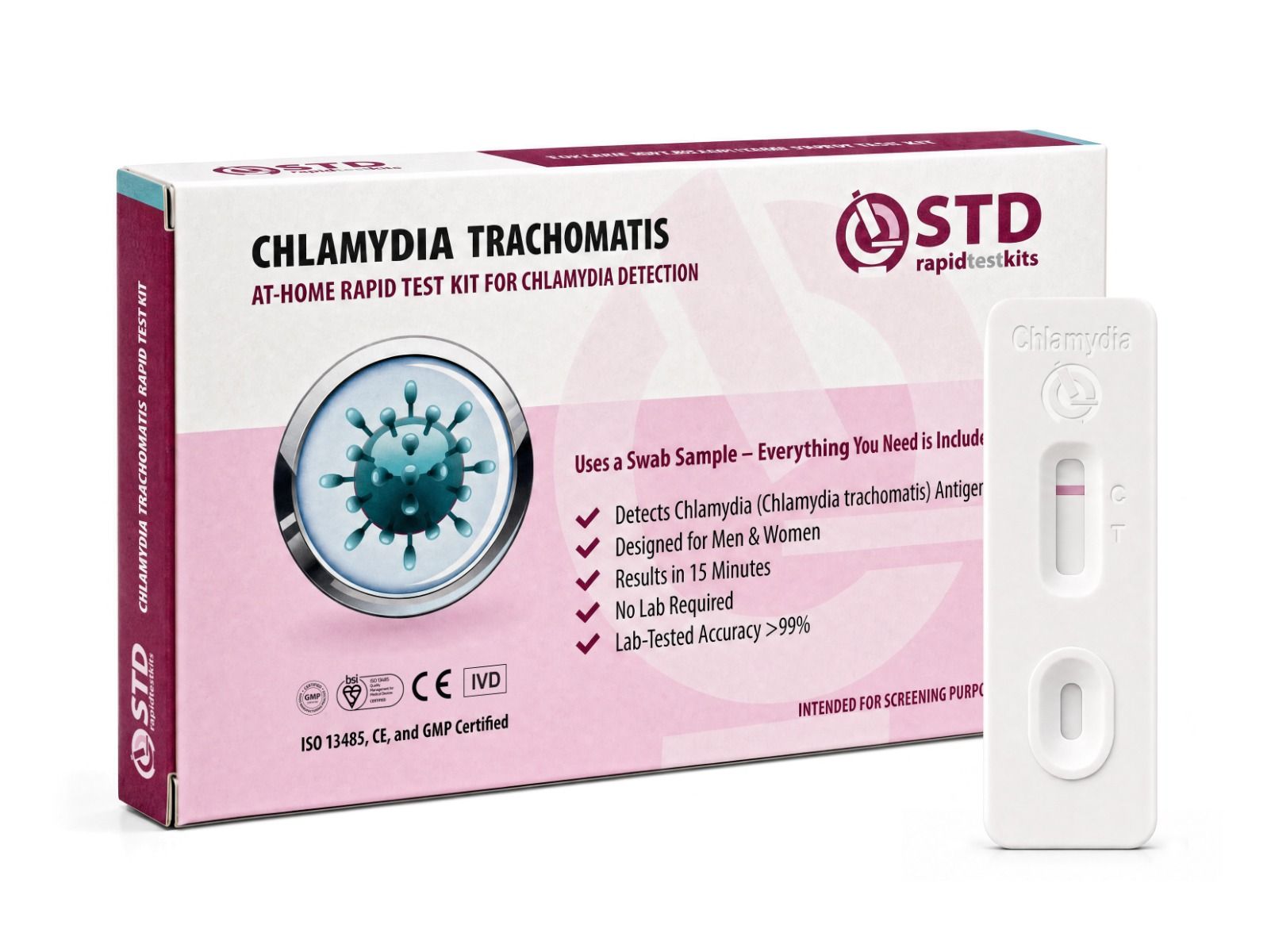
Home rapid tests for chlamydia are useful screening tools when used inside their stated window and read at the right time, but they are not the laboratory gold standard. Clinics run nucleic acid amplification tests (NAATs), which detect the bacterium's DNA and have very high analytical sensitivity (USPSTF screening recommendation). At-home rapid tests are lateral-flow immunoassays, which is a different technology with a different sensitivity profile, especially when bacterial load is low.
A few patterns commonly cause confusion. A cassette read past its time window can show an evaporation line that looks like a faint positive. Testing too soon after exposure can produce a false negative if bacterial load has not yet reached the assay's detection threshold. A clearly positive result inside the right window, on the other hand, is almost always real, even when the test line is fainter than the control line.
If the result feels uncertain, the calm move is a clinic visit or a telehealth-ordered lab NAAT, not another rapid kit. The cost is small, and the clarity is worth it. Many clinicians will treat presumptively after a credible positive at-home result without waiting for the lab confirmation, then use the NAAT to document the case and check related infections like gonorrhea at the same time.
| Test Type | Sensitivity Tier | When to Use | Confirmation Needed? |
|---|---|---|---|
| At-home rapid lateral-flow | Moderate to high | Quick screening at home in about 15 minutes | Yes, if the result is faint, ambiguous, or read outside the window |
| Mail-in lab kit (NAAT-based) | High | Discreet sampling, lab-run analysis, no clinic visit | Rarely, but useful if exposure timing was very recent |
| Clinic NAAT or PCR | Very high | Gold standard, often bundled with other STI screening | No; this is the confirmatory test |
Who to Contact and How: Telehealth, Clinics, and Quiet Conversations
Once the initial shock softens, the practical question is who to contact and how to get treatment lined up. The list is shorter than it feels: a licensed provider for the prescription, recent sexual partners who could have been exposed, and no one else unless you choose to share.
Telehealth has changed this part of the process meaningfully. Many services can issue a prescription within a few hours of an online questionnaire, and the prescription goes straight to a local pharmacy. For people without a regular doctor, an evening positive result no longer means waiting until Monday morning.
Some clinicians can also issue expedited partner therapy (EPT), where a second prescription is provided for the patient's partner without a separate appointment for that partner. The CDC notes that EPT is legal in most U.S. states and is a well-evidenced way to reduce ping-pong reinfection (CDC sexually transmitted infections). Ask the prescribing provider whether it is available in your state and whether it fits your situation.
Whether the path is a telehealth visit, an in-person clinic, urgent care, or a public-health department, the staff handling these cases sees them every day. Chlamydia is among the most common reasons people seek STI care, and the visit is far more routine than it feels from the patient's side. Some local health departments also offer free or low-cost treatment for people without insurance.
Treatment Basics: Antibiotics, Adherence, and What to Expect
Chlamydia is curable. The CDC's current sexually transmitted infection treatment guideline recommends doxycycline 100 mg twice daily for seven days as the first-line regimen for uncomplicated genital infection, with azithromycin 1 g as a single dose listed as an alternative when doxycycline is unsuitable, such as during pregnancy (CDC STI treatment guidelines). Doxycycline is preferred because it has higher cure rates for rectal infections, which often coexist with genital infections in the same person.
Adherence is the part that matters most. Skipping doses, doubling up after a missed dose, or stopping early because symptoms eased can all reduce the chance of full bacterial clearance. The pills do their work whether or not symptoms were ever present, so an absence of symptoms is not a signal to stop.
Practical notes for the seven-day course
- Doxycycline can cause photosensitivity. Brief sun exposure is fine, but a long beach day during the course is worth covering or postponing.
- Both antibiotics can cause stomach upset. Taking them with food and a full glass of water reduces this for most people.
- Doxycycline binds to iron, calcium, and magnesium. Space dairy, antacids, and mineral supplements at least two hours from each dose.
- Mention current medications and supplements when getting the prescription. Some interactions matter, including with hormonal birth control in narrow situations.
- Heavy alcohol use does not directly cancel the antibiotics, but it can worsen nausea and increase the chance of missed doses; minimizing alcohol during the course is the safer play.
Most people tolerate treatment well. After completing the course, the infection should be cleared within about a week, although when symptoms were present they can take a few additional days to fully resolve.
| Medication | Typical Course | Effectiveness | Practical Notes |
|---|---|---|---|
| Doxycycline (first-line) | 100 mg twice daily for 7 days | High cure rate for genital and rectal infection when taken as prescribed | Take with water and food; avoid prolonged sun exposure; not used in pregnancy |
| Azithromycin (alternative) | 1 g as a single oral dose | Effective for genital infection; less reliable for rectal infection | Used when doxycycline is unsuitable, including pregnancy; can cause stomach upset |
Mental Health and Stigma: You Are Not Alone
A diagnosis can echo in the mind long after the bacteria are gone. The most common reactions are shame, anxiety about future relationships, and a sense of being marked. None of those reactions reflect the actual medical situation. Chlamydia is the most commonly reported bacterial STI globally, with an estimated 128 million new infections annually among adults aged 15 to 49 according to the WHO (WHO chlamydia fact sheet). The diagnosis means a person tested, which is the responsible step.
Reframing helps. A positive result is information that allows treatment, not a verdict on character. People who disclose to current partners often find the conversation lands better than expected, because the alternative (silent transmission) is what most partners actually fear. Honest disclosure usually builds trust rather than ending the relationship.
If the anxiety lingers beyond the treatment window, it is worth taking seriously. Professional counseling, peer-support communities such as the resources hosted by the American Sexual Health Association, and conversations with a trusted friend can all help. The mental side of recovery deserves the same attention as the physical side, and a brief course of therapy is a reasonable response when stigma feels heavier than it should.
This article is published by stdrapidtestkits.com, which sells at-home STI testing kits. Product mentions below are tied to the section's clinical content, not to a sales priority. Many readers landing here will not need to buy anything, and that is the right outcome for them.
Partner Notification: Scripts, Tools, and Anonymous Options
Partner notification is often the hardest part of the process and one of the most important. Untreated partners can develop their own complications, and they can reinfect a treated person within days of resumed sex. Three approaches are common, and the right one depends on the relationship and the timeline.
Three workable approaches
- Direct conversation. A phone call, video chat, or in-person talk. Best for current or recent close partners, where trust is already in place.
- Anonymous notification services. Web-based tools such as TellYourPartner.org or InSPOT, often partnered with public-health departments, send a text or email to a named contact without revealing the sender's identity. Best for past partners, casual partners, or situations where direct contact feels unsafe.
- Health-department contact tracing. In some jurisdictions, public-health staff will reach out to listed partners on the patient's behalf. Best when the case involves multiple partners or a longer exposure timeline.
A short script for direct conversations
- State the fact: "I tested positive for chlamydia."
- Move to the action: "You should get tested and treated. Most providers can do it the same day, and your insurance or a local clinic should cover most of the cost."
- Close with reassurance: "It is common, fully treatable, and routine to handle."
The shorter the conversation, the easier it tends to go. Most people respond with concern about their own status, not anger directed at the messenger. If a partner reacts badly, that reaction is usually about their own anxiety, not a verdict on the person delivering the news.

When and Why to Retest: Avoiding False Confidence
Clearing the infection is not the finish line. Reinfection is common, often from an untreated partner, and it is usually silent. The CDC recommends retesting at about three months after treatment for everyone diagnosed with genital chlamydia, regardless of whether the original partner was treated (CDC chlamydia overview). The recommendation applies even when the original infection was asymptomatic and even when the patient is in a long-term, ostensibly monogamous relationship.
A test of cure within a few weeks of finishing antibiotics is not routinely recommended for uncomplicated genital infection. NAATs detect bacterial DNA, and dead bacterial fragments can still trigger a positive result for several weeks after successful treatment. A repeat test inside that window can mislead and prompt unnecessary additional antibiotics.
Three months is the sweet spot. By then, leftover DNA has cleared, and any new exposure has had time to register. If new symptoms appear sooner, or if a new partner is involved, an earlier test can still be useful, but a confirmatory test at the three-month mark is still worth doing.
| Timing | Reason to Test | Reliability |
|---|---|---|
| 2 weeks after treatment | Only if new symptoms develop or a new exposure occurs | Limited; residual bacterial DNA can produce a misleading positive |
| 6 weeks after treatment | Optional early check for high-risk reinfection situations | More reliable than 2 weeks but not the standard guideline timing |
| 3 months after treatment | Standard CDC guideline; routine retest for everyone diagnosed | Most accurate confirmation that the infection cleared and was not reacquired |
Preventing Reinfection: Condoms, Routine Testing, and Smarter Patterns
A positive result can be the prompt for changes that genuinely reduce the chance of repeat infection. Condoms reduce chlamydia transmission substantially when used consistently and correctly, although they are not a complete shield (CDC condom effectiveness). Combined with routine testing, the math shifts in a meaningful way.
Habits that work for most people
- Routine STI screening as part of annual health maintenance for sexually active women under 25, and for older adults with new or multiple partners (USPSTF screening recommendation).
- Aligning treatment timing with partners, so that both finish the antibiotic course before resuming sex.
- Asking new partners about their last test date and result, the same way many people now ask about contraception.
- Keeping at-home test kits on hand for mid-relationship checks or after a possible exposure, especially in situations where a clinic visit is not practical.
There is no licensed vaccine for chlamydia. Trials are underway, but no product is currently available. HPV vaccination, while unrelated to chlamydia directly, is part of the broader STI prevention picture and is recommended through age 26 routinely, with shared clinical decision-making for adults aged 27 to 45 (CDC HPV vaccine information).
The point is not to avoid intimacy. It is to integrate testing and treatment into how relationships start and progress. A normalized testing conversation, a finished antibiotic course before sex resumes, and a planned three-month retest are the core habits worth adopting after a diagnosis.
A Calmer Path Forward
A positive chlamydia test is upsetting, but the process from here is short and well-mapped. The diagnosis is common, the treatment is routine, and the long-term outlook for someone who follows through is excellent.
The harder work, the part the antibiotics cannot do, is reframing what the result means. It is information about a treatable infection, not a verdict on a person's worth or relationship choices. The four-step checklist below covers everything most people need to handle from here.
Your next four steps
- Confirm the result with a clinic NAAT if anything looks ambiguous, or accept presumptive treatment if the at-home result was clear.
- Start the antibiotic course the same day if possible. Doxycycline twice daily for seven days is first-line; azithromycin in a single dose is the alternative.
- Notify recent sexual partners using a direct conversation, an anonymous notification service, or expedited partner therapy through the prescriber.
- Retest at about three months. Set a calendar reminder when you pick up the prescription so the follow-up does not slip.
FAQs
- Can chlamydia go away on its own?
- No. Chlamydia does not reliably clear on its own. It requires antibiotics, and untreated infections can cause pelvic inflammatory disease, infertility, or chronic pelvic pain over time.
- Do I need a confirmatory test after a positive at-home kit?
- If the at-home result is clear and you had a recent exposure, many providers will treat presumptively without waiting for confirmation. A clinic NAAT is the gold standard and is worth running when the line is faint, when the timing was borderline, or when you want documentation for partner notification.
- Can I still have sex during treatment?
- No. Avoid all sexual contact until you and your partner or partners have completed treatment, including the seven days of doxycycline or seven days after a single dose of azithromycin. Even protected sex risks reinfection if either person is not yet fully cleared.
- When should I retest after treatment?
- Three months after finishing antibiotics is the CDC standard. Testing sooner risks a misleading positive from residual bacterial DNA fragments, not new infection. Set a calendar reminder when you pick up the prescription so the follow-up does not slip.
- What happens if I do not treat chlamydia?
- Untreated chlamydia can lead to pelvic inflammatory disease, ectopic pregnancy risk, and infertility in women, and to epididymitis in men. The risk rises the longer the infection sits, even when symptoms are absent.
- Can I reinfect myself with chlamydia?
- Reinfection comes from a new exposure, almost always from an untreated partner who passes the bacteria back. Once antibiotics clear the infection, the bacteria are gone from the body and do not re-emerge without a new contact.
- Does alcohol interfere with chlamydia treatment?
- Alcohol does not directly cancel the antibiotics, but heavy drinking can worsen nausea and increase the chance of missing doses or vomiting them up. Minimizing alcohol during the seven-day course is the safer choice for most people.
- Is chlamydia curable?
- Yes. With the correct antibiotics taken as prescribed, chlamydia is fully curable. Cure does not protect against future infections; reinfection requires a new exposure, which is why routine retesting and partner treatment matter.
Our article was constructed based on current advice from the most prominent public-health and medical organizations, including the U.S. Centers for Disease Control and Prevention, the World Health Organization, the U.S. Preventive Services Task Force, and the U.K. National Health Service. Editorial framing draws on patterns commonly described in clinical and counseling settings, summarized into plain language for at-home decisions. This article does not provide individual clinical diagnosis; for symptoms or questions specific to your situation, see a licensed provider.
- U.S. Centers for Disease Control and Prevention. About Chlamydia, including overview, complications, and prevention guidance.
- U.S. Centers for Disease Control and Prevention. Sexually Transmitted Infections Treatment Guidelines, chlamydia chapter, with first-line and alternative regimens.
- U.S. Centers for Disease Control and Prevention. Sexually Transmitted Infections home page, including expedited partner therapy program guidance.
- World Health Organization. Chlamydia fact sheet covering global incidence, transmission, complications, and treatment.
- U.S. Preventive Services Task Force. Chlamydia and Gonorrhea Screening Recommendation for sexually active women and at-risk adults.
- U.K. National Health Service. Chlamydia overview, including symptoms, testing, treatment, and partner-care guidance.
