
Published: August 2025 | Last updated: April 2026 | Editorial review and quality control: Martina N.
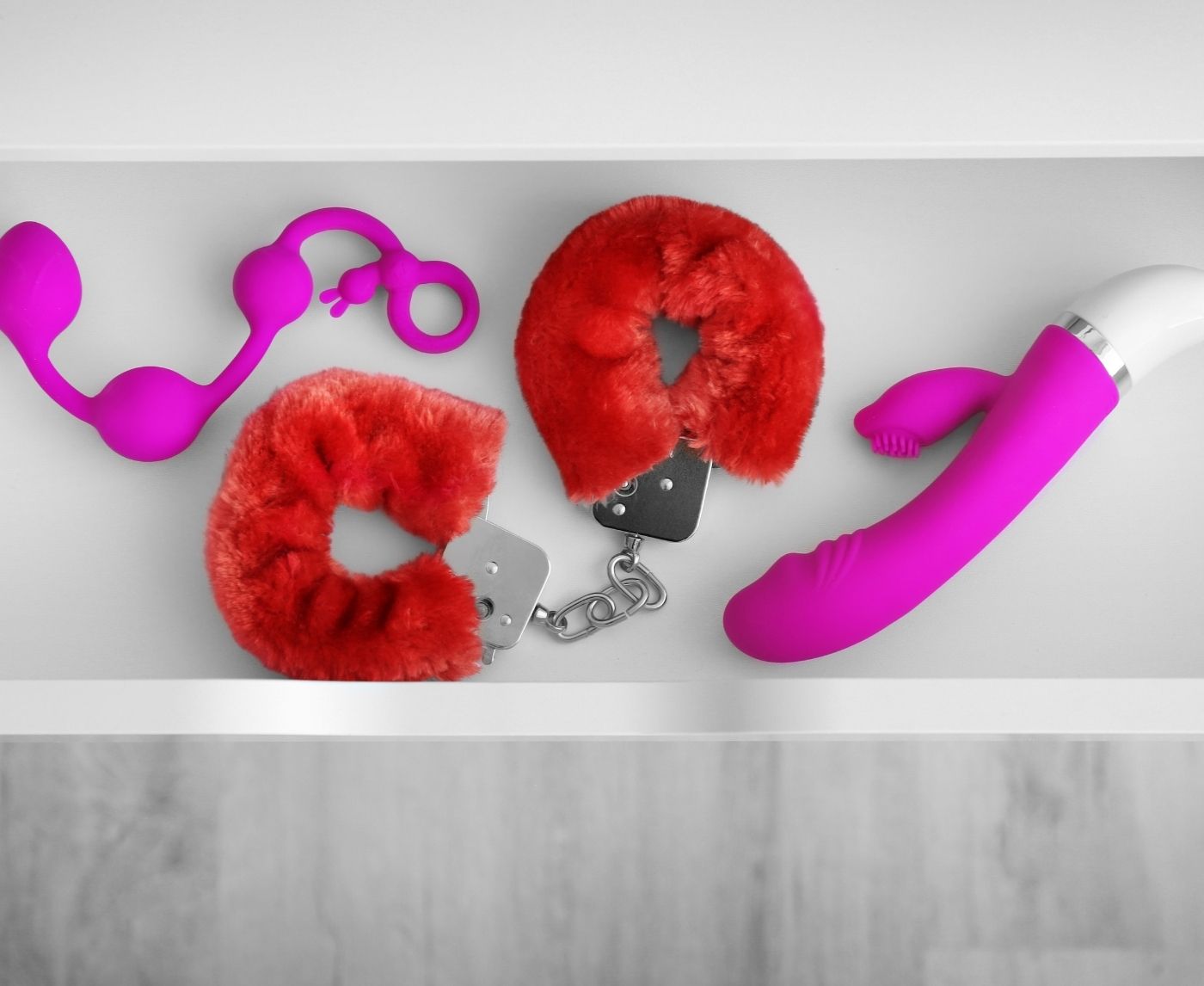
Sex toys are not bacteria-proof. If a toy goes from one person's body to another's without a fresh condom or a thorough clean, gonorrhea can ride along. That is true for vibrators, dildos, plugs, strap-ons, and anything else that contacts a mucous membrane. The infection does not need penetration in the traditional sense. It needs an opening, a bit of moisture, and an opportunity, and a shared toy can supply all three.
Mainstream sex education rarely addresses toy-related transmission, which leaves a lot of people stunned by a positive test after what felt like a low-risk night. This guide walks through how the bacteria actually move between bodies via objects, how long they survive on common toy materials, when at-home and clinic testing is most reliable, and which cleaning practices actually work. It is written for queer couples, kink-positive partners, casual hookups, solo players who rotate toys between body parts, and anyone whose sexual practice does not fit the standard penis-in-vagina script that most STI pamphlets assume.
Can you really get gonorrhea from a shared sex toy?
Yes. Neisseria gonorrhoeae can survive on warm, moist toy surfaces long enough to pass between users, generally for minutes to a few hours depending on material and conditions. If a toy contacts an infected person's genitals, throat, or rectum and is then used on another person without a fresh barrier or proper cleaning, transmission is realistic. Test about 7 to 14 days after the exposure for the most reliable result, and treat with a single intramuscular dose of ceftriaxone if positive.
Key Takeaways
- Gonorrhea spreads to mucous membranes (genitals, rectum, throat) on contact, so a shared toy that bridges two bodies without a fresh condom or thorough cleaning is a realistic transmission route, even with no penetrative sex.
- If you shared a toy and want to test, day 7 to 14 after exposure is the most reliable window for genital infection. Earlier tests can produce false negatives, and throat or rectal infection requires a site-specific swab from a clinic.
How Gonorrhea Travels Through a Toy
Gonorrhea is caused by Neisseria gonorrhoeae, a bacterium that thrives in warm, moist tissue. According to the CDC's gonorrhea overview, the infection settles in the urethra, cervix, rectum, throat, and (rarely) the eyes. Transmission requires that infected secretions, vaginal fluid, semen, pre-ejaculate, or rectal mucus, reach another mucous membrane. That can happen during penetrative sex, oral sex, or any contact that bridges those tissues, including via a shared toy.
Bacterial cells can survive briefly on a slick toy surface between uses, with no immune system clearing them. If the toy moves from one body to another inside that survival window, the cells get a fresh place to colonize. The same logic applies when a single user moves a toy between body parts without cleaning, for example from rectum to vagina, which is a known cross-contamination route per the NHS gonorrhoea guidance. A toy used on someone with rectal gonorrhea, then used vaginally on the same person an hour later, can produce a vaginal infection from a single act with no second partner involved.
Practically, toy transmission happens in two ways: back-to-back use between partners during a single session (toy on partner A, then on partner B without cleaning), and within-user cross-contamination across body parts (anal use followed by vaginal or oral use). Both routes are interrupted by the same simple steps, a fresh condom changed between uses or a thorough clean before reuse.
How Long the Bacteria Survive on Toy Surfaces
Neisseria gonorrhoeae is fragile compared to viruses like HPV. It does not last for days on a dry counter. But on a moist, warm, freshly used toy, it can stay viable long enough to matter, particularly on porous materials and in conditions that mimic body temperature. Public-health guidance generally treats any back-to-back use without a fresh barrier or cleaning as a transmission risk, regardless of the exact survival time.
The table below summarizes typical survival ranges referenced in clinical and harm-reduction guidance. These ranges are general estimates rather than laboratory measurements from a single published study.
| Toy material | Estimated viability window when moist | Typical risk if reused without cleaning |
|---|---|---|
| Medical-grade silicone (non-porous) | Up to about 2 hours | High during the same session, low after a thorough hot-water-and-soap clean |
| Glass or stainless steel (non-porous) | Up to about 1 hour | Lower than silicone; easiest to fully sterilize by boiling |
| Jelly, rubber, TPE, or TPR (porous) | Bacteria can lodge in micro-pores for several hours or longer | High; surface cleaning does not reliably reach lodged bacteria |
| ABS plastic (non-porous) | Roughly 1 to several hours | Moderate; clean the surface fully and avoid hot-water damage to internal electronics |
| Any toy covered with a fresh condom changed between uses | No direct surface contact with body fluids | Low when the condom is changed every time and the toy outside the condom is also clean |
Symptoms After Toy Exposure Are Often Quiet
One of the reasons toy-related gonorrhea spreads under the radar is that most infections at non-genital sites are silent. Per the CDC clinical overview, throat (pharyngeal) gonorrhea is asymptomatic in the majority of cases, and rectal infections are often missed unless someone specifically tests for them. People with vulvas may have no genital symptoms at all, or symptoms that mimic a yeast infection or bacterial vaginosis.
When symptoms do appear, they vary by site:
- Genital (with a penis): burning during urination, white or yellow discharge, testicular tenderness, sometimes pain or swelling in the testicles.
- Genital (with a vulva): unusual discharge, spotting between periods or after sex, pain during intercourse, lower-belly discomfort.
- Rectal: mild itching, anal discharge, rectal pain or bleeding, painful bowel movements, or no symptoms at all.
- Throat (pharyngeal): mostly asymptomatic; occasionally a sore throat that does not respond to typical viral self-care.
If a toy was used in the throat or rectum and you have a vague symptom that lingers more than a few days, it is worth ruling out gonorrhea even if a genital test is negative. Per the WHO gonorrhoea fact sheet, untreated gonorrhea can cause pelvic inflammatory disease, infertility, ectopic pregnancy, and increased HIV susceptibility.
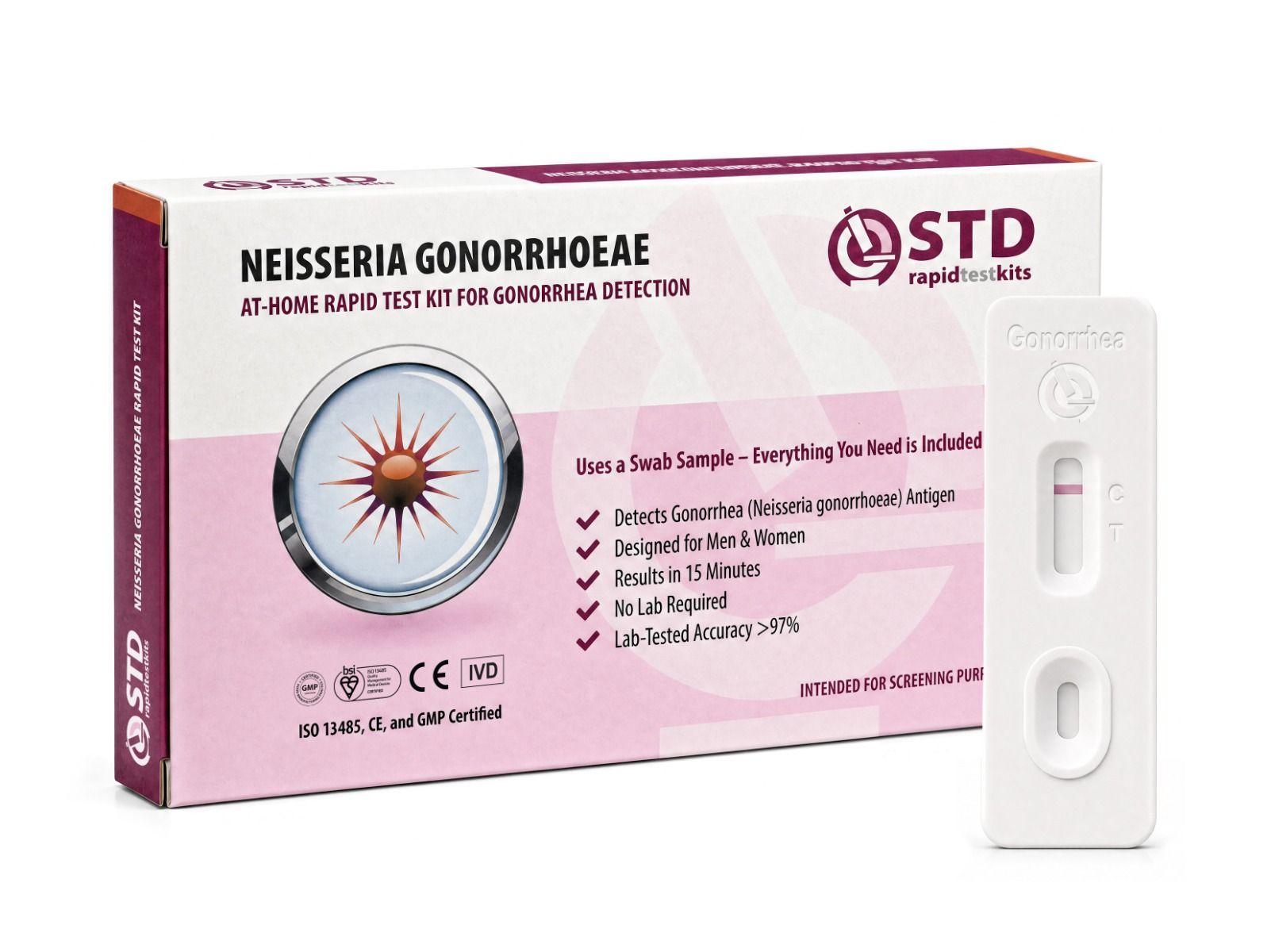
Our at-home rapid kits use a self-collected genital swab. Gonorrhea infections in the throat or rectum need a site-specific swab, usually collected at a clinic or via a mail-in lab service that supplies pharyngeal and rectal swabs. If your toy exposure was oral or anal, our genital-swab kit can address the genital concern, but for full coverage of throat or rectal sites you should also book a clinic visit or use a multi-site lab service. We do not sell pharyngeal or rectal swab tests; pretending otherwise would not serve you.
Toy Material Changes Your Risk More Than You Think
If your toy collection skews toward soft, jelly-feeling materials, that is the part of your setup most worth attention. Porous materials trap bacteria in micro-pores that surface cleaning does not reliably reach. Non-porous toys, by contrast, can be cleaned to a level where shared use is much safer, provided you actually clean them.
Here is how the common materials compare on cleaning difficulty and shared-use risk:
| Material | Porosity | How to clean | Safer for sharing? |
|---|---|---|---|
| Medical-grade silicone | Non-porous | Hot water and soap; boil for 3 to 5 minutes if no internal electronics | Yes, with proper cleaning between users |
| Glass or stainless steel | Non-porous | Boil, top-rack dishwasher, or hot water and soap | Yes, easiest to fully sterilize |
| Jelly, rubber, TPE, or TPR | Porous | Surface clean only; cannot fully sterilize | No; use with a condom that is changed between users, and replace the toy regularly |
| ABS plastic | Non-porous | Hot water and soap; do not boil if internal electronics | Yes, with thorough surface cleaning |
When to Test After Sharing a Toy
Gonorrhea has a window period: a stretch of time after exposure when the bacterial load is too low for a test to reliably detect. Testing too early gives a false sense of security. The general guidance for genital, rectal, and pharyngeal gonorrhea is to wait at least 7 days, with day 14 being the more reliable mark for ruling the infection out.
The table below is a practical timing guide for testing after a toy exposure. If you have severe symptoms (high fever, severe pelvic or testicular pain, eye discharge), do not wait for the window period; see a clinician immediately. We sell the test kit linked below; the public-health sources cited throughout this article are independent.
| Days since toy exposure | What to do | Why |
|---|---|---|
| 0 to 2 days | Wait. If you have severe acute symptoms, see a clinic. | Bacterial load is usually below the detection threshold of any test. |
| 3 to 7 days | Test if you have symptoms or for early reassurance, then plan to retest. | Some infections are detectable in this window, but a negative is not definitive. |
| 7 to 14 days | Best window for a single at-home or clinic test you trust. | Sensitivity is at its highest for most assay types in this range. |
| About 3 months after treatment | Retest if you have any ongoing risk (new partners, more shared-toy use). | Per CDC guidance, gonorrhea reinfection is common and worth catching early. |
What to Do If Your Test Is Positive
A positive gonorrhea test means one clinic visit and a single antibiotic injection for most people. Acting within a few days keeps complications off the table. Per the CDC STI Treatment Guidelines, the recommended regimen for uncomplicated gonococcal infection of the cervix, urethra, or rectum is ceftriaxone 500 mg intramuscular in a single dose for adults weighing under 150 kg. If chlamydia has not been ruled out, the clinician may add oral doxycycline.
Antibiotic-resistant gonorrhea is rising globally and worth understanding without panicking. Per the WHO gonorrhoea fact sheet, decreased susceptibility to ceftriaxone has been documented across multiple countries, though the standard regimen still works for the majority of patients. If symptoms persist after a course of treatment, return to your provider for culture and sensitivity testing rather than asking for a repeat of the same antibiotic. Resistance is mostly a population-level concern at this stage; for an individual patient, the standard ceftriaxone injection still clears most infections, and follow-up matters more than usual.
Practical next steps after a positive result:
- See a clinician within a few days for treatment. A pharmacist cannot prescribe ceftriaxone; you need a clinic visit, telehealth appointment, or a sexual-health service that can administer the injection.
- Avoid sex and shared toy use for at least 7 days after completing treatment, and until any partner you might have exposed has been tested and treated.
- Disinfect any toys used during the exposure window before further use, even on yourself. For boil-safe non-porous toys, a 3-to-5 minute boil is the most reliable single step. For porous toys, replacing them is the safer choice.
- Plan a retest at about 3 months, since reinfection from an untreated partner is the single most common reason gonorrhea reappears.
- If symptoms persist after treatment (discharge that does not clear, ongoing pelvic or testicular pain), return to your provider; persistent symptoms can signal a resistant strain, a co-infection like chlamydia, or pelvic inflammatory disease.
One scenario that catches people out: completing treatment, feeling better, then reusing the same uncleaned toy that caused the original infection. Reusing an uncleaned toy after treatment is a direct re-exposure. A 3-to-5 minute boil or a fresh condom on the toy before next use closes that route completely.
Disinfect any toys used during the exposure window before your next use, even solo. Reinfection from an uncleaned object is fully preventable: a 3-to-5 minute boil for boil-safe materials, or a fresh condom on the toy before next use, closes that route.
Telling Partners You Shared a Toy With
Most people dread the notification conversation more than the test result itself, only to find it takes less than two minutes. It is also the part that stops the infection chain, so it matters. A short, factual message works better than a long explanation. Something like: "I tested positive for gonorrhea. We shared a toy a couple of weeks ago, so you should get tested too." That is enough. You do not owe anyone a clinical lecture, an apology, or a defense of your sex life.
If reaching out directly feels too hard, many U.S. health departments offer anonymous partner-notification services that contact previous partners on your behalf without naming you. Some telehealth providers offer the same service. The point is not who delivers the message, only that partners get the chance to test and treat before they pass the infection on or develop complications.
Anyone who is sexually active can get gonorrhea through unprotected vaginal, anal, or oral sex.
Preventing Toy-Based Transmission Going Forward
Prevention is not about giving up toys. It is a small set of habits that make shared use much lower risk:
- Use condoms on insertable toys when sharing. Change the condom between users and between body parts (vagina to anus, anus to mouth, and so on). This is the single most effective single-action habit, and it works for porous and non-porous toys alike.
- Clean immediately after use, not later. Bacteria are easier to remove before they dry into seams or texture. Hot water and soap is the floor; boiling for 3 to 5 minutes (for boil-safe materials with no internal electronics) is the ceiling.
- Use a toy-safe disinfectant for between-rounds cleaning. A purpose-made toy cleaner or a 70 percent isopropyl alcohol wipe followed by a soap-and-water rinse is more reliable than hand sanitizer or wet wipes. Dry the toy fully before storage to discourage anything that survived.
- Replace porous toys regularly. If a toy is jelly, TPE, TPR, or rubber, treat it as semi-disposable. You cannot fully sterilize it, so its safer life span is short.
- Use water-based lube with silicone toys. Silicone-on-silicone can degrade the toy surface, creating micro-tears that trap bacteria.
- Test on a regular cadence if you share toys. Every 3 to 6 months is a reasonable baseline for active shared use, plus a test after any new partner or any session where the cleaning protocol slipped.
- Designate solo toys when possible. If a toy is yours alone and never enters another person, it removes one transmission route entirely.
For a fuller view of safer-sex practices around shared objects, the NHS sexual health hub has practical, judgment-free guidance.
Frequently Asked Questions
- Even if the toy looked clean, can it really pass gonorrhea?
- Yes. Visual cleanliness is unrelated to bacterial presence. Neisseria gonorrhoeae is microscopic, often present in fluids that have already wiped or absorbed away, and undetectable by sight or smell. A toy can look pristine and still carry enough bacteria to transmit if it was in an infected person's body within the last hour or two.
- How long does gonorrhea survive on a toy?
- Generally minutes to a few hours, depending on the material and how warm and moist the surface is. Porous materials like jelly or TPE can hold bacteria longer because the cells lodge in micro-pores. Non-porous silicone, glass, or stainless steel clears more quickly. The practical implication is that back-to-back use during a single session is the highest-risk window.
- Is washing the toy with soap enough?
- For non-porous toys (silicone, glass, stainless steel, ABS plastic), hot water and soap with thorough scrubbing is generally sufficient between uses, and boiling for 3 to 5 minutes is more reliable for boil-safe items. For porous toys (jelly, TPE, TPR, rubber), surface cleaning does not reach bacteria lodged in micro-pores; the safer option is to use a condom on the toy and change it between users.
- When should I test after a possible toy exposure?
- Day 7 to 14 after the exposure is the most reliable window for a single test. Testing earlier is reasonable if you have symptoms, but a negative result before day 7 is not definitive. If you test early, plan a retest at the two-week mark.
- If the exposure was only oral (toy in someone's mouth), do I still need to worry?
- Yes. Pharyngeal gonorrhea is well documented and often asymptomatic. A toy that was in an infected person's throat can transfer bacteria to the next user's genital or rectal mucosa. Throat-site testing requires a pharyngeal swab, which is not part of our home-collection kits; for that, see a clinic or use a mail-in lab service that supplies a throat swab.
- Do I have to tell a partner I tested positive after only toy use?
- Yes. The route does not change the obligation. A short message such as "I tested positive for gonorrhea, we shared a toy, you should get tested" is enough. Many U.S. health departments and some telehealth services offer anonymous partner notification if direct contact feels too hard.
- If I have no symptoms, am I in the clear?
- Not necessarily. Most pharyngeal infections and many rectal and cervical infections are asymptomatic. Untreated gonorrhea can cause pelvic inflammatory disease, infertility, and increased HIV susceptibility, and a test at day 7 to 14 is the only way to confirm you are clear after a possible exposure.
- Can I keep using my toys after I test positive?
- Yes, but disinfect them before further use, and do not share them until you have completed treatment and any exposed partner has been tested. For boil-safe non-porous toys, boil for 3 to 5 minutes. For porous toys you cannot reliably sterilize, replacement is the safer choice.

- U.S. Centers for Disease Control and Prevention. About Gonorrhea: clinical overview and transmission routes for uncomplicated infection.
- U.S. Centers for Disease Control and Prevention. STI Treatment Guidelines: Gonococcal Infections Among Adolescents and Adults, including ceftriaxone 500 mg IM single-dose first-line regimen.
- World Health Organization. Gonorrhoea (Neisseria gonorrhoeae infection) fact sheet, including complications of untreated infection and rising antimicrobial resistance.
- UK National Health Service. Gonorrhoea: symptoms, testing, treatment, transmission routes including shared sex toys.
- Cleveland Clinic. Gonorrhea: causes, symptoms, diagnosis, treatment, and prevention.
- UK National Health Service. Sexual health hub including safer-sex practice guidance and condom use on shared sex toys.
