
Published: August 2025 | Last updated: May 2026 | Editorial review and quality control: Martina N.
The search for a “harmless” sexually transmitted infection usually starts with a particular kind of worry. Something happened, something feels off, and the mind races toward worst-case scenarios. Asking which STD is the mildest is often a way of asking for permission to relax.
The short answer: no STD is completely harmless, but some are far easier to treat and far less likely to cause lasting health problems than others. Bacterial infections like chlamydia and gonorrhea can usually be cured with antibiotics. Trichomoniasis, a parasitic infection, often resolves after a single course of medication. Many HPV infections clear on their own within one to two years and never produce symptoms at all.
That picture is reassuring, with one important caveat. The same infection can behave very differently in different people, and untreated cases of even “mild” STDs sometimes lead to pelvic inflammatory disease, fertility issues, or higher transmission risk for other infections. This guide walks through which STIs sit on the milder end of the spectrum, why doctors avoid the word harmless in the first place, and the practical steps that turn an anxious internet search into a clear next move.
Key takeaways
- No STD is completely harmless, but chlamydia, gonorrhea, and trichomoniasis are usually curable with medication, and most HPV infections clear on their own.
- Many STIs cause no symptoms at all, so routine testing is the only reliable way to catch mild infections before they have a chance to do quiet damage.
Why Doctors Avoid the Word “Harmless”
Clinicians tend to flinch at the phrase “harmless STD.” The reason is practical, not pedantic. The same organism can produce a barely-there infection in one person and a serious complication in another, especially when treatment is delayed by months or years.
Take chlamydia. Many people experience no symptoms whatsoever, which can make the infection feel like nothing. But left undetected, chlamydia can ascend into the upper reproductive tract and lead to pelvic inflammatory disease, chronic pelvic pain, or reduced fertility. CDC surveillance data show roughly two-thirds of reported chlamydia cases occur in people under 25, most picked up during routine screening rather than after symptoms.
An untreated chlamydia infection that feels like nothing at week two can cause pelvic scarring by month six. For most “mild” STIs, the clinical risk is a function of how long they go undiagnosed, not how severe the initial infection looks.
STDs That Antibiotics Can Usually Clear
Some sexually transmitted infections are caused by bacteria or parasites, not viruses. These respond to medication, which puts them in the category public health writers sometimes call “the easy ones” (with the understanding that easy still means medical follow-up).
Of these, trichomoniasis is sometimes described as one of the mildest because it frequently produces minimal symptoms and clears with a single antibiotic dose. The trade-off: trichomoniasis can quietly increase the risk of acquiring or transmitting other STIs, including HIV, when it goes untreated.
Even curable infections still need follow-up testing. Repeat infection within months of treatment is common, often because a sexual partner was not treated at the same time. Public health programs build that step into their guidance precisely because re-exposure can undo an otherwise simple cure.
| STI | Type | Typical treatment | Curable? |
|---|---|---|---|
| Chlamydia | Bacterial | Course of antibiotics | Yes |
| Gonorrhea | Bacterial | Antibiotic injection (ceftriaxone) | Yes |
| Trichomoniasis | Parasitic | Antiparasitic medication | Yes |
| Syphilis (early stage) | Bacterial | Penicillin injection | Yes |
The Infection That Often Clears on Its Own
When people search for the least dangerous STD, they tend to land on discussions of HPV, the human papillomavirus. HPV is so common that most sexually active adults are exposed to it at some point. In the majority of cases, the immune system clears the virus naturally within one to two years, without any treatment and often without producing symptoms.
For low-risk strains, HPV can fade away entirely. That pattern is the reason HPV often gets flagged in lists of “mild” infections. The picture changes for a smaller subset of high-risk strains, which are linked to genital warts (for some types) and to cervical, anal, throat, and other cancers (for others). The same family of viruses behaves very differently depending on strain.
This is why public health guidance pairs HPV with vaccination and screening rather than treating it as a binary infection. The HPV vaccine offers routine protection through age 26 and shared clinical decision-making with a provider up to age 45, per ACIP recommendations. Routine cervical screening picks up the small share of HPV cases that progress before the cancer stage.
Many STIs cause no symptoms at all. Testing is the only way to know for sure if you have an STI.
Curable Versus Lifelong Infections
Whether an infection can be cured outright or only managed long-term is the clearest practical dividing line between STIs. Bacterial and parasitic infections (chlamydia, gonorrhea, syphilis, trichomoniasis) sit in the curable column. Most viral infections (HIV, herpes, hepatitis B, HPV) stay in the body, although they can usually be controlled with medication or, in HPV’s case, cleared by the immune system over time.
This difference shapes how clinicians talk about risk. A bacterial infection treated quickly may resolve in days. A viral infection might remain in the body for life and yet cause very little disruption to daily life, especially with modern treatment.
Herpes is the clearest example. The virus persists in nerve tissue indefinitely, which sounds frightening at first read. In practice, many people with HSV experience infrequent outbreaks or none at all, and daily antiviral medication reduces both symptoms and the risk of transmitting the virus to partners. Modern HIV treatment goes further still: people on consistent antiretroviral therapy can reach an undetectable viral load, which means they cannot transmit HIV through sex (the “U=U” principle that public health agencies now endorse).

When an Infection Feels Like Nothing
A surprising number of STIs cause no symptoms in the early stages. People often discover an infection during a routine screening visit or after a partner shares a positive result. Public health surveillance consistently shows that a large share of chlamydia and gonorrhea cases occur without any noticeable signs.
The absence of symptoms can create the impression that an infection is trivial. Counselors at sexual health clinics describe a common reaction: patients say “but I feel completely fine,” and they are telling the truth. The body simply does not always send a warning. CDC estimates put the share of asymptomatic chlamydia cases in women at roughly 70%, with comparable rates in men.
So which STD is actually the most harmless?
No STD is completely harmless, but bacterial infections like chlamydia and parasitic infections like trichomoniasis sit toward the milder end of the spectrum: both are curable with medication and rarely leave lasting damage when treated early. Among viral STIs, most HPV infections clear on their own within one to two years. The risk in every case comes from delay, not from the organism itself.
Symptoms People Tend to Dismiss
Part of the reason the “harmless STD” myth persists is that early symptoms can look incredibly ordinary. A small bump might be mistaken for an ingrown hair. Mild burning during urination gets blamed on dehydration. A little itching is written off as a soap reaction. Each of these is a plausible explanation; each can also be the first sign of something worth checking.
None of these signs automatically point to an STI, which is the point. When symptoms overlap with ordinary irritation, the only way to separate the two is a test. People often wait weeks or months to see whether something resolves on its own; by the time they reach a clinic, the infection is still usually treatable, but it could have been handled much sooner.
| Possible symptom | Often mistaken for | Potential cause |
|---|---|---|
| Mild itching | Skin irritation, yeast | Trichomoniasis, candidiasis |
| Burning during urination | Dehydration, UTI | Chlamydia or gonorrhea |
| Small bumps or sores | Ingrown hairs, razor burn | Herpes, syphilis, HPV |
| Unusual discharge | Hormonal change, BV | Several bacterial STIs |
| Pelvic or testicular ache | Muscle strain | Untreated chlamydia or gonorrhea |
How Early Testing Changes the Outcome
One of the most reassuring facts about sexual health: most STIs are straightforward to treat when caught early. The gap between a minor inconvenience and a significant complication is almost always a function of timing. Chlamydia treated within weeks of exposure clears completely; chlamydia ignored for a year may still clear with medication but can leave scarring along the way.
Testing also breaks transmission chains. A person who does not know they are infected may unknowingly pass the infection to a partner; awareness of status is the prerequisite for stopping that. Public health agencies treat routine STI screening the way they treat dental cleanings or annual physicals, as a normal piece of preventive care, not as a sign of suspicion.
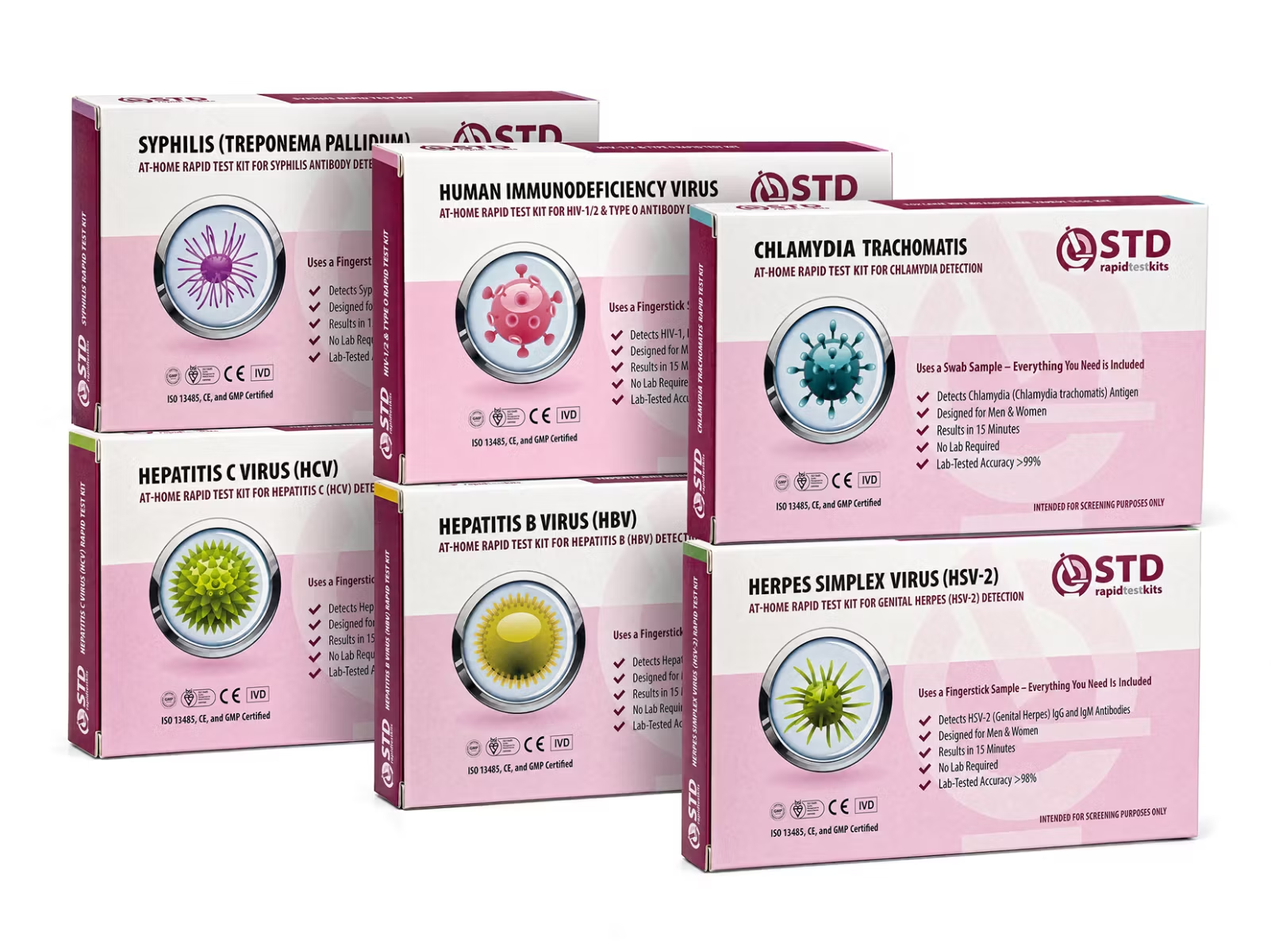
Modern testing options remove most of the friction that used to surround the process. Walk-in clinics, telehealth consults, and at-home rapid kits all exist now, and each fits a different preference for privacy and speed. At-home rapid lateral-flow kits are not a replacement for confirmatory lab testing when a result is positive, but they screen quickly in the window between exposure and a clinic appointment. This site sells rapid lateral-flow STI kits for at-home screening; product recommendations below are based on fit for the reader’s situation, not commercial benefit.
The Myth of the “Harmless” STD
The internet loves clean rankings: the worst STD, the easiest STD to cure, the least dangerous STD. Sexual health rarely fits neatly into those kinds of lists. An infection that seems mild for one person can lead to fertility issues for another, especially when treatment is delayed.
Sexual health clinicians frequently note that the infections causing the most problems are often the ones people decided were too small to worry about. That observation reframes the question. The danger in “harmless STD” thinking is not that any specific infection is uniquely awful; it is that the label discourages testing.
This is why public health communication has shifted toward talking about treatable or manageable infections instead of harmless ones. The distinction sounds subtle, but the practical effect is real: people who hear “treatable” tend to seek testing; people who hear “harmless” tend to wait.
Word choice matters in clinical communication. People who hear “treatable” tend to walk into a clinic this week. People who hear “harmless” tend to push it off three months. Public health agencies shifted their vocabulary deliberately, because the label shapes the testing behaviour that follows.
What to Remember If You Are Worried
Most STI diagnoses are manageable, treatable, and far less dramatic than late-night search results suggest. The single most consistent observation from sexual health counseling is that the uncertainty before a test is harder on people than the diagnosis itself usually turns out to be. Once a result is in hand, there is almost always a clear path forward.
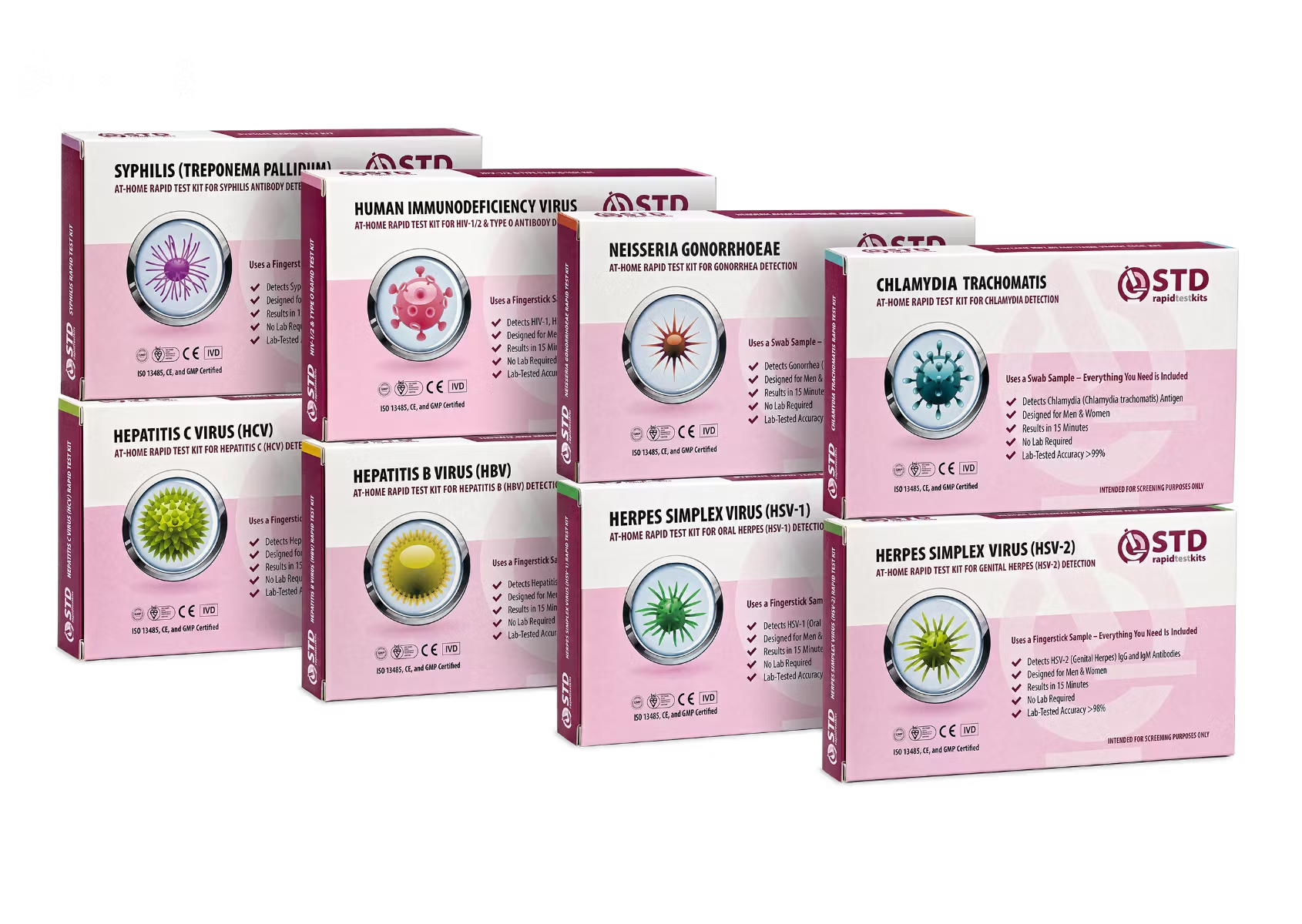
Modern sexual health education focuses less on ranking infections and more on encouraging three practical steps: routine testing, honest communication with partners, and timely treatment. With those in place, most STIs become a routine medical issue, not a life-altering one. The 8-in-1 kit below covers the broadest set of common infections for readers who want a single comprehensive screen.
You Deserve Clarity, Not Guesswork
Searching for the “most harmless STD” usually means one specific thing: something happened, something feels different, and the mind is trying to calculate the risk. That is a normal place to start. Sexual health questions almost always begin in the uncomfortable gap between curiosity and worry.
The good news is that the infections clinicians see every day are mostly manageable and, in many cases, easily treatable. What changes the outcome is information. A quick test turns a spiral of guesses into a single clear next step, and the answer is almost always less dramatic than the wait suggests.
Frequently asked questions
- Is there really such a thing as a harmless STD?
- Strictly, no, though some come close. Chlamydia typically clears within about a week of starting antibiotics when it is caught early. Trichomoniasis often resolves after a single antiparasitic dose. The catch with both is the re-infection risk if a partner is not treated at the same time, plus the quiet damage that can happen during the months an undetected infection lingers. Mild reputations only hold when testing happens early.
- Which STD do doctors worry about the least?
- If pressed to name one, many clinicians point to chlamydia. It is extremely common, frequently produces no symptoms, and responds well to a standard antibiotic course. The caveat that doctors always attach: untreated chlamydia can quietly cause pelvic inflammatory disease and fertility issues. Easy to treat is not the same as safe to ignore.
- Can you have an STD and feel completely fine?
- Yes, and this is common enough that public health agencies have built whole screening programs around it. A large share of chlamydia, gonorrhea, and HPV cases produce no obvious symptoms. The body does not always send a warning, which is why routine testing exists for sexually active adults rather than waiting for something to feel wrong.
- Which STD sometimes clears up without treatment?
- HPV is the standard example. The immune system clears most HPV infections within one to two years, and many people never realize they had the virus. Certain high-risk strains can lead to genital warts or, more rarely, to cancers of the cervix, anus, or throat, which is why screening and the HPV vaccine remain important even though the typical course is self-limiting.
- If my symptoms are mild, can I just wait and see?
- Tempting, but rarely the best plan. Mild itching, burning, or a small bump can come from dozens of harmless causes, and they can also be the first sign of an STI. The problem with waiting is that guessing wastes the easiest treatment window. A quick test replaces guesswork with a clear answer, which is almost always less stressful than weeks of internet research.
- What is the easiest STD to treat quickly?
- Most bacterial infections respond well to a short course of medication. Chlamydia is treated with antibiotics; gonorrhea with an antibiotic injection; trichomoniasis with an antiparasitic pill. In each case, symptoms (when they exist) usually fade within days of starting treatment. The biggest practical step after treatment is making sure recent partners are tested too, so the infection does not bounce back.
- Do mild STDs still need treatment?
- Yes. Even infections that feel minor can cause complications if they linger. Chlamydia and gonorrhea can ascend the reproductive tract; untreated syphilis progresses through stages that grow harder to treat; trichomoniasis raises the risk of acquiring other STIs. Treating an infection early is also how you protect partners from inheriting the same diagnosis.
- What is the smartest thing to do if I am unsure?
- Get tested. It is not a dramatic decision; it is a piece of routine preventive care, similar to a dental cleaning or a yearly physical. The moment you know your status, you and your provider can act on it, and the answer is usually simpler than the worry leading up to it. Walk-in clinics, telehealth visits, and at-home rapid kits each offer a low-friction starting point.
How we sourced this article: This guide synthesizes current STI guidance from the U.S. Centers for Disease Control and Prevention, the World Health Organization, the UK’s National Health Service, and the Mayo Clinic, alongside peer-reviewed clinical literature on common STIs, symptom patterns, and treatment outcomes. Specific claims trace back to the primary sources listed below. This article is educational and does not replace a clinical diagnosis; if you have symptoms or a known exposure, please see a licensed provider.
- U.S. Centers for Disease Control and Prevention. Sexually transmitted infections (STIs) overview, screening recommendations, and surveillance data.
- U.S. Centers for Disease Control and Prevention. Chlamydia fact sheet covering transmission, asymptomatic infection, treatment, and complications.
- U.S. Centers for Disease Control and Prevention. Trichomoniasis fact sheet covering prevalence, symptoms, and antiparasitic treatment.
- World Health Organization. Sexually transmitted infections (STIs) fact sheet covering global burden, screening, and treatment.
- UK National Health Service. Sexually transmitted infections (STIs) overview, including symptom patterns and testing guidance.
- Mayo Clinic. Sexually transmitted diseases (STDs) overview hub: symptoms, causes, and treatment summaries.
