What Is Gonorrhea, and How Is It Treated When Antibiotics Don't Work?
Gonorrhea is one of the most common STIs, and headlines about failing antibiotics make it sound untreatable. It isn't. This guide explains what the infection is, how it shows up (or doesn't), how a single injection still cures it, and the specific steps clinics take when a first treatment doesn't work, including the two oral antibiotics approved in late 2025.
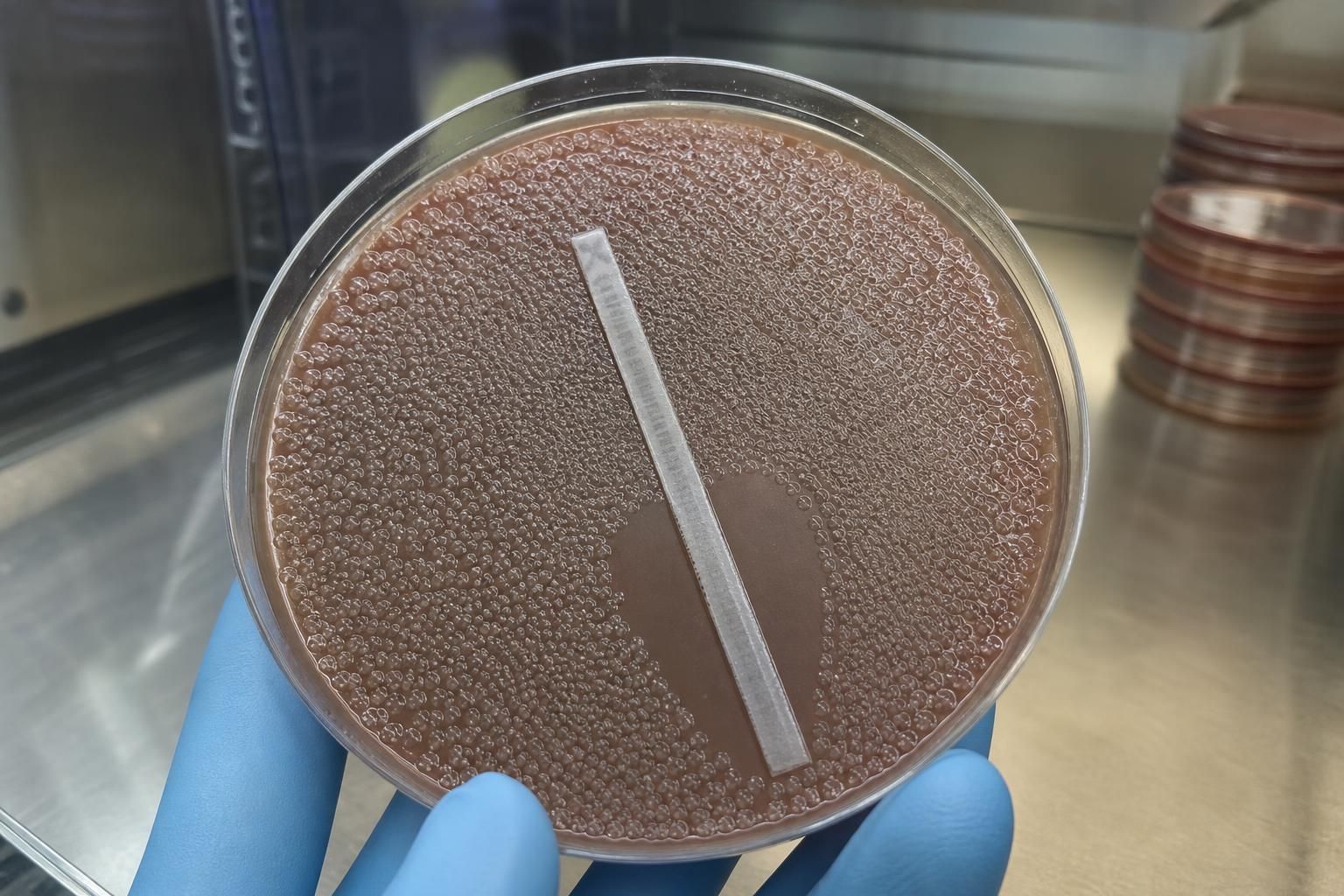



- Many people with gonorrhea, especially women, have no symptoms, so feeling fine is not the same as a negative test.
- When treatment seems to fail, clinics first sort reinfection from true failure, and a culture shows which antibiotics still work.
Published: October 2026 | Last updated: October 2026 | Editorial review and quality control: Martina N.
What is gonorrhea, and what happens if antibiotics don't work?
Gonorrhea is a bacterial STI of the genitals, rectum or throat. US clinics treat it with one ceftriaxone injection. If symptoms or a positive test persist, clinicians first check for reinfection, collect samples for culture to see which antibiotics still work when failure is suspected, get specialist advice on the next regimen, and report the case to public health.
Gonorrhea is a bacterial infection, passed during sex, that a single injection usually cures. Recent headlines about rising resistance have sent many people searching for what it is and whether they could be stuck with it. In the US, CDC reported no verified cephalosporin treatment failures as of February 2024, and the standard injection still cures most infections, but resistance is growing and clinics are watching for failures (CDC, Drug-Resistant Gonorrhea).
Our other articles cover the science of resistance in depth, including why gonorrhea is becoming harder to treat. This one starts earlier and ends more practically. It explains the infection itself for readers who have never had to think about it, then walks through what actually happens, step by step, when someone is treated and the infection doesn't clear.
What gonorrhea is and how it spreads
Gonorrhea is caused by the bacterium Neisseria gonorrhoeae. It infects the moist lining of the body: the urethra, the cervix, the rectum and the throat, and occasionally the eyes. You can get it from vaginal, anal or oral sex without a condom with someone who has the infection, and a pregnant person can pass it to their baby during childbirth (CDC, About Gonorrhea).
It is extremely common. The World Health Organization estimates there were 82.4 million new cases among people aged 15 to 49 worldwide in 2020 (WHO fact sheet on multi-drug resistant gonorrhoea). Because the bacterium lives where it is passed on, the site of infection follows the kind of sex someone has. Oral sex can lead to a throat infection; receptive anal sex can lead to a rectal one. That matters later, because the throat is the hardest place to clear the infection and a site the new oral treatments are not approved for.
Symptoms, and why many people never notice any
Gonorrhea often causes no symptoms at all. The CDC says most women with gonorrhea have none (CDC). When symptoms do appear, the NHS says they usually start around 2 weeks after infection, though sometimes not until many months later (NHS, Gonorrhoea).
Silence is not the same as harmless. Untreated, gonorrhea can spread to the uterus, fallopian tubes and ovaries as pelvic inflammatory disease, which can scar the tubes and lead to ectopic pregnancy, infertility and long-term pelvic pain. In men it can inflame the tubes attached to the testicles, which in rare cases affects fertility. Rarely, it spreads to the blood or joints, which can be life-threatening (CDC). The fertility fear many readers carry is legitimate. Prompt treatment lowers the risk of these complications, so finding and treating the infection matters.
Signs that can point to gonorrhea
Many people have none of these. Only a test can confirm or rule out gonorrhea.
- Burning or pain when you pee Common
- Yellow or greenish discharge from the vagina Common
- White, yellow or green discharge from the penis Common
- Pain in the lower abdomen Less common
- Painful or swollen testicles Less common
- Discharge, itching, soreness or bleeding from the rectum, or painful bowel movements Less common
- Bleeding between periods Rare
How gonorrhea is normally treated
US treatment is deliberately simple. The CDC recommends a single 500 mg injection of ceftriaxone into a muscle for people who weigh under 150 kg, and 1 g for those who weigh 150 kg or more. The same dose is used for genital, rectal and throat infections. If chlamydia hasn't been ruled out, the clinic adds doxycycline 100 mg by mouth twice a day for 7 days (CDC STI Treatment Guidelines, gonococcal infections in adults). Other countries follow their own national guidance; the NHS describes a single dose of antibiotics given as an injection or tablets (NHS).
Ceftriaxone is the only recommended first-line option in the US. CDC's treatment guidelines list cefixime, an oral cephalosporin, as an alternative only when ceftriaxone isn't available (CDC STI Treatment Guidelines), and fluoroquinolones such as ciprofloxacin were dropped in 2007 (CDC, Drug-Resistant Gonorrhea).
What happens after the shot matters as much as the shot. A clinic will ask you to avoid sex until seven days after finishing all medicine, until partners have been treated and until any symptoms have gone. In the US, CDC advises a retest about three months later even if your partners were treated; the NHS instead asks people to be tested again about a week after starting treatment.
After treatment: the follow-up timeline
- Day 0 Treatment
Single ceftriaxone injection, plus doxycycline if chlamydia isn't ruled out
- Day 7 Sex can resume
Seven days after finishing all medicine, once partners are treated too and any symptoms have gone
- Day 14 Throat test of cure
Throat infections are retested 7 to 14 days after treatment with culture or NAAT
- Month 3 Routine retest
In the US, everyone treated is retested at about 3 months, whatever their partners did
Based on CDC guidance. A throat infection gets an extra test of cure; a genital or rectal one usually doesn't.
What “antibiotics don't work” can actually mean
A positive test or lingering symptoms after treatment has three common explanations, and only one of them is resistance. The first is reinfection: a partner who wasn't treated passes the bacteria straight back, or a new exposure happens before the follow-up test. The second is a different infection. Chlamydia often travels with gonorrhea, which is why CDC adds doxycycline when it hasn't been excluded. The third is true treatment failure, where the bacteria survived the antibiotic.
True failure with the current regimen is still uncommon. CDC's drug-resistance page, last updated in February 2024, says it has received no reports of verified clinical treatment failures with any cephalosporin in the United States (CDC). Elsewhere the picture is less comfortable. WHO lists ceftriaxone treatment failures over the past decade in Australia, France, Japan, Slovenia, Sweden and the UK, an international ceftriaxone-resistant strain reported in Denmark, France, Japan and the UK, and a growing number of failures reported from Austria and the UK (WHO). Strains with high-level ceftriaxone resistance are what headlines call super gonorrhea.
The throat is where failure is most likely. WHO reports that nearly all confirmed ceftriaxone treatment failures have been throat infections (WHO). The backup options are weaker there too: in CDC's data, cefixime, the oral alternative, cured 92.3% of throat infections, and CDC says no reliable alternative treatments exist for throat gonorrhea (CDC STI Treatment Guidelines). Throat infections also get their own test of cure.
Positive again after treatment: three possibilities
| Possibility | Reinfection | Treatment failure | A different infection |
|---|---|---|---|
| What happened | New exposure after treatment, often from an untreated partner | The bacteria survived the antibiotic | Symptoms come from chlamydia or another cause |
| Typical clue | Sex before partners were treated or within the 7-day wait | Positive test with no new sexual exposure | Gonorrhea test is negative but symptoms persist |
| What the clinic does | Repeats standard treatment and arranges partner treatment | Culture with susceptibility testing, specialist advice, report to public health within 24 hours | Tests for other STIs and treats what it finds |
Only a clinic can tell these apart; the next step differs for each.
What clinicians do when the first treatment fails
When a clinic suspects real treatment failure, the response is specific and fast. CDC tells clinicians to take samples from the infected sites for culture and antimicrobial susceptibility testing, which grows the bacteria in a lab and measures which drugs stop them. They are told to consult an infectious disease specialist or STD clinical expert, and to report the case to CDC through the state or local health department within 24 hours. The bacterial sample, called an isolate, is saved and sent on to CDC through public health laboratories (CDC STI Treatment Guidelines).
Culture matters because the standard lab test, a NAAT (nucleic acid amplification test), detects the bacteria's genetic material but does not show what kills them. A susceptibility result lets the specialist pick a drug that works for that particular strain rather than guessing. Reporting matters for everyone else: one resistant case can be the first sign of a strain spreading through a sexual network, and health departments use it to find and treat partners so the strain isn't passed back or onward.
For people who can't have ceftriaxone, CDC already lists alternatives. With a cephalosporin allergy, the option is gentamicin 240 mg as a single injection plus azithromycin 2 g by mouth. If ceftriaxone isn't available, cefixime 800 mg by mouth is the fallback. For a throat infection in someone with a severe ceftriaxone allergy, CDC directs clinicians to an infectious disease specialist, since no reliable alternative exists there. None of this is something to do yourself, and the practical guide to curing the gonorrhea you already have covers what to ask your clinic.
The two oral antibiotics approved in December 2025
For decades the pipeline for new gonorrhea drugs was nearly empty. That changed on December 12, 2025, when the FDA announced two approvals for uncomplicated urogenital gonorrhea, meaning a localized infection of the urethra or cervix (FDA):
- Nuzolvence (zoliflodacin), granules dissolved in water, for adults and children 12 and older who weigh at least 77 pounds. In its trial, 91% of people were cured, compared with 96% on a ceftriaxone shot plus an azithromycin pill, a result FDA judged comparable. Animal studies suggested it might cause birth defects, pregnancy loss or male fertility problems, and it shouldn't be taken with certain interacting medicines.
- Blujepa (gepotidacin), oral tablets already approved for urinary tract infections, for people 12 and older who weigh at least 99 pounds. The FDA limits it to patients who have few or no other treatment choices, because of limited clinical safety data. In its trial, 93% were cured, compared with 91% on standard treatment, which FDA also judged comparable. It carries warnings for heart-rhythm (QTc) effects, acetylcholinesterase inhibition and allergic reactions.
Both are taken by mouth rather than by injection, and they give clinicians options beyond the cephalosporins. Three limits keep them from being a quick fix. Both approvals cover the urethra and cervix only, so throat and rectal infections are outside them, and the throat is where, as noted above, nearly all confirmed ceftriaxone failures have occurred. Blujepa is reserved for people with few other options. And as of October 2026, CDC's clinician guidance has not caught up: its gonorrhea clinical care page, dated July 2024, still calls a single 500 mg ceftriaxone injection the only CDC-recommended treatment for genital, rectal and throat gonorrhea, and neither it nor the adult treatment guideline page (last reviewed September 2022) mentions the new drugs (CDC, Clinical Care of Gonorrhea). Whether a clinician uses either drug depends on the infection site, any allergy, pregnancy and what susceptibility testing shows.
Gonorrhea has developed resistance to nearly all the antibiotics used for its treatment. We are currently down to one last recommended and effective class of antibiotics, cephalosporins, to treat this common infection.
Where testing fits, including at home
Resistance raises the stakes on finding gonorrhea early and testing in the right place. Different situations call for different tests, and the most important split is between screening someone with no symptoms and following up someone who has already been treated.
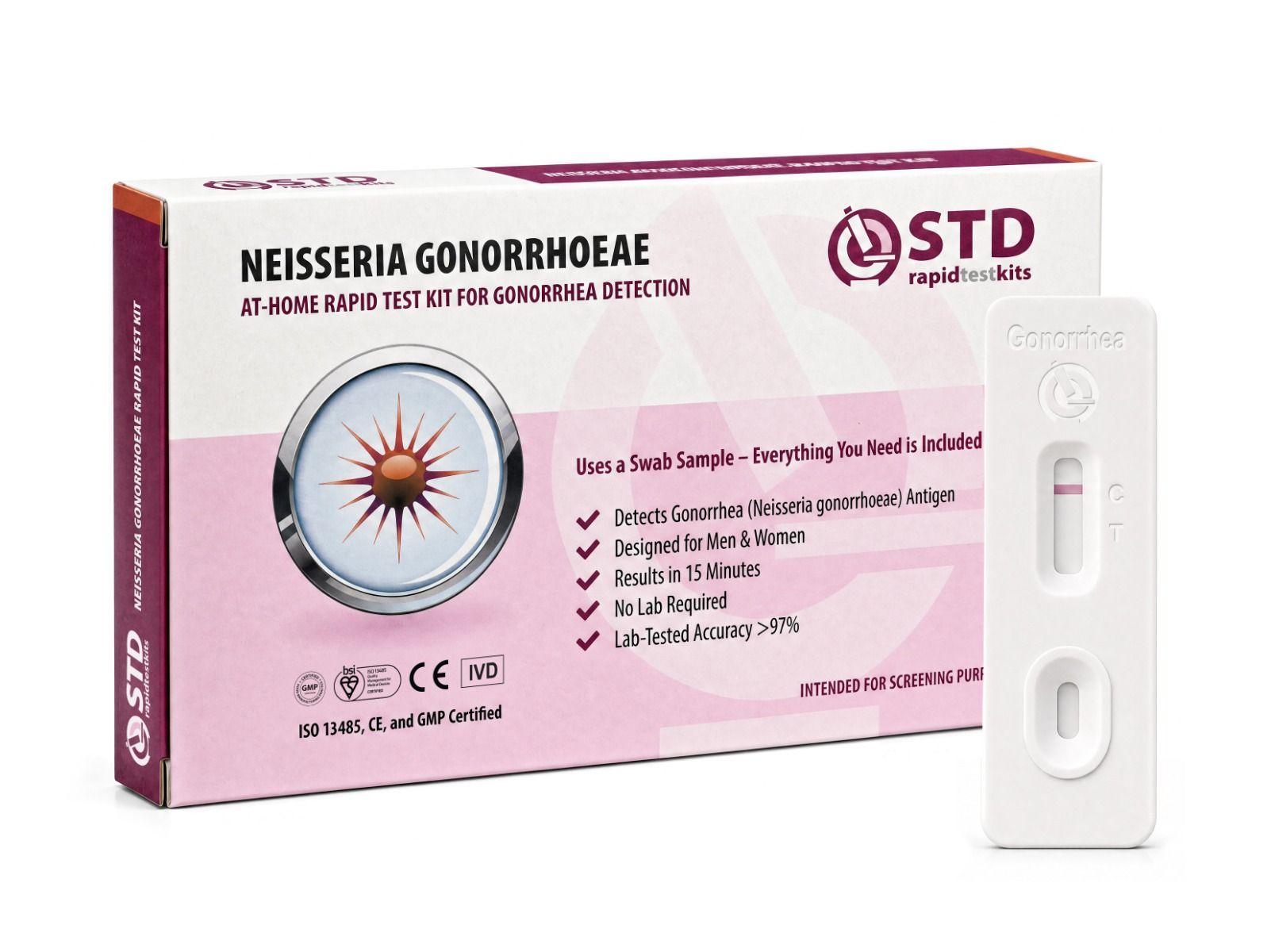
For a first check with no symptoms after a genital exposure, an at-home rapid test is a reasonable, private starting point. This article is published by stdrapidtestkits.com, which sells at-home STI test kits. Our at-home gonorrhea test is a lateral-flow swab test intended for an endocervical or urethral swab according to the manufacturer's instructions. The manufacturer's insert reports sensitivity of 91.6% and specificity of 96.1% on clinician-collected female cervical swabs, and 89.3% and 96.5% on clinician-collected male urethral swabs, both measured against culture. The manufacturer publishes no figure for self-collected swabs or results read at home. Our catalog suggests testing from about 1 to 2 weeks after exposure and retesting at 2 weeks, timing borrowed from UK public-health guidance (BASHH, 2025) written for lab NAATs; no study has checked that window for this antigen test.
It is a preliminary screen. A positive needs confirmation by a clinician, and that clinic visit is also where a sample can be sent for NAAT or culture before treatment. A negative doesn't rule infection out, particularly if you test early. How likely a positive is to be real depends on how common gonorrhea is among people like you, so it's more reliable after a known exposure than as a random check. If both chlamydia and gonorrhea are a concern, a 2-in-1 chlamydia and gonorrhea swab kit covers the pair that CDC already treats together.
A home kit is the wrong tool in several situations. It can't tell you which antibiotic will work, so it plays no part in a suspected treatment failure. It doesn't sample the throat or rectum, and we don't offer throat or rectal swabs, so after oral or anal sex a clinic test is the one that answers the question. It isn't a test of cure after treatment. And if you have symptoms, a partner has been diagnosed with gonorrhea, or you're pregnant, see a clinician directly. For a fuller look at the resistance angle on testing, see drug-resistant gonorrhea: the STD antibiotics can't treat.
Treated, worried, or not sure: where to go next
Most people reading this fall into one of a few situations. Someone treated weeks ago who still has a discharge needs a different next step from someone who had a condom break last weekend and feels fine. The guide below sorts the common cases. If more than one applies, follow the first one that fits.
What should I do next about gonorrhea?
Were you treated for gonorrhea and still have symptoms more than a few days later, or a positive test 7 or more days after treatment?
Yes: Contact the clinic that treated you now rather than waiting for the 3-month retest. Ask whether a culture is needed to check which antibiotics work, avoid sex until you're cleared, and don't take leftover or online antibiotics.
Was your gonorrhea infection in the throat?
Yes: Return for the test of cure 7 to 14 days after treatment that CDC advises for throat infections. Home swab kits don't sample the throat.
Do you have symptoms now, are you pregnant, or has a partner been diagnosed with gonorrhea?
Yes: See a clinician for testing and treatment now. A home screen isn't the right tool in these situations.
No symptoms, no diagnosed partner, not pregnant, and 1 to 2 weeks or more since a genital exposure?
Yes: A home rapid swab is a reasonable private first check. Confirm any positive with a clinician. A negative doesn't rule infection out, particularly if you tested early; if you tested before 2 weeks, retest at 2 weeks. Use a clinic test after oral or anal sex.
No: Testing now may be too early; a home swab fits from about 1 to 2 weeks after exposure. If a partner has been diagnosed with gonorrhea, you're pregnant, or symptoms start, see a clinician now instead of waiting.
General guidance only. A clinician can advise on your specific situation, and symptoms always justify a clinic visit.
FAQs
- Is super gonorrhea a different disease?
- No. It's the same bacterium, spread the same way, with high-level resistance to ceftriaxone. WHO uses the term for extensively drug-resistant strains. Testing and prevention are the same; what changes is that a clinic needs culture results to choose a drug that works.
- Can I take antibiotics I already have at home?
- Don't. Leftover pills are unlikely to be the right drug or dose: in the US, a ceftriaxone injection is the only first-line treatment CDC recommends. Self-treating also skips the follow-up that shows whether the infection cleared.
- Is there a gonorrhea vaccine?
- No vaccine is licensed specifically for gonorrhea, according to WHO. In the UK, the NHS says the MenB vaccine can give some protection and offers it to some men who have sex with men at higher risk. Condoms, regular testing if you have new or multiple partners, and making sure partners are treated remain the main protection.
- If I've had gonorrhea once, can I catch it again?
- Yes. Treatment clears the current infection but doesn't make you immune. That's why CDC advises a retest about three months after treatment, even when every partner was treated.
This article summarizes current guidance from the U.S. Centers for Disease Control and Prevention (CDC), the NHS, the World Health Organization (WHO) and the U.S. Food and Drug Administration (FDA). Each specific figure or recommendation links to the page that states it, and every page used is listed under Sources with what it supports. It is general health information written by our editorial staff, not a diagnosis or a treatment plan; how we choose topics and use sources is described in our editorial policy.
- U.S. Centers for Disease Control and Prevention. Gonococcal Infections Among Adolescents and Adults, STI Treatment Guidelines (last reviewed September 2022). Ceftriaxone 500 mg / 1 g dosing, doxycycline co-treatment, gentamicin plus azithromycin and cefixime alternatives, cefixime throat cure rate, 7 to 14 day throat test of cure, 3-month retest, and the treatment-failure protocol including the 24-hour report.
- U.S. Centers for Disease Control and Prevention. Drug-Resistant Gonorrhea (February 2024). History of resistance including the 2007 fluoroquinolone withdrawal, cephalosporins as the last recommended class, and no verified US cephalosporin treatment failures reported.
- U.S. Centers for Disease Control and Prevention. About Gonorrhea (January 2025). How gonorrhea spreads, that most women have no symptoms, complications including PID, infertility and spread to blood or joints, and the seven-day wait before sex.
- NHS. Gonorrhoea (last reviewed December 2024). Symptom list, symptoms usually starting around 2 weeks after infection, and single-dose antibiotic treatment in the UK.
- World Health Organization. Multi-drug resistant gonorrhoea fact sheet (October 2025). 82.4 million new cases in 2020, ceftriaxone treatment failures and resistant strains by country, nearly all confirmed ceftriaxone failures being throat infections, the term super gonorrhoea, and no licensed vaccine.
- U.S. Food and Drug Administration. FDA Approves Two Oral Therapies to Treat Gonorrhea (December 12, 2025). Approval, age and weight eligibility, urogenital-only indication and trial cure rates for Nuzolvence (zoliflodacin) and Blujepa (gepotidacin).
- U.S. Centers for Disease Control and Prevention. Clinical Care of Gonorrhea (July 2024). A single 500 mg intramuscular dose of ceftriaxone as the only CDC-recommended treatment for urogenital, anorectal and pharyngeal gonorrhea; no mention of the December 2025 oral approvals.