Published: September 2025 | Last updated: May 2026 | Editorial review and quality control: Martina N.
The phrase “full STD panel” sounds like it covers every sexually transmitted infection. In most clinical settings, it doesn’t. Routine screening usually tests for chlamydia, gonorrhea, syphilis, and HIV. Herpes and HPV are often left out of asymptomatic screening unless you specifically request them, and hepatitis B and C depend on your age and exposure risk.
That gap between what “full” implies and what actually gets ordered is where most of the late-night confusion starts. If your results came back negative and something still feels unresolved, the issue might be which tests were run, not whether you missed anything. This guide walks through exactly what a standard panel covers, what it leaves out, and how to ask for the rest.
Key Takeaways
- A standard "full" STD panel usually covers four infections: chlamydia, gonorrhea, syphilis, and HIV. Herpes blood testing and HPV screening require a specific request in most asymptomatic adults.
- Every STD test has a window period (the time between exposure and reliable detection), so a negative result taken too early is a snapshot, not a final answer.
This Is Where the Confusion Starts
The phrase “full STD panel” gets used as shorthand at clinics, urgent care visits, and at-home testing platforms. It carries the weight of completeness. The clinical reality is narrower. In the United States, routine screening follows recommendations from the Centers for Disease Control and Prevention and the U.S. Preventive Services Task Force, which prioritize the infections that are most common, most consequential if missed, and most responsive to early treatment (CDC STI public health information).
That means routine screening leans toward bacterial STIs and HIV. It does not automatically include every sexually transmitted infection that exists. Whether a provider runs additional tests depends on your symptoms, exposure history, sexual behavior, and age. The gap is rarely about clinicians hiding something; it reflects how guidelines weigh prevalence, test accuracy, and whether identifying the infection changes treatment.
U.S. screening recommendations from the CDC and USPSTF prioritize infections that meet three criteria at once: common in the general or higher-risk population, consequential if missed, and responsive to early treatment. That logic is why chlamydia, gonorrhea, syphilis, and HIV anchor most panels while other STIs are added by request or by risk profile.
What's Typically Included in a Standard STD Panel?
When most clinics describe a full or standard panel, they mean a combination of urine testing and blood work designed to detect the most common and treatable infections. Public health agencies prioritize these because they are widespread, often asymptomatic, and have well-defined treatment paths.
The exact list varies slightly by provider, location, and patient risk factors. Below is the core of what nearly every standard panel covers.
| Infection | Common Test Type | Sample Used | Why It's Routinely Included |
|---|---|---|---|
| Chlamydia | NAAT (PCR) | Urine or swab | Very common, often asymptomatic, easily treated with antibiotics |
| Gonorrhea | NAAT (PCR) | Urine or swab | Common, can cause infertility and pelvic complications if untreated |
| Syphilis | Blood antibody test (RPR, treponemal) | Blood draw | Resurging in the U.S.; serious long-term effects if undetected |
| HIV | Antigen/antibody combo (4th-generation) | Blood draw or oral fluid | Early detection enables therapy that reaches undetectable viral load |
What These Four Tests Cover (And What They Don't)
These four infections form the backbone of most routine screening panels. If a provider told you that you had a “full panel,” there is a strong chance these were the four tests ordered. Now look at the list and notice the names that are missing.
Does a “full” STD panel cover herpes and HPV?
Usually not. Routine panels in the U.S. cover chlamydia, gonorrhea, syphilis, and HIV; hepatitis B and C are added based on risk. Herpes blood testing is generally only run when symptoms or a known exposure are present, and HPV is screened only as part of cervical cancer screening for women in specific age groups. To include herpes or HPV, you typically need to ask.
What's Often Left Out (Unless You Ask)
This is where assumptions and reality diverge. Many people walk away from a “full panel” assuming herpes and HPV were covered. In most asymptomatic adults, they were not.
Herpes testing is complicated because blood tests detect antibodies, not active sores. Type-specific antibody testing can confirm past infection with HSV-1 or HSV-2, but it cannot tell you when you were infected or from whom. In people without symptoms or a known exposure, false positives can outnumber true positives, which is why the CDC STD Treatment Guidelines do not recommend routine herpes screening of asymptomatic adults (CDC genital herpes overview).
HPV is even more nuanced. There is no FDA-approved general screening test for HPV in men without symptoms. For women, HPV testing is typically performed during cervical cancer screening, not as part of a standard STD blood panel (CDC HPV basics). When someone says “I tested negative for everything,” HPV status is almost certainly not included unless cervical screening was specifically performed.
Hepatitis is conditional. Hepatitis B or hepatitis C may be added depending on age, vaccination history, and exposure risk, but neither is universally tested as part of every panel.
| Infection | Usually Included? | Why It May Be Excluded |
|---|---|---|
| Herpes (HSV-1 & HSV-2) antibody | No | High false-positive risk in low-prevalence groups; many people are asymptomatic |
| HPV | No for men; only with cervical screening for women | No FDA-approved blood test; cervical screening guided by age and prior results |
| Hepatitis B | Sometimes | Often based on vaccination history and exposure risk |
| Hepatitis C | Sometimes | Now recommended at least once for most adults but not in every panel |
| Trichomoniasis | Not always | More commonly screened in symptomatic women or higher-risk populations |
Why Herpes Isn't Automatically Included (And Why That Feels Personal)
Herpes carries more emotional weight than almost any other sexually transmitted infection. The stigma is heavy, the jokes are tired, and the fear is loud. So when someone learns their “full panel” did not include herpes, it can feel like something important was hidden from them.
The clinical reason is more practical than personal. Blood tests for herpes look for antibodies, which means they detect whether your immune system has encountered HSV-1 or HSV-2 at some point. They cannot pinpoint timing, source, or whether the virus is currently active. In populations with low prevalence, these tests produce a non-trivial rate of false positives, which can lead to unnecessary anxiety, treatment, and disclosure decisions.
For these reasons, national guidelines recommend herpes testing when someone has symptoms, a known exposure to a partner with HSV, or specific risk factors. It is not part of routine asymptomatic screening. If herpes is your main concern, you can ask for type-specific antibody testing anyway. You have every right to request it, and your provider should walk you through what the results would and would not tell you.
You can ask for type-specific HSV-1/HSV-2 antibody testing at any appointment. Ask your provider to walk you through what a positive and a negative result would each mean for your situation before you decide.
HPV: Almost Everyone Encounters It, Almost No One Gets a "Test" for It
HPV is among the most common sexually transmitted infections worldwide, and most sexually active adults will encounter it at some point. Yet it almost never appears on a “full STD panel.” That disconnect alone creates enormous confusion.
For women, HPV testing is usually tied to cervical cancer screening and performed during or alongside a Pap test, depending on age and current screening guidelines. It is not detected through routine blood testing. For men, there is no FDA-approved general screening test for HPV unless visible symptoms such as genital warts are present, which a clinician can examine directly (WHO STI fact sheet).
This is not secrecy. It reflects a limitation of available testing methods combined with how clinical guidelines weigh accuracy against actionability. Routine HPV screening of men without symptoms would generate results that providers could not act on meaningfully, since most HPV infections clear on their own.
Gender Differences in STD Screening
Screening recommendations differ depending on anatomy, sexual behavior, and age. Two people can both walk in asking for a “full panel” and leave with slightly different tests on their order sheet.
Consider a heterosexual man with no symptoms who requests screening. He is likely to be tested for chlamydia, gonorrhea, syphilis, and HIV. He will not typically be screened for HPV unless visible lesions are present, and he will not automatically receive herpes blood testing.
Now consider a woman in her early thirties. She may receive urine testing for chlamydia and gonorrhea, blood testing for syphilis and HIV, and HPV testing if she is due for cervical screening. Her “full panel” might technically include more information, but only because cervical cancer prevention protocols overlap with STI screening, not because the STI panel itself is broader.
Knowing which tests differ lets you fill the gaps before you leave the clinic.
Typical male vs. female “full panel”
- Both panels usually cover chlamydia, gonorrhea, syphilis, and HIV. Hepatitis B and C are added for either gender based on age and exposure risk.
- HPV screening is the main routine difference: included for women through cervical cancer screening per age guidelines, but there is no FDA-approved general HPV screen for asymptomatic men. Herpes antibody testing is not routine for either.
Clinic Panel vs Comprehensive Testing: What's the Difference?
A standard clinic panel screens for infections that are common and have a significant public health impact. Comprehensive testing goes further, adding infections that are not automatically screened but may be relevant based on your exposure history, your peace of mind, or both.
Think of it like a standard car inspection versus a full diagnostic scan because something specific caught your attention. Both have a place; they serve different purposes.
| Category | Routine STD Panel | Comprehensive Testing |
|---|---|---|
| Core infections | Chlamydia, gonorrhea, syphilis, HIV | All common infections plus any additions you request |
| Herpes testing | Usually excluded unless symptomatic | Available on request, with counseling about interpretation |
| HPV screening | Only during cervical screening for women | Included where indicated and available |
| Hepatitis B / C | Based on age and risk factors | Added proactively if you want it |
| Customization | Limited | High, based on exposure history and concern |
How to Make Comprehensive Actually Comprehensive
If you want broader coverage, you can ask for it. Saying “Can we also test for herpes and hepatitis?” is not distrust; it is informed consent. Providers are trained to respond to specific exposure histories, and most appreciate when patients share what they are worried about so the ordered tests match the actual concern.
Timing Matters: The Window Period No One Talks About
A negative result feels like a verdict. Biology often complicates that feeling. Every STD test has a window period, the interval between exposure and when a test can reliably detect infection. Testing too soon can produce a negative that is accurate at the moment but does not reflect what is happening biologically.
Bacteria and viruses need time to replicate to detectable levels, and your immune system needs time to produce antibodies. Testing in the first week after exposure can create false reassurance for several infections. Aligning your test date with each infection’s window period is the difference between “I got tested” and “I got tested at a point where the test could actually find what it was looking for.”
| Infection | Earliest Reliable Detection | Recommended Testing Time | Notes |
|---|---|---|---|
| Chlamydia | About 1 to 2 weeks | 2 weeks after exposure | Often asymptomatic; retest if symptoms appear |
| Gonorrhea | About 1 to 2 weeks | 2 weeks after exposure | May cause discharge or burning, but not always |
| Syphilis | About 3 weeks | 6 weeks after exposure, retest at 90 days if exposure ongoing | Early sores may be painless and missed |
| HIV (4th-gen Ag/Ab) | About 2 to 4 weeks | 45 days for most antigen/antibody tests; 90 days for older antibody-only tests | Follow CDC HIV testing guidance for confirmatory steps |
| Herpes (type-specific antibody) | About 4 to 6 weeks | 12 to 16 weeks after exposure | Swab/PCR of an active lesion is more accurate when sores are present |
| Hepatitis B (HBsAg) | About 4 weeks | 6 weeks to 6 months after exposure | Vaccination history affects interpretation |
| Hepatitis C antibody | About 8 to 11 weeks | 12 weeks after exposure | Recommended at least once for most adults |
What the Different Sample Types Look Like
One reason “full panel” means slightly different things in different places is that STD testing uses three main sample types, each with strengths for specific infections. A panel built around blood tests will miss things a swab catches, and vice versa.
At-Home Panels: More Control Over What Gets Tested
At-home rapid testing has changed how people approach screening. Instead of accepting whatever panel a clinic runs by default, you can choose a specific kit based on what you want covered.
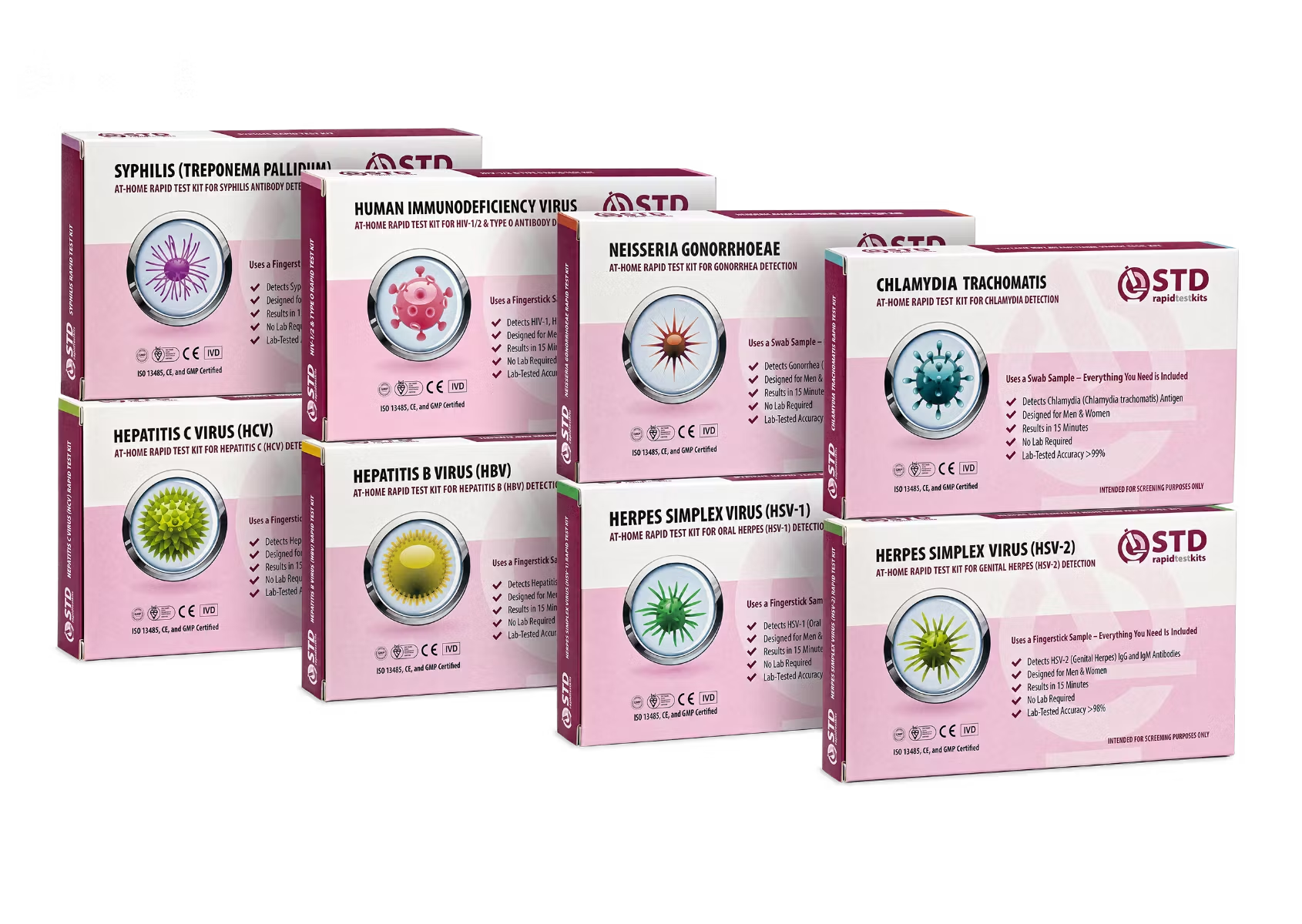
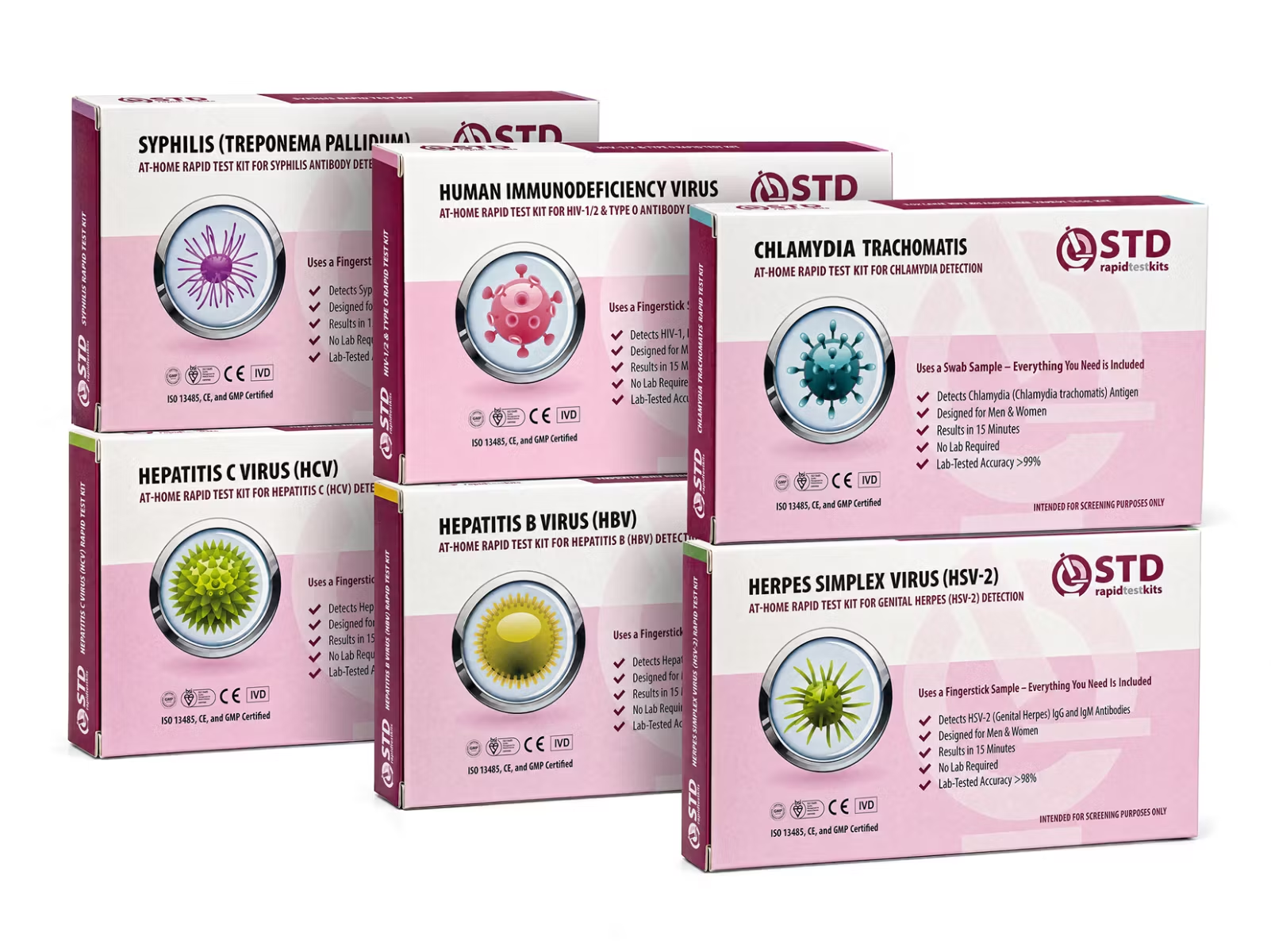
Many at-home rapid combo kits include the core four infections. Some expand to cover hepatitis B and C or add herpes antibody testing. The key trade-off is technology: home rapid tests are lateral-flow immunoassays, which provide a screening result in about 15 minutes at home. Laboratory testing uses NAAT (nucleic acid amplification) for higher analytical sensitivity, especially in early or low-level infections. The two are complementary; a positive home result is worth confirming with a lab test, and lab testing remains the diagnostic standard for confirmation.
If privacy, customization, or convenience matter to you, choosing a kit based on your real exposure beats relying on a generic definition of “full” (NHS STI testing overview).
How to Ask for the Right Tests (Without Feeling Awkward)
Clarity beats politeness when the right tests depend on your specific exposure. You can say: “I’d like a full STD panel, and please include herpes antibody testing.” Or: “I had oral sex, so I’d like throat swabs added.” Or simply: “Can you tell me exactly which infections this panel covers?”
That kind of specificity changes the appointment. It moves you from passive recipient to informed participant. Providers are trained to respond to specific exposure histories, and sharing whether you had vaginal, oral, or anal sex, whether protection was used, and whether a partner disclosed an infection gives them what they need to order the right tests. The conversation can feel vulnerable. It is also medically relevant.
One detail many people overlook: standard panels do not always include extragenital testing. If you had oral or anal sex, throat or rectal swabs may be needed for complete chlamydia and gonorrhea screening at those sites. A urine sample alone will miss infections there.
Our at-home kits are rapid lateral-flow immunoassays using self-collected samples (vaginal or penile swab, fingerstick blood). The HPV and trichomoniasis swab kits are validated for vaginal self-swab only, so they fit women looking to test at home; men who need HPV or trich evaluation should see a clinic where appropriate exams or PCR-based testing can be performed. We do not sell throat or rectal swab kits; if oral or anal exposure is part of your concern, a clinic visit for site-specific NAAT swabs is the right next step.
If You Test Positive: What Happens Next
A positive result lands differently for everyone. Some people cry; others go numb; some scroll their contacts wondering who to call first. The emotional response is often louder than the medical one, which is worth knowing in advance so you can pace yourself.
Most common STIs are manageable. Chlamydia, gonorrhea, and syphilis are bacterial and curable with the right antibiotics. HIV is a chronic but manageable condition; modern antiretroviral therapy is effective enough that people on stable treatment reach undetectable viral loads and cannot sexually transmit the virus (CDC HIV resource hub). Herpes is common and manageable with antiviral medication, and most HPV infections clear on their own; routine cervical screening catches the small percentage that progresses.
Next steps usually involve confirmatory testing if the initial result was a rapid screen, a treatment plan, and partner notification. Many clinics offer partner-notification tools that let you inform contacts anonymously. If you used a home test and want discreet follow-up testing, match the kit type to what specifically needs retesting.
1. Confirm the result with a laboratory test (NAAT, RPR plus treponemal confirmation, or HIV antigen/antibody plus viral load, depending on the infection). 2. Make a treatment plan with a clinician, including any partner-management considerations. 3. Notify recent partners directly, or use an anonymous notification service offered by many clinics and public-health departments.
What "Full" Really Means (And How to Make Yours Truly Complete)
A “full STD panel” is industry shorthand for a standardized group of high-priority tests covering chlamydia, gonorrhea, syphilis, and HIV, with hepatitis added based on risk. Herpes antibody testing and HPV screening sit outside that default; you can ask for them, and you should know to ask.
The gap between what readers expect and what providers run is where anxiety grows. Closing that gap comes down to three habits: knowing what is on the panel before you agree to it, aligning your test timing with each infection’s window period, and being specific with your provider about what kind of exposure occurred. The clinic will run the default; you bring the specific question.
Frequently Asked Questions
- Does a full STD panel actually include herpes?
- Usually not. Most routine panels skip herpes blood testing unless you have symptoms or specifically ask for it. The reason is partly clinical: herpes antibody tests can produce confusing results in low-prevalence populations, with false positives that lead to unnecessary anxiety. If herpes exposure is your main concern, you can request type-specific antibody testing, and your provider can walk you through how to interpret the result.
- If my results were negative, can I relax completely?
- It depends on timing. If you tested in the first one to two weeks after exposure for something like syphilis, HIV, or hepatitis C, the test may have been too early to detect infection reliably. A negative at the right window period is reassuring. A negative inside the window period is a snapshot. If anxiety persists, a strategic retest at the recommended window for each infection usually settles it.
- Why don't doctors just test for everything automatically?
- Because more testing is not always better. Some screening tests, like herpes antibody testing in low-risk people, generate false positives faster than true positives, which causes harm without improving outcomes. Doctors follow guidelines built around what testing changes for the patient. That said, “routine” does not mean “complete for your situation,” which is why asking specific questions matters.
- Is HPV part of a standard STD panel?
- Not in a blood panel. For women, HPV screening happens through cervical sampling during a Pap test, based on age guidelines. For men, there is no FDA-approved general screening test unless visible symptoms such as genital warts are present. Most people are surprised by this the first time they hear it.
- I had oral or anal sex. Does that change what I should test for?
- Yes. Chlamydia and gonorrhea can establish themselves in the throat or rectum without symptoms, and a urine sample will not catch them. If you had oral or anal exposure, throat or rectal swabs are needed for complete screening at those sites. Tell your provider what kind of contact occurred so the right swabs are ordered.
- Are at-home STD tests as reliable as clinic testing?
- It depends on what you compare. At-home rapid tests are lateral-flow immunoassays that screen quickly with high specificity. Lab NAAT testing has higher analytical sensitivity, especially early in infection. Used at the right window period, an at-home test is a strong screening tool; any positive is worth confirming with a follow-up lab test, and a negative inside the window period should be repeated.
- How often should I get tested if I'm sexually active?
- Annual screening is the baseline for sexually active adults. Every three to six months makes more sense for people with new or multiple partners. Pregnancy, a new diagnosis in a partner, and shifts in sexual behavior are all reasons to test sooner. Routine retesting after treatment is also recommended for chlamydia and gonorrhea to catch reinfection.
- What is the best way to make sure I'm tested for everything that matters?
- Match your testing to your exposure. Ask the provider what is included before they order anything, then add what is missing for your situation (herpes, hepatitis, throat or rectal swabs). Time the tests against each infection’s window period. Done that way, “full” means something specific to you instead of a generic phrase.
How we sourced this article: This guide summarizes current screening recommendations from leading public health authorities, including the U.S. Centers for Disease Control and Prevention, the World Health Organization, and the U.K. National Health Service, alongside published guidance on STI window periods and at-home testing technology. It is written by a non-clinician medical writer and reviewed for clinical accuracy by a licensed physician (see the author and reviewer bios below). It is general information, not personalized medical advice; for symptoms or specific exposure questions, see a clinician.
- U.S. Centers for Disease Control and Prevention. STI public health information hub covering routine screening recommendations, prevalence data, and clinical guidelines.
- U.S. Centers for Disease Control and Prevention. HIV resource hub including testing window-period guidance and treatment-as-prevention information.
- U.S. Centers for Disease Control and Prevention. Genital herpes information pages including testing guidance and recommendations against routine asymptomatic screening.
- U.S. Centers for Disease Control and Prevention. HPV information hub covering infection biology, vaccination guidance, and cervical screening practice.
- World Health Organization. Sexually transmitted infections fact sheet covering global prevalence, transmission, and screening recommendations.
- U.K. National Health Service. Sexually transmitted infections information for the general public, including testing, symptoms, and where to seek care.
