
Published: November 2025 | Last updated: May 2026 | Editorial review and quality control: Martina N.
This guide is for anyone trying to make a careful, deliberate decision about their health after a sexual assault. Whether the experience was last night or last year, whether you have reported it or not, whether you saw a doctor at the time or not, the question of testing for sexually transmitted infections sits near the top of what survivors think about. The short answer is that yes, testing is worth doing, even when the risk feels uncertain and even when the idea of a clinic visit feels impossible right now. The longer answer covers timing, which infections to screen for, where you can test, and how to manage the emotional weight at your own pace.
You did not cause what happened. The information below is here to give you choices, not to add weight to an already heavy day. If you want to skip ahead, scroll to What to do in the first 72 hours for the most time-sensitive steps, or jump to the resources callout near the end for hotlines and immediate help.
This article was written for the United States and reflects current CDC guidance. If you are reading from another country, the medical principles are the same, although specific clinic names and helplines will differ. This article is published by stdrapidtestkits.com, which sells at-home STI testing kits. We recommend products based on fit for the reader's specific concern, not commercial benefit.
Key Takeaways
- Time-sensitive: HIV post-exposure prophylaxis (PEP) only works if started within 72 hours of the assault. If you are inside that window, an emergency room or sexual assault clinic should be the first call.
- A negative test in the first few days is not a final answer. Window periods vary by infection, so the standard pattern is a baseline test now and follow-up tests at 2 weeks and 6 to 12 weeks.
Why testing matters even when the risk feels uncertain
Sexual assault carries a real but variable risk of sexually transmitted infection (STI), and most clinical guidance treats post-assault testing as part of standard care rather than something reserved for high-risk cases. The CDC's sexual assault treatment guidelines list chlamydia, gonorrhea, trichomoniasis, syphilis, HIV, hepatitis B, and HPV as the infections most commonly considered, depending on the type of contact involved.
Two facts shape why testing is recommended even when the math feels uncertain. The first is that bacterial STIs like chlamydia and gonorrhea are the most likely to be transmitted in a single assault and the easiest to cure with antibiotics if caught early. The second is that a small number of viral exposures, particularly HIV, have a narrow prevention window where post-exposure medication can dramatically reduce risk. Testing converts uncertainty into a specific, actionable answer, and a specific answer is much easier to act on than an open question.
Most STIs do not produce visible symptoms in their early stages, so deciding whether to test based on how you feel can leave real infections undetected. According to the World Health Organization, the majority of STIs are asymptomatic. Symptomless does not mean harmless: untreated chlamydia and gonorrhea are leading preventable causes of pelvic inflammatory disease and tubal infertility in women.
Should you get tested for STDs after a sexual assault?
Yes. The CDC's sexual assault treatment guidelines recommend a baseline screen as soon as you are able, with follow-up testing at 2 weeks and again at 6 to 12 weeks because some infections take time to show on a test. If the assault happened in the last 72 hours, contact an emergency room or sexual assault clinic about HIV post-exposure prophylaxis (PEP), a 28-day course of antiretroviral medication that significantly reduces HIV transmission risk if started inside that window. When a clinic visit feels overwhelming, FDA-cleared at-home rapid tests cover most of the same infections privately.
HIV post-exposure prophylaxis (PEP) is a 28-day course of antiretroviral medication that significantly reduces the risk of HIV transmission if started within 72 hours of exposure. The earlier it begins, the better it works. Call a hospital emergency department, a sexual assault clinic, or the RAINN hotline at 1-800-656-HOPE for guidance on accessing PEP confidentially. Hepatitis B post-exposure vaccination and emergency contraception have similar time-sensitive windows.
What to do in the first 72 hours
The first three days after an assault are when the broadest set of medical options remains open to you, including HIV PEP, hepatitis B post-exposure vaccination, emergency contraception, and forensic evidence collection if you might want it later. None of these decisions need to happen all at once, and you have the right to consent to or decline any single part of the process.
If you choose to seek care during this window, the most reliable option is an emergency room with a Sexual Assault Nurse Examiner (SANE) on staff. SANE-trained nurses are specifically prepared to provide medical care without forcing reporting decisions, to collect evidence in a way that preserves the option to report later, and to coordinate STI testing alongside any forensic exam. The NHS guidance for the UK describes the same model under the name Sexual Assault Referral Centres.
If you decide to have a forensic exam, sometimes called a sexual assault evidence collection kit, the clinician (often a SANE) walks through each step with you and asks permission before each part. You can stop at any point. The exam typically includes a head-to-toe injury check, swabs from any sites of contact, collection of clothing if relevant, and bloodwork. A trained advocate from a local rape crisis center can sit with you through the entire process if you want one, and your hospital can call the local advocate line on your behalf.
You do not need to make a police report to receive medical care. In every U.S. state, hospitals are required to provide medical evaluation and STI prophylaxis after a sexual assault regardless of whether the patient chooses to involve law enforcement. If reporting feels uncertain or unsafe, evidence can usually be collected and stored for a defined period (often called a Jane Doe kit) so that the option remains available if you change your mind.
If a hospital visit is not possible right now, that does not close every door. PEP can be prescribed through urgent care, primary care, and many sexual health clinics. Telehealth services in some states will issue PEP prescriptions same day.
Time-sensitive actions in the first 72 hours
- HIV post-exposure prophylaxis (PEP): a 28-day antiretroviral course that significantly reduces transmission risk if started within 72 hours.
- Hepatitis B post-exposure vaccination: most effective when given within 24 hours of exposure, still useful for several days after.
- Emergency contraception: levonorgestrel works best within 72 hours; ulipristal acetate (a prescription option) remains effective up to 5 days.
- Forensic evidence collection: a SANE kit can be collected and stored even if you are not yet ready to decide about reporting.
How HIV post-exposure prophylaxis (PEP) actually works
HIV PEP is short for non-occupational post-exposure prophylaxis, often shortened further to nPEP. It is a 28-day course of antiretroviral medication that, when started promptly, sharply reduces the chance that an HIV exposure becomes an HIV infection. The medication keeps HIV from replicating while the immune system clears the small amount of virus that may have entered.
The timing is firm. The CDC recommends starting PEP as soon as possible after exposure and always within 72 hours. After 72 hours, the medication is no longer considered effective because the virus has had time to establish a stable infection. Within that 72-hour window every hour matters; PEP started at hour 6 works better than PEP started at hour 60.
The typical regimen in the United States is tenofovir disoproxil fumarate plus emtricitabine combined with either dolutegravir or raltegravir, taken daily for 28 days. Common side effects include nausea, fatigue, and headache, especially in the first week. These usually settle and rarely require stopping the course.
A few practical things worth knowing:
- PEP is different from PrEP. PEP is taken after a possible exposure; PrEP is taken on an ongoing basis before any exposure. If you have ongoing risk after your immediate situation has resolved, PrEP is a separate longer-term conversation with a clinician.
- Most insurance plans cover PEP. If you are uninsured, manufacturer assistance programs and many state programs can reduce or zero the cost. Hospitals are not allowed to turn you away for inability to pay in an emergency.
- PEP does not affect the timing of your follow-up HIV tests. You will still need testing at 4 to 6 weeks and at 3 months to confirm you remain HIV negative.
If you missed the 72-hour window, please do not skip the rest of the testing schedule. Modern HIV treatment is highly effective; people on antiretroviral therapy with undetectable viral loads cannot transmit HIV to partners.
Standard US regimen: tenofovir disoproxil fumarate plus emtricitabine, combined with dolutegravir or raltegravir. Course length: 28 days, taken daily. Start window: within 72 hours of exposure; the earlier the better. Follow-up: HIV testing at 4 to 6 weeks and again at 3 months to confirm you remain negative.
Which STIs are typically tested for after assault
The post-assault STI panel reflects what is actually transmissible through the kinds of contact that may have occurred. The exact tests offered depend on the assault details, but the core panel is consistent across CDC and WHO guidance.
Bacterial infections like chlamydia and gonorrhea are routinely tested at every site of potential exposure (genital, rectal, and pharyngeal where applicable) because each site has its own infection risk and a negative test at one site does not rule out the others. Viral and bloodborne infections like HIV, hepatitis B, and hepatitis C are tested through blood, with timing of follow-up tests dictated by their window periods. Syphilis is tested by blood as well. Trichomoniasis screening is more commonly offered to women but applies to anyone with vaginal exposure.
| Infection | Why it is tested | Sample type |
|---|---|---|
| Chlamydia | Most common STI transmitted in assault. Often without symptoms. Curable with antibiotics. | Swab or urine |
| Gonorrhea | Frequently co-transmitted with chlamydia. Can affect genital, rectal, or throat sites. | Swab or urine |
| Trichomoniasis | Common parasitic infection. Easily missed without testing. Curable with antibiotics. | Vaginal swab or urine |
| Syphilis | Can have a long asymptomatic period. Curable with penicillin if caught early. | Blood |
| HIV | Lower per-act transmission rate, but PEP within 72 hours and follow-up testing are time-sensitive. | Blood |
| Hepatitis B | Vaccine-preventable. Post-exposure prophylaxis available within 24 hours of exposure. | Blood |
| Hepatitis C | Lower transmission risk through sex but tested when blood-to-blood contact possible. | Blood |
| Herpes (HSV-1, HSV-2) | Tested if symptoms develop, or by blood antibody panel later. | Swab if lesions, or blood |
| HPV | Vaccination is still effective post-exposure for many strains. Cervical screening is the standard follow-up for women. | Cervical screening |
Window periods: when each test becomes reliable
Every STI has a window period, the gap between exposure and the point at which a test can reliably detect the infection. Testing inside that window can produce a negative result even when the infection is present and developing. Understanding these windows is the most important reason that one negative test is not the end of the screening process.
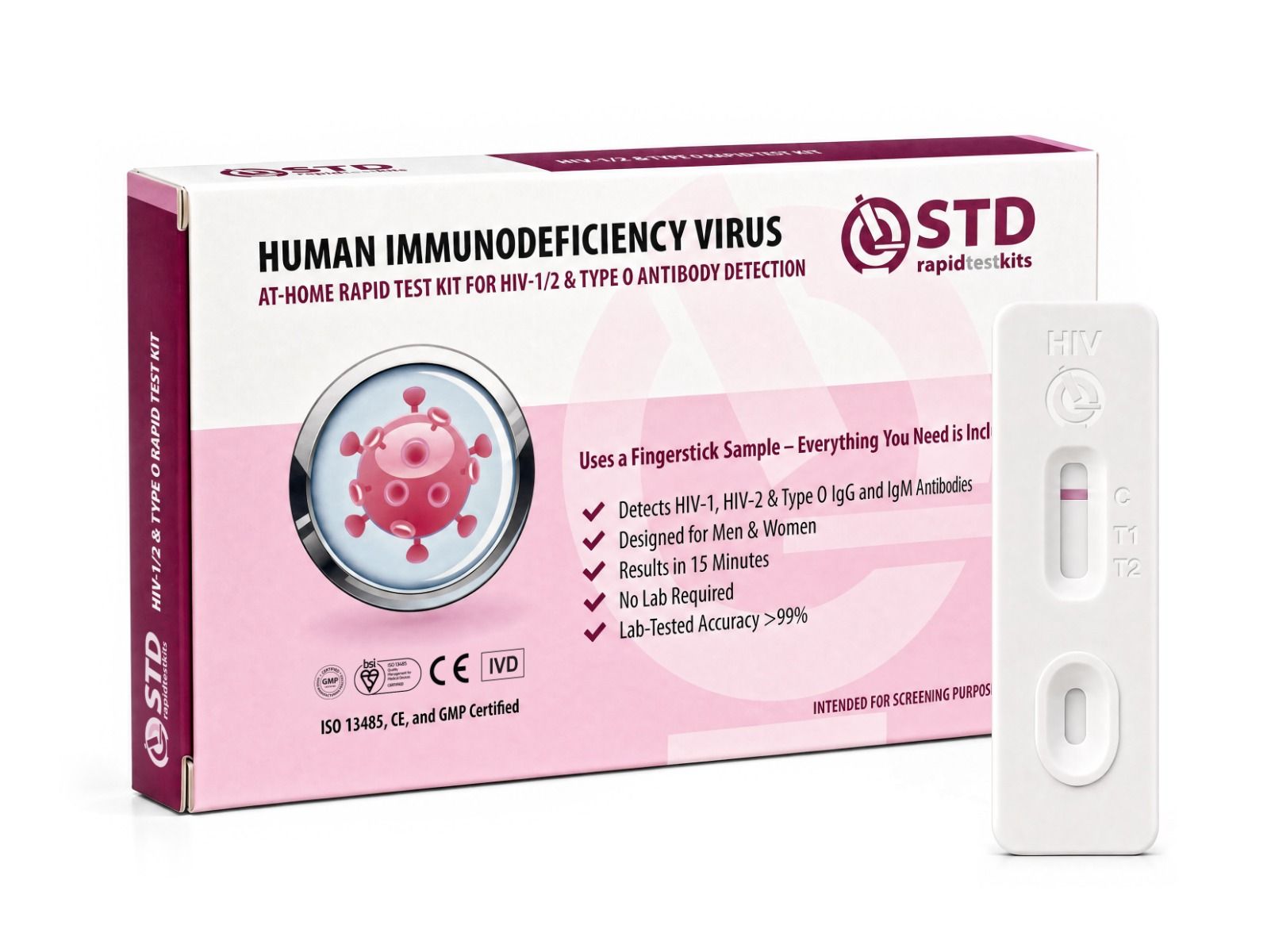
The window depends on what the test actually measures. Tests that detect the bacteria or virus directly (NAAT or PCR, which are laboratory technologies) tend to have shorter windows than tests that detect the body's antibody response. The widely used HIV fourth-generation antigen-antibody combination test, for example, can detect most infections by about 18 to 45 days after exposure, while older antibody-only tests may take up to 90 days. At-home rapid lateral-flow tests are screening tools that work best once the relevant window has closed; a positive home result is worth confirming with a lab test, while a negative result at the right time gives equivalent reassurance.
| Infection | Earliest reliable test | Recommended follow-up | Notes |
|---|---|---|---|
| Chlamydia / Gonorrhea | 1 to 2 weeks | Retest at 2 weeks if baseline was within first 5 days | At-home rapid swabs are most sensitive after the 2-week mark |
| Trichomoniasis | 1 to 2 weeks | Retest at 4 weeks if symptoms develop | Often asymptomatic in early stages |
| Syphilis | 3 to 6 weeks | Retest at 6 weeks and 3 months if initial test is negative | Antibody response builds slowly |
| HIV (4th-gen lab Ag/Ab) | 18 to 45 days | Retest at 6 weeks and 3 months | PEP within 72 hours can prevent infection |
| HIV (rapid antibody, including most home kits) | 23 to 90 days | Retest at 6 weeks and 3 months | Antibody-only tests may take longer than lab Ag/Ab combo |
| Hepatitis B | 3 to 6 weeks | Retest at 6 weeks and 6 months | Vaccine plus immune globulin can prevent if given early |
| Hepatitis C | 8 to 11 weeks (antibody) | Retest at 6 months | Curable with direct-acting antivirals |
| Herpes (HSV-2 antibody) | 12 to 16 weeks | Confirm at 16 weeks if initial result is negative | Earliest possible detection at 4 to 6 weeks; antibody response is not reliable until about 12 weeks. Symptom-based swab testing is faster if blisters are present. |
Where you can get tested
There are four reasonable paths to STI testing after assault, and the right one depends on how soon the assault happened, how comfortable you feel in clinical settings, and what services your area has.
Hospital emergency department or SANE clinic. The most comprehensive option, especially within the first 72 hours. Provides PEP, emergency contraception, evidence collection if requested, baseline STI testing, and connections to follow-up care. Care is available regardless of whether you make a police report.
Sexual health or family planning clinic. Planned Parenthood, county health departments, and community sexual health clinics offer confidential STI testing on a sliding fee scale. Many have specific protocols for survivors and can coordinate with mental health services. They are a strong option for follow-up testing in the weeks after an initial ER visit.
Primary care provider. If you have an established relationship with a doctor you trust, your primary care office can order the same panels a sexual health clinic would, often with insurance billing handled in a way that does not specify the reason for the visit.
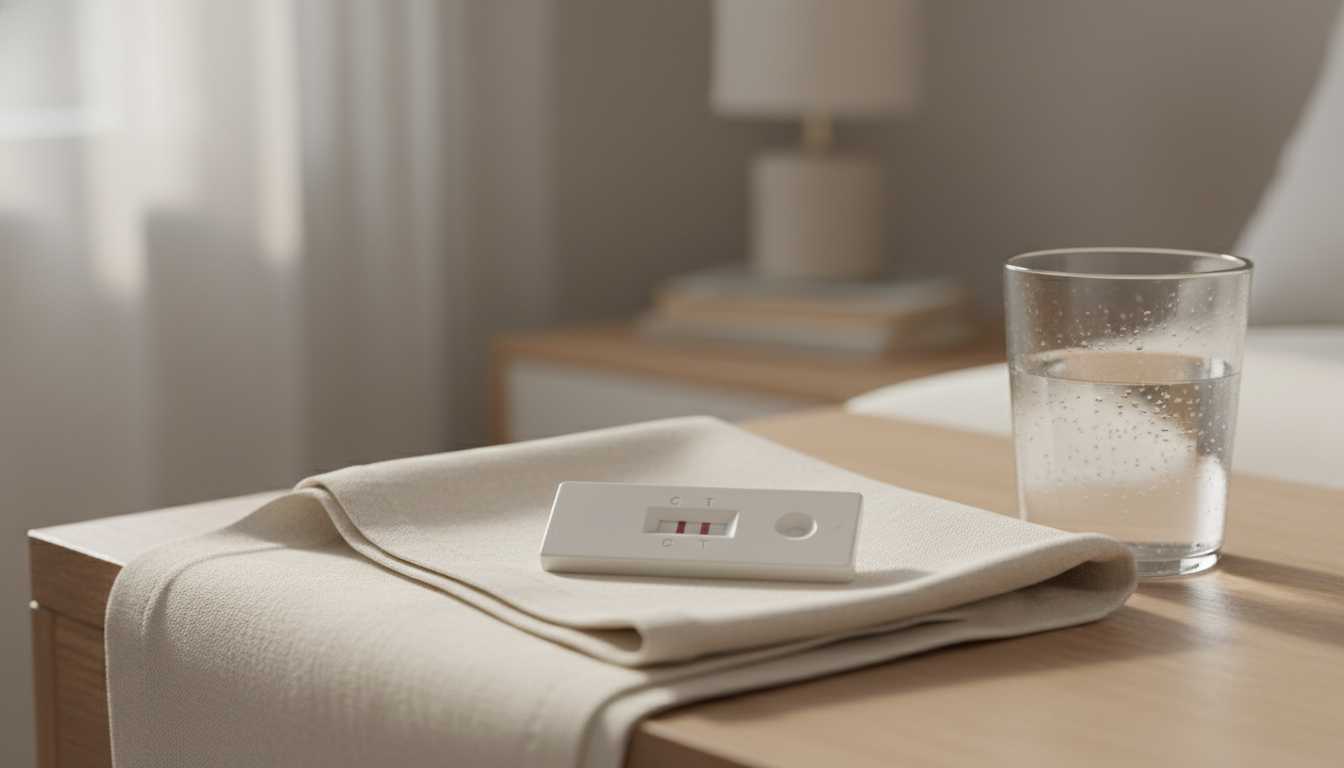
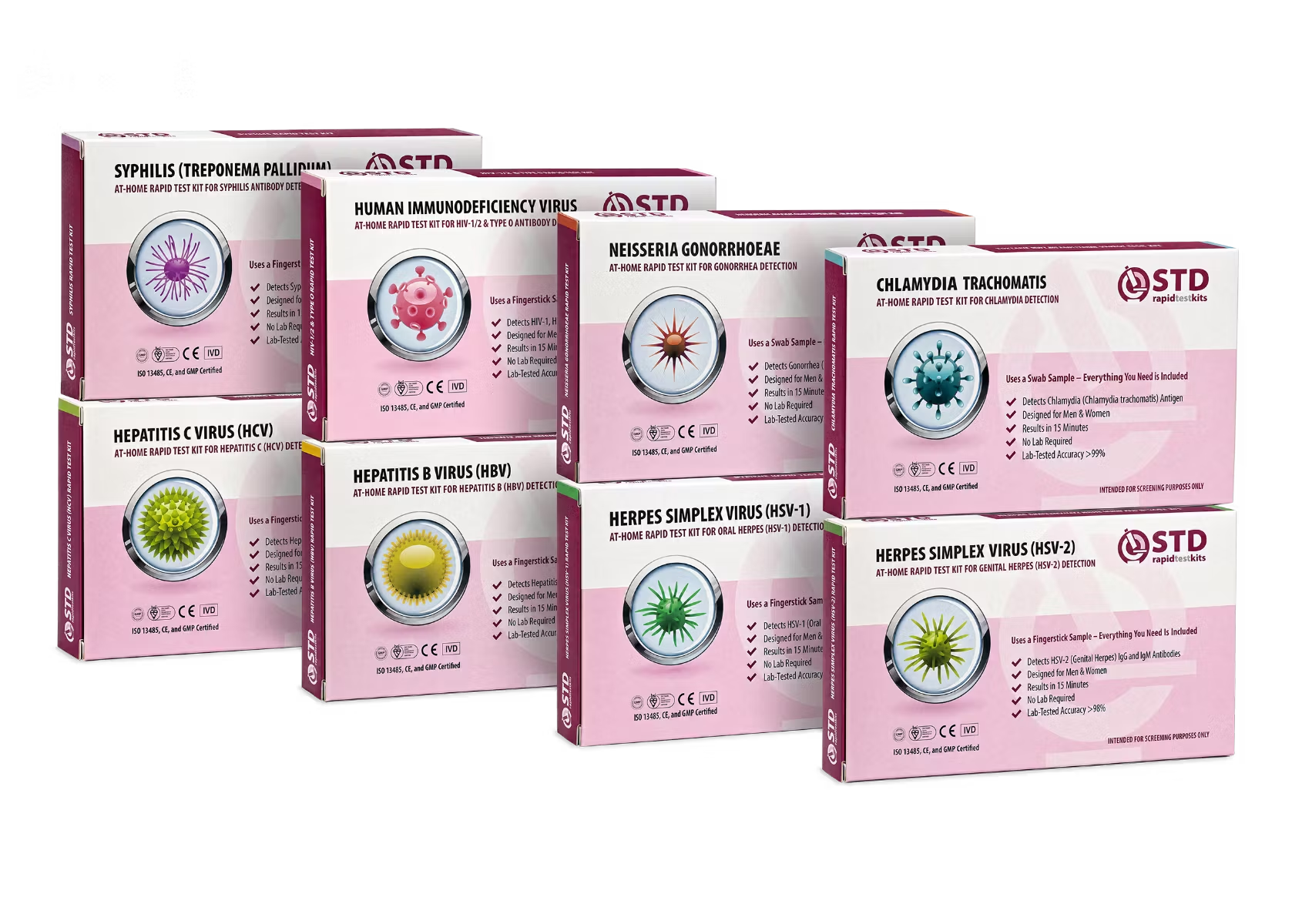
At-home rapid test kits. FDA-cleared rapid lateral-flow tests cover several of the most common post-assault concerns, including HIV, syphilis, hepatitis B, hepatitis C, chlamydia, gonorrhea, and herpes. They are useful for follow-up testing during the window-period weeks, for people who cannot reach a clinic, or for anyone whose nervous system is not ready for an in-person visit. A positive result on a home test should be confirmed at a clinic, but a negative result at the right time gives the same reassurance a clinic test would.
Privacy, consent, and confidential care
Privacy concerns are one of the most common reasons survivors delay or skip testing, and most of those concerns can be addressed with the right setting and the right questions. Federal HIPAA protections apply to all medical visits in the United States, and most states layer additional protections specifically for sexual health and sexual assault care.
Several practical privacy tools are worth knowing about. Anonymous HIV testing is available in many U.S. states through public health departments, where results are tied to a code rather than a name. Confidential billing options at clinics like Planned Parenthood and county health departments allow visits to be coded as general preventive care so that an explanation of benefits sent home does not specify STI testing. At-home kits are mailed in plain packaging without identifying labels, and the results are delivered directly to the person who took the test.
For minors, state laws vary on whether parental consent or notification is required for STI testing. Most states allow minors to consent to STI testing and treatment without parental involvement, but the specifics differ. Sexual assault crisis hotlines like RAINN can talk through specific state laws confidentially before any visit.
If documentation is something you might want later, even when reporting feels uncertain right now, ask the medical provider to note the visit in your chart in a way that preserves the option. SANE programs are specifically trained to handle this. Documentation does not require a police report, and a quiet medical record kept now can be useful months or years later.
Anonymous HIV testing: available in many U.S. states through public health departments. Results are tied to a code rather than your name.
Confidential billing at sexual health clinics: visits can often be coded as general preventive care so the explanation of benefits sent home does not specify STI testing.
At-home rapid kits: shipped in plain unbranded packaging, no identifying labels on the box, and the result is delivered only to the person who took the test.
If a test comes back positive
A positive test result is hard to read, especially after an assault. It also opens a clear, tractable path forward. Most STIs are either curable with a short course of medication or fully manageable with ongoing treatment, and early diagnosis is what makes those outcomes likely.
The treatment path depends on the specific infection. Chlamydia and gonorrhea are typically cleared with a short course of antibiotics, often a single intramuscular injection plus an oral course. The CDC updates these regimens periodically as resistance patterns shift, and current guidance is published in the CDC STI Treatment Guidelines. Trichomoniasis is curable with metronidazole or tinidazole. Syphilis is cured with penicillin in its early stages. Hepatitis C, once a chronic illness, is now curable in most patients with 8 to 12 weeks of direct-acting antivirals. Hepatitis B is preventable with vaccination and post-exposure immunoglobulin if caught early enough.
Herpes is not curable but is well managed with antiviral medication that suppresses outbreaks and reduces transmission risk. HIV is also not curable, but modern antiretroviral therapy reliably suppresses the virus to undetectable levels, at which point it cannot be transmitted sexually (the principle known as Undetectable equals Untransmittable, or U=U). A diagnosis of HIV today is a chronic, treatable condition with a near-normal life expectancy when treatment starts early.
If the positive result came from an at-home test, the next step is to confirm at a clinic and start treatment. If the positive came from a clinic test, the medical team usually moves directly to treatment and follow-up. In both cases, free or low-cost treatment is available through public health departments for anyone who cannot afford to pay out of pocket.
| Infection | Curable? | First-line treatment |
|---|---|---|
| Chlamydia | Yes | Doxycycline (oral course) or azithromycin |
| Gonorrhea | Yes | Ceftriaxone intramuscular injection |
| Trichomoniasis | Yes | Metronidazole or tinidazole |
| Syphilis | Yes (especially in early stages) | Penicillin G injection |
| Hepatitis B | Manageable; preventable with vaccine | Antiviral therapy if chronic; vaccine plus immunoglobulin post-exposure |
| Hepatitis C | Yes | Direct-acting antivirals (8 to 12 weeks) |
| Herpes (HSV-1, HSV-2) | No, but well controlled | Daily or episodic antivirals (acyclovir, valacyclovir) |
| HIV | No, but treatable to undetectable | Daily antiretroviral therapy |
Retesting and follow-up timing
One round of testing rarely covers everything, and that is not because the first test was wrong. Different infections become detectable at different times. The standard CDC follow-up schedule for sexual assault patients includes a baseline screen, a 2-week recheck for bacterial STIs, a 6-week recheck that captures the antibody response window for HIV and syphilis, and a 3-month confirmatory test for the longest-window infections.
This pattern looks daunting on paper. In practice, most survivors who follow it find that each visit (or each at-home kit) gets easier than the last. The first test is the hardest because it carries the weight of not knowing. By the second or third, the rhythm becomes more familiar and the results have more meaning because they are accumulating against a clearer baseline.
Retesting is also important if treatment was given. After antibiotic treatment for chlamydia or gonorrhea, the CDC recommends a test of cure approximately 3 to 4 weeks later to confirm the infection has cleared. This is especially important when the original infection was at a non-genital site (rectal or pharyngeal), where treatment failures are slightly more common.
Some survivors choose to repeat a test simply for their own peace of mind, beyond what guidelines strictly require. That is a valid reason. Reclaiming bodily autonomy after an assault is a process, and choosing how and when to test is part of it.
Trauma-informed care and pacing
Testing after assault is not just a medical event. For many survivors, the act of getting tested can be its own form of secondary stress, especially if the testing process involves swabs, exams, or settings that resemble the assault. Trauma-informed care is the clinical framework that recognizes this and adjusts how care is delivered: pacing slowly, explaining each step before it happens, offering choices, and never proceeding without clear consent.
If you have the choice of where to be tested, prioritize providers who use the words trauma-informed in their public materials. SANE-trained nurses are explicitly prepared in this approach. So are many sexual health clinics, especially those affiliated with rape crisis centers. If you are using an at-home kit, you control the entire environment, which can be its own form of trauma-informed care: doing it on your own schedule, in clothes you feel safe in, with a support person present or not, with the result delivered to no one but you.
It is also reasonable to bring a support person to a clinic visit, to ask for the smallest possible swab when one is needed, to take breaks, to ask the clinician to narrate each step before doing it, and to stop the visit at any point. None of these requests is unreasonable, and good clinicians will not be surprised by them. The CDC's sexual assault treatment guidelines explicitly recommend that comprehensive medical evaluation include this kind of survivor-led pacing alongside testing and prophylaxis.
Bring a support person. A friend, family member, or trained advocate can sit with you in the waiting room or in the exam room itself.
Ask the clinician to narrate each step. Good providers will explain what is about to happen and pause for your consent before doing it.
Request the smallest available swab. Most STI screening can be done with self-collected vaginal swabs or urine samples instead of speculum exams.
Pause or stop at any point. You can take a break, change your mind about any individual step, or end the visit entirely. None of this jeopardizes the rest of your care.
The emotional recovery track
The medical track and the emotional track run in parallel. Progress on one does not mean the other is finished. In the days and weeks after an assault, it is common to feel numb, then suddenly overwhelmed, then numb again. Sleep can be disrupted. Concentration can vanish. Some survivors find that physical environments that previously felt safe (a bedroom, a shower, a bus stop) suddenly feel charged. None of these reactions are a sign that something is wrong with you. They are the nervous system's way of registering that something serious happened.
The most consistently helpful early step is talking to someone trained in sexual assault response. That can be a hotline counselor (no appointment, no commitment), an advocate at a local rape crisis center, or a therapist who specializes in trauma. Many of these services are free or sliding-scale. A trained listener will follow your lead about what you do and do not want to talk about, and will not push you toward decisions you are not ready to make.
Evidence-based therapy approaches for trauma include cognitive processing therapy (CPT), prolonged exposure therapy (PE), and eye movement desensitization and reprocessing (EMDR). The American Psychological Association's clinical practice guidelines address all three approaches. None of them require you to retell every detail of the assault; they work by changing your relationship to the memory and the bodily responses connected to it.
Healing is rarely linear after assault. Testing answers one specific medical question so that the rest of the recovery work has fewer unknowns competing for attention.
Cognitive processing therapy (CPT): a structured approach that helps you examine and update the thoughts the assault left behind.
Prolonged exposure therapy (PE): gradually reduces the power of trauma memories and reminders through guided, controlled re-engagement.
Eye movement desensitization and reprocessing (EMDR): uses guided eye movements while recalling the event to help the memory settle into the past.
You do not have to retell every detail to a therapist to use any of these.
Stigma, blame, and what survivors deserve
Two cultural narratives still hurt survivors more than they should. The first is the idea that something the survivor did, wore, drank, or said caused the assault. The second is the idea that contracting an STI from an assault carries any moral weight. Both are wrong, and the medical literature, public health bodies, and every survivor advocacy organization cited in this article reject both.
The cause of an assault is always and only the choice of the assailant. There is no clothing, intoxication level, prior history, relationship status, or contextual detail that shifts that responsibility. RAINN's resource library has comprehensive material on this point if anyone in your life is struggling to understand it.
An STI acquired from an assault is a medical event, no different from any other infection acquired through no fault of the patient. The infection does not change who you are. It does not say anything about your worth, your future, or your relationships. Most STIs are curable with a short course of medication. The ones that are not (HIV, herpes, HPV) have well-developed treatment frameworks that let people live long, healthy, intimate lives.
The practical reason this matters: shame and self-blame are among the strongest predictors of whether someone follows up on testing and treatment. Letting go of self-blame, with help, is often what makes the full medical track possible. The blame belongs to the person who chose the assault.
One note on the CDC pull-quote that follows. The guidance below addresses the standard of care historically written for female patients. Parallel STI prophylaxis and PEP indications apply regardless of gender; SANE programs and ER protocols extend the same medical track to all survivors.
RAINN (Rape, Abuse, and Incest National Network): 24/7 confidential hotline at 1-800-656-HOPE (4673), with online chat at rainn.org.
DoD Safe Helpline (U.S. military): 1-877-995-5247, 24/7, confidential and anonymous; supports active-duty service members, family members, and DoD civilians.
StrongHearts Native Helpline (Native and Indigenous survivors): 1-844-7NATIVE (762-8483), 24/7, with culturally specific support.
National Domestic Violence Hotline: 1-800-799-7233 if the assault was by a partner or family member.
Local SANE programs: the International Association of Forensic Nurses maintains a directory of SANE-trained providers by city.
If you are supporting a survivor: believe them, do not interrogate them, and offer practical help (a ride, sitting in the waiting room, picking up a prescription) without making it conditional on hearing detail. The hotlines above take calls from supporters too.
Women who report sexual assault should be offered prophylaxis for chlamydia, gonorrhea, and trichomoniasis; evaluated for HIV postexposure prophylaxis; offered hepatitis B vaccination and HPV vaccination as appropriate; and offered emergency contraception.
Frequently asked questions
- How soon after assault should I get tested?
- The CDC's sexual assault treatment guidelines recommend a baseline test as soon as you are able to access one, with follow-up testing at approximately 2 weeks, 6 weeks, and 3 months. The first 72 hours have the most options open (PEP for HIV, hepatitis B prophylaxis, emergency contraception), so seeking care early is helpful when possible. Testing days, weeks, or months later still produces useful information and is always worth doing.
- Can I get HIV PEP without going to an emergency room?
- PEP is a prescription medication, so it has to come from a clinician. If an emergency room visit is impossible, urgent care, primary care, sexual health clinics, and (in some states) telehealth services can prescribe PEP. The clock is the most important factor: PEP works best when started as soon as possible after exposure and substantially loses effectiveness after 72 hours.
- Can I get PEP if I do not know the assailant's HIV status?
- Yes. The CDC supports starting PEP when the exposure is sufficient to transmit HIV and the source's status is unknown, which describes most assaults. The clinician assesses the specifics and decides whether to start, continue, or stop the 28-day course as more information becomes available.
- Will the testing process be painful or invasive?
- Most STI tests are not painful. Blood tests for HIV, syphilis, and hepatitis are a fingerprick or standard blood draw. Swabs for chlamydia and gonorrhea can be self-collected in many clinics, which removes the most uncomfortable part of a clinical exam. Urine samples are also commonly used. If a clinical exam is being recommended (such as a SANE forensic exam) and feels too overwhelming, it is your right to pause, ask questions, or decline any individual part.
- Will my insurance company or family find out about the visit?
- Federal HIPAA protections apply to all medical visits, and several privacy options exist beyond that. Anonymous HIV testing is available in many states. Sexual health clinics often code visits as general preventive care for billing purposes. At-home tests are shipped in unbranded packaging and the results go only to the person who took the test. Many states also have crime victims compensation funds that cover post-assault medical care confidentially, even for the uninsured.
- What if I do not know the assailant or their STI status?
- Not knowing the assailant's status is the most common situation, and STI testing is designed for exactly that case. The post-assault testing panel is built around what you might have been exposed to, not what is known about a specific person. The standard panel covers the infections most plausibly transmissible from any unknown source, and treatment decisions follow your test results, not the assailant's.
- Can I test at home instead of going to a clinic?
- Yes, FDA-cleared at-home rapid kits are a valid alternative for the screening phase. Practically, choose by phase: a multi-infection panel like the 8-in-1 kit is the most efficient first step for broad baseline coverage, while a single-infection HIV test is more economical for the 6-week and 3-month follow-up windows that most survivors only need to repeat for HIV and syphilis. A positive home result should always be confirmed at a clinic so that treatment can begin and any laboratory confirmation tests can be run. At-home tests do not replace HIV PEP, lab NAAT for high-risk exposures, or a SANE exam.
- What if it has been months or years since the assault?
- Testing is still useful weeks, months, or years after an assault. Some infections (HSV, HPV, chronic hepatitis, untreated syphilis) can persist undetected for long periods, and a screen now gives you accurate information about your current status. There is no point at which testing becomes too late to be useful.
- Do I have to file a police report to receive medical care?
- No. In every U.S. state, hospital and clinic care for sexual assault is decoupled from law enforcement involvement. You can receive a full medical evaluation, STI testing, PEP, and emergency contraception without speaking to police. If you are uncertain about reporting, evidence can usually be collected and stored in a way that preserves the option without committing to it.
- U.S. Centers for Disease Control and Prevention. Sexual Assault and Abuse and STIs - Adolescents and Adults. Part of the CDC STI Treatment Guidelines; the authoritative U.S. reference for post-assault testing panels, prophylaxis, and follow-up timing.
- U.S. Centers for Disease Control and Prevention. STI Treatment Guidelines (overall). Source for current chlamydia, gonorrhea, syphilis, and trichomoniasis treatment regimens, plus test-of-cure recommendations.
- U.S. Centers for Disease Control and Prevention. HIV program landing page, including HIV post-exposure prophylaxis (PEP) clinical guidance, the 72-hour treatment window, and the standard tenofovir/emtricitabine plus dolutegravir or raltegravir regimen.
- World Health Organization. Sexually transmitted infections (STIs) fact sheet. Source for global epidemiology and the asymptomatic nature of most STIs.
- NHS (UK). Help after rape and sexual assault. Source for the Sexual Assault Referral Centre model and UK-specific post-assault care pathways.
- American Psychological Association. PTSD topic hub, including links to the APA Clinical Practice Guideline for the Treatment of PTSD covering cognitive processing therapy, prolonged exposure therapy, and EMDR.
