
Published: June 2025 | Last updated: April 2026 | Editorial review and quality control: Martina N.
Vulvar pain is one of the most underreported health complaints in women's medicine, and one of the most misdiagnosed. Chronic vulvar pain affects a meaningful share of women at some point in their lives, and many never raise it with a clinician (NICHD vulvodynia overview). The reasons run from embarrassment to clinic access to plain dismissal at the appointment itself.
The pain pattern itself often hints at a cause. A sudden raw burn that arrived after a new partner points one way. A slow-build ache that has been around for months without a clear trigger points another. Sexually transmitted infections sit on the short list either way, and confirming or ruling them out is the fastest path to an answer.
Why does my vulva hurt and what should I do first?
Vulvar pain has four common causes: sexually transmitted infections (genital herpes, chlamydia, gonorrhea, trichomoniasis, and high-risk HPV), non-STI infections (yeast, bacterial vaginosis, urinary tract infections), chronic pain syndromes (vulvodynia, vestibulodynia), and skin conditions (lichen sclerosus, contact dermatitis). The fastest first step if you have had any unprotected sexual contact in the past three months is an STI screen, because infections are treatable and ruling them out narrows the search. Rapid at-home swab and blood tests cover the bacterial and viral causes within fifteen minutes; a pelvic exam comes next if pain continues with negative results.
Key Takeaways
- Vulvar pain alone, with no discharge or visible sore, can still be a sign of an STI. Genital herpes, chlamydia, and trichomoniasis often present this way.
- If at-home STI tests come back negative and pain persists past three months, the next step is a pelvic exam to evaluate vulvodynia, lichen sclerosus, or pelvic-floor causes.
How Vulvar Pain Actually Presents
Vulvar pain is not one symptom. It is several, and the pattern matters more than the intensity. Patients describe knife-like stabs at the vaginal opening, raw burning that flares with urination, dull soreness that builds across the day, sharp tingling that travels down the inner thigh, or a constant rawness that makes underwear feel like sandpaper. Some only feel it during sex (dyspareunia, the clinical term). Some feel it constantly. Some feel it only when something touches the vestibule, the small ring of tissue around the vaginal opening.
Two distinctions help a clinician (and an at-home test plan) point in the right direction. The first is location: localized to one spot like the clitoris or vestibule, or generalized across the whole vulva. The second is provocation: pain that needs a trigger like sex or a tampon, versus spontaneous pain that arrives unprovoked. Provoked, localized pain at the vestibule is the most common pattern in vestibulodynia, while burning that wraps the whole vulva is more typical of generalized vulvodynia or active herpes prodrome. STIs can sit anywhere on this spectrum, which is why testing is the first filter.
1. Where is the pain? Localized to one spot like the clitoris or vestibule, or generalized across the whole vulva.
2. Is it provoked or spontaneous? Does it need a trigger like sex, a tampon, or tight clothing, or does it arrive on its own?
Provoked-and-localized points toward vestibulodynia. Spontaneous-and-generalized points toward generalized vulvodynia or an active herpes prodrome. STIs can sit anywhere on the grid, which is why an STI screen is the first filter regardless of pattern.
STIs That Cause Vulvar Pain
Several STIs cause vulvar pain as their primary symptom or as part of a wider symptom picture. The Centers for Disease Control and Prevention's STI fact sheets cover each of these in detail, and the table below summarizes how each typically presents on the vulva.
| Infection | How it can hurt the vulva | Other clues |
|---|---|---|
| Genital herpes (HSV-1 or HSV-2) | Tingling and burning hours to days before any blister appears; raw painful ulcers once lesions form; recurrent flares in the same spot | Fever, swollen groin nodes during a first outbreak |
| Chlamydia | Internal inflammation can radiate as vulvar pressure or burning during urination; often silent | Abnormal discharge, pain with sex, spotting between periods |
| Gonorrhea | Burning urination, vulvar redness, and tenderness, often combined with chlamydia | Greenish-yellow discharge, pelvic pain |
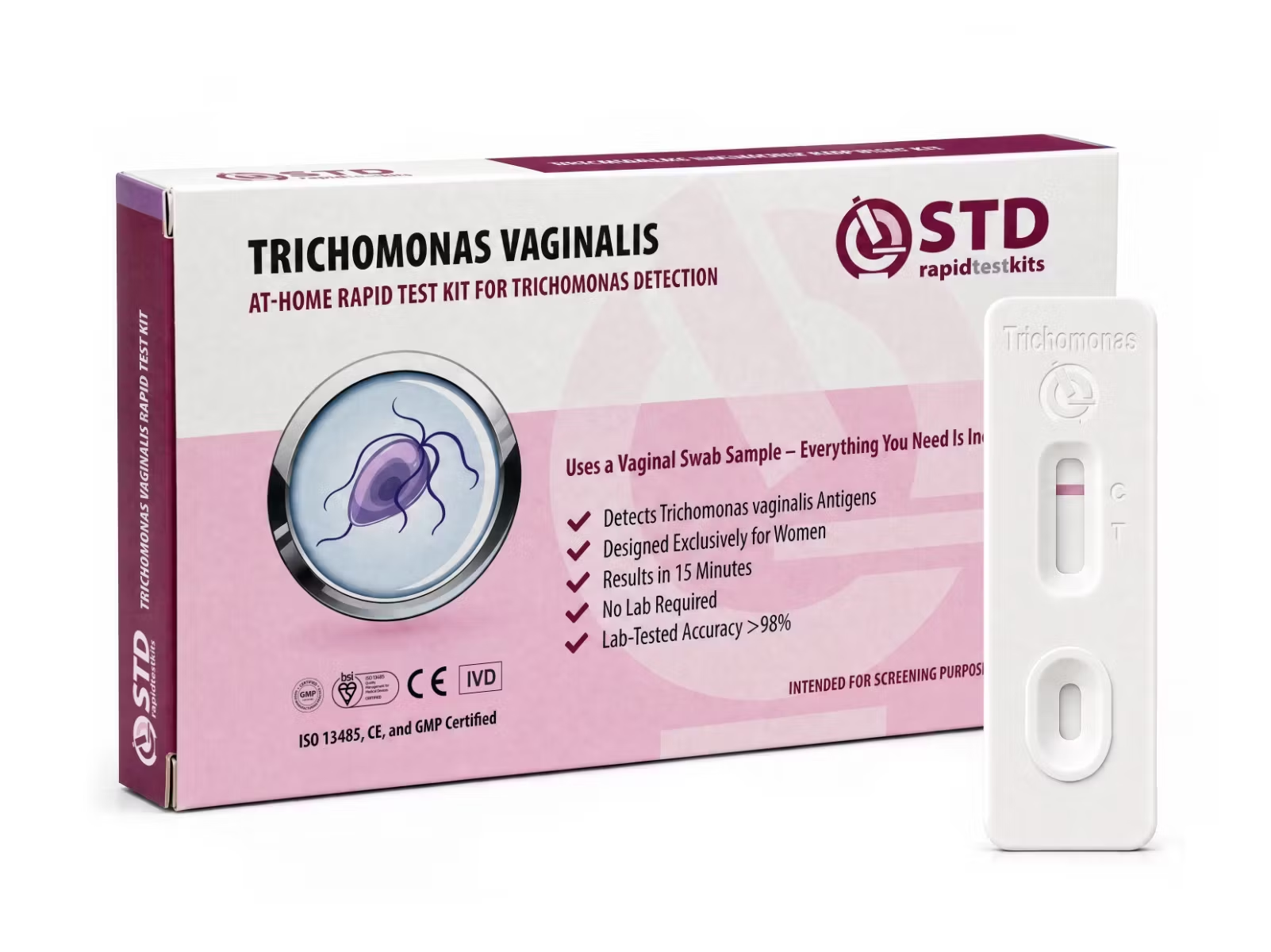
| Trichomoniasis | Itching, soreness, and burning at the vaginal opening; pain with sex | Frothy yellow-green discharge with a strong odor; women only see this presentation |
| High-risk HPV | Usually painless, but persistent infection can cause vulvar dysplasia or warts that are tender to touch or pressure | Visible flesh-colored growths, abnormal Pap result |
Genital Herpes Is the Most Common Pain-First STI
CDC surveillance data indicate that a substantial share of U.S. adults carry genital herpes, most without ever being diagnosed (CDC genital herpes overview). Pain is often the first sign of an outbreak, arriving 24 to 48 hours before any visible blister or ulcer forms. This is the prodromal phase, the warning period before an active outbreak forms, and it is when many people mistake the symptom for chafing, a yeast infection, or a urinary tract infection. The lesions, when they emerge, are small fluid-filled blisters that rupture into shallow painful ulcers, most often clustered on the labia, the perineum, or the vaginal opening.
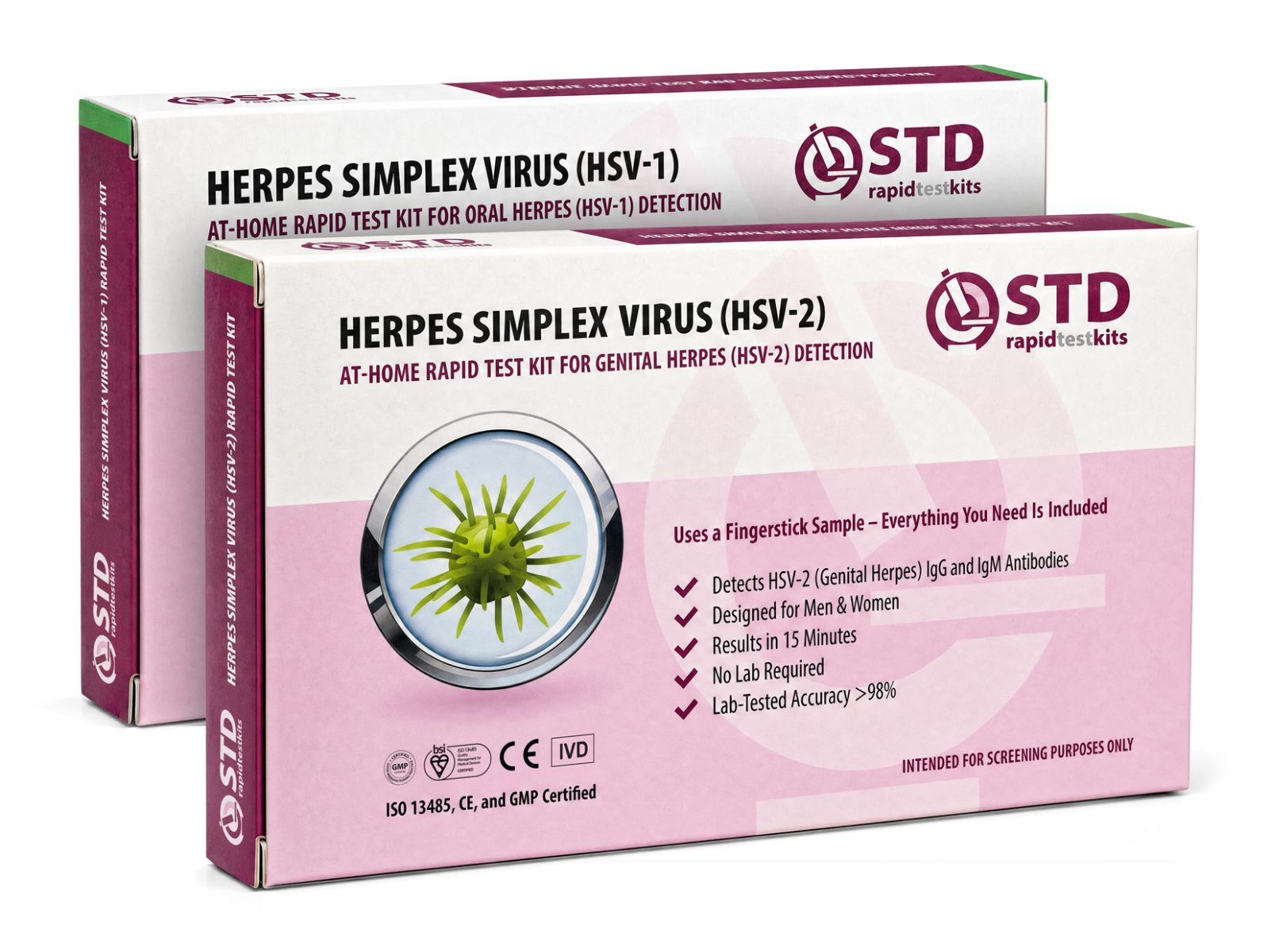
Crucially, primary outbreaks (the first one a person has) tend to be the most severe, with fever, body aches, and swollen lymph nodes in the groin. Recurrent outbreaks are usually milder and more localized but still painful. Antibody blood tests can confirm prior exposure to HSV-1 or HSV-2, which is useful when lesions are not visible at the time of testing. A clinic-administered swab of an active lesion is the gold-standard confirmation when sores are present.
When It Is Not an STI: Vulvodynia and Look-Alikes
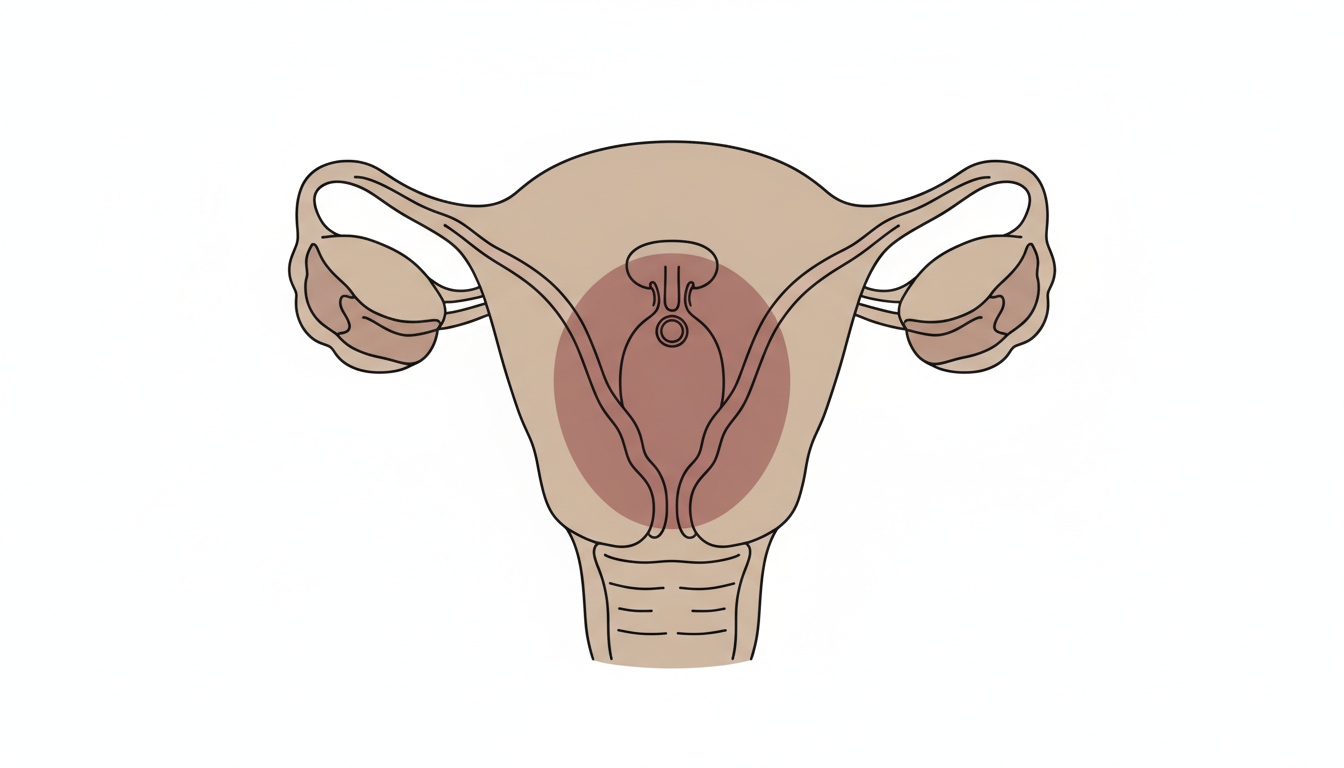
Plenty of vulvar pain has nothing to do with an infection. Four conditions cover most non-STI cases:
- Vulvodynia. Chronic vulvar pain lasting three months or more without an identifiable cause. The NHS describes it as a persistent burning, throbbing, stinging, or rawness, sometimes generalized across the whole vulva, sometimes localized to a single spot (NHS vulvodynia overview).
- Vestibulodynia. A subtype of vulvodynia where the pain is concentrated in the vestibule and is provoked by pressure (intercourse, tampon insertion, tight clothing, even prolonged sitting).
- Lichen sclerosus. A chronic skin condition that causes thin, white, fragile patches on the vulva, often with intense itching and tearing. Untreated, it can scar the architecture of the vulva over years.
- Contact dermatitis. An allergic or irritant reaction to soaps, laundry detergents, scented period products, lubricants, or condoms. Burning that arrives after a product change is often this.
Yeast infections and bacterial vaginosis also produce burning and soreness, with the discharge clue: thick white cottage-cheese discharge for yeast, thin gray discharge with a fishy odor for BV. Neither is sexually transmitted in the strict sense (BV is associated with sexual activity but is not classed as an STI by CDC), and both are easily treated once correctly identified. Trichomoniasis often gets misdiagnosed as one of these because the symptoms overlap, which is why a swab test for trich is worth running when burning and itching do not respond to a standard yeast or BV treatment (CDC trichomoniasis overview).
If burning started within days of a new soap, laundry detergent, scented liner, lubricant, or condom brand, contact dermatitis is the leading suspect. Stop the new product, switch to fragrance-free everything for two weeks, and see if it resolves before pursuing testing. If pain persists, the next step is to rule out an infection.
Acute vs Chronic: What the Pain Pattern Reveals
Time course is the single most useful clue when sorting causes. Pain that arrived in the past few days behaves differently from pain that has been around for months, and the differential diagnoses cluster by duration.
| Pattern | What it suggests | First action |
|---|---|---|
| Sudden onset, sharp or stabbing, started within 1 to 14 days | New STI (especially herpes prodrome), yeast infection, contact dermatitis from a recent product | STI screen if any unprotected exposure in past 3 months; otherwise check for product/yeast triggers first |
| Burning with urination, started within a week | Urinary tract infection, gonorrhea, chlamydia, or trichomoniasis | Urinalysis at clinic plus STI screen |
| Recurrent flares in the same spot every few months | Genital herpes recurrences | HSV-1 and HSV-2 antibody blood test if no active lesion; clinic swab if lesion present |
| Persistent burning or rawness for 3+ months without visible cause | Vulvodynia or vestibulodynia, lichen sclerosus | Pelvic exam with a vulvar specialist; STI screen first to rule out infection |
| Pain only during or after sex | Vestibulodynia, pelvic floor dysfunction, vaginal dryness, low-grade infection | STI screen, then pelvic floor physical therapy referral if negative |
Why Vulvar Pain Often Gets Dismissed in Clinics
Vulvar pain is harder to take seriously when there is nothing visible. No rash, no obvious sore, no positive culture on the first swab. Specialists in vulvar care report that women with chronic vulvar pain often see multiple clinicians before reaching an accurate diagnosis, and many are first told the pain is psychological. Major women's-health bodies including the American College of Obstetricians and Gynecologists now recognize vulvodynia as a real chronic pain syndrome with neurologic, inflammatory, and pelvic-floor components (ACOG).
Two practical consequences follow. First, ruling out the easy stuff at home (the common bacterial and viral STIs) shortens the diagnostic loop and gives a clinician something concrete to work with at the next visit. Second, if a primary care provider dismisses persistent pain after STI tests come back negative, asking for a referral to a vulvar pain specialist or a pelvic floor physical therapist is a reasonable next step.
Most people with genital herpes have no symptoms or have very mild symptoms. Mild symptoms may go unnoticed or be mistaken for other skin conditions like a pimple or ingrown hair.
What At-Home Testing Can and Cannot Do
This site sells the rapid at-home test kits referenced in this article. At-home rapid STI tests are lateral-flow immunoassays. They use the same swab or fingerstick blood sample type as a clinic, deliver a result in roughly fifteen minutes, and are best understood as a screening tool rather than a definitive diagnosis. Laboratory NAAT testing is more analytically sensitive for chlamydia and gonorrhea; an at-home rapid test is faster, more private, and good enough to flag the most common infections so the next step is clear.
For a reader with vulvar pain and any unprotected sexual contact in the past three months, a sensible at-home panel covers herpes (blood antibody for HSV-1 and HSV-2), chlamydia and gonorrhea (vaginal swab), and trichomoniasis (vaginal swab). HPV testing at home is also available as a vaginal swab and is useful if there are visible warts or an abnormal Pap history.
Lateral-flow tests need time to detect an infection after exposure. Chlamydia and gonorrhea are usually detectable on a swab from about 1 to 2 weeks after exposure. HSV-1 and HSV-2 antibody blood tests can take 6 to 12 weeks for full seroconversion (check the kit's label for the specific window). Testing too early can produce a false negative; if a recent exposure is the concern, retest after the window closes.
When to Skip the Home Test and See a Provider
Some symptoms warrant a clinic visit first, not a home swab. Going to a provider directly is the right call if there is a visible blister, ulcer, or lesion (a clinician can swab the active lesion for HSV PCR, which is more sensitive than a blood antibody test); if there is fever, severe pelvic pain, or pain on one side that could indicate pelvic inflammatory disease; if there is unusual bleeding or a missed period combined with pain; or if pain has lasted more than three months without a clear infection cause.
The home test still has a role in these situations as a parallel screen, since clinic appointments take time and an at-home result narrows what the clinician needs to investigate. But it should not delay a same-day or urgent-care visit when those red flags are present.
After a Negative STI Test, What Comes Next
A clean STI panel does not mean the pain is imagined. It means the search moves to non-infectious causes. Three concrete next steps tend to produce answers:
- Pelvic exam with a vulvar specialist. A trained clinician will perform a cotton-swab test (gently touching different points on the vestibule with a soft swab to map where pain occurs) and examine the skin under good lighting for signs of lichen sclerosus or other dermatologic causes.
- Pelvic floor physical therapy. Hypertonic pelvic floor muscles are a frequently missed driver of provoked vestibular pain. A pelvic floor PT can identify and treat this with internal and external manual therapy, often resolving pain that imaging and lab work missed.
- Symptom diary. Two to four weeks of tracking pain intensity, location, triggers, menstrual cycle phase, and recent products often reveals patterns that a single appointment cannot. Bring it to the specialist visit.
For chronic vulvar pain that has been ruled out as infectious, the standard treatment ladder includes topical anesthetics, low-dose tricyclic antidepressants for neuropathic pain, gabapentinoids, vestibulectomy in select cases, and pelvic floor PT throughout. None of these are quick wins, but most cases respond meaningfully within 6 to 12 months of structured treatment.
Pick the Right Combined Test for the Symptom Picture
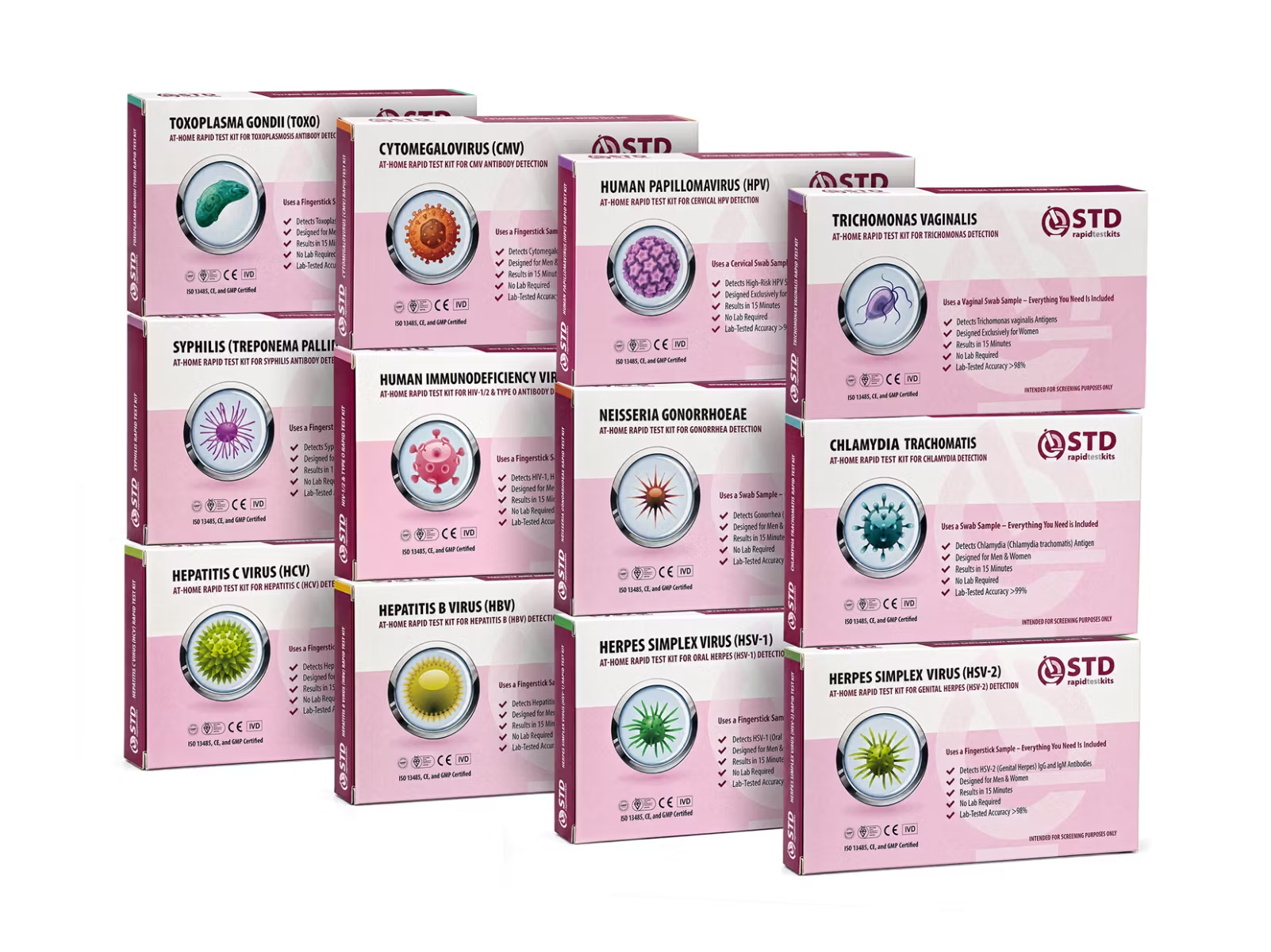
If the goal is to rule out the broadest set of STIs in one go, a multi-infection rapid kit covers more ground than a single-test cassette. The 10-in-1 women's kit screens for the ten most common STIs in a single home test session and is the most comprehensive at-home option. Note that the 10-in-1 is validated for female anatomy only; male readers and male partners should use the 8-in-1 kit (validated for both anatomies) or visit a clinic.
Frequently Asked Questions
- Can an STI cause vulvar pain without any discharge?
- Yes. Genital herpes is the clearest example: tingling, burning, and rawness often arrive 24 to 48 hours before any visible blister, and recurrent outbreaks may produce pain with little or no discharge. Trichomoniasis can also cause vulvar burning with minimal discharge, and chlamydia can produce internal inflammation that radiates as vulvar pressure with no external signs.
- How do I tell vulvodynia from an STI?
- Start with an STI screen. If results are negative and the pain has lasted three months or more, vulvodynia becomes the leading hypothesis and a pelvic exam with a vulvar specialist is the next step. The cotton-swab test performed by a clinician is the standard way to map vulvodynia pain points and distinguish it from infection-driven inflammation.
- Can pain during sex be a sign of an STI?
- Sometimes. Chlamydia, gonorrhea, and trichomoniasis can all cause inflammation that makes intercourse painful. Active herpes outbreaks make any friction painful. But pain during sex is also a hallmark of vestibulodynia, vaginal dryness, pelvic floor dysfunction, and lichen sclerosus, so an STI test is the first filter, not the only answer.
- Can someone have herpes without ever seeing sores?
- Yes. The CDC notes that most people with genital herpes have no symptoms or only very mild symptoms that may go unnoticed or be mistaken for other skin conditions like a pimple or ingrown hair. Some have only mild prodromal tingling and never form visible blisters; others have asymptomatic viral shedding and only learn of their status through a positive antibody blood test.
- How long should I wait after exposure before testing?
- About 1 to 2 weeks for chlamydia and gonorrhea swab tests; about 6 to 12 weeks for HSV-1 and HSV-2 antibody blood tests (check the specific kit label for the exact window). HIV fourth-generation antigen-antibody tests detect by about 4 to 6 weeks. Testing before the window closes can produce a false negative, so retest after the window if the exposure is recent.
- Does HPV cause pain in the vulva?
- Most HPV infection is painless. High-risk strains can cause persistent infection that progresses to vulvar dysplasia or cancer over years; visible warts (low-risk strains) can be tender to direct pressure. If there is a known abnormal Pap history or visible growths, HPV testing and follow-up with a gynecologist is appropriate.
- Can vulvar pain come from something completely non-sexual?
- Yes, and often. Vulvodynia, lichen sclerosus, contact dermatitis from soaps and detergents, allergic reactions to lubricants or condoms, pelvic floor muscle tension, and yeast infections are all common non-sexual drivers. A negative STI panel is the cue to investigate these.
- What if my home STI tests are all negative but the pain continues?
- That is the cue to see a vulvar specialist or a gynecologist with experience in pelvic pain. Bring a 2 to 4 week symptom diary, ask for a cotton-swab vestibular mapping exam, and request a pelvic floor PT referral. Most chronic vulvar pain has a treatable cause; it just is not always the first thing a generalist looks for.
- U.S. Centers for Disease Control and Prevention. About Genital Herpes, used for the asymptomatic-presentation statement, prodromal-symptom description, and pull-quote on mild symptoms being mistaken for other skin conditions.
- U.S. National Institute of Child Health and Human Development. Vulvodynia overview, used for the working definition of chronic vulvar pain and as the primary U.S. public-health reference for vulvodynia.
- American College of Obstetricians and Gynecologists. Used for clinical recognition of vulvodynia as a chronic pain syndrome with neurologic, inflammatory, and pelvic-floor components.
- U.K. National Health Service. Vulvodynia condition page, used for symptom presentation language (burning, throbbing, stinging, soreness) referenced in the chronic pain section.
- U.S. Centers for Disease Control and Prevention. Trichomoniasis overview, used for trichomoniasis presentation, asymptomatic-rate framing, and symptom overlap with bacterial vaginosis and yeast.
