Published: June 2025 | Last updated: May 2026 | Editorial review and quality control: Martina N.
The phrase “too young for herpes” is one of the most stubborn myths in sexual health, and it lands hard when a tingle, a bump, or a positive test result shows up before someone feels old enough to be in this conversation. The reality is the opposite of the myth. Herpes simplex virus is among the most common infections on the planet, and the majority of people who carry it picked it up in adolescence or their early twenties, often without realizing. Most herpes infections are mild, manageable with widely available antivirals, and far less defining than the cultural shame around them suggests. This guide explains what HSV does, who has it, what early outbreaks look like, how to test responsibly from home, and how to keep dating, sleeping with people, and living a normal life after a diagnosis.
Am I too young to have herpes?
No. Most people who get HSV pick it up between their mid-teens and mid-twenties, and the majority never realize. The World Health Organization estimates that about <a href="https://www.who.int/news-room/fact-sheets/detail/herpes-simplex-virus" target="_blank" rel="noopener">two-thirds of people under 50 worldwide carry HSV-1</a> (the virus behind most cold sores and a growing share of genital herpes), and the CDC reports an estimated <a href="https://www.cdc.gov/herpes/about/index.html" target="_blank" rel="noopener">572,000 new genital herpes infections in the U.S. in 2018 among people aged 14 to 49</a>, on top of the millions who already had it. Age is not protective. Awareness, well-timed testing, and antivirals are.
Key Takeaways
- Most new herpes infections happen between the late teens and mid-twenties, and most go undiagnosed because the first outbreak is mild, brief, or silent.
- HSV antibody tests can take up to 12 weeks after exposure to turn positive, so test timing matters as much as the test itself.
How common is herpes in people under 30?
Herpes shows up in two main types. HSV-1 is the type behind most oral cold sores and a growing share of genital infections, especially in younger adults. HSV-2 is the most common cause of genital herpes worldwide. Both are skin-and-nerve viruses spread by direct contact, both can stay quiet in nerve roots for years between outbreaks, and both are far more common than the cultural conversation lets on.
Globally, the WHO estimates 3.8 billion people under 50 carry HSV-1 (about 64% of that age group), and 520 million people aged 15 to 49 carry HSV-2 (about 13%). In the United States, CDC analyses of long-running national health surveys have put HSV-2 prevalence around 12% of 14- to 49-year-olds, with most carriers undiagnosed.
What does that look like in practice? In a college lecture hall of 100 students, statistically speaking, around a dozen carry HSV-2 antibodies and roughly half carry HSV-1 antibodies. Most do not know. Most have no current symptoms. Some have had episodes they assumed were ingrown hairs, razor burn, a yeast infection, or a rash from a new detergent.
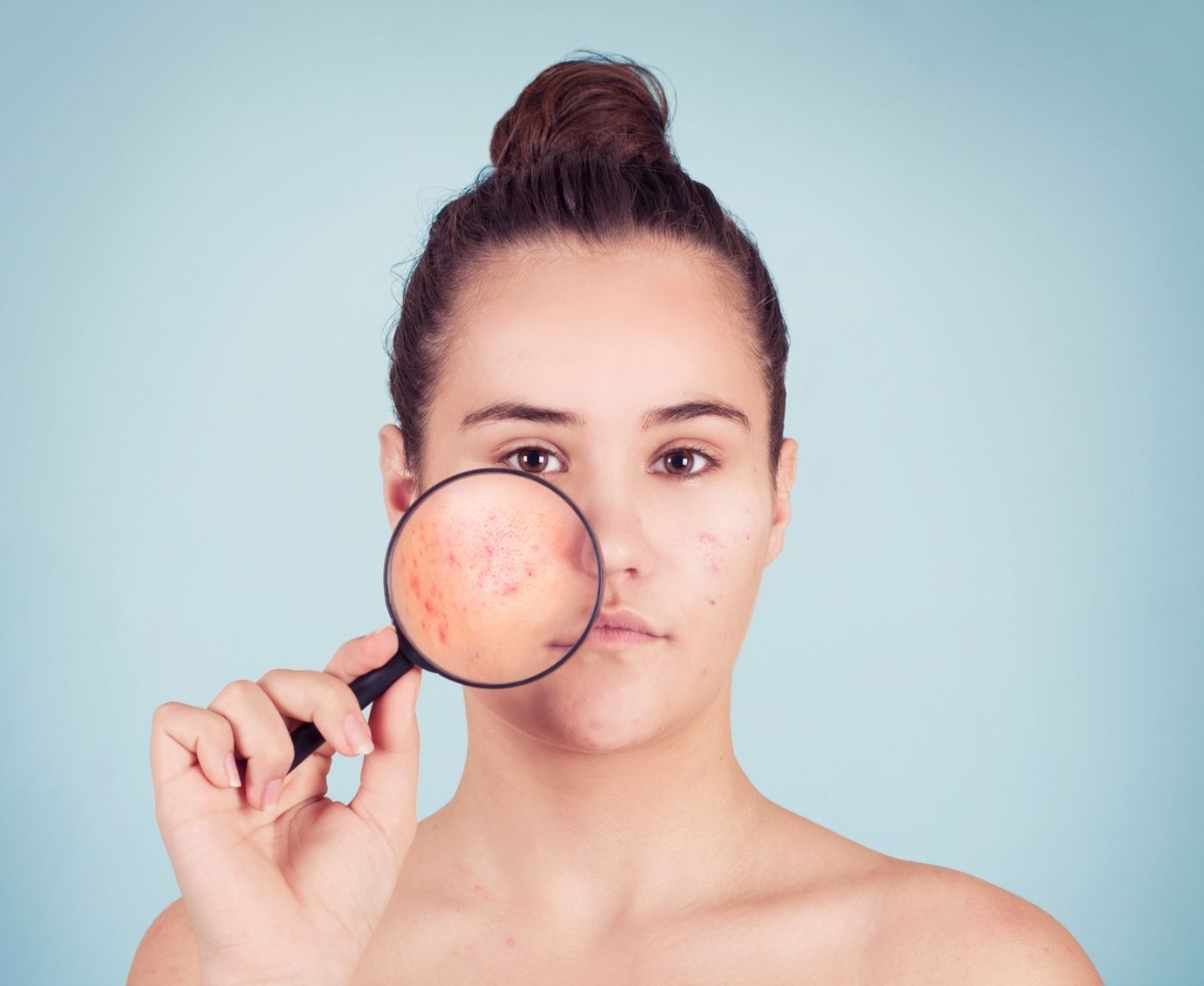
Most people with genital herpes have no symptoms or have very mild symptoms. You may not notice mild symptoms, or you may mistake them for another skin condition such as a pimple or ingrown hair.
What early herpes actually looks like
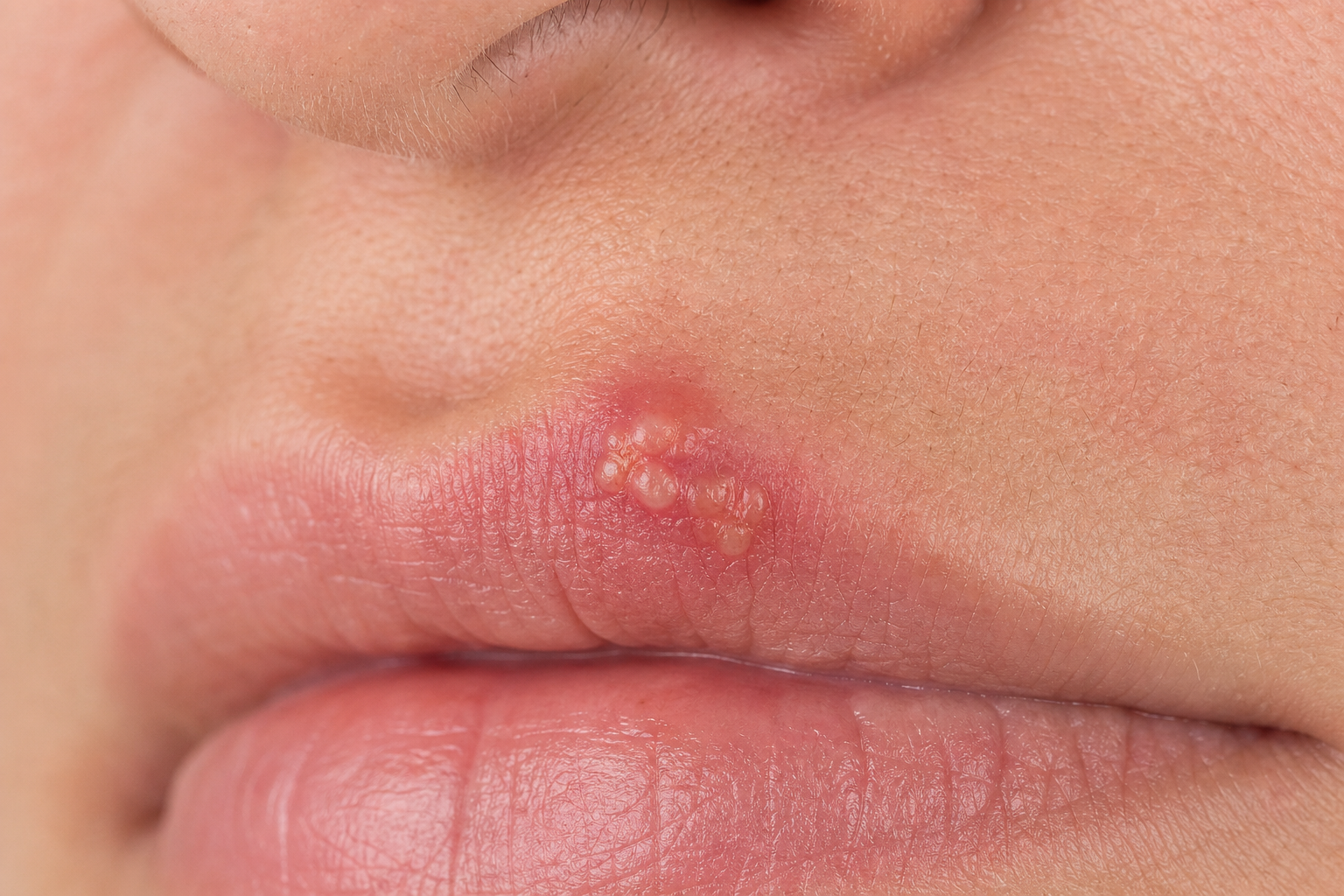
A first herpes outbreak rarely looks like the dramatic version in old health-class slides. Sometimes it is a single small bump that crusts over and disappears in a few days. Sometimes it is a cluster of tiny clear blisters preceded by tingling, itching, or a burning feeling in the skin. Sometimes the first episode comes with flu-like symptoms (low-grade fever, body aches, swollen lymph nodes in the groin), which can be mistaken for a viral bug. And sometimes the first outbreak is so mild it gets dismissed as shaving irritation.
Common early signs to know:
- Tingling, itching, or burning in the skin around the mouth or genitals before any visible change
- Small fluid-filled blisters or red bumps that progress to shallow open sores and then crust over
- Pain or stinging during urination if the sores are near the urethra
- Tender, swollen lymph nodes in the groin or neck
- Low-grade fever, headache, or a flu-like feeling during the first outbreak
The reason early herpes gets missed: these signs overlap with ingrown hairs, yeast infections, contact dermatitis, friction blisters, allergic reactions to lubricants, and ordinary skin irritation. Visual self-diagnosis is unreliable for almost everyone, including clinicians, which is why the CDC's treatment guidance leans on lab confirmation when an active sore is present.
If a lesion is currently visible, the most accurate confirmation is a clinic-collected swab tested by NAAT (nucleic acid amplification), which the CDC STI Treatment Guidelines describe as the most sensitive method for diagnosing herpes from a lesion; once the sore has healed, an antibody blood test becomes the practical option instead.
HSV-1 vs HSV-2: why the labels matter less than you think
The old shorthand was clean: HSV-1 above the waist, HSV-2 below. That mental model is now out of date. Oral sex transmits HSV-1 to genital skin readily, which means a meaningful share of new genital herpes diagnoses in young adults are HSV-1, not HSV-2. The reverse can also happen, although it is less common. The two viruses are close relatives, behave similarly under the microscope, and respond to the same antiviral drugs.
What the type still tells you is mostly about future outbreak frequency and transmission risk. Genital HSV-2 tends to recur more often than genital HSV-1; oral HSV-1 tends to recur as occasional cold sores rather than constant outbreaks.
| HSV-1 | HSV-2 | |
|---|---|---|
| Most common location historically | Mouth and lips (cold sores) | Genital area |
| Now also common at the other site? | Yes, increasingly causes genital herpes via oral sex | Less commonly causes oral infections |
| Estimated global prevalence (under 50) | About 64% (WHO, 3.8 billion people) | About 13% of 15 to 49 year olds (WHO, 520 million people) |
| Outbreak frequency at the genital site | Usually fewer recurrences over time | Tends to recur more often, especially in the first year |
| Antiviral treatment | Acyclovir, valacyclovir, famciclovir | Same drugs |
| Type-specific antibody test useful? | Yes, once antibodies have developed (typically 12 weeks after exposure) | Yes, once antibodies have developed (typically 12 weeks after exposure) |
Why the stigma hits young people harder
The medical reality of herpes is unremarkable. The cultural reality is harsh, and it lands hardest on people who are still building their dating lives, sexual confidence, and identity. A 17-year-old who hears the words “you have it forever” processes them very differently from a 47-year-old who has had a long-term partner and a stable sense of self. The same diagnosis, very different psychological weight.
Some of the patterns clinicians and counselors describe in younger patients:
- Young women often absorb a layer of purity-culture guilt that has nothing to do with the actual virus and everything to do with how the diagnosis is framed at home, in school, or online.
- Young men sometimes go quiet about a diagnosis out of fear of being seen as “unclean,” which delays partner conversations and makes the next disclosure harder.
- Queer and trans youth navigate an extra layer of misinformation, and may not have a trusted clinician to ask the basic questions.
None of this changes the biology. HSV is a skin virus that you catch from someone whose skin touched yours, often someone who did not know they carried it. It does not say anything about character, judgment, or worth.
HSV is a skin-contact virus that millions of healthy, sexually active, partnered people live with. It says nothing about your character, your judgment, or your worth. The virus is doing its thing whether anyone is ashamed of it or not, and the meaningful work after a diagnosis is practical: antivirals, partner conversations, and a clinician you can ask anything.
Treatment, antivirals, and what daily life looks like
Herpes is not curable, but it is treatable, and modern antiviral therapy has changed what living with HSV looks like in important ways. Three oral antivirals (acyclovir, valacyclovir, and famciclovir) are widely used. They work by interfering with viral replication, which shortens outbreaks and, when taken daily as suppressive therapy, reduces both the number of outbreaks and the chance of passing the virus to a partner.
For most people with genital HSV, daily suppressive therapy is the meaningful upgrade. It can:
- Cut the number of outbreaks per year significantly, often to zero or near-zero
- Reduce viral shedding from skin between outbreaks (which is when transmission can happen even without visible sores)
- Lower the risk of transmitting HSV-2 to a regular partner who does not have it
Episodic therapy (taking the antiviral only when an outbreak starts) is an alternative for people who get very infrequent outbreaks. The choice between the two is a conversation with a clinician based on how often outbreaks are happening, partner status, and personal preference.
For most people, outbreaks become less frequent and milder over time, dating continues, sex continues, and condoms plus suppressive therapy plus open conversation reduces transmission risk substantially. The hardest period for most newly diagnosed people is the first six months, which is exactly when peer support (formal groups, online communities, or a trusted friend who has been through it) tends to matter most.
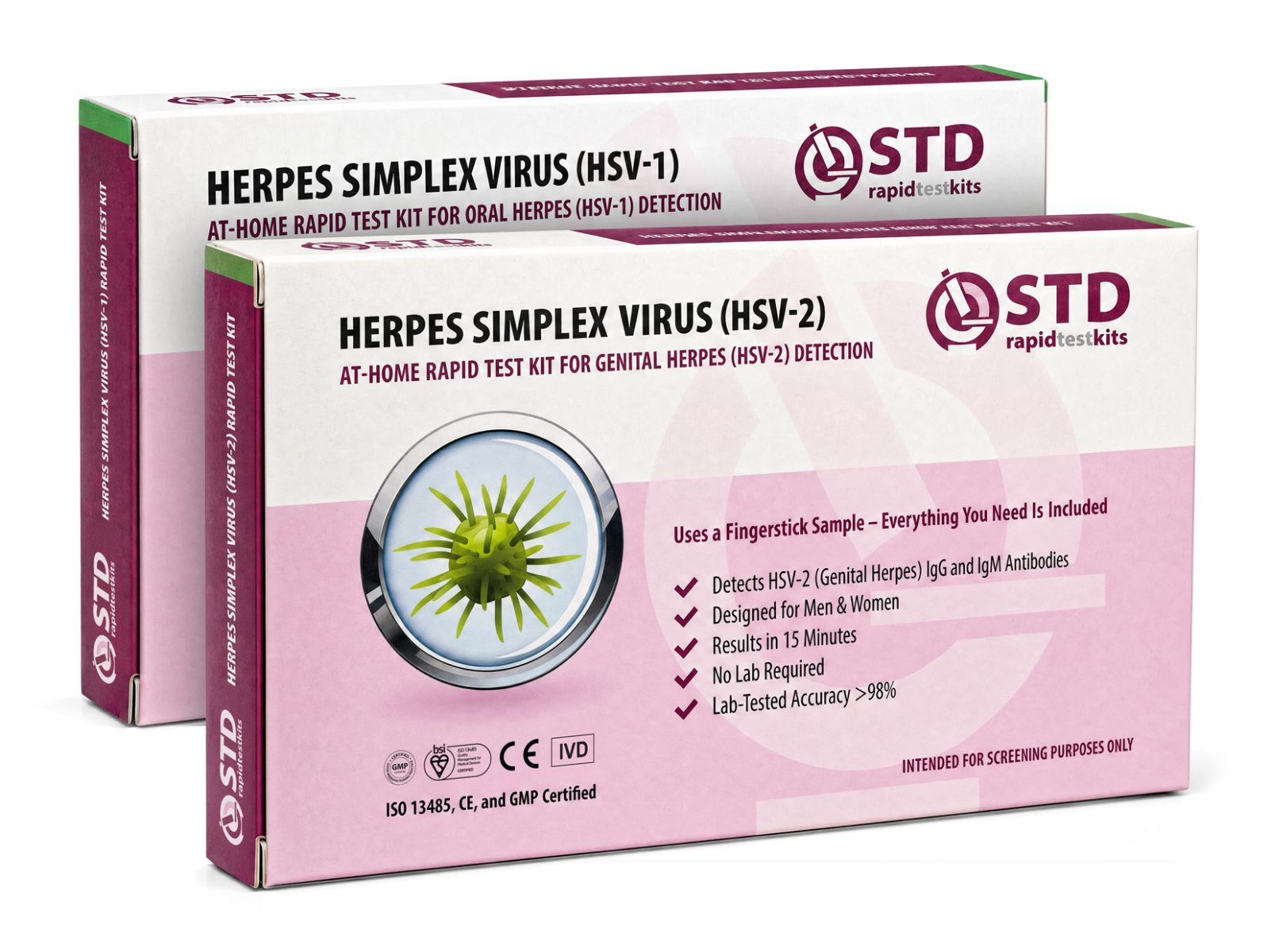
We sell rapid at-home HSV antibody tests; the testing guidance in this article applies regardless of where you choose to test.
How at-home herpes testing works (and where its limits are)
At-home HSV tests are antibody tests. They detect the immune response to the virus, not the virus itself, which means they answer a slightly different question from a clinic swab. A swab tested by NAAT, taken from an active sore, answers “is HSV in this lesion right now and which type?” An antibody test answers “has my immune system seen HSV-1 or HSV-2 at any point in the past?”
That difference matters in two practical ways:
- Window period. After a new exposure, antibodies take time to build to a detectable level. The CDC STI Treatment Guidelines recommend repeating type-specific antibody testing 12 weeks after a suspected acquisition when an early test is negative, because false-negatives are common in the first few weeks.
- Active outbreak. If a sore is currently visible, do not rely on antibody testing alone. A clinician-collected swab tested by NAAT is the most sensitive option, and it identifies the type from the lesion directly.
For asymptomatic people without a known exposure, the CDC explicitly does not recommend routine herpes screening, because false-positive results are more common in low-prevalence populations and a positive test can carry psychological weight that outweighs the clinical benefit. At-home antibody testing is most useful for people who have a specific reason to test: a known exposure, a partner with herpes, or an unexplained recurrent skin pattern. It is most accurate at least 12 weeks after the exposure.
An HSV antibody test taken in the first few weeks after exposure can be falsely negative because antibodies have not built up yet. CDC guidance is to repeat type-specific antibody testing 12 weeks after the suspected exposure if the early test was negative. If you have an active sore right now, ask a clinician about a swab-based NAAT test instead. It is more sensitive while a lesion is present, and it identifies the HSV type from the sore itself.
Talking to a partner, and when to bring in a clinician
Disclosure conversations are the part of a herpes diagnosis that newly diagnosed people dread the most, and they are usually less catastrophic than expected. A short, plain script tends to land better than a long apologetic explanation. Something close to: “Before we get more physical I want to tell you that I have HSV. It is the same virus that causes cold sores, it is very common, I take a daily antiviral that lowers transmission risk, and I am happy to answer any questions you have or share what my doctor told me.” Most people hear that and ask one or two clarifying questions. Some pause to read up. A few decide it is not for them, which is information about compatibility, not a verdict on worth.
Bring in a clinician when:
- You have an active first outbreak. Antivirals work best when started early, ideally within the first 5 days of symptoms (per NHS guidance), and a clinician can confirm the diagnosis with a swab while a lesion is present.
- Outbreaks are recurring more than a few times a year and starting to interfere with daily life. Daily suppressive therapy is usually the answer.
- You are pregnant or planning a pregnancy. Active genital HSV at the time of delivery carries a real but manageable risk of neonatal transmission, and antivirals plus delivery planning reduce that risk substantially.
- The lesion does not look like classic herpes (very large, persistent, atypical location, or accompanied by significant systemic symptoms). A clinician should rule out other causes.
Frequently asked questions
- Can you get herpes from kissing?
- Yes. HSV-1 spreads readily through kissing, and that is how most people who carry it picked it up, often in childhood. HSV-1 transmission can happen even when no cold sore is visible, though risk is highest during an active outbreak.
- Can you have herpes without ever knowing it?
- Most people who carry HSV-2 do not know they have it. The CDC notes that most genital herpes infections are asymptomatic or so mild they get mistaken for ingrown hairs, yeast infections, or skin irritation. Antibody testing is the only way to confirm without an active sore.
- How long after exposure can herpes show up?
- When a first outbreak does happen, it usually appears 2 to 12 days after exposure. Many people never have a noticeable first outbreak, and antibody tests can take up to 12 weeks after exposure to turn positive, so a negative test in the first few weeks is not a clear all-clear.
- Does HSV-1 below the waist count as genital herpes?
- Yes. Genital HSV-1 is genital herpes, and it is increasingly common in younger adults, mostly transmitted through oral sex. The treatment is the same as for HSV-2, although genital HSV-1 typically recurs less often than genital HSV-2.
- Will I always have outbreaks?
- For most people, outbreaks become less frequent and milder over time. Daily suppressive antiviral therapy can reduce outbreaks substantially, often to zero or near-zero, and also lowers the chance of transmitting the virus to a partner.
- Do condoms prevent herpes transmission?
- Condoms reduce the risk substantially but do not eliminate it, because HSV is a skin virus and it can be present on skin a condom does not cover. Condoms plus daily suppressive therapy plus avoiding sex during outbreaks is the layered approach that lowers risk the most.
- Should I get a herpes blood test if I have no symptoms?
- The CDC does not recommend routine herpes screening for asymptomatic people in the general population, because false-positive results are more common in low-prevalence groups. Testing makes sense if you have a known partner with herpes, a specific exposure you are concerned about, or unexplained recurrent skin symptoms.
- Can I have a normal sex life and pregnancy after a herpes diagnosis?
- Yes. Most people with herpes date, have sex, fall in love, and have healthy pregnancies and babies. Pregnancy needs a clinician in the loop early so that antiviral suppression and delivery planning can be discussed if active genital lesions are present near the due date.
- U.S. Centers for Disease Control and Prevention. About Genital Herpes (overview, prevalence, symptoms).
- World Health Organization. Herpes Simplex Virus fact sheet (global HSV-1 and HSV-2 prevalence).
- U.S. Centers for Disease Control and Prevention. STI Treatment Guidelines, Genital Herpes section (NAAT testing, type-specific serology window of 12 weeks).
- U.S. Centers for Disease Control and Prevention. Herpes Testing (who should be tested, asymptomatic screening guidance).
- NHS. Genital herpes (symptoms, antiviral treatment, when to start within 5 days of symptoms).
- MedlinePlus (U.S. National Library of Medicine). Genital herpes patient overview.
