
Published: August 2025 | Last updated: May 2026 | Editorial review and quality control: Martina N.
For three decades, public health campaigns have trained us to think about sexually transmitted infections in a specific way: get tested, take antibiotics, move on. That model still works for chlamydia, gonorrhea, and syphilis, the bacterial three that show up loudly with discharge, burning, or sores and disappear with a course of antibiotics. The trouble is that they are no longer the infections most people are actually carrying.
Quietly, herpes and HPV have become the dominant sexually transmitted infections worldwide. The World Health Organization estimates that around 3.8 billion people under age 50 carry HSV-1 and roughly 520 million people aged 15 to 49 live with HSV-2. HPV is the most common STI according to the CDC, and anyone who is sexually active can acquire it, even from a single partner. Bacterial STIs, by comparison, are reported in the millions per year, not billions of cumulative carriers.
That gap is not just a numbers story. It changes what testing, protection, and partner conversations need to look like. The standard "clean" panel was built for a world where bacterial infections were the main risk. We don't live in that world anymore.
Key Takeaways
- Herpes and HPV now reach more people than chlamydia, gonorrhea, and syphilis combined, and most carriers never feel a symptom.
- Standard STI panels test for the bacterial three, so a "clean" result usually says nothing about your viral status.
When Silence Becomes a Symptom
Viral STIs spread mostly because the people carrying them have no idea they are carrying anything. The CDC reports that most people with genital herpes have no symptoms or have very mild symptoms that go unnoticed or are mistaken for other skin conditions like a pimple or ingrown hair. The same is true for HPV. Most infections clear within two years without ever causing visible warts or abnormal cells, but during that window the virus is transmissible.
Compare that to chlamydia, where a significant fraction of infected people develop clinical signs that send them to a provider, or to gonorrhea, which announces itself with discharge and pain in many cases. Bacterial STIs are noisy. Viral STIs are quiet. Noisy infections get caught and treated. Quiet ones keep moving.
The mismatch is geometric. CDC's provisional 2024 surveillance reports roughly 1.5 million chlamydia cases and 543,000 gonorrhea cases in the United States. Lifetime prevalence for HSV-2 alone in U.S. adults sits in the double-digit percentages, and HPV will touch the vast majority of sexually active adults at some point. Bacterial cases are tracked in tens of millions globally per year. Viral carriers are tracked in billions, lifetime.
Both HSV-1 and HSV-2 shed virus from the skin even when no sores are visible, a phenomenon called asymptomatic viral shedding. HPV behaves the same way. You can acquire either virus from a partner who has never had a single visible symptom and who has tested "negative" on every bacterial panel they've taken. This is why protection strategies have to assume the virus is present in the dating pool, not absent from it.
Why Viral STIs Are Outpacing Bacterial Ones
Three forces explain why the viral side has pulled ahead. First, biology: viruses integrate into host cells in ways bacteria do not. HSV establishes lifelong latency in nerve ganglia and reactivates periodically. HPV embeds in epithelial tissue and can persist for years before either clearing or progressing toward dysplasia. Antibiotics, the entire toolkit that solved bacterial STIs, do nothing to either virus.
Second, screening practice: a standard "full STI panel" in most U.S. clinics covers chlamydia, gonorrhea, syphilis, and HIV. Herpes is not part of routine screening per CDC's STI Treatment Guidelines, which note that HSV-2 serologic screening among the general population is not recommended and recommend type-specific serology only in specific scenarios (recurrent or atypical symptoms with negative PCR, a partner with known genital herpes, or selective use during pregnancy when partner status indicates risk). HPV screening exists in the form of cervical cytology and HPV co-testing for women, but there is no FDA-approved HPV test for men. The result: viral STIs slip past the same panel that catches the bacterial ones.
Third, behavior: app-mediated dating compresses the time between meeting and intimacy, and condom use among adults has trended down over the past decade. Bacterial STIs have responded with rising case counts, but viral STIs have responded more dramatically because each undiagnosed carrier remains infectious indefinitely rather than for weeks until antibiotics clear them.
The combined effect is a steady accumulation of viral carriers in the population.
Why have herpes and HPV overtaken chlamydia and gonorrhea?
Three reasons stack: viruses establish lifelong infection while antibiotics cure bacteria, standard "full STI panels" don't include herpes or HPV in most clinics, and asymptomatic carriers transmit silently. Bacterial cases get diagnosed and cleared. Viral cases accumulate in the population because every undiagnosed carrier remains infectious, often for life.
The Myth of Being "Clean"
The word "clean" still appears on dating profiles as shorthand for "recently tested STI-negative." In most cases the speaker means they got back a negative chlamydia and gonorrhea panel, sometimes with HIV and syphilis added. They almost never mean they have been screened for herpes, because most U.S. clinics don't do routine herpes serology, and they cannot mean they have been screened for HPV if they are male, because no validated screening tool exists for men.
So a "clean" partner can honestly believe what they are saying and still be carrying HSV-2 or HPV. They aren't lying; the testing system simply doesn't surface those infections by default. The shorthand creates a false equivalence between "tested" and "uninfected" that the dating culture has not caught up with.
The word also does damage in the other direction. Treating an STI test result as a moral category, clean versus unclean, makes people delay testing because they don't want to risk the second label. Delayed testing means later treatment for the bacterial cases that would have been simple to clear, and longer transmission windows for the viral cases that won't clear at all. The language of shame and the biology of viral persistence reinforce each other.

Modern Dating and the Viral Playground
Public health researchers have started using the phrase "viral playground" to describe what happens when app-mediated dating meets infections that don't surface in routine testing. On apps where matches turn into meetings within hours, the pre-intimacy conversation about sexual health rarely covers viral infections. Even partners who have tested recently and shared their results have usually only shared the bacterial panel.
Two structural realities make the playground bigger than people realize. First, asymptomatic shedding means the virus moves between people who have never had visible signs. Second, the testing-window logic that applies to bacterial infections (test, get a negative, you're cleared for that exposure) doesn't translate cleanly to herpes or HPV, where serology windows are longer and where a negative test in a man tells you very little about his HPV status because that test doesn't exist.
None of this means casual dating causes viral STIs. It means that when you only protect against the infections you can name, the infections you can't name spread. Layered protection works: condoms reduce but don't eliminate herpes and HPV transmission because both viruses live on skin a condom doesn't cover (the groin, inner thighs, scrotum, base of penis), and HPV vaccination meaningfully reduces the strains that cause the most cervical, throat, and anal cancers. Each layer cuts risk; no single layer eliminates it.
Most people with genital herpes have no symptoms or have very mild symptoms. Mild symptoms may go unnoticed or be mistaken for other skin conditions like a pimple or ingrown hair.
Bacterial vs Viral STIs at a Glance
The differences between the two categories aren't subtle, and they explain why a single "STI test" never really existed. Bacterial and viral infections behave differently in the body, get caught by different panels, and respond to entirely different protection strategies. The table below pulls the comparison into one place.
| Feature | Bacterial STIs (Chlamydia, Gonorrhea, Syphilis) | Viral STIs (Herpes, HPV) |
|---|---|---|
| Cure available? | Yes, antibiotics clear infection in days to weeks | No cure; lifelong management with antivirals (herpes) or watchful waiting (HPV) |
| Typical symptoms | Discharge, burning urination, sores, pelvic pain in many cases | Often none; intermittent sores or warts in a minority |
| Standard panel coverage | Yes, included in routine "full STI" screen | Often excluded; herpes only on request, HPV not screened in men |
| Vaccine available? | No | Yes for HPV (Gardasil 9); no vaccine for herpes yet |
| Transmission while asymptomatic | Possible but less efficient | Common; asymptomatic shedding drives most new cases |
| Long-term complications | PID, infertility, increased HIV risk if untreated | Cervical/oropharyngeal/anal cancer (HPV); recurrent outbreaks (herpes) |
What a Bacterial Panel Actually Catches
If you've ordered a multi-STI rapid test, it's worth knowing exactly what each panel covers so the result means what you think it means. Most at-home and clinic rapid tests are lateral-flow immunoassays that screen the most common bacterial and bloodborne infections. They are not the same technology as the lab-based NAAT (nucleic acid amplification test) that the CDC considers the gold standard for chlamydia and gonorrhea, but they cover the same target infections and a positive result is worth confirming with NAAT when possible.
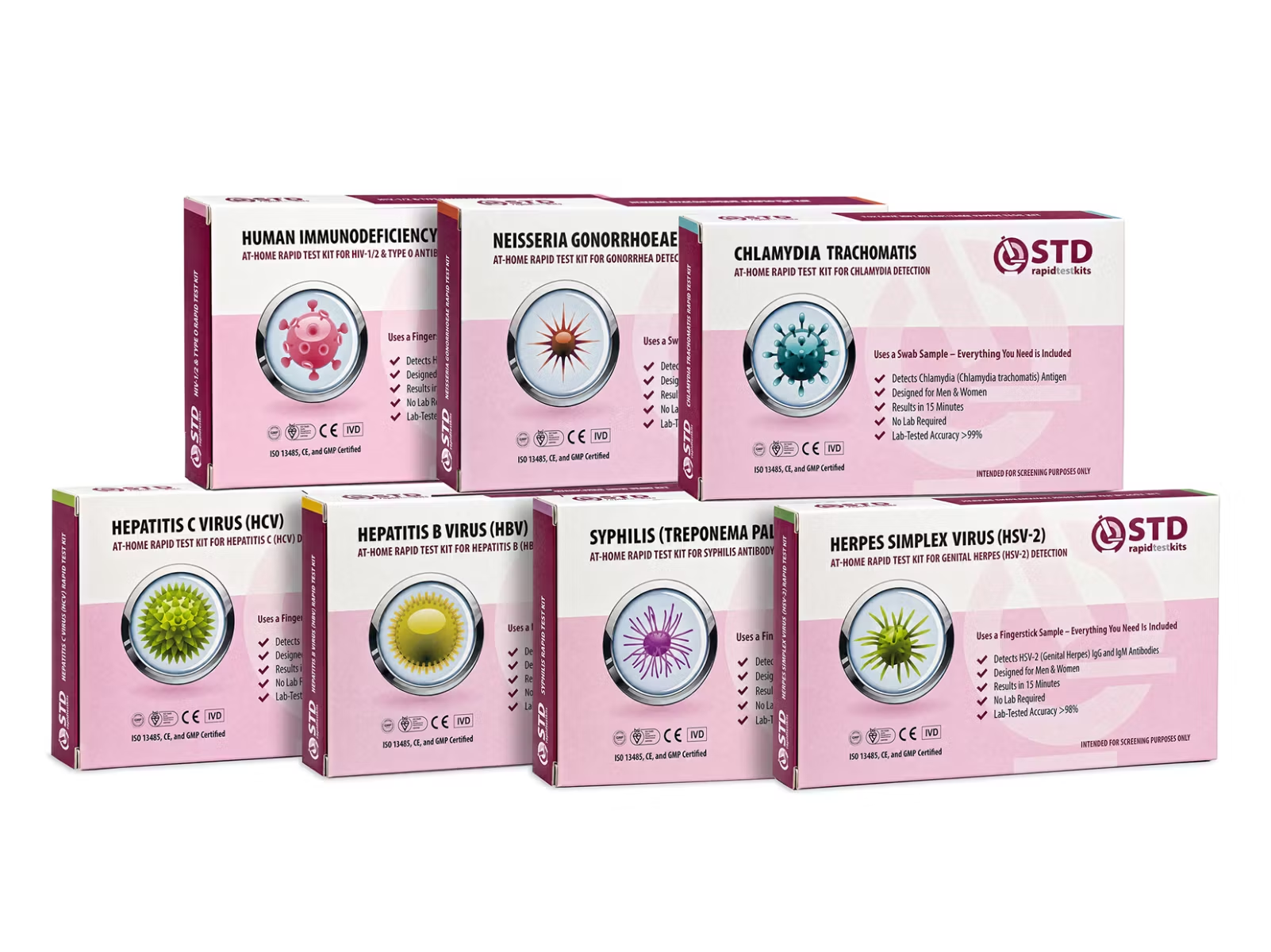
A 7-in-1 panel typically covers chlamydia, gonorrhea, syphilis, HIV, hepatitis B, hepatitis C, and herpes (HSV-2 antibodies). That spans the bacterial three, the bloodborne four, and one viral. It does not cover HPV in men (no kit can), and it does not detect herpes during the window before antibodies form (about 12 weeks for HSV-2). Reading a panel result correctly means understanding both what it screens and what it can't. This site sells at-home lateral-flow rapid test kits, and the panel below is one option for broader-than-bacterial home screening.
How to Protect Yourself Without Fear
Once you accept that viral STIs sit in the population at much higher rates than the bacterial ones, the protection plan stops being a single dramatic action and starts looking like a layered routine. None of the layers below is dramatic on its own. Stacked, they reduce real risk meaningfully.
HPV vaccination, even if you are sexually active. The CDC's ACIP recommends routine HPV vaccination through age 26, with shared clinical decision-making for adults aged 27 through 45. The vaccine doesn't treat existing infections, but it protects against strains you haven't encountered yet, and most people haven't encountered all of them.
Condoms during the contact window. Condoms reduce HPV and herpes transmission substantially but not completely, because skin not covered by the condom (groin, scrotum, inner thigh, vulva) can still transmit. Treat them as risk reduction, not elimination.
Suppressive antiviral therapy if you have herpes. Daily acyclovir or valacyclovir reduces both outbreak frequency and the rate of asymptomatic viral shedding, lowering transmission risk to partners. This is a conversation with a clinician, not a self-diagnosis.
Honest conversations before, not after. The script doesn't have to be clinical. "When were you last tested, what did it cover, do you have any cold sores or recurring symptoms?" is enough to get past the shorthand of "clean."
Periodic testing that includes the viral side. A bacterial-only panel every six months is good. The same panel plus an HSV-2 antibody check gives you a more honest picture of your status, especially if you are early in a relationship or between partners.

When At-Home Testing Makes Sense
At-home rapid testing isn't a replacement for a clinic. It's a complement, useful in the situations where the friction of getting to a clinic causes people to skip testing entirely. Three scenarios where home testing genuinely helps:
Routine periodic checks. If you are in a stable monogamous relationship and just want quarterly or semi-annual reassurance, an at-home rapid panel is faster than booking a clinic visit and gives you a result in about 15 minutes. Anything positive should be confirmed with a clinician.
The post-exposure window-period check. If a specific exposure has you worried, a home test taken at the right point in the window (about 14 days for chlamydia and gonorrhea, 12 weeks for HSV-2 antibodies and HIV antibody-only tests) gives you a fast preliminary read while you decide whether to also book a clinic NAAT for confirmation.
Privacy-sensitive situations. College dorms, shared housing, conservative family environments, or any situation where a clinic visit feels exposed. The kits arrive in plain packaging.
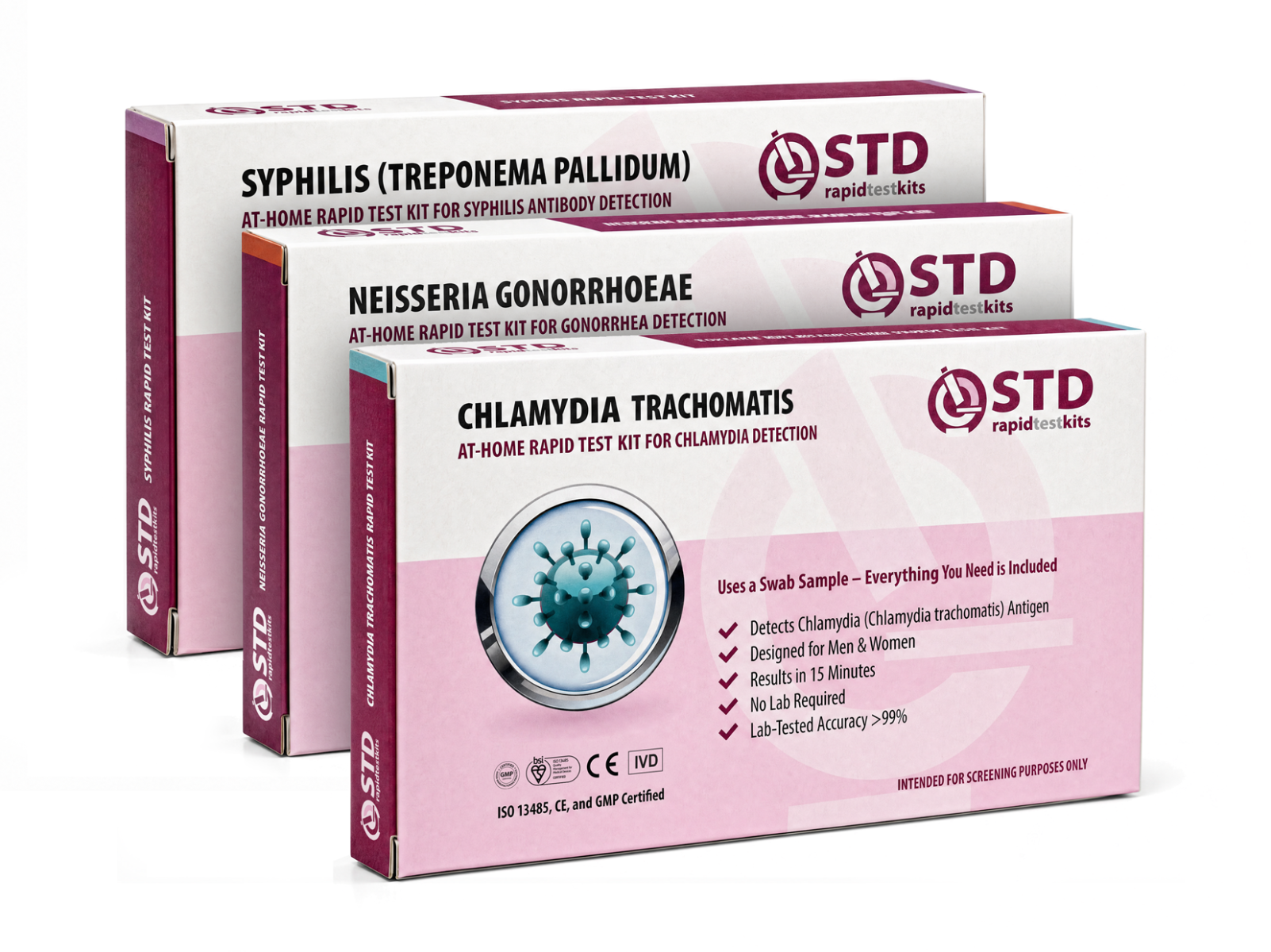
Two honest limitations: at-home rapid tests use lateral-flow chemistry, which is meaningfully different from lab-based NAAT for analytical sensitivity. They are great screens; lab confirmation is the standard for definitive diagnosis. And the at-home HPV self-collection kit available on this site is validated for vaginal self-swab only. Male readers needing HPV evaluation should see a clinician, because no validated home HPV test for men currently exists.
You Deserve Answers, Not Assumptions
The viral shift in STI epidemiology isn't a reason to be afraid. It's a reason to update the mental model most of us were given about sexual health. "Tested" and "clean" are not synonyms anymore, if they ever were. A negative chlamydia result tells you about chlamydia. It tells you nothing about herpes or HPV.
The good news is that the same three actions handle most of the new landscape: HPV vaccination if you haven't had it, suppressive antivirals for diagnosed herpes, and a testing routine that periodically includes the viral side, not just the bacterial three. None of those is dramatic. All of them work better than waiting until something visible forces a conversation.
If you want a private place to start, an at-home panel can give you a fast preliminary read while you decide whether to add a clinic visit. Home testing complements clinical care; it doesn't replace it.
Three actions that handle most of the new landscape
- Get HPV vaccination if you haven't already. ACIP recommends it through age 26 with shared decision-making through age 45, and it protects against strains you may not have encountered yet.
- Discuss suppressive antiviral therapy with a clinician if you have been diagnosed with herpes. Daily acyclovir or valacyclovir reduces both outbreak frequency and asymptomatic shedding.
- Add an HSV-2 antibody check to your next routine STI panel. The bacterial-only panel won't tell you, and you have to ask for type-specific serology specifically.
FAQs
- Can I have herpes if my STI tests came back negative?
- Yes. Most U.S. clinics don't include type-specific herpes serology in a routine STI panel unless you specifically ask for it, and herpes antibody tests need about 12 weeks after exposure to turn positive. A clean bacterial panel says nothing about your herpes status. If you want to know, request type-specific HSV-1 and HSV-2 IgG testing.
- Why are herpes and HPV harder to treat than chlamydia?
- The short answer: there is no antibiotic equivalent for viruses. Chlamydia clears in 7 to 10 days on a course of doxycycline. Herpes and HPV have no comparable cure. Daily antivirals can suppress herpes outbreaks and reduce shedding, and most HPV infections clear on their own within two years per the CDC, but neither treatment removes the virus from the body the way antibiotics clear bacteria.
- Do condoms protect against herpes and HPV?
- Partially. Condoms reduce transmission risk for both viruses but don't eliminate it, because both viruses can be shed from skin a condom doesn't cover (groin, inner thighs, scrotum, vulva). The reduction is meaningful enough to keep using condoms, but layering with HPV vaccination and partner communication closes more of the gap than condoms alone.
- Is HPV dangerous for men if there are no symptoms?
- Most HPV infections in men clear without consequence. A subset of high-risk strains can cause genital warts or, rarely, oropharyngeal, anal, or penile cancers. The risk is meaningful enough that the CDC recommends HPV vaccination for men through age 26, with shared decision-making through age 45. Routine HPV screening for men doesn't exist because no validated test has been approved.
- Can I test for herpes and HPV at home?
- An at-home HSV-2 antibody fingerstick blood test is available and accurate when used at least 12 weeks after suspected exposure. An at-home HPV self-collection swab is available, but the validated version is for vaginal self-swab only. Men needing HPV evaluation should see a clinician. For visible lesions, a clinic swab/PCR is more accurate than any antibody test.
- What happens if chlamydia or gonorrhea goes untreated?
- In women, untreated chlamydia or gonorrhea can ascend to the upper reproductive tract and cause pelvic inflammatory disease, scarring, ectopic pregnancy risk, and infertility. In men, untreated infection can cause epididymitis. Both raise the risk of acquiring or transmitting HIV. This is why the bacterial three remain a screening priority even though they are no longer the most common STIs.
- Is HPV vaccination still worth getting if I'm already sexually active?
- Yes. Gardasil 9 protects against nine HPV strains, and most adults haven't encountered all of them. The CDC's ACIP recommends routine vaccination through age 26 and shared clinical decision-making for adults aged 27 through 45. The vaccine doesn't treat existing infections but it protects against strains you haven't met yet, which lowers your long-term cancer risk.
- Can I have a normal sex life with a herpes or HPV diagnosis?
- Yes. Most people with viral STIs have ordinary sexual relationships. The components are partner disclosure before intimacy, condoms during contact, daily suppressive antivirals for herpes if recommended, and HPV vaccination for partners who haven't had it. A diagnosis changes some of the logistics; it doesn't end the rest of your sexual life.
- World Health Organization. Herpes simplex virus fact sheet, with global HSV-1 and HSV-2 prevalence estimates.
- World Health Organization. Sexually transmitted infections (STIs) fact sheet, global incidence and burden estimates.
- U.S. Centers for Disease Control and Prevention. Genital Herpes overview, including asymptomatic transmission and the comparison of mild symptoms to pimples or ingrown hairs.
- U.S. Centers for Disease Control and Prevention. About Genital HPV Infection, including the statement that HPV is the most common STI and that any sexually active person can acquire it.
- U.S. Centers for Disease Control and Prevention. National STI surveillance annual statistics, provisional 2024 chlamydia and gonorrhea case counts.
- U.S. Centers for Disease Control and Prevention. STI Treatment Guidelines, genital herpes section with HSV-2 serologic screening guidance.
- U.S. Centers for Disease Control and Prevention. Immunization schedules including ACIP HPV vaccination recommendations.
