

Published: September 2025 | Last updated: April 2026 | Editorial review and quality control: Martina N.
Herpes, chlamydia, and gonorrhea sit at the top of the U.S. sexually transmitted infection list. Each one spreads easily, often without producing symptoms, and affects millions of people who have no idea they are carrying the virus or bacteria. This article walks through how each infection works, what symptoms to watch for when they do appear, what happens when one is left untreated, and when testing actually gives you a reliable result.
The numbers matter. According to the CDC's most recent STI surveillance summary, more than 2.2 million combined cases of chlamydia, gonorrhea, and syphilis were reported nationwide in 2024, and those totals only count infections that someone tested for and a clinician reported. Herpes is not a nationally notifiable condition, so its true scale lives in seroprevalence research rather than case counts. The gap between how many people carry these infections and how many know they carry them is the story worth understanding.
What are the three most common STIs in the United States?
Herpes, chlamydia, and gonorrhea. Herpes is the most widespread by overall prevalence, with most carriers unaware they have it. Chlamydia is the most reported infection year after year, with more than 1.5 million cases reported in 2024 per CDC surveillance. Gonorrhea is the second most reported and faces growing antibiotic resistance. All three can be present and transmissible without producing any noticeable symptoms, which is why testing matters even when nothing feels wrong.
Key Takeaways
- Most people carrying chlamydia, gonorrhea, or herpes feel completely fine. The majority of bacterial infections are asymptomatic, and most herpes carriers either never had a noticeable outbreak or attributed early symptoms to something else.
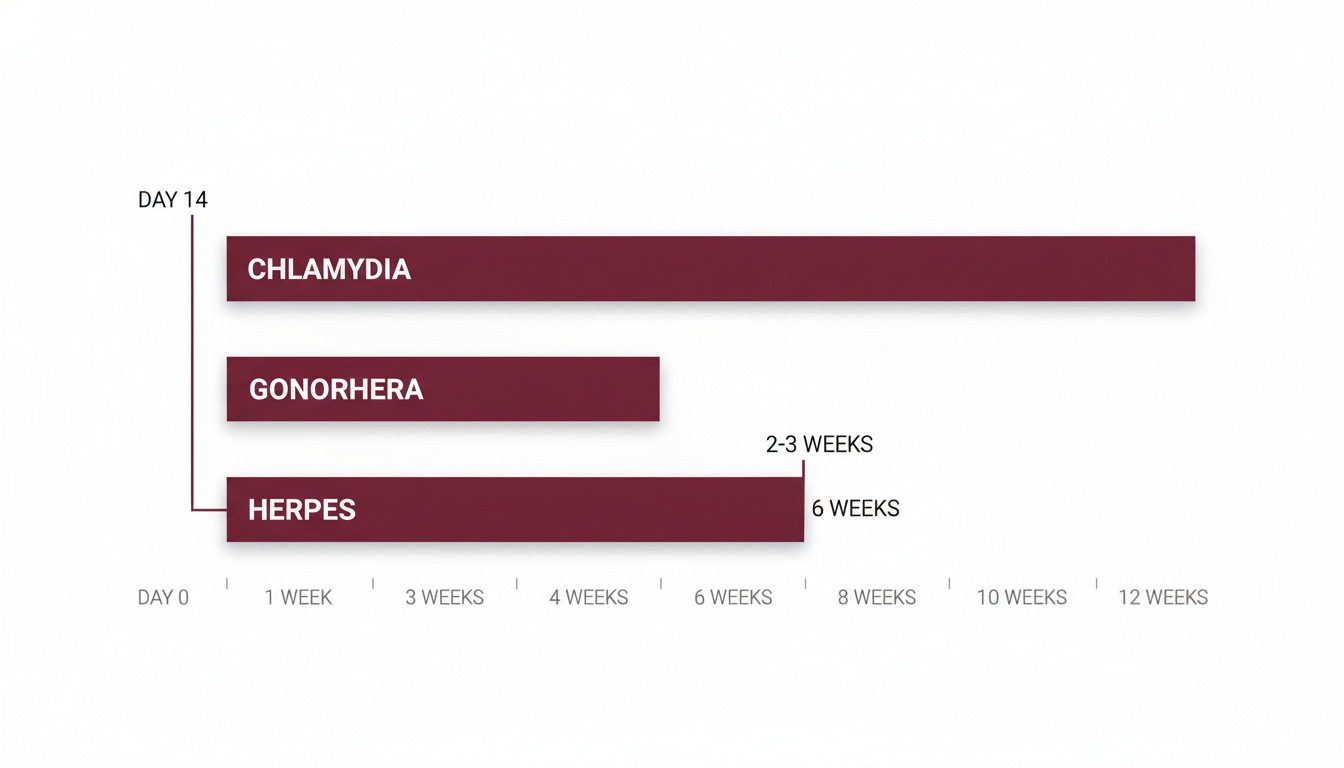
- Reliable testing windows differ by infection: chlamydia from 14 days post-exposure, gonorrhea from 2 to 3 weeks, herpes via blood antibody test from 6 to 12 weeks. Testing too early risks a false negative even when infection is present.
Herpes: The Most Widespread STI Most People Have Never Tested For
Herpes is the most prevalent sexually transmitted infection in the United States, and it is also the one most wrapped in confusion, stigma, and outdated information. There are two types: HSV-1, which most commonly causes oral herpes (cold sores), and HSV-2, which most commonly causes genital herpes. The distinction matters less than people often think. HSV-1 can and does cause genital herpes, and once established in the body the two types behave similarly, both setting up lifelong residence in nerve ganglia and reactivating periodically.
The scale is striking. Per American Sexual Health Association estimates, about 1 in 8 (roughly 12%) of people aged 14 to 49 carry genital HSV-2, and HSV-1 seroprevalence among adults sits above 50 percent. Herpes is extraordinarily common. The reason it does not feel that way is that the vast majority of people carrying the virus do not know it, either because they never had a noticeable outbreak, or because they had symptoms they attributed to a razor cut, a yeast infection, an ingrown hair, or friction irritation.
When herpes does cause symptoms, they typically show up as clusters of small, painful blisters or sores around the mouth, genitals, buttocks, or thighs. The first outbreak is usually the most severe, often accompanied by flu-like symptoms, swollen lymph nodes, and a general feeling of illness. Subsequent outbreaks tend to be shorter and milder, and for many people they become infrequent over time. The clinical reality the public most often misses: herpes can be transmitted even when no sores are visible, through a process called asymptomatic shedding. Someone can pass herpes to a long-term partner having never had a single visible outbreak themselves.
There is no cure for herpes. The virus stays in the body for life. That is less alarming than it sounds. For most people herpes is a manageable condition rather than a debilitating one. Daily antiviral suppressive therapy reduces the frequency and severity of outbreaks and lowers (without eliminating) transmission risk to a partner. Condoms reduce risk meaningfully but cannot eliminate it, because herpes can be present on skin not covered by a condom. Our deeper read on why so many people have herpes without knowing it goes into the asymptomatic-shedding science in more detail.
The reliable testing window for herpes via blood antibody test is roughly 6 to 12 weeks after exposure, with most people seroconverting by 12 weeks. The CDC's herpes testing page notes that current antibody tests can take up to 16 weeks or more to detect infection in some people, so a negative early result is worth confirming later.
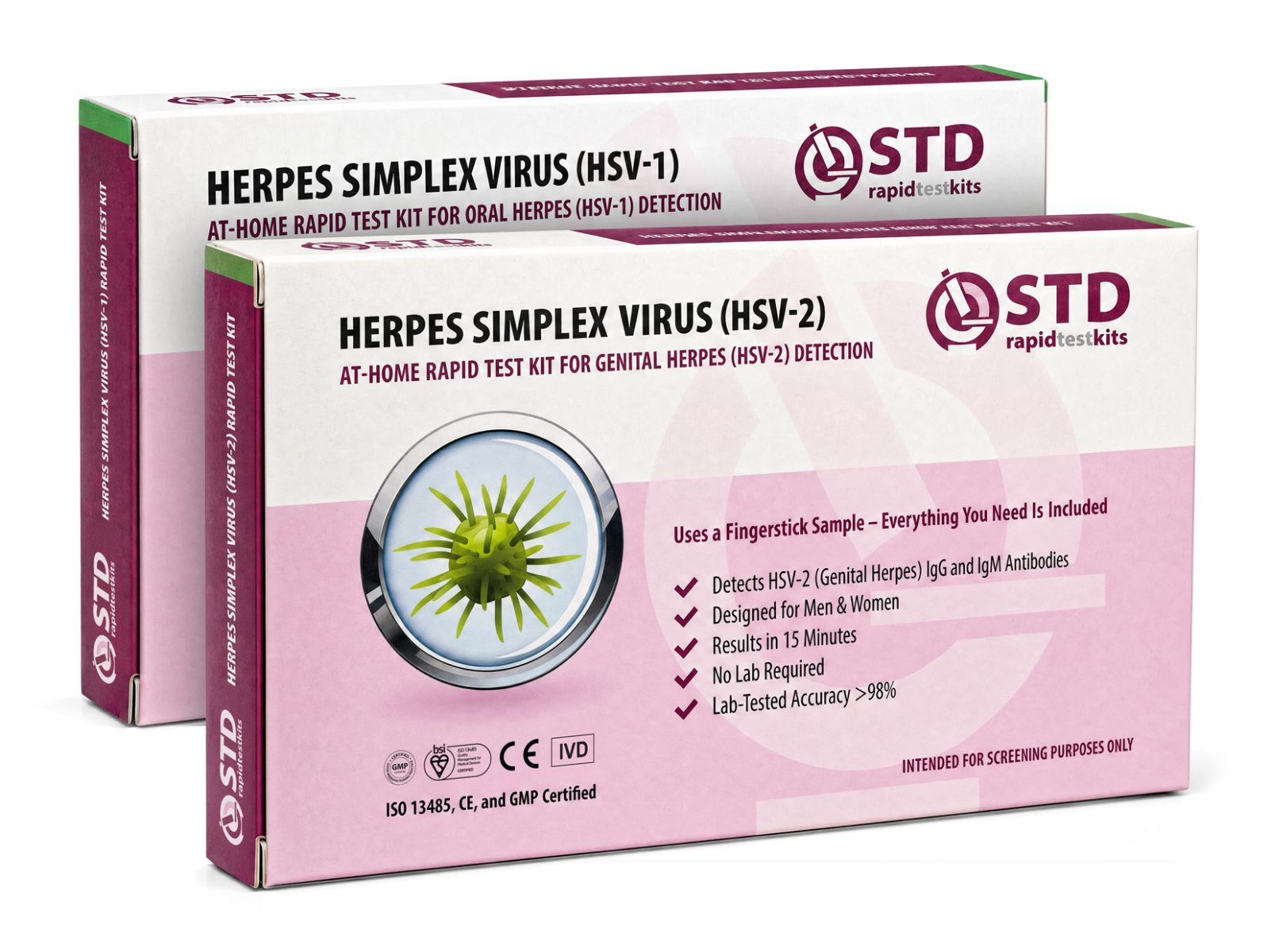
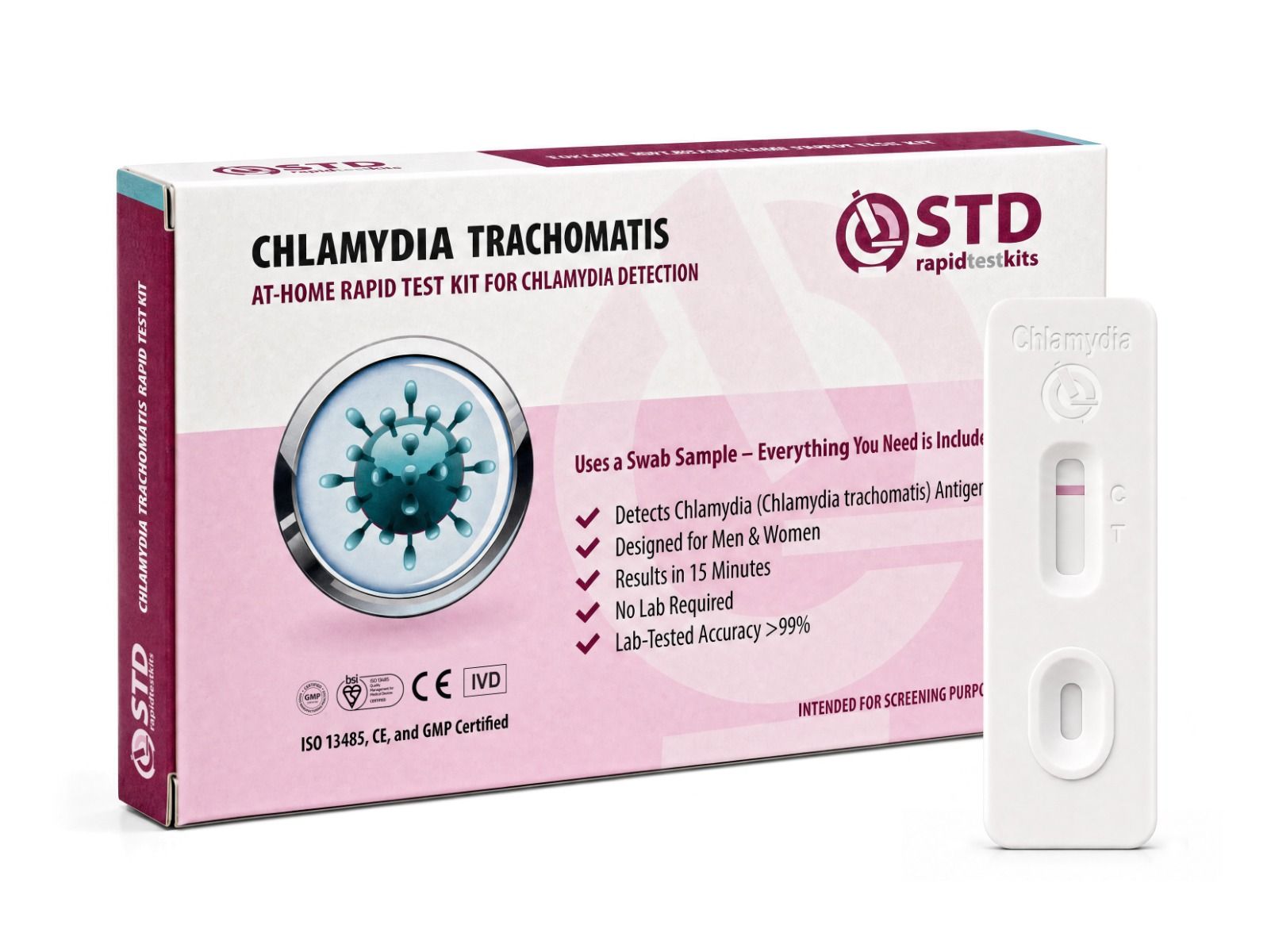
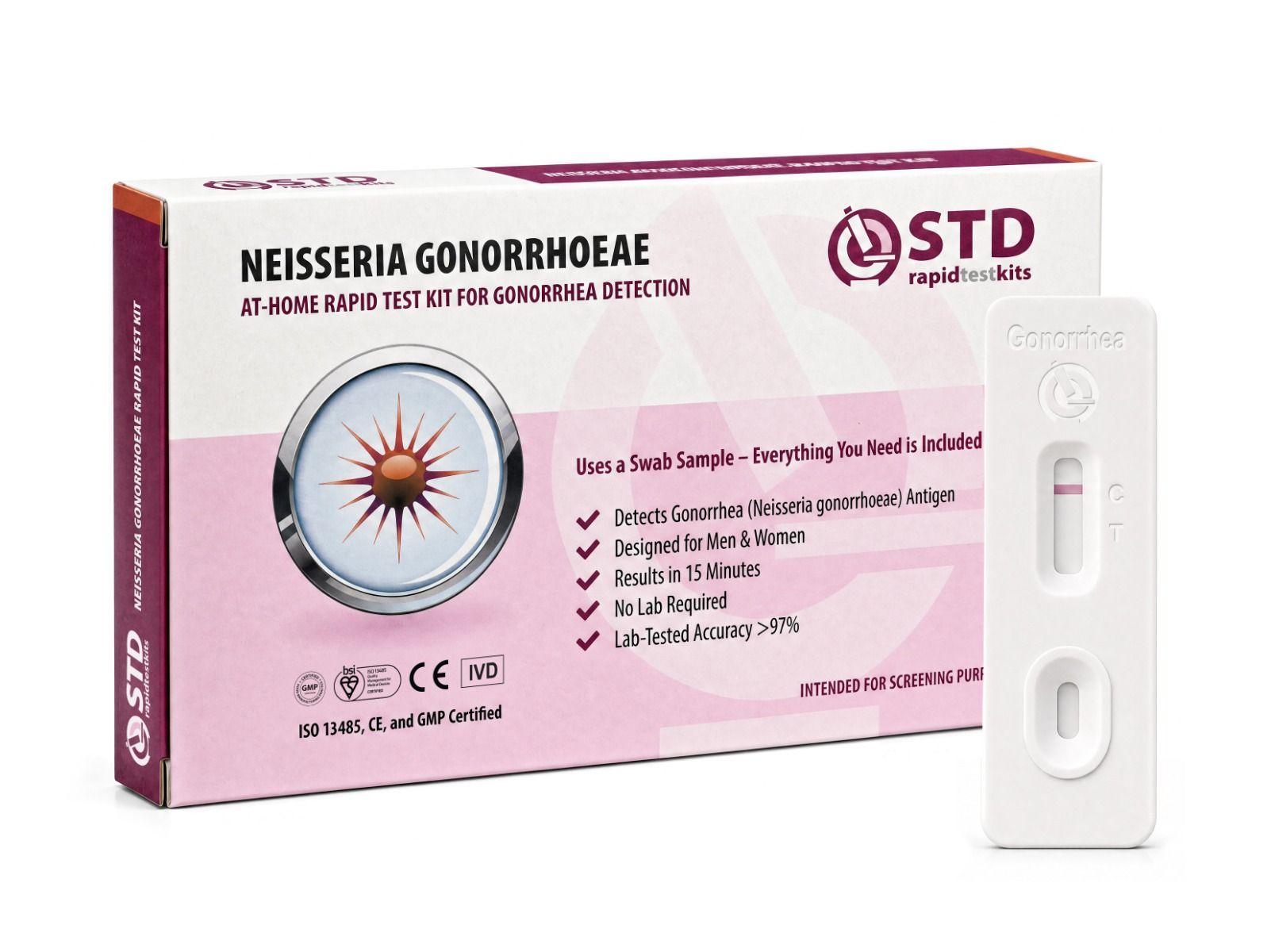
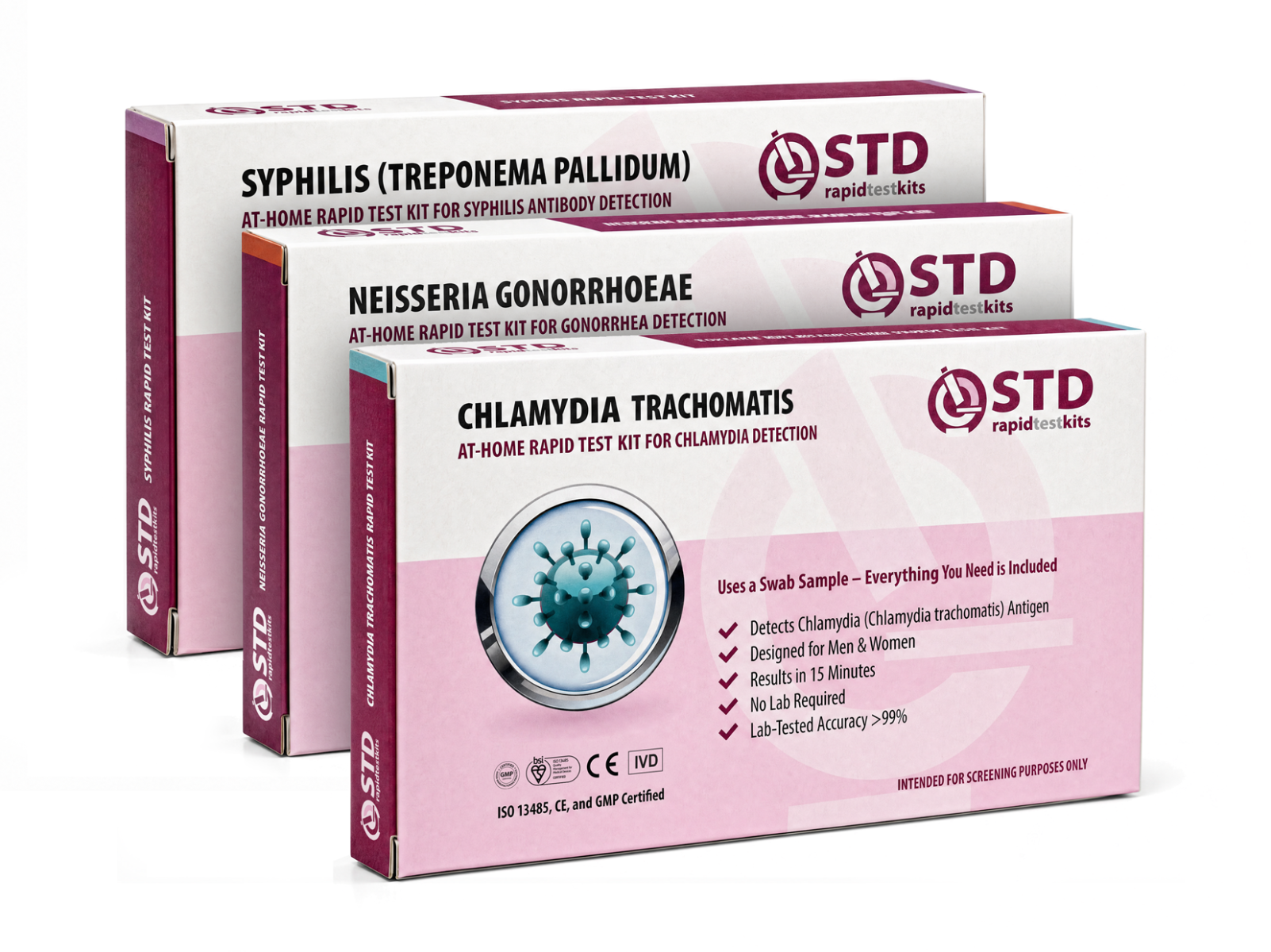
We sell at-home rapid tests for herpes, chlamydia, gonorrhea, and other STIs. Banners throughout this article link to kits that match the section's topic; we recommend products based on fit-for-purpose for your concern, not commercial benefit.
Chlamydia: The Most Reported STI in America, and the Quietest
Chlamydia is the most frequently reported notifiable STI in the United States. It tops the official case count year after year, with more than 1.5 million cases logged in 2024 (down roughly 8 percent from 2023) per CDC surveillance. Chlamydia's public-health significance comes as much from how silently it operates as from its scale.
The majority of people with chlamydia have no symptoms. No discharge, no discomfort, nothing that prompts a doctor's visit. This is what makes chlamydia a textbook silent infection. It spreads readily through unprotected vaginal, anal, and oral sex while the people carrying it have no idea anything is wrong. When symptoms do appear in men, they tend to include a burning sensation during urination, unusual penile discharge, or swollen and tender testicles. In women, symptoms may include unusual vaginal discharge or burning when urinating, easy to dismiss or attribute to a urinary tract infection.
Untreated chlamydia is where the consequences become serious. In women, an undetected infection can travel upward through the reproductive tract and cause pelvic inflammatory disease (PID), a condition that can lead to chronic pelvic pain, ectopic pregnancy, and infertility. In men, untreated chlamydia can cause epididymitis, a painful inflammation of the tube carrying sperm that in severe cases affects fertility. Chlamydia can also pass from mother to newborn during delivery, causing eye infections or pneumonia in the baby. Per the CDC's chlamydia fact sheet, annual screening is recommended for all sexually active women under 25, and for older women with new or multiple partners.
This is also why regular testing matters even for people in long-term relationships. Being committed to one partner does not protect you from an infection either of you may already be carrying without knowing. Our piece on whether you can get an STD in a committed relationship addresses that directly. For a broader look at what happens when these infections go undiagnosed, the long-term effects of undiagnosed STDs is worth reading.
The encouraging part: chlamydia is highly curable with antibiotics. A single course of treatment clears the infection in most cases. The challenge is getting diagnosed in the first place, which requires testing. The reliable testing window for chlamydia is 14 days after exposure.
Gonorrhea: Curable but Increasingly Resistant
Gonorrhea is the second most reported STI in the United States. Like chlamydia it is bacterial and curable, but gonorrhea comes with a complication that has public-health experts increasingly concerned: it is steadily developing resistance to the antibiotics used to treat it. The CDC's gonococcal infection treatment guidelines recommend a single 500 mg ceftriaxone intramuscular injection as first-line therapy for adults under 150 kg, after older antibiotic options lost effectiveness against most circulating strains. Our deeper article on super-gonorrhea and who is most at risk covers the resistance picture in detail.
Gonorrhea infects mucous membranes: the genitals, rectum, throat, and eyes. It spreads through unprotected vaginal, anal, and oral sex. Like chlamydia, it frequently causes no symptoms, particularly in women. When symptoms do appear, they tend to be more pronounced in men, with burning during urination and unusual discharge that may be yellow, white, or green. In women, symptoms when present may include increased vaginal discharge, pain during urination, or bleeding between periods. Rectal gonorrhea, acquired through anal sex, can cause rectal pain, discharge, or bleeding, and is also frequently asymptomatic. Pharyngeal gonorrhea (throat infection) is almost always silent and gets diagnosed only when someone tests specifically for it.
One important note about pharyngeal infection: a throat-swab test is the right tool to detect it, and we do not sell a throat swab. Our at-home rapid kits use genital swabs only. If oral exposure is your specific concern, a clinic test is the right path; our genital and blood-based home tests cover the adjacent risk from the same exposure event but cannot replace a pharyngeal swab.
Untreated gonorrhea carries similar long-term risks to chlamydia: PID in women, epididymitis in men, and increased susceptibility to HIV infection. In rare cases gonorrhea spreads to the bloodstream and joints, causing disseminated gonococcal infection that requires hospital care. It can also pass to a newborn during delivery and cause severe eye infection. The treatment-resistance picture makes early diagnosis more important than ever, because the longer an infection persists the more chances the bacteria have to be transmitted.
The reliable testing window for gonorrhea is approximately 2 to 3 weeks after exposure.
Can You Have These Infections Without Knowing It?
Herpes, chlamydia, and gonorrhea have very different biology, treatment options, and long-term implications. They share one critical feature: all three can be present in your body, and transmissible to a partner, without producing a single symptom you would notice on your own.
This is not a small caveat. It is the defining clinical reality of these infections, and it is why the assumption that something would feel wrong if anything were wrong does not hold. The biology is not designed to alert you. Chlamydia has been called the silent epidemic for good reason. Herpes shedding happens between outbreaks, often for years after the initial infection, with no external sign. Gonorrhea sits in the throat or rectum without any discomfort. The only thing that reliably tells you whether you have any of these is a test.
A second pattern worth naming: people frequently underestimate these infections because of how they imagined an STI would feel or look. A mild herpes outbreak gets written off as an ingrown hair or razor burn; throat gonorrhea reads as a passing cold; chlamydia produces nothing noticeable at all for months on end. The gap between what people expect an STI to feel like and what these three actually feel like is exactly the gap through which they spread.
Regular testing is best understood as a routine part of managing your health when you are sexually active, the same way you would manage a cholesterol check or a dental cleaning. Per the CDC's STI screening recommendations, annual screening is advised for sexually active people under 25 and for older adults with new or multiple partners. Many sexual-health clinicians extend that to recommend testing whenever you have a new partner, regardless of age. If anxiety about the testing process itself has been the blocker, our guide on what to do when you are scared to get tested addresses that directly.
CDC recommends yearly chlamydia and gonorrhea screening for all sexually active women younger than 25 years, as well as older women with risk factors such as new or multiple sex partners.
Who Is Most at Risk for These Three Infections?
Any sexually active person can contract any of these infections, and the epidemiology makes no demographic exceptions. Herpes, chlamydia, and gonorrhea do not discriminate by relationship type, sexual orientation, or how careful someone believes they are being. Certain factors do raise risk, and understanding them is useful as long as you do not slide into the false comfort of assuming the factors do not apply to you.
Young people aged 15 to 24 account for a disproportionate share of reported STI cases, roughly half of all new infections annually per CDC STI surveillance. This pattern reflects a combination of factors: lower rates of consistent condom use, less frequent testing, and the biological reality that younger cervical and urethral mucosa may be more susceptible to certain pathogens. People with multiple partners face higher cumulative exposure simply because each new partner represents a new exposure possibility. People who have unprotected vaginal, anal, or oral sex with partners of unknown STI status face the highest individual risk per encounter.
The category most consistently missed in STI prevention conversations is people in long-term monogamous relationships. Chlamydia and gonorrhea are routinely discovered in people who have not had a new partner in months or years, either because one partner had an existing untreated infection at the start of the relationship, or because of contact outside the relationship. Being in a committed relationship is a reason to have an honest conversation about testing history, not a reason to skip testing altogether.
Previous STI infection raises future risk in non-obvious ways. Having chlamydia or gonorrhea once does not confer immunity. Reinfection is common when a treated person resumes sex with an untreated partner. Herpes does not protect against the other type, so someone with HSV-1 can still acquire HSV-2 and vice versa. Critically, having any STI, including herpes, raises biological susceptibility to HIV by creating inflammation and disruption to the mucosal barriers that would otherwise offer some protection. The infections do not exist in isolation; they interact in ways that make comprehensive testing a smarter approach than testing for one thing at a time.
Roughly half of all new STIs reported in the U.S. each year occur in people aged 15 to 24, per CDC surveillance. New STIs in long-term monogamous relationships are not unusual either, often reflecting an undiagnosed infection one partner brought into the relationship. Risk is rarely about how you look on paper; it tracks exposure history and time since the last test.
How Do You Prevent Herpes, Chlamydia, and Gonorrhea?
Prevention advice for STIs tends to fall into two categories: abstinence (the only certain method) and everything else. That framing is technically accurate, but for people who are sexually active and intend to remain so, the practical question is which measures meaningfully reduce risk and which create a false sense of security.
Condoms used correctly and consistently are highly effective at reducing transmission of chlamydia and gonorrhea, both of which spread primarily through infected fluids contacting mucous membranes. For herpes the picture is more complicated. Condoms reduce transmission risk significantly, but herpes can shed from skin in the genital area not covered by a condom, so condom use offers meaningful but incomplete protection. For couples in which one partner has herpes and the other does not, combining daily antiviral suppressive therapy with consistent condom use offers the greatest risk reduction short of abstinence; clinicians often recommend this combination because each tool addresses a different transmission pathway.
Regular testing is itself a prevention tool, not just a diagnostic one. Knowing your status lets you treat curable infections before passing them on, and knowing a partner's status lets both people make informed decisions. The cultural shift toward normalizing STI testing, treating it as a routine health check rather than a sign of suspicion or failure, is one of the most impactful population-level prevention moves available. An honest conversation with a new partner about recent testing is awkward for about thirty seconds. An untreated chlamydia infection causing pelvic inflammatory disease is a longer and harder problem.
Vaccination covers two infections related to this article's territory: HPV, which has a highly effective vaccine recommended as routine vaccination through age 26 and shared clinical decision-making through age 45 per current ACIP guidance, and hepatitis B, which is also vaccine-preventable. Neither herpes, chlamydia, nor gonorrhea has an approved vaccine yet, so testing and barrier methods remain the primary prevention tools for all three.
| Infection | Symptoms in men (when present) | Symptoms in women (when present) | Important note |
|---|---|---|---|
| Herpes (HSV-1 / HSV-2) | Painful blisters or sores on genitals, buttocks, or thighs; flu-like symptoms during the first outbreak | Same as men; first outbreak often more severe; sores can be internal and harder to see | Most people have no recognizable symptoms; asymptomatic shedding occurs between outbreaks |
| Chlamydia | Burning during urination; unusual penile discharge; swollen or tender testicles | Unusual vaginal discharge; burning during urination; bleeding between periods | Majority of cases in both men and women have no symptoms at all |
| Gonorrhea | Burning during urination; yellow, white, or green penile discharge; swollen testicles | Increased vaginal discharge; pain during urination; bleeding between periods | Women are more likely to be asymptomatic; rectal and throat infections are almost always symptom-free |
FAQs
- What is the most common STI in the United States?
- Among reportable infections, chlamydia consistently holds the top spot, with the most cases reported to the CDC each year. By overall prevalence (including the many infections nobody reports because nobody knows they have one), herpes is the most widespread, affecting tens of millions of Americans, most of whom have never been tested.
- Can you have these infections and feel completely fine?
- Yes, and it is the rule rather than the exception. The majority of people with chlamydia or gonorrhea have no symptoms at all. Most people with herpes have either no outbreaks or outbreaks so mild they get attributed to something else, like razor burn or a yeast infection. Feeling fine is not the same thing as being infection-free.
- How long after exposure should I wait to get tested?
- The short rule: wait at least two weeks before testing for anything. For herpes specifically, plan a 12-week test to be confident, since a 6-week result that comes back negative may not have had time to turn positive yet, and CDC notes some antibody tests can take up to 16 weeks to detect infection. Chlamydia clears the two-week bar at 14 days; gonorrhea is reliable around 2 to 3 weeks. Anything earlier risks a false negative because antibodies or detectable bacterial loads have not built up yet.
- Can these infections be cured?
- Chlamydia and gonorrhea are bacterial and curable with antibiotics. A single course is usually enough. Herpes establishes lifelong residence in nerve tissue and has no cure. Antiviral therapy controls it effectively, reducing outbreak frequency and lowering transmission risk to partners.
- Can chlamydia or gonorrhea be transmitted through oral sex?
- Yes. Both infections can spread through oral sex and can infect the throat as well as the genitals and rectum. Throat (pharyngeal) gonorrhea is frequently asymptomatic and gets missed by routine genital-only testing unless someone specifically asks for a throat swab. The at-home rapid kits we sell test from genital swab samples, not throat samples, so a clinic test is the right tool when oral exposure is the specific concern.
- Can herpes spread when no sores are visible?
- Yes. The herpes virus periodically sheds from skin even when no sores are present, a process called asymptomatic shedding. People with herpes can transmit it to a partner during periods of zero visible symptoms, often without realizing they have done so. Daily antiviral suppressive therapy reduces (but does not eliminate) shedding and transmission risk.
- Do condoms protect against all three infections?
- Condoms used correctly and consistently dramatically reduce chlamydia and gonorrhea transmission, both of which spread through infected fluids and mucosal contact. Condoms also reduce herpes transmission, but not completely, because herpes can be present on skin not covered by a condom. Condoms are one of the most effective tools available, but no single barrier method is 100 percent against all three.
- Should I test for all three at the same time?
- If you are testing after a potential exposure to any of these, testing for all three together is sensible. The bacterial infections co-occur frequently and often share the same exposure event. Our 3-in-1 chlamydia, gonorrhea, and syphilis kit covers the most-reported bacterial STIs in one home test. Herpes uses a separate blood antibody test because the technology is different.
- U.S. Centers for Disease Control and Prevention. Annual STI surveillance summary including chlamydia, gonorrhea, and syphilis case counts.
- U.S. CDC chlamydia fact sheet. Symptoms, testing, treatment, and screening guidance for sexually active women under 25.
- U.S. CDC gonococcal infection treatment guidelines. First-line ceftriaxone 500 mg therapy and antibiotic-resistance surveillance.
- U.S. CDC genital herpes overview. HSV-1 and HSV-2 epidemiology, symptoms, asymptomatic shedding, antiviral suppressive therapy, and antibody testing window guidance (the linked overview's testing sub-page elaborates on detection timing).
- U.S. CDC STI screening recommendations. Annual screening guidance by age, gender, and risk factor.
- American Sexual Health Association. Herpes prevalence statistics (about 1 in 8 of those aged 14 to 49 carry genital HSV-2) and HSV-1 versus HSV-2 epidemiology.
