
Published: November 2025 | Last updated: May 2026 | Editorial review and quality control: Martina N.
Pop music shapes more than mood. It shapes assumptions, and the assumption that sex is supposed to be spontaneous, unprotected, and shame-free has been climbing in lyrics for over a decade. When the soundtrack of dating culture treats condoms as optional and STIs as a punchline, real choices follow. Younger listeners absorb the framing first, often without explicit sex education to push back on it. The cumulative effect is not a single song; it is the gap between what songs depict and what bodies actually do.
This piece walks through what the research shows about media and sexual behavior, why moments like the recent Honey Singh controversies surface a bigger cultural pattern, and what a practical response looks like for anyone who has caught themselves thinking “I should probably get tested” and never quite gotten around to it.
This article is published by stdrapidtestkits.com, which sells at-home STI testing kits. We recommend products based on fit for the reader’s concern, not commercial benefit.
Key Takeaways
- Music that normalizes condomless sex is associated with lower condom use and later STI testing among younger listeners, per decades of adolescent-health research.
- Most chlamydia, gonorrhea, herpes, and HPV infections cause no symptoms, so routine testing on a schedule is the only reliable way to know your status.
When music carried public-health messages, and when it stopped
Pop culture has never been shy about sex, but for a brief stretch in the 1990s, it was loud about safe sex. Salt-N-Pepa released “Let’s Talk About Sex” in 1991, with an alternate radio version commissioned around public-health awareness. The song explicitly invited a conversation about protection. TLC folded HIV warning into a chart-topper with “Waterfalls.” Madonna handed out condoms at concerts. For a moment, the mainstream charts and the public-health agenda were briefly aligned.
That alignment has thinned. By the late 2010s, the dominant pop and hip-hop framing around sex had shifted toward spontaneity, dominance, and the absence of any visible prevention. References to condoms, testing, or consent had become rare enough that mentions stood out by their absence rather than by their presence.
Honey Singh’s recurring controversies are one visible example. His 2025 song “Maniac” drew a public-interest litigation in India over what critics called the overt sexualization of women, and a January 2026 Delhi concert remark on unprotected sex among Gen Z drew condemnation for the language he used, even though he later said the underlying message was to encourage condom use. The story matters less for what one performer did and more for the cultural pattern it sits inside.
Two cultural shifts ran in parallel. School-based sex education thinned in many U.S. states, and explicit references to condoms in pop and hip-hop tracks dropped sharply. The result was a generation that learned more about sex from playlists than from classrooms, with most playlists silent on prevention.
What the research actually says about music and behavior
The link between media content and sexual behavior is one of the more studied subjects in adolescent health. The American Academy of Pediatrics has issued formal policy statements noting that exposure to sexual content in popular media is associated with earlier sexual initiation and lower rates of contraceptive use. A widely cited 2006 study in Pediatrics by Martino and colleagues tracked adolescents over two years and found that those most exposed to lyrics described as sexually degrading were substantially more likely to have advanced to intercourse than peers with low exposure.
Newer surveys reinforce the same direction. The CDC’s Youth Risk Behavior surveillance program has tracked a multi-year decline in condom use at last sex among sexually active U.S. high school students. The reasons are layered: shifting partner-counting norms, less explicit school-based prevention education, growing reliance on hormonal contraception that does not protect against STIs, and a media environment that rarely shows protection at all. Music alone does not cause the trend. It is one thread in an environment that makes skipping protection feel like the default, reinforced by thin school-based education and a media landscape that rarely shows prevention at all.
Beliefs follow behavior. A common myth among younger sexually active people is that protection is optional once a partner feels familiar. That belief mirrors how risk is framed in many popular tracks: protection is for strangers and for one-night situations, never for people you trust. The clinical reality cuts the other way. Familiarity does not change biology. A partner you know well can still be carrying an asymptomatic infection acquired from a relationship that ended years ago.
| Source | Finding |
|---|---|
| American Academy of Pediatrics policy statements on media and adolescents | Sexual content in popular media is consistently associated with earlier sexual debut and lower contraceptive use among adolescents. |
| Pediatrics, 2006 (Martino et al.) | High exposure to sexually degrading music lyrics was associated with substantially greater likelihood of advancement to intercourse over a two-year follow-up period. |
| CDC Youth Risk Behavior Survey, multi-year trend | Condom use at last intercourse among sexually active U.S. high school students has declined steadily over the past decade. |
Why the Honey Singh moment matters more than the lyric
When the Honey Singh stage remark hit headlines in early 2026, the cycle was familiar. News outlets ran the outrage. Talk shows booked panelists. Activists demanded apologies, regulations, takedowns. Within a week the conversation moved on. What the cycle rarely contains is the next sentence the audience actually needs: where to get tested, how long after exposure to test, what the test will and will not detect, what to do if it comes back positive.
Clinicians and educators commonly describe a pattern where younger patients arrive convinced that testing is something for people who did something wrong. That framing of STIs as a character flaw, rather than a common health reality, suppresses screening rates. People who would never skip a dentist appointment will skip an STI panel for years, because nothing in the surrounding culture has told them it is a routine part of looking after themselves.
Honey Singh’s stage remark matters because of what failed to come after it. The conversation about exposure windows, partner notification, and what an asymptomatic infection actually feels like never made it onto the talk shows or into the comment threads. This article walks through that practical layer the news cycle skipped.
Many STIs have no symptoms or may only cause mild symptoms, so people can have an infection but not know it.
STIs do not care if you are “careful,” they care if you test
The most stubborn myth in dating culture, the one pop music quietly reinforces, is that risk lives elsewhere. Risk is for sketchy people. Risk is for the partner you do not know. Once you trust someone, the thinking goes, you can stop worrying. The biology of common infections is indifferent to that frame.
Chlamydia is the textbook case. The majority of chlamydial infections cause no symptoms at all, particularly in women, where untreated infection can quietly cause pelvic inflammatory disease and fertility problems. Gonorrhea is similar at the genital site and more often silent in the throat and rectum. Herpes simplex virus type 2 sheds and transmits between outbreaks, including from people who have never noticed a sore. Human papillomavirus is so prevalent that most sexually active adults acquire it at some point, usually without ever knowing.
None of those infections care whether the person who passed them on seemed trustworthy. They respond to exposure, and a partner from years ago can quietly carry chlamydia, HPV, or HSV-2 forward into every relationship that follows without any visible sign that something has changed.
| Infection | Often asymptomatic? | Routine screening per CDC |
|---|---|---|
| Chlamydia | Yes, in a majority of cases | Annual screening for sexually active women under 25, and for older women with new or multiple partners |
| Gonorrhea | Frequently, especially throat and rectal sites | Annual for sexually active women under 25; at least annual for men who have sex with men |
| Herpes (HSV-2) | Often unrecognized; transmits between outbreaks | Targeted blood antibody testing when clinically indicated, not routine universal screening |
| HPV | Yes, in most cases | Cervical screening for women starting in their 20s; routine vaccination through age 26, shared clinical decision-making through age 45 |
What honest safe-sex messaging actually looks like
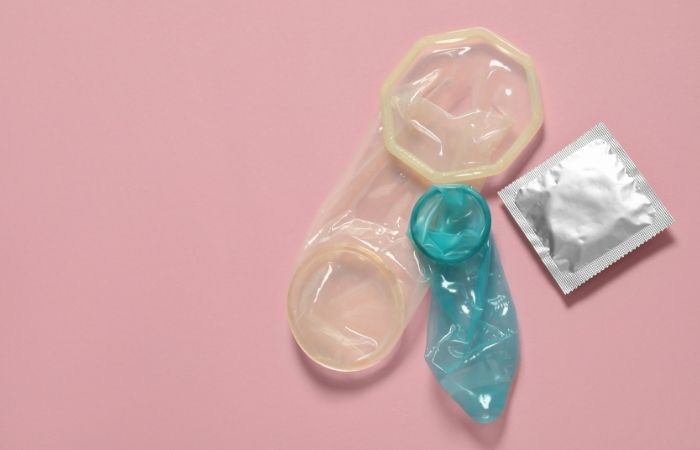
Safe sex is not just condoms, and it has never been just condoms. It is a small bundle of routine decisions: ongoing communication about boundaries, explicit consent, barrier use during the early months of a relationship and after partner change, and screening on a cadence that matches activity. Most pop music shows none of those decisions. Pleasure is performed, risk is hand-waved, and testing is invisible.
The artists who have folded prevention into their work have done it without sounding like a clinic brochure. Salt-N-Pepa made the conversation itself sound playful. Janelle Monáe has written about sex with care for the partner across from her. Frank Ocean has captured the emotional cost of hookup culture in ways that quietly support self-knowledge. None of those tracks killed the vibe; they added a layer.
Younger listeners are the audience most exposed to high-volume, repeat-play music, and the audience most affected by trends in screening. Public-health budgets for outreach are small; artist platforms are large. Frank Ocean and a handful of other contemporary artists have shown that prevention can sit inside a song without breaking its mood.
Testing is the bridge between culture and care
The reason testing keeps coming up in this article is not that we sell test kits, although we do. It is that screening is the single intervention that closes the loop between cultural messaging and individual outcomes. A lyric cannot give you a result, but a test can, and the friction between “I should probably test” and “I tested” is where most preventable transmissions sit.
According to the WHO, more than one million curable sexually transmitted infections are acquired every day worldwide among people aged 15 to 49. Most of those infections will be treated successfully once detected. The U.S. CDC’s 2024 surveillance data showed combined reported chlamydia, gonorrhea, and syphilis cases ticking down for the third year in a row, which is encouraging, but congenital syphilis kept climbing for a twelfth consecutive year. Better screening of pregnant people and their sexual partners is what bends the congenital line, and none of that happens without testing.
What CDC recommends is fairly specific. Everyone aged 13 to 64 should be tested for HIV at least once. Sexually active women under 25 should be screened annually for chlamydia and gonorrhea, and so should older women with new or multiple partners. Men who have sex with men benefit from at least annual screening for syphilis, chlamydia, and gonorrhea, with three- to six-month intervals for those with multiple or anonymous partners. For most everyone else, a baseline panel after a new partner, and a repeat at the relevant window-period mark, is the simplest rhythm to stick to.
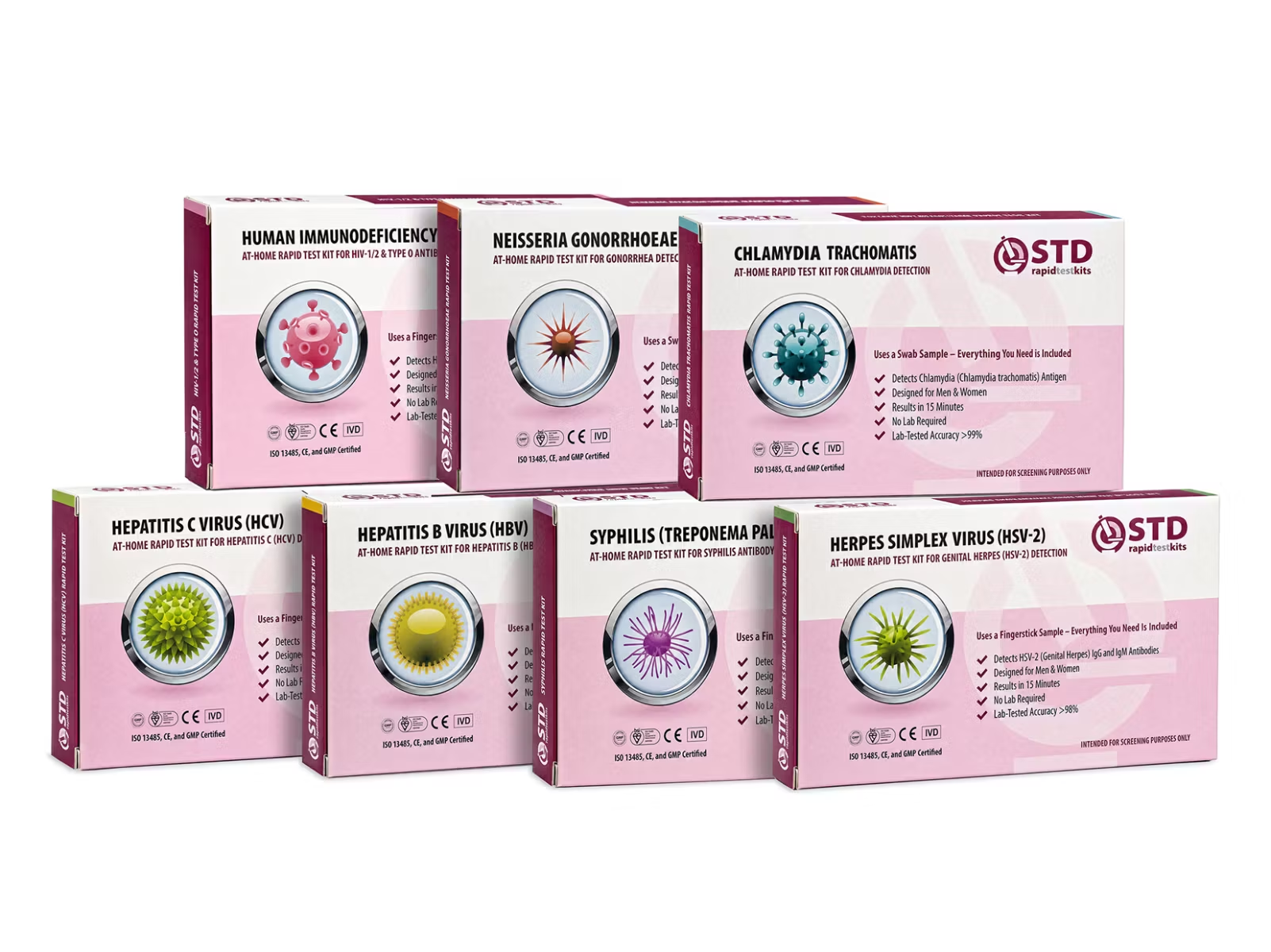
At-home rapid tests work as the first layer of that rhythm. Sample collection is private. Lateral-flow chemistry produces a result within minutes of running the test. These are screening tools, not laboratory NAAT confirmation, so a positive result is worth confirming through a clinic. What they remove is the activation cost of getting to a clinic in the first place, which is where most intentions to test quietly die.
What better lyrics could sound like
Small lyric choices add up. When Doja Cat slipped a brief “strap up” line into a track, it landed. When Frank Ocean wrote about hookup culture with emotional honesty, it deepened the song rather than killing it. These are not public-service announcements. They are realistic glimpses of how grown-ups actually navigate sex when they care about themselves and the person across from them.
What would help most is normalization. A chorus where testing together is part of the courtship. A verse where a couple stops to find a condom and the moment becomes more intimate, not less. A line that treats a recent negative panel as a flex. None of that requires sermonizing. It just requires the cultural assumption that the people in the song are people who take care of themselves.
Gen Z audiences already consume health content from creators they trust. Attaching honest prevention messaging to that reach is a craft choice that costs an artist nothing and lands where school syllabi no longer do.
Salt-N-Pepa, “Let’s Talk About Sex” (1991): modeled an explicit on-record conversation about protection and built it into a top-ten chart hit.
Frank Ocean: writes about hookup culture with emotional honesty, treating self-knowledge and care for the other person as part of the romance rather than a buzzkill.
Doja Cat, “Need to Know”: slipped a “strap up” line into the verse without breaking the song’s mood, showing that protection can sit inside a track rather than against it.
You deserve better than silence
The scandal in a lyric is rarely the lyric. What comes after the lyric is usually silence: silence around the quiet hookup, around the test that never happened, and around the worry that quietly compounds until the discomfort of acting finally outweighs the discomfort of not knowing.
If a song surfaced a worry for you, that worry is information. Forget the viral tweet or the apology demand. The practical move is a test, taken at home or at a clinic, on a schedule that fits your life. The result is just a result. Most of them are reassurance. The ones that are not are the start of treatment, which is faster, cheaper, and quieter the earlier it happens.
A simple testing cadence to keep
- Baseline panel after a new partner, before you drop barrier protection on each other.
- Repeat panel at the relevant window-period mark for the infections you screened for (e.g., 4 weeks for chlamydia/gonorrhea NAAT, 12 weeks for HIV antibody and syphilis).
- Annual rebase if you are sexually active per CDC, with three- to six-month intervals if you have multiple, new, or anonymous partners.
FAQs
- Can a song really change how someone thinks about condoms?
- Indirectly, yes. The change rarely comes from one song. It comes from the accumulated soundtrack. Repeated exposure to media that omits protection is associated with treating condom skipping as normal, especially in younger listeners. Layered with thin school-based sex education and limited public-health outreach, the cultural assumption shifts. The fix is to make accurate information just as easy to reach as the music.
- Why did Honey Singh’s recent remarks draw so much criticism?
- Two things were happening in parallel. His 2025 song “Maniac” drew a public-interest litigation for what critics described as the overt sexualization of women, and a Delhi concert remark in early 2026 used explicit language while urging condom use among Gen Z. He later apologized and said the underlying intent was to encourage protection. The bigger story is the gap the controversy exposed: a cultural environment that produces sexually explicit material with little accompanying prevention messaging.
- Do I need to test for STIs if I have no symptoms?
- Yes. Most chlamydia, gonorrhea, herpes, and HPV infections cause no symptoms, sometimes for years. Symptom-only testing misses the majority of transmissible cases and lets untreated infections progress to complications like pelvic inflammatory disease and infertility. Routine screening on a schedule appropriate for your activity is the only reliable way to know your status.
- I have only had a couple of partners. Is testing still relevant?
- Yes. Transmission is about exposure, not partner count. A single partner with an unknown status can transmit an infection they did not know they carried. A baseline panel after a new partner, and a repeat at the relevant window-period mark, is a sensible rhythm regardless of how many partners came before.
- How accurate are at-home rapid STD tests?
- Sensitivity and specificity vary by infection and by assay. Rapid lateral-flow home tests are screening tools rather than laboratory-confirmed NAATs. They perform best when used after the correct window period for the infection being tested. For exact figures on any given kit, see that product’s package insert; manufacturers are required to validate and publish per-assay sensitivity and specificity. A positive home result is worth confirming through a clinic NAAT regardless of the home assay’s stated performance.
- How is a home test different from a clinic test?
- Clinic testing usually uses laboratory NAAT methods, which have higher analytical sensitivity for asymptomatic chlamydia and gonorrhea in particular. Home tests use lateral-flow chemistry and produce results in minutes from a sample you collect yourself. Home testing removes the activation cost of getting to a clinic, which is where many intentions to test quietly stall. Both have a role; one is screening, the other is confirmation.
- How do I bring testing up with a partner without it being awkward?
- Frame it as something you are doing for yourself first, and invite them to do the same. “I’m overdue for a panel before we drop barriers, want to test together?” lands as a small piece of self-care, not an accusation. A partner who responds well is signaling the same care. A partner who responds defensively is telling you something worth knowing.
- What happens if I test positive?
- Most STIs are curable with a short course of antibiotics, and the ones that are not, like herpes and HIV, are managed effectively with modern medications and a normal sex life remains possible. A positive result is the start of a plan. Notify recent partners so they can test, follow the treatment your provider recommends, and continue with whatever ongoing screening cadence is right for your activity.
How we sourced this article: We reviewed current advice from the U.S. Centers for Disease Control and Prevention, the World Health Organization, and Planned Parenthood, along with long-running adolescent-health research published by the American Academy of Pediatrics, and translated that material into plain language for at-home health decisions. Academic citations referenced in the article (Martino et al. 2006, Pediatrics; AAP media-and-adolescent policy statements) are publicly available through PubMed and the AAP Policy Portal respectively. We do not provide clinical diagnosis. For symptoms or exposures that concern you, see a licensed provider.
- U.S. Centers for Disease Control and Prevention. Sexually Transmitted Infections Surveillance, annual report. Supports 2024 trend claims for chlamydia, gonorrhea, and syphilis, and the multi-year rise in congenital syphilis.
- U.S. Centers for Disease Control and Prevention. Getting Tested for STIs. Supports age- and risk-based testing recommendations cited in the article.
- U.S. Centers for Disease Control and Prevention. About STIs. Supports the statement that many STIs have no symptoms or only mild symptoms.
- World Health Organization. Sexually transmitted infections (STIs) fact sheet. Supports the global daily incidence figure of more than one million curable STIs among people aged 15 to 49.
- World Health Organization. Condoms for STI Prevention. Supports the claim that consistent correct condom use is among the most effective methods of preventing most STIs, including HIV.
- Planned Parenthood Federation of America. STDs, HIV, and Safer Sex. General consumer-facing reference for STI prevalence, prevention, and the importance of routine testing.
