

Published: August 2025 | Last updated: April 2026 | Editorial review and quality control: Martina N.
Sexually transmitted infections are not rare, dramatic, or shameful, yet most people still hear about them in whispers. Public awareness campaigns exist to change that signal-to-noise ratio. They put accurate information where readers spend their time (social feeds, transit ads, dating apps, doctor waiting rooms) and pair it with concrete next steps: routine screening, partner conversations, vaccination, and at-home testing.
This article walks through what well-built campaigns do, which ones have measurably moved testing rates, where outreach still falls short, and how the rise of private at-home testing has reshaped what a useful campaign looks like in 2026.
What do STD awareness campaigns actually accomplish?
The strongest campaigns increase testing rates, reduce stigma, and shorten the time between exposure and diagnosis. Peer-reviewed research has found that mass-media STI interventions can meaningfully raise testing rates in targeted populations, and CDC-coordinated efforts like STI Awareness Week and National HIV Testing Day measurably increase clinic visits each year. Campaigns work best when they pair information with low-friction access to testing, including free clinic services and home test kits.
Key Takeaways
- Mass-media STI campaigns can raise testing rates substantially in targeted populations, and pairing messaging with home-test access amplifies the effect.
- The most effective campaigns are non-judgmental, culturally specific, and link straight to action: a free clinic, a vaccine appointment, or a private home test kit.
What STD awareness campaigns actually accomplish
An awareness campaign is not just a poster and a hashtag. It is a coordinated push to change four specific things at once: what people know, how they feel about testing, whether they can access it, and whether they book the test.
According to the U.S. Centers for Disease Control and Prevention, more than 2.4 million combined cases of chlamydia, gonorrhea, and syphilis were reported in the United States in 2023, and many infections still go undiagnosed because people delay or skip screening. Campaigns target that gap. The best ones share four traits:
- They educate without lecturing. Plain-language facts about transmission, window periods, and treatment, with no moralizing.
- They reduce stigma. Real stories, inclusive imagery, and language that treats sexual health like any other routine health topic.
- They prompt a specific action. A test, a clinic visit, a vaccine appointment, a partner conversation. Not just "awareness."
- They lower the access cost. Free clinic finders, mailed home kits, telehealth links, low-cost vaccines.
Without that fourth trait, campaigns plateau.
stdrapidtestkits.com sells at-home rapid lateral-flow test kits for common STIs, including chlamydia, gonorrhea, HIV, syphilis, hepatitis B and C, and HSV antibodies. Recommendations on this page reflect what fits a reader's specific concern, not what is most profitable. For symptoms or exposures that need clinic-administered swabs (throat or rectal NAAT, for example), the honest answer is: see a clinic; we do not sell that test.
Real campaigns that moved the needle
Awareness campaigns are not theoretical. Several U.S. and international programs have published measurable effects on testing, knowledge, and stigma. The pattern is consistent: messaging plus access beats messaging alone.
The CDC's "Talk. Test. Treat." campaign frames sexual health as a three-step routine: open partner communication, regular screening, prompt treatment if needed. Its STI Awareness Week push every April reaches millions through clinic partners, social media, and community organizations, with each year's theme tied to specific testing actions. "Get Yourself Tested" (GYT), originally a CDC and MTV collaboration, used celebrity voices and youth-oriented social formats to drive testing among 15-to-24-year-olds, the age group with the highest STI burden.
Internationally, programs like the UK's NHS sexual-health initiatives and the Netherlands' Soa Aids Nederland use direct, sex-positive humor to normalize STI testing. South Africa's national HIV-testing pushes pair messaging with mobile testing vans and community-led peer education, including the long-running Brothers for Life initiative aimed at men. The pattern below summarizes how a few well-evaluated campaigns combined message and access.
| Campaign | Reach / Method | What it paired messaging with |
|---|---|---|
| Get Yourself Tested (GYT) | U.S. youth via TV, social media, celebrity endorsement | Clinic finder, free or low-cost teen testing |
| I Want the Kit (IWTK) | Underserved U.S. communities | Free home test kits mailed in discreet packaging |
| Talk. Test. Treat. (CDC) | U.S. nationwide, annual STI Awareness Week | Clinic locator, treatment partner-services links |
| NHS Sexual Health (UK) | UK adults via humor-led ads | Free NHS clinics, free condoms, free home kits in many regions |
| Brothers for Life (South Africa) | South African men via peer education | Mobile testing vans, free HIV counseling |
How awareness campaigns evolved: a short history
STI public messaging has moved through three distinct eras, and the shift between them is as much about politics and stigma as it is about disease. During World War II, the U.S. government produced VD posters aimed at servicemen, framing infection as a threat to military readiness rather than a routine health concern. The tone was utilitarian and often moralistic, and campaigns largely ignored civilian women and any non-military audience.
The HIV/AIDS crisis of the 1980s forced a different model. Activists, community organizations, and grieving families pushed back against federal-level silence and built ground-up outreach: peer educators, harm-reduction storefronts, and direct-action campaigns that treated affected communities as partners rather than targets. Public health agencies eventually followed.
The current digital era inherits both lineages. The reach of social media echoes the WWII-era ambition for mass distribution, while the activist insistence on community-built messaging echoes the AIDS-era model.
WWII-era (1940s): Government VD posters aimed at servicemen, framed around military readiness, moralistic in tone, mostly ignoring civilians.
HIV/AIDS-era (1980s onward): Activist and community-led outreach built from the ground up, with peer educators and direct-action campaigns treating affected communities as partners.
Digital era (2010s onward): Mass scale through social media and dating apps, paired with community-built messaging carried by trusted creators rather than top-down public-service announcements.
The digital shift in sexual health outreach
Traditional health campaigns relied on TV ads, posters, and pamphlets. The shift online has changed who reaches whom. Younger adults now expect health information in the same formats as everything else they consume: short video, creators they trust, search results that load instantly. The CDC's own STI communication resources section reflects this, providing access to shareable graphics, short videos, and templated social posts for community organizations.
Three digital approaches have been particularly effective:
- Dating-app integration. Apps like Grindr have run in-product testing reminders and clinic locators tied to user location. Research published in PMC has found substantial increases in self-reported STI testing among hard-to-reach groups during targeted social-media campaign periods.
- Creator partnerships. Sex educators on TikTok, YouTube, and Instagram explain symptoms, window periods, and what a test result means, often in under 90 seconds.
- Search-friendly resources. Plain-English explainer articles (like this one) that meet readers when they Google a worry at midnight, then link to a real next step.
Digital reach is not automatically better than print. It is just better at meeting people where they already are. The same campaign that fails on a brochure in a clinic waiting room can succeed as a 30-second TikTok if the message and call-to-action are unchanged but the format fits the surface.
Reaching diverse communities matters more than ever
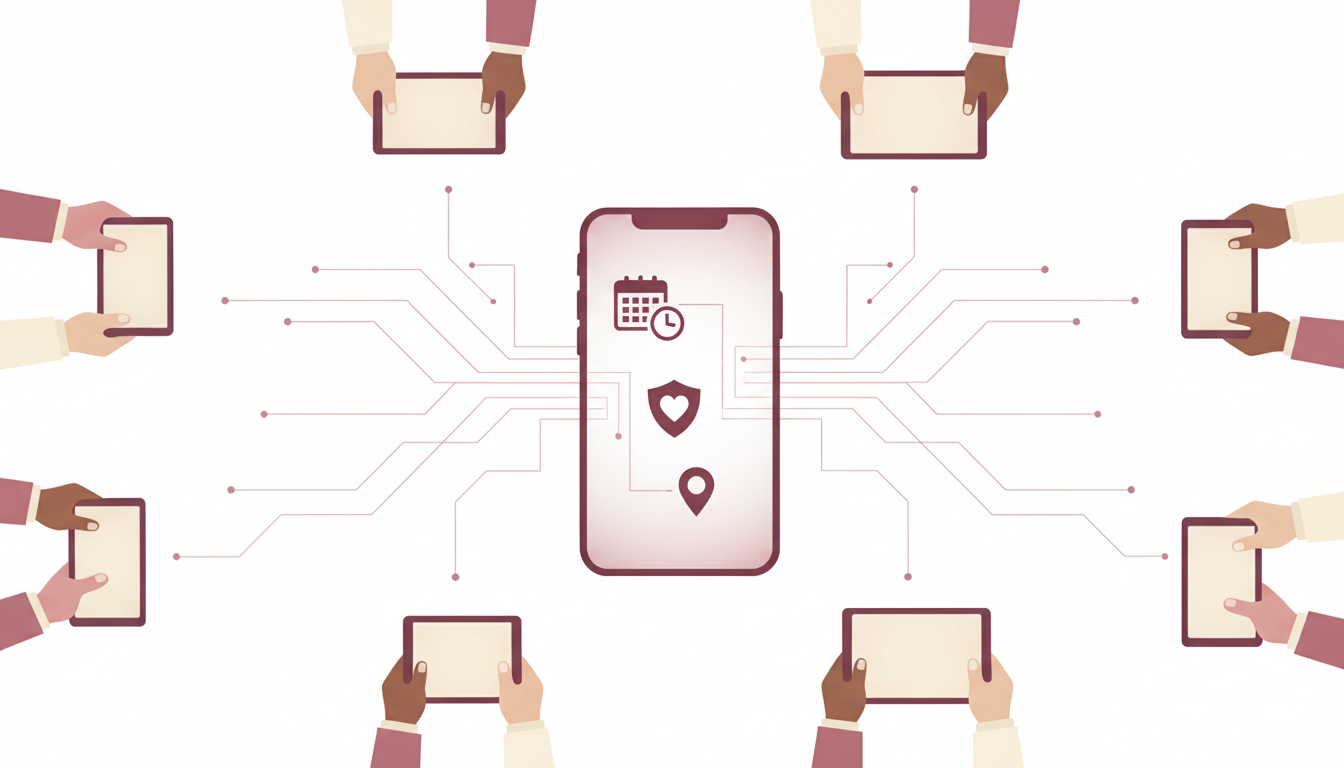
No two communities experience sexual health the same way. STI rates, language preferences, religious context, geographic access, and trust in the medical system vary widely, and a campaign that works for college students in New York will not reach migrant farmworkers in Texas or queer teens in a conservative Southern town. According to the World Health Organization, more than one million STIs are acquired globally every day, and effective response requires culturally responsive outreach, not generic messaging.
Strong programs adapt across several dimensions:
What culturally responsive outreach looks like in practice
- Race and ethnicity: campaigns co-created with the communities they serve, not designed in a boardroom and translated.
- Gender and orientation: trans-inclusive language, imagery that reflects same-sex partnerships, content that addresses sex workers without stigma.
- Age: TikTok and Instagram for Gen Z and millennials; mailed cards, radio, and clinic-based outreach for older adults often missed by digital-first campaigns.
- Geography: SMS-based clinic finders for rural areas with clinic deserts; mobile testing units where transit is the barrier.
- Faith and language: partnerships with community leaders and bilingual materials that feel native, not auto-translated.
Where many STD campaigns still get it wrong
Despite real progress, plenty of campaigns still rely on outdated playbooks. The most common failures share a root cause: they treat the audience as the problem rather than as a partner. Common patterns to avoid include fear-based imagery, sanitized language that erases the actual reasons people have sex, and one-size-fits-all messaging that ignores how different communities experience risk and care.
A 2021 review in The Lancet eClinicalMedicine on STI stigma reduction concluded that fear-based and morality-driven messaging often increases avoidance rather than testing, especially among the populations campaigns most need to reach.
1. Fear-based imagery. "You could die from this" triggers shame and avoidance, not testing.
2. Excluding people living with STIs from development. When real voices are missing, the resulting message often feels stigmatizing or unrealistic to the people it aims to help.
3. Sanitizing all references to actual sex. Avoiding any mention of pleasure, kink, or non-monogamy alienates a meaningful share of the audience.
4. Assuming one message fits all. Especially across age groups, disabilities, and racial or ethnic communities. A monolithic campaign reaches only the median reader; the people most underserved by the medical system are left out.
Trauma-informed and sex-positive approaches that work
The campaigns that have measurably reduced stigma share a common posture. They speak to the audience as adults, acknowledge that sex is part of why people seek information, and treat testing as a normal part of self-care rather than a punishment for past behavior.
Trauma-informed campaigns recognize that many readers carry histories that make medical encounters difficult: assault survivors, people who have experienced healthcare discrimination, those navigating family or religious shame. The language they use focuses on health rather than morality, includes consent and care alongside protection, and acknowledges systemic barriers like racism, poverty, and homophobia. Sex-positive campaigns add another piece: they treat condoms, communication about status, and routine testing as part of good sex rather than the price of having sex at all.
That posture matters because it changes the audience's calculus. When the implicit message is "you are bad if you test positive," the rational response is to avoid testing. When the message is "testing is what people who care about themselves and their partners do," the rational response is to test.
How at-home testing fits modern awareness
One of the most measurable changes in the past decade is how often campaigns now route readers to home testing rather than (or in addition to) clinic visits. Programs like "I Want the Kit" demonstrated a decade ago that mailed kits could detect cases that clinic-only outreach missed, particularly in rural and underserved communities. The same logic applies to private rapid kits sold direct to consumers: they remove the appointment, the waiting room, and the awkward conversation, which are the three friction points that delay testing for many people.
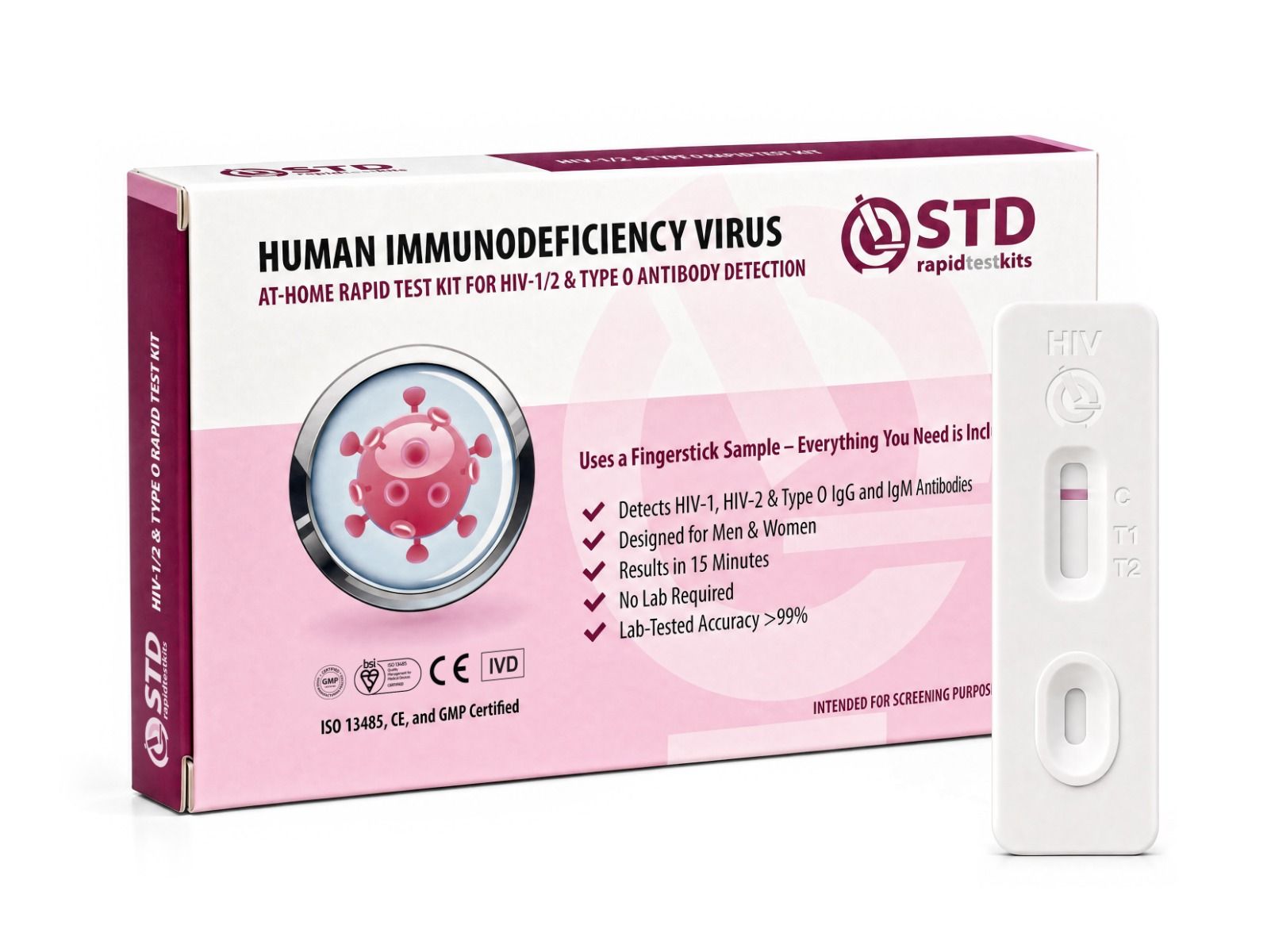
For readers who have read this far and want a concrete next step, a multi-infection rapid panel screens for the most common infections in one private session at home. These at-home rapid tests use lateral-flow chemistry (the same strip technology used in home pregnancy tests), which complements rather than replaces laboratory NAAT testing. Results take roughly 15 minutes per cassette. A positive result is worth confirming with a lab NAAT or with a clinician; a negative result, taken after the appropriate window period for each infection, is reassuring.
More than 1 million curable sexually transmitted infections are acquired every day worldwide in people 15–49 years old, the majority of which are asymptomatic.
From awareness to advocacy: practical steps
Awareness is the first step. Real change needs action, and the best campaigns make that action concrete. If a campaign has made you think differently about STI testing, the most useful follow-through is the smallest one you will do this week. A few practical options, in order of effort:
- Test yourself. Either at a clinic or with a private home kit. Make it routine: annually for sexually active adults, more often if you have multiple partners or a new partner.
- Have one direct conversation. With a partner, a friend, or a family member. "I got tested" normalizes testing more powerfully than any campaign.
- Share an accurate resource. A CDC fact sheet, an NHS explainer, or a trustworthy article. Replace a myth with a fact in someone's feed.
- Support local public health. Vote for sex-ed funding, donate to a community clinic, or volunteer with an organization doing peer-led outreach.
- Push back on stigma when you hear it. Calmly, briefly, factually. "Most STIs are common and treatable" is usually the only line you need.
For readers who want a discreet way to act on what they have learned without booking a clinic visit, a privacy-first home option is below.
Frequently asked questions
- Do STD awareness campaigns actually reduce infection rates?
- Indirectly, yes. Campaigns themselves do not prevent transmission; what they do is increase testing and shorten time-to-diagnosis, which lets treatment start earlier and cuts onward transmission. Peer-reviewed evaluations have found that mass-media STI campaigns can meaningfully raise testing rates in targeted populations, and CDC HIV testing campaigns measurably increase clinic visits during awareness weeks.
- What makes a campaign effective?
- Three things consistently: plain, non-judgmental language; cultural specificity (who the audience is, not a generic adult); and a low-friction next step like a free clinic locator or a mailed home test kit. Campaigns that stop at "awareness" without offering an action plateau quickly. Campaigns that pair awareness with access keep working.
- Are there STD awareness days I should know about?
- Yes. STI Awareness Week runs each April, organized annually by the CDC. National HIV Testing Day is June 27. World AIDS Day is December 1. Cervical Health Awareness Month is January, which is a useful prompt for HPV vaccination and screening.
- How can I support awareness in my own community?
- The single most effective thing most people can do is normalize testing openly in their own social circle. Saying "I got tested" out loud removes more stigma than a thousand campaign impressions, because it comes from someone trusted. Beyond that: share one factually accurate resource this week, and if you have children in school, push for evidence-based sex education at the next school board meeting. Small actions in trusted spaces beat large actions in anonymous ones.
- Why is stigma still such a barrier to testing?
- Because many people still grew up hearing about STIs in moral rather than medical terms. Shame keeps people silent, and silence keeps them from testing or telling partners. Campaigns that include real people living with STIs, use affirming language, and avoid scare tactics are the ones that move stigma measurably.
- What is the difference between fear-based and trauma-informed messaging?
- Fear-based messaging tries to scare the audience into safer behavior using shock images or worst-case-outcome language. It often backfires, especially with people who already feel judged by the medical system. Trauma-informed messaging assumes the audience may have prior negative experiences (assault, discrimination, family shame) and prioritizes safety, consent, and clear next steps over fear. Trauma-informed campaigns consistently produce better testing uptake.
- Are at-home test kits part of modern awareness campaigns?
- Increasingly, yes. Programs like "I Want the Kit" pioneered free mailed kits more than a decade ago, and current CDC and NHS messaging explicitly includes home testing as a valid option alongside clinic visits. Direct-to-consumer rapid lateral-flow kits, like the ones sold here, fill the same gap for readers who want a private alternative without waiting for a public-health mailing list.
- What if I test positive on a home rapid test?
- A reactive result on any rapid lateral-flow test should be confirmed with a laboratory test (NAAT for chlamydia and gonorrhea, RNA or fourth-generation HIV test, RPR or treponemal test for syphilis). Most STIs are highly treatable; chlamydia, gonorrhea, and syphilis are curable with antibiotics, and HIV treatment makes the virus undetectable and untransmittable. Tell recent sexual partners so they can also test.
- U.S. Centers for Disease Control and Prevention. Sexually Transmitted Infections Surveillance, annual reports including the 2023 combined case figure for chlamydia, gonorrhea, and syphilis cited in this article.
- U.S. Centers for Disease Control and Prevention. STI Awareness Week resources and annual campaign materials, used as the timing anchor for national STI outreach in April.
- U.S. Centers for Disease Control and Prevention. STI communication resources section, used to source how modern campaigns deliver messaging through digital channels.
- World Health Organization. Sexually transmitted infections fact sheet, including the global burden figures and asymptomatic-prevalence statement quoted in this article.
- UK National Health Service. Sexually transmitted infections overview, including UK testing access patterns and humor-led public-messaging context.
- BioMed Central. Open-access publisher of BMC Public Health, which carries peer-reviewed evaluations of mass-media STI prevention campaigns referenced in this article.
- The Lancet eClinicalMedicine, an open-access journal published by Elsevier. A 2021 review on STI stigma reduction interventions is referenced in this article.
