






Quick Answer: Hormonal contraceptives may influence herpes outbreaks in some individuals by affecting immune response and hormone-sensitive viral shedding. While not a guaranteed trigger, methods like the pill or patch could contribute to flare-ups, especially during hormonal shifts.
Why This Question Hits So Hard
Let’s be honest: herpes already carries enough shame and mystery. Add in the delicate act of choosing a birth control method, and suddenly you're juggling two taboo topics at once. Most people don’t bring this up to their doctor, either because they’re afraid of judgment or they don’t even realize the connection might exist.
But here’s what we know: herpes isn't always random. Certain immune, hormonal, and environmental shifts can “wake up” the virus after long periods of silence. Birth control changes, particularly those involving estrogen and progesterone, are one such shift. That doesn’t mean your method is wrong. But it does mean your body may be reacting in ways you deserve to understand.
The Biology: How Hormones Influence Herpes
Herpes Simplex Virus (most commonly HSV-2 for genital infections, though HSV-1 is rising fast) doesn’t leave your body once you’re infected. It stays dormant in your nerve cells, usually along the sacral ganglia, and can become active again due to triggers like illness, stress, or, you guessed it, hormonal fluctuations.
Research has shown that hormonal shifts, particularly changes in estrogen and progesterone, can influence immune suppression and viral reactivation. One peer-reviewed study published in Clinical Infectious Diseases linked hormonal contraceptive use to an increased risk of HSV-2 shedding. Another study followed 433 women with HSV-2 and found notable hormonal phase impacts on asymptomatic shedding, even without visual outbreaks.
Still, the relationship isn’t black-and-white. Some people experience zero change. Others find their outbreak patterns shift dramatically after starting or switching hormonal contraceptives. This variability makes it even harder to talk about, and even harder to research definitively.
People are also reading: I Shared a Vape at a Party, Do I Need an STD Test?
Table 1: Hormonal Contraceptives and Possible Herpes Impact
| Contraceptive Method | Main Hormones | Possible HSV Impact |
|---|---|---|
| Combined Oral Pill | Estrogen + Progestin | May increase viral shedding during hormonal fluctuations |
| Progestin-Only Pill (Mini Pill) | Progestin | Less studied, but may still suppress local immunity |
| Transdermal Patch | Estrogen + Progestin | Hormone spikes may act as flare triggers |
| Hormonal IUD | Levonorgestrel (Progestin) | Localized hormone delivery, but systemic effects possible |
| Implant (e.g., Nexplanon) | Etonogestrel (Progestin) | Less cyclical fluctuation, but still individual variability |
Table 1. Summary of hormonal contraceptives and their potential to influence herpes symptoms through immune or hormonal modulation. Data reflects a mix of peer-reviewed findings and clinical inference.
Order Now $75.00 $98.00 Check Your STD Status in Minutes
Test at Home with Remedium
Genital & Oral Herpes Test Kit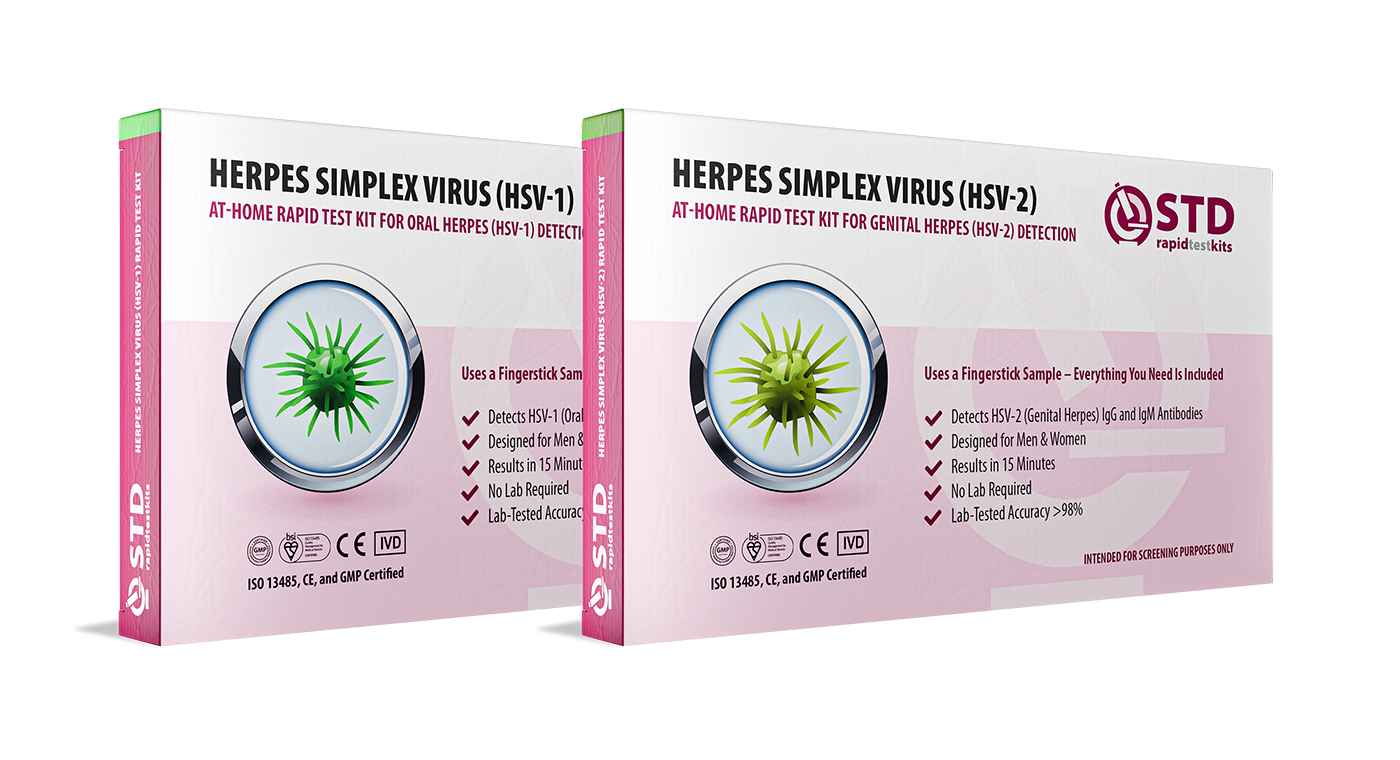
 For Men & Women
 Results in Minutes
 No Lab Needed
 Private & Discreet
For all 2 tests
Case Study: “I Was Fine for a Year, Then the Pill Changed Everything”
Andreia, 31, had been managing genital herpes since her diagnosis at 25. After two rough years, she’d gotten to a place where she hadn’t had a flare-up in over 13 months. Then she switched her birth control. “My old doctor moved, and the new clinic offered me a different pill that was ‘better for migraines,’” she said. “Two weeks into it, I had the worst outbreak I’d had in ages. My vulva was on fire. I couldn’t even wear jeans.”
Andreia’s story isn’t rare. Online forums and herpes support communities are filled with similar accounts. Users swap notes: “I had a flare the first month on the NuvaRing,” or “Ever since the implant, I’m breaking out every time I ovulate.” While anecdotal, the patterns are enough to make you pause, especially when flare-ups line up precisely with hormonal transitions.
Herpes Triggers: It’s Never Just One Thing
Here’s the hard truth: herpes doesn’t need a reason to resurface. But when it does, there’s usually a stack of micro-stressors hiding behind the scenes. Think of flare-ups like a fire, your body has to hit the right combination of dry air, friction, and spark. Hormonal contraception might just be one of those sparks.
When you add in disrupted sleep, emotional stress, a poor diet, or even an untreated yeast infection, it’s easy to reach ignition. The hormone shift alone might not trigger anything. But if your immune system is already busy juggling other stressors, that progesterone spike from a new birth control method might be enough to lower your natural viral suppression threshold.
This is particularly true during transition windows: starting a new method, going off birth control cold-turkey, or switching brands. These are the windows where estrogen or progesterone levels shift fast and hard. Your body notices, and sometimes, so does your virus.
The Menstrual Cycle Connection
Many herpes sufferers observe that their outbreaks coincide with their periods, even when they are not using contraception. It is believed that local immune suppression caused by estrogen dips and progesterone surges during the luteal phase (post-ovulation) facilitates HSV reactivation close to mucosal surfaces.
In a 2018 study published in the Journal of Infectious Diseases, daily self-collected genital swabs from 433 women showed that HSV-2 shedding was more common during the follicular phase, right after menstruation. Researchers suspect this might relate to temporary cervical and vaginal changes, allowing easier viral access or immune suppression. While not directly about contraception, this underscores how hormone fluctuation can modulate outbreak likelihood.
In other words, your body is already sensitive to these hormonal swings. Add synthetic hormones into the equation, and it’s no wonder some people feel their contraception is “waking up” the virus.
Table 2: Common Flare-Up Windows Around Birth Control Use
| Timing | Trigger Mechanism | Why It Matters |
|---|---|---|
| First month on a new method | Estrogen/progesterone surge; immune recalibration | Immune dips can help viruses that are sleeping come back to life. |
| Missed or skipped doses | Hormonal fluctuation from inconsistency | Disrupted cycles may trigger HSV-2 activation. |
| Post-pill or method discontinuation | Sudden hormone withdrawal | May mimic PMS drop, triggering a flare |
| Ovulation on progestin-only methods | Breakthrough ovulation with local hormone changes | May align with other inflammatory triggers |
| Switching between methods (e.g., pill to IUD) | Different hormone profiles interacting | Creates a short-term environment of immune instability |
Table 2. Key hormonal contraceptive transitions that may coincide with increased herpes flare risk due to hormonal instability or immune suppression.
Why Doctors May Not Mention This
It’s not that your doctor doesn’t care. It’s that this isn’t typically covered in medical school or standard gynecology texts. Unless your provider actively follows HSV literature or manages herpes patients routinely, they might not be aware of the nuance. And because the studies don’t offer a clear causal link, just correlations, they’re unlikely to warn you unless you bring it up first.
This creates a silence cycle. Patients don’t ask, because they don’t know they can. Providers don’t bring it up, because the data is murky. And people like Leah and Andreia are left wondering if their bodies are betraying them, when really, it’s a complex interaction we’re only just beginning to understand.
That’s why articles like this matter. You shouldn’t have to choose between pregnancy prevention and outbreak control without fully understanding how your method might affect your body. And you absolutely shouldn’t feel like a failure for asking the question.
What You Can Do If You Suspect a Link
If you’ve started a new birth control and noticed an increase in herpes outbreaks, the most important thing to know is this: you’re not imagining it, and you’re not alone. While your provider may not list “flare-ups” as an official side effect, your lived experience is valid, and there are options.
Start by tracking your outbreaks. Write down when they occur, what contraceptive method you’re using, where you are in your cycle (if applicable), and any other changes, diet, stress, sleep, new partners, antibiotics, etc. This kind of personal data can help you draw connections and also provides your provider with something concrete to discuss.
If you’re seeing a pattern, it might be time to reconsider your contraceptive strategy. Some people choose to switch to a different hormonal profile, for example, from a combined pill to a progestin-only mini pill, or from a patch to a hormonal IUD, which delivers more localized effects. Others opt to go hormone-free entirely, choosing copper IUDs, condoms, or fertility-awareness methods that don’t interfere with systemic hormone levels.
Herpes and Non-Hormonal Birth Control
Non-hormonal methods don’t carry the same immune-modulating effects as synthetic hormones. That said, they come with their own pros and cons. Copper IUDs, for example, don’t release hormones, but they do cause localized inflammation in the uterus, which may affect susceptibility to other infections in rare cases. Condoms are effective at preventing pregnancy and reducing herpes transmission, but they don’t protect fully against HSV, especially when lesions are outside the area they cover.
Some people with chronic herpes choose to use a combination: a non-hormonal method for pregnancy prevention, plus daily suppressive antivirals like valacyclovir to reduce outbreaks and minimize transmission risk. This combo approach can restore balance for those who felt thrown off by hormonal contraception but still want peace of mind in their sex lives.
If you’re not sure what switch might work best, bring your herpes history into the room when you talk to your doctor. You shouldn’t have to whisper about it. Your provider needs to know what’s affecting your quality of life, and your relationship with your own body.
People are also reading: Why STD Testing Isn’t Just for Women
Emotional Fallout: When a Flare Feels Like Failure
The link between herpes and hormones isn’t just about biology, it’s also about blame. Many people feel betrayed by their bodies during a surprise outbreak, especially if they’ve been “doing everything right.” For people with a uterus, this grief can get tangled up in larger feelings about reproductive health, autonomy, and even past trauma.
In support forums, flare-up posts often sound like this: “I thought I was past this.” “Why now?” “I feel disgusting again.” It’s common to feel rage, sadness, or isolation. Hormones affect your nervous system and mood regulation too, so if you’re already riding a hormonal wave from a contraceptive shift, your emotional baseline might already be off-balance. Add an outbreak to that? It’s a perfect storm.
It helps to reframe the outbreak not as a punishment, but as a message: your body is processing something. You’re not backsliding. You’re responding to a real biological shift. That doesn’t mean you’re weak or wrong, it means you’re paying attention. And now that you know what might be influencing your symptoms, you can adjust with power, not panic.
Check Your STD Status in Minutes
Test at Home with Remedium6-in-1 STD Rapid Test Kit
 For Men & WomenResults in MinutesNo Lab NeededPrivate & Discreet
Order Now $119.00 $294.00
For all 6 tests
Your Testing and Treatment Options
If you’re experiencing more frequent or intense outbreaks, it’s worth revisiting your testing and treatment plans. Even though herpes can’t be cured, it can absolutely be managed. If you haven’t already confirmed your HSV type (1 or 2), now is the time. Type matters when it comes to location, transmission risk, and response to antivirals.
At-home testing options now include discreet Herpes Simplex Virus rapid test kits that you can use without a clinic visit. These kits detect antibodies, which indicate past or current infection. While they’re not suitable for early exposure detection (because antibodies take time to form), they can provide clarity if you’re unsure of your status, or if you’re trying to confirm whether a new partner may have passed the virus on.
If you’re already diagnosed, a suppressive antiviral regimen can reduce outbreak frequency by over 70% and viral shedding by over 90%, according to data from the CDC. Talk to your provider about daily valacyclovir or acyclovir. Even low doses can make a difference.
Call to Action: You Deserve Answers
Whether you’re in your bathroom trying to soothe your skin, or just wondering why your body’s rhythms feel different after starting the patch or pill, you deserve real answers, not vague reassurances. The good news? Those answers are now easier to get than ever.
Don’t wait in silence. If your symptoms are shifting, or if you’re starting a new contraceptive and want to understand your risk, you can take the first step from home. This at-home combo test kit checks for the most common STDs discreetly and quickly, no waiting room required.
Reclaim control, not just over your cycle, but your whole body. You’re allowed to ask hard questions, switch methods, test again, and start fresh. This isn’t just about outbreaks. It’s about ownership.
FAQs
1. Is it really possible for birth control to cause a herpes outbreak?
It’s not as wild as it sounds. Hormonal shifts, especially from starting or stopping contraception, can absolutely throw off your immune rhythm. And when your body’s defenses dip, that dormant herpes virus can seize the moment. Not everyone reacts this way, but if your outbreak clock started ticking right after switching methods, you're not imagining it.
2. Which methods are the worst for triggering flare-ups?
There’s no villain in a white coat here, but some people report more trouble with combined pills, patches, or rings that deliver a steady dose of estrogen and progestin. Others say the implant messed with them. Still, it’s incredibly individual. One person’s “never again” is another’s “zero issues.”
3. I got my first outbreak a month after starting the pill. Coincidence?
Maybe. Maybe not. If you’d already been exposed to HSV in the past, those hormonal changes could’ve lowered your guard just enough to let the virus pop up. That first outbreak is often the body’s way of announcing: “Hey, something’s up.” If the timing was tight, it’s worth tracking, and maybe testing, too.
4. What about IUDs, do they mess with herpes?
Hormonal IUDs release a local progestin dose, so technically they affect your uterus more than your bloodstream. But yes, for some people, even that can stir things up. Others do just fine. Copper IUDs, on the other hand, are hormone-free, and often recommended if you're trying to avoid synthetic hormone effects altogether.
5. Can switching from one method to another trigger a flare?
Absolutely. Your body needs time to recalibrate when you swap hormones. Whether you're going off the pill or jumping to a patch, that transition window can be shaky. If you’re already HSV-positive, that immune turbulence might open the door to a flare, even if the method itself isn’t the issue long-term.
6. What should I do if I think my birth control is causing outbreaks?
First, don’t panic, and definitely don’t suffer in silence. Track what’s happening. Then, bring it up with your provider. You might want to switch to a different hormonal profile, or even explore non-hormonal options. And if outbreaks are interfering with life, daily antivirals like valacyclovir can keep things quieter, regardless of your birth control choice.
7. Can I just stop taking the pill to make the outbreaks go away?
Slow down, maybe. But stopping cold-turkey can sometimes make things worse before they get better, because your hormones nosedive fast. Talk it out with a provider first. You might just need a different formulation or a phased approach off hormones. There’s no shame in changing course if your body’s screaming at you.
8. Do antivirals still work if the outbreaks are hormone-triggered?
Yes. Valacyclovir and acyclovir don’t care what started the outbreak, they work by shutting down viral replication no matter the trigger. If you’re having repeat episodes, suppressive therapy could be a game-changer, even if you stay on birth control.
9. Is there any birth control that won’t mess with herpes at all?
The holy grail? Probably not. But options like copper IUDs, condoms, and fertility-awareness methods steer clear of hormones, so they're less likely to poke the viral bear. Still, every body’s different. Some people do better on low-dose hormonal methods than no method at all. It's about finding your sweet spot.
10. Why didn’t my doctor warn me about this?
Short answer? The research isn’t conclusive, and this link isn’t widely discussed in medical training. Your doctor wasn’t trying to sabotage you, they probably just didn’t know it could happen. But now you do. And knowledge = leverage when it comes to your next move.
You Deserve More Than Silence
There’s no shame in asking, “Is this connected?” when it comes to your birth control and herpes symptoms. You’ve been told to trust your method, trust your body, and trust the system, but sometimes your body speaks in ways science hasn’t fully caught up with. And that’s okay.
If your outbreaks have shifted since starting or switching contraceptives, you’re allowed to explore that connection. You’re allowed to ask your doctor to take it seriously. And you’re allowed to change your method if it no longer supports your whole-body health.
Don’t wait for validation. STD Rapid Test Kits gives you discreet access to answers from home, whether you’re confirming an outbreak, rechecking your HSV type, or screening for something new. Your health is yours to navigate. We’re just here to help you do it with power, privacy, and clarity.
How We Sourced This Article: We combined current guidance from leading medical organizations with peer-reviewed research and lived-experience reporting to make this guide practical, compassionate, and accurate.
Sources
1. Genital HSV Shedding Across the Menstrual Cycle – JID 2018
6. Shedding patterns of genital herpes simplex virus infections – JAMA.
7. About Genital Herpes – CDC.
8. Herpes – STI Treatment Guidelines – CDC.
9. Effectiveness of condoms in preventing sexually transmitted infections – NCBI Bookshelf.
About the Author
Dr. F. David, MD is a board-certified infectious disease specialist focused on STI prevention, diagnosis, and treatment. He blends clinical precision with a no-nonsense, sex-positive approach and is committed to expanding access for readers in both urban and off-grid settings.
Reviewed by: Lindsay M., RN, MPH | Last medically reviewed: November 2025
This article is only for information and should not be used as medical advice.


