
Published: July 2025 | Last updated: May 2026 | Editorial review and quality control: Martina N.
Why are STI rates rising among older adults?
Reported cases of chlamydia, gonorrhea, and syphilis among Americans aged 55 and older have climbed sharply over the past decade, and adults 65+ have seen some of the steepest year-over-year jumps. The drivers are longer healthier lifespans, more dating after divorce or widowhood, low condom use once pregnancy is no longer a concern, and primary-care visits that rarely ask older patients about sexual activity. The fix is the same as at any age: regular screening, condoms with new partners, and treatment when needed. All three work just as well at 70 as at 25.
Key Takeaways
- Reported STI cases among Americans aged 55 and older have risen sharply over the past decade, with adults 65+ posting the largest 2020 to 2023 percentage jumps in a Fair Health commercial-claims analysis covered by CIDRAP.
- The fix is screening, not shame. Most senior STIs are easy to treat when caught early, and at-home rapid tests make routine checks practical even when getting to a clinic is hard.
Reported chlamydia, gonorrhea, and syphilis cases among Americans over 65 have climbed sharply over the past decade, according to CDC STI surveillance data. The trend kept climbing into the most recent reporting period: CIDRAP's reporting on a Fair Health analysis of more than 47 billion commercial insurance claims found that adults 65 and older had the largest overall percentage increase in STI diagnoses between 2020 and 2023, with HPV showing the sharpest rise in that age group at roughly 32%.
Some of that surge is happening in places where sex is the last thing many people expect to discuss, including nursing homes, retirement villages, and assisted living centers. Several forces are converging at once. People are living longer and staying physically active. More are dating again after divorce or the death of a spouse. Medications that support sexual function are widely available. Condom use is strikingly low in age groups that no longer worry about pregnancy. And public-health prevention campaigns still focus almost entirely on people under 30, leaving a generation without modern STI knowledge or testing routines.
Adults aged 65 and older posted a roughly 24% rise in STI diagnoses between 2020 and 2023, the largest jump of any U.S. age group in the Fair Health commercial-claims analysis covered by <a href="https://www.cidrap.umn.edu/sexually-transmitted-infections/std-cases-rose-5-2020-2023-biggest-jumps-among-older-adults-data" target="_blank" rel="noopener">CIDRAP</a>. HPV led the rise within that age group at approximately 32%.
Why STI rates are climbing among older Americans
The rise is not about a sudden change in behavior. It is about behavior that has always existed finally meeting an environment that did not exist a generation ago: longer lifespans, smartphone dating, mid-life divorces, and a class of medications that restore sexual function well into the 70s.
Longer healthier lives. The average 65-year-old American today can expect to live well into their 80s, much of it in good health, according to CDC National Center for Health Statistics life tables. Sex does not stop at retirement. National sexuality surveys consistently suggest that a majority of adults 65 to 74, and a meaningful share of those 75 to 85, remain sexually active at least occasionally.
Second-act dating. Divorce after 50, sometimes called gray divorce, has risen sharply since the 1990s per Pew Research Center analyses of national divorce data. Widowhood combined with longer lifespans means many older adults are forming new sexual relationships in their 60s, 70s, and 80s. Apps like SilverSingles, OurTime, and even Tinder now have substantial older-adult userbases.
Erectile-function and hormonal medications. Sildenafil, tadalafil, and vaginal estrogen therapies have made sex possible and comfortable for many older adults who would have stopped a generation ago.
Almost no condom use. National surveys repeatedly find condom use among sexually active adults over 60 in the single digits. Most people in this age group came of age before HIV awareness campaigns, and once pregnancy is off the table, condoms feel unnecessary.
Clinical blind spots. University Hospitals clinicians note that primary-care providers often skip sexual-history questions with older patients, assuming they are no longer sexually active. CDC screening guidance does not include a routine annual STI screen for adults over 25 unless risk factors are present, and “risk factors” in clinical judgment are still heavily age-coded.
This article is published by stdrapidtestkits.com, which sells at-home rapid STI test kits. Products are recommended based on what genuinely fits the reader's situation, not commercial benefit. Two of our test kits, the trichomoniasis and HPV swabs and the 10-in-1 women's panel, are validated for vaginal self-swab only, so men needing those specific tests should see a clinic. Our 8-in-1 men-and-women kit and 6-in-1 essential kit are both validated for use across genders.
How aging itself raises STI risk
Age does more than change the odds of dating after a long monogamous period. It also changes the body's ability to resist infection at the cellular level, which means seniors who do contract an STI tend to acquire it more easily and clear it less reliably than younger adults.
- Vaginal and vulvar tissue thinning after menopause. Estrogen withdrawal causes the vaginal lining to lose elasticity and the surface cells to thin out. Microtears during sex become more common, and pathogens like HIV, herpes, and chlamydia have an easier route into the bloodstream.
- Slower mucosal healing. The cells lining the genital tract, mouth, and rectum take longer to repair after exposure or trauma in older adults, prolonging the window of vulnerability.
- Immune senescence. The aging immune system mounts smaller, slower antibody responses to new pathogens. That is why HPV-related cancers can develop years after a long-dormant infection, and why HIV in older adults often progresses to AIDS faster after initial seroconversion.
- Coexisting conditions. Diabetes, autoimmune disease, and the immunosuppressive medications used to manage them all blunt the body's response to STIs. Vaginal dryness, urinary incontinence, and prostate changes can also mask or mimic STI symptoms.
- Atypical symptom presentation. An older adult with gonorrhea or chlamydia may have no genital discharge at all, only mild abdominal pain, fatigue, or a urinary-tract complaint that gets treated with the wrong antibiotic. Syphilis in older adults is sometimes mistaken for dermatologic conditions, dementia, or stroke, depending on its stage.
The combination is not just “more exposure.” It is more exposure landing in bodies less equipped to fight it off and less likely to be tested for it.
The two factors that most often turn a survivable senior STI into a serious one are atypical symptom presentation (a chlamydia or gonorrhea infection treated as a recurrent UTI) and immune senescence (HIV progressing faster to AIDS, HPV-driven cancers emerging from long-dormant infection). Both are reasons to favor a confirmatory test over a symptom-based guess.
The STIs showing up most in senior populations
Six infections account for nearly all of the senior STI surveillance signal. The table below summarizes how each typically presents in older adults and how the lab tests for it work. Use it as a quick scan before talking to a provider or choosing an at-home kit.
| Infection | Trend in adults 55+ | Common presentation in older adults | Standard lab test |
|---|---|---|---|
| Chlamydia | Rising, often missed | Often silent; mild urinary symptoms or pelvic discomfort | Genital swab or urine NAAT (lab); rapid swab (home) |
| Gonorrhea | Rising fastest in men 55+ | Discharge, burning urination, sometimes asymptomatic | Genital swab NAAT; rapid swab (home) |
| Syphilis | Largest percentage rise in seniors 70+ | Painless ulcer (early); rash on palms or soles; later neurologic and cognitive symptoms | Blood antibody test (lab and home) |
| Genital herpes (HSV-2) | Rising; may be confused with friction sores | Recurrent painful blisters or ulcers; many cases are asymptomatic | Blood antibody test 12+ weeks after exposure |
| HIV | Adults 50+ make up over half of people living with diagnosed HIV in the U.S. | Flu-like initial illness then long silent phase; older adults often diagnosed late | Blood test (rapid antibody at home; lab antigen-antibody confirms) |
| HPV (women's anatomy) | Persistent infection drives senior cervical-cancer cases | Usually silent until cervical changes appear on Pap or rapid swab | Cervical Pap; rapid vaginal-swab self-test |
Symptoms to recognize at any age
Older bodies are good at minimizing or masking STI symptoms, which is exactly why screening matters more than waiting for warning signs. Still, these patterns warrant attention and a conversation with a clinician or a same-day test:
- Unusual vaginal or penile discharge, especially with new partners
- Burning or pain during urination not explained by a known UTI
- Genital sores, ulcers, blisters, or warts (painful or painless)
- Pelvic, lower abdominal, or testicular pain
- A new rash on the palms, soles, or trunk (a classic secondary syphilis pattern)
- Persistent unexplained fatigue, low-grade fever, or swollen lymph nodes after a new sexual partner
- Cognitive or neurologic changes in someone with risk factors (late-stage syphilis can present this way and is fully treatable when identified)
Many of these overlap with non-STI conditions of aging, including yeast infections, urinary-tract infections, hemorrhoids, contact dermatitis, and prostate enlargement. That overlap is the reason confirming with a test rather than self-diagnosing matters: an STI mistaken for a UTI gets the wrong antibiotic and keeps spreading.
Most senior STIs are partly or fully asymptomatic, and aging tends to mute the warning signs that do appear. A confirmed negative screening test after the appropriate window period is far more reliable than the absence of obvious symptoms. If you are sexually active with new or non-monogamous partners, screen on a schedule rather than waiting for something to feel wrong.
How and where older adults can get tested
The two reliable testing paths are a clinic visit and an at-home rapid kit, and they answer slightly different questions. A clinic visit produces lab-grade results, links directly to treatment if positive, and is fully covered by most Medicare plans for symptomatic visits. The downside is the appointment itself: scheduling, transportation, and a conversation many older adults find uncomfortable starting.
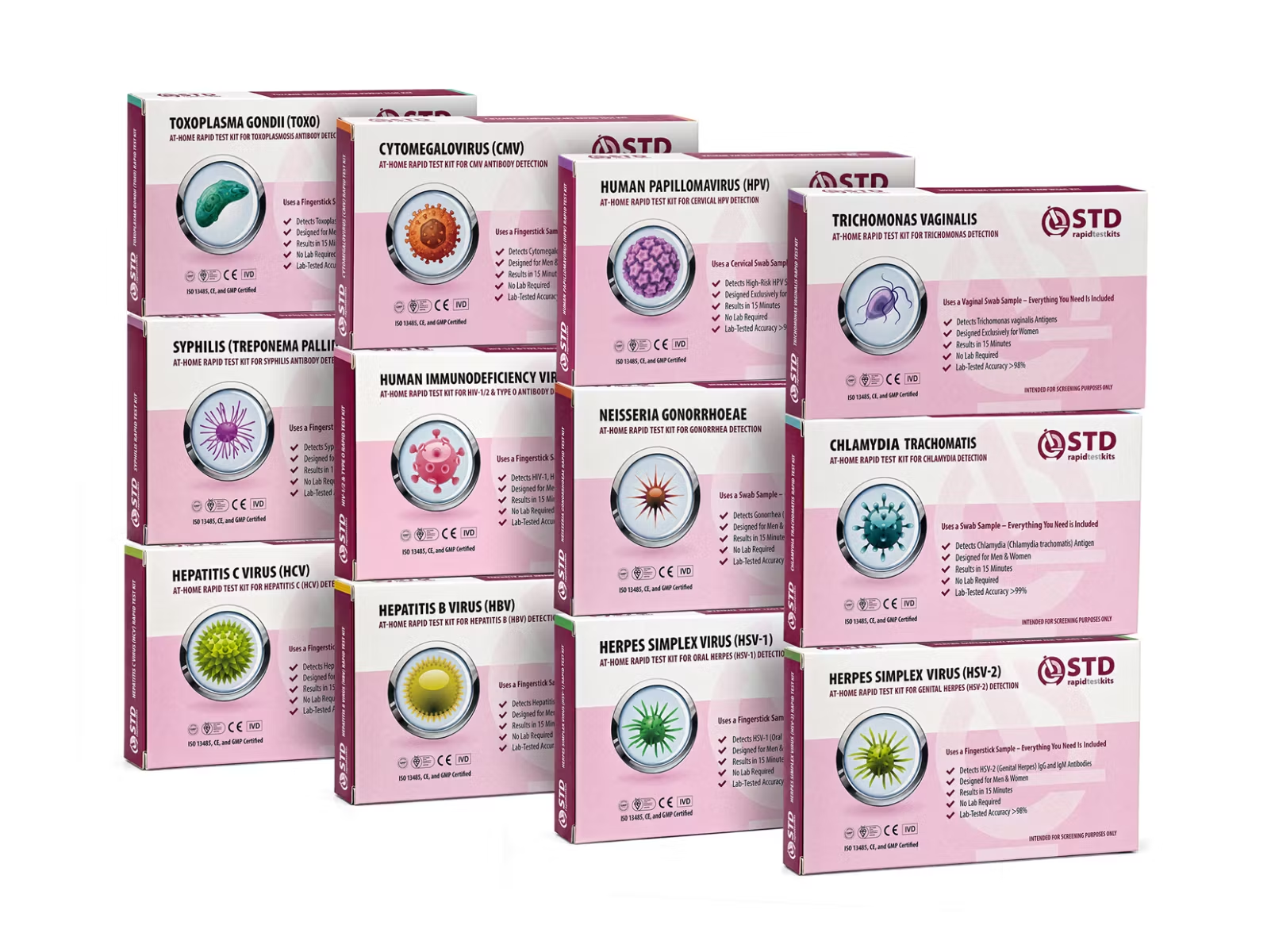
At-home rapid kits are lateral-flow tests, the same chemistry as a home pregnancy or COVID test. They use a self-collected vaginal or penile swab for chlamydia, gonorrhea, trichomoniasis, and HPV (the swab kits) and a fingerstick blood drop for HIV, syphilis, hepatitis B, hepatitis C, and herpes (the blood kits). Most return a result in about 15 minutes. They are screening tools, which means a positive result is meaningful and worth confirming with a lab NAAT or antibody panel through a clinician, while a negative result during the test's recommended window is reassuring.
For older adults who are sexually active and starting a new relationship, the most practical pattern is: a comprehensive multi-infection at-home screen at the start of the relationship and a repeat screen 8 to 12 weeks later, plus testing any time symptoms appear. Adults in long-term mutually monogamous relationships generally do not need routine screening unless one partner's status changes.

Prevention that actually works after 60
Good prevention for older adults is identical to good prevention at any age, with two adjustments to account for menopause and slower healing.
- Use condoms with any new or non-monogamous partner. Latex or polyurethane male condoms remain the most effective barrier against bacterial STIs (gonorrhea, chlamydia, syphilis) and substantially reduce, though do not eliminate, the risk of viral STIs (HIV, HSV, HPV). For partners with latex sensitivity, polyurethane and polyisoprene work just as well.
- Use water-based or silicone-based lubricant. Vaginal thinning and reduced lubrication after menopause make microtears more common, which is exactly the route through which most STIs enter the bloodstream. Lubricant is not optional after 60 in the way it was at 25; it is part of the protective barrier strategy.
- Test before, not after. A new partner who has been recently tested and shares results is a better protective factor than condoms used inconsistently. Many seniors find that an at-home rapid kit the morning of a first sexual encounter is the most practical way to do this without an awkward clinic conversation.
- Treat any active infection completely. Bacterial STIs are cured with antibiotics. Treatment failure usually traces back to incomplete dosing or unprotected re-exposure with the same untreated partner. Both partners need treatment at the same time.
- Stay up to date on the HPV vaccine if eligible. Per CDC ACIP guidance, routine HPV vaccination is recommended through age 26 and shared clinical decision-making applies for adults aged 27 to 45. Adults over 45 are not vaccinated routinely, but those starting a new sexual chapter can ask a clinician whether catch-up vaccination makes sense.

Talking with your doctor and your partners
Two conversations seem to bother older adults more than the test itself: bringing up sex with a primary-care provider who has known them for years, and asking a new partner about their testing history. Neither is as awkward as the alternative.
With your provider. Older adults consistently report that primary-care visits skip sexual-history questions, leaving it on the patient to raise the topic. A practical opener: “I am sexually active and would like to be screened for the common STIs at my next labs.” That sentence triggers an order for the relevant tests. If your doctor pushes back on age, ask for the screen anyway. CDC guidance does not exclude older adults from screening when it is clinically indicated, and “I have a new partner” is a clinical indication.
With a partner. The honest version works best: “I care about both of our health. When were you last tested? Want to do an at-home test together this weekend before we sleep together?” Pairing the question with an action (the at-home kit on the kitchen counter) tends to remove most of the social discomfort. Partners who refuse to test together are giving you useful information about what kind of partner they will be.
In long-term care settings. Residents in assisted living and nursing facilities have the same right to consensual sexual activity as anyone else, and increasingly facilities are developing intimacy policies that respect that right while ensuring staff are trained to discuss STI prevention without stigma. If you are a resident, family member, or caregiver, the right ask is for the facility to provide condoms, education materials, and routine STI screening as part of preventive care.
To your provider: “I am sexually active and would like to be screened for the common STIs at my next labs.” To a new partner: “I care about both of our health. Want to do an at-home test together this weekend?” To a long-term-care facility: “Please include condoms, education materials, and routine STI screening in resident preventive care.” Each one moves the conversation past the awkwardness in a single sentence.
Common myths about STIs and aging
The biggest barrier to senior sexual health is not biology. It is the assumptions that everyone, patients and clinicians alike, still carries about who needs to think about STIs in the first place.
- “You cannot get an STI after menopause.” Menopause ends fertility. It does not end exposure. Vaginal thinning after menopause raises the per-act transmission risk for several STIs, including HIV, herpes, and chlamydia, because microtears become more common.
- “Only people with many partners get STIs.” One partner is enough. Many seniors acquire infections from a single new monogamous partner whose own previous exposures were never screened.
- “My doctor would have told me if I needed a test.” Older adults consistently report that providers skip sexual-history questions. The screening conversation usually has to start with the patient. “Can we add an STI panel to my labs?” is enough.
- “At-home tests are not reliable for seniors.” At-home rapid lateral-flow tests perform the same way regardless of age. The relevant variable is the test's window period (the time after exposure for the marker to become detectable), not the age of the person testing. The chemistry does not know how old the swab donor is.
- “Condoms are just for birth control.” Condoms are the most accessible STI barrier at any age. The pregnancy-prevention framing is the reason condom use drops off after 50, and it is exactly why infection rates climb.
Many older adults are sexually active and at risk for sexually transmitted infections, including HIV. Routine sexual health discussions and screening should not stop based on age alone.
Frequently asked questions
- Can you get an STI in a nursing home or assisted living facility?
- Yes, and surveillance data show this is increasingly common. Communal living, new relationships among residents, and inconsistent staff training around sexual health all contribute. Residents retain the same right to consensual sexual activity and the same need for STI screening and condom access as anyone living independently.
- How often should sexually active older adults get tested?
- With any new partner, test at the start of the relationship and again 8 to 12 weeks later to catch infections still in their window period. In an established mutually monogamous relationship with no new exposures, routine testing is unnecessary unless symptoms appear or a partner's status changes. Annual screening is reasonable for anyone with multiple partners across the year.
- Are at-home STD tests accurate for older adults?
- Yes. At-home rapid lateral-flow tests work the same way regardless of the user's age. The variable that matters is the test's window period (how long after exposure the marker is detectable), not the user's age. Multi-infection panels like the 6-in-1, 8-in-1, and 10-in-1 kits screen for several STIs at once and are designed for ages 18 and older.
- Can post-menopausal women still get HPV or genital herpes?
- Yes. Both viruses are transmitted through skin-to-skin contact and are not affected by menopause. In fact, vaginal thinning after menopause makes the genital tissue slightly more vulnerable to microtears that allow viral entry. Persistent HPV infection is a leading cause of cervical cancer in women over 60.
- Why does my doctor never bring up sexual health?
- Many providers, especially in primary care and geriatrics, default to age-based assumptions and skip the sexual-history question with older patients. The simplest fix is to raise it yourself: “I am sexually active and would like to be screened for STIs at my next labs.” That sentence triggers the relevant lab orders. If your doctor pushes back, ask for the screen anyway.
- Do I really need condoms if I am no longer worried about pregnancy?
- Yes. Condoms are the most effective barrier against bacterial STIs (gonorrhea, chlamydia, syphilis) and substantially reduce viral STI transmission (HIV, HSV, HPV). The pregnancy-prevention framing is the reason condom use drops off after age 50, and that drop tracks closely with the rising infection rates in this age group.
- What should I do if my at-home test is positive?
- Treat a positive at-home result as a meaningful screening result that warrants confirmation. Contact your primary-care provider or a sexual-health clinic, share the result, and ask for a confirmatory lab test (usually a NAAT for bacterial infections or an antigen-antibody panel for HIV and syphilis). Bacterial STIs are cured with antibiotics; viral STIs are managed with medication and partner notification. Treatment is fully effective at any age.
- How do I bring this up with a new partner?
- Pair the question with an action so it does not feel abstract. “I care about both of our health. Want to do an at-home test together this weekend before we sleep together?” works in most situations. Partners who decline to test together are providing useful information. The conversation is uniformly easier than the conversation that follows an untreated infection.
For women specifically: HPV, trichomoniasis, and the wider panel
Two of the infections rising fastest in older women, HPV and trichomoniasis, are not part of the standard 8-in-1 panel because both require a vaginal self-swab. Persistent HPV infection drives most cervical-cancer cases diagnosed after age 60, and trichomoniasis remains common in older women but rarely produces obvious symptoms. The 10-in-1 women's panel below is built for vaginal self-swab specifically and adds those two infections to the comprehensive blood-and-swab screen.
- U.S. Centers for Disease Control and Prevention. STI Statistics: current chlamydia, gonorrhea, and syphilis surveillance data including age-stratified case counts.
- U.S. Centers for Disease Control and Prevention. STI screening recommendations and clinical guidance for primary care providers.
- U.S. Centers for Disease Control and Prevention. HIV Data and Statistics: prevalence by age, including the finding that adults 50+ make up over half of people living with diagnosed HIV in the United States.
- Center for Infectious Disease Research and Policy (CIDRAP) reporting on a Fair Health analysis of more than 47 billion commercial insurance claims: STI diagnoses rose roughly 5% from 2020 to 2023, with the largest age-group jumps among adults 65+ and HPV showing the sharpest rise in that group.
- University Hospitals: clinical commentary on why STIs are rising in older adults, including provider perspective on screening blind spots in primary care.
- U.S. Centers for Disease Control and Prevention ACIP. Adult immunization schedule and HPV vaccination guidance through age 45.
- U.S. Centers for Disease Control and Prevention, National Center for Health Statistics. Life tables and life-expectancy projections for U.S. adults.
- Pew Research Center: analyses of U.S. divorce trends including the rise in divorce among adults aged 50 and older since the 1990s.
