

Published: September 2025 | Last updated: May 2026 | Editorial review and quality control: Martina N.
The most common reason people skip STI testing is that they feel fine. No rash, no pain, no obvious sign that anything is wrong. The trouble is that the most common sexually transmitted infections (chlamydia, gonorrhea, HPV, herpes, even early HIV) usually do not announce themselves. They sit quietly until they cause complications, and the person who carries them often has no idea.
The second most common reason is age. People assume STI testing is a habit for twenty-year-olds. The data say otherwise: U.S. STI surveillance shows rates climbing in nearly every adult age bracket over the past decade, including a sharp rise among adults 55 and older (CDC STI surveillance, 2024 summary). Routine screening is a sexually-active-adult habit that adapts to whatever life stage you are in.
How often should I get tested for STIs?
Most sexually active adults should run a basic STI panel once a year, with extra testing every 3 to 6 months if you have multiple partners, a new partner, or a higher-risk sexual network. Sexually active women under 25 should be screened for chlamydia and gonorrhea every year regardless of risk factors. Adults 50 and older are often missed by clinicians and should ask directly for a sexual-health screen if they are sexually active. After any unprotected exposure with a new partner, schedule a panel at the start (to catch pre-existing infection) and again after the relevant window period has passed (<a href="https://www.cdc.gov/std/treatment-guidelines/screening-recommendations.htm" target="_blank" rel="noopener">CDC screening recommendations</a>).
Key takeaways
- More than 2.2 million combined cases of chlamydia, gonorrhea, and syphilis were reported in the U.S. in 2024, with rates rising in nearly every adult age bracket.
- Adults 55 and older are one of the fastest-growing groups for new STI diagnoses, but most clinicians do not screen this group routinely.
Why STI risk does not follow a clean age curve
STI risk is not really about age. It is about exposure. The clock resets every time you have a new partner, come out of a long relationship, or have unprotected sex. The reason different decades show different testing rates is that the life events that drive new exposures (first relationships in your early twenties, a divorce or breakup in midlife, dating again after a death or separation in older adulthood) cluster differently across the lifespan.
The U.S. Centers for Disease Control and Prevention reports more than 2.2 million combined cases of chlamydia, gonorrhea, and syphilis in 2024, with chlamydia alone accounting for over 1.5 million reported cases (CDC STI surveillance, 2024). Many of those infections will never produce noticeable symptoms. The CDC's chlamydia treatment guidelines note that asymptomatic chlamydia is common in both women and men, which is why providers rely on screening rather than symptoms to detect it (CDC chlamydia treatment guidelines). Gonorrhea is similarly silent in many cases, and HPV is almost always invisible until pap-smear changes appear years later.
Routine screening serves two purposes at once. It catches treatable bacterial STIs (chlamydia, gonorrhea, syphilis) early, before complications like pelvic inflammatory disease or infertility develop. It also identifies viral STIs (HIV, hepatitis B, hepatitis C, HSV-2) early enough that antiviral or chronic-disease treatment can dramatically reduce both transmission risk and long-term complications.

The CDC's 2024 STI surveillance summary reports more than 2.2 million combined cases of chlamydia, gonorrhea, and syphilis. Chlamydia alone accounted for 1,515,985 reported cases; gonorrhea 543,409; syphilis 190,242 (<a href="https://www.cdc.gov/sti-statistics/annual/index.html" target="_blank" rel="noopener">CDC, 2024 STI surveillance</a>).
Testing in your teens and twenties
Adolescents and young adults carry a disproportionate share of new STI cases. CDC surveillance reporting consistently shows this age group accounting for a large share of new chlamydia, gonorrhea, and HPV diagnoses each year, even though they make up a much smaller fraction of the sexually active population (CDC STI surveillance).
Several factors drive that concentration. New-partner frequency is highest in the early years of sexual activity. Consistent condom use is lower when oral contraception is the primary method and pregnancy feels like the main risk. The cervical epithelium is biologically more susceptible to chlamydia and HPV in younger women. And many young adults have not seen a primary-care provider since their adolescent visits and do not know to ask about sexual-health screening.
The CDC's screening guidance for this age group is specific and worth knowing:
- All sexually active women under 25 should be screened for chlamydia and gonorrhea every year, regardless of any other risk factors.
- All sexually active adults should have at least one HIV test in their lifetime as a baseline, with repeat testing if risk factors apply.
- Sexually active gay, bisexual, and other men who have sex with men should test for HIV, syphilis, gonorrhea, and chlamydia every 3 to 12 months depending on number of partners.
- HPV vaccination is routinely recommended through age 26 for people who missed the routine adolescent schedule, with shared clinical decision-making for some adults aged 27 to 45.
The single most useful habit at this stage is making STI testing part of your annual physical or birth-control visit, even if you are not symptomatic. Your provider may not bring it up. You can.
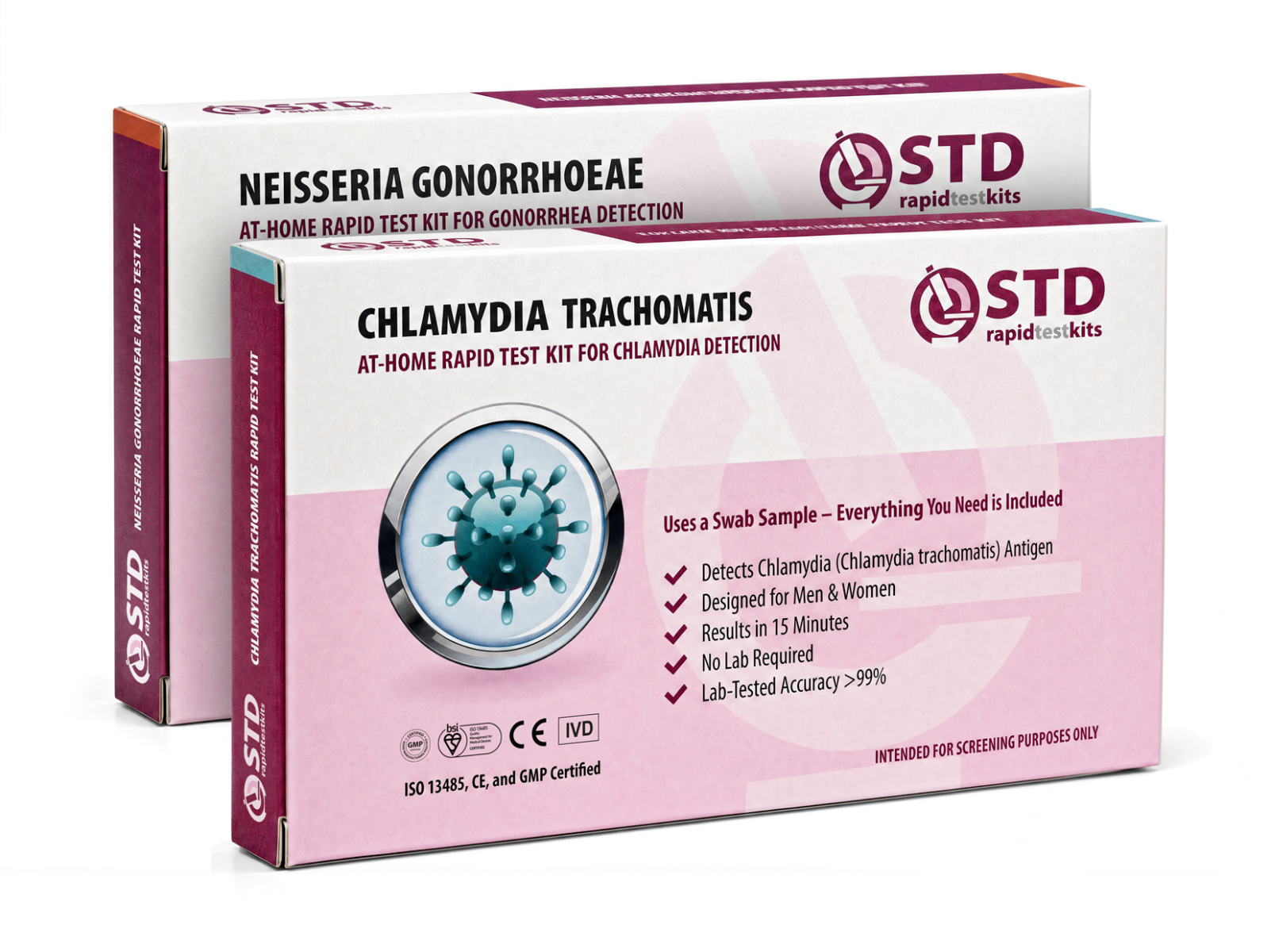
Disclosure: STD Rapid Test Kits sells at-home rapid kits for the infections discussed throughout this article. Product mentions are based on fit-for-purpose for the reader's concern, not commercial benefit.
The CDC recommends annual chlamydia and gonorrhea screening for all sexually active women under 25, regardless of any other risk factors. This is one of the few STI screenings recommended on a fixed annual schedule rather than triggered by exposure history (<a href="https://www.cdc.gov/std/treatment-guidelines/screening-recommendations.htm" target="_blank" rel="noopener">CDC screening recommendations</a>).
Common STIs to watch for, by life stage
Different STIs disproportionately affect different age groups. The infections most commonly diagnosed in someone in their early twenties are not always the same as those most commonly diagnosed in someone in their fifties. The table below summarizes which infections to flag at each life stage and why they cluster there.
| Life stage | Most common new infections | Driving factors |
|---|---|---|
| Teens and 20s (15 to 29) | Chlamydia, gonorrhea, HPV, HSV-1 (oral), early HSV-2 | Higher partner-change rate; lower condom use; biological susceptibility; gaps in screening |
| 30s and 40s | Chlamydia and gonorrhea after a new partner, HPV-related cervical changes, late HSV-2 acquisition, syphilis | Re-entering dating; new partner after long monogamy; pregnancy-related screening |
| 50s and 60s | Chlamydia and gonorrhea (rising), syphilis, HSV-2, hepatitis C | Active dating after divorce or widowhood; lower condom use; thinning genital tissue post-menopause |
| 70 and older | HIV (often diagnosed late), syphilis, hepatitis B and C | Long-undiagnosed infection; clinicians rarely ask; assumption of low risk |
Testing in your thirties and forties
By the time most people are in their thirties or forties, they have settled into longer relationships, and the urgency around STI testing tends to drop. That makes sense for someone in a stable monogamous relationship where both partners tested at the start. It does not make sense after a breakup, divorce, or any new sexual contact, and it does not account for slow-acting viral infections that can show up years after they were acquired.
Two specific situations drive STI risk in midlife.
1. Re-entering the dating pool after a long monogamous period. People who last tested when they were in their twenties may not realize that screening protocols have changed. HIV testing is now recommended at least once for every adult aged 13 to 64, not just high-risk groups (CDC HIV testing guidance). HPV co-testing has been added to cervical cancer screening for women aged 30 to 65. Routine syphilis testing has been expanded in pregnancy and in higher-prevalence regions. A baseline panel before becoming sexually active again is the cleanest reset.
2. Discovering an STI that was acquired earlier and never diagnosed. HSV-2 and HPV in particular can be silent for years. Some people first learn they carry HSV-2 from a partner's new diagnosis. Others learn about HPV through an abnormal pap. Routine HSV-antibody screening is not generally recommended outside of symptomatic or partner-prompted testing, but pap-based HPV co-testing every 5 years is recommended for women aged 30 to 65.
Within a stable relationship, syphilis testing is recommended at the first prenatal visit and re-tested in the third trimester for women in higher-prevalence areas, because syphilis transmission to the fetus can be devastating and the infection is fully treatable when caught early. There is no clean rule that says everyone in their thirties or forties needs annual screening. The right rule is: get a panel before any new sexual partner, get a panel during pregnancy, and ask your provider about your specific risk factors.
Midlife screening at a glance
- HPV co-testing is recommended every 5 years for women aged 30 to 65 as part of routine cervical cancer screening.
- Syphilis testing is recommended at the first prenatal visit, with re-testing in the third trimester for women in higher-prevalence areas.
- A full STI panel is the cleanest baseline before any new sexual relationship after a long monogamous period.
Testing at fifty and beyond
STI rates among adults aged 55 and older have climbed at one of the fastest paces of any age group over the past decade. Public-health researchers have documented this trend in the CDC's annual STI surveillance reports, with notable increases in chlamydia, gonorrhea, and syphilis diagnoses in this age bracket since the mid-2010s (CDC STI surveillance).
Several social and biological factors drive the rise.
- Longer healthy life expectancy and active dating, particularly after divorce or widowhood. Online dating platforms have meaningfully expanded older-adult sexual networks.
- Pregnancy is no longer a perceived risk after menopause, so condom use frequently drops at exactly the age when partner-change can resume.
- Vaginal tissue thinning after menopause can increase susceptibility to STIs that transmit through small mucosal abrasions, including HIV.
- Erectile-dysfunction medications have made sexual activity feasible for many men whose partners may not be on a regular testing schedule.
- Most importantly, primary-care clinicians often do not ask older adults about sexual activity. Geriatric primary-care surveys suggest that sexual-health discussions are uncommon in routine visits with adults over 65.
If you are over 50 and sexually active with a new or non-monogamous partner, you almost certainly need to ask for STI testing directly. Most older adults are not screened unless they request it. The infections worth testing for at this age are largely the same as for any other adult age (chlamydia, gonorrhea, syphilis, HIV, and hepatitis B and C), but the threshold for asking has to come from you.
If your provider does not bring up sexual-health screening at your annual visit, a short, direct request works:
"I'd like to be tested for sexually transmitted infections. Can you order the standard panel for someone in my situation?"
That single sentence is enough. You do not have to justify the request, and a competent provider will not ask you to. The standard panel for an adult of any age usually covers HIV, syphilis, hepatitis B and C, chlamydia, and gonorrhea.

How often should you actually test?
The CDC's frequency guidance is the cleanest starting point. The complete recommendations sit on the agency's screening recommendations page, but the practical short version looks like this:
- Sexually active women under 25: annual chlamydia and gonorrhea testing.
- Sexually active women 25 and older with risk factors (new partner, multiple partners, partner with an STI, inconsistent condom use): annual chlamydia and gonorrhea testing.
- All sexually active adults: at least one HIV test in their lifetime, ideally between ages 13 and 64, as a baseline.
- Pregnant women: HIV, syphilis, hepatitis B, hepatitis C, and chlamydia testing at the first prenatal visit, with repeat testing in the third trimester for those at higher risk.
- Sexually active gay, bisexual, and other men who have sex with men: HIV, syphilis, gonorrhea, and chlamydia every 3 to 12 months based on number of partners.
- Adults living with HIV: STI screening at first diagnosis and at least annually thereafter.
Outside the routine schedule, three situations should trigger an extra panel:
- After unprotected sex with a new partner.
- After a partner discloses a positive STI diagnosis.
- When you have any symptoms (genital sores or ulcers, unusual discharge, painful urination, pelvic pain, or an unexplained rash that includes the palms and soles of the feet).
Most providers will run the panel quickly when you ask. The tests themselves take minutes. The discomfort is in asking for the first one, which is exactly why building a yearly habit makes the request feel routine instead of charged.

When clinicians refer to a "full STI panel" they typically mean: HIV, syphilis, hepatitis B, hepatitis C, chlamydia, and gonorrhea. Some labs add herpes (HSV-1 and HSV-2) antibody testing on request, and women may have HPV included as part of cervical screening. If you ask for a "full panel," confirm what is included so you can request anything missing.
Understanding window periods
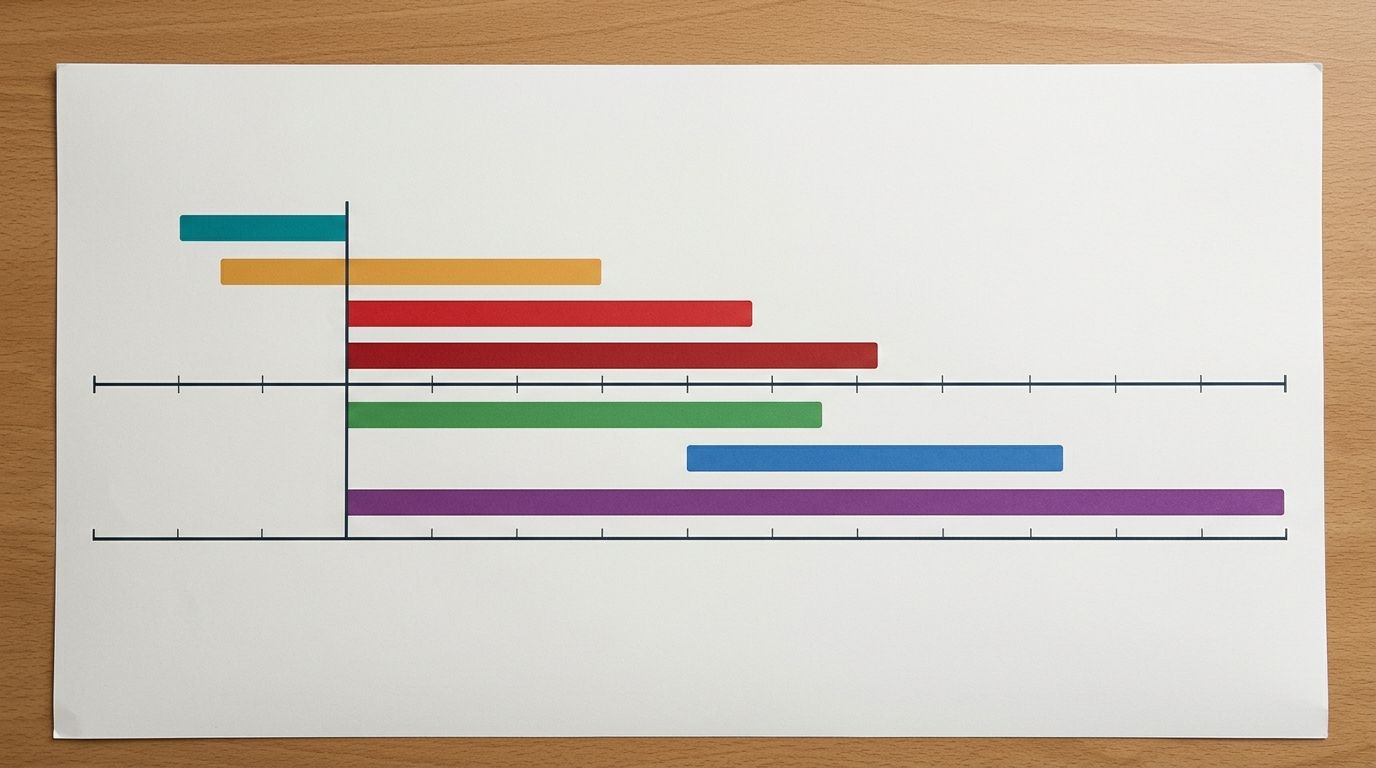
The "window period" is the gap between exposure to an STI and the point when a test can reliably detect it. Testing before that window is up produces a false negative, which is misleading and can be dangerous if it leads someone to skip follow-up testing or stop using protection.
Approximate windows for the most common rapid tests look like this (always check the insert that came with your specific kit, since exact figures vary by assay):
- Chlamydia and gonorrhea swab: typically reliable from about 7 to 14 days post-exposure.
- Syphilis rapid blood antibody test: typically 3 to 6 weeks.
- HIV antigen-antibody lab test: 18 to 45 days. Rapid antibody-only home tests run longer (23 to 90 days) per CDC HIV testing guidance.
- Hepatitis B rapid HBsAg test: about 3 to 6 weeks for most exposures.
- Hepatitis C rapid antibody test: 8 to 11 weeks for most people, occasionally up to 6 months.
- HSV-2 antibody test: typically up to 12 weeks for most people, with current tests sometimes taking up to 16 weeks or more to reliably detect infection (CDC herpes testing guidance).
The practical takeaway: do not test the day after a high-risk exposure expecting a definitive answer. The CDC and most clinical labs recommend a baseline test at the time of concern (to capture any pre-existing infection) plus a follow-up test once the relevant window has passed. If you want one number to remember, think of it as 6 to 12 weeks for a confident "all clear" across most common infections, with chlamydia and gonorrhea testable earlier.
At-home rapid tests vs clinic NAAT testing
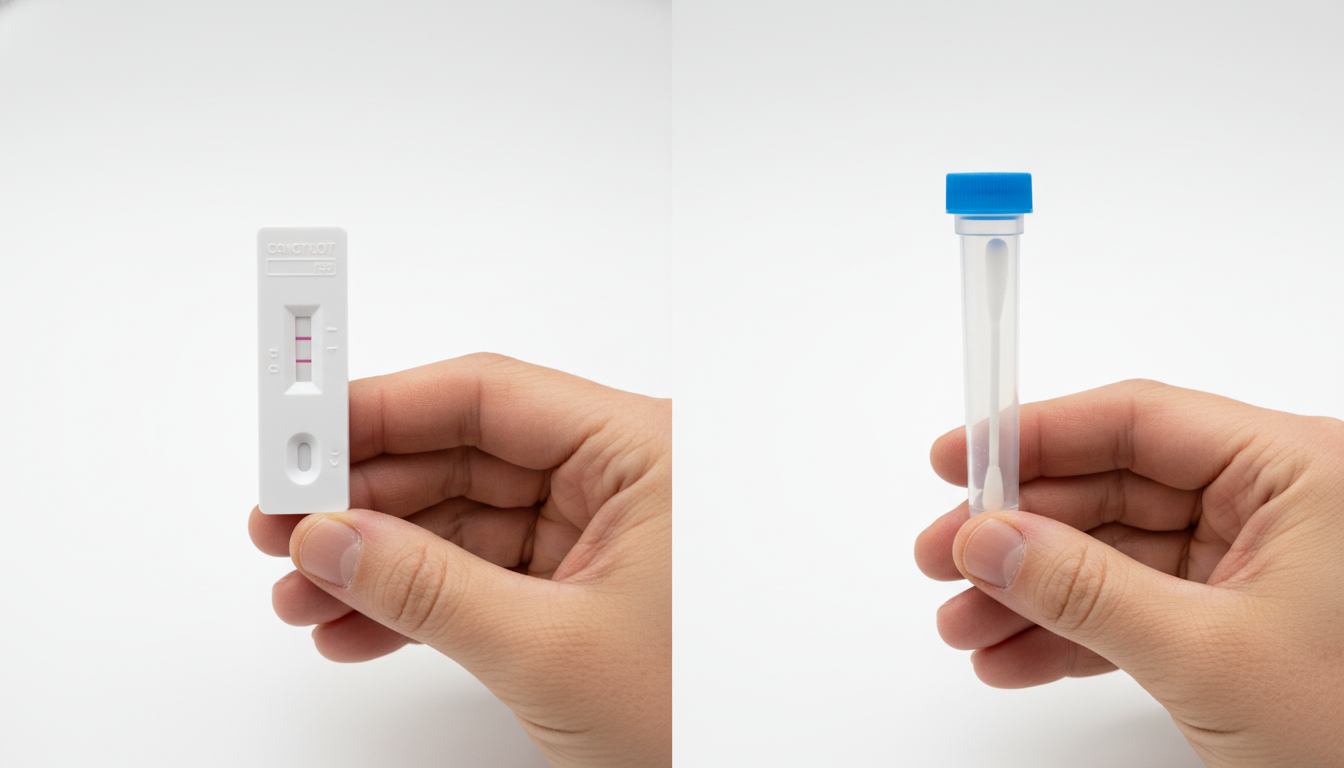
At-home rapid STI tests have made testing dramatically more accessible. They use the same general sample types (vaginal or penile swab, fingerstick blood) as clinic-based rapid tests, and they are reasonable choices for routine annual screening or after a known exposure.
Two qualifiers are worth understanding before you rely on a rapid result.
First, lateral-flow rapid kits and lab-processed NAAT (nucleic acid amplification tests) are different technologies. The CDC's chlamydia treatment guidelines call NAATs "the most sensitive tests" and the recommended method for detecting C. trachomatis infection (CDC chlamydia treatment guidelines). A negative rapid test in someone with symptoms or a recent confirmed exposure should be followed by a clinic NAAT to rule infection out. The two are complementary, not interchangeable.
Second, a positive rapid test is a strong reason to book the next available clinic appointment for confirmation. Some confirmatory tests (a dark-field examination for syphilis, a culture for gonorrhea, a quantitative HIV viral load) perform better than rapid antibody tests at staging or characterizing the infection, and treatment requires a clinician anyway.
The strengths of an at-home rapid test are speed, privacy, and removing the friction of a clinic appointment for a routine check that may turn up nothing.
Use at-home rapid testing when: you want a privacy-first routine annual check, you are between partners and want a baseline before a new relationship, or your local clinic access is limited.
Use clinic testing (NAAT) when: you have active symptoms (sores, discharge, pain), you have a recent known exposure to a partner with a confirmed STI, or your at-home rapid test came back positive and needs confirmation.
How to bring up testing with a new partner
The most useful sentence anyone can use with a new partner is short: "I get tested regularly. When was your last test?" That is the entire opener. It puts the request in your court, signals that you take sexual health seriously, and gives the other person a clear answer they can offer.
If a partner refuses or evades, that is itself information. You are entitled to ask for recent results before sex, to wait until both of you have tested, or to use barrier protection in the meantime, and none of those requests are unusual or invasive in a healthy adult sexual relationship. Partner notification is the baseline of informed adult sexual consent at any age, regardless of relationship history.
If you have just received a positive STI diagnosis, contact partners from the relevant exposure window even if the conversation is uncomfortable. Many infections are fully treatable when caught early. Many become harder to manage if a partner does not know to test.
Many people who have an STI do not know they are infected. Routine testing is the only way to know your status and to protect your partners.
Why testing is the simplest sexual-health habit you can build
Routine STI testing is one of the simplest things you can do for long-term sexual health. The right cadence is once a year for most sexually active adults, more often with multiple partners, and after every new partner or known exposure.
Annual: a basic panel for every sexually active adult.
Every 3 to 6 months: if you have multiple partners, a new partner, or are in a higher-risk sexual network.
Before any new partner: a baseline panel for both of you, repeated after the relevant window period if there has been recent exposure.
After a known or suspected exposure: test at the time of concern to catch pre-existing infection, then again after the relevant window period (6 to 12 weeks covers most common infections).
Frequently asked questions
- Do I really need STI testing if I am in a long-term monogamous relationship?
- If both partners tested before becoming sexually exclusive and the relationship has stayed monogamous since, ongoing routine STI testing is generally not needed for either partner. It is worth a baseline at the start, plus pregnancy-related testing for women, plus testing if there is any chance of outside exposure. The most common reason someone in a long relationship encounters an STI is a partner break or an undisclosed earlier exposure that was silent until now.
- Are at-home STI tests as accurate as clinic tests?
- At-home rapid tests use lateral-flow chemistry, which is a different technology from the lab-based NAAT (nucleic acid amplification) tests that the CDC's chlamydia treatment guidelines call the most sensitive method for chlamydia detection. Rapid tests are generally accurate enough for routine screening, but a positive result should be confirmed in a clinic, and a negative result in someone with symptoms or a known exposure should be repeated with a NAAT. The two are complementary, not interchangeable.
- How long after a possible exposure should I wait before testing?
- It depends on the infection. Chlamydia and gonorrhea are usually testable within 7 to 14 days. Syphilis takes about 3 to 6 weeks. HIV detection ranges from about 18 days for an antigen-antibody lab test to about 90 days for a rapid antibody-only home test. HSV-2 antibodies typically appear within 12 weeks but, per CDC herpes testing guidance, current tests can take up to 16 weeks or more to reliably detect infection. The CDC recommends a baseline test at the time of concern plus a confirmatory test once the relevant window has passed.
- Should adults over 50 get routine STI screening?
- If you are sexually active with a new or non-monogamous partner, yes. STI rates among adults 55 and older have risen sharply in the past decade, and most clinicians do not raise sexual-health screening with older patients unless asked. The same panel that applies to younger adults (HIV, syphilis, hepatitis B and C, chlamydia, gonorrhea) is appropriate, and you generally need to request it directly.
- Can I have an STI without symptoms?
- Yes, and this is the rule rather than the exception for the most common infections. Asymptomatic chlamydia is common in both women and men, per CDC guidance. Gonorrhea, HPV, and early HIV often produce no noticeable signs at all. HSV-2 and syphilis can cycle silently for long stretches. The fact that you feel fine is not evidence that you are uninfected, which is why routine screening is the only reliable way to know your status.
- Which STIs are included in a standard rapid panel?
- A typical at-home or clinic rapid STI panel includes HIV, syphilis, hepatitis B, hepatitis C, chlamydia, and gonorrhea. Some panels add HSV-2 antibody testing or include HPV (women only) as part of cervical screening. If you are unsure what is in a kit you have purchased, check the insert; if you are asking your clinician for a "full panel," confirm exactly which infections are covered so you can request anything that is missing.
- Do I still need testing if I always use condoms?
- Condoms reduce transmission risk significantly but do not eliminate it, especially for STIs that spread through skin-to-skin contact in areas not covered by a condom (HSV, HPV, and syphilis chancres on the groin or thighs). Condoms also can fail. Routine annual testing remains worthwhile for sexually active adults regardless of consistent barrier protection.
- How do I bring up testing with a new partner?
- Treat it as a small decision-framework, not a heavy disclosure conversation: before things become sexual, both of you testing and sharing recent results is more reliable than discussing history or trusting protection alone. If a partner declines to test or refuses to share results, that itself is information you can act on. You can wait, fall back on barrier protection in the meantime, or reconsider whether the relationship is one you want to be sexual in. None of those responses are unreasonable.

- U.S. Centers for Disease Control and Prevention. STI Statistics: 2024 annual surveillance summary, including the 2.2M-case combined total for chlamydia, gonorrhea, and syphilis cited in this article.
- U.S. Centers for Disease Control and Prevention. STI Treatment Guidelines: Screening Recommendations by age, sex, and risk group, used for the frequency tables and pregnancy-screening guidance.
- U.S. Centers for Disease Control and Prevention. HIV Testing: lifetime baseline recommendation, frequency guidance, and window-period figures for antigen-antibody and antibody-only tests.
- U.S. Centers for Disease Control and Prevention. Herpes Testing: HSV-2 seroconversion timing, including the up-to-16-weeks window cited in this article.
- U.S. Centers for Disease Control and Prevention. STI Treatment Guidelines: Chlamydia. NAAT recommendation as the most sensitive test for C. trachomatis, plus the prevalence of asymptomatic infection in men and women.
- U.K. National Health Service. Sexually Transmitted Infections (STIs): patient-facing guidance on symptoms, testing services, and partner notification.
