
Published: November 2025 | Last updated: May 2026 | Editorial review and quality control: Martina N.
Telling a new partner about an STI you've had, or are currently living with, is one of the conversations people dread most in early dating. The fear of being judged, ghosted, or treated like a problem is real, and it is the main reason a lot of people put the talk off until it feels too late to bring up naturally. The calmer truth: most adults respect honesty far more than they fear a manageable infection, and the conversation itself almost always goes better than the days of dread leading up to it.
This guide walks through what counts as relevant history, when in a new relationship the talk usually fits best, exact phrasings you can borrow, and how to handle reactions ranging from "thanks for telling me" to silence. The goal is not a single script. It's a framework that lets you find the words you'd actually say out loud, in your own voice, without shame.
Key Takeaways
- Disclose any STI that could still be transmitted today: herpes, HPV depending on strain, current HIV status (even undetectable), and any active or untreated infection. Fully cured bacterial infections (chlamydia, gonorrhea, syphilis) carry no ongoing risk and are not medically required to share.
- The right time is before any skin-to-skin contact that could transmit something. The sweet spot is the moment a casual connection starts feeling intimate, not on date one and definitely not during sex itself.
What Counts as "Disclosure-Worthy" History?
Not every infection you've ever had needs to be part of the conversation. If you were treated for gonorrhea at 19, haven't had symptoms or reinfection since, and test negative now, you don't owe anyone that detail unless you want to share it. Bacterial STIs (chlamydia, gonorrhea, and syphilis) are cured by antibiotics. Once treated and cleared, they no longer affect anyone's risk going forward.
Viral infections behave differently. Herpes (HSV-1 and HSV-2) remains in the body for life and can transmit through skin contact even when no sores are visible, because of asymptomatic viral shedding. HPV usually clears on its own within two years, but specific high-risk strains and timing matter. HIV is lifelong; treatment that suppresses the virus to an undetectable level reduces sexual transmission risk to effectively zero (the U=U framework), but ethical disclosure still matters in new relationships. Hepatitis B can be chronic in a minority of adults who get infected, and remains transmissible.
The simple test: does it affect your partner's risk today? If yes, disclose. If no, the choice is yours.
One legal layer that often gets missed: alongside the ethical case, several US states and some other jurisdictions impose criminal or civil disclosure requirements, primarily for HIV and in a few places for other STIs. The laws vary widely, are sometimes contested, and change over time. If you live somewhere those statutes are active and you have HIV in particular, it is worth knowing your state's current rules. A local public health department or an HIV legal services nonprofit can point you to the specifics for your jurisdiction.
A commercial note: this site sells at-home STI rapid test kits. Product mentions in this article are placed where they fit the section's topic, not based on commercial benefit. Skip them if they aren't useful to you.
| STI | Still needs disclosure? | Why |
|---|---|---|
| Herpes (HSV-1 or HSV-2) | Yes | Lifelong infection with ongoing risk of viral shedding, even without visible symptoms. |
| HPV | Sometimes | Most cases clear within 1-2 years. Disclose if you have a current diagnosis, active lesions, or known high-risk strain. |
| Chlamydia | No, if treated and cleared | Antibiotic cure removes ongoing risk. Routine retest 3 months after treatment is recommended. |
| Gonorrhea | No, if treated and cleared | Antibiotic cure removes ongoing risk. Retest in 3 months due to reinfection rate. |
| Syphilis | No, if treated and confirmed cleared | Antibiotic cure works; ongoing serology may stay positive but is not transmissible. |
| HIV (including undetectable) | Yes | U=U applies for sexual transmission, but informed consent is part of healthy new relationships. Some jurisdictions also impose legal disclosure obligations. |
| Hepatitis B | Yes, if currently positive or chronic carrier | Vaccinated partners are protected. Status still matters for unvaccinated partners and partner planning. |
When in a New Relationship Should You Bring It Up?
If you're searching this question, the moment is already on your mind. That awareness is half the work. The most respectful time to disclose is before any sexual contact that could carry transmission risk, including the kinds of skin-to-skin contact that come well before intercourse. But that does not mean first-date-coffee energy or an awkward over-dinner announcement.
The closer two people get to physical intimacy, the more vulnerable each partner becomes, emotionally and biologically. Disclosing early in the connection (not necessarily on date one) lets you both make informed decisions. It also gives the relationship room to breathe before sex becomes the pressure point.
What often works in practice: bring it up when you feel the connection shifting. The moment kissing gets longer, sleepovers come up, or someone teases about sex on a future date. That shift is your cue. Disclosure lands gently when it feels like part of a bigger trust-building moment instead of a roadblock or a confession.
What rarely works: waiting until the bedroom. By that point your partner has already committed emotionally and physically, and now feels they cannot say no without ruining a moment. Even if they say yes, the dynamic is no longer consent grounded in real information. It is reaction under pressure, and that is what most people remember afterward.
Disclose before any skin-to-skin contact that could carry transmission risk. The natural cue is the moment a casual connection starts feeling intimate, somewhere between early dates and the bedroom. Earlier than that is usually awkward; later than that takes informed consent off the table.
What to Actually Say
This is the part most people dread. You have the knowledge. You have made the decision to bring it up. The question is how to say it out loud without scaring them off or stumbling into shame.
No script fits everyone. But there are patterns that work: language that centers consent, keeps things clear, and removes apology. Be short, factual, and grounded in care. Two or three sentences is plenty. Then let them respond. You don't need to over-explain, dump your entire sexual history, or beg for understanding. Just give them the truth in a calm, respectful tone and see what they do with it. If they react badly, that says more about them than about you.
Here is how that might sound, depending on your situation:
| Situation | Example phrasing |
|---|---|
| Living with herpes | "Before things go further, I want to share something. I have genital herpes. I've learned how to manage it and I always want to be upfront. I'm happy to answer anything you want to ask." |
| Past STI, now cleared (sharing by choice) | "I had chlamydia a couple of years ago. It was treated and cleared, and I test regularly. I just believe in being open about this kind of thing." |
| Waiting on test results | "I'm in the middle of a testing window right now, so I'd rather wait to get physical until I have my results back. Just want to be careful for both of us." |
| Unsure of current status | "I haven't tested in a while, so I can't promise anything one way or the other. If we're heading toward physical, I'd feel better if we both got checked first." |
| Living with HPV | "I want to mention I've had HPV. Most cases clear, and mine is being monitored. I get routine screening and I wanted you to know going in." |
| HIV, undetectable on treatment | "I want to be upfront. I'm HIV positive and have been undetectable on treatment for a while, which means sexual transmission risk is effectively zero. I'm happy to talk through what that means with you." |
How to Handle Their Reaction
Say it goes sideways. They pull back. They get quiet. They text less. What now?
Give them space first. Not everyone knows how to respond in the moment, especially if they have never thought seriously about STIs before. Some people need time to look up the basics, talk to their own doctor, or sit with their own fears. A delay in their response is not the same as rejection. It usually means they are processing, and that processing is a sign they are taking the conversation seriously.
But if someone immediately accuses you, treats you like damaged goods, or vanishes mid-sentence, that is information you can use. They were never the partner who could meet you in honest conversation, and the disclosure just saved you from finding that out at a worse moment, like after sex or weeks into something more serious.
A common pattern: someone discloses HPV to a new partner and gets silence in return, or a comment like, "I don't want to take on someone else's problems." That stings in the moment. But the silence is data. They could not handle a routine adult health conversation, which usually means they could not handle real intimacy either. The disclosure did its job by surfacing that fact early, while you can still walk away cleanly.

If You Had an STI in the Past But No Longer Carry It
This is where it gets murky. You might wonder whether to mention an infection you had years ago but don't have anymore. The short answer: it depends on your comfort, the relationship you want, and what feels honest to you. If you were treated, tested negative since, and have no symptoms, there is no medical obligation to share. Your partner's risk is not affected.
That said, many people choose to share anyway, because future check-ins become less awkward and because vulnerability is part of how trust gets built. Imagine you are months into a new relationship. Everything feels right. One night, your partner casually mentions they've never had an STI and asks about your testing history. If you've left a treated gonorrhea case from years ago unmentioned, the omission now feels heavier than it would have if it had come up earlier, even though the infection itself was long gone and posed no real risk to your partner.
A lighter way to handle this: normalize your own story when testing comes up in general conversation. "I had chlamydia a while back, caught it fast, treated, clear since. I test regularly." That frames it as part of responsible adulthood instead of baggage, and most people respond with their own version of "Same, I had a scare once too."
Treated and cleared bacterial STI (chlamydia, gonorrhea, or syphilis): no medical obligation to disclose, because there is no ongoing risk to a partner. Choosing to share anyway is a values call, often made to keep the relationship fully transparent and to avoid the omission becoming heavier later.
If You're Not Sure of Your Current Status
Maybe you're waiting for results. Maybe it has been a while since your last test. Maybe you've had recent symptoms but aren't sure what they mean. In that case, transparency is protective for both partners and for your own peace of mind.
Use a soft boundary: "I want to be physical with you, but I'm waiting on results before I feel completely settled. Can we hold off until then?" That kind of pause is care, not rejection, and most people will appreciate the clarity. If someone pushes back or takes it personally, that is a red flag, because it shows they are not prioritizing consent or your shared safety.
You can also suggest testing together. Reframe it as a wellness step instead of a problem: "I was thinking of doing one of those at-home kits before we get any closer. Want to do one too?" Joint testing puts concrete action behind the conversation and removes the asymmetry of one partner being "the one with history."
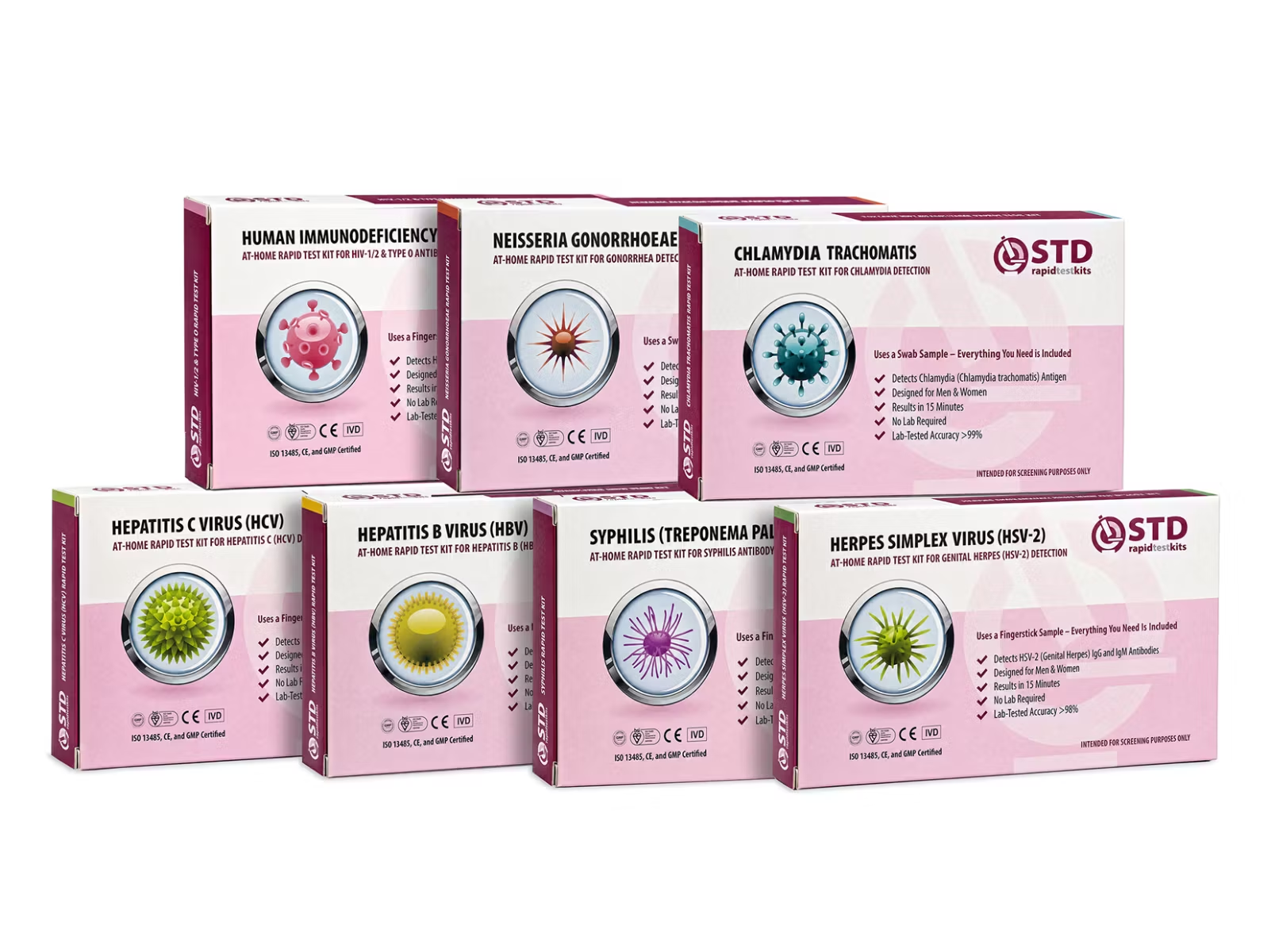
For a discreet starting point, our multi-STI rapid test kit covers the most common infections in a single private order, with results in about fifteen minutes per test.
Suggesting you test together turns disclosure into a shared decision instead of a one-sided confession. It also tells you something useful about your partner: someone who can handle a routine joint testing conversation can usually handle the longer, harder conversations a real relationship will eventually need.
After the Conversation
Whether it goes well, awkwardly, or unresolved, disclosure leaves a residue. Relief, vulnerability, pride, sometimes mild grief that you had to have the conversation at all. All of that is normal. You practiced a kind of courage that does not get much credit.
Do something grounding afterward. Journal it. Text a friend who already gets it. Watch something funny. Touch base with your body and remember that you did something honest, which is a different thing from doing something dangerous.
Don't be surprised if your partner brings it up again days later. That is usually a sign the conversation is deepening rather than a red flag. They might want more information, might have read something with questions, might just be processing. Stay open, but protect your energy. You are not obligated to become their personal sex ed teacher unless you genuinely want to, and pointing them to a reputable source (CDC, NHS, ASHA) is a perfectly fair response to the harder questions.
Pick whatever helps you settle: journal what came up, text a friend who already gets it, or step outside and move your body for ten minutes. You don't owe anyone (yourself included) an immediate debrief on how it went.
If They Ghost or Pull Away
This does happen sometimes. Some people vanish. Some react as if you confessed to something serious. That part is genuinely painful, and pretending otherwise would be dishonest about how dating actually works.
The other side of it: when someone disappears after honesty, they were never going to be the partner you needed. They were not safe enough for your body, your story, or your emotional reality. The conversation acted as a sorting mechanism, and it sorted them out faster than time alone would have. The disclosure saved you weeks or months of investing in someone who could not meet you in the truth.
You don't need universal approval to date well; you need mutual respect with the right person, and each conversation you have makes you a little more fluent in your own voice.
Talking with a partner about STIs before having sex is one of the most important things you can do to protect your health and theirs. The conversation may feel uncomfortable, but it supports informed consent and shared decision-making.
You're Not a Warning Label
If you've had an STI, you might carry the worry that you are "less than," "damaged," or somehow disqualified from a real relationship. That is shame talking, not science, and not the way most adults think about this once the conversation moves out of stigma and into routine health.
Most sexually active people will encounter an STI at some point. Lab-detectable infections are common, treatable in many cases, and manageable in others. Your medical history is not who you are; how you handle it with calm honesty is. Every direct conversation you have is a step toward trusting yourself, and toward dating people who can be trusted with the truth.
The World Health Organization tracks sexually transmitted infections in the millions of new cases per day worldwide. Many are curable, others are manageable, and most cause no symptoms or only mild ones. Your history puts you in a very large, very ordinary group, not in a category of your own.
FAQs
- Do I have to tell every new partner about an STI I had years ago, even if it was treated?
- If it was a fully treated bacterial infection (chlamydia, gonorrhea, or syphilis) and you have tested negative since, there is no medical obligation to share. The infection is no longer in your body, so your partner's risk today is not affected. Some people choose to share anyway, because they prefer the relationship to start without secrets and because testing-history questions tend to come up eventually. That choice is yours to make based on the kind of openness you want in the relationship.
- When in a new relationship is the right moment to bring it up?
- Before any skin-to-skin contact that could transmit something, typically when a casual connection starts feeling intimate. For herpes specifically, that threshold comes earlier than many people assume, because the virus can transmit through brief skin contact even when no outbreak is visible, so the conversation needs to happen before any genital or oral contact rather than only before intercourse. For most other infections, the cue is the moment sleepovers start, kisses get longer, or sex feels close on the horizon. Date one is usually too early to share comfortably; the middle of physical intimacy is too late, because your partner can no longer say no without feeling they ruined the moment.
- How do I phrase it without sounding scared or apologetic?
- Keep it short and matter-of-fact. Something like, "Before we get more physical, I want to be up front. I have herpes. It is managed, and I always take precautions. Happy to answer anything you want to ask." Two or three sentences. You are not writing a medical memoir or asking for absolution. You are giving them information so they can make their own informed decision, the same way you've made yours.
- What if I tell them and they ghost or pull away?
- It is painful in the moment, but it is also useful information. Someone who disappears after a respectful disclosure was not going to handle real intimacy well. Their reaction is information about them, not a verdict on you. Take a quiet day, do something grounding, then move on. The conversation did its job by surfacing a compatibility problem before you invested more time or physical risk.
- Is texting OK, or does it have to be in person?
- Text and in-person disclosures both work well. Some people process better when they have time to read, look things up, and respond at their own pace. If you choose text, send a clear message, then offer to talk in person whenever they're ready. The medium matters less than the follow-through; don't ghost your own disclosure by sending the message and then going silent if they want to talk.
- What if I'm not sure of my current status?
- Test before sex. Until results are in, be honest: "I haven't tested in a while and want to do that before we hook up. I care about doing this right." Suggesting joint testing turns it into a shared decision instead of a one-sided disclosure, and it tends to lower the emotional weight for both of you. At-home rapid kits are a discreet starting point.
- Can someone have an STI and not know it?
- Yes, and it is common. Chlamydia and gonorrhea are often asymptomatic, especially in women. HPV usually causes no symptoms at all and most cases clear without ever being noticed. HIV can be silent for years before producing symptoms. This is exactly why routine STI testing matters even when you feel completely fine. "No symptoms" does not mean "no infection."
- Should I ask about their status too?
- Yes. Disclosure should go both ways. "When were you last tested?" or "Want to test together before this goes further?" are both fair, normal questions. How someone responds tells you a lot about whether they will treat your shared sexual health as a joint responsibility. Mutual disclosure makes the conversation feel less like a confession and more like the kind of grown-up planning every new sexual relationship benefits from.
- U.S. Centers for Disease Control and Prevention. STI Awareness: Talking with Your Partner. Used for guidance on disclosure timing and the role of conversation in informed consent.
- U.S. Centers for Disease Control and Prevention. About Genital Herpes. Used for information on asymptomatic viral shedding and ongoing transmission risk between outbreaks. Verified live this revision pass.
- U.S. Centers for Disease Control and Prevention. About HIV. Used for the U=U (undetectable equals untransmittable) framework and antiretroviral treatment's effect on sexual transmission risk. Verified live this revision pass.
- World Health Organization. Sexually Transmitted Infections (STIs) Fact Sheet. Used for global epidemiology and overview of treatable vs. lifelong infections.
- National Health Service (UK). Sexually Transmitted Infections (STIs). Used for plain-language definitions of common infections and testing guidance.
- American Sexual Health Association. Herpes and Relationships. Used for guidance on disclosure phrasing and partner conversations in long-term relationships.
