
Published: November 2025 | Last updated: May 2026 | Editorial review and quality control: Martina N.
Can I really test for chlamydia at home and treat it without a clinic?
Yes for testing, not for treatment. Rapid swab kits give a private result in about 15 minutes. A positive still needs a confirmatory lab test and a prescription antibiotic. The CDC's first-line regimen is a 7-day doxycycline course. No chlamydia antibiotic is sold over the counter in the U.S., though telehealth platforms handle most prescriptions without a clinic visit.
Chlamydia is the most reported bacterial sexually transmitted infection in the United States, with approximately 1.6 million cases reported in 2022, per CDC STI surveillance data. Most of those infections never produce a single symptom, which is why home testing has become a normal part of sexual-health routines for sexually active adults under 35 and for anyone whose partner has just tested positive. The World Health Organization estimates roughly 129 million new chlamydia infections globally in 2020, and the NHS notes that most people who have chlamydia do not have any symptoms.
If you arrived here after searching for a "chlamydia urine home test kit" or "over-the-counter chlamydia treatment," two things are worth knowing upfront. First, the at-home rapid kits sold to consumers use a self-collected swab rather than a urine sample. Second, no antibiotic licensed to treat chlamydia is currently sold over the counter in the United States. The brand some older articles still mention, Clamelle, was withdrawn from the United Kingdom in 2019 and was never licensed in the U.S.
That sounds like bad news, but it is not. The swab-based home test is faster than mail-in lab kits and gives you a private result in about 15 minutes. Treatment does require a prescription, though a telehealth visit for a confirmed positive often costs less than a clinic copay. The rest of this guide walks through how the home test works, when in the window after exposure you can rely on it, and what current CDC treatment guidance actually says. You can test for chlamydia at home in about 15 minutes, and we will be straight about where that kit fits and where a clinic is the better call.
Key Takeaways
- At-home rapid chlamydia kits use a self-collected vaginal or penile swab, not a urine sample. Lab-processed mail-in kits can use urine, but they ship to a clinical lab; the rapid in-home version is swab-based.
- Chlamydia treatment is prescription-only in the U.S. The CDC's current first-line regimen is doxycycline 100 mg twice daily for 7 days. Single-dose azithromycin is now an alternative, not the preferred option.
How at-home chlamydia testing works in practice
The term "home test" gets used for two different products in chlamydia screening, and they are not interchangeable. Knowing which one you bought tells you what the result actually means.
The first is a mail-in collection kit. You provide a urine sample, or in some cases a vaginal swab, and ship it to a contracted clinical laboratory. The lab runs a nucleic acid amplification test (NAAT) and posts results to a patient portal in 2 to 7 days. The lab NAAT is the CDC's preferred diagnostic method because its analytical sensitivity is the highest available, often above 95 percent on both urine and swab specimens.
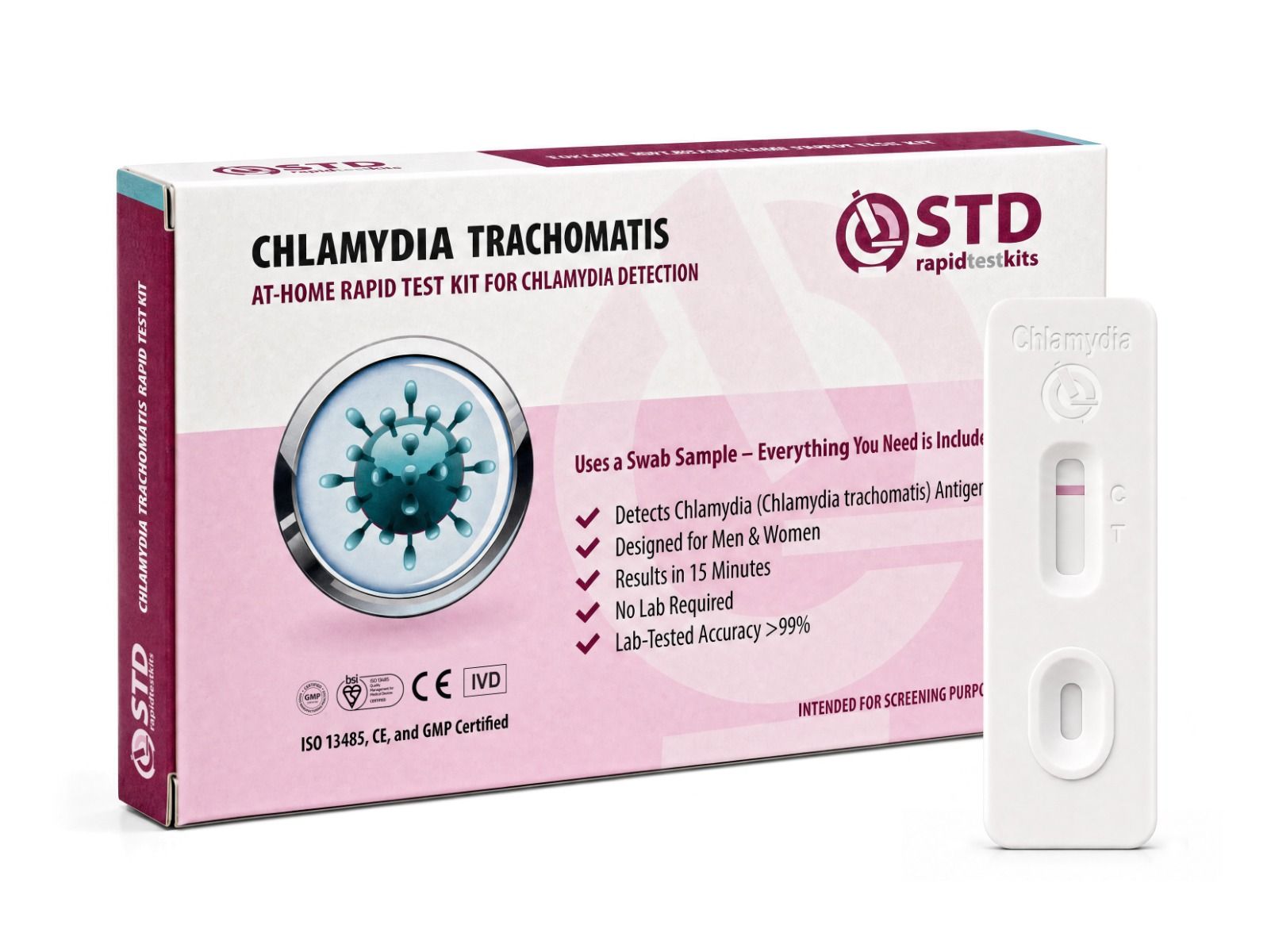
The second is a rapid lateral-flow cassette you use entirely at home, with no lab involved. You collect a self-administered swab (vaginal for women, penile for men), drop the swab into a small buffer tube, then apply a few drops of the mixed sample onto the test cassette. Capillary action carries the fluid across a strip coated with antibodies that bind a specific chlamydia antigen, and a colored line appears within about 15 minutes if enough antigen is present. The control line confirms the test ran correctly. The test line is the result. Our at-home kit is this second type: lateral-flow chemistry, swab-based, no lab.
The difference matters because lateral-flow rapid tests detect bacterial antigen, while NAATs amplify chlamydia DNA millions of times before reading the result. NAATs can pick up infections at much lower bacterial concentrations. Lab NAATs remain the reference standard. Rapid lateral-flow tests are faster, fully private, and useful when waiting a week for lab results is the difference between getting screened and not getting screened at all.
One thing the rapid at-home kit cannot do: process a urine sample. If you specifically need a urine NAAT, for example because a clinician or insurer asked for one, a mail-in lab service is the at-home option for that workflow. We are honest about this on the product page. We sell the swab-based rapid kit, not a urine cassette, because the swab is the validated sample type for the lateral-flow chemistry we use.
Mail-in collection kit: you collect at home, ship the sample to a clinical lab, results post to a patient portal in 2 to 7 days.
Rapid lateral-flow at home: you collect, process, and read at home with no lab involved; the cassette gives a result in about 15 minutes.
Both are valid screening tools. The choice is mostly about how fast you need the result and whether you are comfortable reading a cassette versus waiting for a lab report.
When to test in the window after possible exposure
Chlamydia's window period is the gap between exposure and the point a test can reliably detect the infection. For chlamydia, that window is roughly 1 to 2 weeks. The bacteria need time to colonize the cervix, urethra, or rectum and replicate to detectable levels before any test, including a lab NAAT, can find them.
The practical takeaway is that day 14 is the sweet spot for a rapid swab test. Testing on day three because the kit arrived on day three buys you a number that does not actually answer your question. A negative inside the first week is essentially uninformative, while a positive in that early window is still a real positive worth acting on. If you tested early and came back negative but a recent exposure is still on your mind, retest at the two-week mark. A second negative at day 14 to 21 is reassuring in a way a day-three negative is not.
If you already have symptoms (unusual discharge, burning with urination, pelvic discomfort, post-coital bleeding, or testicular pain), do not wait for the window to close. See a clinician within the week. Symptomatic chlamydia carries a higher risk of moving up the reproductive tract, and prompt treatment is the goal. After a confirmed partner exposure, clinicians often treat presumptively rather than wait the full window, which is part of why expedited partner therapy exists.
Chlamydia Testing Window After Exposure
- Day 0 Exposure
Bacteria transmit; no test can detect infection yet
- Day 7 Too early
Even a lab NAAT may miss it; a negative here is not reassurance
- Day 14 Reliable window opens
Both lab NAATs and rapid swab tests detect reliably
- Day 21 Confirmation point
A second negative here is genuinely reassuring
Reliable detection begins around day 14; a day-3 negative answers almost nothing.
How accurate are home tests, really?
Accuracy is two numbers, not one. Sensitivity is the fraction of infected people the test correctly flags as positive. Specificity is the fraction of uninfected people the test correctly clears as negative. A common pitfall in product marketing is collapsing both into a single "accuracy" figure, which hides the real trade-offs. When a kit advertises "99% accuracy," that figure is usually specificity (the false-positive rate is genuinely very low) rather than sensitivity (the false-negative rate). Both numbers matter, and the sensitivity figure is what determines how much weight to put on a negative result.
The numbers below are pooled, indicative ranges drawn from published validation studies, benchmarked against the lab NAAT that the CDC treats as the most sensitive diagnostic method. They are not per-product specifications and they vary by population, sample handling, and the specific kit; always check each individual product's Instructions For Use for that kit's validated sensitivity and specificity. With that caveat: self-collected swabs sent to a NAAT lab typically show pooled sensitivity around 92 to 96 percent and specificity above 99 percent, very close to clinician-collected NAAT samples. Rapid lateral-flow home tests typically report sensitivity in the 80 to 92 percent range against a NAAT reference standard, with specificity also above 98 percent, depending on the kit and the bacterial load profile of the population tested. Asymptomatic infections, which are the majority of chlamydia infections, tend to sit at the lower-load end of the distribution and are harder for any antigen-based test to catch.
What does that mean in practice? A positive home rapid test is highly likely to be a real infection (high specificity), and you should act on it. A negative home rapid test is reassuring, but it is not the same as a negative NAAT. If the exposure was high-risk, if symptoms appear, or if you are inside the testing window, a clinic NAAT is the appropriate next step regardless of what the home strip showed.
| Test type | Sample | Sensitivity (pooled, indicative) | Specificity (pooled, indicative) | Time to result |
|---|---|---|---|---|
| At-home rapid lateral-flow | Self-collected vaginal or penile swab | About 80 to 92 percent | Above 98 percent | About 15 minutes |
| Mail-in self-collected NAAT | Self-collected swab or urine | 92 to 96 percent | Above 99 percent | 2 to 7 days |
| Clinic NAAT (lab) | Clinician or self-collected swab; first-catch urine | 94 to 98 percent | Above 99 percent | 1 to 3 days |
Reading your at-home result and confirming it
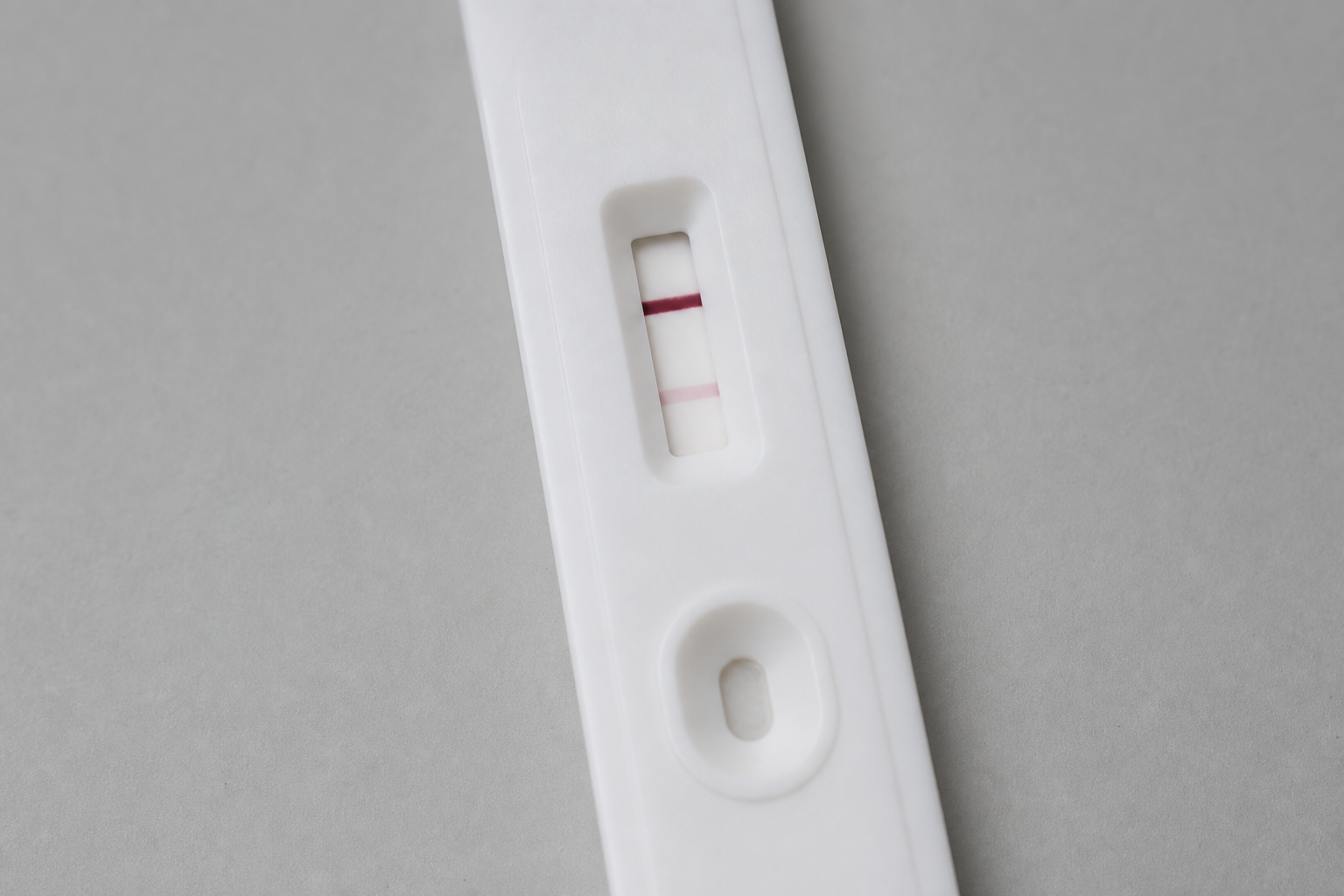
The rapid cassette has two reading positions: a control line (C) and a test line (T).
- One line at C, no line at T: negative result. The test ran correctly; no chlamydia antigen was detected in your sample.
- Two lines (both C and T): positive result. Even a faint test line counts as a positive in lateral-flow chemistry. Do not dismiss a weak line as inconclusive.
- No line at C: invalid result. Something went wrong with the sample, the buffer, or the cassette itself. Re-test with a fresh cassette.
The 15-minute reading window matters. Lines that appear after 30 minutes are not diagnostically meaningful; they can be evaporation artifacts from the buffer drying on the strip. Read the result during the window stated in your kit's instructions and discard the cassette afterward.
If you get a positive, the next step is a confirmatory NAAT through your primary care provider, a sexual-health clinic, or a telehealth service. A positive at home is enough to start a clinical conversation, but treatment will be tied to a confirmatory test or to clinical judgment based on symptoms and exposure history. Plan on a 1 to 3 day turnaround for a confirmation at most labs.
If you get a negative result but had a likely exposure within the last 2 weeks, re-test in 1 to 2 weeks. False negatives during the window are the most common source of missed chlamydia diagnoses on rapid tests.
Step by step: using a self-collected swab
The single biggest determinant of whether a home test gives you a useful answer is whether the sample collection went right. The procedure is simple, but small mistakes (touching the swab tip to skin, sampling too quickly, or running the cassette before the buffer drops have had time to wick) can dent sensitivity. Read the kit insert before you open anything.
The general flow looks like this:
- Wash and dry your hands. Do not use antibacterial soap or hand sanitizer immediately before handling the swab tip.
- Lay the kit out. Open the swab pouch, the buffer tube, and the cassette pouch. Do not put the swab down on the counter at any point. Hold it by the handle only.
- Collect the sample. For a vaginal self-swab, insert the swab about two inches and rotate gently against the vaginal walls for the time the kit specifies (typically 10 to 30 seconds). For a penile self-swab, the swab is inserted a short distance into the urethral opening; for many users, this is uncomfortable for a few seconds. Follow the kit instruction exactly.
- Transfer to the buffer tube. Place the swab into the buffer-solution tube. Stir or rotate as the kit insert directs, then break or trim the swab handle so the cap seals.
- Apply to the cassette. Apply the number of buffer drops the insert specifies (usually three to four) to the sample window. Start a timer.
- Read the result at the right moment. Most kits read at 15 minutes. Reading too early can miss a faint positive line; reading too late can produce evaporation artifacts. Do not interpret a result outside the kit's specified window.
Any visible test line, even a faint one, is a positive result if the control line is also present. A control line with no test line is a negative. No control line at all means the test failed and the result is not interpretable; run a fresh kit.
stdrapidtestkits.com sells the swab-based rapid kit described above; product fit, not commercial benefit, drives the recommendations in this article.
What to do if your home test is positive
A positive home test is treatable, fast, and not the end of anything. Chlamydia clears with a short antibiotic course in the overwhelming majority of cases. The action plan looks like this.
Confirm with a clinician. Before starting treatment, most providers will want to confirm with a NAAT, both to verify the diagnosis and to rule out co-infections like gonorrhea (which is often picked up in the same swab). A telehealth visit usually qualifies. Bring the home test result to the consultation and tell the provider what kit you used.
Treatment is short. The CDC's first-line regimen is doxycycline 100 mg orally twice daily for seven days. Azithromycin 1 g as a single oral dose is an alternative when doxycycline is contraindicated or adherence is a concern, though doxycycline has shown superior efficacy, particularly for rectal infections. Pregnancy changes the regimen; talk to your provider.
Do not have sex during treatment. Wait until both you and any sex partners have completed treatment plus seven days. Skipping this step is the most common cause of reinfection.
Notify partners. Anyone you have had sex with in the 60 days before symptoms or diagnosis should be tested and treated. Many U.S. jurisdictions and some clinics support expedited partner therapy, which lets a clinician prescribe treatment for partners without a separate clinic visit. The CDC supports this practice for heterosexual partners.
Reinfection from an untreated partner is the most common reason a recently treated patient tests positive again at the three-month retest. Wait until you AND any sex partners from the past 60 days have both finished a full antibiotic course PLUS seven additional days before resuming sex. If a partner has not been treated, condom use does not bridge the gap reliably; the safer call is to wait.
Why "over-the-counter chlamydia treatment" is misleading in 2026
Older articles, including the one we are refreshing, used to point readers toward Clamelle, a single-dose pharmacy-supplied azithromycin product. That guidance is no longer current.
Three things have changed:
- Clamelle was discontinued. The brand was withdrawn from the UK pharmacy network in 2019. It was never licensed for sale in the United States, so the "OTC chlamydia pill" recommendation that some search results still surface has never been accurate for U.S. readers and is no longer accurate anywhere.
- First-line treatment changed. In the CDC's 2021 STI Treatment Guidelines, doxycycline 100 mg taken twice daily for 7 days replaced single-dose azithromycin as the preferred regimen for uncomplicated chlamydia in non-pregnant adults. Doxycycline produces higher microbial cure rates, particularly for rectal and pharyngeal infections, where azithromycin failure rates had become a real clinical concern.
- Prescription only. Doxycycline and azithromycin are both prescription antibiotics in the United States. You cannot buy either over the counter. Buying antibiotics through unregulated international websites is unsafe; counterfeit and underdosed products are common, and even a genuine but wrong-dose regimen can suppress symptoms while bacterial resistance develops underneath.
If a friend, an older article, or a foreign pharmacy listing tells you that you can pick up an over-the-counter chlamydia cure in the U.S., it is wrong. The right path after a positive test is a quick clinical conversation, either with your usual provider, a sexual-health clinic, or a telehealth platform that handles STI prescriptions. Several telehealth services will write the prescription after a brief intake form and a confirmed positive result, typically within 1 business day of the test confirmation, often for less than a typical urgent-care copay.
There is one related product you can buy without a prescription: condoms. Consistent condom use reduces chlamydia transmission, though it does not eliminate it because the bacterium can sit on skin areas the condom does not cover.
Common misconceptions about treating chlamydia at home
Myth: You can buy a chlamydia cure over the counter at a U.S. pharmacy.
Fact: No chlamydia antibiotic is sold over the counter in the United States. Doxycycline, azithromycin, and amoxicillin are all prescription-only. Clamelle, the UK pharmacy-supplied azithromycin product some older articles still mention, was withdrawn in 2019 and was never licensed in the U.S.
Myth: If a positive test result is private, ordering antibiotics from an overseas website is a reasonable shortcut.
Fact: Buying antibiotics through unregulated international websites is unsafe. Counterfeit and underdosed products are common, and even a genuine but wrong-dose regimen can suppress symptoms while bacterial resistance develops underneath. A telehealth visit is usually faster, cheaper, and verifiably safe.
Myth: Single-dose azithromycin is the standard first-line treatment for chlamydia.
Fact: Since the CDC's 2021 STI Treatment Guidelines, doxycycline 100 mg twice daily for 7 days is the preferred regimen for uncomplicated chlamydia in non-pregnant adults. Azithromycin 1 g as a single dose is now the alternative, used mainly when doxycycline is contraindicated or adherence is a concern.
Doxycycline, side effects, and re-testing
The doxycycline regimen produces high microbial cure rates in clinical trials, which is why the CDC names it the preferred first-line therapy for uncomplicated chlamydia. The three current CDC regimens are straightforward to remember. Non-pregnant adults take doxycycline 100 mg orally twice daily for 7 days as the preferred course. Single-dose azithromycin 1 g orally is the alternative when doxycycline is contraindicated or adherence is a concern. Pregnancy uses either azithromycin 1 g as a single dose or amoxicillin 500 mg three times daily for 7 days, since doxycycline is not used in pregnancy. All three are prescription-only in the United States; there is no over-the-counter equivalent.
Adherence is the most common reason treatment appears to fail: stopping the course after a few days when symptoms resolve, or taking doxycycline on an empty stomach and feeling nauseated enough to skip a dose. Take it with food and a full glass of water. Avoid lying down for 30 minutes after each dose; doxycycline can irritate the esophagus if it sits in the upper digestive tract before reaching the stomach.
Side effects are usually mild: nausea, sun sensitivity (wear sunscreen and avoid prolonged direct sun exposure), occasional rash. Stop the antibiotic and contact your prescriber if you develop severe persistent diarrhea (possible C. difficile infection), throat tightness, or a widespread rash that involves the lips, eyes, or mucous membranes.
Partner treatment is essential. The CDC supports expedited partner therapy (EPT), in which your clinician writes a prescription for your partner without a separate clinic visit. Most U.S. states currently allow EPT for heterosexual partners; the exact list updates periodically, so confirm with your prescriber whether EPT applies in your state.
Re-test 3 months after completing treatment, even if you have no symptoms and even if your partner was treated alongside you. The 3-month follow-up is a reinfection check rather than a test of cure; proper antibiotic adherence is assumed to have cleared the original infection, and the follow-up test is looking for a new infection from an untreated contact. Catching reinfections early prevents further transmission.
Take with food and a full glass of water to reduce nausea and esophageal irritation.
Stay upright for 30 minutes after each dose. Doxycycline can irritate the esophagus if it sits in the upper digestive tract.
Finish the full 7-day course even if symptoms resolve in the first 2 to 3 days. Stopping early is the most common reason treatment appears to fail.
Wear sunscreen or limit direct sun exposure while on the course. Doxycycline can cause heightened sun sensitivity.
Who should screen for chlamydia, and how often
The U.S. Preventive Services Task Force gives chlamydia screening a Grade B recommendation for all sexually active women aged 24 and younger, and for women 25 and older who are at increased risk, without specifying a fixed screening interval. The USPSTF guidance notes that women aged 15 to 24 carry the highest infection rates, which is why younger women get universal screening rather than risk-based screening.
The CDC's recommendations layer in an annual cadence and additional groups. Annual screening is advised for sexually active women under 25, for women 25 and older with risk factors, and for sexually active gay and bisexual men with site-specific testing (urethral, rectal, pharyngeal) based on exposure. Pregnant people should be screened at the first prenatal visit and again in the third trimester for those at continued risk. Anyone who has had a chlamydia infection should be retested approximately three months after treatment regardless of partner status.
If you fall into one of these groups, an annual home swab kit is a reasonable way to stay on schedule. If you are outside these groups but have a new partner, multiple partners, or a specific exposure on your mind, a single targeted test is also reasonable. The point of catching quiet infections early is preventing the downstream complications that make untreated chlamydia consequential, especially the tubal-factor infertility risk in women with longstanding asymptomatic disease.
Who should screen, and how often
- Sexually active women aged 24 and younger: screen annually (USPSTF Grade B).
- Women 25 and older with new or multiple partners: screen annually while the risk factor is current.
- Sexually active gay and bisexual men: screen annually, with site-specific testing based on exposure.
- Pregnancy: at the first prenatal visit, then again in the third trimester for those at continued risk.
- After treatment for chlamydia: retest about 3 months later, regardless of whether partners were treated.
Complications if chlamydia goes untreated
Untreated chlamydia is rarely an emergency in the short term. The risks build over months, which is why the asymptomatic majority is the most clinically concerning subset of cases.
For women, the most significant complication is pelvic inflammatory disease (PID). Untreated chlamydia can ascend from the cervix to the uterus and fallopian tubes, causing inflammation and scarring. The CDC's chlamydia overview identifies PID as a serious consequence in women whose infection is left untreated. PID increases the lifetime risk of infertility, ectopic pregnancy, and chronic pelvic pain. Tubal damage from scarring is often irreversible by the time symptoms make the diagnosis obvious.
For men, untreated chlamydia can cause epididymitis, an inflammation of the duct behind the testicle, presenting as one-sided testicular pain and swelling. Epididymitis is treatable but uncomfortable, and recurrent episodes are associated with rare fertility complications later in life.
A less common complication can affect either sex: reactive arthritis, a form of joint inflammation that can follow a chlamydia infection, listed among the possible complications by MedlinePlus.
For both sexes, untreated chlamydia raises the per-act risk of acquiring or transmitting HIV during exposure. Active genital inflammation increases viral entry points and viral shedding. Treating chlamydia therefore contributes to HIV-risk reduction in addition to clearing the bacterial infection itself.
Pregnant women with untreated chlamydia can transmit the infection to a newborn during vaginal delivery, causing neonatal conjunctivitis or pneumonia. Routine prenatal screening identifies most of these infections before delivery, but the protocol depends on testing actually happening; chlamydia is one of the standard panel items in U.S. prenatal care.
Annual screening for chlamydia is recommended for all sexually active women under 25 years of age, and for older women with risk factors such as new or multiple sex partners.
When a home test isn't the right tool
Home swab kits are validated for genital sample collection only. They are not the right tool for every chlamydia question.
Pharyngeal (throat) chlamydia. Oral exposure can transmit chlamydia, and pharyngeal infection is real, but it requires a throat swab collected and processed differently from a genital swab. We do not sell a pharyngeal swab kit. If your concern is throat exposure, a sexual-health clinic can do a pharyngeal NAAT in the same visit as a genital test.
Rectal chlamydia. The same reasoning applies. Rectal swabs are validated for chlamydia detection, but they are a separate procedure with separate processing, and we do not sell a rectal swab kit. Anyone with rectal exposure or rectal symptoms should see a clinician for a site-specific NAAT.
Active, symptomatic infection. If you have unusual discharge, pelvic or testicular pain, painful urination, or post-coital bleeding, do not stop at screening at home. See a clinician. A symptomatic presentation deserves a full exam, a co-infection screen (gonorrhea, trichomoniasis, sometimes mycoplasma), and a same-day antibiotic plan. A home test alone is too narrow.
Test of cure for pregnant patients. Pregnant patients diagnosed with chlamydia need a documented test of cure roughly four weeks after treatment, plus a retest in the third trimester. That is a clinical workflow, not a home-screening one.
Two further limits are worth naming plainly. A home result does not plug into the public-health partner-notification workflow that a clinic diagnosis often does, so telling partners falls entirely to you, or to a clinician you ask to help. And each kit tests one anatomic site only; a genital swab does not screen the throat or rectum, so a full picture after multi-site exposure means more than one test.
Throat exposure: a pharyngeal swab is needed and we do not sell one.
Rectal exposure or rectal symptoms: a rectal swab is needed and we do not sell one.
Active symptoms (unusual discharge, pelvic or testicular pain, painful urination, post-coital bleeding): a full exam plus a co-infection screen is the right pathway, not a single-target home test.
Pregnant and recently treated for chlamydia: the four-week test of cure plus third-trimester retest is a clinical workflow, not a home-screening one.
Should you also screen for gonorrhea?
Co-infection with gonorrhea is common in chlamydia-positive samples, and the two are routinely screened together; the USPSTF issues a combined screening recommendation for both. They used to share a single combined-dose treatment regimen, but no longer: the current CDC regimens are different drugs (doxycycline for chlamydia, intramuscular ceftriaxone for gonorrhea), which is one more reason confirmatory testing matters before any antibiotic is started.
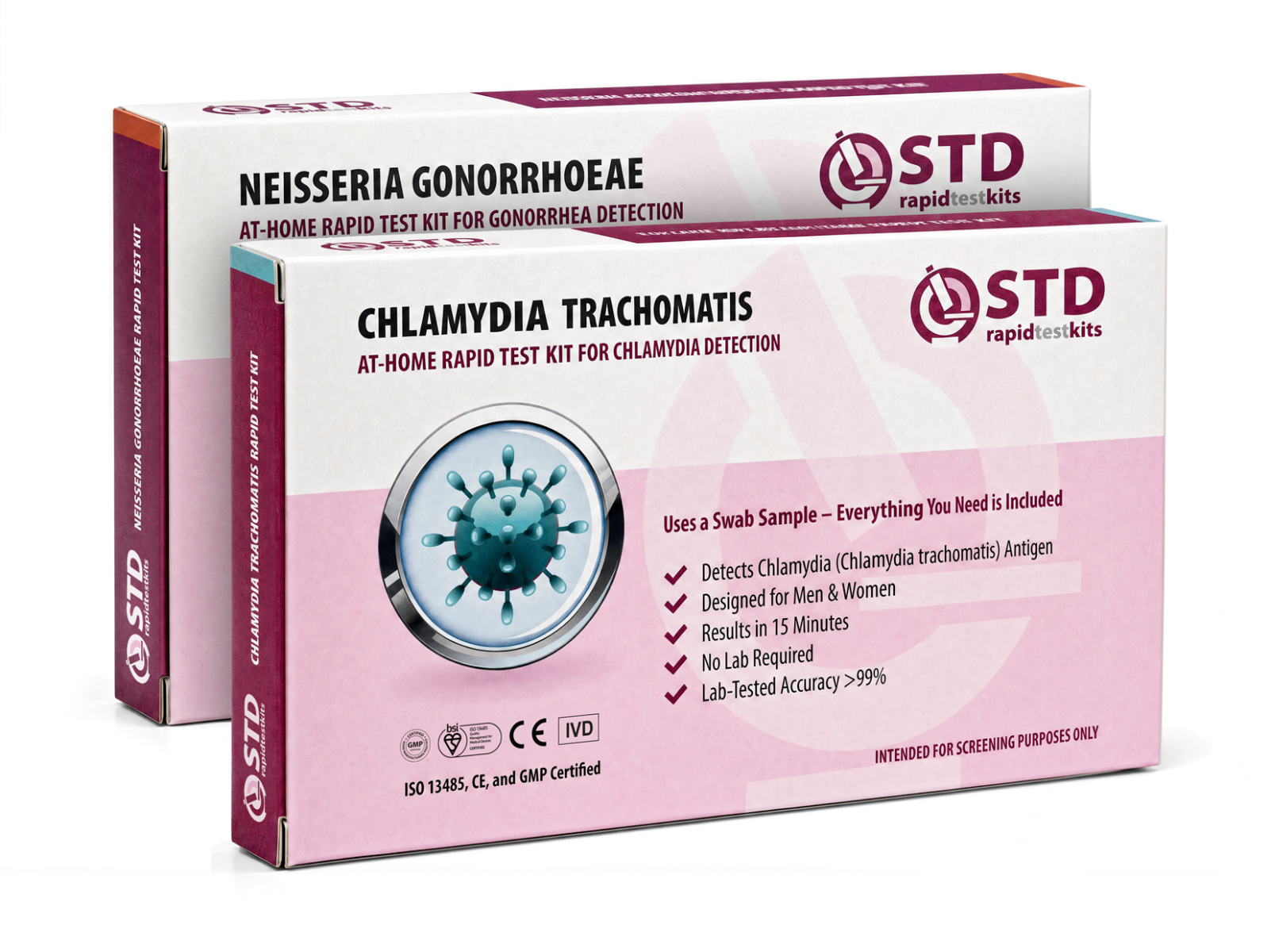
If you are testing because of a recent possible exposure, screening for both at once is the practical approach. A combination 2-in-1 swab kit covers both pathogens from the same self-collected sample, which is cheaper and faster than running two separate tests. For people with risk factors for broader STI exposure (new partner, multiple partners, condomless contact), a combination at-home STI test kit that adds syphilis and blood-borne infections may be the right scope to consider.
Our at-home rapid kits cover genital and bloodwork screening. We do not sell pharyngeal (throat) or rectal swab kits. If your exposure was oral or anal and you specifically need to test those sites, a clinic NAAT remains the right tool, because labs run NAAT on throat and rectal swabs with validated sensitivity. The genital and blood panel still catches the most common transmission route from the same encounter.
Your next steps after reading this guide
Was your possible exposure less than 14 days ago, with no symptoms?
Yes: Wait until day 14 before running a rapid swab test. A negative result before then does not reliably rule out infection.
Did you test early and get a negative, but a recent exposure is still on your mind?
Yes: Retest at day 14 to 21. A second negative in that window is genuinely reassuring.
Did your home test come back positive, or do you have symptoms?
Yes: Confirm with a lab NAAT and contact a provider or telehealth service for a doxycycline prescription. Tell any sex partners from the past 60 days so they can test and treat, then retest yourself about 3 months after finishing treatment.
No: If you tested negative after the window closed and have no symptoms, routine annual screening is your next checkpoint.
General guidance only. A healthcare provider can advise based on your specific situation.
Frequently Asked Questions
- How accurate is an at-home chlamydia test compared to a lab test?
- Lab NAATs are the most analytically sensitive option for chlamydia, with sensitivity often above 95 percent. Rapid at-home lateral-flow tests sit in the 80 to 92 percent sensitivity range because they detect antigen rather than amplifying DNA. Specificity (the false-positive rate) is above 98 percent in both formats. A positive at-home result is highly likely to be a true positive; a negative result with high clinical suspicion is worth confirming with a lab NAAT 1 to 2 weeks later.
- Can men use an at-home chlamydia kit?
- Yes. Our single-infection chlamydia kit is validated for both vaginal and penile self-collection. Men collect a sample from the urethral opening with a small swab; the kit instructions are step-by-step and the collection itself takes less than a minute.
- How soon after possible exposure can I test?
- The window period is about 1 to 2 weeks. Testing earlier than day 7 carries a high chance of a false negative because bacterial levels are still too low to detect. Day 14 onward is the reliable detection window for both lab NAATs and rapid swab tests. If symptoms are present, see a clinician without waiting for the full window.
- Is over-the-counter chlamydia treatment available in the U.S.?
- No. All antibiotics used to treat chlamydia (doxycycline, azithromycin, amoxicillin in pregnancy) are prescription-only in the United States. Clamelle, the pharmacy-supplied azithromycin product some older articles mention, was withdrawn from the UK in 2019 and was never licensed in the U.S. Telehealth services can write the prescription quickly after a confirmed positive result.
- What if my home test is positive?
- Schedule a confirmatory NAAT through your provider, a sexual-health clinic, or a telehealth platform. A positive at home is enough to start the clinical conversation, but treatment is typically tied to a confirmatory result so the prescriber has documented diagnostic evidence. Plan on a 1 to 3 day turnaround for most lab confirmations.
- Will a home swab detect throat or rectal chlamydia?
- No. Genital self-swab kits are validated for vaginal or penile sample collection only. Pharyngeal (throat) and rectal infections need site-specific swabs processed by a clinical lab, which is a clinic procedure. A genital home test cannot rule out infection at other sites.
- Does a negative home test mean I definitely do not have chlamydia?
- Not in absolute terms. A negative result clears infection only relative to the test's sensitivity, which for rapid lateral-flow kits sits in the 80 to 92 percent range. If symptoms develop, the exposure was high-risk, or you tested before the window closed, follow up with a clinic NAAT for a stronger negative.
- Should I retest immediately after finishing my antibiotics?
- No. The CDC recommends re-testing about 3 months after completing treatment, not immediately afterward. Re-infection from an untreated contact is far more common than treatment failure. A test of cure right after treatment is only recommended in pregnancy or when symptoms persist beyond the expected timeline.
- U.S. Centers for Disease Control and Prevention. 2021 Sexually Transmitted Infections Treatment Guidelines. Source for chlamydia diagnosis, the doxycycline first-line regimen and its efficacy, alternative regimens in pregnancy, expedited partner therapy, and re-testing at 3 months.
- U.S. Centers for Disease Control and Prevention. STI surveillance statistics hub providing access to annual surveillance reports, including the figure of approximately 1.6 million U.S. chlamydia cases reported in 2022.
- U.S. Centers for Disease Control and Prevention. Chlamydia overview, source for asymptomatic prevalence and complications including PID and testicular inflammation.
- World Health Organization. Sexually transmitted infections fact sheet, including the 2020 global chlamydia incidence estimate of 129 million new infections.
- NHS. Chlamydia overview, source for asymptomatic prevalence in the UK population and screening guidance for UK readers.
- U.S. Preventive Services Task Force. Chlamydia and Gonorrhea Screening recommendation (Grade B) for sexually active women age 24 and younger and for older women at increased risk; basis for combined chlamydia and gonorrhea screening.
- NIH MedlinePlus. Chlamydia Infections topic page, source for what chlamydia is, its often-asymptomatic course, antibiotic treatment, and complications including reactive arthritis.
