Published: August 2025 | Last updated: May 2026 | Editorial review and quality control: Martina N.
How accurate are rapid at-home STI tests?
Used after the correct window period, rapid lateral-flow STI tests report roughly 85 to 99% sensitivity and high specificity, commonly 97 to 99%, with overall accuracy up to 99.7%. The main risk to a reliable result is timing rather than technology: test before the window closes and even a near-perfect test can miss the infection.
At home, with a test kit on the counter and fifteen minutes to spare, you can now get the same answer that once required a clinic visit, a check-in line, and a waiting room full of strangers. In 2026, that shift matters more than most people realize. The U.S. recorded about 2.2 million reported cases of chlamydia, gonorrhea, and syphilis combined in 2024 surveillance data (CDC STI surveillance), and the gap between that figure and the far smaller number of people who test regularly is what at-home STI test kits are designed to close.
These tests are fast, private, and, used correctly, highly accurate. The phrase "used correctly" is doing a lot of work, though. Timing has the biggest effect on whether your result is reliable: test before the infection has had enough time to show up in your sample, and even a 99% accurate test will miss it. The rest of this guide covers getting that timing right, understanding what the accuracy numbers really mean, working through the common infections one at a time, and knowing what to do with the result you get.
This guide is published by stdrapidtestkits.com, which sells the at-home rapid kits described here; we recommend tests by fit for your concern, not commercial benefit. Everything below is a plain-English summary of current public-health guidance.
Key Takeaways
- Rapid at-home STI tests routinely report 97 to 99% overall accuracy when used after the correct window period, putting them within reach of clinic-based laboratory testing for most infections.
- Testing too early is the single most common cause of a false negative; window periods range from 14 days for chlamydia to 12 to 16 weeks for HSV-2 antibody testing, and ignoring them turns a reliable test into an unreliable one.
How rapid STI tests work
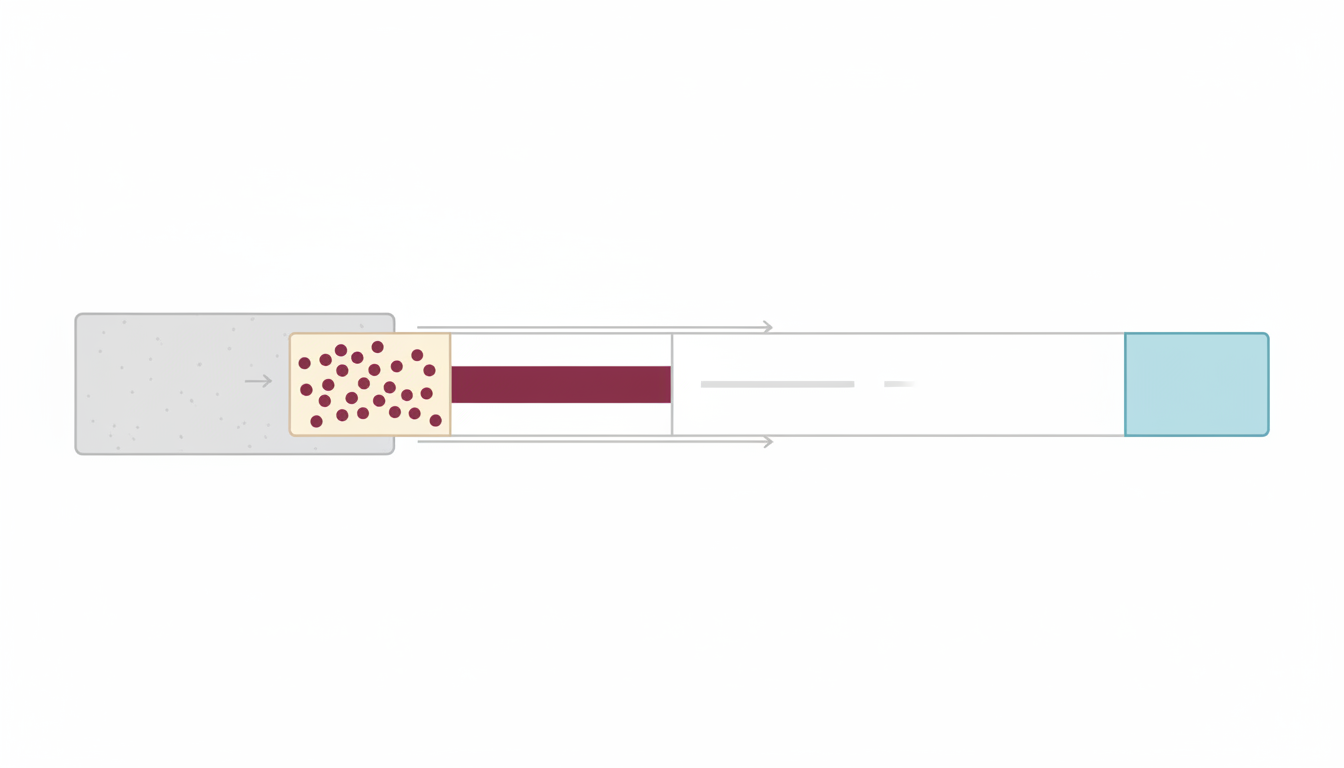
A rapid test finds signs of infection in a biological sample without sending it to an outside lab. Most rapid STI tests use lateral-flow immunoassay chemistry, the same basic method behind at-home pregnancy tests and rapid COVID tests. When a sample is placed on the strip, it migrates across a membrane embedded with reagents. If the target marker is present (a specific antigen or antibody), it binds to those reagents and produces a visible line or color change. The whole reaction finishes in the strip in roughly ten to twenty minutes.
What the test detects depends on the infection. Bacterial-infection tests for chlamydia and gonorrhea look directly for bacterial antigens or DNA fragments. Tests for viral infections such as HIV, hepatitis B, hepatitis C, and herpes typically look for antibodies, the proteins your immune system makes in response to the infection. That difference matters: antibody-based tests need time for your body to mount a detectable response, which is why window periods exist. The exact timelines are in the section below.
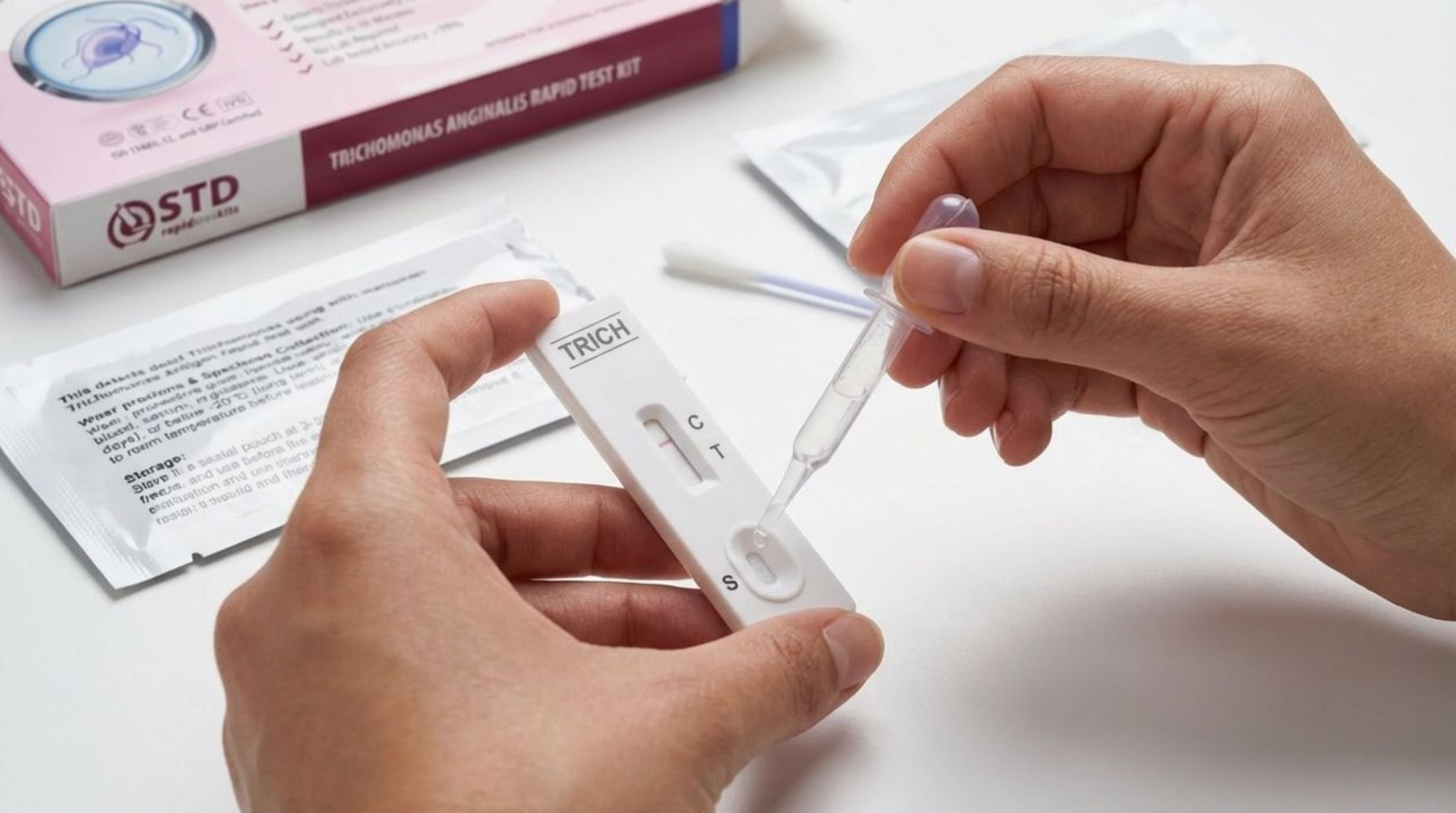
Sample collection is designed to be straightforward. Depending on the infection, you will do one of two things: a fingerstick blood draw (for HIV, syphilis, hepatitis B and C, and herpes) or a self-collected vaginal or penile swab (for chlamydia, gonorrhea, trichomoniasis, and HPV). Self-collected samples, when taken correctly, perform reliably; the limiting factor is timing and technique rather than the technology itself (NIH MedlinePlus, STI tests).
Bacterial-infection rapid tests (chlamydia, gonorrhea) look for the bacterium or its DNA fragments in your sample. Viral-infection rapid tests (HIV, hepatitis B and C, herpes) look for the antibodies your immune system produces in response. The antibody pathway is why most viral STI tests have longer window periods: the antibody has to exist in detectable quantities before the strip can find it. We do not sell urine-based, throat-swab, or rectal-swab tests; if your exposure was oral or anal contact and you need a pharyngeal or rectal swab, that is a clinic-only test.
What "accuracy" really means: sensitivity and specificity
Most people see a single accuracy percentage on a kit and assume it tells the whole story. It doesn't. Test accuracy in clinical medicine is measured across two separate dimensions, and understanding both is the difference between knowing what your result means and guessing.
Sensitivity is the test's ability to correctly identify people who have the infection. A test with 98% sensitivity correctly detects the infection in 98 of every 100 infected people; the other 2 receive a false negative. Sensitivity matters most to someone worried they might be infected, because a high-sensitivity test rarely misses a real case.
Specificity is the ability to correctly rule out infection in people who don't have it. A test with 99% specificity correctly returns a negative in 99 of every 100 uninfected people; the remaining 1 gets a false positive. Specificity protects the integrity of a positive result. When a high-specificity test says positive, it tends to mean something.
| Measurement | What It Measures | High Score Means | Low Score Means |
|---|---|---|---|
| Sensitivity | Ability to detect true infections | Rarely misses a real case | Higher rate of false negatives |
| Specificity | Ability to rule out infection in healthy people | Rarely produces a false alarm | Higher rate of false positives |
Accuracy by infection: what the numbers look like
Rapid STI tests are not one-size-fits-all. Accuracy varies by the infection, the biological marker being detected, and the quality of the kit. The figures below reflect performance ranges reported for high-quality lateral-flow rapid tests used within the correct detection window. The kits sold on this site report accuracy rates of 97% to 99.7% depending on the product, with the exact figures published on each individual product page.
| Infection | Typical Sensitivity | Typical Specificity | Overall Accuracy |
|---|---|---|---|
| Chlamydia | 86 to 96% | 97 to 99% | Up to 99.7% |
| Gonorrhea | 86 to 97% | 97 to 99% | Up to 97.2% |
| Syphilis | 85 to 99% | 91 to 99% | Up to 99.4% |
| HIV 1 and 2 | 92 to 99% | 99 to 99.9% | Up to 99.7% |
| Herpes HSV-1 | 93 to 98% | 99 to 99.9% | Up to 98.2% |
| Herpes HSV-2 | 93 to 98% | 99 to 99.9% | Up to 98.2% |
| Hepatitis B | 97 to 99% | 99% | Up to 98.8% |
| Hepatitis C | 97 to 99% | 98 to 99% | Up to 98.5% |
| HPV (women) | 87 to 98% | 94 to 99% | Up to 98% |
| Trichomoniasis (women) | 92 to 98% | 97 to 99% | Up to 98.38% |
How rapid lateral-flow tests compare to lab NAATs
One comparison surprises people: rapid at-home tests are not dramatically less accurate than what happens in a clinic. The laboratory gold standard, NAAT (nucleic acid amplification testing) using techniques like PCR, reaches slightly higher analytical sensitivity for bacterial infections such as chlamydia and gonorrhea, especially in asymptomatic cases where bacterial load is low. For most viral infections, including HIV and hepatitis, the gap between a high-quality rapid test and a lab test is small.
It helps to be precise about the technology. At-home rapid tests are lateral-flow immunoassays, not NAATs or PCR tests. They use the same swab or blood sample a lab would receive, but the analytical chemistry differs. Lateral-flow chemistry trades some sensitivity for speed, simplicity, and the ability to read a result without lab equipment. The two technologies are complementary rather than equivalent: rapid tests are excellent for screening and quick answers, and a positive result from any rapid test is worth confirming with lab follow-up where appropriate (CDC, sexually transmitted infections).
Window periods: the single biggest factor in whether your result is reliable
Every STI has a window period: the time that must pass after exposure before the infection becomes detectable on a test. Testing before this window closes is the most common reason a result comes back negative when an infection is present.
Think about what the test measures. For antibody-based tests, which cover most viral STIs, the test looks for proteins your immune system produced in response to the infection. Your body does not generate those proteins instantly. It takes time for the virus to replicate, time for your immune system to recognize it, and time for antibody levels to build to a detectable concentration. Testing three days after a possible exposure is too soon; a negative result then only tells you the window has not closed yet.
Vague guidance like "test soon after exposure" is not useful when you are trying to judge whether a result is reliable. The window periods below are the figures clinicians and public-health authorities cite for first-pass reliable results, including the CDC's HIV and STI testing guidance (CDC HIV testing).
| Infection | Test From | Why the Window Exists |
|---|---|---|
| Chlamydia | 14 days after exposure | Bacterial antigen or DNA reaches detectable levels within about 2 weeks |
| Gonorrhea | 3 weeks after exposure | Bacterial load builds to detectable concentration within 21 days |
| Trichomoniasis | 5 to 28 days after exposure | Detectable from day 5; symptoms (when present) often appear sooner |
| Syphilis | 3 weeks to 3 months | Treponema pallidum antibodies typically appear 3 to 6 weeks post-exposure |
| HIV (antibody test) | 23 to 90 days; retest at 12 weeks for certainty | Antibody production begins at 3 to 6 weeks; full seroconversion confirmed by 12 weeks |
| Herpes HSV-2 (antibody) | 12 weeks; some assays up to 16 weeks | HSV antibodies reach detectable levels 2 to 12 weeks post-exposure |
| Hepatitis B | 4 to 10 weeks after exposure | HBsAg appears 1 to 9 weeks after infection; 6 weeks is a typical screening cutoff |
| Hepatitis C | 8 to 11 weeks after exposure | HCV antibody development takes longer; antibodies usually detectable by 6 to 9 weeks but may take up to 6 months |
HIV is a special case: three test types, three windows
HIV deserves a dedicated note because the test technology used affects the window period. Three categories exist, each with its own detection window:
- Nucleic acid test (NAT). Detects the virus itself in the blood, not antibodies. Reliable from roughly 10 to 33 days after exposure. Highly sensitive, used in clinical settings, not typical for home kits.
- Antigen/antibody combination test. Detects both the HIV p24 antigen and antibodies to the virus. Reliable from about 18 to 45 days after exposure. The standard for fourth-generation lab testing.
- Antibody-only test. Detects HIV antibodies in blood or oral fluid. Reliable from 23 to 90 days after exposure, with full seroconversion typically confirmed by 12 weeks. This is the technology in most rapid at-home HIV kits, including the at-home HIV test sold on this site.
The CDC recommends a confirmatory retest at 12 weeks (90 days) after exposure for the highest certainty on a negative antibody result (CDC HIV testing). A negative at 6 weeks is a strong indicator, though not the final word. If your exposure was within the last 72 hours and you cannot wait, the right move is a clinic visit for a fourth-generation antigen-antibody test or, where appropriate, post-exposure prophylaxis (PEP), which must be started within 72 hours.
A positive HIV result today is the start of a manageable, chronic-care path rather than a crisis. Modern treatment is one daily pill for most people, and someone on effective therapy who reaches an undetectable viral load cannot sexually transmit the virus, a finding public-health agencies summarize as Undetectable equals Untransmittable.
Per-infection notes: what the test detects and what comes next
Each core infection has its own clinical pattern. Here is a brief on what the rapid test looks for, where the infection sits in the broader picture, and what treatment looks like after clinic confirmation.
Chlamydia is the most commonly reported bacterial STI in the United States and most of Europe. Per the CDC chlamydia program page, the majority of infections cause no noticeable symptoms, which is why routine screening rather than wait-for-symptoms testing is the standard approach. The home test is a self-collected swab; lab confirmation uses NAAT, which has higher analytical sensitivity, especially in asymptomatic cases. Treatment, when caught, is a short oral course of doxycycline. Untreated chlamydia in women can ascend to cause pelvic inflammatory disease, the principal mechanism behind tubal-factor infertility.
Gonorrhea (Neisseria gonorrhoeae) shares chlamydia's asymptomatic profile, especially in women, and is routinely screened alongside it. The notable shift over the last 15 years is antibiotic resistance: gonorrhea has progressively developed resistance to one drug class after another, and current first-line treatment is a single intramuscular injection of ceftriaxone (CDC gonorrhea). A positive at-home result should not be self-treated with leftover antibiotics or a pharmacy walk-in; the right step is a clinic visit for confirmation and the correct prescription.
Syphilis produces a staged infection. Primary syphilis is a single painless ulcer (a chancre) at the inoculation site, typically appearing about 3 weeks after exposure with a range of 10 to 90 days. The chancre heals on its own in a few weeks, which is part of why infections go undetected. Secondary syphilis follows 4 to 10 weeks later as a non-itchy rash that often involves the palms and soles, with flu-like symptoms. Treatment at any stage is intramuscular benzathine penicillin G, and earlier treatment leaves less long-term tissue damage. Syphilis is also the clearest example of why screening still matters: even as overall reported STIs fell in 2024, congenital syphilis (passed from parent to baby in pregnancy) rose for the 12th year in a row, to nearly 4,000 reported cases (CDC STI surveillance).
Hepatitis B testing looks for HBsAg (hepatitis B surface antigen), which becomes detectable roughly 4 to 10 weeks after exposure. Most acute infections in healthy adults clear on their own within 6 months, but a minority become chronic, and chronic HBV is a leading cause of cirrhosis and liver cancer worldwide. A reactive home result should be followed by full lab serology (HBsAg, anti-HBs, anti-HBc), which separates active infection from immunity. One nuance: the hepatitis B vaccine is part of routine childhood immunization, so if you completed the series you are likely already protected, and a negative home result is the expected outcome rather than a screening accomplishment.
Hepatitis C testing looks for HCV antibodies, which become detectable roughly 8 to 11 weeks after exposure, with a longer tail in immunocompromised people that can extend up to 6 months. The story has changed dramatically in the last decade: oral direct-acting antiviral regimens now cure more than 95% of HCV infections in 8 to 12 weeks of treatment (CDC hepatitis C treatment). Today the main challenge is finding the infection through screening, since the treatment itself is short and highly effective.
Herpes (HSV-2) rapid kits detect HSV-2 IgG antibodies on fingerstick blood. Many people with HSV-2 have no symptoms and are unaware they carry it, which is one reason HSV-2 testing comes up in broader screening conversations. A reactive antibody result indicates past or present HSV-2 exposure; it does not date the infection and cannot tell you whether a current sore is herpes. For an active lesion, the right test is a clinic-administered HSV PCR swab, which we don't sell. There is no cure, but daily suppressive antiviral therapy reduces outbreaks and lowers the risk of passing it to partners (NHS, genital herpes).
Primary (about 3 weeks after exposure): a single painless chancre at the inoculation site. Heals on its own.
Secondary (4 to 10 weeks later): non-itchy rash often involving palms and soles, plus flu-like symptoms.
Latent: no symptoms, but the infection is still present and still transmissible in the early latent stage.
Tertiary (years later, now rare in resource-rich settings): cardiovascular and neurological complications.
Penicillin treatment at any stage prevents progression to the next.
Reading the result: what the lines mean
Most home STI rapid tests are immunochromatographic lateral-flow assays. The cassette holds a strip of nitrocellulose paper with two zones: a test line coated with antibodies or antigens specific to the infection marker, and a control line that confirms the test ran correctly. You add the sample (swab eluted in buffer, or a drop of blood) to the well, the liquid migrates by capillary action, and any target marker present binds to the test line and produces a colored band. It is the same chemistry as a home pregnancy test or a rapid COVID antigen test.
Read the result inside the time window stated in the kit instructions, usually 10 to 15 minutes after you add the sample. A line that appears after the read window can be a false positive caused by dye drift and should be ignored. Read on a flat surface, at room temperature, in good lighting.
Negative. Only the control line appears. The test ran correctly and no marker was detected.
Positive. Both the control line and the test line appear, regardless of how faint the test line is. A faint line still counts.
Invalid. The control line does not appear (with or without a test line). The test did not run correctly, usually because of insufficient sample, an expired cassette, or wrong storage. Repeat with a fresh cassette and a new sample.
When a rapid test can miss an infection, and why
No test is perfect, and the most useful thing you can do with that fact is understand the specific scenarios where false negatives are most likely.
Testing too early. The most common cause of a false negative is testing before the window period has closed. Below the cutoff, the marker the test looks for has not reached detectable levels yet, whether or not an infection is present. This is a timing error, not a test error, and the fix is simple: wait until the window has passed, then test.
Sample collection quality. Rapid at-home tests rely on you to collect an adequate, uncontaminated sample. A fingerstick that does not produce enough blood, or a swab that does not make good contact with the right tissue, can reduce the test's ability to detect a real infection. Reading the instructions and following them exactly (volume, timing, technique) meaningfully affects reliability.
Biological variability. Some infections produce inconsistent antibody profiles in the early weeks. Herpes is the canonical example: HSV antibodies can take anywhere from 2 to 12 weeks to reach fully detectable levels, with most people seroconverting by 6 to 12 weeks. The CDC recommends confirming any positive viral-STI rapid result with a healthcare provider, which triggers the right treatment pathway, partner notification, and any required disease-reporting documentation.
No HIV test can detect HIV immediately after infection. That's because of the window period, the time between HIV exposure and when a test can detect HIV in your body.
Who should test, and how often
Globally, the World Health Organization estimates that more than one million STIs are acquired every day, most of them without symptoms (WHO STI fact sheet). That asymptomatic majority is why guidelines lean on scheduled screening rather than waiting for something to feel wrong.
The CDC's STI screening recommendations set the baseline by population and risk. The short version: frequency depends on age, sex, partner pattern, and whether a known exposure has occurred. The at-a-glance breakdown is below.
Home testing fits well into a routine annual or quarterly check. It fills the gap between full clinic visits and lets you escalate to a clinic only when something changes: a positive result, a new symptom, a known exposure that needs PEP. What home testing does not replace is the first comprehensive workup, the prenatal panel, a clinic visit for active genital ulcers (which need swab-based PCR), or symptoms that could come from something other than the infections covered here.
CDC baseline screening by population
- Sexually active women under 25, and women 25 and older with risk factors (new or multiple partners): annual chlamydia and gonorrhea screening.
- All adults aged 13 to 64: at least one HIV test in their lifetime, more frequent screening if at higher risk.
- Men who have sex with men: at least annual screening for chlamydia, gonorrhea, syphilis, and HIV; more frequent (every 3 to 6 months) if at higher risk.
- Pregnant people: routine screening for HIV, syphilis, hepatitis B, and chlamydia at the first prenatal visit.
- Anyone with a new sexual partner, a partner whose status is unknown, or a known exposure: targeted testing after the appropriate window period.
What to do after you get your result
Each result type calls for a specific next step, depending on what it says and when you tested.
Negative result, tested within the correct window. If you tested at the right time and the result is negative, the probability that you have the infection is very low. If you have ongoing symptoms or suspect the sample was compromised, follow up with a provider for confirmatory testing. For HIV specifically, a negative at 6 weeks is a strong indicator, and the CDC recommends a retest at 12 weeks for the highest certainty.
Positive result. Take a positive rapid result seriously and confirm it. High-quality rapid tests have excellent specificity, so positives are rarely false alarms. Confirmatory testing at a clinic remains standard practice, especially for viral infections. The pathways: chlamydia and gonorrhea positives go to clinic NAAT and a prescription (oral doxycycline for chlamydia, an intramuscular ceftriaxone injection for gonorrhea); a syphilis positive goes to treponemal-plus-non-treponemal serology and a penicillin course staged to the infection; an HIV positive goes to a clinic differentiation assay plus viral-load PCR and antiretroviral therapy; a hepatitis B positive goes to full hepatitis serology to separate acute from chronic; a hepatitis C positive goes to HCV RNA testing to confirm active infection, then a short oral direct-acting antiviral course; an HSV-2 positive opens a discussion about suppressive therapy and partner notification. Partner notification is part of every positive result, and many clinics can use expedited partner therapy, where a provider prescribes treatment for a partner who has not been seen in person, which raises the share of partners who actually get treated. Abstain from sex or use barrier protection consistently until you have spoken with a provider.
Negative result, tested too early. Don't trust it. Retest once the correct number of days or weeks has passed from the suspected exposure date. An early negative is genuinely uninformative, and treating it as reassurance is one of the most common ways infections go undetected.
Stop sexual activity or use barrier protection consistently until you have spoken with a healthcare provider. Book a confirmatory test at a clinic. Most bacterial STIs (chlamydia, gonorrhea, syphilis, trichomoniasis) are fully curable; viral STIs (HIV, herpes, hepatitis B and C) are manageable with treatment, with hepatitis C now curable in 8 to 12 weeks for more than 95% of cases.
Choosing the right rapid test kit for your situation
Not every exposure is the same, and not every kit covers the same infections. Picking the right one means thinking about what you need to test for.
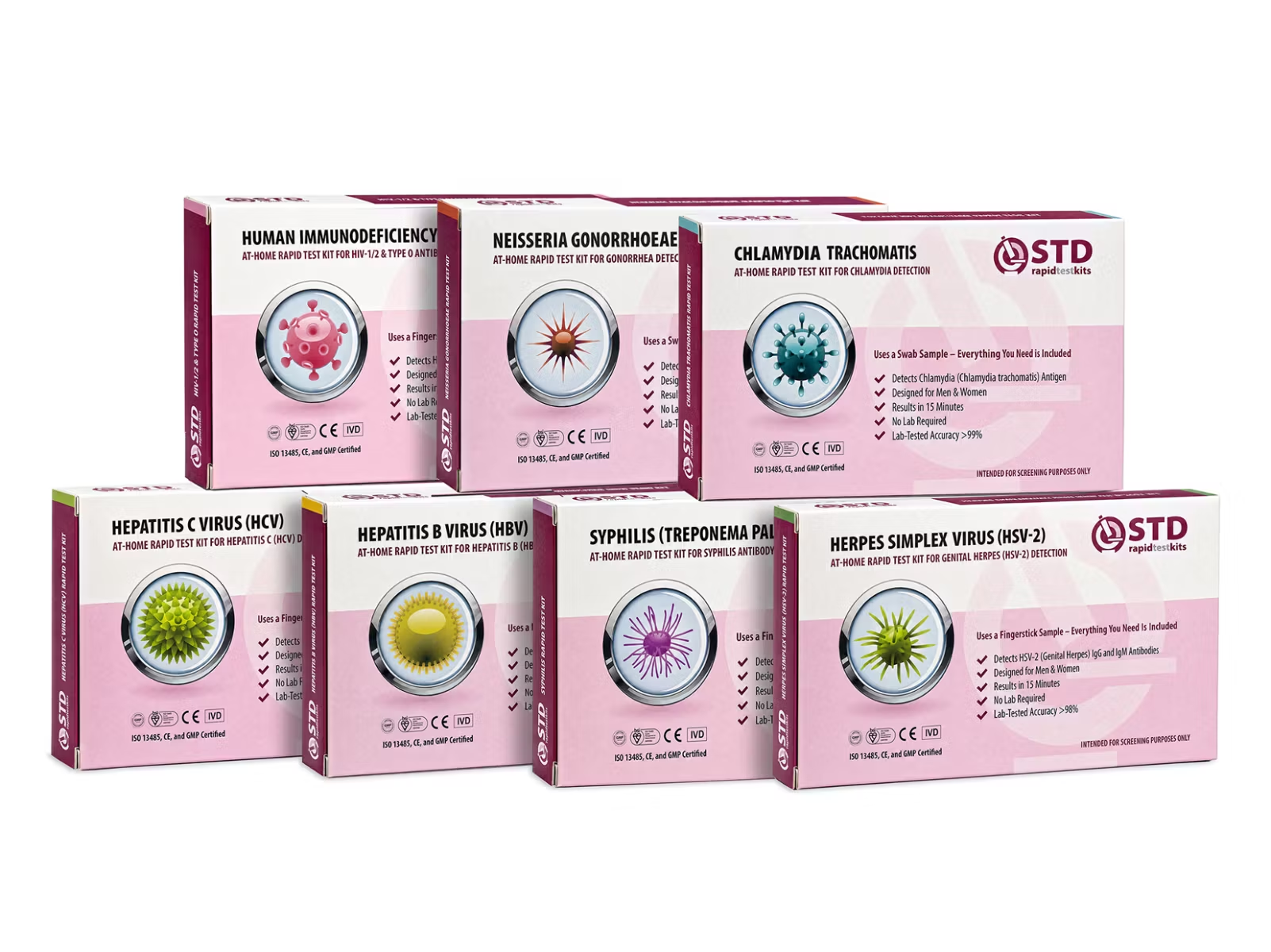
For a single known potential exposure, for example unprotected sex with a partner who has since disclosed a specific diagnosis, a targeted single-infection test makes sense. Single-infection rapid kits are available for chlamydia, gonorrhea, HIV, syphilis, hepatitis B, hepatitis C, and the herpes viruses.
For a broader exposure risk, such as a new partner, a lapse in protection, or multiple recent encounters, a combination kit is the smarter option. You can't always know which infection (if any) was transmitted, and a combo kit covers the realistic possibilities in a single session. The 6-in-1, 7-in-1, and women's 10-in-1 kits each cover a different breadth.
For routine sexual-health screening, the kind that should happen regularly for anyone sexually active, a combo kit once a year (or more often based on risk) covers the most clinically significant infections in one go. The 6-in-1 and 7-in-1 are the standard any-gender choices; the women's 10-in-1 adds HPV and trichomoniasis.
Our trichomoniasis and HPV rapid kits are validated for vaginal self-swab only and are women-only products; male readers needing a trich or HPV test should see a clinic. Our HSV-1 and HSV-2 kits are fingerstick blood antibody tests, not lesion swabs, so they detect systemic seroconversion 6 to 12 weeks after exposure rather than diagnosing an active sore at the moment it appears.
Picking the right kit by situation
- Single known potential exposure with a specific disclosed diagnosis: a targeted single-infection rapid kit (chlamydia, gonorrhea, HIV, syphilis, hepatitis B, hepatitis C, or one of the herpes kits) is the simplest match.
- Broader exposure risk such as a new partner, a lapse in protection, or multiple recent encounters: a combination kit (6-in-1, 7-in-1, or women's 10-in-1) covers the realistic possibilities in one session.
- Routine annual screening for anyone sexually active: the 6-in-1 or 7-in-1 covers the most clinically significant any-gender infections; the women's 10-in-1 adds HPV and trichomoniasis.
What to do next
If you are deciding what to do right now, the questions below turn everything above into a short, ordered plan. Work through them top to bottom, using the window-period table to time your test.
Your next steps, in order
Was your possible exposure within the last 72 hours and high-risk for HIV (for example, condomless sex with a partner of unknown or positive status)?
Yes: Contact a clinic or emergency department now about post-exposure prophylaxis (PEP), which has to start within 72 hours. You can still test later, once each window period has closed.
Has the window period closed for the infection you want to check (use the window-period table above)?
Yes: Collect your sample and run the test. A negative result after the correct window is highly reliable.
No: Wait until the window closes, then test. An early negative is uninformative, so note the date and test on time.
Did your result come back positive?
Yes: Book a clinic visit for confirmatory testing before starting any treatment, notify recent partners, and use barrier protection until you have spoken with a provider.
No: If you tested after the correct window, your risk is very low; for an HIV antibody test specifically, retest at 12 weeks for full certainty.
Guidance only; a healthcare provider can advise based on your specific situation.
Frequently asked questions
- How accurate are rapid STI tests compared to lab tests?
- Laboratory NAAT and PCR tests are the analytical gold standard for STI screening, particularly for catching low-bacterial-load asymptomatic chlamydia and gonorrhea. Rapid lateral-flow at-home kits use simpler antibody and antigen detection chemistry and trade some analytical sensitivity for speed and access. In practice, that gap is small for most viral STIs (HIV and hepatitis) and somewhat wider for the bacterial infections. The far larger driver of real-world accuracy on either format is timing: a test used after the window period has closed is reliable; one used too early isn't, regardless of which technology runs the assay.
- What does a false negative on a rapid STI test mean?
- A false negative is a negative result when an infection is actually present. Testing too early, before the window period has closed and before antibodies or antigens have reached detectable levels, is by far the most common cause. If you tested during the window, wait until the correct number of days or weeks has passed from the suspected exposure date and retest. Sample-collection errors (insufficient blood, swab not contacting the right tissue) are the second most common cause.
- Can I trust a positive result from an at-home rapid STI test?
- Specificity on high-quality lateral-flow rapid tests is high, commonly in the high 90s, so false positives are uncommon and a reactive line is worth acting on. Book a clinic visit for confirmatory testing soon afterward; that step locks in the correct treatment pathway for the specific infection, opens up the partner-notification support your provider can help you navigate, and creates the medical record that public-health follow-up may require.
- When can I test for STIs after a potential exposure?
- It depends on the infection. Chlamydia is detectable from 14 days post-exposure, gonorrhea from 3 weeks, trichomoniasis from 5 to 28 days. Syphilis can show up as early as 3 weeks but may take up to 3 months. HIV (antibody test) and hepatitis B need 23 to 90 days and 4 to 10 weeks respectively for first-pass reliability, with HIV requiring a 12-week retest for certainty. Hepatitis C has a window of 8 to 11 weeks, occasionally longer. HSV-2 antibody is the longest at about 12 weeks, with some assays needing up to 16. Use the window-period table above to plan your testing date.
- What if my test result is invalid (no control line)?
- An invalid result means the test did not run correctly, usually because of insufficient sample volume, an expired cassette, or wrong storage conditions. The result tells you nothing about whether you have the infection. Repeat with a fresh cassette, a new sample, and careful attention to the volume and timing in the instructions. If repeated tests keep giving invalid results, contact customer support.
- Can I get an STI from oral sex?
- Yes. Gonorrhea, chlamydia, syphilis, herpes, and HIV (lower risk) can all transmit through oral sex. The home kits we sell test the systemic markers of these infections (blood antibodies for HIV, syphilis, herpes; genital swab for chlamydia and gonorrhea). For pharyngeal gonorrhea or chlamydia specifically, a throat swab at a clinic is the right test, which we do not sell.
- Do rapid STI tests need a blood sample?
- It depends on the infection. HIV, syphilis, hepatitis B, hepatitis C, HSV-1, and HSV-2 are tested with rapid blood tests using a fingerstick. Chlamydia, gonorrhea, trichomoniasis, and HPV use a self-collected swab. Combination kits that test for multiple infections at once may include both sample types. Each kit comes with clear step-by-step instructions for the relevant collection method.
- Are at-home rapid STI tests private?
- Yes. Kits are delivered in discreet, unmarked packaging with no indication of the contents from the outside, and billing descriptors are non-specific. The entire testing process happens at home. No one else is notified of your result unless you choose to share it. There is no clinic visit, no conversation with staff, and no record entered into a healthcare-system database.
- What is the difference between an STI and an STD?
- The terms are largely interchangeable in everyday use. The technical distinction is that an STI (sexually transmitted infection) refers to the presence of the pathogen, whether or not symptoms have appeared, while an STD (sexually transmitted disease) refers to the symptomatic disease state. Public-health agencies increasingly prefer STI because it captures asymptomatic infections, which are the majority for chlamydia, gonorrhea, and HSV-2.
- U.S. Centers for Disease Control and Prevention. Sexually Transmitted Infections Surveillance, 2024 (provisional): more than 2.2 million combined reported cases of chlamydia, gonorrhea, and syphilis, and the continued rise in congenital syphilis.
- U.S. Centers for Disease Control and Prevention. HIV testing overview covering NAT, antigen/antibody, and antibody-only test categories with their respective detection windows.
- U.S. Centers for Disease Control and Prevention. Treatment of Hepatitis C: oral direct-acting antivirals cure more than 95% of infections in 8 to 12 weeks.
- U.S. Centers for Disease Control and Prevention. STI Treatment Guidelines screening recommendations (annual screening guidance by population and risk).
- National Institutes of Health, MedlinePlus. Sexually Transmitted Infection (STI) Tests: sample types (blood, urine, swab) and the purpose of testing.
- World Health Organization. Sexually transmitted infections fact sheet covering global incidence, transmission, and the importance of testing access.
