
Published: August 2025 | Last updated: May 2026 | Editorial review and quality control: Martina N.
After unprotected sex or another possible exposure, the urge to test the next morning is understandable. The math of testing is less intuitive: every sexually transmitted infection has a built-in delay between when bacteria or virus enters the body and when a test can reliably detect it. Test before that delay is up and a true negative cannot be told apart from a false negative.
This guide walks through the incubation periods and detection windows for nine common STIs, what to do if symptoms appear, and how to schedule testing based on current guidance from the U.S. Centers for Disease Control and Prevention (CDC), the World Health Organization (WHO), and the United Kingdom's National Health Service (NHS). One disclosure: this article is published by stdrapidtestkits.com, which sells at-home STI testing kits. Product recommendations are based on fit for the reader's concern, not commercial benefit.
Key Takeaways
- Most STI tests cannot reliably detect a recent infection until the test's window period has passed: 1 to 2 weeks for chlamydia and gonorrhea NAATs, around 6 weeks for syphilis blood tests, and up to 90 days for HIV antibody-only tests.
- A negative result during the window period does not rule out infection. Plan to retest at the end of the longest applicable window if the first result was negative.
Why Timing After Exposure Matters
A test the morning after sex feels like the responsible move. Biologically, it is almost always too early. STIs need time to multiply to detectable levels in blood or on swabs, or to trigger antibodies that the immune system has produced in response. The clinical term for the gap between exposure and reliable detection is the window period. Test before the window closes and the result is not informative.
Public-health agencies do not recommend skipping a test out of fear of a false negative. They recommend testing at the right time, and retesting after the longest window has passed if the first result was negative. Most clinics will book a follow-up test at the end of that window for any negative result obtained earlier (CDC STI Treatment Guidelines).
If your first test was negative and you took it inside the window period, retest at the end of the longest applicable window before treating the negative as final. The window depends on the test method, not on how recent the exposure feels.
Incubation Period vs Window Period: Two Different Clocks
These two phrases get used interchangeably in popular health writing, and they are not the same thing.
The incubation period is the time from exposure to the first symptoms (if symptoms appear at all). The window period is the time from exposure to the earliest point a specific test can detect the infection. The window depends on the test method. A NAAT (nucleic acid amplification test, the lab method that detects bacterial DNA or viral RNA) usually has a shorter window than an antibody test, because antibodies take longer to develop than bacteria take to multiply.
For HIV the difference is dramatic. RNA-based testing can detect the virus 10 to 33 days after exposure. Antibody-only testing can take up to 90 days (CDC HIV testing guidance). For chlamydia and gonorrhea, NAATs work within about 1 to 2 weeks (CDC STI Treatment Guidelines).
Both numbers matter because symptoms and detectability do not run on the same clock. Many people never feel a thing during early chlamydia or gonorrhea infections. Symptoms are not a reliable signal of whether you are infected, and absence of symptoms is not a reliable signal of being clear.
How soon after exposure can I reliably test for an STI?
Most STIs need 1 to 12 weeks after exposure before a test can reliably detect them. Chlamydia and gonorrhea NAAT swabs are reliable from 1 to 2 weeks. Syphilis blood tests reach reliable sensitivity by about 6 weeks for most people. HIV antibody-only tests are reliable by 90 days, while 4th-generation antigen/antibody tests are reliable by 45 days. Test once at the earliest reliable point for the infection of concern, and again at the end of the longest applicable window if the first result was negative.
Chlamydia: 1 to 3 Weeks
Chlamydia trachomatis is the most-reported bacterial STI in the United States (CDC STI surveillance). Most people with chlamydia have no symptoms at all, which is part of why it spreads so efficiently (CDC chlamydia fact sheet).
When symptoms do appear, the incubation period is typically 7 to 21 days after exposure. They can include painful urination, unusual genital discharge, and pelvic pain. NAAT swab testing reliably detects chlamydia from about 1 to 2 weeks after exposure. A test taken the day after exposure will not detect it.
Untreated chlamydia in women can ascend to the upper reproductive tract and cause pelvic inflammatory disease, which is a leading preventable cause of infertility.
The CDC recommends annual chlamydia screening for sexually active women under 25, for older women with new or multiple partners, and for sexually active men who have sex with men (more often based on individual risk). People with a new suspected exposure outside their usual screening interval should test sooner per the <a href="https://www.cdc.gov/std/treatment-guidelines/">CDC STI Treatment Guidelines</a>.
Gonorrhea: Symptoms Within Days to Two Weeks
Neisseria gonorrhoeae has one of the shortest incubation periods of the common STIs. In symptomatic cases, signs typically appear within the first two weeks after exposure (CDC STI Treatment Guidelines). About half of women with genital gonorrhea have no symptoms, while most men with urethral gonorrhea do.
Detection follows a similar schedule to chlamydia. A NAAT swab from the genital site reliably picks up gonorrhea from 1 to 2 weeks after exposure. Untreated gonorrhea can cause pelvic inflammatory disease in women, epididymitis in men, and disseminated gonococcal infection in either. Antibiotic resistance has been rising for years; CDC currently recommends a single 500 mg ceftriaxone injection for uncomplicated gonococcal infections in adolescents and adults (CDC STI Treatment Guidelines). Self-treatment with leftover antibiotics is dangerous and accelerates resistance, so confirmed cases should be treated by a clinician.
Pharyngeal (throat) and rectal gonorrhea infections require swabs taken at those sites by a clinician. Our at-home swab kits are validated for genital self-collection only. If your exposure was oral or anal, see a sexual-health clinic for site-specific NAAT testing rather than relying on a genital swab.
Syphilis: 3 Weeks to 3 Months
Syphilis takes its time. The incubation period for the primary chancre (the painless sore that marks the first stage) ranges from 10 to 90 days after exposure (CDC STI Treatment Guidelines). The chancre may appear on the genitals, in the mouth, or hidden inside the rectum, and it heals on its own within several weeks even without treatment.
The infection itself does not heal on its own. Untreated syphilis progresses to a secondary stage (a body rash, fever, swollen lymph nodes), then to a long latent stage with no outward signs, and eventually to tertiary syphilis, which can cause serious cardiovascular and neurological damage years later.
Standard treponemal blood tests reliably detect syphilis from about 6 weeks after exposure, with rare detection earlier. Anyone with a primary chancre should be evaluated regardless of when the chancre appeared, because direct testing of the lesion (dark-field microscopy or PCR) can confirm infection at the bedside (CDC STI Treatment Guidelines). Treatment is benzathine penicillin G; one or three weekly doses depending on stage.
Herpes (HSV-1 and HSV-2): About 4 Days, Range 2 to 12
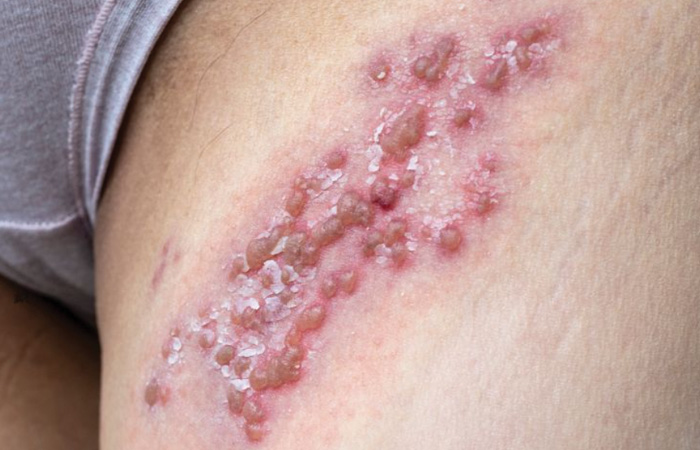
Herpes simplex virus has a short incubation for first outbreaks, with sores typically appearing within 2 to 12 days after exposure (CDC STI Treatment Guidelines). The first outbreak is often the most severe and can include clusters of fluid-filled blisters that ulcerate, painful urination, swollen lymph nodes, and flu-like symptoms.
Many people never have a recognized first outbreak. The virus then sits dormant in nerve cells and may reactivate weeks, months, or years later as a milder recurrence. This is the source of frequent relationship confusion: someone may test positive for HSV-2 antibodies years into a monogamous relationship without ever knowing the original timing of acquisition. The virus can also be transmitted during periods of asymptomatic viral shedding when no sores are visible.
Blood antibody testing for HSV-1 and HSV-2 reliably detects past infection within 12 weeks for most people, with occasional seroconversion extending to 16 weeks. Direct viral testing of an active lesion (a swab plus PCR) is more accurate than blood testing during a fresh outbreak (CDC STI Treatment Guidelines). Antiviral medication does not cure the infection but reduces outbreak frequency, severity, and transmission risk.
HIV: 10 Days to 3 Months Depending on the Test
HIV does not behave like a bacterial infection. The window period depends entirely on which test is used (CDC HIV testing):
- HIV RNA (NAT) test: reliable from 10 to 33 days after exposure. Used in clinical settings when very early detection matters.
- Antigen/antibody (4th-generation lab) test: reliable from 18 to 45 days after exposure.
- Antibody-only rapid tests, including most home tests: reliable from 23 to 90 days after exposure, with some people seroconverting later than others.
Acute HIV (the first 2 to 4 weeks after infection) often produces a flu-like illness: fever, sore throat, fatigue, swollen lymph nodes, sometimes a rash. These symptoms are easy to mistake for influenza, mononucleosis, or strep throat. They are also the period when blood viral load is at its highest, which means transmission risk to partners is greatest.
If you have had a high-risk exposure within the last 72 hours, post-exposure prophylaxis (PEP) is a 28-day course of antiretroviral medication that can substantially reduce the chance of HIV taking hold. PEP is started in an emergency department or sexual-health clinic; it is not available as an at-home product, and starting it earlier within the 72-hour window is more effective than starting later.
The type of HIV test you take determines how soon you can be tested after a possible exposure. No HIV test can detect HIV immediately after infection.
HPV: Months to Years
Human papillomavirus is the slowest of the common STIs to declare itself. Genital warts caused by low-risk HPV strains can appear weeks to months after exposure. High-risk strains that drive cervical, anal, and oropharyngeal cancers can persist and over time cause detectable cell changes that may progress to cancer (CDC HPV basics).
There is no single approved blood test for HPV. The standard screening pathway is cervical cytology (Pap test) plus high-risk HPV DNA testing on a cervical sample, with the recommended interval depending on age and prior results (CDC cervical cancer screening). Our at-home HPV self-swab kit is validated for vaginal self-collection only. Male readers concerned about HPV should see a clinic, since no widely-validated home HPV test for male anatomy is available.
HPV vaccination is routinely recommended through age 26, with shared clinical decision-making about vaccination extending through age 45 per ACIP guidance. The vaccine is most effective when given before sexual debut, but can still benefit people who already have one HPV strain by protecting against others. If you have not been vaccinated and are within the recommended age range, ask a clinician about getting started.
Trichomoniasis: 5 to 28 Days
Trichomonas vaginalis caused an estimated 156 million new infections in 2020, more than any other curable non-viral STI (WHO STI fact sheet). When symptoms appear, they develop within 5 to 28 days of exposure: itching, irritation, frothy or foul-smelling discharge for women, and rarely urethritis-like symptoms for men. Most infected people have no symptoms.
NAAT testing is the gold standard for trichomoniasis and reliably detects the parasite from about 1 week after exposure. Treatment is a single dose of metronidazole or tinidazole; both partners should be treated to prevent reinfection, and sex should be avoided until both partners have completed treatment (CDC STI Treatment Guidelines).
Our at-home trichomoniasis swab kit is validated for vaginal self-collection only. Male readers needing a trichomoniasis test should see a clinic for a urethral or urine sample, which our home swab does not cover.
| Infection | Symptoms within | Earliest reliable test | Test type |
|---|---|---|---|
| Trichomoniasis | 5 to 28 days | About 1 week | NAAT swab |
| Hepatitis B | Around 90 days | 4 to 10 weeks | HBsAg blood |
| Hepatitis C | 2 weeks to 6 months (often none) | Within a few months | Antibody blood |
Hepatitis B: Symptoms Around 90 Days
Hepatitis B virus has a long incubation period: when symptoms appear, they typically begin around 90 days after exposure (CDC hepatitis B fact sheet). Many adults clear the infection on their own without ever knowing they had it. About 640,000 adults in the United States are currently living with chronic hepatitis B, an infection that can lead to cirrhosis or liver cancer over time; the chronic-infection rate is much higher in people infected during infancy.
Blood testing for hepatitis B surface antigen (HBsAg) becomes reliable about 4 to 10 weeks after exposure. Hepatitis B vaccination is highly effective, requires two or three doses depending on the schedule, and is now part of the recommended routine adult vaccination schedule for anyone not previously vaccinated. If you have completed the vaccine series and have documented antibody response, post-exposure retesting for hepatitis B is generally not necessary.
Hepatitis C: 2 Weeks to 6 Months
Hepatitis C virus is less commonly transmitted sexually than hepatitis B, but the risk rises substantially in men who have sex with men, especially with HIV co-infection or with practices that involve mucosal trauma. It is most often transmitted through blood-to-blood contact rather than sexual exposure, including shared injection equipment.
The incubation period before symptoms appear (when they appear, which is rare) is 2 weeks to 6 months. Antibody blood tests reliably detect hepatitis C within a few months for most people, with some people seroconverting later (CDC hepatitis C fact sheet). RNA testing can detect the virus 1 to 2 weeks after exposure but is not the standard initial screen. Modern hepatitis C treatment cures more than 95% of cases with an 8-to-12-week course of direct-acting antiviral medication (CDC hepatitis C fact sheet), so a positive result is a reason to seek treatment promptly rather than to panic.
A positive hepatitis C antibody result indicates current or past infection but does not by itself confirm active virus. Some people clear the infection spontaneously yet remain antibody-positive for life. Confirmatory RNA (PCR) testing is needed to determine whether the infection is currently active and treatable; talk to a clinician about the next step before assuming a result.
Why Symptoms the Next Morning Are Almost Never an STI
One of the most common reasons people search for STI information is irritation, itching, or burning that started within hours of sex. In nearly every case, that timing is too fast for an STI to be the cause.
The fastest-incubating STIs (gonorrhea and herpes) still need at least 24 to 48 hours to produce symptoms. Most need a week or longer. Symptoms within minutes or hours after sex are usually one of:
- Mechanical irritation from friction during prolonged or vigorous sex
- Allergic or contact reaction to latex condoms, spermicide, lubricant, or partner body products
- Urinary tract infection (UTI), which can develop within hours and produce burning urination overnight
- Vaginal pH disruption, common with certain lubricants or after a long break from sexual activity
- Yeast overgrowth triggered by friction, recent antibiotic use, or hormonal changes
If symptoms persist beyond 48 to 72 hours, see a clinician. STI testing is part of the workup at that point, but the immediate cause is more often a non-STI condition that has its own treatment path. Persistent symptoms are not a reason to panic; they are a reason to get a real evaluation rather than trying to diagnose at home.

How to Build a Realistic Testing Schedule
For a single suspected exposure, the practical schedule looks like this. If you have ongoing partners or any reason to suspect a second exposure during this schedule, restart the clock from the most recent date. CDC's general guidance for sexually active people is to test for chlamydia, gonorrhea, syphilis, HIV, and hepatitis B at least annually, and more often with new or multiple partners (CDC STI Treatment Guidelines). The NHS offers similar advice through its sexual-health services (NHS sexual health).
| Time after exposure | STIs to test | Test type | Notes |
|---|---|---|---|
| Day 0 to 7 | None reliable yet | Watch for symptoms | Note the date of exposure; results inside the first week are not informative. |
| Week 2 | Chlamydia, gonorrhea | NAAT swab | A negative is informative at this point. |
| Week 6 | Syphilis, HIV | Treponemal blood; 4th-generation antigen/antibody | Plan to repeat HIV at week 12 if only an antibody-only test was used. |
| Week 12 | HIV, hepatitis C, HSV (if relevant) | Antibody blood | A negative HIV result here is conclusive for nearly all standard test platforms. |
| Month 6 | Hepatitis B | HBsAg blood | Only needed for high-risk exposure if you are not vaccinated. |
Frequently asked questions
- Can I get a reliable STI result the day after sex?
- No. The fastest-detecting tests (NAATs for chlamydia and gonorrhea) need about a week to be reliable. HIV antibody tests can need up to 90 days. Testing the day after exposure produces a result that cannot reliably distinguish a true negative from a false negative.
- What is the fastest STI to show up on a test?
- RNA-based testing for HIV can detect the virus from about 10 days after exposure, and NAAT swabs for chlamydia and gonorrhea are reliable from 1 to 2 weeks. Symptoms can appear faster than detection (gonorrhea or herpes within 2 to 7 days), but symptoms are not the same thing as a confirmable test result.
- Can I transmit an STI before I have symptoms?
- Yes, and this is one of the main reasons STIs spread. Chlamydia, gonorrhea, herpes, HIV, and syphilis can all be transmitted during the asymptomatic incubation period. HIV viral load is at its highest during acute infection, when transmission risk is greatest, even though many people feel only a mild flu-like illness during that window.
- Are home rapid STI tests as accurate as lab tests?
- Home rapid lateral-flow tests are screening tests, while laboratory NAAT and antigen/antibody tests have higher analytical sensitivity. Sensitivity varies by product, so check the specific test instructions for sensitivity and specificity figures. A positive home test should be confirmed at a clinic, and a negative home test taken inside the window period should be repeated at the end of the window.
- Should I retest after a single suspected exposure?
- Yes. Most clinicians recommend testing once at the earliest reliable point (1 to 2 weeks for chlamydia and gonorrhea, around 6 weeks for syphilis and HIV) and again at 12 weeks for HIV antibody confirmation. Hepatitis B retesting at 6 months is reasonable after a high-risk exposure if you are not vaccinated.
- What if I have symptoms before the testing window opens?
- See a clinician promptly. Visible signs (genital sores, painful urination, unusual discharge) can support a presumptive diagnosis and treatment without waiting for blood-test confirmation. Direct testing of an active lesion (a swab plus PCR for herpes, dark-field microscopy or PCR for a syphilis chancre) is more sensitive than blood testing during the first weeks.
- Why do some people never develop STI symptoms?
- Asymptomatic infection is common in chlamydia, gonorrhea (especially in women), trichomoniasis, HPV, and chronic hepatitis B. Most people with chlamydia have no symptoms at all per the CDC chlamydia fact sheet. Lack of symptoms does not mean the infection is harmless: untreated, these can cause pelvic inflammatory disease, infertility, and (for HPV and hepatitis B) cancer years later.
- U.S. Centers for Disease Control and Prevention. Sexually Transmitted Infections Treatment Guidelines, with screening recommendations and incubation/window-period guidance for chlamydia, gonorrhea, syphilis, herpes, and trichomoniasis.
- U.S. Centers for Disease Control and Prevention. HIV Testing window periods by test type, including RNA, 4th-generation antigen/antibody, and antibody-only test windows.
- U.S. Centers for Disease Control and Prevention. Hepatitis B About page covering symptom onset around 90 days and current chronic-infection prevalence in U.S. adults.
- U.S. Centers for Disease Control and Prevention. Hepatitis C About page covering transmission, antibody seroconversion timing, and direct-acting antiviral cure rates of more than 95%.
- World Health Organization. Sexually Transmitted Infections fact sheet, with global incidence statistics including 156 million new trichomoniasis infections in 2020 and asymptomatic-infection statistics.
- United Kingdom National Health Service. Sexually transmitted infections overview, including testing windows and partner-notification guidance.
