Published: September 2025 | Last updated: May 2026 | Editorial review and quality control: Martina N.
A herpes flare-up tends to arrive at the worst possible time, and the first instinct is to get tested immediately. Painful sores, burning urination, swollen lymph nodes; these are real symptoms that deserve real answers. The frustrating reality is that testing during an outbreak is more complicated than it sounds.
Some tests work best precisely when symptoms are visible. Others read negative even when herpes is genuinely the cause of every symptom on the list. This guide explains what each test actually does, which window each one fits, what a negative result during a flare-up really means, and when retesting gives you a clearer picture. It is written to be useful whether this is a first suspected outbreak, a fifth, or a confirmation after a partner has been diagnosed.
Key Takeaways
- Swab PCR tests are most accurate within the first 48 hours of a new sore. Accuracy drops sharply once the lesion begins healing or crusting.
- Type-specific blood antibody (IgG) tests cannot reliably confirm a brand-new infection during a first outbreak. MedlinePlus notes the body can take up to three months to make detectable HSV antibodies.
Two herpes tests, two very different jobs
Herpes testing splits into two broad categories, and the distinction matters during an outbreak. The first is a direct test for the virus itself, taken from an active sore. The second is a blood test that looks for antibodies the immune system produces in response to infection.
Direct viral tests are usually nucleic acid amplification tests (NAATs), most often a PCR swab. A clinician collects a sample from the base of an active lesion, and a laboratory checks for HSV genetic material. The CDC's STI treatment guidelines describe NAAT swab testing as the preferred method for diagnosing herpes when a sore is present. Viral culture is an older alternative; it can grow the virus from a lesion swab, but sensitivity drops faster as the sore heals.
Blood tests look for type-specific IgG antibodies the immune system makes after exposure. A positive IgG result confirms past infection with HSV-1 or HSV-2, but it does not tell you when you were infected, which body site is affected, or whether the virus is currently active. Per MedlinePlus, the body can take up to three months after exposure to produce detectable HSV antibodies.
| Test type | What it detects | Best used when | Main limitation |
|---|---|---|---|
| PCR / NAAT swab | Active HSV genetic material in the lesion | Within the first 48 hours of a new sore | Sensitivity drops as the sore begins healing |
| Viral culture (swab) | Live HSV grown from the lesion | Within the first 24 to 48 hours of a new sore | Lower sensitivity than PCR; less commonly used today |
| Type-specific IgG blood test | Past HSV-1 or HSV-2 infection (antibodies) | Roughly 12 weeks (up to three months) after suspected exposure | Cannot confirm a brand-new infection; can miss some HSV-1 cases |
| IgM blood test | Possible recent infection | Rarely recommended | High false-positive rate, not type-specific, generally discouraged |
How outbreak timing changes which test works
The same outbreak can give you a clear positive on Monday and a falsely reassuring negative on Friday. Timing is the variable nobody can fully control, but understanding it makes the results far less mysterious.
In the first 24 to 48 hours of a new lesion, viral shedding is at its peak. A swab taken now is most likely to capture enough HSV DNA for a PCR test to confirm it. The CDC notes that viral detection is most reliable from early vesicular or ulcerative lesions, and least reliable from crusted or healing sores (CDC STI Treatment Guidelines).
By day three to five, many sores start to dry out. The virus may still be present in lower amounts, and swab sensitivity drops. By the time a sore has fully crusted (often around day 7 to 10 for a first outbreak), a PCR swab may come back negative even when the cause is genuinely HSV. That is one of the most common reasons people get a confusing negative result.
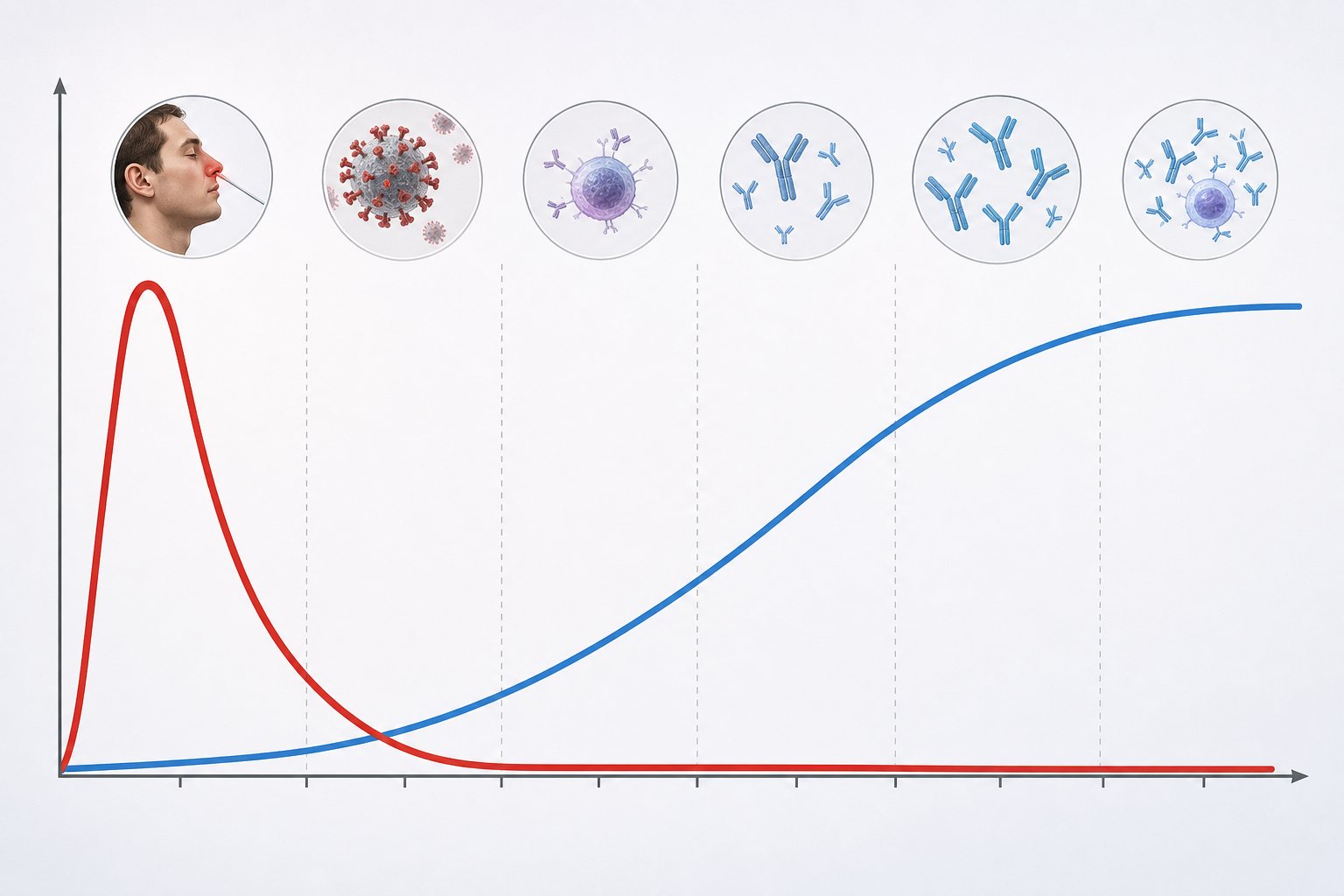
Blood antibody testing runs on the opposite schedule. After a first infection, the immune system needs time to build detectable IgG antibodies. According to MedlinePlus, the body can take up to three months after exposure to produce detectable HSV antibodies, and some people, especially with HSV-1, take longer. Testing a brand-new outbreak with a blood test almost guarantees a negative result, even when herpes is the cause.
For a recurrent outbreak in someone with a confirmed past diagnosis, the picture is different: antibodies are already present, so a blood test will be positive, but it tells you nothing new about the current flare.
What a negative test during a flare-up really means
A negative herpes test taken during an active outbreak is one of the most disorienting moments in sexual-health testing. The body is producing visible, painful evidence of something, and the lab report says otherwise.
Clinicians commonly see two patterns that produce false-negative results during a flare-up. The first is a swab taken too late: the sore is healing, viral shedding has already declined, and the PCR result comes back negative because there was not enough viral material on the swab to amplify. That does not mean there is no herpes; it means the lab missed the window where detection was possible.
The second pattern is a blood test taken too soon. If this is a brand-new infection, IgG antibodies have not yet formed in detectable amounts. A blood test taken during a first outbreak measures what the immune system has already learned to fight, not what is happening on the skin today. The result will frequently be negative, even when the active outbreak is genuinely herpes.
A negative result during an outbreak therefore does not rule out herpes, especially if the test was a swab taken after day three of the sore, or any kind of blood antibody test during a first-ever outbreak. The CDC explicitly cautions that herpes serology can produce false-negative results during early infection and recommends repeat testing in selected cases.
What a negative does suggest is that the test was not the right tool for the moment. The next step depends on what symptoms have done since. If the sore is gone, a follow-up IgG blood test at roughly 12 weeks post-exposure is the better way to look for past infection. If a new lesion appears, a fresh swab in the first 24 to 48 hours is the more sensitive option.
Pain, sores, and swollen lymph nodes are clinical signs a provider can use to diagnose herpes on examination alone, especially when timing has worked against the lab tests. A negative test taken in a difficult window is information about the test, not a verdict on the symptoms.
Can you test for herpes during a flare-up?
Yes. Within the first 48 hours of a new sore, a PCR swab is the most accurate test available. Blood antibody tests cannot detect new infections during a first outbreak; MedlinePlus notes the body can take up to three months to produce detectable HSV antibodies. A negative result during an outbreak often means the test was the wrong tool for the moment, not that herpes is ruled out.
Can at-home tests detect an active outbreak?
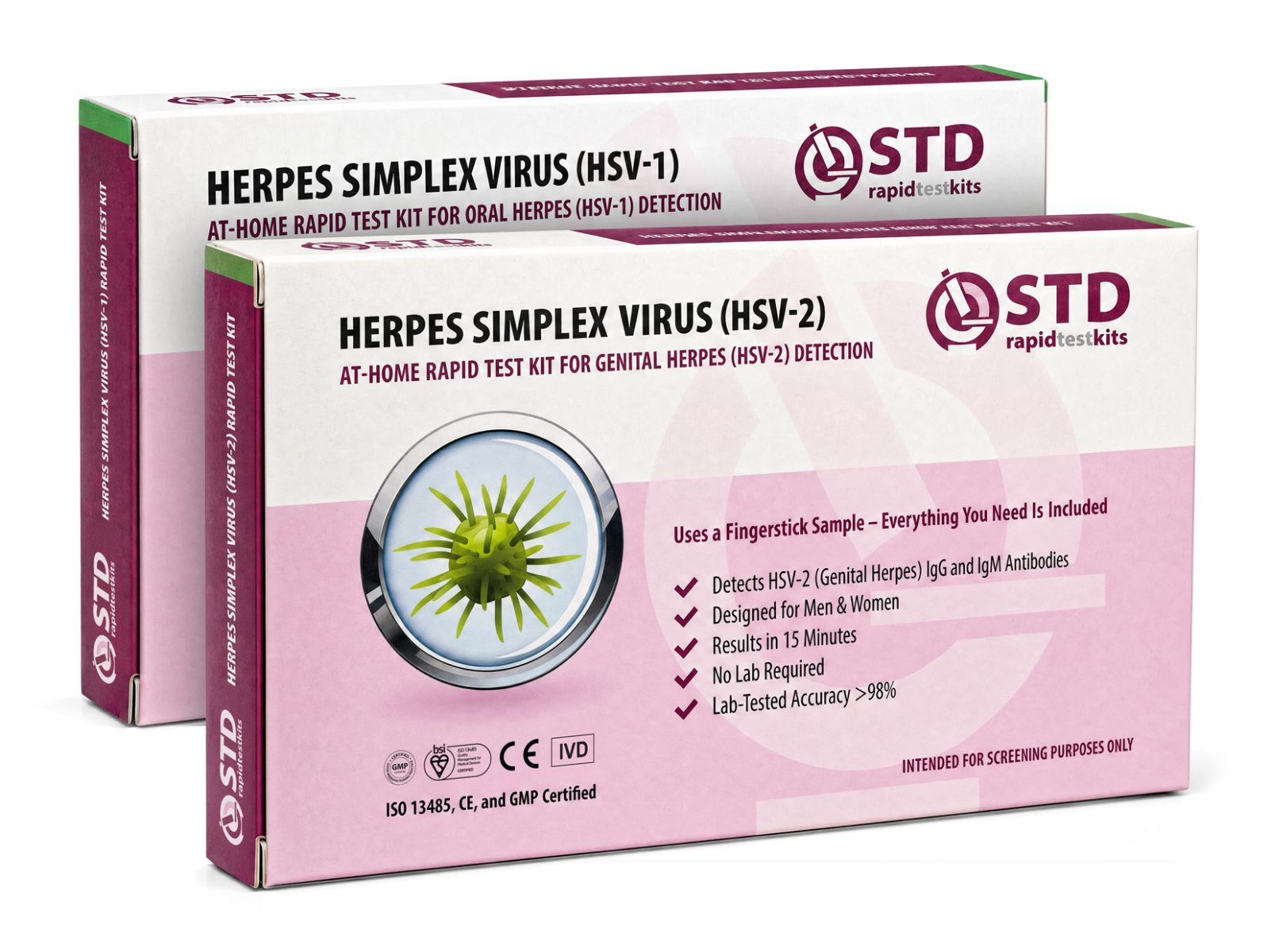
Most at-home herpes test kits, including the rapid tests sold on this site, are fingerstick blood antibody tests. They look for IgG antibodies against HSV-1 and HSV-2. That technology choice has real consequences during a flare-up. This site sells rapid herpes blood tests; the guidance on timing and test choice below applies regardless of which brand you use.
A blood antibody test cannot detect an active outbreak directly. It detects whether the immune system has built up antibodies, which only happens after weeks of immune response. If this is a first outbreak, an at-home blood test will likely come back negative even when herpes is the cause. Blood antibody tests measure immune memory. They answer a different question than the one a person mid-flare-up is asking, which is whether the skin is actively shedding virus right now. During a first outbreak, the immune system has had only days to react, so the antibody test commonly reads negative even though the cause is genuinely herpes.
For an active sore during a first outbreak, the more useful tool is a clinic-administered PCR swab in the first 48 hours. Urgent care, a sexual-health clinic, or a primary-care provider can collect the swab and send it to a lab. Results usually come back within a few days.
An at-home blood antibody test does have a clear place in the herpes-testing story. After the immune system has had time to seroconvert (typically up to three months after exposure, per MedlinePlus), a positive IgG result is a reliable confirmation of past infection. That is the moment an at-home kit becomes useful: as the follow-up confirmation step weeks after a suspected outbreak has resolved, or as a baseline check before starting a new relationship.
When to retest, and how long to wait
If a first test missed an outbreak that has since resolved, retesting is usually worth it. The right window depends on which test came back negative the first time and what symptoms have done since.
For a swab test that returned negative on a sore that had already started healing, a repeat swab is only useful if a fresh lesion appears. PCR cannot recover virus from skin that has healed. The follow-up plan is a blood antibody test at roughly 12 weeks (up to three months) after the original suspected exposure, which is enough time for IgG antibodies to develop in most people.
For a blood test that returned negative during or shortly after a first outbreak, the right move is to wait and retest at the 12-week mark. If symptoms have not returned and the retest is still negative, the original outbreak may not have been herpes, or the immune response may have been delayed (some HSV-1 antibody profiles take longer to become detectable).
The U.S. Preventive Services Task Force currently recommends against routine herpes serologic screening for asymptomatic adolescents and adults, partly because IgG tests have a meaningful false-positive rate in low-prevalence populations. That recommendation applies to people without symptoms. It does not mean testing is wrong for someone who has had an outbreak or a partner with herpes. It does mean a result should be interpreted in context. A clearly clinical outbreak, or a repeatedly positive result, usually carries more weight than a single low-positive antibody number alone.
Outside the first-outbreak case, retesting on a routine schedule is not usually needed for someone with an established herpes diagnosis. Outbreaks tend to become less frequent over the first one to two years after infection. If outbreaks are getting more frequent rather than less, that is a reason to ask a provider about daily antiviral suppression.
Retesting windows at a glance
- Negative swab on a healing sore: schedule a type-specific IgG blood test at roughly 12 weeks post-exposure.
- Negative blood test during a first outbreak: retest at the 12-week mark, when antibodies have had time to develop.
- Still negative at 12 weeks with no recurring symptoms: the original episode may not have been herpes, or warrants a clinical re-evaluation.
Reducing transmission during and after a flare-up
Whether or not a test has confirmed the diagnosis, herpes can transmit during an active outbreak. Sores carry high viral loads, and even blisters that have not yet opened can shed virus through micro-breaks in the skin. The safest position during an active flare is to assume contagion and avoid direct skin-to-skin sexual contact with the affected area until symptoms have fully resolved. This includes vaginal, anal, and oral contact, depending on where the sores are.
Transmission also happens between outbreaks. Asymptomatic viral shedding is well-documented in both HSV-1 and HSV-2, and is one reason a partner can acquire herpes from someone who has never had a visible outbreak. The CDC's STI treatment guidelines describe daily suppressive antiviral therapy (typically valacyclovir or acyclovir) as a way to reduce the frequency of outbreaks and lower the risk of transmission to partners. Suppressive therapy, combined with consistent condom use, has been shown in clinical trials to substantially reduce the risk of transmission to a susceptible partner over a year.
Condoms are partially protective, not absolute. They reduce skin-to-skin contact in the area they cover, but herpes lesions can occur outside the area a condom protects (the upper thigh, the buttocks, the scrotum, the labia majora). The combination of suppressive antivirals, condom use, and avoiding sex during prodromal symptoms (tingling, burning, or itching before a sore appears) is the most effective realistic combination for serodiscordant couples.
Disclosure to partners is a separate but related step. The easier framings tend to be the calmest ones: I have herpes, I take daily antivirals, here is what we can do to reduce the risk if we have sex. Herpes is unusually common; WHO estimates that around 3.8 billion people under 50 have HSV-1, and around 520 million people aged 15 to 49 have HSV-2. The conversation is more often received with practical questions than rejection, especially when the person bringing it up has already taken steps to lower the risk.
Daily suppressive therapy decreases the frequency of genital herpes recurrences by 70 to 80 percent in patients who have frequent recurrences and is effective in reducing the risk for transmission to susceptible sexual partners.
Why screen for other STIs at the same time
The same exposure that may have triggered a herpes outbreak can carry other infections. Chlamydia and gonorrhea are often asymptomatic, syphilis can present with a painless ulcer that does not look like the classic chancre, and HIV has an early-window seroconversion period that overlaps with the first weeks of any new sexual relationship. The CDC recommends co-screening for chlamydia, gonorrhea, syphilis, and HIV at the same visit as a herpes evaluation when the clinical picture is consistent with new exposure (CDC STI Treatment Guidelines).
An outbreak is also a reasonable moment to take stock of overall sexual-health screening. If it has been a year or more since the last full panel, or if a new partner is in the picture, an at-home multi-test panel is a private way to fill the gaps. Multi-test panels combine swab samples (chlamydia, gonorrhea) with fingerstick blood samples (HIV, syphilis, hepatitis), and the herpes blood antibody test fits naturally into the same setting.
For the herpes question specifically, the timing rules still apply. A blood panel can rule in past exposure to HSV-1 or HSV-2 if antibodies have developed, but a brand-new infection still needs a swab during the first 48 hours of a sore for direct confirmation.
Putting it together: a flare-up testing playbook
The clearest path through a suspected herpes flare-up is to match the test to the moment. If a sore appeared in the last 24 to 48 hours, a clinic-administered PCR swab is the test that will give the most definitive answer. If the sore is already a few days old, a swab can still be tried, but a negative result needs to be paired with follow-up blood testing weeks later. If symptoms have already resolved, the right plan is a type-specific IgG blood test around 12 weeks (up to three months) after the suspected exposure.
While the testing question resolves, the practical steps stay the same. Avoid sexual contact while sores are present. Ask a provider about a short course of episodic antivirals (these can shorten the outbreak if started in the first 24 hours of symptoms). Consider whether co-screening for other STIs makes sense given the exposure.
Herpes is common, lifelong, and manageable. A confirmed diagnosis does not change who you are, the relationships you can have, or the health outcomes you can expect. What it does is give you the information needed to make calmer decisions, take daily medication if outbreaks are frequent, and have honest conversations with partners. None of that requires a perfect test result on day one of an outbreak.
Three testing paths
- Active sore under 48 hours old: see a clinic for a PCR swab. This is the highest-yield test available.
- Sore three or more days old: swab if a provider can still attempt it, and plan a type-specific IgG blood test at roughly 12 weeks post-exposure as the follow-up.
- Outbreak already resolved: skip the swab and book an IgG blood test at roughly 12 weeks (up to three months) post-exposure for seroconversion confirmation.
FAQs
- Can I test for herpes during an outbreak?
- The window is narrow. A PCR swab from a fresh sore in the first 48 hours is the most direct test available. After that, swab sensitivity drops sharply, and a follow-up IgG blood test at roughly 12 weeks becomes the next useful step. Blood antibody tests cannot tell you what is happening in an active outbreak; they reflect what the immune system has already processed weeks earlier.
- Why did my herpes test come back negative when I clearly have symptoms?
- The two most common reasons are timing. A swab taken after day three of a sore may no longer have enough viral DNA to detect. A blood antibody test taken during a first outbreak may be too early; per MedlinePlus, the body can take up to three months to produce detectable HSV antibodies. A negative result during an outbreak means the test was not the right tool for the moment, not that herpes is ruled out.
- Are at-home herpes tests useful during a flare-up?
- At-home herpes kits, including ours, are fingerstick blood antibody tests. They are not designed to detect an active outbreak in real time. For a first outbreak with visible sores, the better tool is a clinic-administered PCR swab. An at-home blood test is most useful roughly 12 weeks (up to three months) after a suspected exposure to confirm past infection.
- Should I retest if my first herpes test was negative?
- Usually yes, if symptoms were real or a partner has since tested positive. The right follow-up depends on which test came back negative. If a fresh swab is possible during a new sore, that is the most informative repeat. Otherwise, a type-specific IgG blood test at roughly 12 weeks after the suspected exposure is the standard follow-up window.
- How long does a blood test take to detect a new herpes infection?
- According to MedlinePlus, the body can take up to three months after exposure to produce detectable HSV antibodies. Some people, particularly with HSV-1, take longer. A negative blood test in the first few weeks after a new exposure should not be treated as a final result; it should be retested at the 12-week or three-month window.
- Can herpes transmit between outbreaks?
- Yes. Asymptomatic viral shedding occurs even when there are no visible symptoms, and is one reason herpes is so common. Daily suppressive antiviral therapy (typically valacyclovir or acyclovir) combined with consistent condom use substantially reduces, but does not eliminate, transmission risk between flare-ups.
- Are IgM herpes blood tests reliable?
- Not really. IgM herpes tests have a high false-positive rate, are not type-specific (they cannot reliably tell HSV-1 from HSV-2), and can react to recurrent activity as well as new infections. The CDC does not recommend IgM testing for herpes diagnosis. Type-specific IgG testing is the antibody standard of care.
- Can HSV-1 cause genital herpes?
- Yes. HSV-1 was historically associated with cold sores on the mouth, but it is now a common cause of first-episode genital herpes, often acquired through oral sex. A type-specific test that distinguishes HSV-1 from HSV-2 is useful because HSV-1 genital infections tend to recur less often than HSV-2 genital infections, which changes the treatment and disclosure picture.
- U.S. Centers for Disease Control and Prevention. STI Treatment Guidelines, Genital HSV Infections section, covering NAAT swab as the preferred test during active lesions, IgG serology limitations, and daily suppressive antiviral therapy guidance.
- MedlinePlus, U.S. National Library of Medicine. Herpes (HSV) Test reference page, covering swab and blood test methodology and the up-to-three-months antibody seroconversion timing.
- U.S. Preventive Services Task Force. Recommendation against routine genital herpes serologic screening in asymptomatic adolescents and adults.
- World Health Organization. Herpes simplex virus fact sheet covering global HSV-1 and HSV-2 prevalence estimates.
- Mayo Clinic. Genital herpes overview, used for plain-English description of outbreak progression and clinical presentation.
- U.S. Centers for Disease Control and Prevention. Herpes about page, used for general background on transmission, symptoms, and screening considerations.
