Published: November 2025 | Last updated: May 2026 | Editorial review and quality control: Martina N.
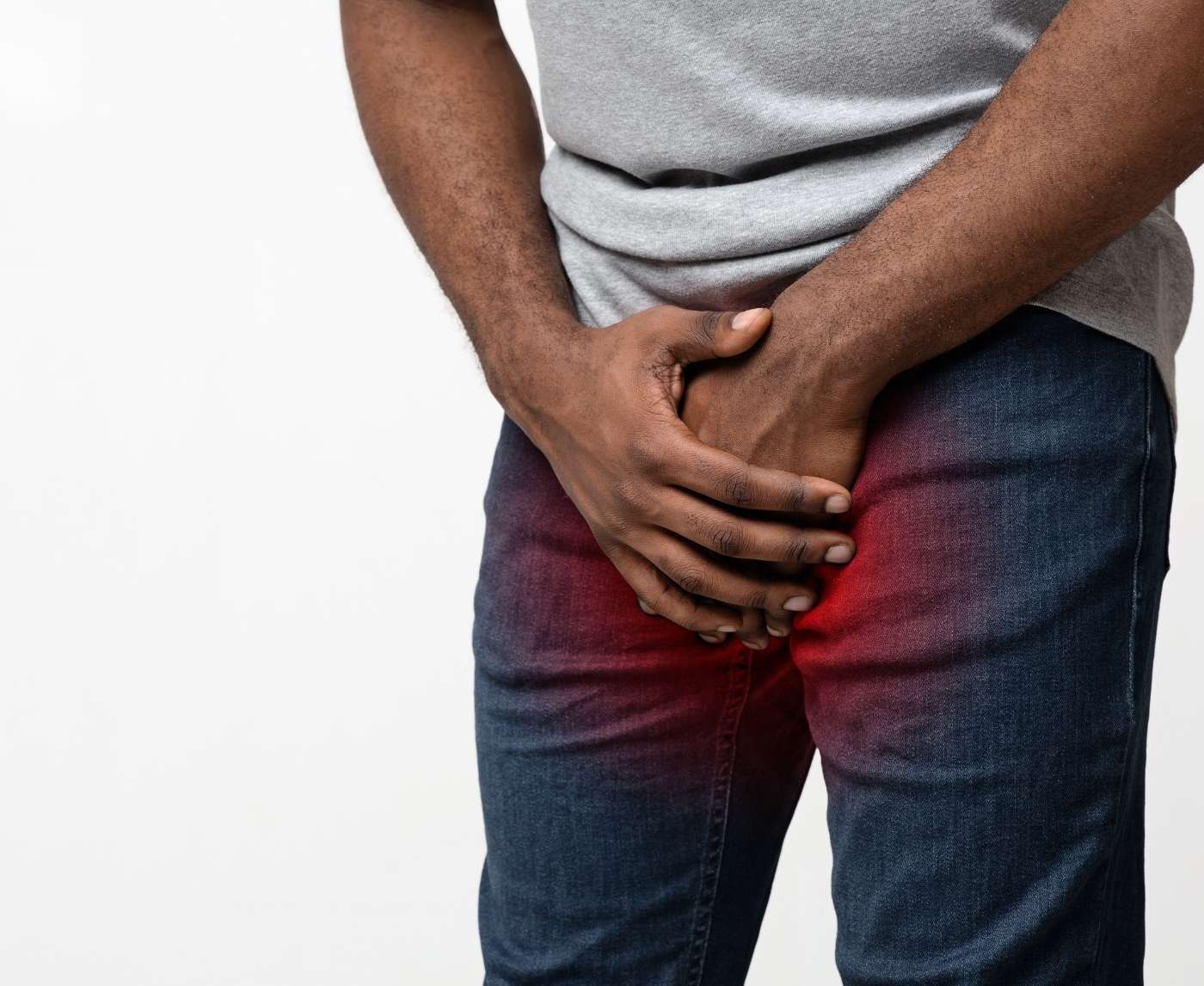
Pain in one testicle is the kind of symptom that pulls your full attention. You can be mid-shower, mid-workday, mid-anything, and suddenly everything else fades. Is this an infection? Did something happen during sex last weekend? Can this wait until Monday, or do I need to be in a clinic today?
This guide walks through what an at-home check can and cannot tell you, the symptoms that usually point to epididymitis or orchitis (the two infections most likely behind testicle pain), and the warning signs that mean stop reading and go now. None of it replaces a clinician's exam. It can, however, help you decide whether the next step is a rapid at-home STI test, a same-day clinic visit, or the emergency room.
Key Takeaways
- Sudden severe pain with nausea, or a testicle that suddenly sits higher in the scrotum, can be testicular torsion. That is a surgical emergency. Get to an ER within hours, not later that day.
- A gradual ache with swelling, warmth, or pain that worsens during urination or after ejaculation more often points to epididymitis, and in sexually active men it is most commonly triggered by chlamydia or gonorrhea.
Why your testicle might hurt, and what could be going on
Testicle pain has more possible causes than people realize. The two most common infections are epididymitis, an inflammation of the epididymis (the coiled tube behind each testicle that stores sperm), and orchitis, inflammation of the testicle itself. They can occur separately or together. Per the CDC STI treatment guidelines, in sexually active men, acute epididymitis is most often caused by Chlamydia trachomatis or Neisseria gonorrhoeae; in men with bladder outlet obstruction, recent urinary instrumentation, or insertive anal sex, gram-negative enteric bacteria (the kind that cause urinary tract infections) become more common culprits.
Orchitis is most often viral. The classic cause is mumps, which still appears in adults whose MMR immunity has waned or who never completed the full series. Mumps orchitis typically develops four to ten days after parotid (cheek) swelling. Older clinical literature places the figure at roughly 20 to 30 percent of postpubertal males who contract mumps, though the exact rate varies by source and decade.
Not every ache is an infection, though. Varicoceles (enlarged scrotal veins), small hydroceles (fluid pockets), referred kidney-stone pain, prolonged bike-saddle pressure, hernias, and post-vasectomy congestion can all produce testicular discomfort. The job of a careful home check is not to diagnose; that takes a clinician. The job is to match what you feel against the patterns below and decide what level of care is appropriate next.
Bacterial: epididymitis from chlamydia, gonorrhea, or enteric organisms. Needs antibiotics to clear.
Viral: orchitis after mumps or another viral illness. Treated with supportive care; antibiotics do not help. They can also occur together as epididymo-orchitis, which is why the clinical picture matters more than guessing.
How to do an at-home self-check
Time this for after a warm shower or bath, when the scrotal skin is relaxed. Stand naked in front of a mirror with good light. The whole exam takes two or three minutes.
Look first. Compare both sides. Is one testicle visibly larger, redder, or higher than the other? It is normal for one testicle (usually the left) to sit slightly lower. What you are watching for is a recent change.
Cup gently with both hands. Feel the weight. Compare temperature side to side with the backs of your fingers. One side feeling distinctly warmer than the other is meaningful.
Roll each testicle between your thumb and first two fingers. Walk around the entire surface. Healthy testicles feel firm and smooth, like a peeled hard-boiled egg. Behind each testicle you will feel the epididymis, a soft cord-like structure. In epididymitis, that cord is the part that feels tender, swollen, and warm; the testicle itself may feel almost normal until the inflammation spreads.
Check the cord above the testicle. Run your fingers up toward the inguinal area. A bag-of-worms texture suggests a varicocele, not infection. Sharp pain that radiates up into the groin or lower abdomen can point to torsion or a hernia and needs urgent evaluation.
Document what you find. A short voice note or phone-camera reminder of how each side felt today gives you a useful baseline if you check again tomorrow.
Symptoms that point to infection versus something else
Testicle infections do not always announce themselves. Sometimes the pain is mild and the swelling subtle. Below is the pattern-matching most clinicians use, paired with the symptoms most likely to mean a different cause.
| Symptom | More likely infection | Could be non-infectious |
|---|---|---|
| Gradual swelling in one testicle, warmth, tenderness | Epididymitis or orchitis | Varicocele and hydrocele are usually painless |
| Sudden severe pain within minutes, nausea, vomiting | Atypical for infection | Testicular torsion. Surgical emergency. |
| Pain after sex or ejaculation | Yes, often the first cue for epididymitis | Pelvic floor strain, congestive prostatitis |
| Fever, chills, body aches | Yes, signals systemic infection | Less common with mechanical causes |
| Burning during urination, urethral discharge | Strongly suggests STI-related epididymitis | Rare without infection |
| A firm lump that does not move with the testicle and is painless | No | Needs imaging to rule out testicular cancer |
When sudden severe pain means stop reading and go now
One row in that table deserves its own paragraph: sudden severe pain with nausea. Per the MedlinePlus testicular torsion entry, the testicle's blood supply twists shut and rapid surgical evaluation is needed to save the testicle, with most of the testicle salvageable when surgery happens within six hours of symptom onset. Torsion is most common in adolescents and young adults but can happen at any age. If the pain hit you all at once, especially if you woke up with it or it started during exercise, do not wait to see whether it resolves. Go to an emergency department.
Infection pain, by contrast, almost always builds gradually. Day one is vague soreness. Day two is tender to touch. Day three brings swelling, sometimes warmth, sometimes discharge or burning urination. That build-up is part of what makes home self-checks useful: you can notice the trajectory and act early, which is the single biggest difference between a routine course of antibiotics and a complicated one.
Sudden severe pain with nausea, or a testicle that suddenly sits higher than the other, is testicular torsion until proven otherwise. Go to an emergency department immediately. Do not wait for symptoms to ease, do not wait for an appointment, and do not finish reading this article first.
STI or not? Why the cause changes the next step
The reason this distinction matters is treatment. Per the CDC 2021 STI Treatment Guidelines, antibiotics for epididymitis are chosen based on the most likely organism. For sexually active men with chlamydia or gonorrhea exposure risk, the recommended regimen covers those organisms. For men with bladder outlet obstruction, recent urinary instrumentation, or insertive anal sex, the regimen also covers enteric bacteria. Picking the wrong target wastes time, and during that time the inflammation can spread to the testicle (epididymo-orchitis) or, rarely, cause lasting damage to fertility on the affected side.
Here are the questions that help point the arrow:
- Have you had a new sexual partner in the last 14 to 21 days? Chlamydia in particular can be present for weeks before symptoms appear.
- Is there burning when you urinate, or any urethral discharge? That combination is more typical of STI-related epididymitis than of any other cause.
- Did you have a UTI recently, or do you have an enlarged prostate? That history shifts the probability toward enteric organisms.
- Did the pain start within hours after exercise, lifting, or an awkward movement? Mechanical causes are more likely.
- Are you under-vaccinated for MMR, or recently exposed to someone with parotid swelling? Mumps orchitis is uncommon but still occurs.
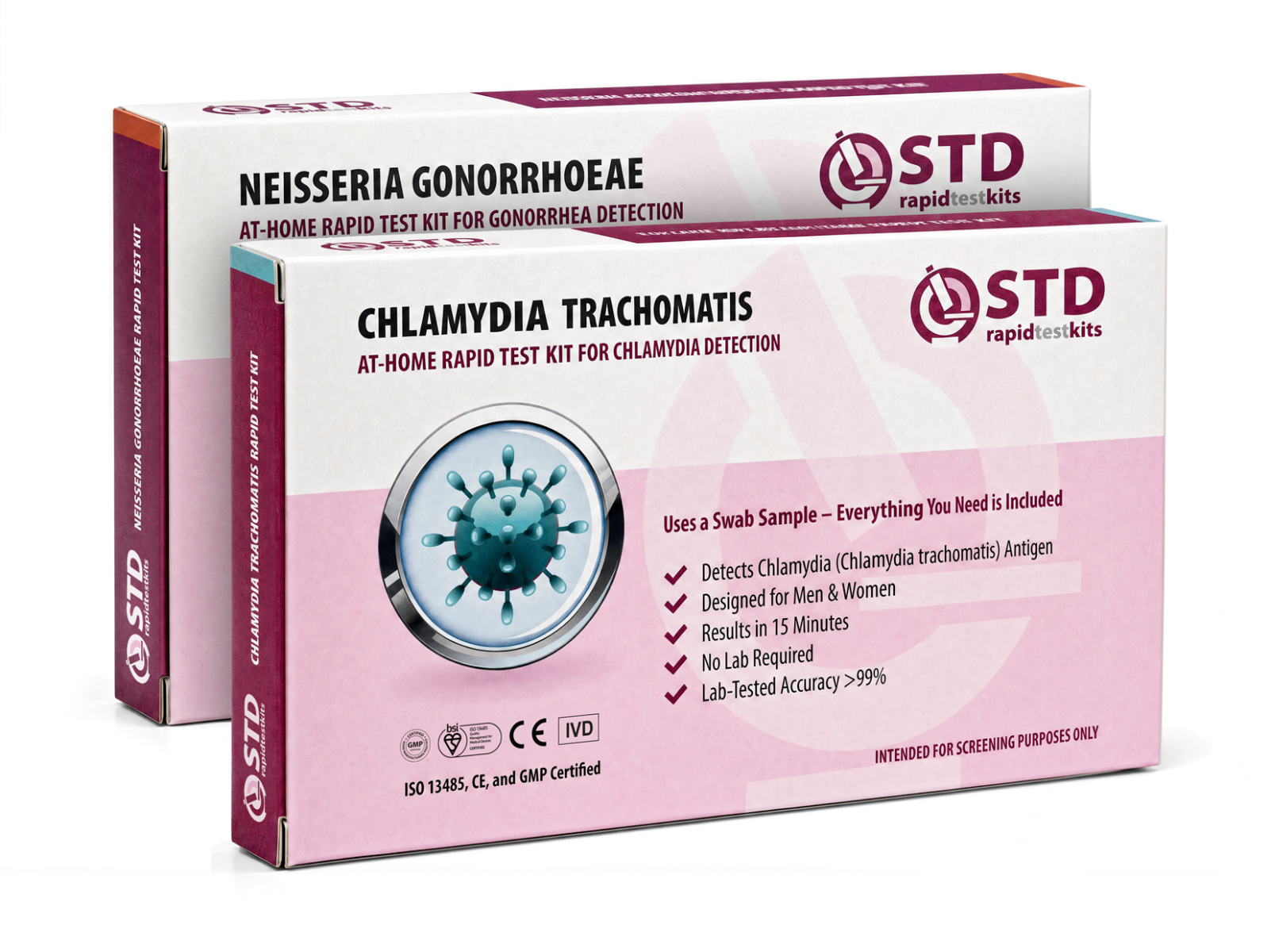
A home rapid swab is enough to confirm or rule out chlamydia and gonorrhea, the two most common STI triggers of epididymitis in sexually active men. A positive result tells your provider exactly which antibiotic class to start.
You need a clinician's exam when the swab is negative but symptoms persist, when the picture suggests an enteric (UTI-type) organism, when mumps orchitis is on the table, or any time torsion cannot be ruled out by history. Urinalysis, ultrasound, or culture may be needed.
Can I confirm a testicular infection at home?
No. You cannot confirm epididymitis or orchitis at home. What you can do is recognize the pattern (gradual ache, swelling, warmth, sometimes burning with urination) and rule in or out the most common cause with a rapid swab for chlamydia and gonorrhea. If symptoms last more than 48 hours, get worse, or come with fever or sudden severe pain, see a provider the same day.
Home treatment, dangerous delay, and the line in between
It is tempting to wait it out. Pop ibuprofen, wear supportive briefs, ice the scrotum for fifteen minutes at a time, lie back with a folded towel under the scrotum to elevate it. Those measures genuinely help symptoms, and per the NHS epididymitis page, they are part of the standard supportive-care advice alongside antibiotics.
But supportive care is not curative for a bacterial infection. The CDC treatment guidance is direct on this point: empirical antibiotics should be started before lab results return, because untreated bacterial epididymitis can progress to abscess, infarction of the testicle, chronic pain, or impaired fertility on the affected side. The five clinical features that earn same-day evaluation appear in the key facts below.
If you have one of those features, the question is no longer whether to seek care. It is which level: same-day primary care or telehealth for the gradual pattern, urgent care or ER for the sudden-severe pattern.
Five signals that mean same-day care
- Swelling, warmth, or tenderness lasting more than 48 hours.
- Fever above 100.4°F (38°C), chills, or systemic feeling-unwell.
- Burning urination or new urethral discharge.
- Pain that worsens after rest, or that wakes you at night.
- Any sudden severe pain. That is the torsion path, and it is an emergency.
Timing your test: how long after exposure to swab
If an STI is on the table, when you test matters as much as whether you test. Lateral-flow swab assays detect pathogen antigen at the urethral or vaginal mucosa, so they need an established infection to call positive. Most clinical references describe chlamydia as detectable within one to two weeks of exposure. Gonorrhea antigen is generally detectable sooner, with most sources placing the window opening within the first week. Exact windows vary by manufacturer, so confirm the specific window with the instructions for the kit you use. The practical timeline below summarizes when each result is most reliable.
Window estimates in the table are approximate and reflect typical antigen-detection thresholds for lateral-flow rapid swab assays. Exact windows vary by manufacturer. Consult the kit instructions for the specific product you are using.
| Time since exposure | What at-home swab testing can show | Recommended action |
|---|---|---|
| 0 to 5 days | Often too early to detect chlamydia or gonorrhea reliably | Track symptoms; plan to test from day 7 onward |
| 6 to 13 days | Gonorrhea typically detectable; chlamydia may already test positive | Test now; if negative and symptoms persist, retest at day 14 |
| 14 to 28 days | Peak detection window for both chlamydia and gonorrhea | Test as soon as you have symptoms or known exposure |
| Ongoing symptoms despite a negative swab | Possible false negative, mumps orchitis, enteric infection, or non-infectious cause | Same-day clinician visit; ultrasound or urine culture may be needed |
What to do with a positive home result
A positive at-home swab for chlamydia or gonorrhea is not the end of the path. It is the start of a focused next step. Call a clinic or telehealth service the same day, share the result, and you can usually have appropriate antibiotics in hand within 24 hours. Per the CDC chlamydia guideline, recent sexual partners should be notified (most clinics will help with that conversation, and a number of states offer free anonymous partner-notification services), and retesting roughly three months after treatment is recommended to catch reinfection. Reinfection is common after STI treatment, and repeat epididymitis cases frequently trace back to untreated partners or new exposures.
A negative at-home swab does not entirely close the file either. If the symptom pattern is consistent with epididymitis and the swab is negative, the most common explanations are testing too early in the window, an enteric organism the swab does not cover, or a non-STI inflammatory cause. In all three situations the next step is the same: a clinician's evaluation within the next 24 to 48 hours.
Why so many men sit on testicle pain for days
Most men with genital symptoms wait longer than clinicians recommend before seeking care, a pattern documented consistently in sexual-health literature. The reasons are not mysterious. Embarrassment ranks high. So does a generalized "tough it out" cultural script. So does the practical problem that many men simply do not have a clinician they see routinely.
None of that is an argument for catastrophizing. It is an argument for shortening the decision loop. An at-home rapid test, taken alongside the symptoms you already noticed, gives you one piece of objective information you can hand to a telehealth provider in five minutes. That is faster than a walk-in clinic, faster than waiting for an appointment, and demonstrably easier than the alternative of doing nothing. For readers who avoid clinics for reasons of gender identity, prior bad experiences, or simply geography, the privacy of a self-collected swab is also a real practical advantage, not a marketing slogan.
Retesting after treatment, and what "healed" actually means
If you are diagnosed with chlamydia- or gonorrhea-triggered epididymitis, the standard course is seven to fourteen days of antibiotics depending on the regimen. Symptoms usually improve within three days of starting treatment, but residual tenderness can persist for two to four weeks while inflamed tissue heals. That lingering soreness is not the same as treatment failure.
Per the CDC chlamydia guideline, anyone treated for chlamydia or gonorrhea should be retested approximately three months later, regardless of whether their partner was treated. The point is not to verify cure of the original infection (that is generally assumed if symptoms resolve) but to catch reinfection, which is common and which carries the same fertility-and-complication risks the first round did.
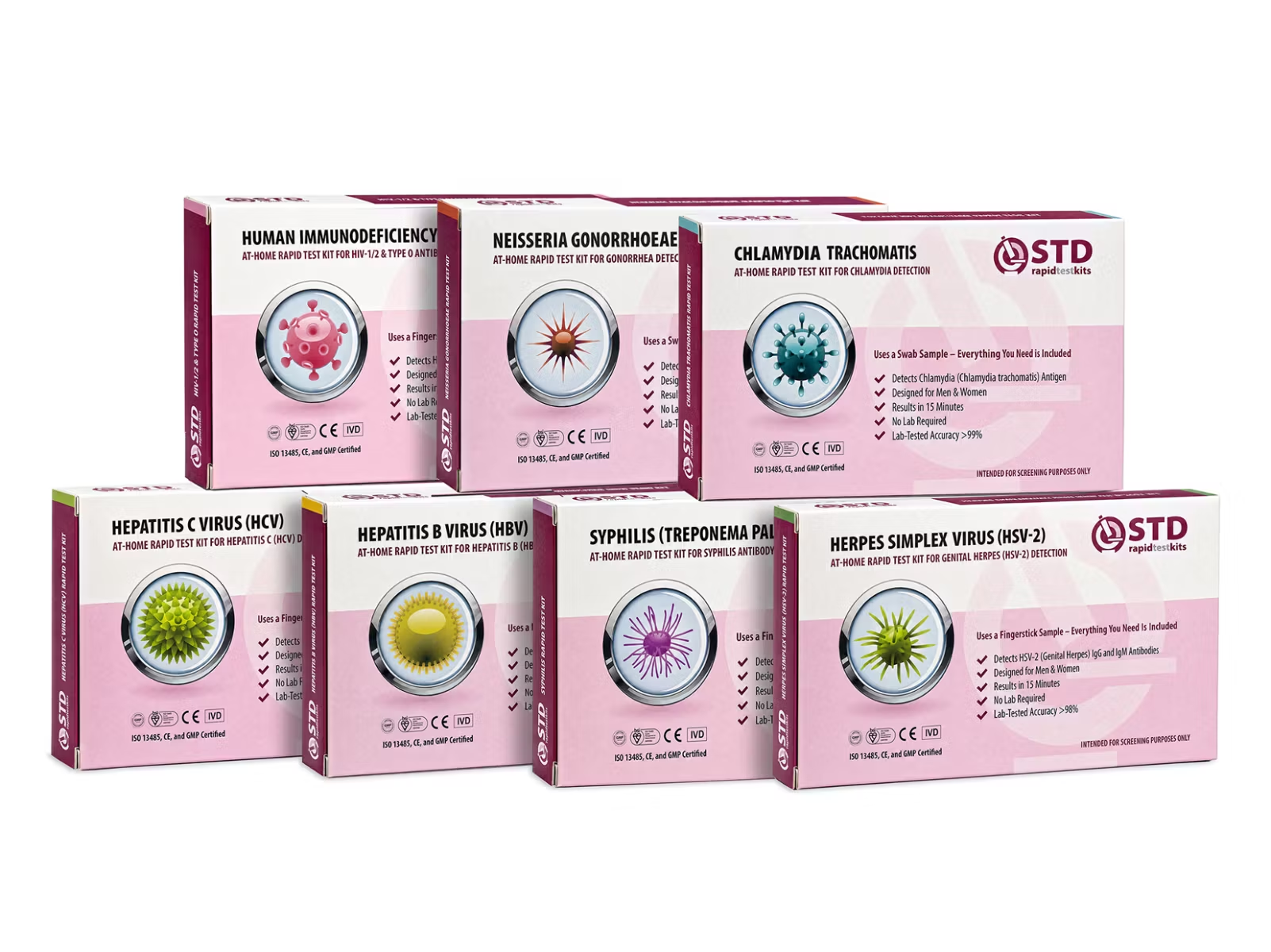
For sexually active people with multiple partners, or with a new partner since the last screen, testing every three to six months is the cadence most public-health recommendations describe. At-home rapid kits make that cadence realistic without taking a half-day off work each time.
Retest at three months after finishing antibiotics, even if your partner was treated. CDC guidance recommends this for everyone treated for chlamydia or gonorrhea.
Two to four weeks of residual tenderness after a complete antibiotic course is normal healing, not treatment failure. If the tenderness worsens or new symptoms appear, that is when to return to your clinician.
You are not overreacting, you are protecting your health
If your testicle hurts, your body is sending a useful signal. Checking it is not weakness. Testing it is not paranoia. Most of the time the answer is reassuring: a mild epididymitis caught early, treated with a short antibiotic course, and forgotten about within weeks. A minority of the time it is something more serious, and in those cases speed matters more than anything else.
Run the home check. Match what you feel against the patterns above. If anything in the "go now" column shows up, do not finish reading this article first. If the picture is the gradual, achy, STI-suspicious pattern, a self-collected rapid swab plus a same-day telehealth visit is usually enough to get you on the right antibiotic by tomorrow.
Three decision branches
- Sudden severe pain, nausea, or a testicle that suddenly sits higher than the other: go to an emergency department now. This is the torsion path.
- Gradual ache with swelling, warmth, fever, burning urination, or symptoms lasting more than 48 hours: take a self-collected rapid swab for chlamydia and gonorrhea, then book a same-day telehealth or clinic visit.
- Mild ache that resolves within 24 hours and is not accompanied by fever, swelling, or urinary symptoms: monitor for another day or two. If anything new appears, return to the gradual-pattern branch above.
FAQs
- Can I confirm a testicular infection at home?
- A rapid swab can rule in or out chlamydia and gonorrhea (the two most common infection triggers) in about 15 minutes at home. What it cannot do is confirm epididymitis itself; that takes a clinician's exam. If the swab is positive, call a clinic or telehealth service the same day to get on antibiotics. If the swab is negative and symptoms persist past 48 hours, see a provider in person so they can rule out enteric organisms, mumps orchitis, or non-infectious causes.
- Pain in just one testicle, is that normal?
- It is the most common pattern for epididymitis. Most testicular infections start on one side and may or may not spread. Sudden one-sided severe pain is different and points to torsion until proven otherwise, which is an emergency.
- I had unprotected sex last week and now my testicle aches. Coincidence?
- Possibly, but the timing is consistent with STI-related epididymitis. Chlamydia and gonorrhea travel upward from the urethra into the epididymis, often before urethral discharge appears. A rapid swab can confirm or rule out the two most common organisms in about 15 minutes.
- No swelling, just an ache. Am I overreacting?
- You are paying attention, which is the right move. Early epididymitis often presents as ache without visible swelling. Track it for 24 hours: if it gets worse, develops swelling or warmth, or comes with burning urination, test and seek care. If the ache resolves and nothing else appears, a low-level musculoskeletal cause is more likely.
- How do I know it is not torsion?
- Torsion almost always hits suddenly, often with nausea, and the affected testicle may sit higher than the other or look rotated. Infection pain builds over a day or two with progressive swelling, warmth, or urinary symptoms. If you cannot tell, treat it as torsion until imaging proves otherwise and go to an emergency department.
- Can I have sex if I think I have a testicle infection?
- Not until you know what it is and, if it is an STI, until you have completed treatment and any clinician-recommended abstinence window. Sex during active STI-related epididymitis can transmit the infection to a partner and can worsen local inflammation.
- I took leftover antibiotics and the pain is gone. Am I cured?
- Probably not. Different organisms need different antibiotic classes and durations. Self-treating with leftover or shared antibiotics can mask symptoms while the infection persists, drives resistance, and complicates testing later. Get a documented diagnosis and a complete course from a clinician.
- Will the package or test results identify what I am testing for?
- No. Kits ship in discreet outer packaging with no diagnostic language visible. Results stay on the cassette in your home and are not transmitted anywhere unless you choose to share them. Privacy is part of why home testing exists.
- U.S. Centers for Disease Control and Prevention. STI Treatment Guidelines: Epididymitis. Source for recommended antibiotic regimens by likely organism and risk factor, and for empirical-antibiotic timing.
- U.S. Centers for Disease Control and Prevention. STI Treatment Guidelines: Chlamydia. Source for the three-month retesting recommendation after treatment and partner-notification guidance.
- MedlinePlus (U.S. National Library of Medicine). Testicular torsion: emergency framing and the six-hour surgical-salvage window.
- NHS. Epididymitis: symptoms, supportive care, and when to see a doctor. Source for ibuprofen, scrotal elevation, and supportive-care advice.
- Cleveland Clinic. Testicular pain: causes, diagnosis, and management. General clinical reference for non-infectious testicular pain.
- NIH/NCBI Bookshelf (StatPearls). Epididymitis overview. General clinical reference for clinical course, complications, and differential diagnosis.
