







Quick Answer: Yes, you can test positive for an STD even if you haven’t had penetrative sex. Infections like herpes, syphilis, HPV, and even chlamydia can spread through skin-to-skin contact, oral sex, or shared objects. Testing is about clarity, not blame.
This Isn’t a Mystery, It’s a Medical Reality
María, 22, was what her friends called “technically a virgin.” She hadn’t had sex, but she had made out with a partner, used fingers, and shared a vibrator once. When she felt a burning sensation while peeing, she assumed it was irritation or a yeast infection. But the test result said otherwise: chlamydia.
“I couldn’t stop crying. I kept repeating, ‘I haven’t even had sex.’ It felt like the world was upside down.”
Her case isn’t rare. In fact, it’s quietly common. Many sexually transmitted infections don’t require intercourse at all to spread. The CDC confirms that infections like herpes and syphilis can pass from one person to María, 22,another simply through skin contact, especially during oral sex or mutual masturbation. HPV is similar. Even chlamydia, which is often associated with genital fluids, has been detected in the throats and rectums of people with no history of penetrative sex.
The most misleading symptom? None. Most STDs show no immediate signs. Over 80% of people with herpes don’t know they have it. Syphilis starts as a painless sore that many never even notice. HPV can live silently in the body for years. So when you test positive and your body feels “normal,” it’s not betrayal, it’s biology.
That’s why this article exists. Because somewhere in the shame spiral is the truth: you’re not reckless, dirty, or alone. You’re part of a bigger story that we’ve been too scared to tell out loud.
“But I Didn’t Even Have Sex”: The Myth That Hurts Most
Adrián, 28, didn’t think much of the small, smooth sore near the base of his shaft. It wasn’t painful. He hadn’t had sex since his last negative test, and he’d only been hooking up through mutual masturbation and oral, nothing “real,” as he put it. When the doctor told him it was primary syphilis, his stomach dropped.
“I literally said, ‘There’s no way. I haven’t done anything that counts.’ And she looked me straight in the eye and said, ‘Syphilis doesn’t care what you count.’”
The belief that sex is only “sex” if it’s penetrative is one of the most dangerous myths when it comes to STD prevention. Skin-to-skin contact, saliva exchange, shared fluids, fingering, oral play, these are all valid forms of intimacy. They’re also valid routes of transmission. Yet because sex ed often centers on penis-in-vagina intercourse, many people underestimate their risk until it’s too late.
Studies from the Journal of the International AIDS Society and Planned Parenthood confirm: oral sex, toy use, and skin-to-skin contact can all transmit infections like herpes, syphilis, HPV, and even gonorrhea. Saliva can carry the herpes simplex virus. Microscopic tears in skin, common during grinding or manual stimulation, can open the door for bacterial or viral infections to pass through. You don’t need to “go all the way” to take on real risk.
Even toys, especially if not properly cleaned, can be vectors for STDs. Shared vibrators, dildos, and other objects can carry infectious fluids or skin cells. HPV, for example, can live on surfaces for several hours. If you or a partner has used a toy without a condom or adequate sanitization, that’s a transmission route, no matter how “safe” it seemed at the time.
There’s also the misconception that being queer, trans, or nonbinary means lower risk. Unfortunately, under-testing in these populations often leads to delayed diagnosis, not immunity. CDC data show that men who have sex with men, especially those under 25, are disproportionately impacted by STDs, even when penetration isn’t involved.
So when someone says, “I can’t have an STD, I’ve never had sex,” what they often mean is: I’ve never had intercourse. But herpes and HPV don’t wait for intercourse. They live on lips, genitals, hands, toys, sheets. And if you’ve touched, kissed, rubbed, or shared anything intimate, you’ve participated in risk, whether you realized it or not.
This isn’t about blaming you for exploring your body or connecting with someone else. It’s about acknowledging the quiet, invisible ways our bodies communicate, sometimes with microbes, and giving you the knowledge to listen, not panic.

People are also reading: How Dating Apps Are Changing the Spread of STDs
When the Shame Hits Harder Than the Diagnosis
Sandra, 19, was a freshman in college when she noticed small bumps near her vulva. They didn’t hurt. They didn’t itch. She thought they might be ingrown hairs. But when a friend urged her to go to the campus clinic, she left with a surprise diagnosis: genital herpes.
“I felt disgusting. I cried the whole bus ride home. I kept asking myself, ‘How?’ I’ve never had sex. I’m still a virgin.’”
That word, “virgin”, carries so much weight and yet means so little in the language of transmission. Herpes doesn’t care if you’ve had penis-in-vagina sex. Neither does HPV. They care if you’ve had skin contact. If your partner had a cold sore and kissed you down there, that’s enough. If you used your hands and then touched yourself, that might be enough too. It’s unfair. It’s invisible. But it’s real.
What makes it worse is that we don’t talk about this. Not in school, not in friend groups, not even in most STD resources. The message we hear is: If you’re careful, if you wait, then you’re safe. So when something like herpes happens outside that narrative, it doesn’t just hurt your body. It hurts your identity.
That internalized shame is often what keeps people from seeking care. In a national survey, 60% of respondents said they feared being judged if they tested positive. Nearly 70% admitted they wouldn’t tell a partner if they got an STD without symptoms. And the silence feeds the stigma. The stigma fuels the silence. Meanwhile, infections spread quietly through people who don’t even know they’re carrying anything.
This is where we need to shift. Instead of asking, “How did this happen to me?” we should be asking, “Why weren’t we taught this earlier?”
Because STDs aren’t punishment. They’re infections. They don’t reflect your worth. They don’t cancel your sexuality. And they definitely don’t mean you did something wrong.
If anything, getting tested, even when you’re “just curious”, shows you care about your health. It shows you care about the people you’re intimate with. It means you’re informed enough to know that sex isn’t always about intercourse, and that protection needs to evolve with our real lives, not outdated assumptions.
This shift doesn’t just protect you. It creates a ripple effect. When you speak openly about testing, when you choose to learn instead of spiral, when you talk about STDs like the manageable, common things they are, you help someone else feel less afraid too.
Check Your STD Status in Minutes
Test at Home with Remedium7-in-1 STD Test Kit
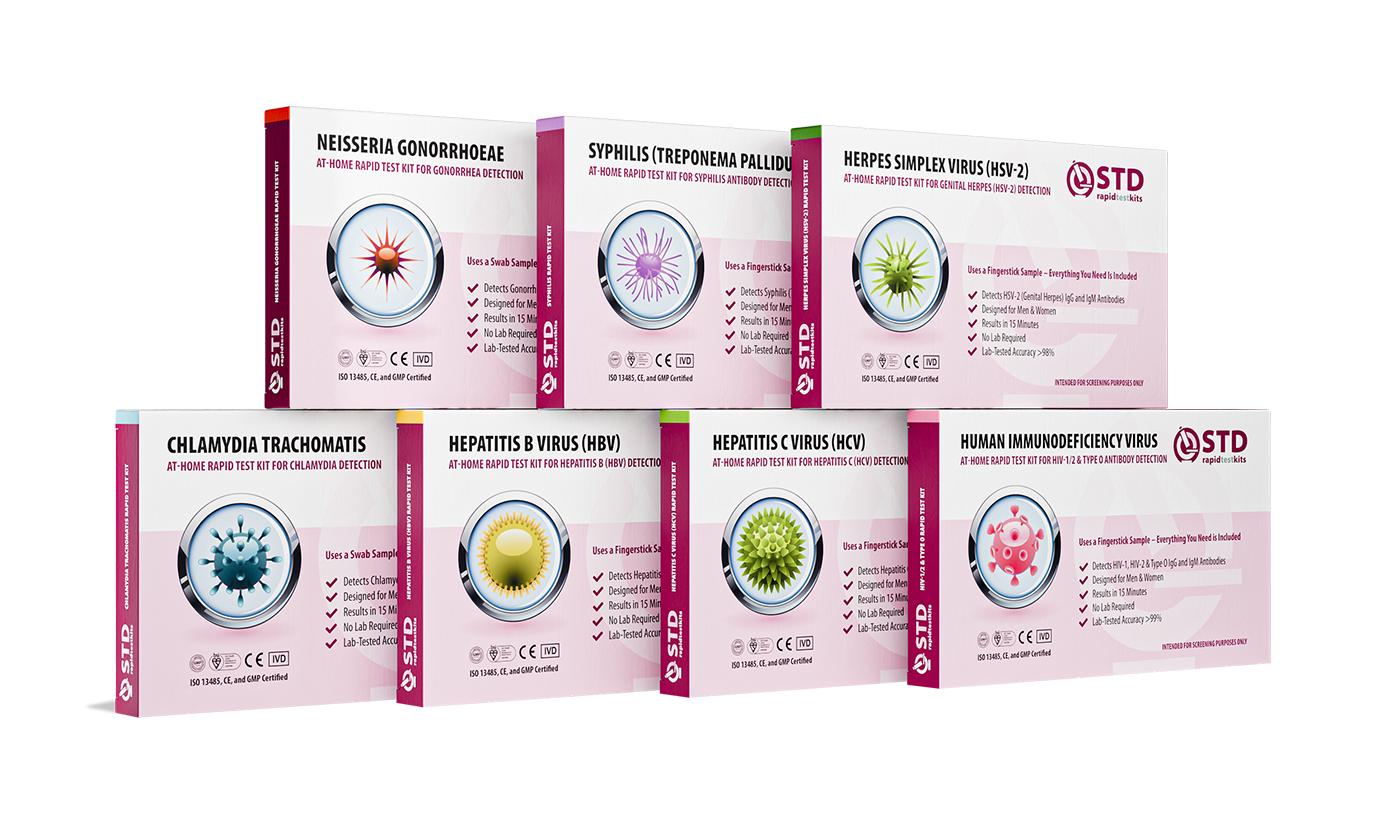
 For Men & Women
 Results in Minutes
 No Lab Needed
 Private & Discreet
Order Now $129.00 $343.00
For all 7 tests
Knowing Isn't Fear, It's Freedom
There’s a difference between living cautiously and living anxiously. Most people aren’t avoiding testing because they don’t care. They’re avoiding it because they’re scared of what it might say about them. That’s the damage stigma does. It turns curiosity into silence. It turns normal things, like oral sex or exploring with a partner, into something that feels too risky to name out loud.
Jules, 26, got tested after a partner asked, “Hey, have you ever done one of those just in case?” They hadn’t had sex, just mutual touching, a little grinding, some deep kissing. The idea felt silly at first, but Jules said yes. Their result came back positive for HPV. The nurse told them it was extremely common, probably something they'd had for months without knowing.
"I wasn’t even mad. I was... relieved. Like, finally I know. Finally I’m not guessing anymore."
That’s what testing is. It’s not shame. It’s not an accusation. It’s peace of mind. It’s being able to say to yourself or your partner, “Here’s where I stand.” And it’s not just about STDs. It’s about agency. It’s about letting your choices reflect your values, not your fears.
It doesn’t matter if your sex life is just beginning, evolving, paused, or somewhere undefined. If you’ve touched, kissed, shared skin or toys or spit, you’re allowed to be curious. You’re allowed to ask questions. You’re allowed to want clarity.
Start there. Not because you’re worried. Because you care. Because your body is worth knowing. And your health? That’s not just personal, it’s powerful.
Take control of your sexual health today. You don’t need to wait for a reason.
FAQs
1. Is it possible to contract an STD without engaging in sexual intercourse?
Yes. You can get herpes, HPV, and syphilis from skin-to-skin contact, oral sex, and sharing sex toys, even if you don't penetrate.
2. What kinds of sexual activity put you at risk for STDs?
Even if there is no penetration, any intimate contact that involves fluids, mucous membranes, or skin-to-skin friction can spread STDs.
3. Do people who haven't had sex get STDs?
Yes. Virgins can get STDs from things like oral sex, mutual masturbation, or sharing toys that don't involve penetration.
4. How can I tell if I got it from kissing or touching?
It's hard to say for sure. A lot of STDs don't show any signs, so partners who don't know they have them can spread them.
5. Can herpes spread without showing any signs?
Yes. People often pass on herpes without knowing it because the virus can still be shed even when there are no sores.
6. Should I still get tested even if I've never had sex?
Yes, for sure. It's a good idea to get tested if you've had any sexual contact, like oral sex, grinding, or sharing toys.
7. Is it shameful to test positive if I didn’t “do anything”?
Not at all. Testing positive means you’ve been exposed, usually unknowingly. It’s not a reflection of your morality or choices.
8. How do I protect myself during oral or toy use?
Use condoms, dental dams, and wash toys with warm water and mild soap between uses. You can also use condoms on toys.
9. Will a doctor believe me if I say I’ve never had sex?
A good doctor will. If you’re dismissed, find a provider who is queer-inclusive and understands real-world transmission.
10. Where can I get tested privately?
You can use at-home options like the Combo STD Test Kit for discreet, reliable results in minutes.
You’re Not Broken. You’re Informed.
If you’ve tested positive without ever having had what the world calls “real sex,” hear this: your body didn’t betray you. Your partner didn’t have to mean harm. The world just didn’t give you the full story. But now you have it. And with it comes power.
You can prevent further transmission by understanding your body and your risk. You can reduce outbreaks, protect future partners, and rewrite the script around sex and safety. That might look like using condoms and dental dams, not just during penetration but during oral and mutual play. That might mean testing every six months even if you’ve only had “soft” or non-genital contact. That might mean asking your partners about their testing habits before you even take your shirt off.
And if you’ve already tested positive, breathe. This doesn’t make you dirty. It makes you human. Treat it. Talk about it. Test again if you need clarity. And above all, release the shame that was never yours to carry.
Testing is care. Knowledge is liberation. And whether your sexual story includes penetration or not, you deserve clarity, autonomy, and peace of mind.
This at-home combo test kit makes it simple to get answers discreetly, especially if you're unsure about what “counts” as risk. Peace of mind can start today.
Sources
1. CDC: About STI Risk and Oral Sex
2. Verywell Health: STD Without Having Sex
3. KFF: Public Knowledge and STI Attitudes


