
Published: September 2025 | Last updated: April 2026 | Editorial review and quality control: Martina N.
Syphilis is one of the oldest sexually transmitted infections in the historical record, and one of the few that the modern world had reason to think it had beaten. Penicillin should have ended its story in the 1940s. Instead, U.S. cases reached the highest level in over seventy years in 2023, with congenital syphilis (the kind passed from a pregnant person to a baby) climbing roughly tenfold over the previous decade, according to CDC STI surveillance data.
The treatment has not changed: a single intramuscular shot of benzathine penicillin G fully cures early syphilis. Catching it early is the part that has gotten harder. The bacterium responsible, Treponema pallidum, has earned the nickname "the great imitator" because its symptoms mimic so many other conditions, and because the worst stages can be silent for years. What follows is a plain-English walk through the disease's history, its four stages, the testing windows you actually need, and how at-home rapid tests fit alongside clinic care.
What is syphilis, where did it come from, and why is it back in 2026?
Syphilis is a bacterial sexually transmitted infection caused by Treponema pallidum. It became widely documented in Europe after 1495 and was a leading cause of disability for centuries until penicillin (introduced for syphilis in the 1940s) made it fully curable. It is back because routine screening fell during the COVID-19 pandemic, public health funding has been cut, dating-app sex networks moved faster than contact tracing, and early symptoms are easy to miss. Caught early, one penicillin shot ends it. Untreated, over five to thirty years it can damage the heart, brain, and nerves.
Key takeaways
- Early syphilis is fully curable with one penicillin injection. Untreated, it can quietly damage the heart, brain, and nerves over years or decades.
- U.S. syphilis cases hit a 70-year high in 2023 per CDC surveillance, and congenital syphilis cases have multiplied roughly tenfold over the past decade.
Where Syphilis Came From: Two Theories That Still Argue
Historians and paleopathologists have debated the origin of syphilis for more than a century, and the question is genuinely unsettled. Two main hypotheses dominate.
The Columbian theory holds that Christopher Columbus and his crew carried Treponema pallidum back to Europe from the Americas in 1493. Skeletal remains from pre-1492 Indigenous American populations show lesions consistent with treponemal disease, and the first major recorded European outbreak followed close on the heels of those returning voyages. The pre-Columbian theory argues that a milder strain already existed in Europe and that troop movements, war-time prostitution, and increased trade simply turned a chronic background infection into a rapid epidemic. Some medieval European skeletal remains do show treponemal-style lesions, though dating and species identification are contested.
What is not debated: the disease exploded into the historical record in 1495, when French troops returning from the Italian Wars after the Siege of Naples developed a frightening new illness with painful sores, fevers, joint and bone deformities, hair loss, and neurological symptoms. By 1500, it had reached every corner of Europe. The naming was political. Italians called it the "French Disease." The French called it the "Neapolitan Disease." Russians blamed the Poles. The English called it "the pox." Behind the finger-pointing, syphilis was already revealing the fault lines of class, sex, and medicine. It made no distinction between a king and a courtesan.
One of the earliest probable cases may have been King Charles VIII of France, whose final illness mirrored late-stage syphilis. Across the next four hundred years, rumors swirled about prominent figures including the painter Albrecht Dürer, members of Napoleon's army, and writers and artists who left coded records of their own decline. The Norwegian painter Edvard Munch and several of Shakespeare's plays referenced the disease's effects. By the mid-1800s, public-health surveys estimated that as many as 15% of adults in some European cities carried syphilis. Babies were born blind or stillborn. Mental hospitals in the late 19th century quietly housed many people with what we now know was tertiary syphilis affecting the brain. No reliable cure existed.
Columbian theory. First major European outbreak in 1495, just two years after Columbus's return from the Americas. Pre-1492 Indigenous American skeletal remains show treponemal lesions. Early European cases concentrated in port cities and returning crews.
Pre-Columbian theory. Some medieval European skeletal remains show treponemal-style bone lesions. Suggests a milder strain already circulated in Europe and was amplified by war, troop movement, and trade rather than imported. Dating and species identification of those remains are still contested.
The Treatments That Were Worse Than the Disease
For the four hundred years between 1495 and the 1940s, almost every syphilis treatment was either useless or actively harmful. The most common was mercury, applied as an ointment, swallowed as a pill, or inhaled as fumes in a steam bath. Mercury is highly toxic. Patients lost teeth, suffered tremors, and frequently died of mercury poisoning rather than the infection. The grim period saying ran: "A night with Venus, a lifetime with Mercury."
Other folk treatments included guaiac wood (also called holy wood), a resinous tree imported from the Americas and brewed into a bitter drink, and sudation therapy, in which patients were sealed under blankets or in steam rooms hot enough to blister skin in an attempt to "sweat out" the disease. None of these worked.
The first partial breakthrough came in 1909, when Paul Ehrlich and Sahachiro Hata developed Salvarsan, an arsenic-based compound. It was a meaningful improvement over mercury and reduced syphilis death rates, but it required a long, painful course of injections and carried serious side effects of its own. Salvarsan was the leading treatment from roughly 1910 until penicillin took over in the 1940s.
| Era | Standard treatment | Real-world effectiveness |
|---|---|---|
| 1490s to 1600s | Mercury ointments, pills, and steam-bath fumigation | Low. Often fatal. The treatment killed patients separately from the disease. |
| 1600s to 1700s | Guaiac wood decoctions and herbal tonics | Effectively zero. Placebo at best. |
| 1700s to 1800s | Mercury continued, plus iodide salts and bloodletting | Marginal symptomatic relief, no cure. |
| 1909 to 1940s | Salvarsan (arsphenamine), an arsenic-based drug | Moderate. Reduced mortality but required dozens of injections, with serious toxicity. |
| 1943 onward | Benzathine penicillin G injection | Very high. Cures early-stage syphilis with a single dose in most patients. |
1943: The Year Penicillin Changed Everything
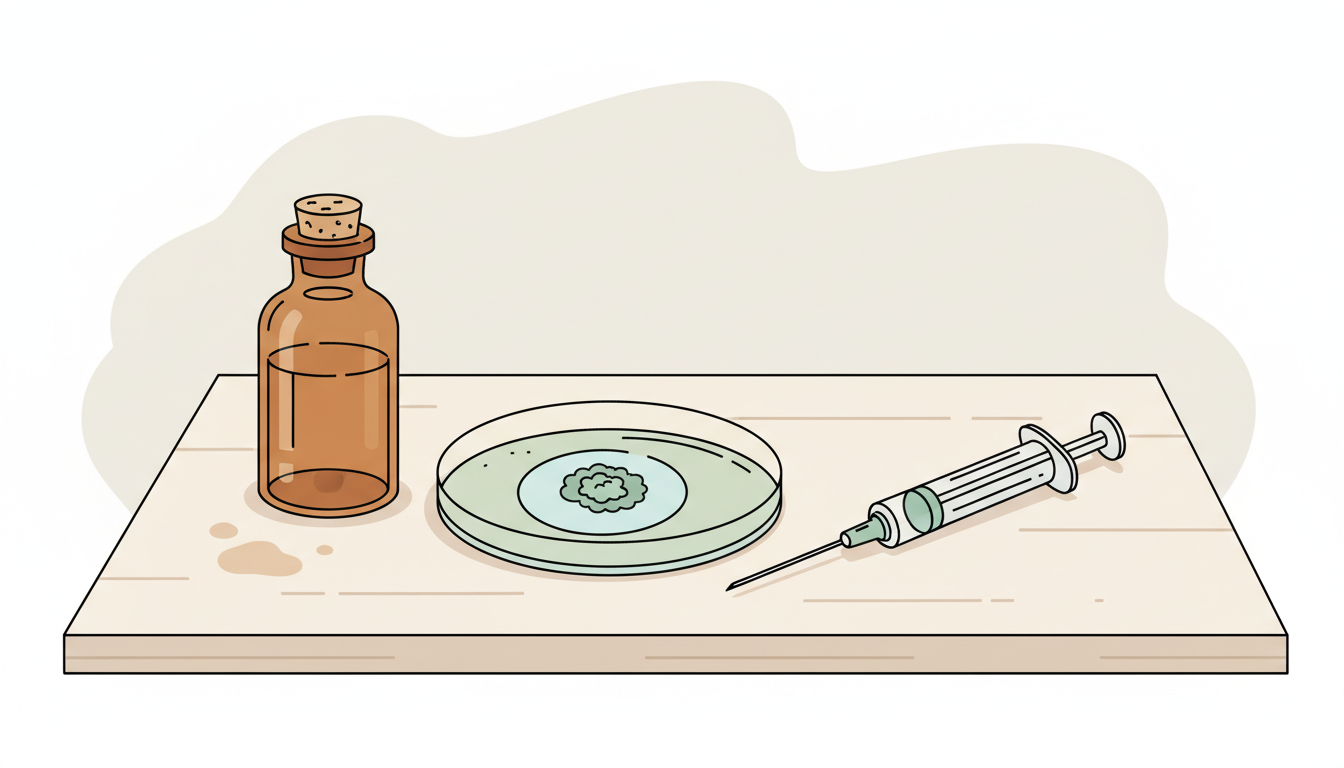
Alexander Fleming had stumbled onto penicillin in 1928 by noticing that mold growing in a forgotten Petri dish killed surrounding bacteria. It took another fifteen years before Howard Florey, Ernst Chain, and a wartime production effort made the drug available in usable quantities. In 1943, the U.S. Public Health Service physician John Mahoney demonstrated that a short course of intramuscular penicillin cured early syphilis. For the first time in the disease's documented history, a safe, effective, single-injection cure existed.
The effect on public health was dramatic. Through mass screening campaigns, contact tracing, and free or low-cost penicillin treatment, U.S. syphilis case counts fell by more than ninety percent between the late 1940s and the late 1950s, according to CDC historical surveillance data. By the 1990s, public-health authorities were publicly discussing the possibility of eliminating syphilis from the United States entirely. Many countries reported similar declines.
Penicillin remains the standard of care today. Per CDC STI treatment guidelines, a single intramuscular dose of benzathine penicillin G cures primary, secondary, and early latent syphilis in most cases. Late-latent or tertiary syphilis requires three weekly injections. There is no significant penicillin resistance in Treponema pallidum after eighty years of use, which is unusual and a real piece of medical good fortune.
Between the late 1940s and the late 1950s, U.S. syphilis case counts fell by more than ninety percent through mass screening, contact tracing, and free or low-cost penicillin treatment, per <a href="https://www.cdc.gov/std/statistics/" target="_blank" rel="noopener">CDC historical surveillance data</a>. The drug is still effective today: Treponema pallidum has not developed meaningful resistance after eight decades of use.
The Tuskegee Study: A Wound That Has Not Closed
The story of how penicillin became the standard cure does not have a clean ending. From 1932 to 1972, the U.S. Public Health Service conducted what is now known as the Tuskegee Syphilis Study. Researchers enrolled 600 Black men in Macon County, Alabama, of whom 399 had latent syphilis. The study was framed to participants as free health care. Researchers told the men they were being treated for "bad blood," a vague local term. They were not told they had syphilis. They were not given penicillin even after it became the standard cure in 1943. The men continued to receive placebo treatments and "free funeral benefits" while the disease progressed in their bodies for forty years.
By the time the study was exposed and shut down in 1972, many of the men had died of syphilis-related complications. Some had passed the infection to their wives. Children had been born with congenital syphilis. The U.S. government did not formally apologize until President Bill Clinton's 1997 statement on behalf of the nation.
This history is more than a footnote. It is one specific reason that mistrust of the medical system runs deep in some Black, Indigenous, and Latinx communities, and why public-health messaging about screening, contact tracing, and partner notification still meets resistance there decades later. Per CDC STI surveillance reporting, syphilis case rates in those communities have continued to run higher than the national average year over year.

This article is published by stdrapidtestkits.com, which sells at-home STI testing kits. We recommend products only when they fit the reader's question. Where a clinic is the better option (for instance, partner notification through anonymous services, or treatment with injectable penicillin), we say so plainly.
Why Syphilis Is Surging Again in the 2020s
For most of the 1990s and early 2000s, syphilis was nearly invisible in the U.S. public-health picture. Then the curve turned. Rates began rising in the mid-2000s, climbed steadily through the 2010s, and accelerated sharply during and after the COVID-19 pandemic. By 2023, the United States was reporting more total syphilis cases than at any point since the early 1950s, per CDC surveillance.
Several drivers stack on top of each other:
- Public-health screening fell during COVID-19. Many local health departments redirected staff to pandemic response. Routine STI testing dropped, and cases that would have been caught in primary or secondary stages slipped into latent infection where they kept transmitting silently.
- Funding for sexual-health clinics has been cut in many U.S. states over the past decade, closing the local clinics that previously did most of the screening and contact tracing.
- Condom use has fallen, particularly among adults under 30 according to multiple population surveys, partly because pre-exposure prophylaxis (PrEP) has reduced HIV transmission worry without addressing other STIs.
- Dating apps move sexual networks faster than 1990s-style contact tracing was designed to handle, especially when partners use anonymous handles.
- Methamphetamine and other substance use in some affected communities is associated with higher-risk sexual networks and lower screening uptake.
- Symptoms are easy to miss. The primary chancre is painless and goes away on its own. The secondary rash often does not itch and can look like eczema, an allergy, or a viral exanthem. People assume the problem resolved.
The most painful corner of this surge is congenital syphilis. Per CDC reporting, congenital syphilis cases multiplied roughly tenfold between 2012 and 2022, and the curve has continued to rise. Most of those cases reflect a pregnant person who either was not screened in time, was screened but not retreated, or whose partner was not also tested and treated. All of them were preventable.
Syphilis can be cured with the right antibiotics from a healthcare provider. However, treatment might not undo any damage the infection has already done.
The Four Stages: What Each One Actually Looks Like
Syphilis unfolds in four medically defined stages. The transitions between them are not always sharp, and one stage can blend into the next. Understanding the pattern matters because each stage has a different appearance, a different transmission risk, and a different testing approach.
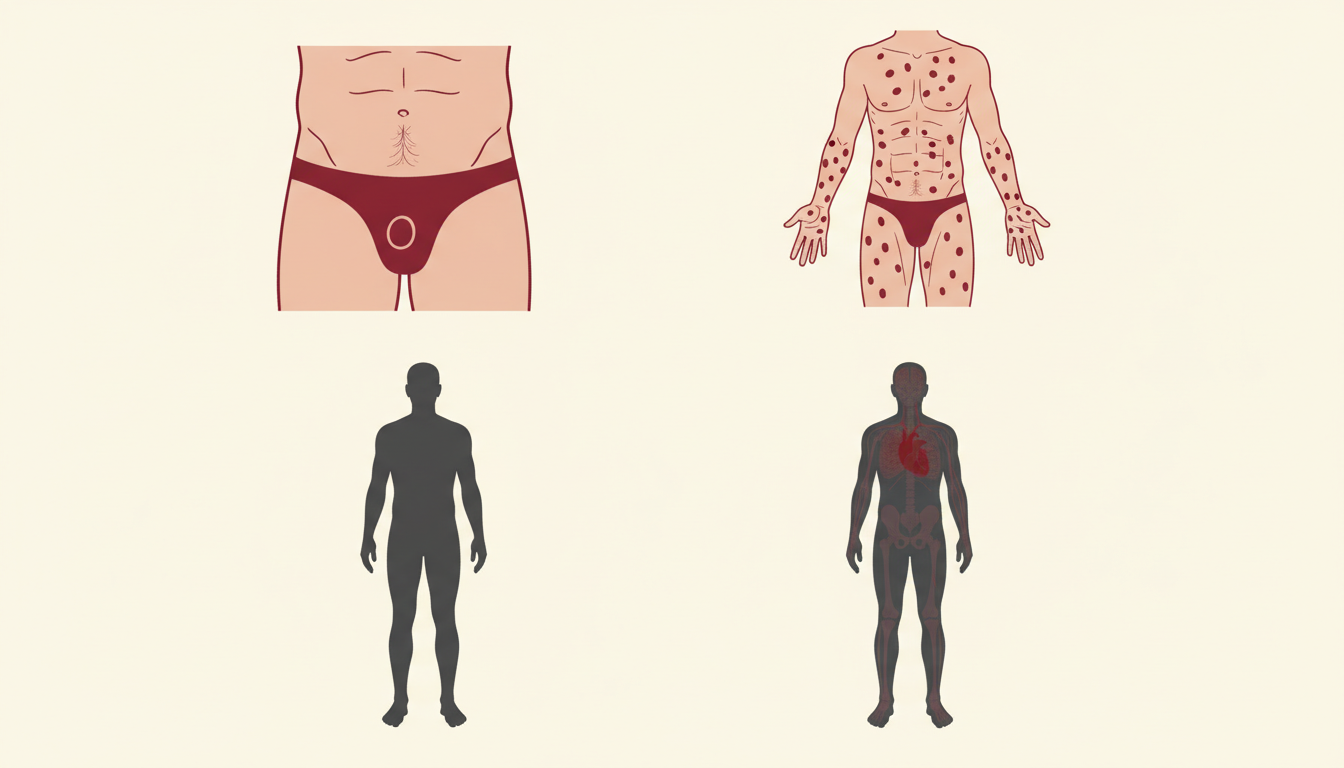
Primary syphilis begins between 10 and 90 days after exposure, with an average of about 21 days, per CDC STI treatment guidelines for syphilis. The signature is a single round, painless ulcer called a chancre at the site where the bacterium entered the body. That site is usually genital, anal, or oral skin or mucosa. Because the chancre does not hurt, and because it can sit hidden inside the vagina, anus, or throat, many people never see it. It heals on its own in roughly three to six weeks even without treatment, which is why people often think the problem is over.
It is not. Without treatment, the bacterium has already entered the bloodstream.
Secondary syphilis typically appears two to twelve weeks after the chancre heals. The classic sign is a non-itchy rash, often on the palms of the hands and soles of the feet (an unusual location that is one of the few clinical clues that distinguishes it from many other rashes). Other secondary signs include fever, fatigue, swollen lymph nodes, sore throat, patchy hair loss, and condylomata lata (raised gray-white plaques in moist body folds). The rash and other symptoms also resolve on their own, sometimes within weeks.
Latent syphilis is the symptom-free phase that follows. Per CDC definitions, the first year of latency is called "early latent" (still infectious to sexual partners) and anything after that is "late latent" (much less infectious sexually but still transmissible from a pregnant person to a baby). Latency can last decades. A person can feel completely healthy and still have an active, progressing infection.
Tertiary syphilis develops in roughly one in three untreated people, anywhere from 5 to 30 years after the original infection, per NHS guidance on syphilis stages. It can affect almost any organ. The most serious forms include cardiovascular syphilis (typically aortitis or aortic aneurysm), gummatous syphilis (soft tumor-like lesions in skin, bone, and organs), and neurosyphilis (which can cause memory loss, personality change, paralysis, vision changes, and stroke). Tertiary syphilis is now relatively rare in countries with routine screening, and that rarity exists only because testing exists.
The Sneakiest Symptoms (and Why They Are Missed)
The reason syphilis spreads silently is that its early visible signs are easy to mistake for something boring.
The primary chancre is painless. Most painful skin lesions get attention. A round, smooth-edged ulcer that does not hurt is often blamed on a rough razor, a friction injury, or a hair follicle. It can sit hidden in the vaginal canal, on the cervix, inside the anus, or in the back of the throat where the person carrying it never sees it.
The secondary rash often does not itch. It can look like a generic viral rash, a mild eczema flare, a heat rash, or pityriasis rosea. The rash being non-itchy and including the palms and soles is the clinical clue, but in real life people rarely think "is this on my palms?" before reaching for hydrocortisone cream. Other secondary symptoms (fatigue, low-grade fever, swollen lymph nodes) get blamed on a cold or general stress.
And then there is the long quiet of latency. A person who never noticed the chancre, never noticed the rash, and feels well in every way can still be carrying an active infection that will harm them years later or pass to a partner or a baby.
Screening is the practical strategy here, because symptoms are too easy to miss or misattribute to catch an infection reliably. CDC screening guidance recommends syphilis testing for all pregnant people, for sexually active gay and bisexual men at least once a year, for anyone with a new sexual partner, and for anyone presenting with another STI.
| Stage | Common signs | Sexually contagious? | Best test |
|---|---|---|---|
| Primary (day 10 to 90, average day 21) | One painless round ulcer (chancre) at exposure site, sometimes swollen local lymph nodes | Yes, highly | Blood antibody test, or direct microscopy or PCR of the sore |
| Secondary (week 6 to 24) | Non-itchy rash often on palms and soles, fever, fatigue, sore throat, swollen nodes, patchy hair loss | Yes, highly | Blood antibody test (RPR or VDRL plus a treponemal-specific test) |
| Latent (months to years) | No symptoms at all | Early latent: yes. Late latent: low risk to sexual partners, but still transmissible to a fetus | Blood antibody test only |
| Tertiary (5 to 30 years) | Cardiac aneurysm, gummatous lesions, neurosyphilis, vision and hearing loss, paralysis | Generally no | Blood antibody test plus targeted imaging or cerebrospinal fluid (CSF) testing |
How Testing Works in 2026
Modern syphilis testing relies on detecting antibodies the immune system makes against Treponema pallidum, not on growing the bacterium itself (it does not grow well in the lab). There are two main antibody categories, and most labs run both.
- Non-treponemal tests (RPR, VDRL) detect antibodies against substances released by damaged cells. They are useful for screening and for tracking treatment success, because the titer (level) drops as the infection clears. They can give false positives in pregnancy, autoimmune disease, and other infections.
- Treponemal-specific tests (TP-PA, FTA-ABS, EIA, CIA) detect antibodies specifically against Treponema pallidum. They confirm a true infection but stay positive for life even after a cure, so they cannot show whether a current infection is active.
Most modern labs use a "reverse algorithm": a treponemal-specific automated test runs first, and any positive is reflexively confirmed with a non-treponemal RPR titer. The combination of results tells the clinician whether the infection is current, historical and already treated, or in a latent stage that needs treatment.
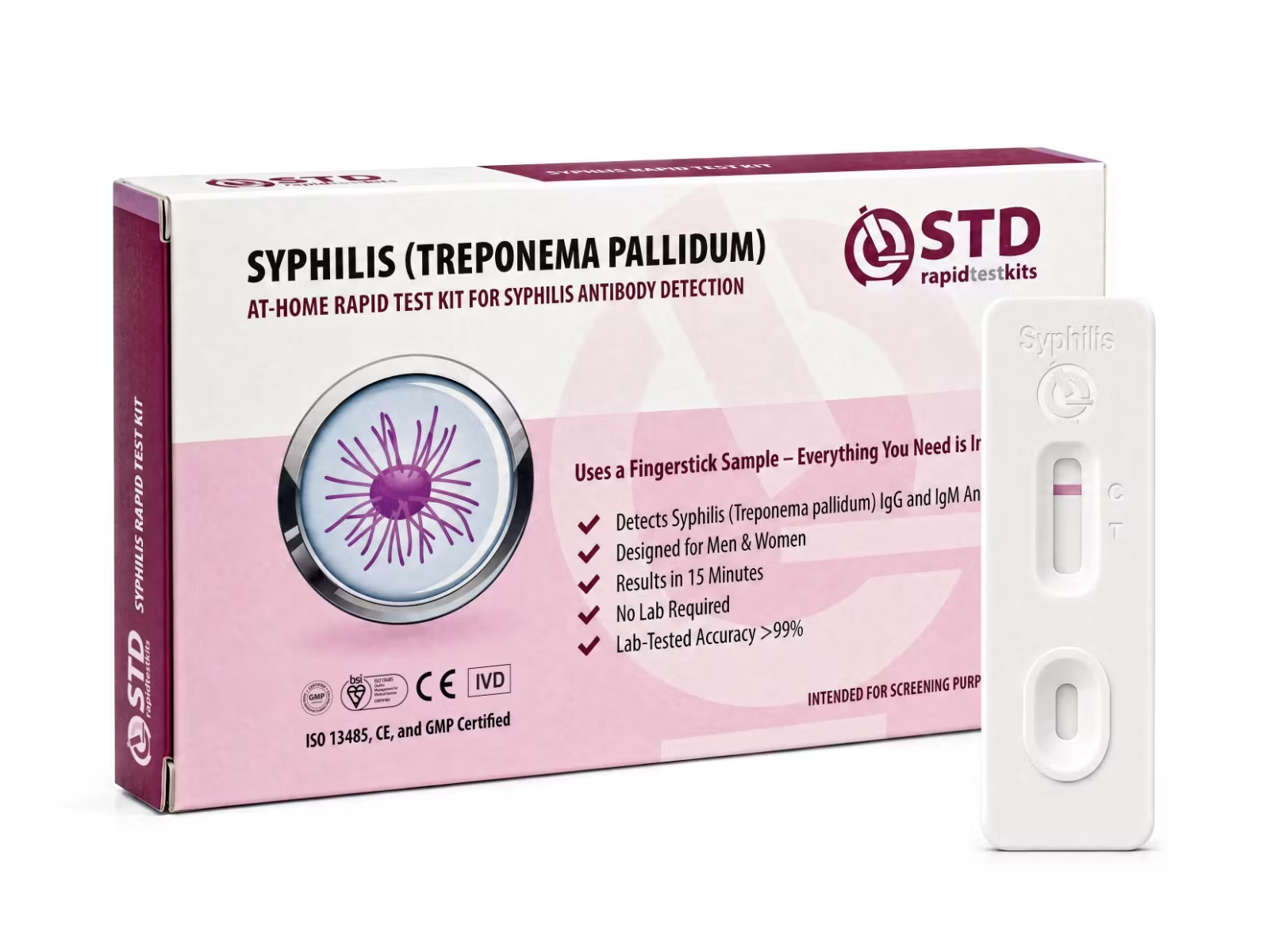
At-home rapid syphilis tests are lateral-flow immunoassays. They detect treponemal antibodies in a fingerstick blood drop and give a visible result in roughly 15 minutes. They are useful as a first-pass screen, especially for people who would not otherwise test. A positive result on any at-home rapid test should always be confirmed at a clinic with the standard reverse algorithm and an RPR titer, because that titer is what tells the treating clinician how much penicillin is needed and how to monitor response.
Timing matters. Antibodies take time to develop. Per CDC and FDA labeling, blood-based syphilis tests are most reliable from about 3 weeks after exposure, and clearly reliable by 6 weeks. A negative result before that window does not rule out infection. If you have a chancre or other visible early sign, see a clinician promptly: a swab or PCR of the lesion can detect the bacterium directly before antibodies are measurable.
Who Is Most at Risk in 2026
Syphilis is no longer concentrated in any one group, but the surveillance data show that it is heavier in some communities than others. Per CDC reporting, the highest case rates in the United States are now seen in:
- Gay and bisexual men, particularly those not on consistent condom use or routine STI screening.
- Black, Indigenous, and Latinx populations, reflecting the same structural healthcare-access gaps that drive most U.S. health disparities.
- Women of reproductive age, where rising case rates have driven the surge in congenital syphilis.
- People who use injection or methamphetamine drugs, where sexual networks and screening gaps overlap.
- People living in rural counties where local sexual-health clinics have closed.
The point is to flag where routine screening matters most, regardless of which demographic box a reader fits into. People with one stable partner, married couples, college students, and people who had a single unexpected encounter all show up in the case data. Anyone who has had a new sexual partner in the past year, anyone who is pregnant or planning to be, and anyone with another STI diagnosis should be screened for syphilis at least once.
Per <a href="https://www.cdc.gov/std/treatment-guidelines/" target="_blank" rel="noopener">CDC STI screening recommendations</a>:
- All pregnant people: at the first prenatal visit, with retesting at 28 weeks and at delivery for those at higher risk.
- Sexually active gay and bisexual men: at least once a year, and every 3 to 6 months if at higher risk (multiple partners, methamphetamine use, partner with HIV or another STI).
- People living with HIV: at least annually, more often if higher risk.
- Anyone with a new partner in the past year: at least once.
- Anyone diagnosed with another STI: as part of the same workup.
If a Partner Tests Positive, or You Had a Possible Exposure
The standard public-health response to a known syphilis exposure is presumptive treatment. If a sexual partner has been diagnosed with primary, secondary, or early latent syphilis, CDC guidance treats the exposed contact with penicillin without waiting for that contact's blood test to turn positive, because the antibody window can be longer than the transmission window.
If you do not yet know whether a partner is positive but you have a specific concern, your test timing depends on how long it has been since the exposure (see the testing-window summary below). If you test positive at home, do not start any treatment on your own. Penicillin for syphilis is given as a specific intramuscular injection, dosed by stage. Your local sexual-health clinic, your primary-care provider, or a state-run STI clinic can deliver that injection at low or no cost in most U.S. states. Most clinics will also offer free anonymous partner notification services so you do not have to make that call yourself.
Testing windows after a possible exposure
- Within the first 3 weeks: a blood antibody test is unreliable. If you have a sore, see a clinician for a direct swab or PCR of the lesion.
- 3 to 6 weeks: a blood antibody test is increasingly reliable. A negative result is reassuring but should be repeated at 12 weeks if the exposure was high-risk.
- 12 weeks and beyond: a negative blood antibody test essentially rules out syphilis from that exposure event.
Syphilis and Pregnancy
Of all the ways syphilis still hurts people in 2026, congenital syphilis is the one most clearly preventable. Per CDC reporting, U.S. congenital syphilis cases multiplied roughly tenfold between 2012 and 2022. Every one of those cases reflects a missed screening or a missed treatment.
Current CDC and ACOG guidance recommends that all pregnant people be screened for syphilis at the first prenatal visit. People at higher risk (in high-prevalence areas, with a new partner, with a partner who has tested positive, or with another STI) should be retested at 28 weeks of gestation and again at delivery. Penicillin is safe throughout pregnancy and is the only effective treatment. People with a documented penicillin allergy who are pregnant must be desensitized to penicillin in a hospital setting, because no other antibiotic prevents fetal infection reliably.
If you are pregnant and unsure whether you have been screened, ask your provider directly: "Was I screened for syphilis, and what was the result?" The screening is included in standard prenatal panels in most U.S. states, but not all, and answers you receive in passing in a busy office are sometimes incomplete.
First prenatal visit: all pregnant people screened.
28 weeks of gestation: retest if higher risk (high-prevalence area, new partner, partner who tested positive, another STI diagnosis).
At delivery: retest higher-risk pregnant people again. Penicillin is safe throughout pregnancy and is the only treatment that protects the fetus.
The Reader Stories Behind the Statistics
The numbers can flatten out what this disease actually feels like to live through. Two patterns recur in reader correspondence.
The first is the missed primary chancre. A reader notices a small flat reddish patch near the groin or anus a few weeks after a new sexual encounter. It does not hurt. They blame a new body wash or a friction injury. It heals on its own in a few weeks. Three to ten weeks later, a faint rash appears on the palms or chest. They search the rash online and the words "secondary syphilis" come back. A blood test confirms it. One penicillin shot ends it. The whole arc, from missed sore to clear test, takes a couple of months.
The second is the silent latent positive. A reader gets a routine STI panel as part of switching healthcare providers, or before trying to get pregnant, or because a previous partner reached out. The treponemal test comes back positive. The RPR titer suggests early latent infection. They have no symptoms and never did. Treatment is the same. Statistically, most syphilis diagnoses in the United States come from routine testing rather than symptoms that prompted a clinic visit.
Penicillin for syphilis is intramuscular benzathine penicillin G, dosed by infection stage. It is not available as a pill, an over-the-counter cream, or an online prescription without examination. A confirmed-positive home test should be followed by a clinic visit for the standard reverse-algorithm confirmatory test, an RPR titer, and the appropriate penicillin injection. Most state and city health departments offer this at low or no cost.
Putting an Old Disease Back in Modern Hands
The history of syphilis is, in a real sense, the history of how badly we used to handle disease, and how powerfully a single antibiotic can change a public-health story. The epidemic of the 1500s was not solved by mercury, by guaiac wood, or by sweating it out. It was solved, four hundred years late, by penicillin and by the public-health infrastructure that delivered it. The current resurgence is the same disease finding the gaps that have opened in that infrastructure during the past decade.
The good news is that the individual side of this is straightforward. A blood test can tell you. A penicillin shot can fix it. The hard part is the part where you have to decide to test, often when nothing visible is wrong. If a partner has tested positive, if you are pregnant, if you have had a new sexual partner in the past year, or if anything looks like the symptoms above, that is the cue.
Frequently asked questions
- Can I really get syphilis from oral sex?
- Yes. If a partner has a chancre or oral mucous patch (which is often painless and not visible), Treponema pallidum can cross through tiny breaks in mouth or genital tissue. Per CDC guidance, oral transmission is well documented. The risk per act is lower than vaginal or anal sex but is not zero, and there is no "safe oral" exception when an active lesion exists somewhere.
- Penicillin has worked for 80 years. Why is syphilis still around?
- Penicillin still works. The bacterium has not developed meaningful resistance. The reason syphilis is rising again is on the public-health side: less screening, fewer clinics, longer asymptomatic windows, and faster sexual networks via dating apps. The cure exists. The bottleneck is finding the cases in time to treat them.
- What does a primary syphilis chancre actually look like?
- A single round ulcer with smooth, slightly raised edges, usually 5 to 15 millimeters across, painless, and at the site where the bacterium entered (genitals, anus, or mouth). It often has a clean base and looks more "punched out" than a herpes lesion. Crucially, it does not hurt, and it heals on its own in 3 to 6 weeks even without treatment, which is why so many people miss it.
- How long after a possible exposure should I test?
- Blood antibody tests are most reliable from 3 weeks onward and clearly reliable by 6 weeks per CDC and FDA labeling. A negative result before 3 weeks does not rule out infection. If you have a visible sore in the first 3 weeks, see a clinic for a direct swab or PCR, which can detect the bacterium before antibodies appear. A negative blood test at 12 weeks essentially rules out syphilis from that exposure.
- Can I get syphilis again after being treated?
- Yes. Treatment cures the current infection but does not produce lasting immunity. Reinfection from a new exposure is possible. People who continue to have new partners or whose partners are not also tested and treated should re-screen periodically. Annual or more frequent screening is the standard recommendation for sexually active gay and bisexual men per CDC guidance.
- Can syphilis really affect my brain?
- Yes, in the late stages. Neurosyphilis can develop years after the original infection if it is never treated, causing memory loss, personality change, vision and hearing problems, paralysis, and stroke. Earlier in the disease, syphilis can also affect the eyes (ocular syphilis) and ears (otosyphilis), and these can occur even in primary or secondary stages. Any new neurological or vision symptom in someone with possible syphilis exposure deserves urgent evaluation.
- I am pregnant. How serious is this?
- Untreated syphilis in pregnancy can cause miscarriage, stillbirth, premature birth, and severe lifelong complications in a surviving baby. Treated syphilis in pregnancy, with the correct dose of intramuscular penicillin given early enough, prevents almost all of these outcomes. Penicillin is safe during pregnancy and is the only treatment that protects the fetus. If you are unsure whether you have been screened, ask your prenatal provider directly. Per CDC guidance, all pregnant people should be screened at the first visit, and many should be retested at 28 weeks and at delivery.
- Are at-home syphilis tests reliable?
- At-home rapid lateral-flow tests detect treponemal antibodies and are useful as a first-pass screen, especially for people who would otherwise not test. They are not the same as a clinic's laboratory test. A clinic uses an automated treponemal test plus an RPR titer, and that titer is what tells the provider how much penicillin to give and how to monitor response. So a home test is a screen. Any positive home test should be confirmed at a clinic before treatment.
- U.S. Centers for Disease Control and Prevention. Syphilis Detailed Fact Sheet, including stages, symptoms, transmission, and treatment.
- U.S. Centers for Disease Control and Prevention. STI Surveillance reports, including total syphilis cases, congenital syphilis trends, and demographic breakdowns.
- U.S. Centers for Disease Control and Prevention. STI Treatment Guidelines, including benzathine penicillin G dosing by stage, screening recommendations, and pregnancy management.
- World Health Organization. Sexually transmitted infections fact sheet, including global syphilis burden and 2024 STI trend reporting.
- National Health Service (UK). Syphilis condition page covering symptoms by stage, transmission, untreated complications including tertiary involvement, and treatment.
- Mayo Clinic. Syphilis symptoms and causes, including stage progression and complications.
