Published: November 2025 | Last updated: May 2026 | Editorial review and quality control: Martina N.
What does chlamydia feel like in women, and how do I know if I have it?
Most women with chlamydia have no symptoms at all. When symptoms do appear, usually 1 to 3 weeks after exposure, the most specific patterns are yellowish vaginal discharge, light spotting after sex, and a deep pelvic ache. These overlap with UTI, yeast infection, and BV, so a swab or urine test is the only way to confirm.
If you have been wondering whether your body would warn you if you had chlamydia, the answer for most women is: probably not. Chlamydia is the most commonly reported bacterial sexually transmitted infection in the United States, with millions of new infections estimated each year and the highest rates concentrated in women under 25 (CDC chlamydia fact sheet). The frustrating part is that most women who carry it never feel sick. The majority of female chlamydia infections produce no noticeable symptoms at all, and the few that do appear are easy to mistake for a yeast infection, a urinary tract infection, or normal cycle changes.
This guide walks through what chlamydia symptoms in women look like in real life, why so many cases stay silent, when to test for a reliable result, what treatment looks like, and how at-home rapid swab testing fits into the screening picture. It is written for the reader who is trying to figure out whether to test, not the reader who has already been diagnosed.
Key Takeaways
- Most women with chlamydia have no symptoms at all, so screening (not symptom-watching) is how nearly every case gets caught.
- Untreated chlamydia is a leading preventable cause of pelvic inflammatory disease, which can scar the fallopian tubes and reduce future fertility.
What chlamydia is, and why it stays hidden in women
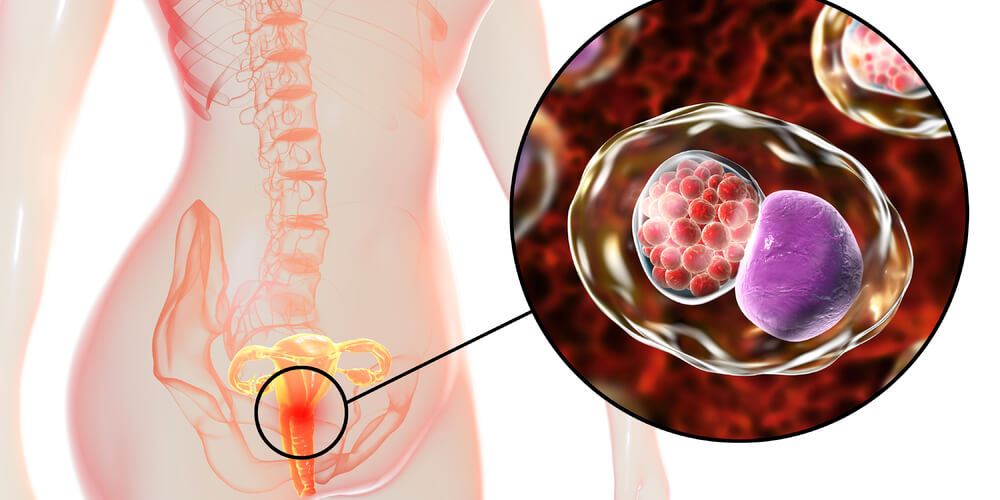
Chlamydia is caused by a bacterium called Chlamydia trachomatis that infects mucous membranes, most commonly the cervix in women, the urethra in men, and (less often) the rectum, throat, or eyes. It is passed through vaginal, anal, or oral sex with someone who carries the infection, and reinfection is possible because the body does not build lasting immunity to it (CDC chlamydia fact sheet).
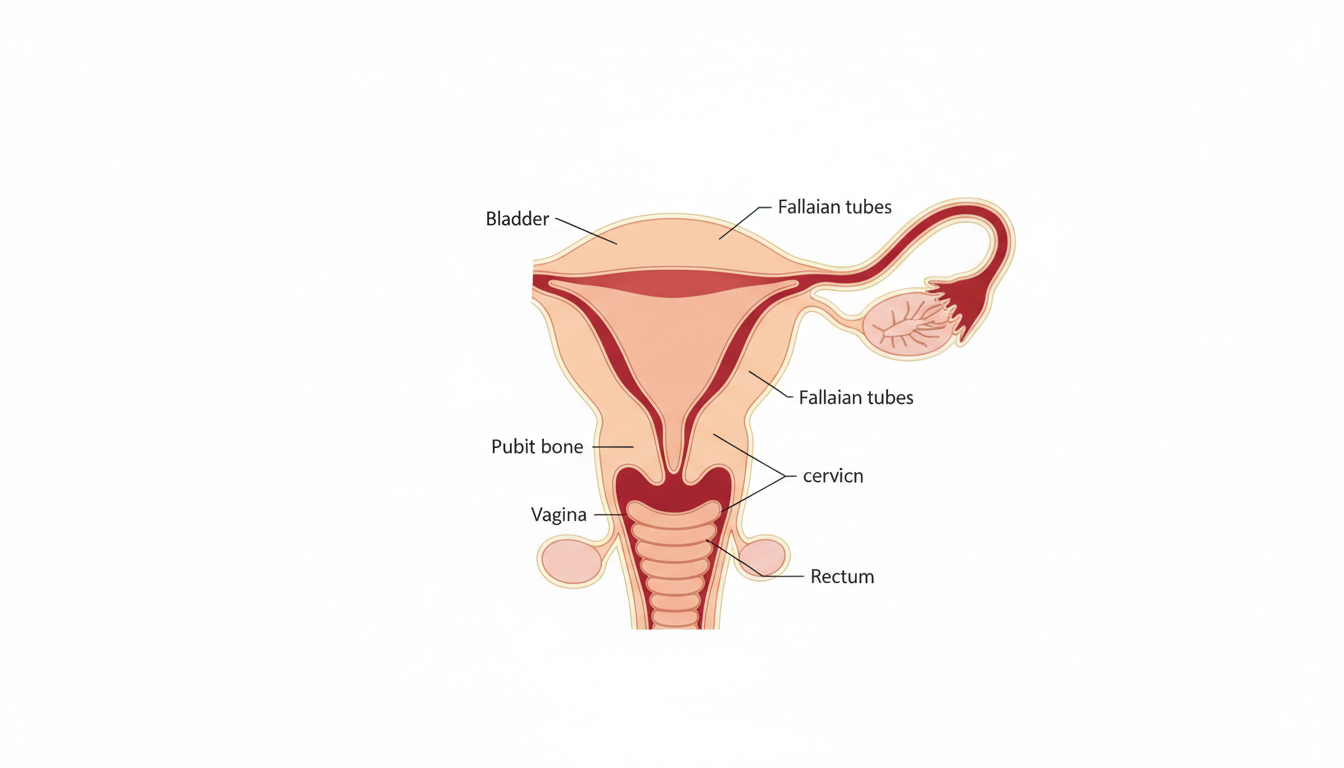
Two things make chlamydia uniquely good at staying hidden in women. The first is anatomy. The cervix has far fewer pain nerves than the bladder, so when Chlamydia trachomatis settles into the columnar cells lining the cervix, the early infection often produces no burn, no urgency, no dramatic discharge change. The second is symptom overlap. The few signs that do appear (a slightly different discharge, mild burning when urinating, occasional spotting) look almost identical to a yeast infection, bacterial vaginosis, an early UTI, or normal mid-cycle changes. The CDC and WHO both describe chlamydia as a frequently asymptomatic infection in women (WHO chlamydia fact sheet), which is why public-health groups call it the silent STI.
There is a cultural reason chlamydia hides so well too. Many women are conditioned to push through minor pelvic changes, attribute them to hormones or stress, and only seek care when the discomfort interferes with daily life. With chlamydia, the discomfort that would push someone to a clinic often arrives only after upstream tissue damage is already underway.
Symptoms women commonly notice
If symptoms do appear at all, they usually start one to three weeks after exposure, though the window can stretch longer. The patterns below cover what women report most often when chlamydia is symptomatic. Any single one of them can come from a non-STI cause; what raises the chlamydia probability is two or more appearing together, especially after a new sexual partner. The checklist also flags how common each pattern is in symptomatic chlamydia cases, since some signs (postcoital spotting, deep dyspareunia) are more specific than others.
One quick reassurance before reading the list. Vaginal discharge varies through the menstrual cycle. Clear or milky discharge that changes consistency around ovulation is normal. Most women who notice an unfamiliar discharge are dealing with a yeast infection, bacterial vaginosis, or a hormonal shift, not chlamydia. The point of the list is not to make you assume the worst; it is to flag the patterns worth ruling out with a test if you have had a new partner or unprotected sex in the past few months.
Symptom patterns that point toward chlamydia
Having one or more of these does not confirm chlamydia. They overlap with UTI, yeast infection, BV, and benign cycle changes. Two patterns appearing together, especially after a new partner, is the trigger to test.
- Unusual vaginal discharge, often yellowish or mucus-like, with an unfamiliar smell rather than the cottage-cheese texture of yeast or the strong fishy odor of BV Common
- Mild burning or stinging during urination, without the urinary urgency or lower-belly pressure of a true UTI Common
- Lower abdominal or pelvic ache, often a steady dull pain rather than a sharp cramp, and not tightly tied to cycle timing Common
- Light spotting or pink or brown discharge after sex, caused by inflamed cervical tissue that bleeds easily on contact Less common
- Deep pelvic pain during or after intercourse that worsens with deeper penetration, rather than entry-level pain Less common
- Intermenstrual spotting that does not fit your normal cycle pattern Less common
- Lower back pain, sometimes the only clue once the infection has moved past the cervix Less common
- Scratchy throat after oral exposure or rectal discomfort after anal exposure (both are commonly asymptomatic) Rare
A closer look at each symptom (and what else it could be)
Because chlamydia symptoms are nonspecific, the practical question is not just "is this chlamydia?" but "is this chlamydia, or one of the more common conditions that looks like it?" Here is what each pattern typically looks like with chlamydia, and how it usually differs from the most common alternative cause.
Abnormal vaginal discharge. With chlamydia, the discharge tends to be yellowish or slightly mucus-like, sometimes with a faint odor that feels different from your usual baseline. There is rarely the thick, white, cottage-cheese texture of a yeast infection, and there is rarely the strong fishy odor of bacterial vaginosis. Discharge from chlamydia comes from cervical inflammation, so it is often described as feeling like it sits higher up than the entry-level itch of a yeast infection.
Painful urination (dysuria). With chlamydia, the burning is usually mild and is not accompanied by the constant urge to urinate that defines a true UTI. With a UTI you typically also feel pressure low in the pelvis and need to urinate frequently in small amounts. Dysuria from chlamydia is often the only urinary symptom, and a urinalysis from a clinic will usually come back without the white blood cells or nitrites that flag bacterial cystitis.
Lower abdominal or pelvic pain. Chlamydia pain is typically a dull, persistent ache in the lower abdomen rather than the cramping wave of a period. It can fluctuate from one day to the next and is often described as feeling deeper than menstrual pain. If pelvic pain is severe, sustained, or comes with fever, that is a warning sign for pelvic inflammatory disease (covered in a later section) and is a reason to see a clinician promptly rather than test at home.
Painful intercourse (dyspareunia). Chlamydia-related pain during sex is usually deep, felt in the pelvis rather than at the vaginal opening, and often gets worse with deeper penetration. Entry-level pain is more typical of vaginal dryness, vaginismus, or a yeast infection, not chlamydia. Pain that develops over the course of weeks (rather than after a single rough encounter) is a more typical chlamydia pattern.
Bleeding between periods or after sex. Postcoital bleeding is one of the more specific chlamydia signals because it points to inflamed cervical tissue that bleeds easily on contact. Intermenstrual spotting can also happen. Both can have entirely benign causes (cervical ectropion, hormonal birth control adjustment, ovulation), but new postcoital bleeding in a sexually active woman under 25 is a strong reason to screen for chlamydia and gonorrhea together.
Chlamydia symptoms vs the conditions they imitate
| Symptom | What it looks like with chlamydia | More common alternative cause |
|---|---|---|
| Vaginal discharge | Yellowish, mucus-like, slight odor change | Yeast infection (white, clumpy) or BV (gray, fishy) |
| Burning when urinating | Mild, no urinary urgency, no lower-belly pressure | UTI (urgency, frequency, pelvic pressure) |
| Pelvic pain | Mild, persistent ache, not tied to cycle timing | Period cramps, ovulation pain, ovarian cyst |
| Bleeding between periods | Light spotting, often after sex | Hormonal birth control adjustment, ovulation, fibroids |
| Pain during sex | Deep pelvic pain, often worsening over weeks | Vaginal dryness, vaginismus, endometriosis |
Single symptoms rarely point conclusively at chlamydia. The combination of two or more patterns after a new partner is the practical signal to test.
UTI, yeast infection, BV, or chlamydia? Decoding the overlap
Chlamydia gets misdiagnosed so often because its symptom toolkit overlaps with three of the most common conditions women already deal with on a regular basis. A burning sensation during urination makes most people assume UTI, since UTIs are far more common in women than in men. Extra discharge with mild itch reads as yeast. Discharge with a fishy smell reads as bacterial vaginosis. The default response becomes the wrong antibiotic, an over-the-counter antifungal, or just waiting for it to pass.
The clue that sets chlamydia apart is the combination, not any single symptom. UTIs almost never cause yellow discharge or post-sex spotting. Yeast infections do not usually cause burning during urination. Bacterial vaginosis usually carries a distinct odor but no bleeding. When two of these patterns show up together, especially after a new sexual partner, chlamydia moves up the list of possibilities. A urine dipstick rules out UTI but does not rule out chlamydia, and treating one does not clear the other.
If you have been bouncing between UTI antibiotics or yeast treatments without lasting relief, that pattern alone is reason to ask your provider specifically for a chlamydia swab test, since a urine dipstick will not catch it.
UTIs almost never cause yellow discharge. Yeast infections do not usually cause burning during urination. Bacterial vaginosis carries a distinct odor but no bleeding. When two of these patterns appear together after a new sexual partner, chlamydia moves to the top of the differential.
Asymptomatic chlamydia: why most women feel completely fine
The single most important fact about chlamydia in women is that the infection is silent in the majority of cases. The CDC describes chlamydia as a frequently asymptomatic infection (CDC chlamydia fact sheet), and women carry a disproportionate share of long-term complications because the infection has more time to progress before anything draws attention to it.
This is the reason the CDC recommends annual chlamydia screening for all sexually active women under 25, regardless of symptoms or perceived risk. The same recommendation extends to women 25 and older who have a new partner, multiple partners, or a partner with an STI (CDC screening recommendations). Pregnant women should be screened at the first prenatal visit, with a third-trimester repeat for those under 25 or with continued risk factors.
For a sexually active reader, the routine looks like this: once a year if you are under 25, plus any time you start a new sexual relationship or have condomless sex with a partner whose STI status you do not know.
The CDC recommends annual chlamydia screening for every sexually active woman under 25. Most cases are caught during routine screening, not because someone showed up with symptoms. Annual is a floor, not a ceiling: rescreen any time you have a new partner or condomless sex with a partner whose STI status you do not know.
When you should get tested for chlamydia
Three triggers should put a chlamydia test on your to-do list: routine screening, post-exposure testing, and symptom-driven testing.
Routine screening. If you are a sexually active woman under 25, schedule a chlamydia test once a year. If you are 25 or older, schedule one after a new partner, after condomless sex with a partner whose STI status you do not know, or annually if you have multiple partners. The same recommendation applies during pregnancy at the first prenatal visit (CDC screening recommendations).
Post-exposure testing. Chlamydia has a window period, the time between exposure and when the bacteria reach a level a test can detect. The earliest reasonably reliable testing window is around 7 days after exposure, with 14 days giving better accuracy. Testing on day 1 or day 2 risks a false negative even when the infection is genuinely there. If you tested that early and either symptoms developed or the exposure carried real risk, retest at the 2-week mark.
Symptom-driven testing. Any of the patterns in the checklist above are a reasonable trigger for a test, especially if more than one is happening at the same time, or if a new symptom started in the weeks after a new sexual partner.
For routine screening and post-exposure testing in someone without severe symptoms, an at-home chlamydia test is a practical first step. For severe pelvic pain, fever, or suspected PID, see a clinician directly; that is not a home-testing situation.
This article includes links to at-home test kits sold by STD Rapid Test Kits, which operates this site. Product recommendations are based on fit-for-purpose for the reader's concern, not commercial benefit.
Routine screening: annual if you are under 25 and sexually active, or with each new partner at any age. Post-exposure: wait at least 7 days, with 14 days giving better accuracy. Symptom-driven: any two patterns from the symptom checklist appearing together, especially after a new partner.
What happens if chlamydia goes untreated
Chlamydia is curable with antibiotics, and a treated infection rarely causes long-term damage. The risks come from infections that go undiagnosed long enough to ascend from the cervix into the upper reproductive tract. The damage usually runs through one of these pathways.
Pelvic inflammatory disease (PID). When chlamydia (or gonorrhea, or both together) spreads from the cervix into the uterus, fallopian tubes, or ovaries, the resulting inflammation is called PID. Public-health bodies including the CDC describe PID as a major preventable cause of female infertility, with tubal scarring from prior infection a recognized contributor (CDC chlamydia fact sheet). PID can also cause chronic pelvic pain that lasts for months or years, and it often produces only mild or no symptoms early on, which is why women can develop tubal damage without ever having a clearly painful infection. Severe PID is a clinic-level concern, not an at-home one.
Tubal-factor infertility. Scar tissue in the fallopian tubes blocks egg movement, making it physically harder to conceive. Women with one or more untreated chlamydia infections have meaningfully higher rates of tubal infertility, and the risk rises with each repeat episode (Mayo Clinic on chlamydia complications).
Ectopic pregnancy. When the tubes are partially scarred, a fertilized egg can implant in the tube itself instead of the uterus. Ectopic pregnancy is non-viable and can be life-threatening if the tube ruptures (NHS on ectopic pregnancy). Anyone with a history of chlamydia who becomes pregnant should be flagged for early ultrasound to confirm intrauterine implantation.
Higher HIV transmission risk. Active chlamydia inflammation in the cervix disrupts the mucosal barrier and brings more immune cells (the cells HIV targets) to the surface, which can make HIV transmission meaningfully easier in either direction during a high-risk exposure. This is a risk multiplier rather than a direct transmission route, so the absolute HIV risk from any single exposure still depends on the partner's status and viral load. Anyone treating chlamydia after a high-risk exposure should include an HIV test in the same testing round, with a follow-up at the appropriate window for the test type used.
Other complications. Untreated chlamydia can cause inflammation around the liver (Fitz-Hugh-Curtis syndrome), and during pregnancy can be passed to a newborn during delivery, causing eye infection or pneumonia in the infant. A small subset of people develop reactive arthritis, a post-infection immune response that can affect the joints; it is rare but documented in the literature.
Most chlamydial infections in women are asymptomatic. Untreated infection can cause serious reproductive health consequences, including pelvic inflammatory disease, ectopic pregnancy, and infertility.
At-home versus clinic testing: which one for which situation
Three sample types are commonly used to test for chlamydia in women: a self-collected vaginal swab, a clinician-collected cervical swab, or a first-catch urine sample. All three can be processed by NAAT (nucleic acid amplification testing), which is the gold-standard laboratory method that clinics typically run.
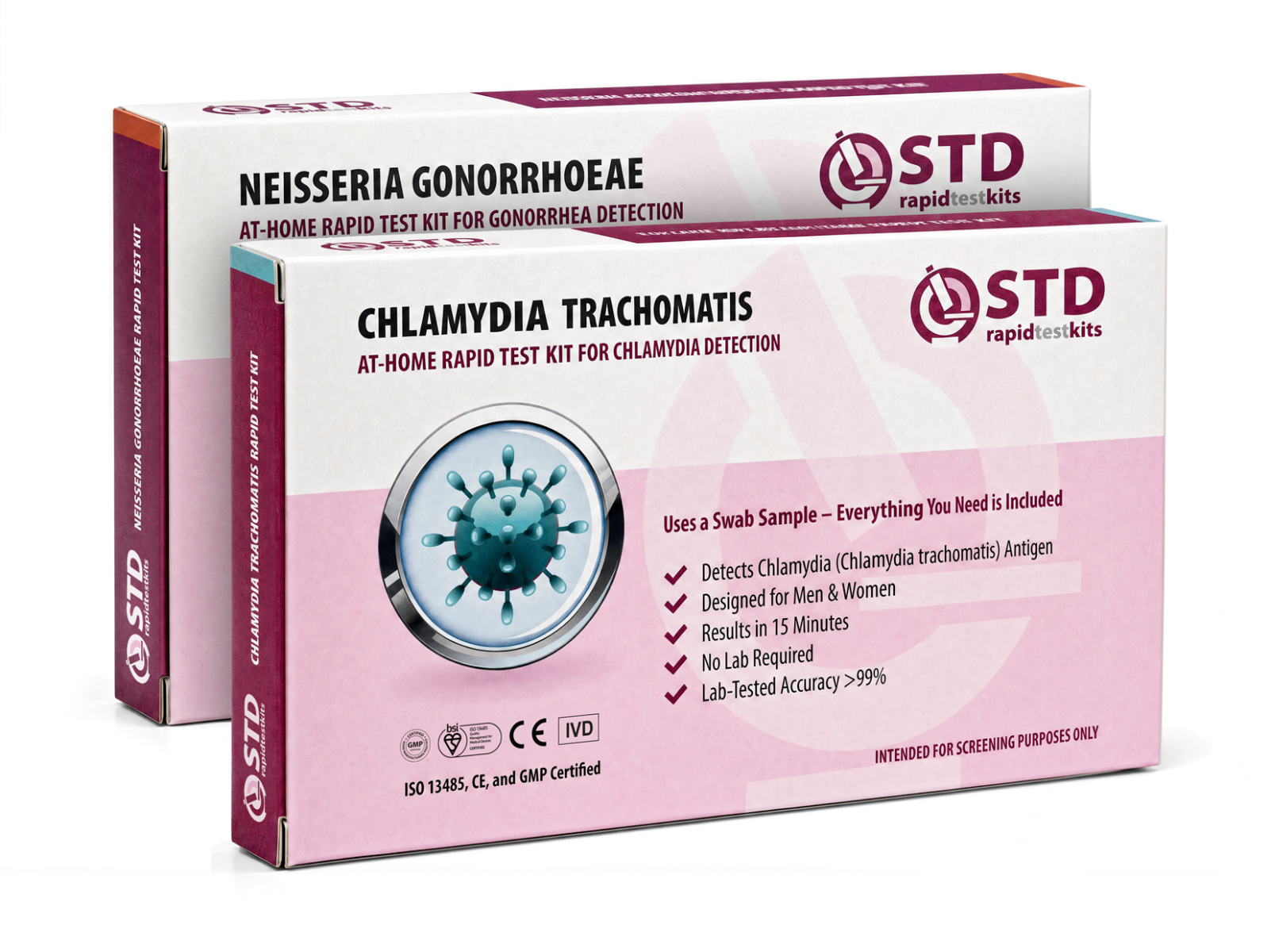
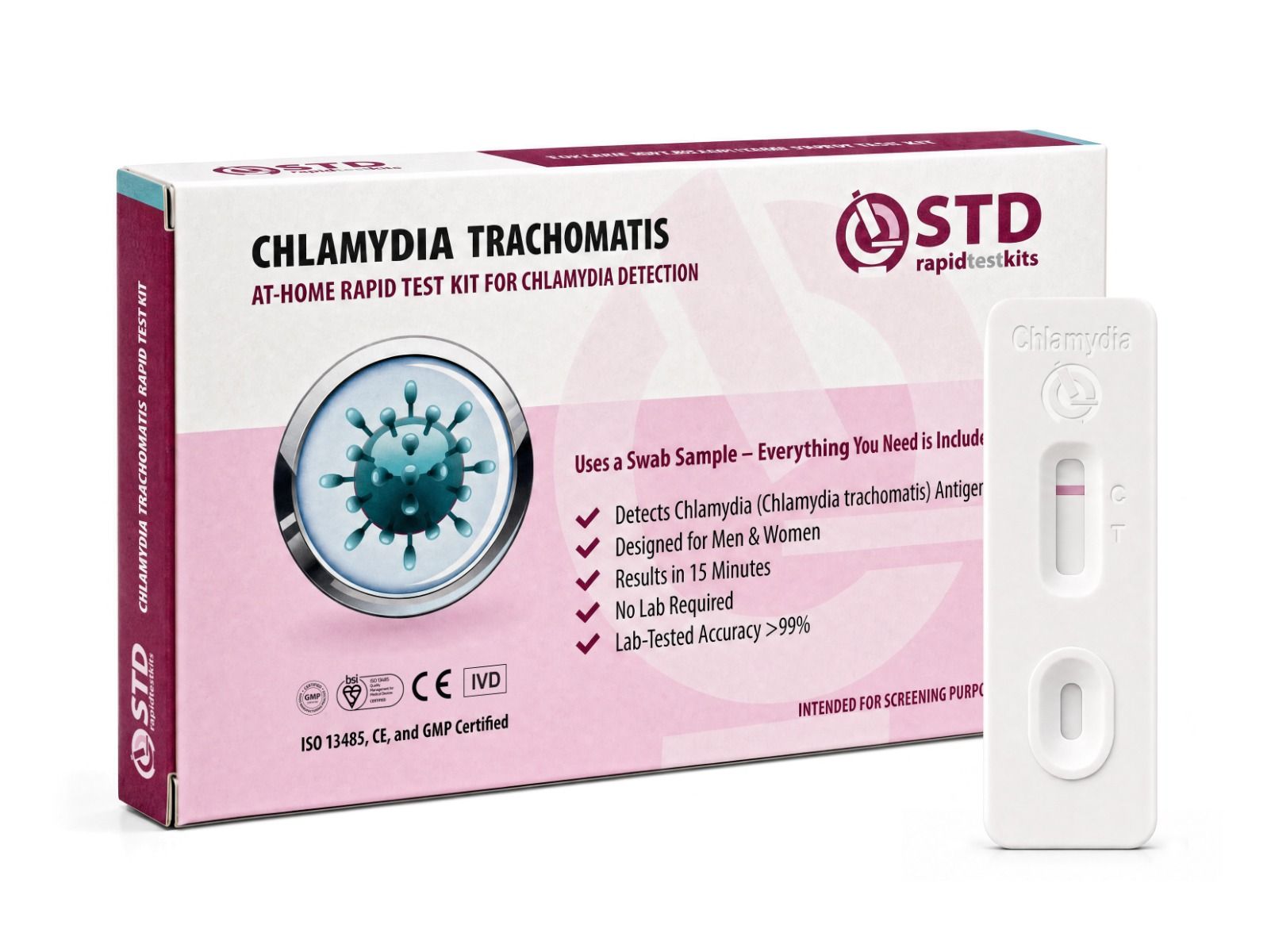
At-home rapid tests use lateral-flow chemistry on a self-collected vaginal swab. You run the test cassette at home and read a visual result in around 15 minutes. The trade-off is sensitivity: lateral-flow rapid tests are screening-grade tools, useful for catching active infection in symptomatic or recently exposed users, but not as analytically sensitive as a laboratory NAAT. A positive at-home result is meaningful and worth confirming with a clinic NAAT before starting treatment, especially if you want documented results for partner notification or pregnancy planning. A negative result during early-window timing, or a negative result with ongoing symptoms, is worth repeating with a clinic NAAT.
A clinic visit is the better starting point in three situations: if you have severe pelvic pain or fever (signs of possible PID), if you are pregnant or trying to become pregnant, or if you have already tested positive on a home test and need confirmation, treatment, and partner notification all in one visit. Clinics also handle anal and oral chlamydia testing if your exposure history points there, which home swab kits do not cover.
Home tests are more private but typically out-of-pocket. Clinic and Title X testing is often free or low-cost but involves an appointment and a clinician conversation.
How chlamydia is treated, and what to expect after
Chlamydia is curable with a short course of antibiotics. The current CDC-preferred regimen for non-pregnant adults is doxycycline 100 mg taken twice daily for 7 days. Azithromycin 1 gram taken once was the older first-line option and is still used in specific situations, but doxycycline now has better cure-rate evidence, particularly for rectal infections (CDC chlamydia treatment guidelines). For pregnant women, azithromycin 1 gram once is the preferred regimen because doxycycline is not recommended in pregnancy.
- Finish the full course. Doxycycline is taken for 7 days. Symptoms (if you had any) usually clear in the first few days, but the infection itself takes the full week to resolve reliably. Stopping early is the most common reason a treatment fails.
- No sex for 7 days after starting treatment. Avoid vaginal, oral, and anal sex for 7 days after starting the doxycycline course, or for 7 days after a single-dose azithromycin regimen, to avoid passing the infection back and forth.
- Treat partners too. Anyone you have had sex with in the 60 days before your diagnosis should be treated, even if their test comes back negative or they have no symptoms.
- Retest in 3 months. The CDC recommends retesting roughly 3 months after treatment. Treatment failure is rare; the retest exists because reinfection from an untreated partner is the most common cause of a second positive result. Setting a calendar reminder on the day you finish antibiotics is the simplest way to remember the second one.
Doxycycline 100 mg twice daily for 7 days is the current CDC first-line regimen for chlamydia in non-pregnant adults. In pregnancy, a single 1-gram dose of azithromycin replaces it. Avoid sex for 7 days after starting treatment, ensure recent partners are treated, and retest in 3 months to rule out reinfection.
Partner notification, expedited partner therapy, and reinfection
The single most common reason women end up with a second chlamydia diagnosis is reinfection from an untreated partner, not treatment failure. Public-health agencies build the 3-month retest into the standard care plan for exactly this reason.
Partner notification is the part most people dread, but it does not have to be a confrontation. A short, factual message works: "I tested positive for chlamydia. You should get tested and treated too." That is the entire script. Anonymous notification services exist if direct contact feels unsafe or impractical.
If your partner cannot or will not get into a clinic, expedited partner therapy (EPT) is a legal option in most U.S. states. Your prescriber writes a prescription for the partner that you can deliver directly, no separate appointment required. Public-health departments support EPT specifically because untreated partners are the engine of reinfection, and reinfection is what drives most of the long-term reproductive damage chlamydia causes (CDC partner-management guidance).
In most U.S. states, your prescriber can write an antibiotic prescription for your partner that you deliver directly, with no clinic appointment needed on their end. Check your state's EPT status at the CDC partner-services page if you are unsure whether your prescriber can do this.
Chlamydia and pregnancy: what to test for and when
Untreated chlamydia during pregnancy carries real risks for both the mother and the baby. The infection can contribute to premature rupture of membranes, preterm labor, and chorioamnionitis (a serious infection of the membranes around the fetus). During vaginal delivery, chlamydia can pass to the newborn and cause neonatal conjunctivitis (an eye infection that can be severe if untreated) or pneumonia in the first weeks of life.
The CDC recommends chlamydia screening at the first prenatal visit for every pregnant person, with a third-trimester repeat screen for those under 25 or with continued risk factors. Treatment in pregnancy is a single 1-gram dose of azithromycin, which is safe for both mother and fetus. Doxycycline, the standard regimen outside pregnancy, is not used in pregnant women because of fetal-safety concerns.
If you tested positive before pregnancy and were treated, a 3-month retest is still the right call before conception, because reinfection from an untreated partner or a new exposure is common. Catching a reinfection before pregnancy starts is far simpler than managing one in progress, and treating both partners ahead of conception means antibiotics have already done their work by the time the pregnancy is dated.
First prenatal visit: chlamydia screen for every pregnant person. Third trimester: repeat screen for anyone under 25 or with continued risk factors (new partner, partner with an STI, prior positive). Treatment if positive: a single 1-gram dose of azithromycin, safe in pregnancy.
Preventing chlamydia (and reinfection after treatment)
Chlamydia prevention works on two fronts: reducing exposure, and catching infections early enough that they cannot ascend.
- Condoms or dental dams. Consistent and correct use of external or internal condoms, plus dental dams for oral contact, substantially reduces chlamydia transmission. They are the single most effective barrier intervention short of mutual pre-sex testing.
- Mutual testing before unprotected sex with a new partner. Both partners get a recent chlamydia and gonorrhea test before condoms come off. This sidesteps a surprising number of asymptomatic infections.
- Annual screening if you are under 25. This is the single highest-impact recommendation in the CDC guidance.
- Treat partners and retest. Make sure anyone you have been with in the 60 days before your diagnosis has been treated, and follow the 3-month retest yourself.
- Honest conversations with new partners. Chlamydia is a common, curable bacterial infection, not a moral verdict. Treating it as a routine health topic, the same way you would talk about birth control, makes future testing and treatment dramatically easier.
Highest-impact prevention actions
- Use external or internal condoms consistently with new or non-monogamous partners.
- Get a chlamydia and gonorrhea test together with any new partner before condoms come off.
- Schedule annual screening if you are sexually active and under 25, regardless of symptoms.
- If you test positive, ensure all partners from the past 60 days are treated and retest yourself at 3 months.
Your next steps
- Test if you have had a new partner or condomless sex in the past 3 months, even with no symptoms. A home rapid swab is reliable from 14 days post-exposure; for severe pelvic pain or fever, skip the home test and see a clinician.
- If positive, start the full doxycycline course (or a single 1-gram dose of azithromycin if you are pregnant) and avoid vaginal, oral, and anal sex for 7 days after the first dose.
- Notify anyone you have had sex with in the past 60 days. Ask your prescriber about expedited partner therapy if a clinic visit is hard for them.
- Set a calendar reminder for 3 months out to retest. Reinfection from an untreated partner is the most common reason for a second positive result.
Frequently asked questions about chlamydia in women
- How long after exposure can a chlamydia test detect the infection?
- Around 7 days after exposure is the earliest reasonably reliable window, with 14 days giving better accuracy. Before 7 days, bacterial load has not yet reached detectable levels and false negatives are common. If you tested inside that early window, plan a repeat test at the 2-week mark regardless of the first result.
- Can chlamydia go away on its own without treatment?
- No. Untreated chlamydia can stay in the body for months or years, often without symptoms, and during that time it can ascend into the upper reproductive tract and cause pelvic inflammatory disease. There is no spontaneous self-clearance you can rely on. The infection requires antibiotics, typically a 7-day course of doxycycline (or a single dose of azithromycin in pregnancy).
- How accurate are at-home rapid chlamydia tests?
- Rapid lateral-flow chlamydia self-tests use the same swab sample type as a clinic test. They are validated screening tools but are less analytically sensitive than the laboratory NAAT used as the diagnostic gold standard. A positive home result should be confirmed with a clinic NAAT, and a negative result taken during the early window after exposure is worth repeating two weeks later. Use the home test for screening; use the clinic test for diagnosis.
- How is chlamydia different from a UTI?
- A UTI typically causes strong urinary urgency, frequent small voids, and pressure low in the pelvis, often without any vaginal discharge. Chlamydia, when it produces symptoms at all, usually causes only mild burning during urination and is more likely to come with yellowish discharge, post-sex spotting, or a dull pelvic ache. A urine dipstick rules out a UTI but does not detect chlamydia, so if antibiotics for a presumed UTI did not clear your symptoms, ask specifically for a chlamydia test.
- Does a Pap smear detect chlamydia?
- No. Pap tests screen for cervical cell changes related to HPV and cervical cancer, not for chlamydia. You need a separate chlamydia test (urine, vaginal swab, or cervical swab) even if your Pap was recent and normal.
- Can I get chlamydia from oral sex?
- Yes. Chlamydia can infect the throat through oral sex with an infected partner, though throat chlamydia often produces no symptoms. The same bacterium can also cause conjunctivitis if it reaches the eye through fluid contact. For specifically pharyngeal-swab testing you would need a clinic visit; we do not sell a throat-swab home kit.
- My partner says they tested negative. Do I still need to treat them?
- Yes, if you tested positive. Test results depend on the window period and the test type used; a partner who tested too early or had only a urine test can carry the infection without it showing on their result. CDC guidelines call for treating recent partners regardless of their test result, often via expedited partner therapy.
- Can chlamydia affect fertility?
- For most women, no. A diagnosed and fully treated infection leaves no lasting fertility impact. The infertility risk belongs specifically to untreated infection that progresses to pelvic inflammatory disease and causes fallopian tube scarring, which is why the CDC screening guidance prioritizes catching infections early rather than waiting for symptoms to appear.
- U.S. Centers for Disease Control and Prevention. Chlamydia fact sheet: symptoms, transmission, complications, and asymptomatic-infection guidance.
- U.S. Centers for Disease Control and Prevention. STI Treatment Guidelines for chlamydial infections: doxycycline (preferred) and azithromycin (pregnancy) regimens, post-treatment retest schedule, and partner-management guidance including expedited partner therapy.
- U.S. Centers for Disease Control and Prevention. STI screening recommendations by age and risk profile, including annual screening guidance for sexually active women under 25.
- World Health Organization. Chlamydia fact sheet: global epidemiology, asymptomatic infection, screening guidance, and impact on reproductive health.
- UK National Health Service. Chlamydia: symptoms, testing, and treatment overview, with annual screening eligibility criteria for women.
- UK National Health Service. Ectopic pregnancy: causes, symptoms, and link to prior pelvic infection including chlamydia.
- Mayo Clinic. Chlamydia trachomatis: symptoms, causes, and complications including pelvic inflammatory disease, tubal infertility, and ectopic pregnancy.
