
Published: September 2025 | Last updated: May 2026 | Editorial review and quality control: Martina N.
You feel completely normal. No burning, no discharge, no aches. So testing for chlamydia feels like overkill, right?
That instinct is exactly why chlamydia is now the most commonly reported bacterial sexually transmitted infection in the United States. Most people who carry it have zero symptoms, sometimes for months, sometimes for years. They pass it to partners without knowing. Some develop scarring or fertility problems before they ever get a clue something was wrong.
This guide walks through what asymptomatic chlamydia actually looks like, why screening has to happen even when nothing feels off, and how to take the first practical step without panic, shame, or a clinic visit you are not ready for.
Key Takeaways
- The CDC labels chlamydia a silent infection because the majority of cases produce no symptoms at all, even while the infection is active and contagious.
- Untreated chlamydia can scar the fallopian tubes, raise ectopic pregnancy risk, and impair fertility, so routine screening is the only reliable way to catch it before damage starts.
Why Chlamydia Hides So Well
The U.S. Centers for Disease Control and Prevention describes chlamydia as a silent infection because most cases produce no warning signs at all. The CDC chlamydia overview states that the infection often has no symptoms but can still cause serious health problems, including damage to a woman's reproductive system that happens even without symptoms.
A 2024 review in PLOS Global Public Health pooled prevalence data on women in low- and middle-income countries and found that roughly 61 percent of women with laboratory-confirmed chlamydia had no symptoms whatsoever. The infection was active, the bacteria were present, and inflammation was happening at the cervix or in the urethra. Their bodies just were not sending warning signals.
This silence is biological, not coincidental. Chlamydia trachomatis is an intracellular pathogen, meaning it lives inside the cells lining the reproductive tract. It replicates slowly, evades parts of the immune response, and often produces just enough inflammation to seed transmission without enough to alert the host. From an evolutionary standpoint, that is a winning strategy for the bacterium. From the patient's standpoint, it is a problem.
Chlamydia can also infect more than one site at the same time. The cervix and urethra are the most common, but the rectum, throat, and even the conjunctiva of the eye can carry the infection. Each site can be silent independently, and a urine test or vaginal swab will not detect bacteria living in the throat or rectum.
Chlamydia trachomatis lives inside the cells lining the reproductive tract, replicates slowly, and produces just enough inflammation to enable transmission without triggering the immune signals that would normally drive someone to seek care.
Why Chlamydia Often Goes Undetected
Even when symptoms do exist, they tend to be vague enough to mistake for something else. A bit of mid-cycle spotting gets blamed on hormones. A burning sensation when urinating gets self-treated as a urinary tract infection. Mild discharge gets dismissed as normal cycle variation. By the time someone seeks care, the infection has already had weeks or months to spread.
The four main reasons people miss a chlamydia diagnosis are summarized below.
| Factor | Why It Hides |
|---|---|
| Asymptomatic infection | Most people experience no symptoms at all, so they never suspect anything is wrong and never seek testing. |
| Delayed symptom onset | When symptoms do appear, they typically take 1 to 3 weeks after exposure, by which point transmission to a new partner may have already happened. |
| Misinterpreted symptoms | Mild discharge, spotting, or discomfort gets attributed to a urinary tract infection, yeast infection, or normal cycle variation. |
| Throat or rectal infection | Pharyngeal and rectal infections produce no obvious symptoms in the majority of carriers, even when the bacterial load is high. |
The Throat and Rectum: Two Sites Most People Forget
Genital chlamydia gets the public-health spotlight, but extragenital infection in the throat or rectum is increasingly common and almost entirely silent. CDC surveillance data and case reports in microbiology journals confirm that pharyngeal and rectal chlamydia regularly appear in people whose only practice was unprotected oral or anal sex.
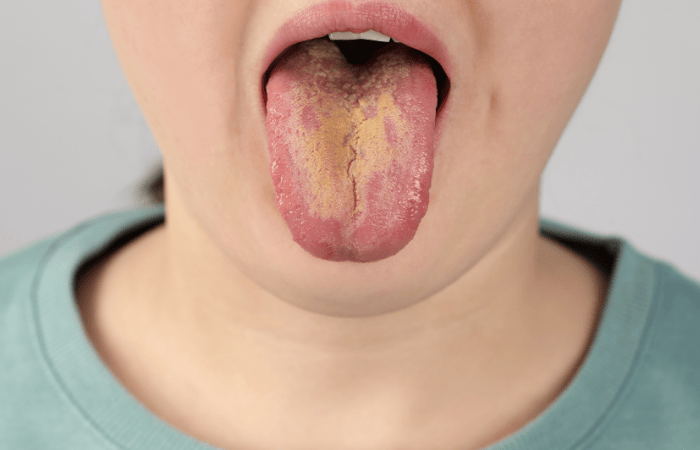
A throat infection rarely produces a sore throat the way strep or a viral pharyngitis does. Most people feel nothing at all. Rectal chlamydia can cause discomfort, bleeding, or discharge in some cases, but most carriers also have no symptoms there.
Here is the practical consequence: a urine test or a vaginal swab will not detect throat or rectal chlamydia. Site-specific testing is required. If you have had unprotected oral or anal sex with a partner whose status you do not know, the standard genital panel can miss the infection entirely. The CDC's chlamydia clinical guidance recommends extragenital testing for anyone with oral or anal exposure who is at risk based on partner history, even when no symptoms are present.
This is also why partner notification matters so much. A partner who tests positive on a urine sample may also have a throat infection that did not get tested or treated, and that is a common reason re-infection happens within months of treatment.
What Happens When You Wait and See
Untreated chlamydia is not a static problem. Even without symptoms, the infection keeps doing damage at the cellular level. In women, it can ascend from the cervix to the uterus and fallopian tubes and cause pelvic inflammatory disease (PID). The CDC and clinical guidelines note that a meaningful share of women with untreated chlamydia develop PID, and the risk grows the longer the infection is left untreated. Once PID scars the fallopian tubes, two outcomes become more likely: ectopic pregnancy, where a fertilized egg implants outside the uterus and threatens the patient's life, and tubal-factor infertility.
In men, untreated chlamydia can move from the urethra to the epididymis, causing epididymitis. Most cases resolve with antibiotics, but recurrent or severe infection can affect sperm transit and, rarely, fertility.
Both genders can develop reactive arthritis, an autoimmune complication where the body's response to the infection causes joint pain, eye inflammation, and urinary symptoms weeks after the initial exposure.
Then there is transmission. Modeling work in journals like Sexually Transmitted Diseases estimates re-infection rates of up to 20 percent within three months when only one partner of an infected couple receives treatment. Without testing, neither person knows they are caught in a re-infection loop. Each cycle adds inflammation and risk.
Can chlamydia really cause harm if I have no symptoms?
Yes. Untreated chlamydia damages the reproductive tract regardless of whether symptoms are present. It can scar the fallopian tubes, raise the risk of ectopic pregnancy, and contribute to infertility in women, and cause epididymitis in men. The bacterial inflammation is happening at the cellular level even when you feel completely fine, which is why screening, not symptom-watching, is the standard of care.
Why Testing Matters Even When You Feel Fine
Public-health screening guidelines exist precisely because waiting for symptoms is unreliable. The CDC's chlamydia clinical guidance currently recommends annual chlamydia screening for all sexually active women under 25, and for women 25 and older with risk factors such as a new partner or multiple partners. Men who have sex with men are advised to test at least annually, and every 3 to 6 months when they have multiple or anonymous partners. Pregnant women are screened at the first prenatal visit and again in the third trimester when at ongoing risk.
Notice what is missing from these guidelines: any mention of waiting for symptoms. The whole point is to catch the infection before symptoms ever appear, before damage accumulates, and before transmission spreads.
Compare this to how you treat blood pressure or cholesterol. You do not wait for a heart attack to find out your numbers. You check, you act on the information, you move on. Chlamydia screening works the same way.
Sexually active women under 25: annually. Women 25 and older: annually with risk factors such as a new or multiple partners. Men who have sex with men: at least annually, and every 3 to 6 months with multiple or anonymous partners. Pregnant women: at the first prenatal visit and again in the third trimester when ongoing risk is present.
What Your Testing Options Look Like
Three main test technologies cover chlamydia detection today, each with different sensitivity, sample types, and use cases. The table below summarizes how they compare. NAAT chemistry is the laboratory gold standard, while at-home rapid kits use lateral-flow chemistry designed for screening; a positive rapid result is worth confirming with a lab NAAT, and a negative result during a window-period concern is worth repeating.
| Test type | Where it is used | Typical sensitivity | Sample type |
|---|---|---|---|
| NAAT (lab molecular test) | Clinics, mail-in labs, integrated home programs | Up to 98 to 99 percent | Urine, vaginal swab, throat swab, or rectal swab |
| Rapid lateral-flow (at-home cassette) | At-home self-testing | Lower than lab NAAT, varies by kit | Self-collected vaginal or penile swab |
| Culture | Specialty clinics, antibiotic-resistance work | Slower, less sensitive than NAAT | Cervical, urethral, or pharyngeal swab |
Understanding Lab NAAT Versus At-Home Rapid Tests
NAAT (nucleic acid amplification testing) is the laboratory gold standard for chlamydia. Clinics, mail-in labs, and many integrated home programs use NAAT chemistry. It can run on urine, vaginal swabs, throat swabs, or rectal swabs, and it is sensitive enough to detect very low bacterial loads.
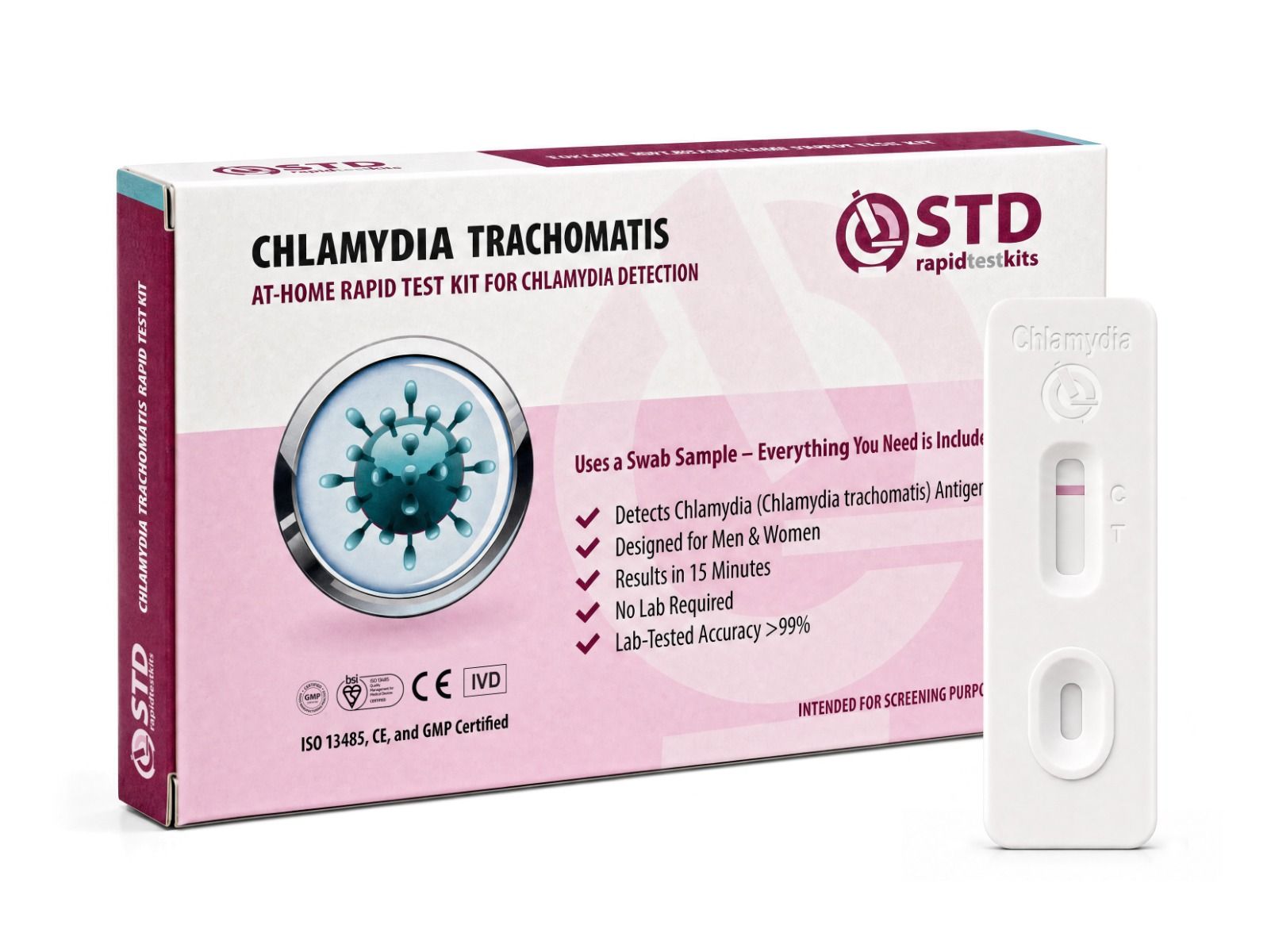
Rapid lateral-flow tests, including the at-home cassette format, work differently. They detect bacterial antigens directly from a swab sample and produce a visible result in about 15 minutes without lab processing. Their analytical sensitivity is lower than lab NAAT, but their value is in speed, privacy, and accessibility. Treat a negative rapid result as a screen rather than a final answer, and confirm with a lab NAAT when exposure risk was high or when symptoms develop.
Culture testing is rarely used now for routine chlamydia screening because it is slower and less sensitive than NAAT, but specialty clinics may still rely on it for antibiotic-resistance investigation.
For an at-home rapid swab, time the test correctly. Most labs and kit instructions recommend waiting at least 1 to 2 weeks after a possible exposure for the bacterial load to rise into the detection range, with a confirmatory test 3 weeks to 3 months later if the early result was negative and exposure risk was significant.
Lab NAAT: up to 98 to 99 percent sensitivity, processed in a laboratory in 1 to 5 days, accepts urine or swabs from genital, throat, or rectal sites. Best for confirmation and extragenital testing.
At-home rapid swab: result on the cassette in about 15 minutes, fully private, lower analytical sensitivity, swab only. Best for first-line screening when a clinic visit is not realistic.
Why the "Symptoms Equal Infection" Myth Is So Dangerous
Pop culture taught most of us that sexually transmitted infections come with dramatic warning signs: oozing sores, intense burning, obvious pain. Those depictions describe a small minority of presentations and they distort how people think about risk. In reality, the vast majority of chlamydia infections produce nothing dramatic. Many produce nothing at all.
The damage from this myth runs in two directions. People with classic symptoms eventually get tested. People with vague or absent symptoms convince themselves they are fine and skip testing entirely. People with mild symptoms second-guess what they are feeling and assume it is a urinary tract infection or a yeast infection. Both quiet groups end up untested and untreated.
Public-health research consistently shows that symptom-based testing strategies miss a substantial proportion of confirmed infections compared with universal opt-out screening. Cases continue to circulate in the meantime, and partners can be exposed before anyone in the chain learns there is something to treat.
Strategies that wait for symptoms before testing miss a meaningful share of confirmed chlamydia infections. Universal opt-out screening, which tests everyone in the recommended age and risk groups, catches cases that watchful waiting never would.
Why Shame Still Stops People from Testing
Even when people understand the medical case for testing, shame and stigma get in the way. Studies on STI testing behavior have repeatedly found that fear of judgment from a provider or a partner is a significant barrier, particularly among teenagers, queer people, and folks living in conservative communities. The activation cost feels higher when you also fear being labeled.
The cultural framing matters. Asking for an STI test is sometimes treated as an admission of guilt or risky behavior, when it is actually the opposite: a reasonable, responsible action that anyone sexually active should take periodically. Annual STI screening should feel as routine as a dental cleaning. Both are about catching small problems before they become big ones.
This is one reason at-home testing has become important in the public-health landscape. Removing the clinic counter, the awkward conversation, and the chart in someone else's filing system lowers the cost for people who would otherwise skip a clinic visit. They will mail back a self-collected swab or run a rapid cassette in the privacy of their bathroom, and that result then drives the decision to seek treatment.
- At-home rapid swab kit: self-collect, run on the cassette, read the result in about 15 minutes.
- Mail-in lab kit: self-collect, ship the sample to a NAAT lab, receive a result electronically in a few days.
- Telehealth provider: order a test, get a prescription if needed, follow up entirely online.
- Sliding-scale clinic, Planned Parenthood, or LGBTQ+-friendly health program: low or no-cost in-person testing in most U.S. cities.
What to Do If You're Still Hesitant to Test
If a clinic visit feels like too big a step right now, you have several alternatives that share the same end result: you learn your status and you act on the information. The list above covers the four main private pathways, and bringing a friend or partner along often helps people who do not want to go alone.
If you test positive, the treatment is fast and effective. The CDC's current STI Treatment Guidelines recommend doxycycline 100 mg twice a day for 7 days as the preferred regimen for uncomplicated chlamydia, with azithromycin 1 gram as a single dose as an alternative when doxycycline is not appropriate (such as in pregnancy). Side effects are usually mild. Most providers recommend abstaining from sex until 7 days after treatment is complete, treating sexual partners from the prior 60 days, and retesting at 3 months because re-infection is common when partners are not treated together. The World Health Organization endorses similar protocols globally. Treatment runs on a defined regimen and timeline once a result is in hand.
Chlamydia is a common sexually transmitted disease. It can cause serious, permanent damage to a woman's reproductive system. This can make it difficult or impossible for her to get pregnant later. Chlamydia can also cause a potentially fatal ectopic pregnancy.
Final Word: You Deserve Real Answers
If you are reading this, you have already done the hardest part: you are asking the question. Most people who eventually develop a chlamydia complication never asked. They felt fine, so they did not test, until something else forced them in. That is the population you do not want to join.
Ordering a test is a sensible response to uncertainty. It is the only reliable way to convert "I think I'm fine" into "I know my status." If you have had a new partner, a one-time hookup, or a question that lingered after sex you did not quite think through, this is the moment to find out. The treatment, if needed, is simple. The information, either way, is yours.
Order an at-home rapid swab test, book a confidential clinic appointment, or schedule a telehealth call. Whichever route fits your situation, take it.
Frequently asked questions
- Can I really have chlamydia and feel completely normal?
- Yes. The majority of people who test positive for chlamydia have reported no symptoms beforehand, per the CDC. The infection remains active and transmissible during this asymptomatic phase, which is why annual screening (rather than waiting for warning signs) is the CDC-recommended approach for sexually active adults under 25.
- What does chlamydia feel like when symptoms do show up?
- Symptomatic cases can include burning when urinating, unusual or off-color discharge, spotting between periods, pelvic pain, or testicular swelling. These signs are often mild and easy to mistake for a urinary tract infection, a yeast infection, or normal cycle variation, which is part of why so many cases get missed.
- Is asymptomatic chlamydia still dangerous?
- Yes. Untreated chlamydia can scar the fallopian tubes, raise the risk of ectopic pregnancy, contribute to infertility, and cause epididymitis in men, all without producing noticeable symptoms first. The cellular inflammation is happening regardless of how you feel.
- How long after sex should I wait to get tested?
- Most labs and at-home kit instructions recommend waiting at least 1 to 2 weeks after a possible exposure so the bacterial load has time to rise into the detection range. If your initial test is negative and exposure risk was significant, repeat at 3 weeks to 3 months to catch infections that may have been below the limit of detection.
- Can I give someone chlamydia without knowing I have it?
- Yes, and this is how most transmissions happen. The infection is contagious during the asymptomatic phase, and many people pass it to one or more partners before they ever learn they carry it themselves. This is why partner notification matters when a positive result comes back.
- Does oral or anal sex carry chlamydia risk?
- Yes. Pharyngeal and rectal chlamydia are well-documented and usually silent. A standard urine or vaginal-swab test will not detect a throat or rectal infection, so site-specific swab testing is needed when exposure included oral or anal sex.
- Will the test itself hurt?
- No. Lab NAAT testing usually involves urinating in a cup or running a cotton-tipped swab inside the vagina or urethra. At-home rapid kits are similar: you collect your own swab, run it on the test cassette, and read the result. There are no needles and no cervical exam needed for screening.
- Can I treat chlamydia with leftover antibiotics?
- No. Random antibiotics can fail, mask other infections, and contribute to resistance. The CDC's preferred regimen is doxycycline 100 mg twice a day for 7 days. Azithromycin as a single dose is an alternative in specific situations like pregnancy. A confirmed test result and a real prescription are how you ensure the treatment matches the infection.
- What should I say to a partner if I test positive?
- Try a direct, low-blame opening: "I tested positive for chlamydia. It is common and curable, and I wanted you to know so you can get checked too." Most clinics also offer anonymous partner notification services if a direct conversation feels too hard.
- Am I immune to chlamydia after I'm treated?
- No. Chlamydia does not produce lasting immunity, and re-infection is common. The CDC recommends a follow-up test about 3 months after treatment, especially when partners may not have been treated at the same time. Barrier protection lowers the risk of re-exposure going forward.
- U.S. Centers for Disease Control and Prevention. Chlamydia overview covering asymptomatic presentation, transmission, and complications.
- U.S. Centers for Disease Control and Prevention. Pelvic inflammatory disease overview, including chlamydia as a leading cause and the screening rationale.
- U.S. Centers for Disease Control and Prevention. Chlamydial infections clinical guidance covering screening intervals, extragenital testing, and recommended populations.
- U.S. Centers for Disease Control and Prevention. 2021 STI Treatment Guidelines, including doxycycline as the preferred regimen for uncomplicated chlamydia.
- World Health Organization. Chlamydia fact sheet covering global burden, treatment, and screening recommendations.
- PLOS Global Public Health, May 2024. Pooled review of asymptomatic chlamydia prevalence among women in low- and middle-income countries.
