Published: September 2025 | Last updated: May 2026 | Editorial review and quality control: Martina N.
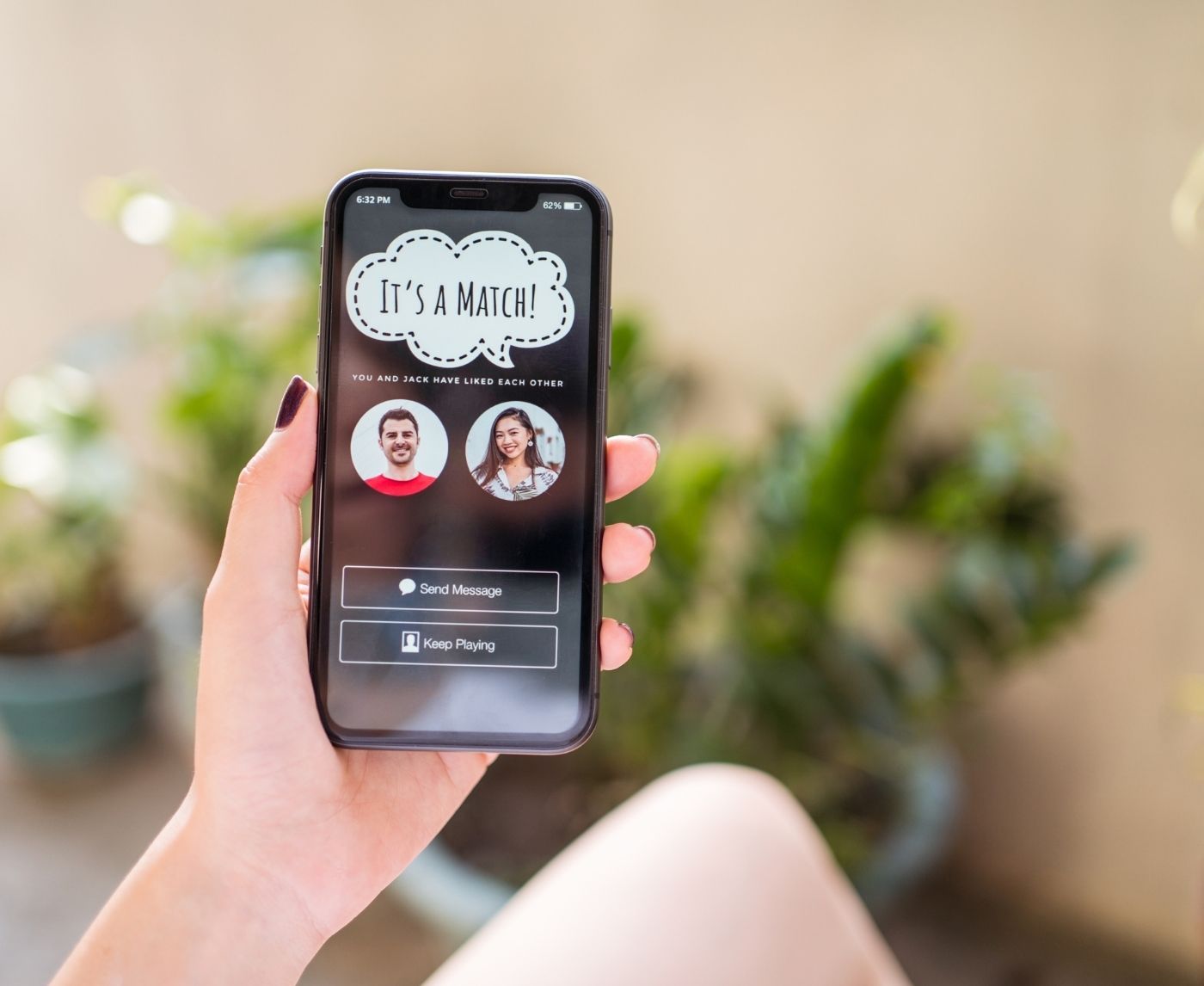
You matched on Wednesday. You met on Saturday. By Tuesday morning you are standing in your bathroom looking at something on your skin, or feeling a sharp sting when you pee, or just sitting with a knot in your stomach that will not go away. The flirting felt easy. The hookup felt fine. So why does the morning after feel like an interrogation you are running on yourself?
Dating apps did not invent sexually transmitted infections. They did, however, make it dramatically easier to meet a new sexual partner with very little context, and that shift shows up in public health data. The U.S. Centers for Disease Control and Prevention has reported steep climbs in gonorrhea, chlamydia, and syphilis through the 2010s and into the 2020s, with the highest rates concentrated in adults under 35 (CDC STI Statistics). The apps are not pathogens. The behaviors they enable, frequent new partners and almost no contact tracing, are part of the modern transmission environment.
This piece walks through what to do with that mix of feelings and facts. We will cover which infections spread most readily through casual encounters, why your body might say nothing for days or weeks, when to test, and how to handle the awkward parts that follow. You did not do anything unusual by sleeping with someone you met on an app. The next move is figuring out what your body is telling you, and what it is not.
Key Takeaways
- Most STIs caught from a casual encounter are silent at first. Chlamydia in particular has no symptoms in the majority of people who carry it, so feeling fine is not the same as being fine.
- Day-1 testing usually misses what is there. Rapid tests for chlamydia, gonorrhea, and syphilis become reliable around 14 days after exposure; HIV combo tests need 18 to 45 days; herpes blood tests need longer.
Why an app hookup feels safer than it is
There is something disarming about meeting someone through a screen. By the time you are in the same room, you have already exchanged voice notes, music tastes, jokes, maybe a few photos. Your brain has built a working model of who this person is. The model is built on what they wanted you to see, not on their last STI screening, last partner, or last conversation about condoms.
That illusion of intimacy correlates with measurable risk. Surveys of dating app users have found higher rates of recent multiple partners and less consistent condom use compared with people who meet partners offline. The pattern is sharpest in groups with already higher baseline STI prevalence. Public health researchers have flagged geosocial networking apps as a feature of the modern transmission environment for syphilis and gonorrhea.
A second factor is the loss of what public health workers call partner traceability. If you meet someone at a friend's party, you can usually find them again. If your only contact is a screen name and a chat history that disappears when one of you unmatches, contact tracing breaks down. You may never learn that the person you slept with tested positive a week later, and they may never be able to tell you. That gap is one reason people get diagnosed with infections they had no idea they were exposed to.
None of this is an indictment of dating apps. The point is what comes after: getting clear on what risk you actually took, and choosing a testing plan that fits how each infection behaves.
The biggest difference between an app hookup and meeting at a friend's party is not the encounter itself, it is what happens after. When the only thread back is a username, a positive test result a week later may never reach you, and yours may never reach them.
STIs that travel through casual encounters
Some infections spread through fluid exchange. Some spread through skin contact alone. Some need a visible sore to transmit. Many do not. The reason a single hookup can pass something on is that the most common STIs do not require dramatic conditions to move from one body to another.
Two practical patterns are worth holding onto before the table below. First, oral sex transmits more than people expect; gonorrhea and herpes both have well-documented oral routes, and syphilis can transmit through skin contact alone. Second, the silent infections, chlamydia in particular and often gonorrhea, are the ones that quietly drive ongoing transmission, because the people carrying them often have no reason to think they should be tested.
Here is a quick map of the infections most often picked up through casual encounters.
| Infection | Can a single encounter transmit it? | Common early signs (when present) | Often silent? |
|---|---|---|---|
| Herpes (HSV-1, HSV-2) | Yes; transmission can occur even without visible sores via asymptomatic shedding | Tingling, itching, painful blisters or shallow ulcers | Yes; many people never have a recognizable outbreak |
| Chlamydia | Yes, via vaginal, anal, or oral sex | Burning urination, discharge, pelvic pain | Yes; the majority of carriers have no symptoms |
| Gonorrhea | Yes, via vaginal, anal, or oral sex | Discharge, sore throat (pharyngeal), burning urination | Often, especially pharyngeal infections |
| Syphilis | Yes, via skin-to-skin contact at the site of infection | Painless sore, body rash, flu-like symptoms | Yes; primary chancre is often missed |
| HPV | Yes, via skin-to-skin contact | Often none; possible genital warts | Almost always |
| HIV | Yes, with condomless vaginal or anal sex | Flu-like illness 2 to 4 weeks after infection (acute retroviral syndrome) in some people | Often, until late-stage disease |
Why symptoms come late, and what that means
The reason your body might be quiet for a week or two after exposure is that infections need time to establish themselves. A bacterium or virus that just landed has not yet replicated to a level that triggers your immune system to throw an obvious symptom, or, in the case of antibody-based tests, to seroconvert. This delay is called the window period, and every infection has its own.
For chlamydia and gonorrhea, the window is roughly one to three weeks; many people never develop noticeable symptoms at all (CDC Chlamydia). For genital herpes, a first outbreak (when it happens) usually shows up within two to twelve days, but it can be mild enough to miss, and antibody tests need additional weeks to register reliably (CDC Herpes Testing). Syphilis usually shows a primary chancre between three weeks and three months after exposure; the sore is often painless and easy to miss when it sits in a hidden location. HIV's typical window depends on which test is used, but most modern fourth-generation antigen-antibody combo tests reliably detect new infection by 18 to 45 days post-exposure.
This delay is not your fault. It does, however, change what early testing actually tells you. A test taken three days after a hookup is mostly testing whether you had something coming into the encounter, not whether you caught something at it. That can be useful information, especially if you have not been tested in a while, but it is not the answer you came for. Treat early testing as a baseline, plan a follow-up test in the right window, and pay attention to symptoms that emerge in between.
The window-period gap also has consequences for partner notification. If you test positive at week three, the likely transmission event could be anywhere from days to weeks before; that makes it hard to point at one specific encounter as the cause, and easy to be unfair to a partner who may have had nothing to do with it. The honest move when notifying past partners is to share what you tested positive for and recommend testing, without assigning blame for who passed it to whom.
Most people who have chlamydia have no symptoms.
When to test after a hookup
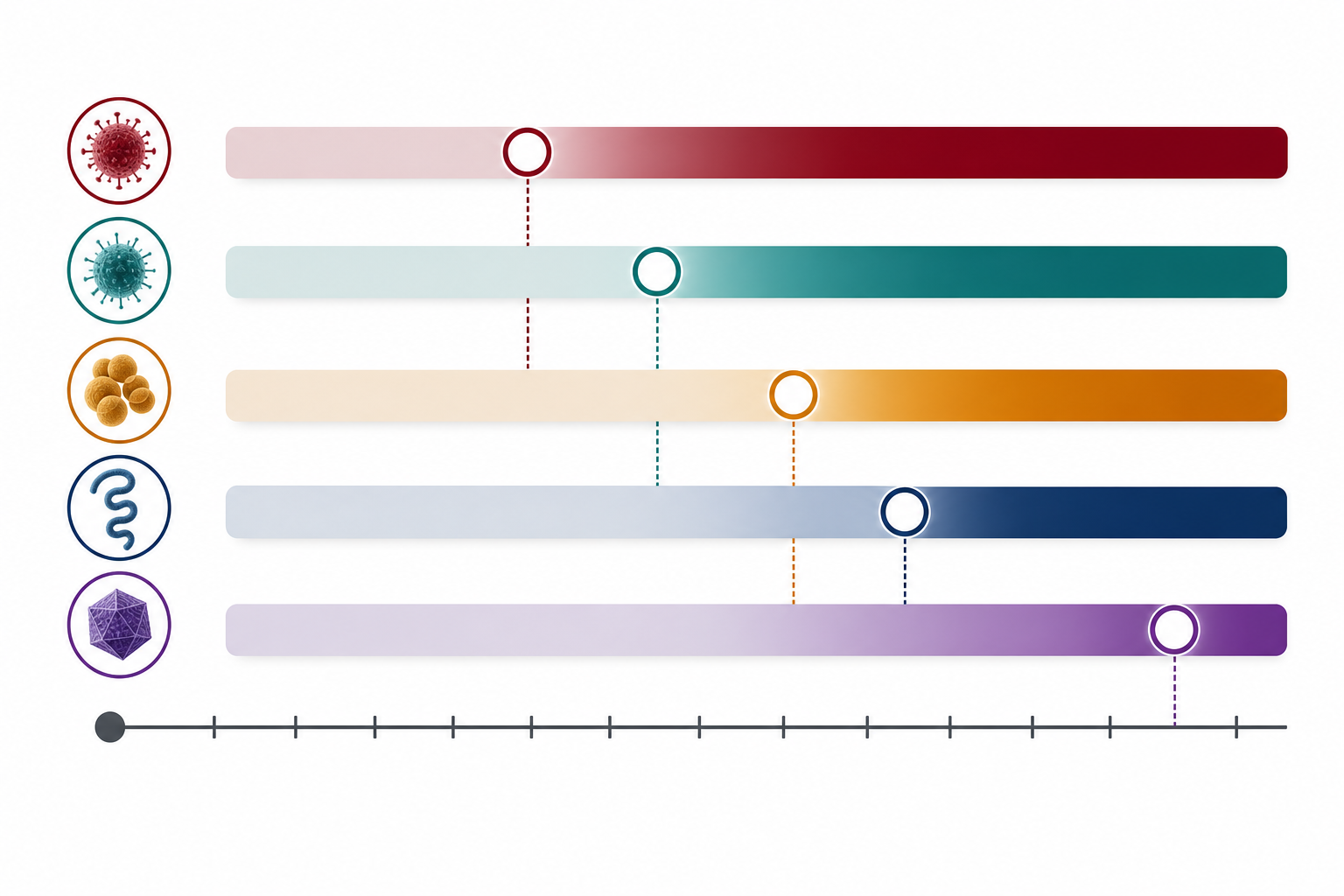
Knowing the window is the difference between a useful negative and a falsely reassuring one. The table below summarizes when each common test becomes reliable, based on guidelines from major public health agencies. These are conservative ranges; the right test for a specific exposure depends on what you actually did and which test method is being used.
If you tested too early and got a negative, retesting at the right time is not paranoia. It is the same protocol the CDC recommends for clinical screening. If symptoms appear before the window closes, get tested anyway; symptoms mean enough biological signal is present to act on, and most STIs are easier to treat early.
| Infection | Best window for an accurate test | Notes |
|---|---|---|
| Chlamydia (NAAT or rapid) | 1 to 2 weeks after exposure | Symptoms (when present) usually within 1 to 3 weeks |
| Gonorrhea (NAAT or rapid) | 1 to 2 weeks after exposure | Same window as chlamydia; pharyngeal infections often silent |
| Syphilis (antibody) | 3 to 6 weeks after exposure | Primary chancre may appear 10 to 90 days post-exposure |
| HIV (Ag/Ab combo) | 18 to 45 days after exposure | Earlier detection possible with NAT testing in clinic |
| Herpes (IgG blood test) | 4 to 16 weeks after exposure | Most assays reliable by 12 weeks; CDC notes up to 16 weeks or more for some tests. PCR of an active sore is faster than blood antibody testing. |
What if you are itching, burning, or spotting?
Not every symptom after a hookup is an STI. Razor burn from rushed grooming, friction irritation, latex or lube allergies, urinary tract infections from new sex partners, and yeast or bacterial vaginosis flare-ups can all mimic the early signs of something more serious. Sorting one from the other is not always possible from symptoms alone, but there are patterns worth knowing.
Sharp burning when you pee, lingering for more than a day or two, with or without discharge, is a common early sign of chlamydia, gonorrhea, or a urinary tract infection. Any of these warrants a test, and chlamydia and gonorrhea both treat with a short antibiotic course when caught early.
A new bump or sore in the genital, anal, or oral area is worth investigating. A painless sore that disappears on its own after a few weeks is a classic primary syphilis presentation; the sore vanishes, but the infection does not. Painful clusters of small blisters or shallow ulcers, often preceded by a tingling sensation, suggest a herpes outbreak. An ingrown hair, a friction blister, or a folliculitis pimple are common benign causes that resolve in a few days.
Unexpected spotting, unusual discharge, pelvic cramping after sex, or a new sore throat after oral sex are all reasons to test. Pharyngeal gonorrhea is often silent or shows up as a mild sore throat that gets blamed on a cold. Note that our at-home rapid kits are validated for genital and blood-based testing; for a throat-swab test, a clinic visit is the right tool. We do not sell a pharyngeal swab kit.
Pain is not a reliable signal of severity. Many serious STIs are quiet by design, building damage in the background while you feel fine. If something feels different and lasts more than a couple of days, get a test rather than waiting for it to declare itself.
Talking to a partner you barely know
One of the harder parts of post-hookup care is the conversation, especially if the person you slept with has already faded out of your inbox. The temptation to skip it is real. The reason not to skip it is also real: you may be the only signal that gets them tested before they unknowingly pass something on.
Keep the message short, factual, and free of blame. You do not owe anyone the full story of how the result landed in your phone, and you do not need to apologize for telling them.
If direct contact is not possible or feels unsafe, many U.S. health departments and clinics offer anonymous partner notification services. Some let you send a notification through a website without your name attached. Breaking the chain is what counts, regardless of which channel does it. The CDC maintains state and local resources for partner services through its STI prevention pages (CDC STI Treatment Guidelines).
"Hey, heads up, I tested positive for [infection]. You should get tested too. Not assuming where it came from, just letting you know." That is enough.
Testing without the awkward clinic trip
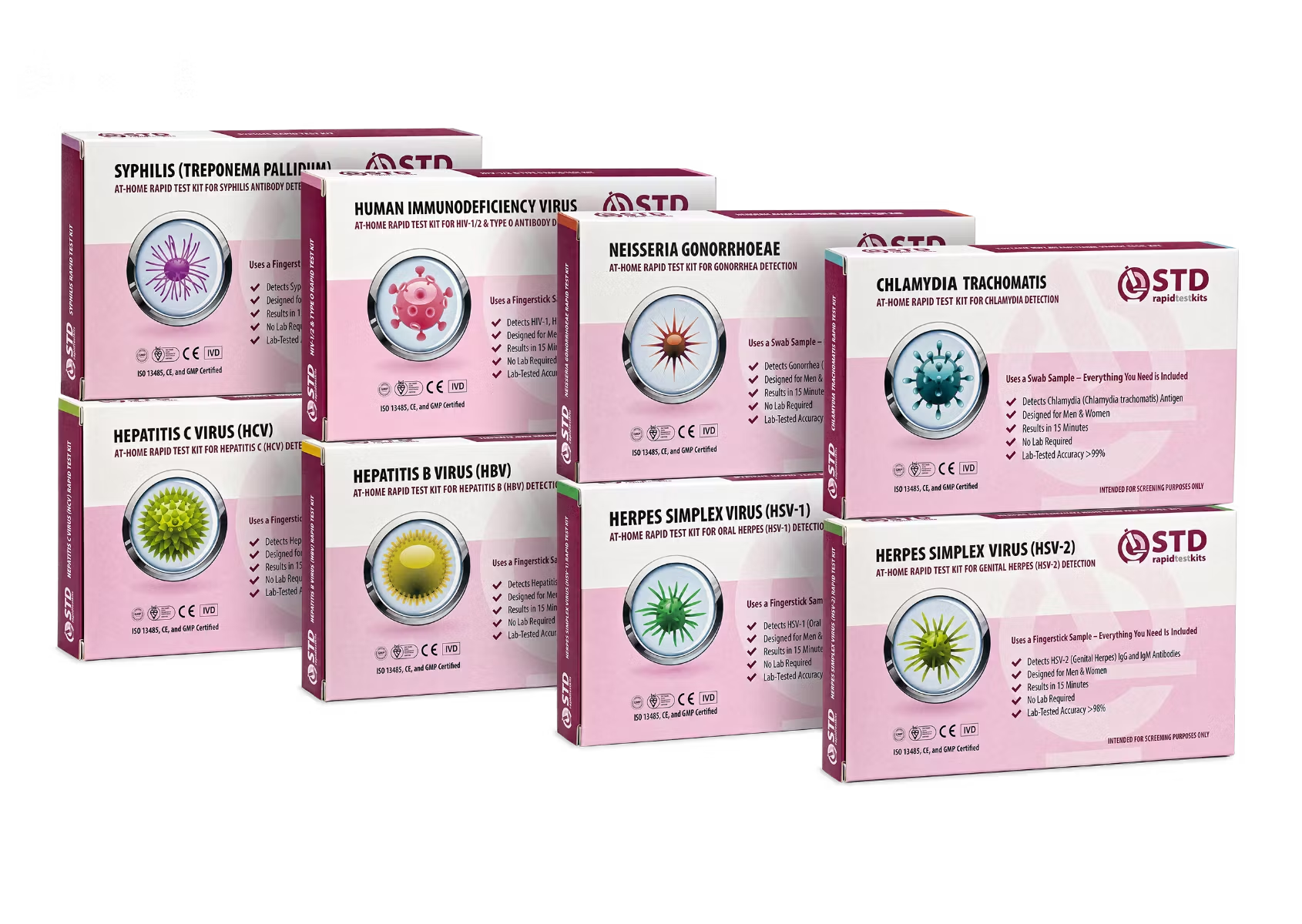
For people in small towns, on tight schedules, or who simply do not want to sit in a clinic waiting room with an STI screening sign-in sheet, at-home rapid testing has become a reasonable first step. A discreet kit ships in plain packaging, you do the sample collection at home (a fingerstick blood draw for HIV, syphilis, hepatitis, and herpes; a self-collected swab for chlamydia, gonorrhea, trichomoniasis, or HPV), and you read the lateral-flow result in roughly fifteen minutes.
It is worth being precise about what an at-home rapid test is and what it is not. These kits use lateral-flow chemistry, the same general technology behind home pregnancy tests and rapid COVID tests. They are screening tools, not laboratory NAAT or PCR assays. Modern lateral-flow STI kits report sensitivity in the mid-to-high 90s for most analytes when used inside the correct window period. A positive result on a rapid test is worth confirming through a clinic-administered NAAT when possible, especially before starting treatment.
What rapid testing buys you is speed and privacy. A Friday-night Tinder date that left you anxious by Sunday can become a Tuesday afternoon answer. A Tuesday afternoon result beats a two-week clinic-appointment wait either way. If the result is positive, most STIs are highly treatable: chlamydia and gonorrhea resolve with a short antibiotic course, early syphilis cures with penicillin, and herpes is managed with daily antiviral medication.
What to do right now if you are worried
If you are reading this in the hours or days after a hookup that did not go the way you wanted, here is a clean way to break it down.
If it has been less than 72 hours since exposure and the encounter was high-risk for HIV (condomless anal sex, partner with unknown or positive HIV status, partner who injects drugs), see a clinic or emergency department about post-exposure prophylaxis (PEP). PEP is most effective when started as soon as possible after exposure and is not effective once that 72-hour window closes (CDC HIV).
If you have any acute symptoms in the days after exposure, burning, sores, unusual discharge, sore throat, or fever, do not wait for the window period to close. Symptoms mean there is enough biological signal to act on now, and most STIs are easier to treat early.
If you are asymptomatic and just want clarity, plan a test for the late end of the window for whichever infection you are most concerned about. For a broad post-hookup screen, that usually means waiting two weeks for a chlamydia and gonorrhea test, three to six weeks for syphilis, and 18 to 45 days for an HIV antigen-antibody panel, with a possible repeat test at three months for herpes if antibody status matters to you.
Three decision branches
- Less than 72 hours since a high-risk HIV exposure: go to a clinic or ER about PEP today, not tomorrow.
- Acute symptoms (burning, sores, unusual discharge, sore throat, fever): test now even if the window has not fully closed.
- No symptoms, just want clarity: plan one test at the end of the window for whichever infection concerns you most, around two weeks for chlamydia and gonorrhea, three to six weeks for syphilis, 18 to 45 days for HIV.
Why one negative test is not always the answer
A single negative result early in the window period gives you less information than people assume. If you tested four days after exposure and got a negative for chlamydia, that result mostly reflects what your body looked like before the recent encounter. The infection may not yet be detectable.
The CDC recommends retesting in two situations: when the first test was inside the window period for that infection, and after a positive result has been treated. Post-treatment retesting (usually three months later for chlamydia and gonorrhea) catches reinfection from untreated partners, which is unfortunately common (CDC STI Treatment Guidelines).
If you are using apps regularly and rotating partners every few months, routine screening every three to six months is the public health recommendation, not a sign of paranoia. The CDC recommends annual screening for chlamydia and gonorrhea for all sexually active women under 25 and for men who have sex with men, with more frequent screening based on number of new partners and other risk factors. Routine HIV screening is recommended at least once for everyone aged 13 to 64, and more often for higher-risk patterns.
First, when your initial test fell inside the window period for that infection, retest at the late end of the window. Second, after a treated positive for chlamydia or gonorrhea, retest at three months to catch reinfection from an untreated partner.
FAQs
- Can one hookup really give me an STI?
- Yes. Chlamydia, gonorrhea, herpes, HPV, and syphilis do not require multiple encounters or specific kinds of sex. A single condomless encounter is enough, including oral sex. Many of these infections also pass without any symptoms in the carrier, so a partner who feels fine can still transmit.
- I have no symptoms. Do I still need to test?
- Yes, especially after a casual encounter. The CDC notes that most people with chlamydia have no symptoms, and gonorrhea is silent in a substantial share of cases. Routine post-hookup screening is the only way to catch these silent infections. Plan a test for the late end of the window period for each infection you want to rule out.
- What does 'testing too early' actually mean?
- It means testing before the infection has had time to register. Bacteria and viruses need to replicate to a detectable level, and antibody tests need additional time for your body to produce antibodies. For chlamydia and gonorrhea that lag is roughly 1 to 2 weeks. For HIV antigen-antibody combo tests it is 18 to 45 days. A negative test before the window closes does not rule out infection from the recent exposure.
- What if it was only oral sex?
- Oral sex still transmits gonorrhea, herpes, syphilis, and chlamydia. Pharyngeal gonorrhea is often silent or shows up as a mild sore throat. Our at-home rapid kits cover genital and bloodwork screening, but a throat-swab test for pharyngeal infection requires a clinic visit; we do not sell a pharyngeal swab kit.
- How long after a hookup should I wait to test?
- Chlamydia and gonorrhea can be screened reliably at 14 days, that is the first useful checkpoint. Syphilis antibodies usually register by three to six weeks. HIV antigen-antibody combo tests are reliable by 18 to 45 days (roughly 3 to 6 weeks). Herpes IgG blood testing is best deferred up to 12 weeks, with some assays needing as long as 16 weeks. If symptoms appear before any of those windows close, test now and follow up at the right window if the first test is negative.
- They said they were 'clean.' Isn't that enough?
- 'Clean' is not a clinical term. Even people who genuinely believe they are infection-free may be inside an undetectable window from a recent exposure, may have a silent infection, or may be working from a screening that did not cover everything. Trust matters in a relationship. For pre-test risk assessment, only a recent test inside the right window is meaningful.
- Are at-home rapid tests really accurate?
- Modern at-home lateral-flow rapid STI tests report sensitivity in the mid-to-high 90s for most analytes when used within the correct window period. They are screening tools, not laboratory-grade NAAT or PCR, so a positive is worth confirming with a clinic NAAT before starting treatment. A negative inside the window period is also worth retesting at the late end of the window.
- How often should I test if I am using dating apps regularly?
- If you are actively dating with multiple new partners, every 3 months is the public health consensus, not paranoia. The frequency is closer to every 6 months for slower partner turnover or consistent condom use. As a separate baseline, the CDC recommends an HIV screening at least once for everyone aged 13 to 64, with more frequent retesting tied to ongoing higher-risk exposure patterns.
How we sourced this article: We combined current guidance from the U.S. Centers for Disease Control and Prevention, the World Health Organization, and the U.K. National Health Service with our own product specifications. Window-period numbers, screening recommendations, and treatment notes are drawn from published CDC clinical guidance pages. Reader-facing language was written for plain-English clarity. This article is a summary of public guidance, not a substitute for clinical care; for symptoms that concern you, see a licensed provider.
- U.S. Centers for Disease Control and Prevention. STI Statistics surveillance data on rising chlamydia, gonorrhea, and syphilis rates, particularly in adults under 35.
- U.S. Centers for Disease Control and Prevention. Sexually Transmitted Infections hub page covering transmission, prevention, and screening for the full STI panel.
- U.S. Centers for Disease Control and Prevention. About Chlamydia: symptoms, transmission, and the high rate of asymptomatic infection.
- U.S. Centers for Disease Control and Prevention. Herpes Testing: window periods and the difference between PCR of an active sore and IgG blood antibody testing.
- U.S. Centers for Disease Control and Prevention. STI Treatment Guidelines: clinical recommendations on retesting after treatment and partner services.
- U.S. Centers for Disease Control and Prevention. HIV resource hub including post-exposure prophylaxis (PEP) and testing recommendations.
- World Health Organization. Sexually transmitted infections fact sheet covering global incidence and screening recommendations.
