Published: October 2025 | Last updated: April 2026 | Editorial review and quality control: Martina N.
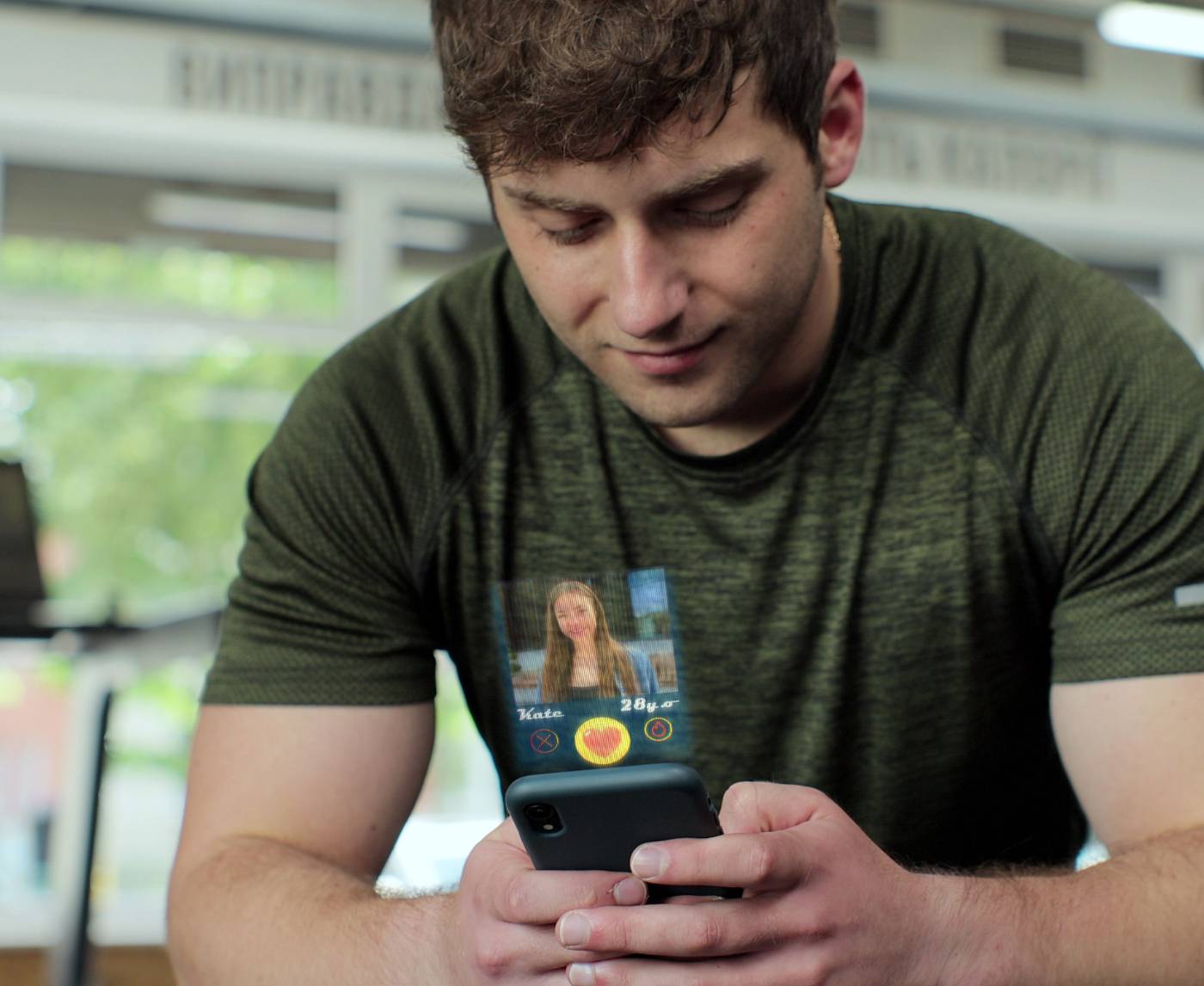
Dating apps did not invent risky sex. They did, however, change the speed and the geometry of how a single infection can move through a city. Match in the morning, meet that afternoon, never trade last names. That pattern is normal now, and it is one of the reasons U.S. sexually transmitted infection (STI) rates have risen for nearly a decade. This guide walks through what the research shows about app use and STI rates, where most readers misjudge their risk (oral sex is a big one), how to time testing after a casual hookup, and what to do when the person you slept with has already deleted their profile.
Are dating apps behind the rise in STDs?
Research consistently links dating-app use to more sexual partners, less consistent condom use, and fewer pre-sex conversations about testing. Those behaviors speed up how infections move through sexual networks. The bigger structural problem is what happens after sex: deleted profiles and anonymous handles make partner notification almost impossible, so infections go un-flagged. Routine testing, including private at-home rapid tests around 14 days after a new partner, is the practical fix.
Key Takeaways
- U.S. STI rates have risen sharply across chlamydia, gonorrhea, and syphilis according to CDC surveillance, and the increase tracks the years dating apps became universal.
- Most chlamydia and gonorrhea infections cause no symptoms, especially in women, so 'I feel fine' is not a substitute for testing roughly 14 days after a new partner.
What the data shows about apps and STDs
The U.S. has been in a multi-year STI surge. According to CDC sexually transmitted infection surveillance, reported cases of chlamydia, gonorrhea, and syphilis (including newborn syphilis passed during pregnancy) all climbed substantially through the late 2010s and into the 2020s. Public health departments name several drivers at once: fewer sexual health clinics after the pandemic, declining condom use, healthcare access gaps for younger and lower-income populations, and a shift in how people meet sexual partners.
The shift in how people meet sexual partners is where the apps become relevant. Peer-reviewed studies of dating-app users consistently report higher partner counts, lower rates of condom use during first-time encounters, and fewer pre-sex conversations about testing status compared with people who meet partners through traditional social circles. None of those findings prove that the app caused the behavior, sociologists are careful about that, and the pattern is consistent across multiple cohorts and countries.
Dating apps did not create sexually transmitted infections. They lowered the friction on rapid, anonymous, geographically distributed partner-finding, which is the friction that used to slow infections down. A single chlamydia case in a pre-app world might have moved through three or four people in a year. The same case today, with two people who each have an active dating profile, can reach a much larger network in weeks.
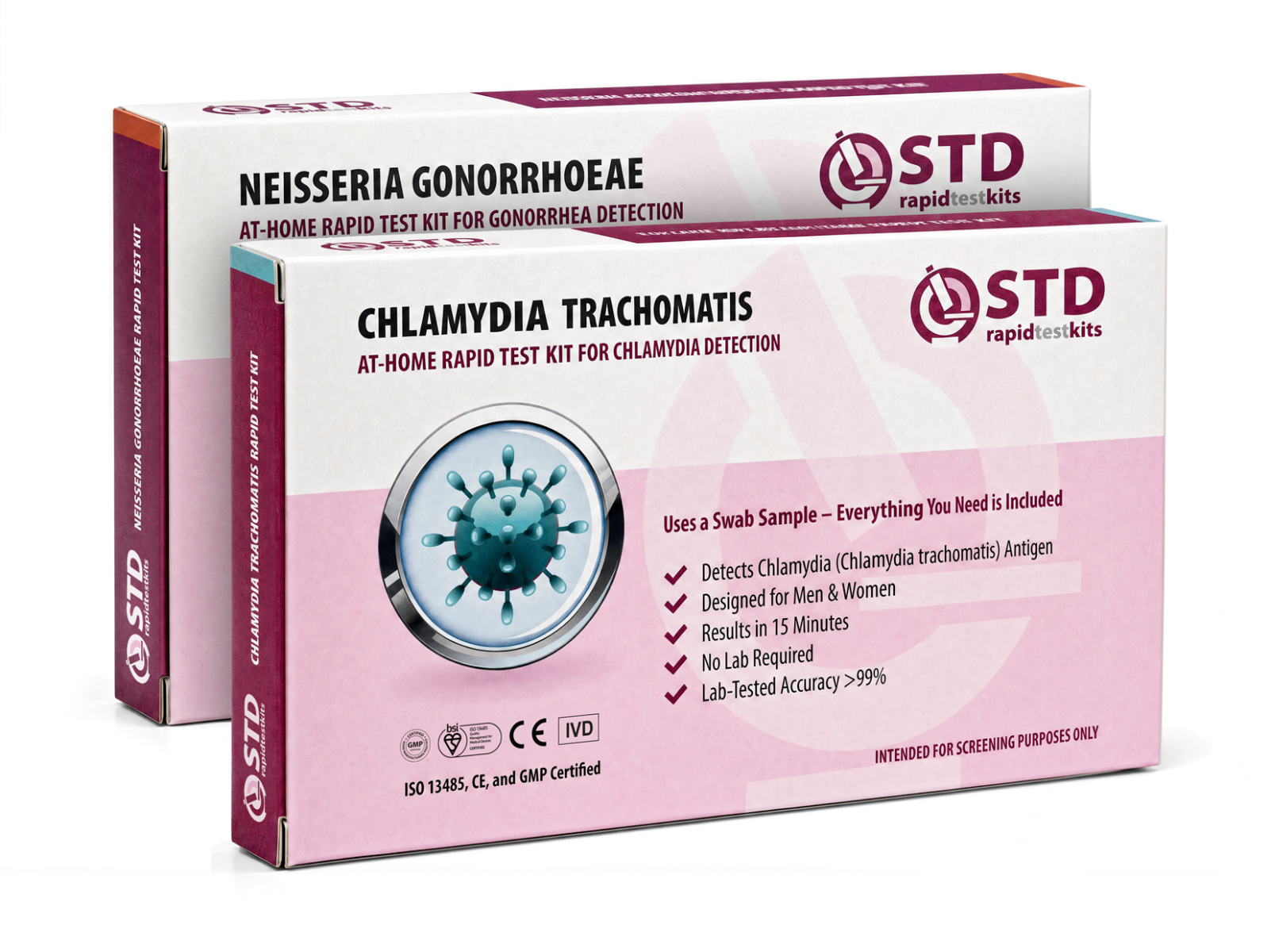
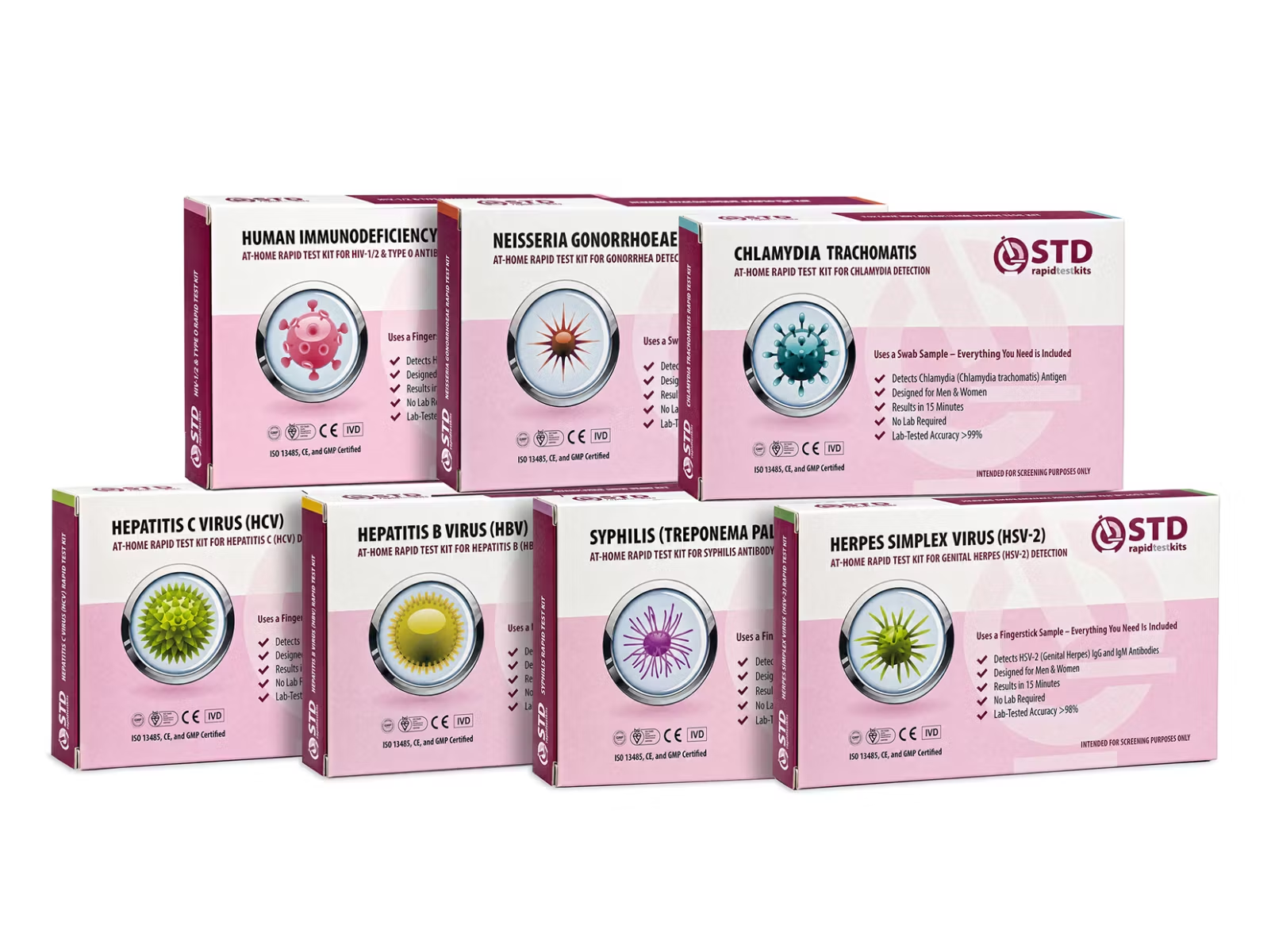
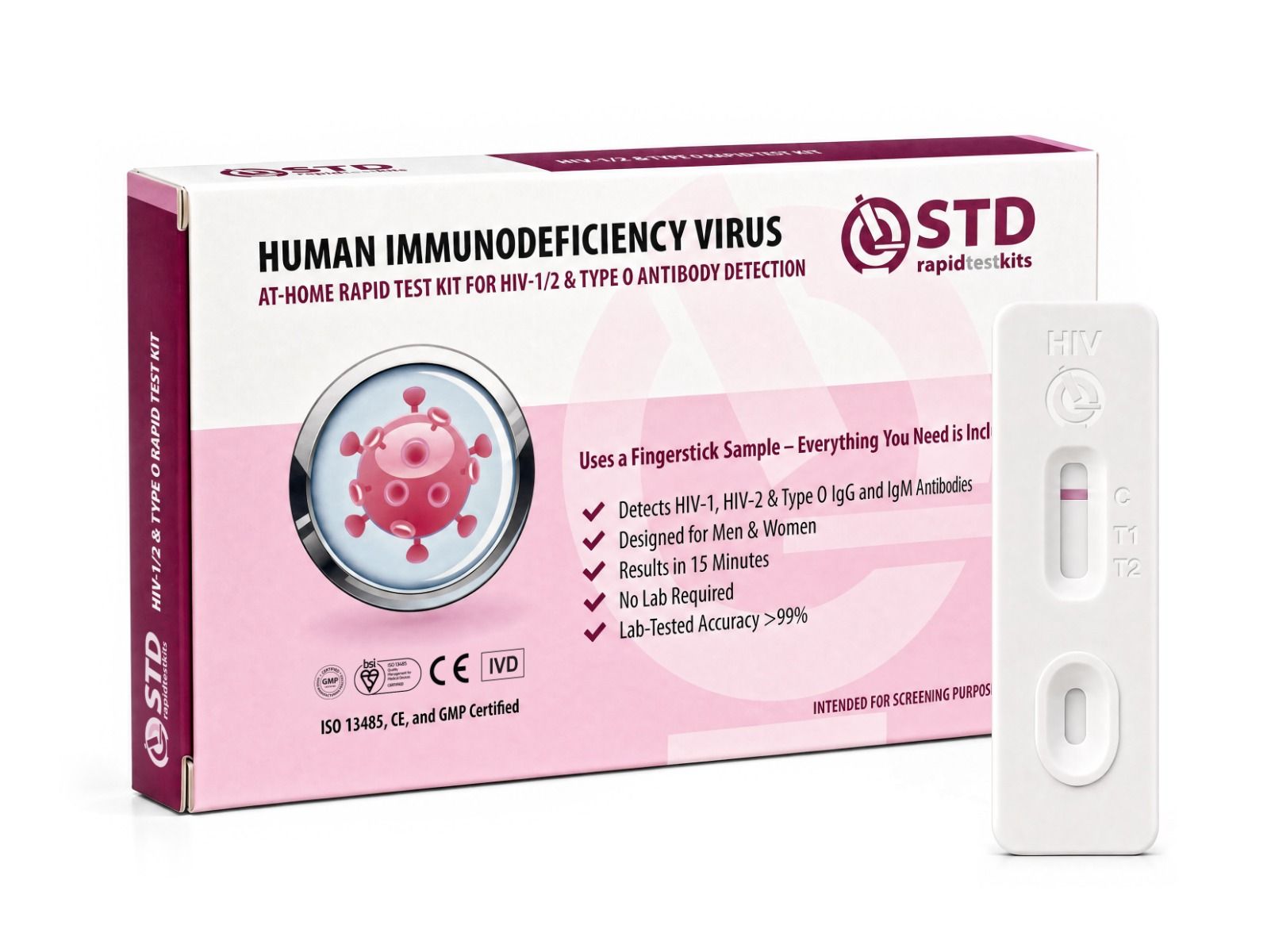
This article is published by stdrapidtestkits.com, which sells at-home rapid STI test kits. We recommend products based on what fits the reader's actual concern, not commercial benefit. Our kits are lateral-flow rapid tests; they screen at home in about 15 minutes, and a positive result is worth confirming with a lab NAAT when you can. They are not a replacement for a clinic visit if you have severe symptoms or need treatment.
How a swipe changes the math of transmission
It is not that people suddenly started having more sex. The change is how partners are found and how quickly the connection turns physical. Dating-app design reshapes transmission risk in several connected ways.
Geolocation widens the partner pool. Pre-app, your dating circle was bounded by your neighborhood, workplace, friend group, and bar scene. App geolocation extends that radius to anyone within 5, 25, or 100 miles, which means your sexual network can overlap with networks you would otherwise never touch. Public health researchers call this 'sexual network mixing,' and a higher mixing rate is one of the strongest predictors of how fast a localized STI cluster can grow.
Speed compresses screening conversations. When a match-to-meet timeline is hours instead of weeks, the natural moments to ask 'when were you last tested?' often get skipped. Multiple surveys of younger app users find that fewer than half raise STI status before sex with a new partner, and the share is even lower among first-time hookups under 25.
Anonymity blocks notification. If a hookup turns out to have been infectious, you usually need to reach the other person to tell them. With deleted profiles, screen names, and no last names exchanged, that loop often cannot close.
Put together, the typical case timeline looks like this:
| Step | Typical scenario | Risk introduced |
|---|---|---|
| Match and meet same day | Minimal conversation about health history | Assumptions replace status confirmation |
| Sex within hours | Often unplanned, alcohol or substances may be involved | Condoms get skipped, used inconsistently, or only used for penetration |
| Ghosting or one-time contact | No follow-up channel if symptoms appear later | Infection cannot be flagged to the other person |
| Delayed symptoms (or none) | Signs appear days to weeks later, or never | Infection has already moved to the next partner |
Where modern STDs show up (it is not just genital)
One of the most common reader misconceptions: STDs are 'genital-only.' They are not. Oral sex, especially without a barrier, is a real route for gonorrhea, chlamydia, syphilis, herpes simplex, and human papillomavirus (HPV). Pharyngeal (throat) gonorrhea and chlamydia are increasingly common in casual-sex populations and are often missed because the only symptom is a sore throat that the person blames on a cold, vaping, late-night talking, or hotel air.
Syphilis can present as a single painless ulcer (called a chancre) at any site of contact, including the lip, mouth, anus, or genitals. The lesion is typically painless and resolves on its own within a few weeks, which is part of why early syphilis is missed: the person assumes the sore healed and so they are fine. The infection has not gone anywhere; it has just moved into a later stage.
A throat-only exposure is best evaluated with a pharyngeal swab. A genital exposure is best evaluated with a genital self-swab plus blood work. A mixed exposure (oral plus genital) calls for both.
Our rapid lateral-flow kits use the same swab-sample type that labs use for chlamydia and gonorrhea (a self-collected genital swab) and a fingerstick blood drop for HIV, syphilis, hepatitis B, and hepatitis C. We do not sell pharyngeal (throat) or rectal swab kits. If your specific concern is a throat infection from oral sex, see a clinic for a pharyngeal swab; our genital and blood panels still cover the rest of the risk from that exposure event. Our HPV and trichomoniasis kits are validated for vaginal self-swab only, so male readers needing those tests should see a provider.
Why 'we used protection' is not the whole story
Condoms work. Used correctly, from start to finish, on every act of contact, they substantially reduce transmission of fluid-borne infections like chlamydia, gonorrhea, HIV, hepatitis B, and trichomoniasis. The problem is the gap between how condoms work in a perfect-use study and how they get used in real app-driven sex.
The gaps cluster into a few overlapping types: condoms used for penetration only and skipped during oral sex; condoms added only after a few rounds of unprotected contact; and skin-to-skin infections such as herpes simplex, HPV, and syphilis chancres in skin not covered by the condom that can transmit even with correct condom use because the contact area extends past what the condom covers.
| Scenario | Common belief | Actual STI risk |
|---|---|---|
| Oral sex without a barrier | 'It is not real sex, so it is safe' | Real risk for gonorrhea, chlamydia, syphilis, herpes simplex, HPV |
| Condom for penetration only | 'Protected = protected' | Oral and genital-skin contact still carry transmissible risk |
| No ejaculation, so no infection | 'They did not finish, it is fine' | Pre-ejaculate fluid can carry chlamydia, gonorrhea, HIV |
| Partner 'looked healthy' | 'They seemed fine, so I did not ask' | Most STIs show no symptoms in early stages |
The ghosting problem: no way to warn or be warned
This is where dating apps reshape the public-health math in a way other dating contexts do not. In a traditional partnership, even a casual one, both people usually have a way to reach each other after sex. If symptoms appear, you text. If your partner tests positive, they tell you. The notification loop closes.
Apps break that loop in two directions. If you develop symptoms after a hookup and the other profile is gone (deleted, blocked, or just renamed), you cannot warn them. And if they later test positive, they cannot warn you, because they probably never had your real name or number. Many app users now report skipping partner notification entirely. The channel simply does not exist: deleted profiles, screen names, no last names exchanged, no way back in.
The platform was built for that exact level of anonymity, which makes the notification gap a structural feature of how apps work. You cannot reach a hookup from six weeks ago whose handle was @mike_runs_marathons because the system never gave you a way to. The implication is practical: when partner notification cannot do the job, regular self-testing has to.
The part you can control is your own testing and treatment. Get tested, get treated if needed, and retest before your next partner. If you have any contact method for a past partner, a brief non-blaming message is enough: let them know they may want to get checked. Many state and local health departments will also send an anonymous notification on your behalf, at no cost, through their partner-services programs.
Who is bearing the brunt of the surge
The biggest STI rate increases sit with people aged 15 to 29, the same demographic that is most active on dating apps and least likely to have a regular primary care provider. That demographic correlation is real, and it is not a story about young people being reckless. It is a story about access (fewer routine sexual-health visits), affordability (uninsured young adults often skip screening), and embarrassment (talking to a parent's doctor about an STI is a non-starter for many).
Among men who have sex with men (MSM), hookup apps have been part of the dating culture for years, and tight-knit MSM communities have built strong testing norms around HIV in particular, including widespread use of pre-exposure prophylaxis (PrEP). Outside those communities, the testing-norm advantage often does not translate, so app-driven sex among heterosexual young adults can move infections faster than the same demographic's testing rate can catch them.
Women, especially Black, Indigenous, Latina, and Asian American women, face an additional access layer. Research from the CDC and academic public-health departments documents delayed diagnosis and treatment for chlamydia, gonorrhea, and trichomoniasis among women of color, including symptomatic cases where providers attributed symptoms to other causes first. Add an anonymous app partner who cannot be notified, and a treatable infection becomes a chronic untreated one.
When and how to test after a casual hookup
Different infections have different 'window periods,' the time after exposure before a test can reliably detect them. Test too early and you can get a false negative; wait too long and you might unknowingly pass something on. The practical rule: for most rapid swab and blood tests, around 14 days post-exposure is when results become useful for chlamydia and gonorrhea, and longer windows apply to HIV and syphilis. If you have symptoms, test now and again at the recommended window if the first result is negative.
Here is the rough timing map (consult the specific kit's data sheet for exact figures, since rapid lateral-flow tests are slightly less sensitive than lab NAAT and may need a longer window):
| Infection | Earliest detection window | Best time to test |
|---|---|---|
| Chlamydia | 5 to 7 days | About 14 days after exposure |
| Gonorrhea | 2 to 6 days | 10 to 14 days after exposure |
| Syphilis (antibody test) | 3 to 6 weeks | 6 to 12 weeks after exposure |
| HIV (4th-gen antigen/antibody) | 2 to 4 weeks | 4 to 6 weeks for accuracy |
| Trichomoniasis | 5 to 28 days | 2 to 4 weeks after exposure |
What to do when you can't reach a past partner
Anonymous notification options exist for exactly this situation. Many state and local health departments run partner-services programs at no cost; they will contact past partners on your behalf without naming you. Search your state health department website for 'partner services,' or ask the clinic that diagnoses you to facilitate notification. The CDC's STI program page links out to state and local resources.
If the person is genuinely unreachable (deleted profile, no contact info), the next-best step is doing the part you can control: get tested yourself, get treated if needed, and retest before any new partner. You are not a bad person for being unable to reach a hookup from a month ago. The platform was designed for that level of anonymity.
If you tested positive and you do still have a way to message the other person, keep it short and non-blaming: 'Hey, I recently tested positive for [infection]. You may want to get checked too. Wishing you well.' That is enough. You do not owe an explanation, and they do not owe you a response.
Reversing the upward trend in sexually transmitted infections requires expanded access to screening, treatment, and partner services across all communities most affected.
Routine testing as the new normal
The single behavioral shift that does the most to slow the app-driven STI curve is making testing routine, not reactive. The CDC's general guidance for sexually active adults under 25, and for older adults with new or multiple partners, is annual screening at minimum, with more frequent screening every three months if you are using apps to find new partners regularly.
'Routine' is the word that matters. A single negative test five days after a hookup does not clear chlamydia or syphilis (their windows have not passed). A negative test at the right window does not protect you from the partner you sleep with three weeks later. The framing that public-health workers find lands best with younger app users: think of testing like brushing your teeth. It is maintenance. It does not mean you did anything wrong, and it does not announce anything about your sex life. It just keeps you informed.
At-home rapid kits make routine testing possible without a clinic appointment, a waiting room, an insurance paper trail, or a reception desk. Take the test, read the result, and if it is positive, follow up with a clinician for confirmatory NAAT and treatment.
CDC-recommended screening frequency
- Annual screening minimum for all sexually active adults under 25.
- Every three months if you have new or multiple partners or use apps regularly to find partners.
- An extra test if you had unprotected sex, develop a symptom, or learn that a recent partner tested positive.
FAQs
- Can I really get an STI from oral sex?
- Oral sex does transmit gonorrhea, chlamydia, syphilis, herpes simplex, and human papillomavirus, even when neither partner has symptoms. Most pharyngeal gonorrhea and chlamydia infections are silent. The risk is lower than with unprotected vaginal or anal sex for HIV specifically; for the bacterial and viral STIs above, oral exposure is a real route.
- How long after a hookup should I wait to get tested?
- It depends on the infection. Chlamydia and gonorrhea become reliably detectable around 14 days post-exposure on rapid swab tests. HIV antigen/antibody tests are most accurate 4 to 6 weeks out. Syphilis antibody tests need 6 to 12 weeks for full sensitivity. If you have symptoms, test now anyway and retest at the appropriate window if the first result is negative.
- What if I do not know my hookup's name or contact info?
- Common situation. You are not a bad person for it. The practical move is doing the part you can control: get tested yourself, get treated if needed, and retest before any new partner. If you suspect a specific infection and want to anonymously alert past partners you do still have contact for, many state and local health departments offer free anonymous partner-notification through their partner-services programs.
- Are dating apps really the cause of rising STD rates?
- Apps are part of the picture, alongside declining condom use, fewer sexual-health clinics, and post-pandemic screening gaps. The contribution from apps comes from how they lowered the friction on fast, anonymous, geographically distributed hookups. That friction reduction is what infectious-disease modelers say accelerates network spread.
- How accurate are at-home rapid STI tests?
- Sensitivity and specificity vary by kit and by infection. Reputable lateral-flow rapid tests, used at the correct window period and per the kit instructions, perform well as screens. Check the data sheet included with your kit, or the product page, for exact figures rather than assuming a universal range applies. Rapid tests are screening tools; positive results are worth confirming with a lab NAAT.
- What should I do if I test positive?
- Most bacterial STIs (chlamydia, gonorrhea, syphilis, trichomoniasis) are curable with a course of antibiotics, so a positive result is manageable information rather than a crisis. HIV is treatable and now compatible with a normal life expectancy on antiretroviral therapy. HSV and HPV are manageable. Confirm the result with a clinician (NAAT or lab serology), follow the treatment plan, avoid sex until cleared, and notify any partners you can reach.
- Do I still need to test if I feel completely fine?
- Yes, especially if you have new or multiple partners. Most chlamydia and gonorrhea infections are asymptomatic in early stages, particularly in women, and a meaningful share of syphilis and HIV cases are too. Feeling fine is reassuring but it is not diagnostic. Routine screening is the only way to catch silent infections before they pass on or progress.
- How often should I test if I am using apps regularly?
- If you have new or multiple partners, every three months is the screening cadence the CDC recommends, with annual screening as a floor for sexually active adults. Add an extra test if you had unprotected sex, develop a symptom, or learn that a recent partner tested positive. Frame it as routine maintenance, not a crisis response.
- U.S. Centers for Disease Control and Prevention. Sexually Transmitted Infections Surveillance, used here for the trajectory of chlamydia, gonorrhea, and syphilis case rates and the demographic distribution of new diagnoses.
- U.S. Centers for Disease Control and Prevention. STI program landing page, used here for general screening recommendations, asymptomatic-infection prevalence, and partner-services guidance.
- U.S. Centers for Disease Control and Prevention. HIV testing and basics, used here for HIV window periods and the role of routine screening in app-active populations.
- World Health Organization. Sexually transmitted infections fact sheet, used here for the global picture and antimicrobial resistance context for gonorrhea.
- U.K. National Health Service. Sexually transmitted infections overview, used here for plain-language framing of symptoms and the role of routine screening.
- American Sexual Health Association. STI A-to-Z fact pages, used here for supplementary plain-language STI framing.
