Published: November 2025 | Last updated: May 2026 | Editorial review and quality control: Martina N.
A vaginal smell that suddenly feels stronger, different, or more noticeable is one of the most searched and least talked-about signals in women's sexual health. The good news first: in most cases, the cause is bacterial vaginosis, which is not a sexually transmitted infection and is straightforward to treat once it is identified. A smaller share of cases come from trichomoniasis, which is an STI but is also curable. And a meaningful chunk of cases come from temporary pH shifts after sex or a period, where nothing is wrong.
The hard part is that the categories overlap and the smell alone cannot tell you which one you are dealing with. What it can do is flag a change worth paying attention to. This guide walks through what each pattern tends to look like, what to test for and when, and what to skip (scented washes and douching make almost every cause worse, not better). The goal is to move you from I think it might be something to a clear next step, without the spiral.
Key Takeaways
- A fishy odor that lingers past a day or two is most often bacterial vaginosis (BV), which is treatable but rarely resolves on its own.
- Trichomoniasis is the main STI linked to a strong or foul vaginal smell; chlamydia and gonorrhea usually have no smell at all, which is why testing matters even when odor is the only sign.
What Different Vaginal Odors Tend to Signal
Not every change in scent points to the same cause. The character of the smell, plus what is happening with discharge, irritation, and timing, helps narrow the field before you ever test. The table below is a starting frame, not a diagnosis: symptoms overlap and at least one of these conditions (trichomoniasis) is often asymptomatic, per CDC trichomoniasis guidance.
The pattern that matters most is persistence. A one-time change in the hours after sex usually resolves on its own as vaginal pH settles. A smell that sits with you for three, four, five days, or comes back every time you have sex, is the body asking for a closer look.
| Odor Type | Most Likely Cause | Other Clues |
|---|---|---|
| Fishy, especially stronger after sex | Bacterial vaginosis (BV) | Thin gray or white discharge, little or no itching |
| Foul, musty, or rotten | Trichomoniasis | Frothy yellow-green discharge, itching, burning when you urinate |
| Sour or tangy, mild | Normal pH variation | No discomfort, often after period or sex, fades in 1 to 2 days |
| Very strong, sudden, with pain or fever | Retained object or pelvic infection | Seek same-day care |
Bacterial Vaginosis: The Most Common Cause
If you are searching for why your vagina smells different, most paths lead here. The CDC describes BV as the most common vaginal condition in women ages 15 to 44, and a fishy odor (often more pronounced after sex) is its signature signal.
BV is not a sexually transmitted infection in the traditional sense, but it is closely tied to sexual activity. A new partner, multiple partners, or even just a change in sexual patterns can disrupt the vaginal microbiome. That disruption lets certain bacteria overgrow at the expense of the protective lactobacilli that normally keep things acidic and balanced. The image below shows what that shift looks like in simple terms.
What makes BV easy to miss is how subtle it can be. Many women report a change in scent and sometimes thinner gray or white discharge, with little or no pain, itching, or burning to go with it. The NHS notes that about half of women with BV have no symptoms at all, which is one reason it gets second-guessed and delayed.
BV is treatable, usually with a short course of antibiotics prescribed by a clinician. It does not reliably clear on its own, and over-the-counter washes and probiotics are not a substitute for treatment in confirmed cases.

When Trichomoniasis or Other STIs Drive the Smell
This is the part most people hesitate to think about. It still matters. The World Health Organization describes trichomoniasis as one of the most common curable STIs globally, and it is the main sexually transmitted infection that produces a strong, foul-smelling vaginal odor. The parasite (Trichomonas vaginalis) often shows up with frothy yellow-green discharge, itching, burning when you urinate, and a smell that women frequently describe as stronger and more unpleasant than BV.
The catch is that most people with trichomoniasis have no symptoms at all, per the CDC. A quiet trich infection can sit unnoticed for months, get passed to partners, and only show up as a stronger smell or odd discharge much later.
Chlamydia and gonorrhea, the two most common bacterial STIs, generally do not cause a strong vaginal smell on their own. That is exactly why they get missed. You can be infected with either one and have no noticeable odor, no obvious discharge, and no pain. If you have had a new partner or any exposure you are unsure about, smell-or-no-smell, broader STI screening is the only way to know.
Most people with trichomoniasis have no symptoms at all, per the CDC. The infection can persist silently for months and be passed to partners without either person knowing, which is why a routine screen after a new partner is worth doing even when nothing seems off.
What Actually Triggers These Changes
One of the most frustrating parts of a sudden odor change is the sense that you did everything right and it still happened. That is because the vaginal environment is genuinely sensitive: things you would not flag as a problem (a normal product swap, a course of antibiotics, your period) can shift the balance enough to change scent. The CDC's bacterial vaginosis page names several of these as the main risk factors for microbiome disruption: new or multiple sexual partners, douching, and not using condoms.
| Trigger | Why It Affects Vaginal Odor |
|---|---|
| Unprotected sex | Semen is alkaline; it temporarily raises vaginal pH and can amplify scent for up to a day |
| A new sexual partner | Introduces unfamiliar bacteria; common BV trigger |
| Douching or scented washes | Disrupts the protective lactobacilli; often makes BV worse, not better |
| Antibiotics | Kill protective bacteria along with the targeted ones, leaving room for overgrowth |
| Hormonal shifts (period, pregnancy, perimenopause) | Change vaginal pH and discharge volume |
| IUDs and some contraceptives | Modest BV risk in some users, per the NHS |
When Testing Actually Makes Sense
You do not need to test every time something feels slightly off. But there are clear moments where testing earns its place. If the smell is strong, new, and has lasted more than a few days, that is one. If it is paired with discharge changes (thin gray for BV, frothy yellow-green for trich), irritation, burning when you urinate, or pelvic discomfort, that is another. If there has been a new partner or any exposure you are unsure about, smell-or-no-smell, broader STI screening is worth doing on principle.
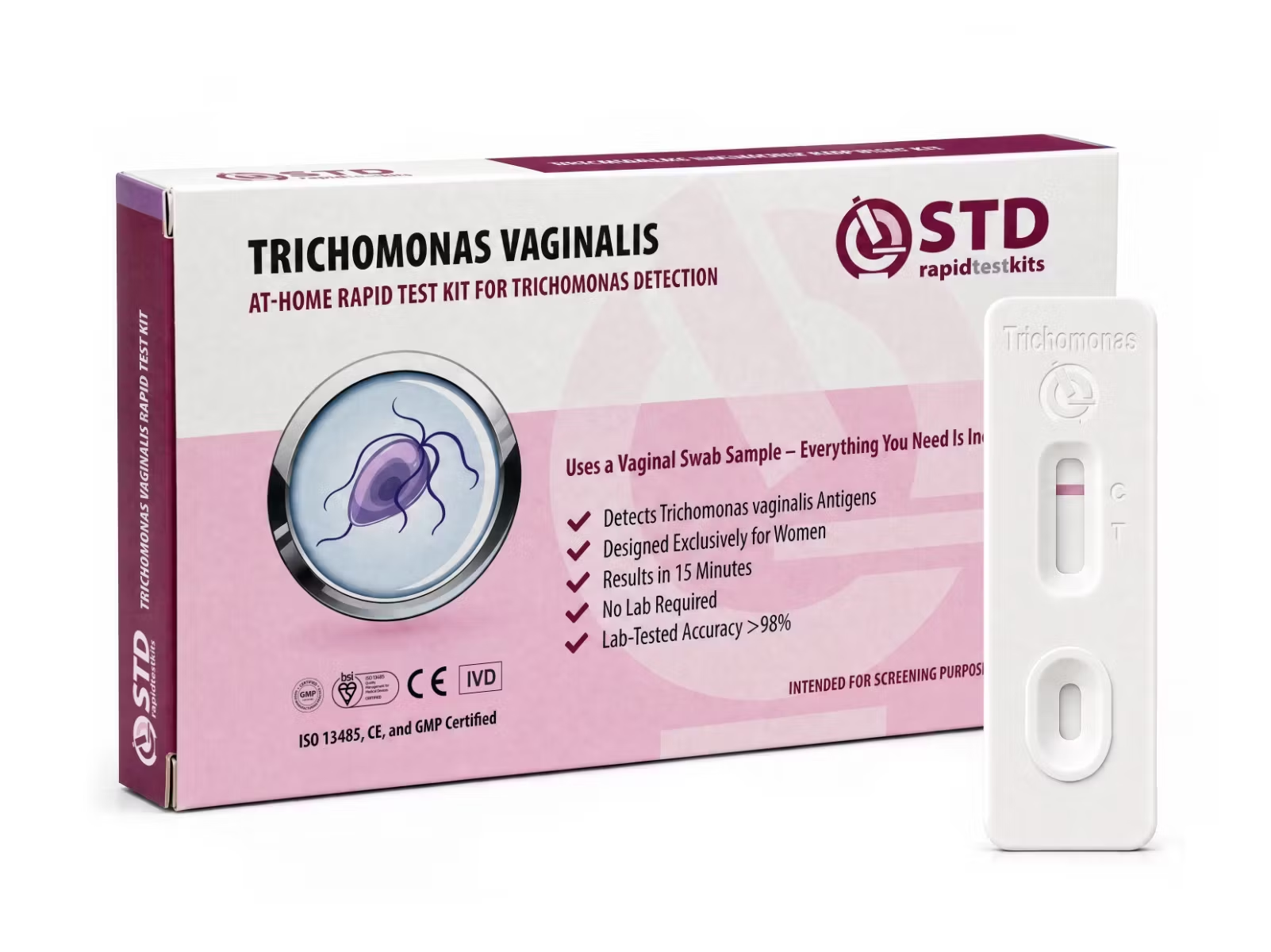
For the STI question specifically, an at-home test makes the step lower-friction. The trichomoniasis kit below is a self-collected vaginal swab validated for women, which is the most directly relevant single test for the odor pattern this article is about. The trich swab detects the active parasite rather than antibodies, so there is no window period: it can be used as soon as symptoms appear or as a routine screen after a new exposure. If you would rather screen for multiple infections at once (a sensible call when there has been an exposure and any uncertainty), the broader combo further down covers the more common bacterial and viral STIs in a single panel.
One scope note: our trichomoniasis and HPV at-home kits are validated for vaginal self-swab only. Male partners who need to be tested should see a clinic for the right collection method. And for BV itself, the right next step is a clinician visit (or telehealth) for a confirmed diagnosis and prescription; a positive trich result on a home kit also needs follow-up with a clinician for treatment.
This article is published by stdrapidtestkits.com, which sells at-home STI testing kits. We recommend products based on fit-for-purpose for your concern, not commercial benefit. For bacterial vaginosis specifically, we do not sell an at-home test; BV is diagnosed by a clinician via vaginal pH and a wet mount or swab. The kits referenced here cover the STI causes that can sit alongside or behind an odor change.
What Not to Do When You Notice a Strong Odor
The instinct when something feels off is to clean it away. Scented washes, intimate sprays, douches, fragrance-heavy soaps: all of these are sold on the promise of freshness and almost all of them make the underlying problem worse. The NHS advises against douching, vaginal deodorants, and scented washes, all of which can disrupt the protective bacteria that maintain vaginal pH.
The vagina relies on a slightly acidic environment maintained by protective lactobacilli. Soap, perfume, and douching wash those bacteria out, push the pH up, and create more space for the anaerobic bacteria that produce the fishy odor in the first place. The fragrance masks the smell briefly while feeding the underlying cycle for weeks.
What does help: warm water for external cleansing, unscented mild soap if you use any soap at all in the vulvar area, breathable cotton underwear, and a clinician visit (in person or telehealth) if the smell is persisting.
Douching, scented washes, and intimate sprays do not fix a vaginal odor change. They strip the protective bacteria that maintain vaginal pH and typically make the underlying cause worse over time, especially when BV is what is driving the smell.
How Long Is Too Long to Wait
There is no exact timer, but there is a pattern. A smell that shows up after sex and is gone within a day or two is almost always a temporary pH shift. Your body recalibrates and things go back to baseline. That alone does not need testing or treatment.
By day three to five, if the smell is still there or getting stronger, that is when a transient pH change starts to look more like an imbalance or infection. The second pattern is repetition: if the odor reliably comes back after sex or after every period, that is the body telling you the imbalance is not stabilizing on its own. Cleveland Clinic's vaginitis overview describes this kind of recurrent pattern as a typical signal to seek a confirmed diagnosis rather than continue to self-treat.
You do not have to rush to urgent care over a smell. But you also do not have to sit with it for weeks hoping it resolves when it clearly is not. Three days of new persistent odor is a reasonable point to act, either by testing for STI causes at home or scheduling a clinician visit for BV evaluation.
Bacterial vaginosis is the most common vaginal condition in women ages 15 to 44. Having BV can increase your chance of getting an STI.
When the Smell Is Your Only Symptom
One of the more confusing presentations is odor with nothing else accompanying it: no itching, no pain, no fever, no discharge that looks obviously different from your baseline, just a scent that was not there before. This is, oddly, the most common presentation of BV. The smell is the only signal the body bothers to give, and the absence of pain is not the absence of a problem.
This is also where self-assessment hits its ceiling. BV does not always smell exactly the same for everyone. Trichomoniasis does not always come with the irritation that textbooks describe. Normal pH variation can sometimes feel more dramatic than it is. Reading forums and comparing notes will only get you so close to the right answer.
The practical move when smell is the only symptom: give it three days. If it has not resolved, either test at home for the STI causes (trich is the most odor-linked, broader STI panels rule out the others) or book a clinician for a BV swab. The combination of an at-home STI screen plus a clinician visit for BV evaluation covers almost every cause this article has discussed.
Give a new persistent odor three days. If it has not resolved by then, test at home for the STI causes or book a clinician visit for BV evaluation. Together, those two steps cover almost every cause this article discusses.
Moving From Guessing to Knowing
The most exhausting part of an unexplained body change is rarely the symptom itself. It is the mental loop: notice, question, search, second-guess, repeat. The longer the loop runs without an answer, the louder it gets, even when the underlying issue is small. Most readers of this article will land on either a temporary pH shift (which resolves on its own) or BV (which is treatable in days once diagnosed). The remaining cases (trichomoniasis, and the quieter STIs that do not produce smell at all) are also treatable, and most of them are caught with a single screening step.
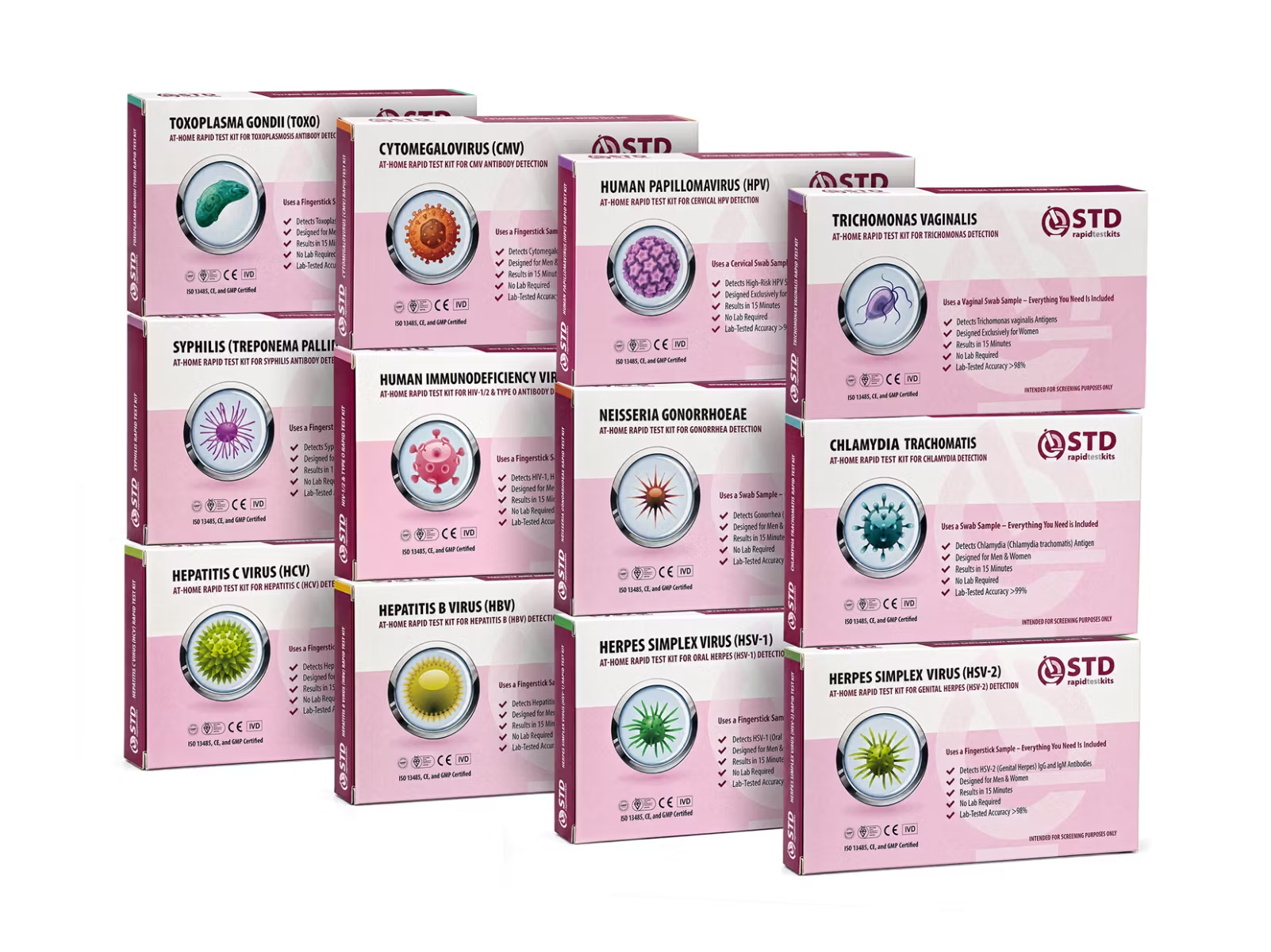
If you have had a recent exposure you are not sure about, or you want a broader screen rather than a single-infection test, the multi-test combo below covers the most common STIs in one kit. It is validated for women specifically, which fits the audience this article is written for.
An at-home trich swab rules out the most odor-linked STI. A clinician visit for a BV wet-mount or swab covers the most common non-STI cause. Together, those two steps resolve almost every scenario this article has discussed.
Frequently Asked Questions
- Does a fishy vaginal smell always mean an STI?
- No. A fishy smell is far more often bacterial vaginosis (BV), which is not classified as an STI. That said, trichomoniasis is a sexually transmitted infection that can also cause a strong, foul vaginal odor, and the symptoms overlap. If there has been a new partner or any exposure, testing for the STI causes alongside seeing a clinician for BV is the cleanest way to know.
- I have no itching or pain, just a new smell. Should I worry?
- BV most often presents this way: a smell shift with little or nothing else accompanying it. About half of women with BV are entirely asymptomatic per the NHS, meaning no odor, no discharge change, nothing detectable. The half who do notice something usually notice a scent change first, and waiting for pain or discharge to confirm typically means waiting longer than necessary. If the smell is persisting past two to three days or keeps coming back, it is worth investigating.
- Why does my vagina smell stronger after sex?
- After unprotected sex, semen briefly pushes vaginal pH toward alkaline, which amplifies the natural scent. That change usually settles within 24 hours on its own as the body restores its acidic baseline. When the smell lingers past 48 hours or returns consistently after every sexual encounter, BV is the more likely explanation and warrants a closer look.
- Can scented washes or douching fix it?
- No, and they will most likely make it worse. The NHS advises against douching, vaginal deodorants, and scented washes as part of standard BV self-care. The vagina is acidic by design and self-cleaning. Soap, fragrance, and douching strip the protective bacteria that keep odor in check, which lets the odor-producing bacteria grow back stronger.
- Can I have chlamydia or gonorrhea without a smell?
- Yes, and it is common. Chlamydia and gonorrhea usually do not cause a strong vaginal odor at all. They are often quiet infections, which is exactly why screening matters when there has been an exposure, regardless of symptoms.
- Can BV or trichomoniasis come back after treatment?
- Yes, recurrence is common with BV: a meaningful share of women have a return within twelve months of antibiotic treatment, often because the underlying triggers (new partner, douching, antibiotic courses) reappear. Trichomoniasis recurs primarily when sexual partners are not treated together. Treating partners and avoiding douching are the two biggest moves to keep recurrence down.
- How long should I wait before getting tested or seeing a clinician?
- If the smell shows up after sex and resolves in a day or two, no action is needed. If it persists past three days, or recurs after every period or sexual encounter, that is a reasonable point to act. Either test at home for the STI causes, or book a clinician visit for a BV swab. The combination of both covers almost every cause.
How we sourced this article: This guide synthesizes current public-health and clinical guidance on bacterial vaginosis and trichomoniasis from the U.S. Centers for Disease Control and Prevention, the World Health Organization, the U.K. National Health Service, the Cleveland Clinic, and MedlinePlus. Specific claims (prevalence figures, asymptomatic rates, BV-related risk language) are linked inline to the source page that states the claim. We do not provide clinical diagnosis; symptoms that concern you should be evaluated by a licensed provider.
- U.S. Centers for Disease Control and Prevention. Bacterial Vaginosis Basic Information, including prevalence, risk factors (new or multiple partners, douching, lack of condom use), and STI-risk language.
- U.S. Centers for Disease Control and Prevention. Trichomoniasis Basic Information, including the high asymptomatic-presentation rate.
- U.K. National Health Service. Bacterial Vaginosis Overview, including the asymptomatic figure and advice against douching and scented washes.
- World Health Organization. Trichomoniasis Fact Sheet, including global incidence context.
- Cleveland Clinic. Vaginitis: Causes, Treatment, and When to See a Provider, including guidance on recurrent presentation.
- MedlinePlus (U.S. National Library of Medicine). Vaginitis overview for general-audience reference.
