The more you are aware of your health, the easier it is for you to manage life, especially regarding sexually transmitted diseases. Usually, this is not the case because most people do not have to be sexually active to obtain an STD. This article looks at some of the various STDs that one would not get just by traditional sexual activity and how one can lower the chances of acquiring them.
03 October 2024
6 min read
1612
Business: Let's Define Sex
When discussing the different STDs, one needs to define the general idea behind what 'sex' is. Usually, 'sex' refers to oral sex, anal sex, and penis-in-vagina sex, where the latter is the most often recognized core sexual act in reality. However, most people have diverse sexual practices, including anal and oral sex, which also define that 'sex' encompasses a wide variety of sexual acts.
Even within this expanded definition of 'sex,' some sexually transmitted infections and diseases can be acquired without sexual contact. While it is true that many STDs are transmitted via vaginal, anal, and oral sex, as this involves mucous membranes and bodily fluids, some STDs have been known to spread through mere skin-to-skin contact and others through exposure to blood.
The myth is that any casual contact with or touching of another person's bodily fluids can acquire an STD instantly. An STD is actually spread by sexual contact with an infected person. Therefore, it is necessary to dispel the myth that all types of sex inherently lead to disease while focusing on the need to take precautionary measures through the use of a condom.
STDs Contractible Without Engaging in Sexual Activity
Here, we outline a few of the sexually transmitted diseases that do not necessarily require the conventional type of sexual intercourse.
Herpes
The HSVs, particularly HSV-2 and HSV-1, are prevalent infections. Based on the CDC, about 15.7% of Americans aged 14 to 49 have been infected with the HSV-2 virus, which is believed to be the principal cause of genital herpes. HSV-1, more commonly associated with oral herpes or 'cold sores,' is estimated to affect 50 to 80 percent of American adults. Condoms can reduce the risk of herpes transmission, but if the virus resides on areas unprotected by condoms, such as lips or thighs, then transmission is possible.
Chlamydia
If left untreated, chlamydia can cause permanent severe damage to the woman's reproductive system, leading to infertility. It is transmitted primarily through sexual contact but is contractible by oral-genital contact without intercourse. Fortunately, chlamydia is easily treatable with antibiotics.
Syphilis
Syphilis is spread by direct contact with a syphilis sore. Syphilis sores can occur on the external genitals, vagina, anus, or in the rectum. The disease spreads only when an infected person has sores. It cannot be spread by sharing toilet seats, doorknobs, drinking glasses, clothing, or bedding. If left untreated, syphilis can damage the organs and cause death. Fortunately, though, most STDs are treatable with antibiotics early in the disease process.
Pubic Lice
Pubic lice, also known as 'crabs,' are transferred through direct bodily contact such as sexual intimacy and not specifically through the actual act of sexual intercourse. They are tiny bugs that live in the hair of one's pubic region and are transferred through direct contact of the body.
HPV (Human Papillomavirus)
HPV is an STD that is transmitted through skin-to-skin contact. There are over 100 related types of HPV. Approximately 40 types may infect the genital areas, mouth, and throat. The majority of individuals who acquire HPV are asymptomatic. However, certain high-risk types can give rise to symptoms such as genital warts and cancers.
HIV
Although most sexual transmission of HIV occurs during sexual contact, it can also occur through sharing needles for intravenous drug use and through infected blood or breastfeeding if the infected woman is breastfeeding her infant.
Hepatitis A
Of the three major forms of Hepatitis, A, B, and C, Hepatitis A is the virus associated with oral contact with fecal matter; hence it has been postulated as a risk for individuals who engage in anoreceptive sex. It occurs whenever you have direct contact with fecal matter from an infected host.
Hepatitis B and C
Hepatitis B and hepatitis C are viral infections; they usually present with hepatitis, which may progress into chronic conditions and be life-threatening. Hepatitis B usually occurs from exposure to infected blood, semen, or other body fluids. It is most commonly acquired via sharing needles, from an infected mother at birth, or through having unprotected sexual contact with a person infected with the virus. Similar to Hepatitis B, Hepatitis C spreads through blood-to-blood contact, with shared needle transmission being one of the most common modes of transmission. However, unlike Hepatitis A and B, a vaccine for Hepatitis C is currently unavailable. Both Hepatitis B and C can cause serious health complications, including liver cirrhosis or liver cancer, when their infection is left untreated. Screening and vaccination—the latter being applicable to Hepatitis B only—are important preventive methods, while both diseases have various treatments that aim at preventing further disease progression into more serious liver conditions.
Molluscum Contagiosum
Another less known STD, Molluscum contagiosum does not necessarily need sexual intercourse to be transmitted. A skin infection, it involves small flesh-colored bumps on the infected area and may be spread through skin-to-skin contact, including the genital areas, or from things that carry the virus.
Trichomoniasis
Despite being among the most common STDs, most people know little about Trichomoniasis. It can be sexually transmitted, but it can also be spread through the touching of a partner's genitals with hands carrying infected fluids, sharing sex toys, and during contact between vulva and vulva.
Condoms or dental dams can greatly reduce the possibility of their acquiring these infections, but no method completely protects against skin-to-skin STDs. It is nonetheless a risk that calls for education and sensible precautions rather than panic.
Much like we cannot protect ourselves completely from common colds and flu, we cannot be completely safe from the risk of acquiring STDs if sexually active. The goal, therefore, should be to reduce that risk through knowledge, regular testing, open communication with partners, and appropriate use of preventative measures.
By keeping an informed outlook and adhering to practices considered safe, you will be in a better position to manage your sexual health with more certainty.







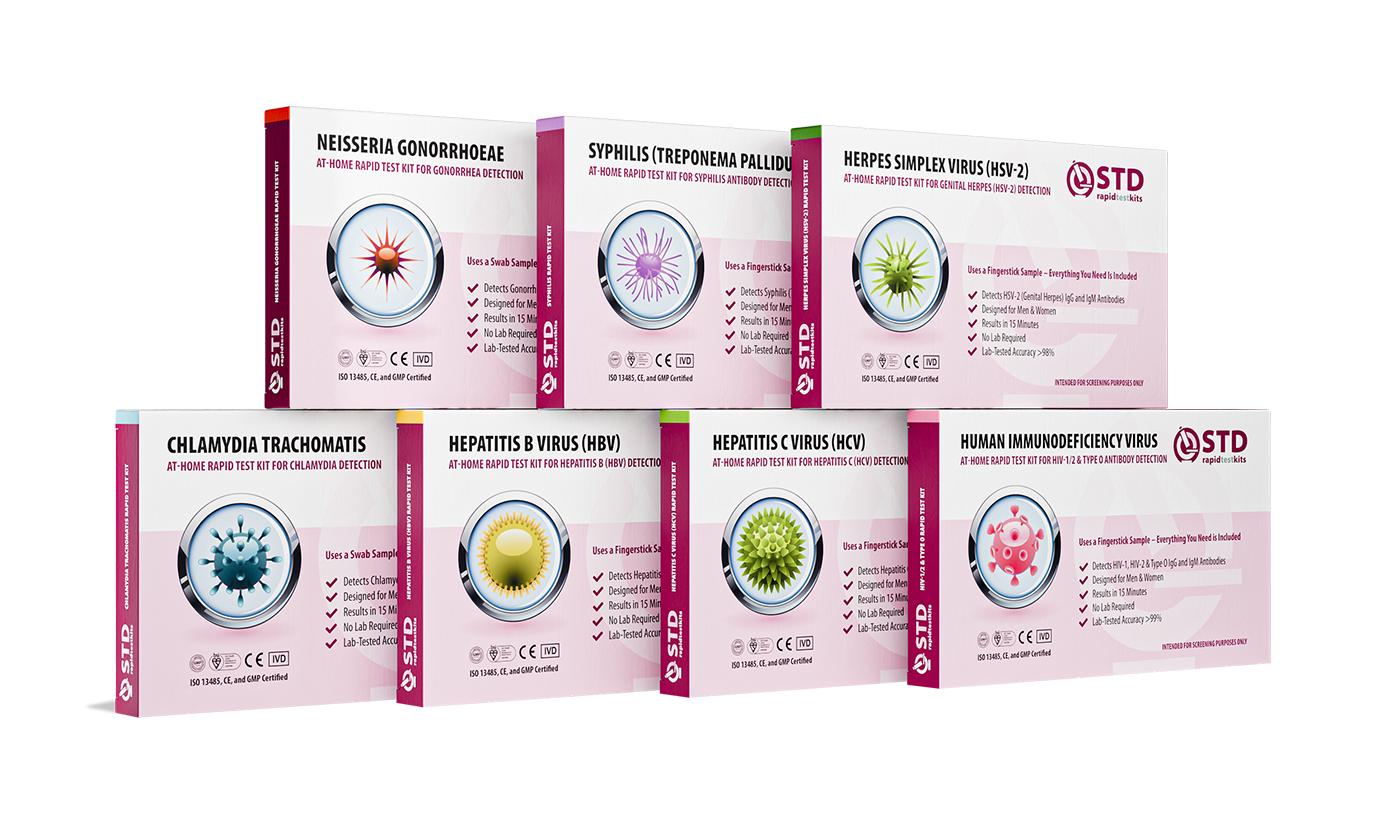
 For Men & Women
 Results in Minutes
 No Lab Needed
 Private & Discreet


