





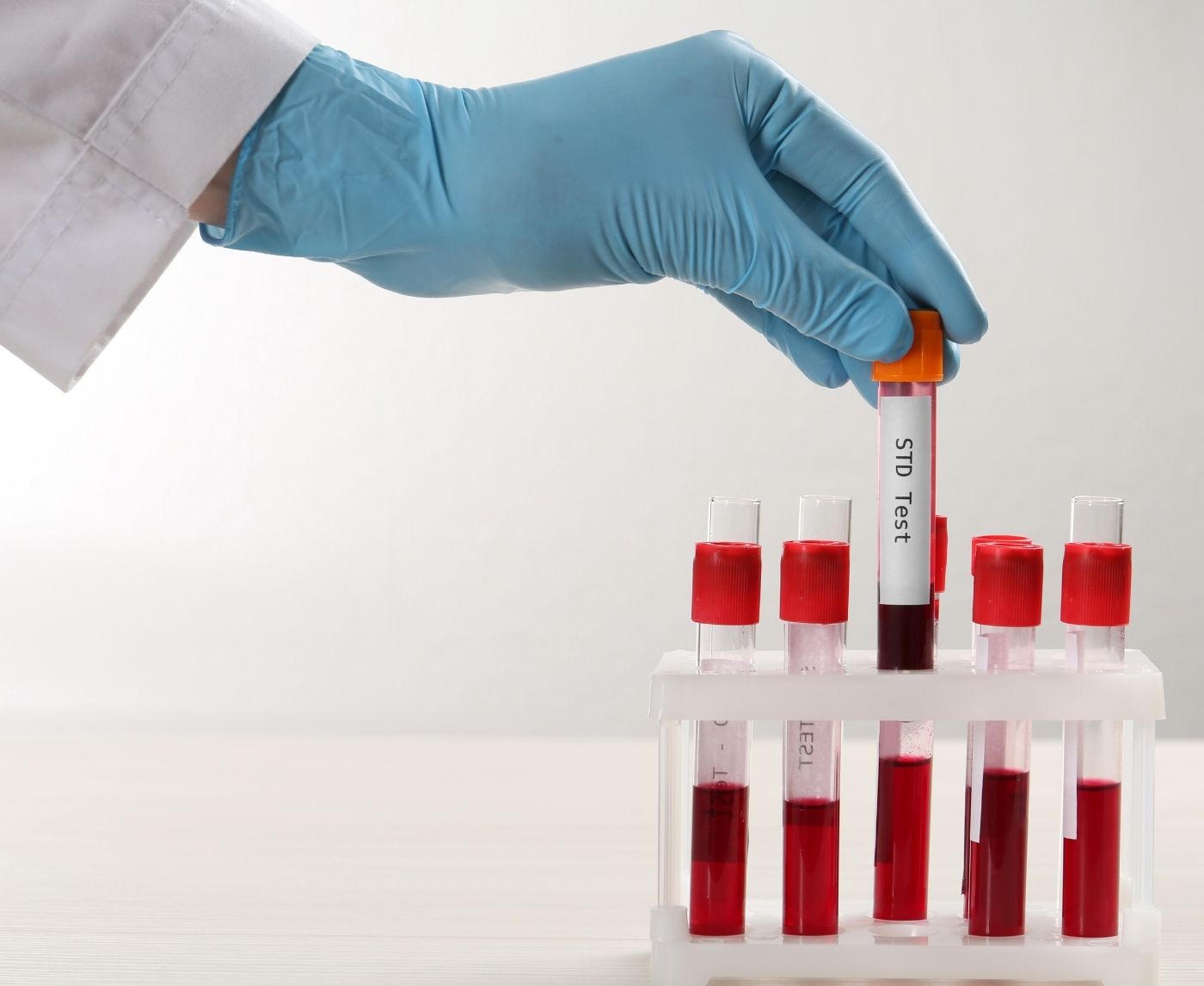

Quick Answer: STD testing isn’t just for when you think something’s wrong. It’s a normal, essential part of sexual wellness that supports confidence, intimacy, and long-term health, even when you have no symptoms at all.
What STD Testing Has Been (And What It Needs to Be)
For decades, the idea of STD testing has carried this heavy subtext: you get tested when something’s wrong. It’s reactive. Secretive. Linked to risk, fear, or guilt. Even the words used to talk about it, like "clean" vs. "dirty", reinforces that shame-soaked mindset. We hear about it after hook-ups gone wrong, anonymous partners, or the telltale sting of something we wish weren’t there. But wellness? Self-care? Testing doesn’t usually make it into those conversations.
Let’s reframe that. Because the reality is, most STDs don’t show symptoms right away, or ever. According to the CDC, infections like chlamydia and gonorrhea are often completely asymptomatic. That means you could be carrying something, passing it to someone you care about, and never know. In that context, getting tested becomes the exact opposite of crisis, it becomes clarity. And clarity is wellness.
Sexual wellness isn’t just about what feels good, it’s about what feels secure, grounded, and informed. When we know our status, we make more confident choices. We talk to partners differently. We walk into intimacy with less fear and more trust. That’s the testing story we need to start telling.
Scene Shift: From Panic to Prevention
Jordan, 29, had been in what she called a “situationship” for about four months. Things were casual but consistent, condoms were used… most of the time. No signs of symptoms, no dramatic breakups. But before starting a new relationship, she paused. “It wasn’t that I was worried. I just didn’t want to bring any baggage into something fresh,” she said. “So I got tested. It felt like washing my sheets or cleaning my apartment before someone comes over.”
There was no drama, no diagnosis. Just the quiet relief of a result. Negative. But that wasn’t the point. The point was that she didn’t have to guess. She could move forward knowing, not hoping. This is what wellness-based testing looks like, intentional, emotionally smart, and free from panic.
Still, we don’t hear those stories enough. Testing is often used as the punchline in sitcoms or the climax in reality shows. But real people, queer, straight, monogamous, poly, married, or dating, test without a scare. Because wellness is about maintenance, not just emergencies.

People are also reading: Yes, Men Get HPV Too, And It’s More Dangerous Than You Think
Why “I Feel Fine” Doesn’t Mean You’re In the Clear
One of the most persistent myths around STDs is that you’ll know if you have one. Burning, itching, discharge, sores, these are the things people wait for. But the data paints a very different picture. According to the National Institutes of Health, up to 70% of chlamydia cases and more than 50% of gonorrhea cases are completely asymptomatic in women. For men, many cases of trichomoniasis and HPV fly under the radar.
Waiting for a symptom is like waiting for your car to make a weird noise before checking the oil. It's risky, and it often comes too late. Many infections, left untreated, can lead to long-term issues like pelvic inflammatory disease, infertility, chronic pain, or increased HIV susceptibility.
The issue is that if we keep telling people that testing is only for when you're sick, most STDs will go undetected. That hurts people and the health of the public. The more we normalize testing as part of general wellness, the more we break that pattern of late detection and silent transmission.
When Should You Test If You’re Not Worried?
Just because you're not in a high-risk situation doesn't mean you're off the hook. Sexually active people, especially those with new or multiple partners, should be testing regularly. Depending on your lifestyle, relationship structure, and personal preferences, "regularly" can mean different things. This is a good place to start:
| Sexual Activity Level | Recommended Testing Frequency | Common STDs to Check |
|---|---|---|
| Monogamous, long-term relationship | Annually (or when changing partners) | Chlamydia, Gonorrhea, Syphilis, HIV |
| Multiple partners, no symptoms | Every 3–6 months | All common STDs + Hepatitis B/C |
| New partner or open relationship | Before and after each new encounter | Chlamydia, Gonorrhea, HIV, HSV, Trichomoniasis |
| Symptoms or partner notification | Immediately, then follow-up if needed | All applicable tests |
Table 1: General STD testing frequency based on relationship dynamics and exposure risk. Always consult a healthcare provider for personalized advice.
This isn’t just about catching an infection, it’s about building a rhythm of care. Like dental checkups or annual physicals, STD testing becomes easier (and less anxiety-inducing) the more it becomes routine.
And if you're not sure which test to take or when? You’re not alone, and you’re not expected to know everything. That's why accessible testing platforms exist, like STD Rapid Test Kits, where you can discreetly choose from single STD tests or an all-in-one Combo STD Home Test Kit.
Check Your STD Status in Minutes
Test at Home with Remedium8-in-1 STD Test Kit
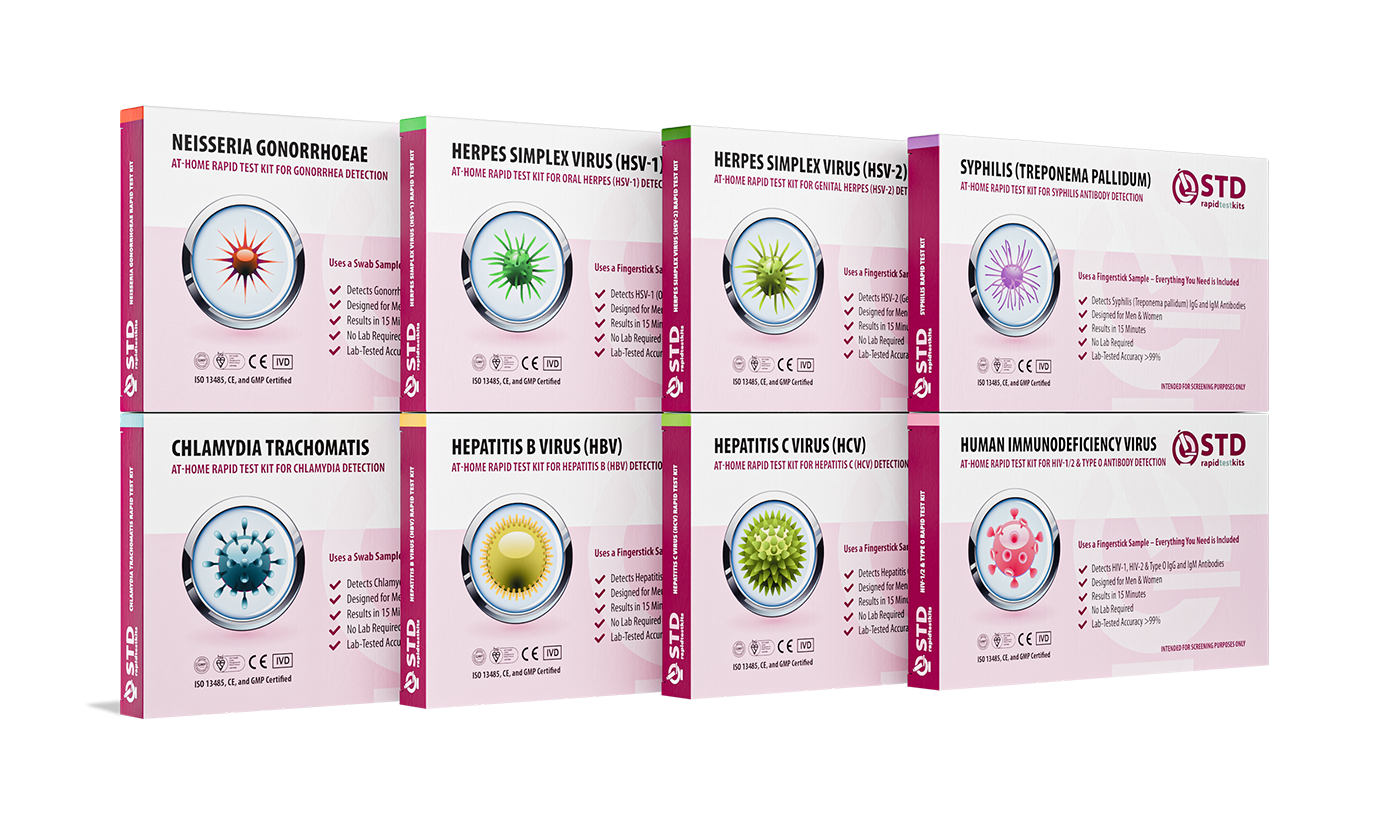
 For Men & Women
 Results in Minutes
 No Lab Needed
 Private & Discreet
Order Now $149.00 $392.00
For all 8 tests
Testing as an Act of Trust, Not Just Protection
There’s something deeply intimate about saying, “I got tested.” Not because it implies something bad happened, but because it shows care, for yourself and for your partners. It’s a soft, unspoken way of saying, “You matter to me.” That’s why STD testing is woven into the fabric of trust, not just prevention. And it’s why more couples, whether monogamous or not, are starting to make testing part of their relationship rituals.
Marcos and Eli, both in their early 30s, shared everything, Spotify passwords, laundry days, even Google calendars. When they decided to open their relationship, testing wasn’t an afterthought. “We didn’t do it because we didn’t trust each other,” Marcos said. “We did it because we do.” Regular testing became a monthly calendar reminder, like paying rent or watering the plants. “It wasn’t about fear. It was just part of how we stayed grounded,” Eli added.
In long-term relationships, especially where communication is strong, regular testing can be a mutual commitment. It removes assumptions and replaces them with clarity. It’s also a great excuse to talk about boundaries, monogamy, desires, and how you both define safety. When viewed through this lens, STD testing becomes a wellness check-in that strengthens emotional intimacy, not a tool for suspicion.
Emotional Relief: The Most Underrated Benefit
We don’t talk enough about the emotional chaos that not knowing can cause. The guessing. The Googling. The “what if” spiral that starts with a tiny itch and ends with you convinced you’re dying of something you didn’t even know existed. This is where testing becomes more than diagnostic, it becomes psychological first aid.
Sam, 24, had just started seeing someone new. “I knew I hadn’t done anything reckless,” he said. “But I couldn’t stop checking myself in the mirror, Googling weird bumps, freaking out over nothing.” After three weeks of worry, he ordered a test kit. “It was negative. But even if it hadn’t been, I just felt calm knowing. I could stop wondering.”
This is why testing is part of mental wellness too. The act of knowing can lift a massive emotional weight. Even when results are positive, the clarity gives you a next step, a plan. And when results are negative, it’s like flipping off a switch that’s been buzzing in your head for weeks. Either way, testing pulls you out of panic and back into your body.
There's a term psychologists use: intolerance of uncertainty. It's the discomfort people feel when they don’t have clear answers. Getting tested for STDs directly addresses that discomfort. It takes you from worrying and guessing to knowing for sure. That’s not just medical, that’s mental wellness in action.
At-Home Testing: How Convenience Drives Care
Part of the new wave of wellness-based testing is thanks to access. At-home kits have exploded in popularity, and for good reason. They offer privacy, ease, and speed, three things that make it easier to act before worry builds. You don’t need to make an appointment, explain your sex life to a stranger, or sit in a clinic waiting room staring at a pamphlet called “Discharge: What’s Normal?”
Instead, you can swab, prick, or pee in the comfort of your own home. That removes a huge barrier for people who live in rural areas, who are LGBTQ+ and wary of judgment, or who just don’t want to explain their sex life to a pharmacist. But how do these options compare to clinic or lab testing?
| Testing Method | Turnaround Time | Privacy | Best For |
|---|---|---|---|
| At-Home Rapid Test | 10–20 minutes | Very High | Immediate clarity, frequent check-ins |
| Mail-In Lab Kit | 2–5 business days | High | High sensitivity, discreet results |
| Clinic-Based Test | Same-day to 7 days | Moderate | Follow-ups, complex cases, insurance |
Table 2: Comparing STD testing options for speed, discretion, and utility. Choose what fits your lifestyle, not just your fear level.
Testing shouldn’t be a punishment. It shouldn’t be a last resort. It should be like brushing your teeth, something you do because you care about how you feel, not just what could go wrong.
If that sounds like something you need to normalize in your life, start here: the Combo STD Home Test Kit offers coverage for multiple infections in one discreet kit, fast, private, and made for everyday use, not emergencies only.

People are also reading: The Rash That Won’t Quit: When It’s Not Just an Allergy
How STD Testing Supports Sexual Freedom
Sexual wellness is about more than avoiding infections, it’s about feeling empowered in your body and relationships. And there are limits to that freedom. You decide who touches you, when, and how. You get to ask questions, voice concerns, and request testing before things get physical. That’s not prudish, it’s power.
STD testing makes those conversations possible. It gives you data. It gives you a timeline. It gives you something to share that isn't just “I think I’m fine.” And that makes pleasure safer. Because the goal of sex isn’t just to avoid problems, it’s to feel good, connected, and safe. You can’t feel safe when you’re unsure. Testing fixes that.
This is especially true in queer and non-monogamous communities where openness around health is a core part of consent. When testing becomes part of how you show respect for partners, not just protect yourself, it elevates sex to something more conscious and compassionate. That’s not medicalization. That’s liberation.
Let’s be honest: in a world that tries to make people ashamed of their desire, taking your sexual health into your own hands is an act of rebellion. And testing is one of the simplest, clearest acts of care you can choose. Not because you’re afraid, but because you’re free.
Breaking the Stigma: You’re Not “Dirty” , You’re Doing the Right Thing
Let’s call out the elephant in the bedroom: the word “clean.” It’s tossed around casually, “I’m clean,” “Are you clean?”, as if being STD-free is some kind of moral badge. But think about what that implies. That anyone who tests positive is... dirty? Gross? Dangerous? That’s the kind of thinking that keeps people from getting tested. And it’s wildly outdated.
The truth? You can be the most cautious, respectful, and monogamous person on the planet and still catch something. Many STDs don’t care about your character. They care about exposure. And the only way to know you’ve been exposed is to test. Being proactive isn’t suspicious, it’s responsible. It’s sexy. It’s wellness in motion.
Priya, 34, works in healthcare. She once told a new partner she got tested every three months, and his face changed. “He looked weirded out, like it meant I was doing something wrong,” she said. “I told him, no, it means I take care of myself.” That conversation didn’t kill the vibe. It built trust. Because when we stop making testing synonymous with suspicion, we open the door to a new kind of connection: one rooted in honesty, not shame.
If the idea of getting tested still feels like admitting failure, ask yourself: who benefits from that shame? Not you. Not your partners. Definitely not your health. Let’s dismantle it, test by test.
“But What If It’s Positive?” , Facing That Fear Without Panic
This is the hidden worry that stops so many people from testing at all. The fear of a positive result. The fear of what it means, who you’d have to tell, what it might say about you. But here’s the reality check: most STDs are treatable. Some, like chlamydia and gonorrhea, are curable with a single round of antibiotics. Others, like herpes and HIV, are manageable with medication and lifestyle support.
And you don’t have to face it alone. Many at-home testing services offer anonymous support lines, telehealth options, or resources to help you understand your results. Even better: knowing early often means better outcomes. Less transmission. Easier treatment. More peace of mind.
DeShawn, 21, found out he had syphilis from an at-home test he took after feeling “off” but unsure. “I was scared. I thought it was going to ruin my life,” he said. “But it didn’t. I got treated the same week. I told my partner. They got tested. And we were okay.”
He wasn’t dirty. He wasn’t doomed. He was just a human who got clarity, acted fast, and moved on. And that’s the real story of most positive results, less drama, more direction. More self-respect, not less.
Check Your STD Status in Minutes
Test at Home with Remedium6-in-1 STD Test Kit
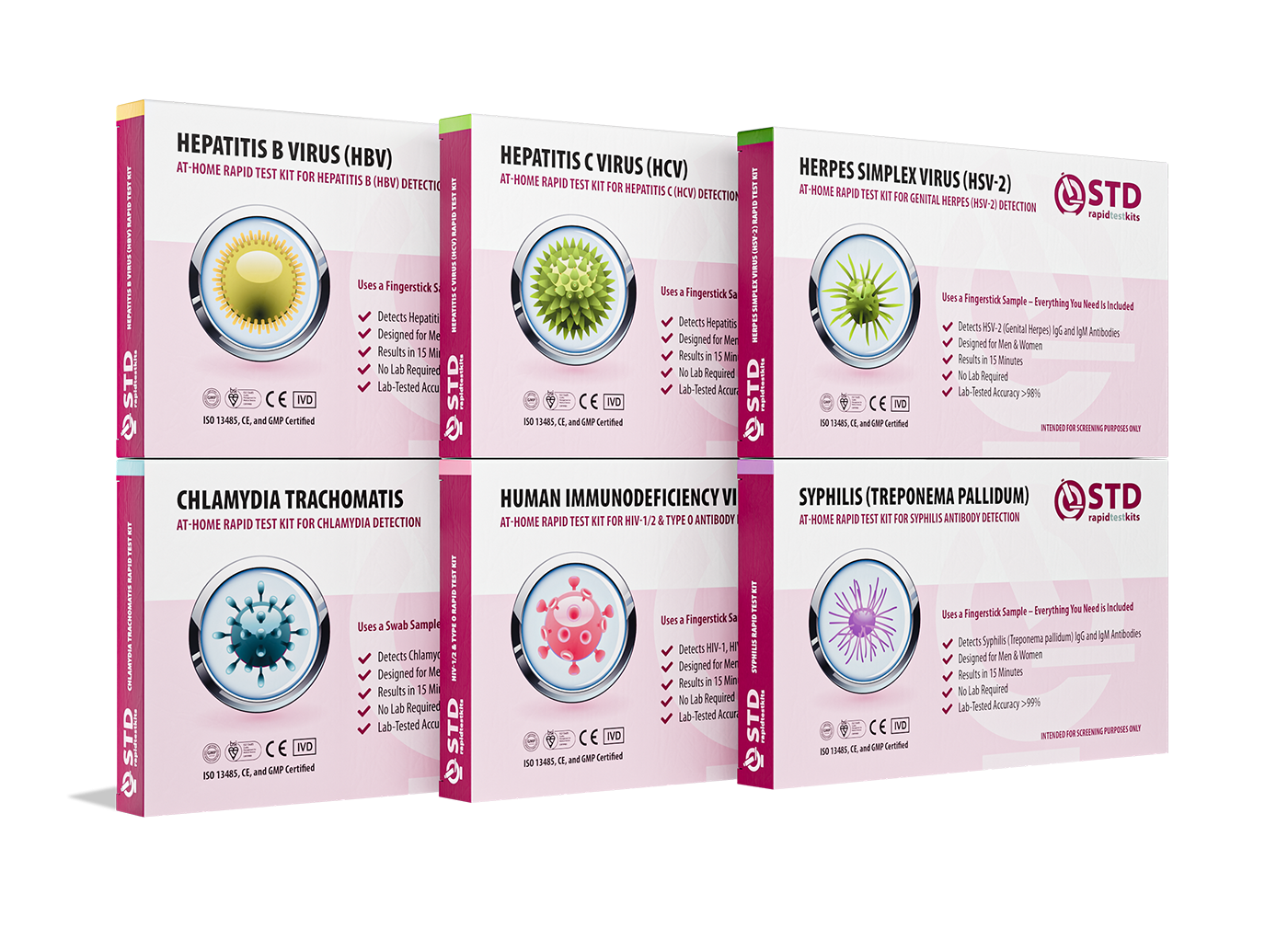 For Men & WomenResults in MinutesNo Lab NeededPrivate & Discreet
Order Now $119.00 $294.00
For all 6 tests
Let Testing Be a Wellness Ritual, Not a Reaction
We do so many things to maintain our wellness without being sick. We stretch. We hydrate. We take vitamins. We journal. We go to therapy. STD testing belongs in that same toolbox, especially for people who are sexually active, exploring, or entering new relationships.
You don’t need to wait for a reason. You are the reason. Your comfort, your confidence, your clarity. And if testing becomes something you do on your terms, not just in response to a scare, it gets easier. More empowering. Less scary. That’s when it becomes a habit, and a healthy one at that.
If you're ready to make it part of your wellness ritual, start with an at-home kit from STD Rapid Test Kits. No appointment. No awkward waits. Just clarity, on your schedule, in your space.
You are not overreacting. You are not being paranoid. You’re being proactive. And that, in itself, is something to be proud of.
FAQs
1. Can I really have an STD and not know it?
Totally. In fact, most people who test positive for something like chlamydia or HPV had no idea anything was wrong. No symptoms, no weird smells, no red flags. That’s why regular testing is so important, it’s not about catching a mistake, it’s about staying ahead of the silence.
2. Do I need to get tested even if I always use protection?
Short answer: yes. Condoms reduce risk (a lot), but they don’t eliminate it completely. Skin-to-skin infections like herpes or HPV can still spread even when you’re being careful. Testing regularly just fills in the gaps your condom can’t cover.
3. Is it weird to ask a partner to test with me?
Not weird, actually really hot. Asking someone to get tested with you says, “I care about both of us.” Try something like, “I like where this is going, and I’d feel even better if we both got tested.” Framed as shared care, not suspicion, it’s a power move.
4. What if I test positive? Is my sex life over?
Absolutely not. A positive result doesn’t cancel your sex life, it gives you a chance to manage your health and protect future partners. Most STDs are treatable, and many people have full, happy, wild sex lives with lifelong infections like herpes or HIV. It’s not the end. It’s a new plan.
5. Is at-home testing actually accurate?
When used correctly and at the right time? Yes, very. At-home tests like the ones from STD Rapid Test Kits are FDA-approved and backed by science. Just be sure to follow instructions and test after the window period (that sweet spot when your body has had time to react to the infection).
6. How often should I test if I’m not sleeping around?
First off, testing isn’t just for the wild weekends. Even if you're monogamous or just not very active right now, a once-a-year checkup is a great idea. New relationships, condom slips, or a past partner’s unknown status are all good reasons to stay on top of it.
7. Do I need to tell anyone if I test positive?
If you’ve had recent partners, yeah, it’s the decent thing to do. But it doesn’t have to be awkward or dramatic. Many services even offer anonymous notification tools. It’s not about blame. It’s about giving someone the chance to take care of themselves too.
8. What if I’m scared to know?
Totally normal. But here’s the truth: not knowing doesn’t make it go away. Most people feel way less anxious after testing, positive or negative, because now they have a clear next step. Knowledge gives you back your power.
9. Is it safe to rely only on at-home kits?
For most people, yes. But if you have ongoing symptoms, are pregnant, immunocompromised, or just want a second opinion, don’t hesitate to follow up with a clinic. At-home testing is a great first step, but you’re allowed more than one.
10. Can testing really make me feel better, even when I’m fine?
Yes, and that’s kind of the whole point of this article. Testing can be an act of emotional relief, not just medical screening. It's like keeping a journal or going to therapy; it helps you clear your mind and bring peace back into your sex life.
You're Not Just Testing, You're Taking Ownership
One thing you should take away from this article is that getting tested isn't about guilt, risk, or fear. It’s about ownership. It’s about being the kind of person who takes their health seriously, who values intimacy enough to protect it, and who doesn’t wait for symptoms to do the right thing.
STD testing is a tool. But it's more than that; it's a way of thinking. One that says: I don’t just want to avoid problems, I want to show up for my body, my relationships, and my peace of mind. And the good news? You can start that mindset today. Quietly. Privately. Powerfully.
Don't wait for a scare or a symptom to take action. This at-home combo test kit makes it easy to check for the most common STDs quickly and discreetly, from your bathroom, not a waiting room.
How We Sourced This Article: We combined current guidance from leading medical organizations with peer-reviewed research and lived-experience reporting to make this guide practical, compassionate, and accurate.
Sources
1. STI Testing and Resources | Getting Tested for STIs (CDC)
2. CDC's recommendations for STI testing
3. Relationships Between Perceived STD-Related Stigma and STD Testing (NIH/PMC)
4. Conversation Tips for Discussing STI Testing (CDC)
5. Which STI Tests Should I Get? (CDC)
6. Sexually Transmitted Infections Treatment Guidelines, 2021 (CDC MMWR)
7. Know the Facts About STI Testing and Prevention (CDC)
8. Get Tested for STIs (ASHA Sexual Health)
About the Author
Dr. F. David, MD is a board-certified infectious disease specialist focused on STI prevention, diagnosis, and treatment. He blends clinical precision with a no-nonsense, sex-positive approach and is committed to expanding access for readers in both urban and off-grid settings.
Reviewed by: Maria Sanchez, RN, MSN | Last medically reviewed: January 2026
This article is only for information and should not be used instead of medical advice.


