
Published: September 2025 | Last updated: May 2026 | Editorial review and quality control: Martina N.
Let's start where most people do: standing in front of a bathroom mirror at 2 in the morning. You're brushing your teeth and notice a small red spot on your lip that wasn't there yesterday. It doesn't hurt. You tell yourself it's a pimple, maybe an ingrown hair, definitely nothing. Still, something nags. What if it's herpes? You've never had an outbreak. You usually use protection. So you do what almost everyone does in 2026: you take a photo and Google it.
This is the moment where shame and technology collide. Most people don't search "I think I have an STD." They search "tiny bump inner thigh not itchy," or "STD rash or heat rash," or "does this look normal?" Those aren't just awkward queries. They're symptoms of a bigger public-health gap: most people were never shown what sexually transmitted infections actually look like, when they show up, or how they spread. When the only sex education someone ever got was an abstinence lecture and a cartoon diagram from tenth grade, the internet starts to feel like the only place left to ask a real question.
Key Takeaways
- STIs often start with subtle or invisible signs, so a normal-looking bump, rash, or itch is not a reliable all-clear.
- Most home rapid tests are more accurate 2 to 3 weeks after exposure; HIV and syphilis can take longer to show on any test.
The Search History We're Too Embarrassed to Admit
If we could open the search history of every phone in America, we'd see how common these fears are: "STD bump or razor burn," "STD or jock itch," "can you get herpes from a toilet seat?" Most people searching those terms were never taught what these infections actually look like. Decades of incomplete sex education left them guessing. According to the Guttmacher Institute's state policy tracker, only 26 of 50 U.S. states require sex education to be medically accurate, and even fewer require inclusive LGBTQ+ content (Guttmacher Institute, State Policies on Sex and HIV Education). The gap shows up later, in a search bar, at 2AM.
One Reddit user summed it up: "I kept googling 'vaginal burning no discharge STD' for two weeks before I worked up the courage to go to Planned Parenthood. I was sure it was herpes. It was BV. But I tortured myself first." When people feel judged about their bodies and their choices, they often spiral online instead of asking for help. The longer they wait, the higher the risk of transmission, complications, and emotional distress. This is about access, autonomy, and dignity.
Per the Guttmacher Institute's most recent state policy review, only 8 states and the District of Columbia require sex education curricula to be LGBTQ+ inclusive. That's roughly 17% of all states. Queer and trans readers searching for symptom information online are often filling a classroom gap that was never filled for them.
When Google Becomes Your Doctor (And Gets It Wrong)
STIs rarely look like the textbook photos people saw in school, if they saw any at all. Many infections cause no symptoms in the early stage. The CDC notes that most people with chlamydia have no symptoms (CDC, About Chlamydia), and the same is true for many cases of gonorrhea, especially genital infections in women and pharyngeal infections in either sex (CDC, About Gonorrhea). Herpes can appear as a single small blister or a cracked corner of the mouth that looks identical to chapped skin (CDC, About Genital Herpes). Even clinicians need a test to be sure. Comparing your skin to a photo from a search result is a guessing game with real consequences.
Image search results also skew toward extremes. The pictures that rank highest are often late-stage, untreated cases, because those are what dermatology atlases and stock medical libraries publish. Comparing a small early lesion to a worst-case image can convince someone they are fine when they are not, or push them into panic over something harmless. Most of the harm happens after the panic passes, when a fading symptom gets read as reassurance and testing gets postponed.
HIV deserves its own paragraph because it drives so many late-night searches. Per CDC transmission estimates, the per-act risk from unprotected receptive vaginal sex with an HIV-positive partner is roughly 8 per 10,000 exposures; receptive anal sex sits much higher at about 138 per 10,000. Window periods matter as much as risk math. Rapid antibody home tests detect HIV between 23 and 90 days after exposure, while fourth-generation antigen plus antibody tests at a clinic shorten the window to 18 to 45 days (CDC, HIV Testing). A negative fourth-generation result at 45 days is treated as conclusive in most U.S. clinical guidance.
Search results for STI symptoms are skewed by what dermatology atlases and stock libraries publish: late-stage, untreated, photogenic-for-textbook cases. Early-stage or mild presentations almost never make the gallery. Visual triage from a search engine is one of the least reliable diagnostic moves available.
This Isn't Just Bad Sex Ed, It's a Public-Health Problem
The CDC's most recent surveillance report counted more than 2.4 million reported cases of chlamydia, gonorrhea, and syphilis in 2023. Syphilis cases hit multi-decade highs in 2022 and 2023 before declining about 22% in the 2024 provisional counts, but the absolute burden is still very high compared with the early 2010s. Globally, the WHO estimates more than 1 million new sexually transmissible infections are acquired every day, most of them asymptomatic (WHO, Sexually Transmitted Infections fact sheet). Numbers like those don't come from recklessness. They come from people not knowing what to look for, not having the words to ask, and not having a low-friction way to get checked.
What's missing is access to honest, unfiltered information at the moment people need it. It's the ability to ask, "I had unprotected sex three nights ago and now my testicles itch, what do I do?" without being met with shame or a blank stare. Instead, people resort to late-night doomscrolling through anonymous forums, blurry photos, and search suggestions that turn small worries into worst-case scenarios.
When "It Doesn't Look That Bad" Backfires
Tariq, 23 (name and details changed), was a college junior when he noticed a stinging sensation during urination and a single small sore near his groin. He googled "STD sore on thigh," saw images of late-stage syphilis, and decided he was safe because his sore didn't look "that bad." The pain faded in a day. He never got tested. Three months later, fatigue and swollen lymph nodes sent him to a campus clinic. The diagnosis was secondary-stage syphilis. He had also passed it to his partner without knowing. An image search had told him he didn't look "infected enough."
Tariq's pattern is common. People underestimate their risk when their symptoms don't match the worst-case images they've seen online. Most STIs don't come with flashing neon signs. Many are quiet, mild, or invisible. If no one taught you what "mild" looks like, the default assumption becomes "I'm fine." That false reassurance can delay care, increase onward transmission, and in some cases lead to long-term complications like pelvic inflammatory disease, infertility, or the tertiary stage of syphilis.
Most people who have an STI experience no symptoms at all, making screening essential for sexually active people.
Myth-Busting the Top Symptom Searches
Some of the most-googled questions deserve straight answers.
"STD or pimple?" is common but misleading. Herpes can present as a single small bump, even one that does not blister. It shows up in places people don't expect: the corner of the mouth, the inner thigh, the buttocks. If a bump tingles, hurts, or comes back in the same spot, it's worth checking. Many people dismiss it because it doesn't look graphic enough to count.
"Can you get chlamydia without having sex?" Yes, depending on how you define sex. Oral sex transmits chlamydia and gonorrhea. Genital-to-genital contact without penetration can transmit infection. Sharing sex toys without cleaning them between partners can transmit infection too. The idea that only penetrative sex counts is a myth, and a dangerous one.
"It burns when I pee but there's no discharge." This is a classic gonorrhea or chlamydia symptom, especially in men. Discharge is not required for diagnosis. Per CDC clinical guidance, most chlamydial infections in women and many in men stay silent or produce only mild irritation (CDC, About Chlamydia).
"STD symptoms no discharge female." Many women report general discomfort, mild cramping, or spotting and assume it's nothing. Trichomoniasis, HPV, and early-stage syphilis can all fly under the radar. The CDC reports that most people with trichomoniasis show no symptoms at the time of testing (CDC, About Trichomoniasis).
Many STIs hide. The CDC estimates most chlamydia and trichomoniasis cases stay silent at the time of testing, and gonorrhea frequently presents without obvious discharge, especially when the infection sits in the throat or rectum. If your reasoning starts with "it doesn't look or feel that bad," you're already working from the wrong baseline.
What That Bump Might Be, And Why You Should Still Test
Many common STIs look like things they aren't. You might assume a bump is an ingrown hair, a shaving cut, a yeast irritation, or a fungal rash from the gym. Sometimes it is. Sometimes it isn't. The only way to know is to test. The chart below maps the most common symptom-misdiagnosis pairs to the infections they could be in reality, and whether testing is worth your time.
| Symptom you noticed | What you might assume it is | What it could be | Worth testing? |
|---|---|---|---|
| Single red bump, painless | Ingrown hair, razor burn | Herpes, primary syphilis chancre | Yes |
| Itching without visible discharge | Yeast infection, dry skin, soap reaction | Chlamydia, trichomoniasis | Yes |
| Sore throat after oral sex | Strep, viral cold | Pharyngeal gonorrhea or chlamydia | Yes |
| Single open sore that doesn't hurt | Cut, abrasion, chafing | Primary syphilis chancre | Yes |
| Burning urination, no discharge | UTI, mild dehydration | Chlamydia, gonorrhea | Yes |
A Note for Women Searching "Itch, No Smell, No Discharge"
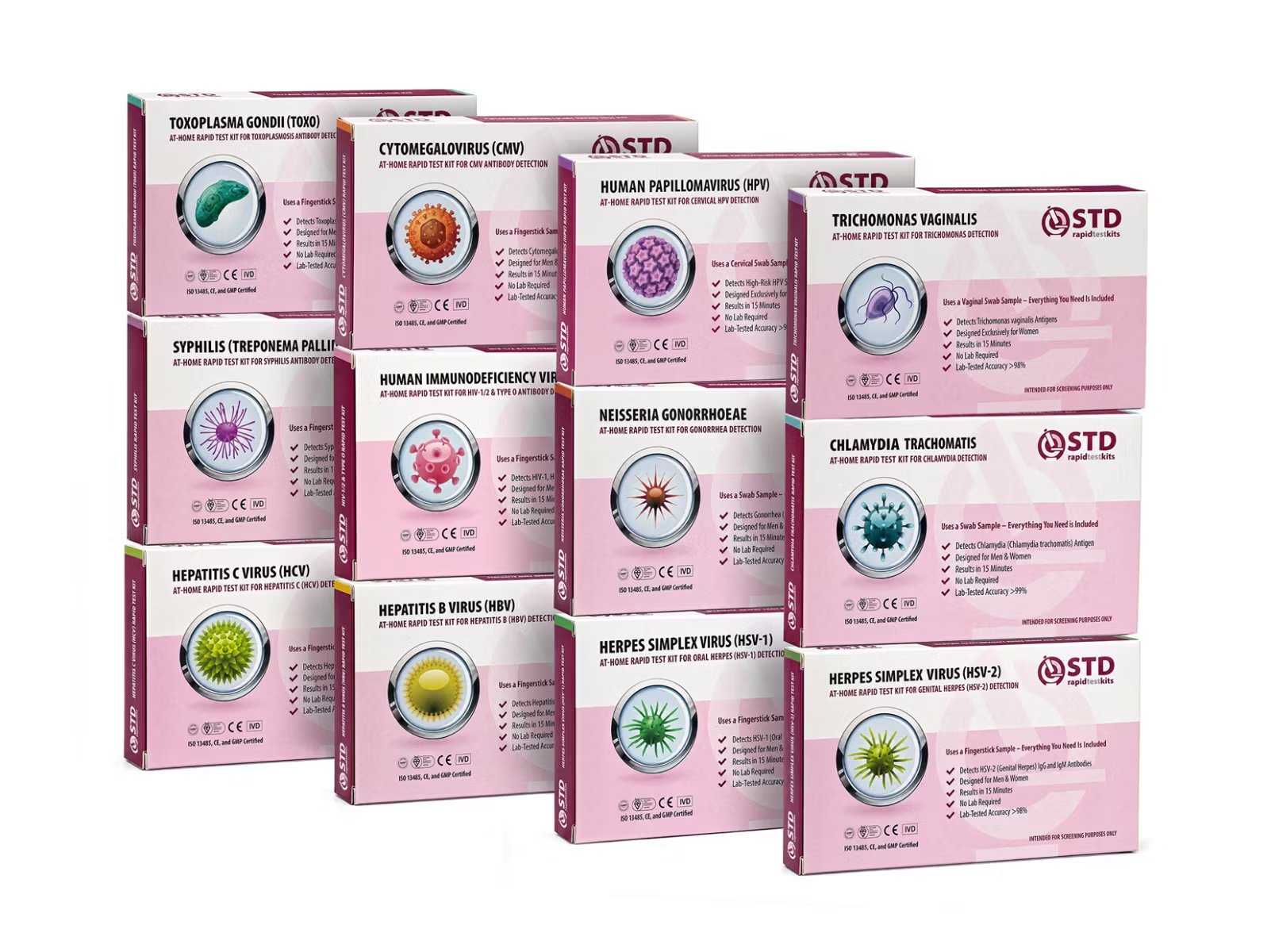
If you have a vagina and you're sexually active, the at-home test that covers the widest range of common female infections in a single kit is worth knowing about. It won't tell you whether your symptom is a yeast issue, BV, or something else, but it does rule out the infections that most often hide without obvious discharge: chlamydia, gonorrhea, trichomoniasis, HPV, plus the bloodborne panel (HIV, syphilis, hepatitis B, hepatitis C, herpes). For male readers, a similar broad-panel option exists in the 8-in-1 kit further down. Our HPV and trichomoniasis rapid swabs are validated for vaginal self-swab only, so men needing those tests should see a clinic.
When to Test: Timing Matters More Than You Think
If you had unprotected sex on Friday and woke up itchy on Sunday, the instinct is to test immediately. The science says wait a little. Every STI has a window period, the time between infection and when a test can reliably detect it. Test too early and you can get a false negative, which feels like good news when it isn't. For most rapid home tests, chlamydia and gonorrhea typically become detectable around 1 to 2 weeks after exposure (the exact window varies by kit and assay chemistry, so always check the package insert that ships with your test). Syphilis typically takes 3 to 6 weeks. Rapid HIV antibody tests usually need at least 23 days and can take up to 90 days for full accuracy, with fourth-generation antigen plus antibody tests at a clinic narrowing the window to 18 to 45 days (CDC, HIV Testing). Herpes antibody tests typically need around 12 weeks for the body to mount a detectable response.
That doesn't mean you should wait to care. If you have active symptoms (sores, burning, unusual discharge, spotting), get checked sooner. If an early test comes back negative, plan to retest a few weeks later for confirmation. Think of it as part one and part two of the same story.
Take Jade, 27 (name and details changed). Her first hookup after a long-term breakup was respectful and mostly protected. A few days later, she noticed an itch around her vulva that didn't feel familiar. It didn't hurt, didn't burn, no discharge. She googled "STD itch no smell," read a forum post, and almost talked herself out of testing because the symptom was "too mild." She tested anyway, three weeks after the encounter. Trichomoniasis. One round of treatment cleared her symptoms in days, and she avoided passing it on. Mild symptoms are often the only ones an STI gives you, so a quiet itch deserves the same response as a loud one.

From Panic to Power: Turning Fear Into Action
By the time you're googling "STD on lip or pimple," you've already done the hardest part. You've admitted that something might be wrong, and that moment carries weight. It means you care about your body, your partners, and your peace of mind. Culturally we don't treat that moment with respect. We make people feel like they're overreacting, being dramatic, or somehow at fault. The stigma doesn't just hurt feelings. It delays diagnoses, increases onward transmission, and pushes people away from care that could change everything.
Here's what we rarely say out loud: it's okay to be scared. It's okay to be confused. But you deserve real information while you sit with those feelings. Most STIs are treatable. All of them are manageable. And many can be caught early if you know when and how to test. At-home testing exists for people who need privacy, speed, and control over the timing.
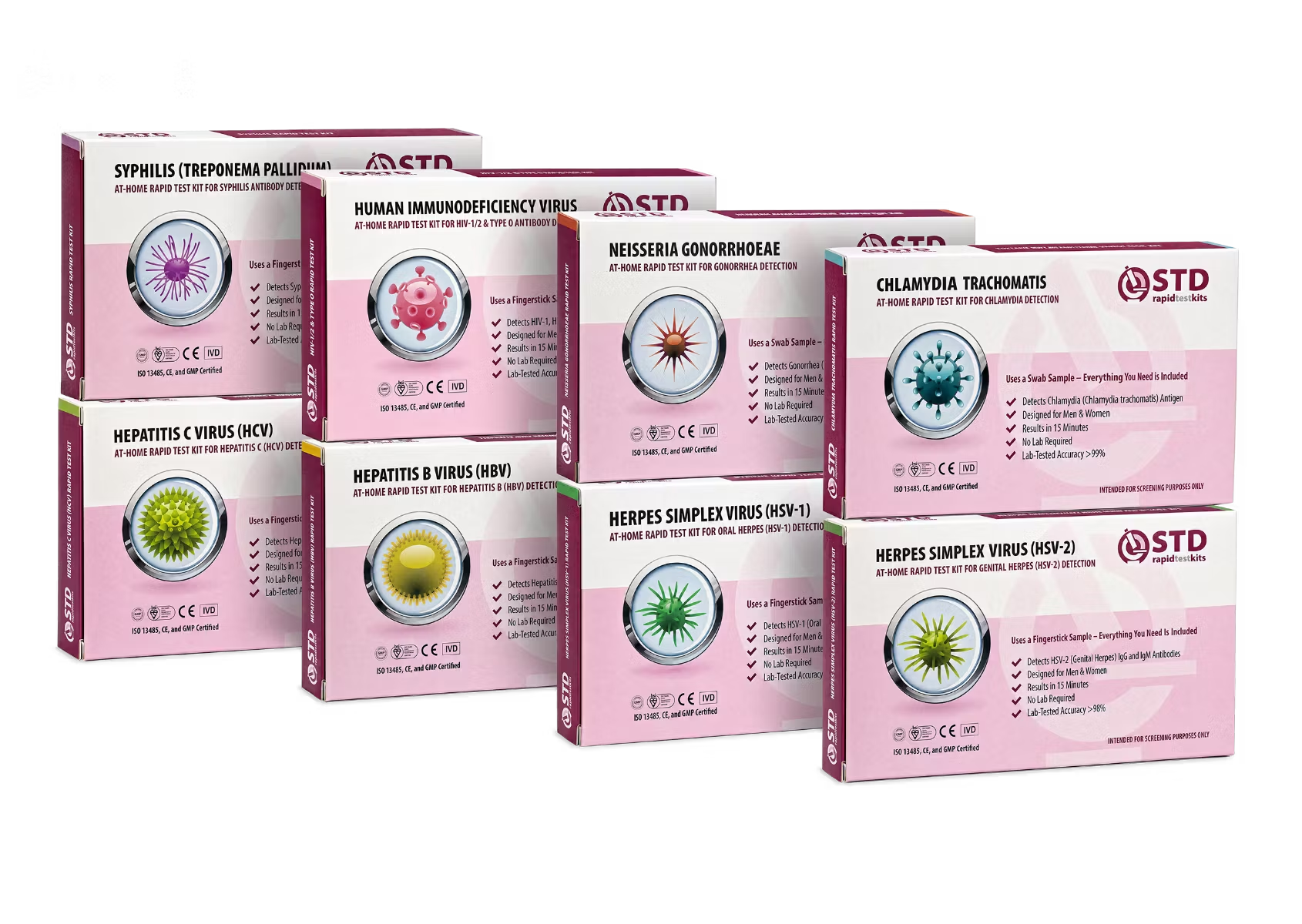
For most people whose first concern is a recent encounter rather than a specific symptom, a multi-infection rapid kit gives the broadest reassurance in one go. The 8-in-1 covers the eight infections most commonly screened for after a new partner, in one set of tests, for any gender.
FAQs about STD symptoms and testing
- Can a pimple down there mean I have an STD?
- It might. A single bump could be from shaving, friction, or an ingrown hair. But herpes and primary syphilis also show up as small, often painless sores. If a bump isn't healing in a week, changes shape, comes back in the same spot, or brings on tingling or burning, don't guess. Test.
- How do I tell an STD from a yeast infection?
- Yeast infections usually come with thick white discharge and intense itching. STIs like trichomoniasis and chlamydia can mimic that pattern, but the discharge tends to be different (yellow-green, frothy, or fishy with trichomoniasis), and itching can occur with no discharge at all. If it's new, persistent, or doesn't respond to typical yeast treatment, test before assuming.
- Why do STD photos online look so extreme?
- Because most published clinical photos show untreated, late-stage cases. Those are what medical atlases prioritize. Most real-world STIs, especially early, look mild or invisible. Comparing your bump to a graphic image is comparing a mosquito bite to a textbook. It's not a useful diagnostic move.
- Can I get an STD from oral sex?
- Yes. Gonorrhea and chlamydia can live in the throat. Syphilis can transmit through oral contact. Even HIV transmission, though lower-risk through oral than through vaginal or anal sex, is possible if there are sores or bleeding gums. A persistent sore throat after a new oral encounter is worth testing for pharyngeal gonorrhea, which requires a throat swab at a clinic (our home kits don't cover pharyngeal samples).
- I'm itchy but there's no discharge. Could it still be an STD?
- Yes. Chlamydia, gonorrhea, and trichomoniasis can cause itching, pressure, or irritation with no visible discharge, especially in early infection. You don't need dramatic symptoms to have an infection. You just need contact.
- I tested too soon. Now what?
- Don't panic. If you tested within a few days of exposure, the result may not be accurate yet. Most STIs need at least 7 to 14 days to show on a rapid test, and HIV or syphilis can take 3 weeks or longer. If you got a negative early on but you're still worried (or still having new exposures), retest after 2 to 3 weeks. One test isn't the whole story.
- Are at-home STD tests legitimate?
- Rapid home tests from established brands use the same lateral-flow chemistry that clinics use for point-of-care testing. They are screening tools, not gold-standard lab NAATs, so a positive result is worth confirming with a clinic-administered test when possible. Follow the instructions, respect the window period, and read the result inside the time window stated on the kit insert.
- Can I have an STI and not feel a thing?
- Yes, and this is the most important thing to understand. Chlamydia, HPV, trichomoniasis, and early HIV can be completely silent, sometimes for months or years. "I feel fine" is not the same as "I'm clean." Periodic testing between partners, or after any condom break, is the only reliable way to know.
- U.S. Centers for Disease Control and Prevention. Annual STI Surveillance Reports. Reported cases of chlamydia, gonorrhea, and syphilis in the U.S., with 2024 provisional updates.
- U.S. Centers for Disease Control and Prevention. About Chlamydia. Symptom prevalence and screening guidance.
- U.S. Centers for Disease Control and Prevention. About Gonorrhea. Symptoms, transmission, and pharyngeal infection.
- U.S. Centers for Disease Control and Prevention. About Trichomoniasis. Asymptomatic rates and clinical presentation.
- U.S. Centers for Disease Control and Prevention. HIV Testing. Window periods, test types, and recommended retest intervals.
- World Health Organization. Sexually transmitted infections (STIs) fact sheet. Global STI estimates and asymptomatic burden.
