
Published: September 2025 | Last updated: April 2026 | Editorial review and quality control: Martina N.
The hardest part of STD testing is usually the part that happens before you ever step into a clinic or open a kit at home: the wondering, the catastrophizing, the 2 a.m. Google searches that turn a normal post-hookup nerve into a full anxiety spiral. The physical test itself is almost anticlimactic, often a urine cup, a fingerstick, or a swab you can collect yourself. The whole appointment is typically shorter than the wait for a coffee.
This guide walks through what every common STD test involves, which infections need which sample type, when to test after a possible exposure, and how at-home rapid kits stack up against a clinic visit. Whether you are testing for the first time, returning after a long pause, or just trying to make sense of the menu of options, the goal is the same: replace the unknown with something concrete.
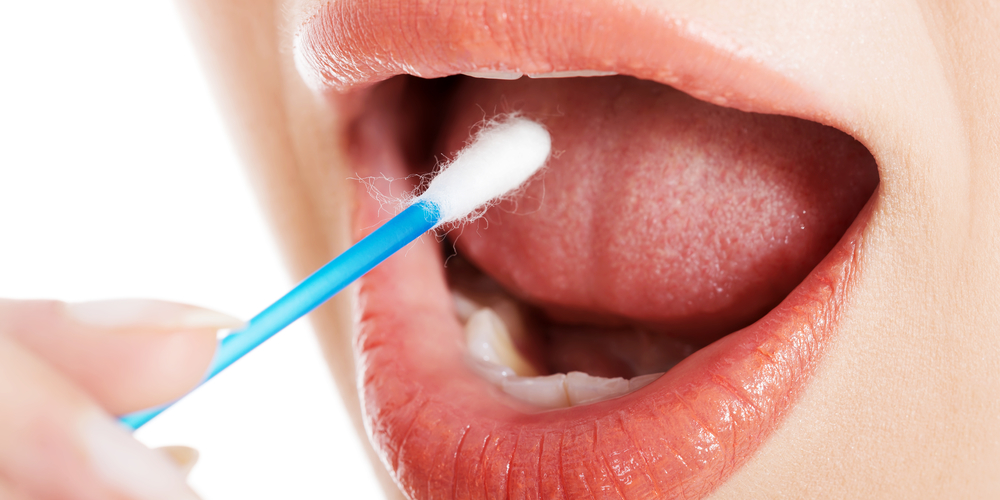
Will they swab there? What does an STD test involve?
Most STD testing uses one of three sample types depending on the infection: a urine sample for chlamydia and gonorrhea in routine screening, a fingerstick or venous blood draw for HIV, syphilis, hepatitis B and C, and herpes antibodies, and a self-collected or clinician-collected swab when symptoms or sexual practices point to throat, vaginal, or rectal sites. A standard four-test panel (chlamydia, gonorrhea, HIV, syphilis) is often completed in under 20 minutes at a clinic. With at-home rapid kits, sample collection takes minutes and the result lines appear on the test cassette in approximately 15 minutes.
Key Takeaways
- Most STD tests use urine, a fingerstick, or a swab the patient often collects themselves. Chlamydia and gonorrhea, the two most commonly screened bacterial STIs, are usually caught from a urine sample alone, not a urethral swab.
- Rapid lateral-flow at-home kits are FDA-cleared for self-collection and read at home in about 15 minutes. Clinic labs use NAAT for higher analytical sensitivity; the two approaches are complementary, not equivalent. Per CDC guidance, self-collected swabs are an accepted screening method for chlamydia and gonorrhea.
Why Routine STD Testing Matters
Most sexually transmitted infections do not announce themselves. The CDC repeatedly emphasizes that the majority of chlamydia and gonorrhea infections produce no symptoms, especially at extragenital sites like the throat or rectum (CDC STI prevention). The same is true for many early HIV, syphilis, and hepatitis infections during the period when they are most transmissible. Waiting for symptoms before testing misses most of what testing is meant to catch.
Untreated infections do not stay neutral. They can progress quietly to pelvic inflammatory disease, infertility, neurosyphilis, or chronic liver damage years after the original exposure, and they continue to be transmissible during that entire silent stretch. Routine screening is how the system catches infections before they cause damage and before the chain of unintended transmission grows. The World Health Organization recommends regular STI testing as part of routine sexual healthcare for sexually active adults, particularly those with new or multiple partners (WHO STI fact sheet).
This article is published by stdrapidtestkits.com, which sells rapid at-home test kits for several of the infections discussed below. Links in the body point to those products. Recommendations are based on fit-for-purpose for the reader's concern, not commercial benefit.
What a Standard STD Panel Tests For
Asking for an STD test does not produce one universal panel. The most common screening combination, sometimes called the Big Four, covers chlamydia, gonorrhea, HIV, and syphilis. These four account for most curable bacterial STIs plus the most clinically significant viral one, and they form the backbone of nearly every clinic-based and at-home panel.
Beyond the Big Four, your panel may also include hepatitis B and C if you have risk factors like injection drug use, multiple partners, or unprotected receptive anal sex. Trichomoniasis is added for women presenting with discharge or symptoms (this kit is validated for vaginal self-swab; male readers needing trich testing should see a clinic). Herpes antibody testing and HPV screening are not part of routine asymptomatic STI panels per CDC guidance, because antibody-only herpes results without symptoms are difficult to interpret, and HPV is screened separately as part of cervical cancer prevention in people with a cervix.
What this means in practice: ask your clinician (or read your home kit's package insert) before assuming you are being tested for everything. A four-test panel and a ten-test panel are both legitimate options, but they answer different questions.
The CDC recommends annual chlamydia and gonorrhea screening for all sexually active women under 25, and for older women with risk factors. HIV screening is recommended for all adults aged 13 to 64 at least once, with more frequent screening for people with risk factors. Syphilis screening is recommended in pregnancy and for men who have sex with men, transgender women, and people with HIV. Beyond this baseline, ask your clinician about adding hepatitis, herpes, or trichomoniasis screening based on your specific exposures.
Clinic Visit vs At-Home Rapid Kit: How They Compare
The choice between an in-person visit and an at-home rapid kit is mostly about logistics and preference. Both use FDA-cleared methods for the most common infections. Clinic labs run NAAT (nucleic acid amplification) for the highest analytical sensitivity, while at-home rapid kits use lateral-flow immunoassay strips that develop a result on the cassette in about 15 minutes. The two are complementary tools: rapid kits are well-suited to private, scheduled-on-your-time screening, and a clinic visit is the right call for symptomatic cases or when a confirmatory NAAT is needed. Pick the friction profile that fits your week.
| Factor | Clinic Visit | At-Home Rapid Kit |
|---|---|---|
| Privacy | HIPAA-protected, but waiting rooms are visible to other patients and staff | Plain packaging delivered to your address; sample collected and read in your bathroom |
| Speed | Same-day rapid HIV tests at many clinics; full lab panel results in 1 to 7 days | Result lines appear on the test cassette in approximately 15 minutes |
| Test technology | Lab NAAT (high analytical sensitivity); rapid antibody tests at point of care | Lateral-flow immunoassay strips read at home |
| Sample types | Urine, blood, throat, vaginal, or rectal swabs as needed | Self-collected swab or fingerstick blood drop, depending on the kit |
| Cost (uninsured) | Free at many public health clinics; $150 to $300 at urgent care or private clinic | $30 to $299 depending on number of tests |
| Best for | Symptomatic visits, complex sexual history, in-person counseling, confirmatory testing | Routine asymptomatic screening, privacy, scheduling flexibility |
How the Test Process Works at a Clinic
Most clinics start with a brief intake covering your symptoms (if any), the kinds of sex you have had recently, and the body parts involved. The questions are not voyeuristic; they help the clinician offer the right tests for the right exposures. Saying you have had oral sex prompts the addition of a throat swab. Saying you have had receptive anal sex prompts a rectal swab. Skipping these details means the clinician orders only the default urine and blood tests, which can miss extragenital infections entirely.
The collection sequence is short:
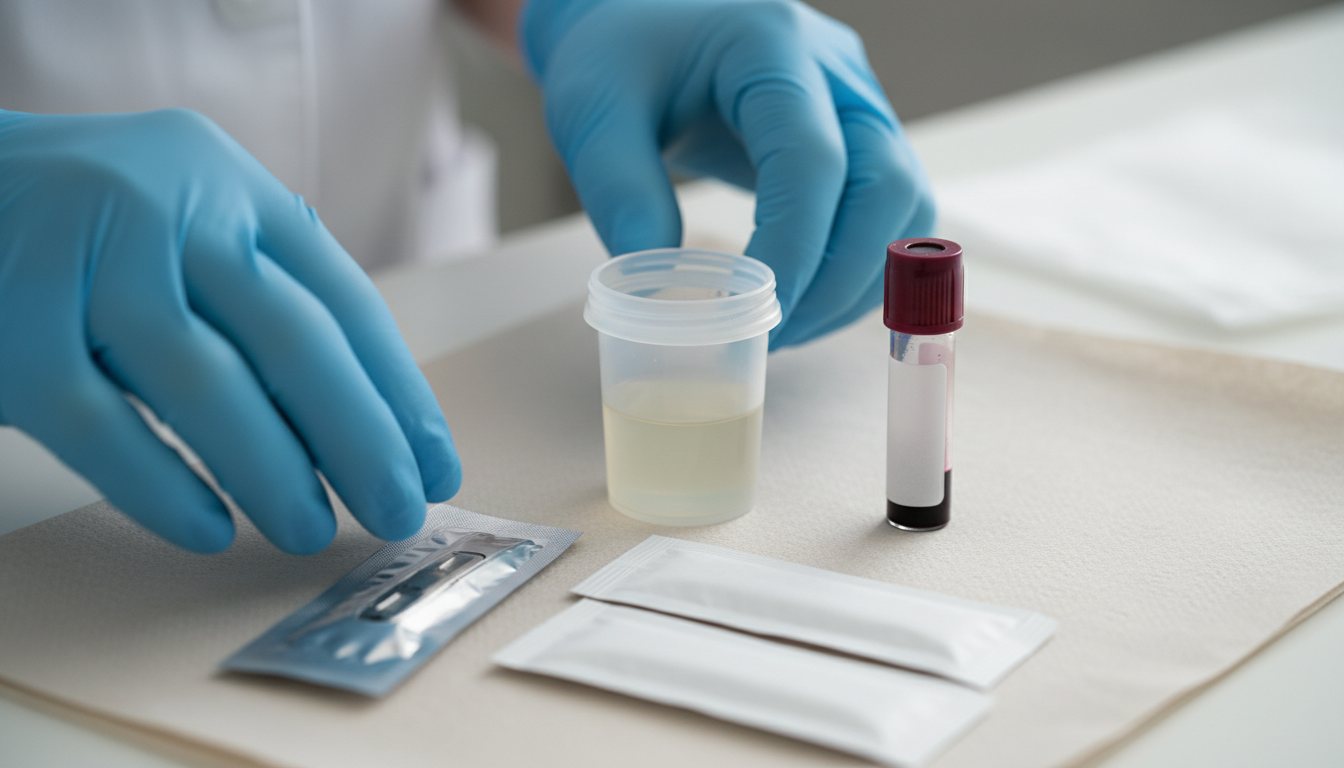
- Urine sample. A small clean-catch in a labeled cup. For chlamydia and gonorrhea testing in most adult populations, this is all that is needed. No urethral swab is required for routine screening, despite long-standing patient anxiety on this point.
- Blood sample. A fingerstick lancet or a small venous draw, depending on which tests are ordered. Rapid HIV tests and rapid syphilis tests typically use fingerstick. Hepatitis serology and confirmatory tests usually require venous blood.
- Swabs. A throat swab feels like the back of a strep test. A vaginal swab is often self-collected: insert about 5 cm and rotate gently for 10 seconds. A rectal swab is a soft cotton tip inserted briefly; clinicians often offer self-collection here too.
The whole physical part of the appointment is usually under five minutes once collection starts. Clinicians repeatedly note that the most common patient feedback after a first test is some version of, "wait, that was it?"
Window Periods: When Each Infection Becomes Detectable
A test is only as accurate as the timing of the sample. Each infection needs a certain interval after exposure before it shows up reliably. Test too early and you can get a false negative even though you are infected; test at the right time and the result reflects what is happening in your body. The CDC publishes window-period guidance for each major infection (CDC HIV testing).
Approximate window periods by infection
- Chlamydia and gonorrhea (NAAT urine or swab): typically detectable within 1 to 2 weeks after exposure. Most clinics recommend testing at the 2-week mark for highest reliability.
- Syphilis (antibody blood test): usually detectable 3 to 6 weeks after exposure. A direct lesion swab during a primary chancre stage can confirm earlier.
- HIV (4th-generation antigen and antibody combo): detects most infections 18 to 45 days after exposure per CDC. Rapid antibody-only tests need 23 to 90 days.
- Hepatitis B and C (blood antibody): typically detectable within 4 to 10 weeks after exposure, though hepatitis C antibody can take longer in some cases.
What STD Testing Costs
Money is one of the most common reasons people delay testing, and it is one of the easiest barriers to dismantle. The landscape:
- Free or sliding scale. Many county public health departments and Planned Parenthood clinics offer STI testing at no charge for patients without insurance, or on a sliding scale based on income. A zip-code search for free STD testing usually surfaces local options within a few miles. Planned Parenthood offers sliding-scale STI testing nationwide; visit plannedparenthood.org to find a nearby clinic.
- Insurance-covered. Under the Affordable Care Act, annual chlamydia and gonorrhea screening is covered without copay for sexually active women under 25 and for higher-risk groups. HIV screening is covered for adults aged 15 to 65 once per lifetime at minimum.
- Urgent care and private clinics. Without insurance, expect $150 to $300 for a comprehensive panel.
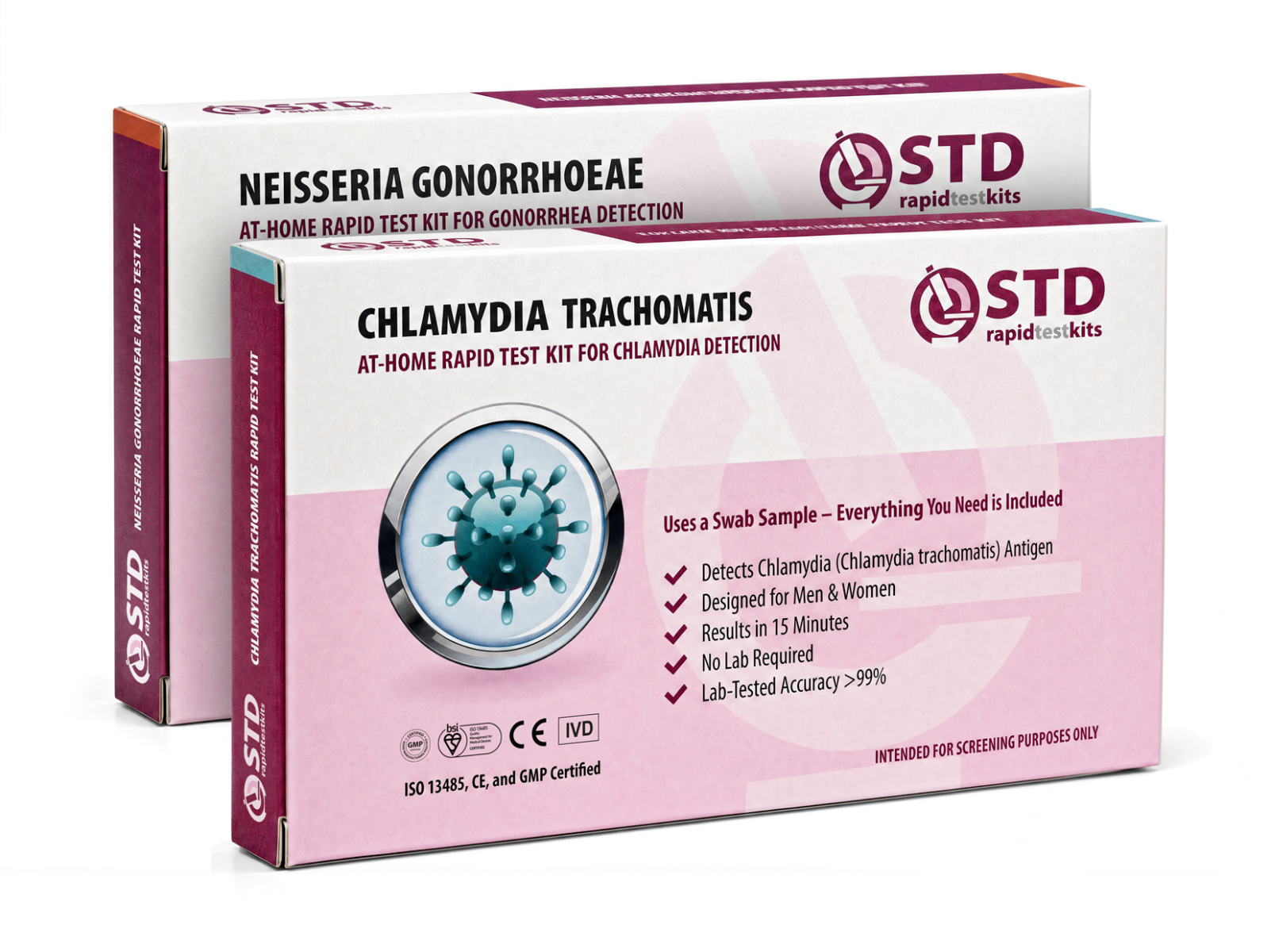
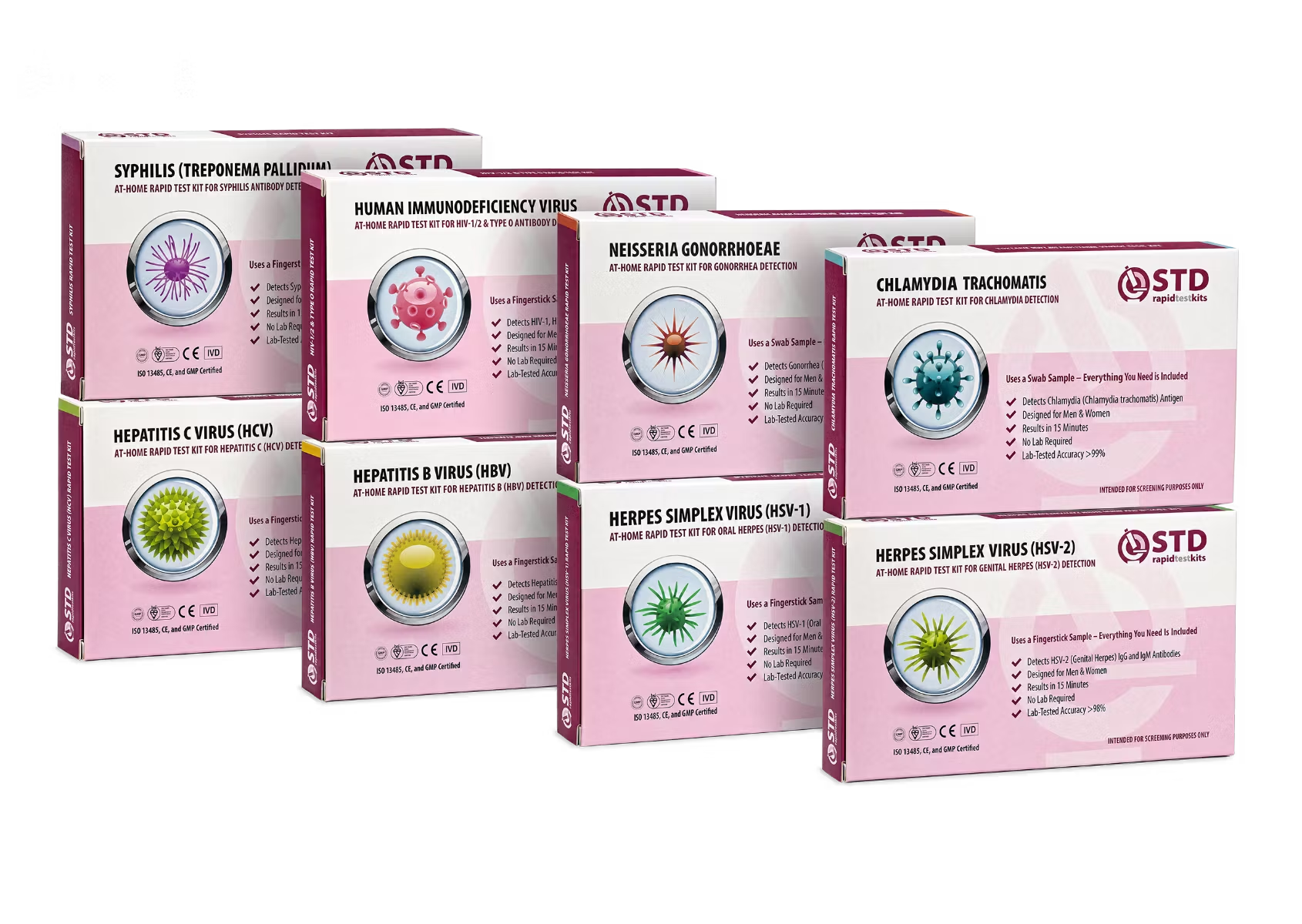
- At-home rapid kits. Single-infection rapid kits start around $30; multi-infection bundles range from $79 to $299 depending on coverage.
The economics often favor whichever option you will follow through on. A free clinic visit you keep postponing for three months is more expensive in delayed information than a $129 kit you order tonight and use Saturday morning.
If Needles Make You Anxious
Trypanophobia, the clinical term for needle fear, affects a meaningful share of adults at varying intensities per Mayo Clinic and other reviews of the literature (Mayo Clinic). The good news is that most rapid STI screening uses a fingerstick lancet, which feels like the prick of a quick splinter rather than a venous draw. Even when a vein draw is required for confirmatory testing, several techniques reliably lower the dread:
- Topical numbing cream. Lidocaine cream applied 20 to 30 minutes before the draw blunts the surface sensation. Most clinics will apply this on request.
- Eat and hydrate beforehand. A small salty snack and 16 ounces of water two hours before reduces vasovagal lightheadedness, the most common cause of fainting during blood work.
- Distraction. Looking away during the stick, listening to music, or making small talk with the phlebotomist all reduce reported pain. Cognitive load consistently dampens pain perception across multiple controlled studies.
- Tell the phlebotomist. Saying you are nervous lets them slow down, use the smallest gauge needle appropriate, and have you lie supine instead of seated.
If a clinic visit is genuinely intolerable, an at-home rapid kit's fingerstick is a meaningfully different experience. The lancets used in modern home kits are designed for self-application and produce only a few drops of blood from the side of a fingertip.
The single most effective vasovagal-prevention move is to eat a small salty snack and drink 16 ounces of water about two hours before the appointment, then lie flat on the exam table during the draw rather than sitting upright. Tell the clinician you have a history of feeling faint and they will set you up supine without needing further explanation.
Self-Collecting at Home With a Rapid Kit
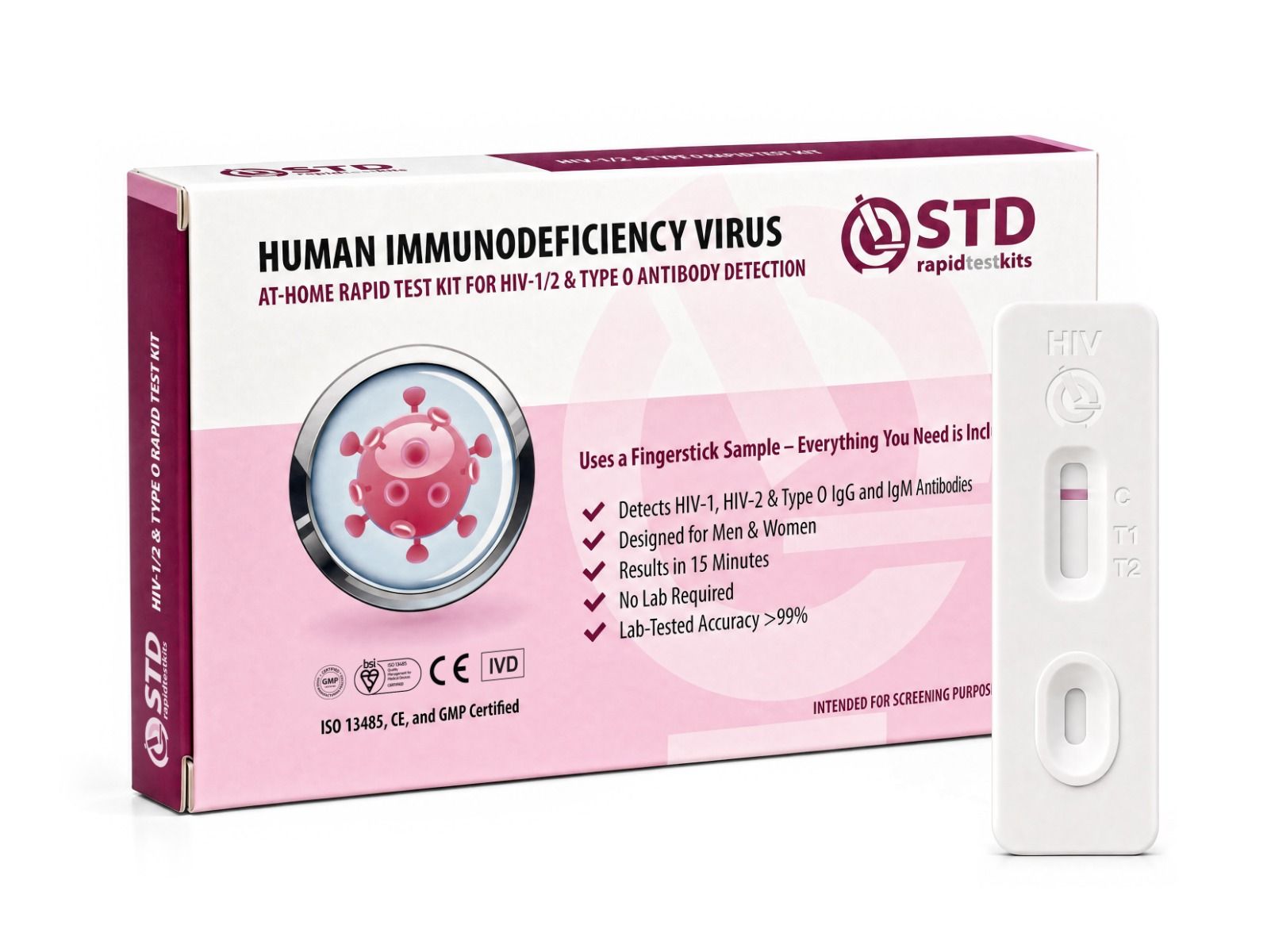
Rapid at-home kits use lateral-flow immunoassay strips housed in a plastic test cassette. The whole sequence happens in your bathroom in about 20 minutes, with no mailing, no lab wait, and no online portal. The single most common reason at-home samples come back unreadable is rushing through steps in the wrong order. A condensed protocol that maps to most rapid kits:
- Read the instruction card before opening anything. Confirm which sample type each test in the kit needs (swab versus fingerstick blood) and the order in which they are run.
- Wash and dry hands thoroughly. Soap, water, and a lint-free towel. Skip lotion and hand sanitizer for the next 30 minutes; both can cross-contaminate samples.
- Collect the swab sample. For a vaginal self-swab, insert about 5 cm and rotate gently for 10 seconds against the vaginal wall. For a throat swab if included, brush both tonsillar pillars and the back of the throat for 5 seconds each. Do this with steady pressure, not a fast scrape.
- Run the swab on the cassette. Stir the swab in the buffer tube as the kit instructs (usually 10 to 15 seconds), then dispense the specified number of buffer drops into the sample well on the test cassette.
- For blood-based tests, prick last. Warm hands first by shaking them below heart level for 60 seconds. Prick the side of your ring or middle finger, not the pad, and let one drop fall into the sample well. Add the buffer drops as instructed.
- Wait and read the lines. Set a timer for the interval printed on the cassette, usually 15 minutes. Read the result during the time window the instructions specify; reading too early or too late can produce a misleading line pattern. The control line confirms the test ran correctly; the test line indicates positive or negative.
Result on the cassette is your result. There is no envelope to seal, no mailbox, no waiting for an email. If a result is positive or unclear, follow up with a clinician for confirmatory testing and treatment.
Reading Your Results Without Spiraling
STD test results arrive in three flavors: negative or non-reactive, positive or reactive, and indeterminate. Each carries a specific meaning that the result code on the lab report does not always make obvious.
- Negative or non-reactive. The test did not detect the infection in your sample. This is reliable only if you tested after the appropriate window period; testing too early can produce a false negative even when you are infected.
- Positive or reactive. The test detected pathogen DNA, antigens, or antibodies. Most STIs at this stage are highly treatable. Bacterial infections like chlamydia, gonorrhea, and syphilis are curable with a short course of antibiotics, and HIV is medically managed to undetectable viral load with daily medication.
- Indeterminate. The signal was borderline, or on a rapid test cassette the test line is faintly visible. The recommended next step is to retest in 1 to 2 weeks, or order a confirmatory lab test through a clinician.
If a result is positive, the next call (or click) is to a clinician for treatment and to confirm with a more specific lab test where appropriate. False positives do happen, particularly at the borderline of detection thresholds, which is why guideline-driven follow-up testing is part of the system.
A faint test line is not the same as a clear negative. On lateral-flow rapid tests, a borderline reading typically means the antibody or antigen level in your sample is near the detection threshold. The standard response is to wait 7 to 14 days and retest, or to follow up with a clinician for a more sensitive lab confirmatory test. Do not assume a faint line is a no.
What Happens If You Test Positive
A positive result is rarely the medical emergency the moment feels like. For most common STIs, treatment is short, accessible, and effective:
- Chlamydia. Doxycycline (typically 100 mg twice daily for 7 days) per current CDC guidance. Retest at 3 months to confirm cure and rule out reinfection.
- Gonorrhea. A single intramuscular ceftriaxone injection. Resistance trends are why CDC updated this regimen in recent years; older oral regimens are no longer reliable.
- Syphilis. A single intramuscular benzathine penicillin G injection if caught in the primary or secondary stage. Longer courses are used for late-stage syphilis.
- HIV. Same-day or next-day linkage to antiretroviral therapy at most clinics. Modern single-pill regimens can reduce viral load to undetectable within months. Undetectable equals untransmittable for sexual partners. For context on the underlying transmission risk: per CDC estimates, the per-act risk for receptive anal intercourse without a condom is around 1.4%, for receptive vaginal intercourse around 0.08%, and for insertive vaginal or oral sex it is lower still. A negative 4th-generation combo test at 45 days is highly predictive, and a confirmatory test at 3 months effectively rules out infection from a single exposure.
- Herpes. Antivirals like acyclovir or valacyclovir reduce outbreak frequency and viral shedding but do not eliminate the virus. Most people manage herpes with episodic or daily suppressive therapy.
Abstain from sex until you and any partners have completed treatment, typically 7 days for the bacterial STIs above. Many clinics and at-home testing services include digital prescriptions or referrals to a partner provider so that treatment can start quickly after a positive result.
Many people who have an STI do not have any symptoms. Without testing, STIs often go undiagnosed, and most providers will not screen for them unless you ask.
Telling a Partner
Notifying past or current sexual partners of a positive result is genuinely difficult and genuinely important. Reinfection from an untreated partner is one of the leading reasons people end up testing positive again three months later for an infection they thought was resolved.
The NHS and other public health bodies recommend a simple structure for the conversation: state the fact, share what you are doing about it, ask them to test (NHS sexual health guidance). The script does not need to be long.
If a direct conversation feels impossible, many U.S. health departments and several at-home testing companies offer anonymous partner-notification services that send an SMS or email letting a partner know they were exposed without revealing the sender. These services exist precisely because the conversation is hard, and using one is a legitimate option, not a sign of failure.
"I just got my STI test results back and one came back positive for chlamydia. I am starting treatment this week. I wanted you to know so you can get tested too." That is the whole script. Short, factual, no apology required.
How Often Should You Test?
Frequency depends on your sexual activity pattern, not on how nervous you feel:
- Single partner, mutually monogamous, both tested negative recently. Annual screening as part of routine healthcare is sufficient.
- Multiple partners or new partner in the last 3 months. Test every 3 to 6 months for chlamydia and gonorrhea. HIV at least annually, with shorter intervals if higher-risk practices are involved.
- Men who have sex with men, transgender women, and people on PrEP. CDC recommends quarterly screening for chlamydia, gonorrhea, and syphilis at all relevant anatomic sites, plus HIV monitoring at the PrEP visit interval (CDC HIV testing guidance).
- After a known or possible exposure. Test once after the appropriate window period for each infection of concern, and again at 3 months for HIV and syphilis if the initial result was negative and the exposure was high-risk.
A phone reminder set to repeat every three months, labeled anything neutral like "quarterly health check," is the simplest way to stay on a consistent screening schedule without treating each one as an event.
Misconceptions Worth Setting Straight
A few persistent myths cause more delay and anxiety than the testing process itself:
- Myth: Getting tested means admitting you did something wrong. Routine STI testing is preventive healthcare in the same category as a dental cleaning or a cholesterol panel. Reframing the act as basic body maintenance instead of confession removes most of the friction.
- Myth: If you do not have symptoms, you do not have an STI. The majority of chlamydia, gonorrhea, early HIV, and many syphilis infections are asymptomatic per CDC surveillance. Symptoms are a poor screening signal.
- Myth: You can tell whether a partner is at risk by how they look or behave. Visual or social risk assessment is unreliable; sexually transmitted infections cross every demographic line.
- Myth: At-home rapid kits are less accurate than clinic tests. FDA-cleared at-home lateral-flow kits are reliable screening tools when used after the correct window period and read at the specified time interval. Clinic NAAT testing is more sensitive and is the appropriate confirmatory step when a rapid result is positive or borderline.
- Myth: A negative result means you are clear forever. A negative result reflects the time of testing only. Window periods matter, and a new exposure starts a new window.
"No symptoms equals no infection" is the misconception responsible for the largest share of undiagnosed cases. Most chlamydia and gonorrhea infections, and many early HIV and syphilis infections, produce no symptoms at all during the period when they are most transmissible. Routine screening catches what symptoms cannot.
FAQs
- How long do STD test results take?
- Clinic rapid tests for HIV and syphilis can return same-day. NAAT-based chlamydia and gonorrhea tests sent to a lab typically take 1 to 3 days. At-home rapid lateral-flow kits show the result on the test cassette in approximately 15 minutes, no lab wait.
- Do STD tests hurt?
- For most routine screening, no. Urine collection is painless. A fingerstick feels like a brief pinch. Throat and self-collected swabs feel awkward more than painful. Venous blood draws use small-gauge needles and are comparable to a flu shot in physical sensation.
- Can I test during my period?
- Yes, with one caveat. Urine and blood tests are unaffected by menstrual flow. Vaginal swabs can be done during a period, but heavy flow may make sample collection slightly less reliable. If your kit allows it, mid-cycle is the easiest time to collect a clean swab. Period blood does not invalidate the test.
- Will they swab my urethra or penis?
- For routine chlamydia and gonorrhea screening, no. Urine NAAT testing has replaced urethral swabbing for most adult patients. Urethral swabs are now reserved for symptomatic cases where direct sampling is clinically necessary, which is uncommon in routine screening.
- Are at-home rapid STD tests as accurate as clinic tests?
- Rapid at-home lateral-flow kits are FDA-cleared and reliable as screening tools when used after the correct window period and read on time. Clinic labs run NAAT, which has higher analytical sensitivity and is the standard confirmatory test for borderline or positive rapid results. The two are complementary, not equivalent.
- How soon after a possible exposure should I test?
- For HIV (4th-generation combo test), the CDC-recommended detection window opens at 18 to 45 days; most other bacterial and blood-borne infections are detectable within 2 to 10 weeks depending on the test. When in doubt, test once at the window midpoint and retest at 3 months for HIV and syphilis if the original exposure was high-risk.
- What does the at-home rapid kit process actually look like?
- Order the kit in discreet packaging, open the sealed components, follow the printed steps to collect your sample (a self-swab or a fingerstick blood drop), apply the sample to the test cassette with the supplied buffer, set a timer, and read the result lines on the cassette after about 15 minutes. If the result is positive or unclear, contact a clinician for treatment and confirmatory lab testing. There is no envelope to mail, no online portal to log into.
- U.S. Centers for Disease Control and Prevention. STI prevention, sample-type guidance, and screening recommendations including window-period detail.
- U.S. Centers for Disease Control and Prevention. HIV testing recommendations, 4th-generation antigen and antibody test windows, per-act transmission risk estimates, and routine PrEP-monitoring schedules.
- World Health Organization. Sexually transmitted infections (STIs) fact sheet covering global prevalence, symptoms, and routine screening guidance.
- U.K. National Health Service. Sexually transmitted infections (STIs) overview, partner-notification structure, and clinic-visit expectations.
- Mayo Clinic. General medical reference for STI symptoms, diagnosis, treatment overview, and discussion of needle phobia.
- Planned Parenthood. STI testing services, sliding-scale cost guidance, and patient education on what to expect at a clinic visit. Visit the root site to find local clinics.
