Canker Sore or STD? How to Tell a Mouth Sore from Herpes or Syphilis
A canker sore and an early oral STI can look almost identical for the first few days, which is why so many people end up scrolling medical photos at 3am. This guide walks through what actually separates a canker from oral herpes, syphilis, throat gonorrhea, and oral HPV, plus what timing and location tell you, and when testing is the move.



- Most mouth sores are harmless canker sores or trauma; the painful ones that heal in a week are almost never STIs.
- A painless sore that hangs around for more than two weeks is the pattern that earns a test, especially after kissing or oral sex with a new partner.
Published: September 2025 | Last updated: April 2026 | Editorial review and quality control: Martina N.
You woke up with a sore in your mouth. Maybe it showed up after a hookup, maybe after a single kiss, maybe in the middle of a brutal stretch of sleep deprivation and finals week. The internet is happy to convince you it could be anything from a vitamin deficiency to syphilis, and that uncertainty is exhausting. Most mouth sores are harmless, but a small fraction are early signs of a sexually transmitted infection that you genuinely want to catch early.
This article walks through what separates a normal canker sore from oral herpes, a syphilis chancre, throat gonorrhea, and oral HPV. It covers what timing tells you, what location tells you, and what to do when the picture is genuinely ambiguous. No alarm, no shame, just specifics.
Is my mouth sore an STI or just a canker?
A canker sore is a round, painful ulcer on the soft tissue inside the mouth that usually heals on its own within 7 to 10 days. If your sore is painless, lingers longer than two weeks, sits on the lip border or tongue, or appeared within a few weeks of kissing or oral sex with a new partner, oral herpes or a syphilis chancre are realistic possibilities. Testing (an at-home blood antibody test for HSV and syphilis, or a clinic-collected lesion swab with PCR) is the only way to know for sure.
This article is published by stdrapidtestkits.com, which sells at-home rapid testing kits. We recommend tests based on what genuinely fits your concern, not on commercial benefit. If your sore looks more like a canker than an STI, the better advice is to wait it out for ten days and skip the test. The information below is for the eight in ten readers who probably do not need to test, plus the small group who genuinely do.
When a Normal Mouth Sore Isn't So Normal
Most people believe they can tell a canker sore from something more serious by sight. Even experienced clinicians often cannot, especially in the first few days when lesions look generic. A canker sore (aphthous ulcer) is round, white or yellowish in the center with a red halo, and noticeably painful when it touches food or your toothbrush. It lives inside the cheek, under the tongue, or on soft gum tissue. Early herpes simplex lesions and primary syphilis chancres can imitate that look before they develop their distinctive features, which is why visual self-diagnosis fails so often.
There is also a basic statistical fact that confuses things. The World Health Organization estimates that roughly two-thirds of the global population under age 50 carries oral herpes simplex type 1 (WHO HSV fact sheet). Most people acquire it in childhood through ordinary, non-sexual contact: a parent kissing a baby's forehead, sharing a cup at school, a friend's straw. So the question is rarely whether you have HSV-1 antibodies somewhere in your body; it is whether the thing in your mouth right now is an active outbreak, a stress-related canker, or a sore from something else entirely.
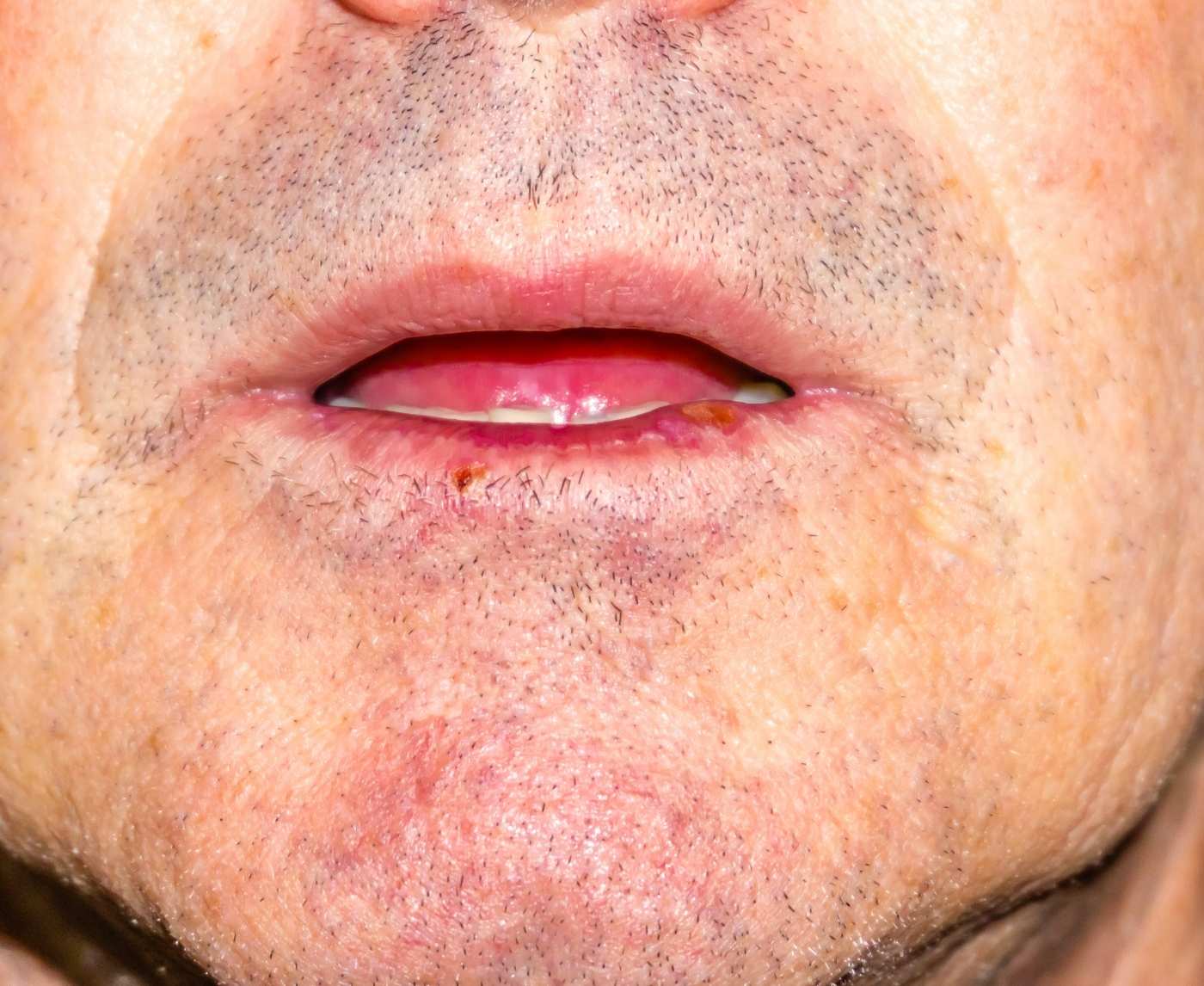
Some patterns help. Canker sores almost always sit on movable, soft tissue inside the mouth and stop at the firm gum line. Cold sores (oral herpes) almost always sit on the vermillion border of the lip or just outside it. A primary syphilis chancre is a single, firm, often painless ulcer that can appear anywhere oral contact occurred. None of these rules are perfect, but when the location and pain pattern do not match a typical canker, testing is the way to settle it.
Inside the mouth on movable soft tissue (cheek, under-tongue, soft gum): almost always a canker sore.
On the lip border (vermillion) or just outside the lip: classic territory for a cold sore (oral herpes).
Anywhere oral contact occurred (lip, tongue, throat) and painless: consider a primary syphilis chancre, especially after recent kissing or oral sex.
Which STIs Can Show Up in the Mouth?
Several sexually transmitted infections can produce visible or felt symptoms in the mouth and throat. Some require direct lesion-to-tissue contact (kissing during an active herpes outbreak, oral sex with someone who has a syphilis chancre). Others spread through mucosal contact during oral sex even when no sore is visible. The five most common offenders are oral herpes (HSV-1, occasionally HSV-2), oral syphilis, pharyngeal gonorrhea, pharyngeal chlamydia, and oral HPV.
Two important caveats up front. First, many oral STIs cause no obvious symptom at all. Pharyngeal gonorrhea and chlamydia are silent in the large majority of infected throats, which is why most cases are diagnosed only after a partner discloses an infection (CDC, STI risk and oral sex). Second, the absence of a symptom is not the absence of contagiousness; people pass these infections without knowing they are infected. The table below summarizes how each one tends to present and how it spreads.
| Infection | Spreads via kissing? | Typical oral signs | Contagious without symptoms? |
|---|---|---|---|
| Oral herpes (HSV-1 or HSV-2) | Yes, especially during an active outbreak | Tingling, fluid-filled blisters, ulcers, swelling | Yes (asymptomatic shedding) |
| Syphilis | Possible if a chancre is present in the mouth | Single painless firm ulcer (chancre) on tongue, lip, or gum | Yes, between stages |
| Pharyngeal gonorrhea | Rare; primarily oral sex transmission | Mild sore throat, redness, occasional white patches; often none | Yes |
| Pharyngeal chlamydia | Rare | Usually no symptoms; occasional mild sore throat | Yes |
| Oral HPV | Possible via deep kissing; most spread via oral sex | Usually none; rarely small flat lesions or warts; persistent sore throat in advanced cases | Yes |
What These Sores Actually Look Like
Pictures help when prose runs out. Below are reference figures for the patterns you are most likely trying to compare: a typical canker sore, an active oral herpes outbreak, a primary syphilis chancre, and a healing cold sore. Look at the location and the texture rather than just the color, which can vary with lighting, healing stage, and skin tone. None of these are diagnostic; matching your sore to one of these images does not confirm anything. They give you vocabulary to describe what you are seeing to a clinician or testing service, and a sense of which patterns belong to which condition.
Why Oral Herpes Often Hides
One of the most frustrating myths about oral herpes is that you will always get a classic cold sore on your lip. In real life, most people who acquire HSV-1 do not feel a thing during their first infection, or they assume the small ulcer inside their mouth is from biting their cheek (CDC, About Genital Herpes; the same overview covers oral HSV transmission). Cold sores cluster on the vermillion border of the lip and erupt as small fluid-filled blisters that crust over within seven to ten days, but a first outbreak can also look like a single round ulcer, a painful patch on the gum line, or a sore throat with swollen glands.
HSV-2, the strain usually associated with genital herpes, can also infect the mouth, though this is less common. It typically reaches the mouth when someone gives oral sex to a partner with a genital HSV-2 infection. Once HSV-1 or HSV-2 is established, it stays in the body for life, with reactivations triggered by sun exposure, stress, illness, or hormonal shifts.
Herpes can shed from saliva and from the skin around the lips even when no sore is visible (asymptomatic shedding), which is how many people pass it without knowing they are contagious. Daily suppression therapy with antivirals can shorten outbreaks, reduce shedding, and lower transmission risk to partners, even though no antiviral fully clears the virus from the body.
Most people who acquire HSV-1 for the first time feel nothing, or mistake the small mouth ulcer for a cheek bite or canker. The absence of a classic cold sore on the lip does not rule out herpes, especially if the sore keeps recurring in roughly the same spot.
Why Syphilis Sores Are Easy to Miss
Of the oral STIs, syphilis is the most quietly dangerous. Its first sign, called a primary chancre, is usually a single, firm, round sore that appears at the exact spot where the bacterium entered. That spot can be the genitals, the rectum, the lips, the tongue, or the back of the throat. Two features make the chancre easy to dismiss: it is often painless, and it heals on its own in three to six weeks even without treatment.
The chancre healing on its own is misleading. The bacterium has simply moved deeper into the body. Weeks or months later, secondary syphilis can announce itself with a non-itchy rash that often involves the palms and soles, swollen glands, low-grade fever, or patchy hair loss. If still untreated, the infection can stay dormant for years before causing serious complications affecting the heart, brain, eyes, and nerves (WHO syphilis fact sheet).
The good news is that early syphilis is curable with one or three doses of penicillin, depending on the stage. The CDC's About Syphilis page covers transmission routes (genital, anal, and oral), the stage-by-stage course, and treatment guidance (CDC, About Syphilis). If you have an unexplained painless sore in or around your mouth that lasted more than two weeks, especially after oral sex with a new partner, a syphilis test is the right call.
Syphilis testing uses blood, not a swab. The standard rapid test detects antibodies to the bacterium and becomes reliable about three to six weeks after exposure. Earlier than that, the test can be falsely negative; if you have a suspicious sore, retest at six weeks even if your first result was negative.
Per the CDC's About Syphilis page, the primary chancre appears at the exact site of infection. That site can include the external genitals, the anus, the rectum, the lips, and the inside of the mouth. The sore is often painless and can pass unnoticed; the infection is transmissible to partners through direct contact with that sore. Read the CDC's full guidance at <a href="https://www.cdc.gov/syphilis/about/index.html" target="_blank" rel="noopener">CDC, About Syphilis</a>.
Throat Gonorrhea, Chlamydia, and Why Our Home Kits Don't Cover These
Gonorrhea and chlamydia are usually thought of as genital infections, but both can colonize the throat after oral sex. Pharyngeal gonorrhea and pharyngeal chlamydia rarely produce dramatic symptoms; when they do, the symptoms are vague (mild sore throat, redness, occasional white patches) and easily mistaken for a viral cold or strep. The result is that throat infections are often underdiagnosed in routine clinical care.
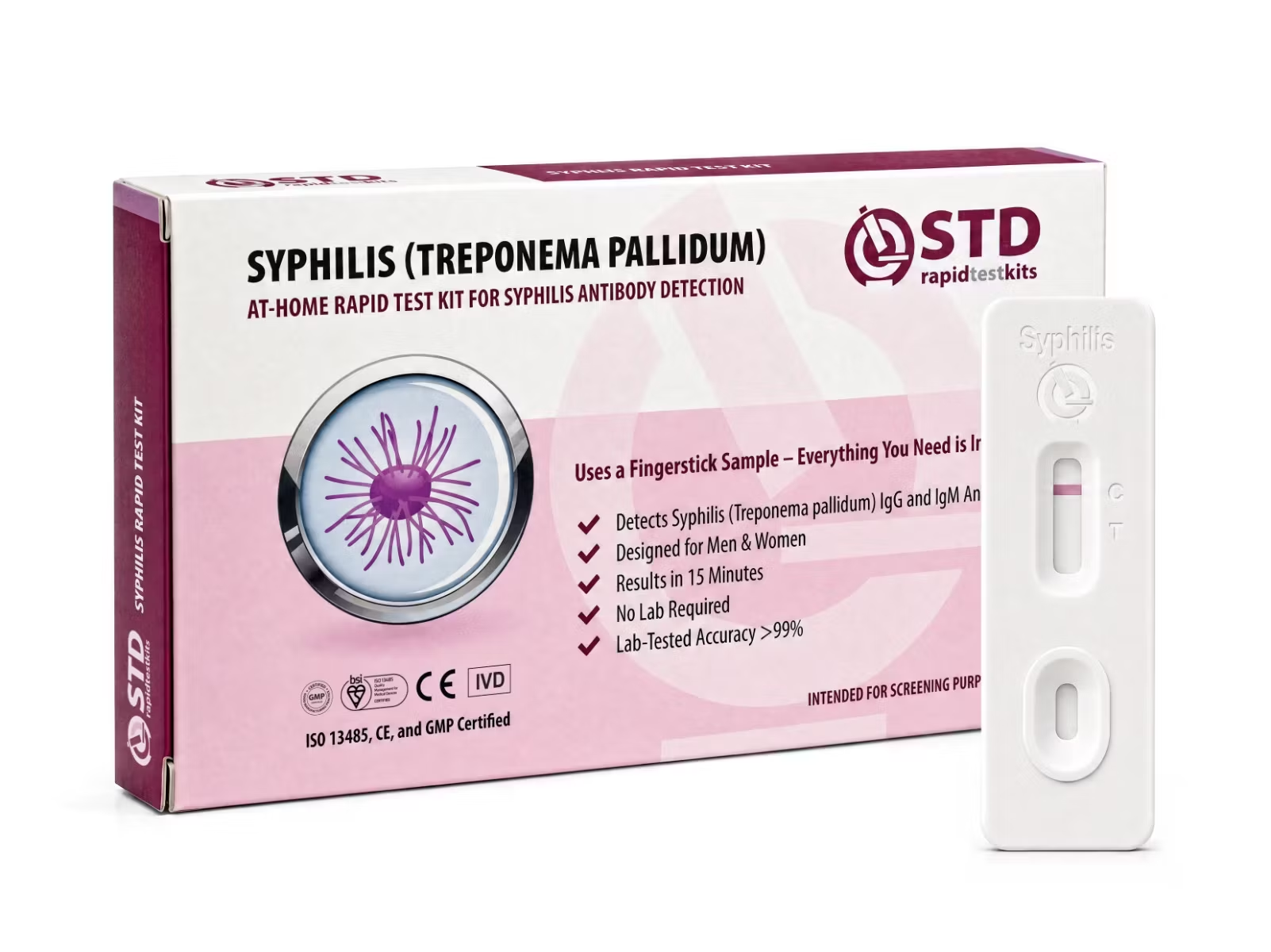
Our at-home rapid kits do not include a pharyngeal swab option. We sell genital swabs and blood-based fingerstick tests; a throat swab requires a clinician to collect the sample correctly from the back of the throat, and the lab method (NAAT) is not reproducible at home with current technology. If you are specifically worried about a throat infection, a clinic visit or telehealth-ordered NAAT throat swab is the right tool, not our kits.
That said, the genital and blood components of our combo kits still do useful work after an oral sex exposure. If your partner had a chlamydia or gonorrhea infection, you may have been exposed at multiple sites; testing the genital site with our swab kits is straightforward, and many pharyngeal infections are accompanied by undetected genital infections in the same person. CDC guidance is to test all exposed sites separately, so think of our home kit as the genital and blood half of the picture, with a clinic NAAT throat swab as the other half if your symptoms are throat-specific.
Kissing rarely transmits either chlamydia or gonorrhea. The CDC's STI risk and oral sex page lists oral sex (giving or receiving) as the primary route for pharyngeal infection.
Our at-home kits cover genital self-swabs and fingerstick blood tests. They do not include a pharyngeal (throat) swab. For throat-specific symptoms after oral sex, a clinic-collected NAAT throat swab is the right tool. The blood and genital portions of our combo kits remain useful for catching the infections that may have crossed to other exposure sites from the same encounter.
Oral HPV: Common, Quiet, and Without a Home Test
Human papillomavirus is the most common sexually transmitted infection worldwide. Most strains are harmless and clear on their own within two years; a small subset (high-risk strains, especially HPV-16) is associated with throat and oropharyngeal cancers. Oral HPV usually causes no visible symptom at all; people can carry it for years without knowing.
When oral HPV does produce visible signs, they are most often small flesh-colored bumps or flat lesions on the tongue, soft palate, tonsils, or back of the throat. These look more like persistent skin tags than ulcers. A persistent sore throat lasting longer than three weeks, a painless lump in the neck, or unexplained ear pain in adults are signs worth flagging to a clinician for HPV-related screening.
There is no FDA-approved at-home test for oral HPV. Our HPV self-swab kit is validated for vaginal HPV detection in women only; it is not validated for oral or male anatomy. The strongest tool against HPV is the Gardasil 9 vaccine, which the CDC recommends for routine vaccination through age 26 and shared clinical decision-making with a provider through age 45. The vaccine prevents the strains responsible for the majority of HPV-related cancers, including those in the mouth and throat.
Oral HPV at a glance
- HPV-16 is the high-risk strain most associated with oropharyngeal (throat) cancers.
- Gardasil 9 is the preventive tool; the CDC recommends routine vaccination through age 26 and shared clinical decision-making with a provider through age 45.
- Our HPV self-swab kit is validated for vaginal HPV detection in women only and is not indicated for oral or male anatomy.
How Long After Exposure Do Symptoms Show?
Many people assume that if a sore appeared the morning after a hookup, the hookup is the cause. That timeline is wrong for almost every oral STI. Each infection has an incubation period: the gap between exposure and the first detectable sign or testable result.
Testing too early gives you false reassurance; an antibody test taken three days after exposure cannot detect an infection that takes three weeks to seroconvert. A sore that appeared the morning after a hookup is more likely a coincidence (stress, biting your cheek during the night, irritation from alcohol or smoking) than an infection that crossed the incubation gap in twelve hours.
The table below summarizes typical incubation periods. These are averages; individual cases can be earlier or later, especially for syphilis, where the chancre can take up to 90 days to appear after exposure.
| Infection | Typical incubation | First signs (when present) |
|---|---|---|
| Oral herpes (HSV) | 2 to 12 days | Tingling, then small blisters or a single ulcer |
| Syphilis | 10 to 90 days (about 21 days on average) | Single painless chancre at site of contact |
| Pharyngeal gonorrhea | 1 to 14 days | Often none; sometimes mild sore throat |
| Pharyngeal chlamydia | 1 to 3 weeks | Usually none |
| Oral HPV | Months to years | Usually none; persistent throat changes in rare cases |
Canker, Herpes, or Syphilis: A Side-by-Side
There is no perfect way to self-diagnose a mouth sore, but a few patterns separate the common conditions reasonably well. The table below summarizes the visual and pain features that distinguish a typical canker sore from oral herpes and primary syphilis. Use it as a starting point for a conversation with a clinician or as a reason to test, not as a final answer.
| Feature | Canker sore | Oral herpes | Primary syphilis |
|---|---|---|---|
| Typical location | Inside cheek, under tongue, soft gum tissue | Lip border (vermillion), occasionally inside mouth | Anywhere oral contact occurred: lip, tongue, throat |
| Pain level | Moderate to high, especially with food | Tingling first, then burning or stinging | Often painless or only mildly tender |
| Number of sores | Usually 1 to 3 | Cluster of small blisters that may merge | Usually a single firm ulcer |
| Border and texture | Soft round ulcer, white-yellow center, red halo | Small fluid-filled vesicles, then crusts | Firm rolled border, smooth indurated base |
| Healing time | 7 to 10 days | 10 to 14 days for an outbreak | 3 to 6 weeks (heals untreated, but infection persists) |
| Recurs? | Yes, often during stress or illness | Yes, reactivations throughout life | No, but untreated infection advances to later stages |
What to Do Next
If your sore checks the canker boxes (round, painful, inside the soft tissue of the mouth, no recent kissing or oral sex with a new partner, present for less than ten days) the right move is patience. Most cankers heal on their own. Over-the-counter benzocaine gels and saltwater rinses help with the pain. A multivitamin is sometimes useful for people with recurrent cankers, since low B12, iron, or folate can be a contributing factor.
If your sore checks any STI box (painless, longer than two weeks, on the lip border or tongue, or appeared after a recent kissing or oral sex exposure with a new partner) the right move is testing. The decision tree is straightforward:
- Active visible lesion you want identified: a clinic visit with a viral or bacterial swab and PCR is the gold-standard next step. PCR can confirm or rule out herpes from the lesion within a day or two and is far more sensitive than a blood antibody test in the first few weeks after a new infection.
- Asymptomatic or post-exposure peace of mind: an at-home blood antibody test for HSV and syphilis becomes reliable about six to twelve weeks after a possible exposure, depending on the infection.
- Pharyngeal symptoms (sore throat, persistent throat irritation after oral sex): a clinician-collected NAAT throat swab is the right tool. Our home kits do not cover pharyngeal sites.
Frequently asked questions
- Can you really get an STI from kissing?
- Yes, though only for some infections. Oral herpes (HSV-1) is the most common kissing-transmitted STI by a wide margin, and it is extremely common worldwide. Syphilis can also spread through kissing if one partner has a chancre on the lips or in the mouth, although this is less frequent. Chlamydia, gonorrhea, and HIV are essentially not transmitted by kissing in real-world conditions; they need oral, genital, or blood contact.
- How is a canker sore different from oral herpes?
- Canker sores live on movable tissue inside the mouth (cheek, under-tongue, soft gum), are clearly painful from day one, and heal in 7 to 10 days. Oral herpes usually starts with a tingling sensation on the lip border, then a cluster of small fluid-filled blisters that crust over within a week. If your sore is on the vermillion border of the lip and started with tingling, herpes is the more likely answer. If it is round, white-centered, painful, and inside the cheek or under the tongue, a canker is more likely.
- What does an oral syphilis chancre look like?
- A primary syphilis chancre is usually a single, firm, round ulcer about a centimeter across with a raised rolled border and a clean indurated base. It can appear on the tongue, lip, or anywhere oral contact occurred. The defining features that distinguish it from a canker are that it is often painless and it lingers for three to six weeks rather than healing in a week. Painlessness is the trap, since many people assume painless equals harmless.
- My sore healed on its own. Should I still test?
- Often yes, especially if it was painless or lasted longer than two weeks. Both herpes and primary syphilis can heal on their own while the infection persists in the body. A blood antibody test becomes reliable about three to six weeks after exposure for syphilis and about 12 weeks for HSV. If you had a suspicious sore that healed, schedule a test at the appropriate window after the original exposure event.
- Could it just be from spicy food or biting my cheek?
- Often, yes. Mechanical trauma (biting the inside of your cheek while sleeping, hot food, hard tortilla chips) is the most common cause of one-off sores, and these heal in five to seven days. The reason to test is when the sore does not match the trauma timeline: it appeared without obvious cause, it is painless, it sits on the lip border or tongue, or it has lasted more than two weeks.
- I have not had penetrative sex. Could this still be an STI?
- Yes. Oral herpes (HSV-1) spreads through saliva and lip contact, which is why so many people acquire it in childhood from non-sexual contact. Syphilis can spread through kissing if a chancre is in the mouth. Penetrative sex is not the only route. If you kissed someone with an active oral lesion, the exposure is real, and there is nothing reckless about getting tested to find out where you stand.
- Can I test for oral STIs at home?
- Partly. Home blood antibody tests for HSV-1, HSV-2, and syphilis are reliable once you are past the window period, and they are appropriate for asymptomatic peace of mind. Home kits do not include a pharyngeal swab; if you have throat-specific symptoms after oral sex, a clinic-collected NAAT throat swab is the right tool. Active visible lesions are best identified with a clinician-collected swab and PCR for highest sensitivity in the first few weeks.

- U.S. Centers for Disease Control and Prevention. About Genital Herpes (covers HSV-1 and HSV-2 transmission, including oral and asymptomatic shedding).
- World Health Organization. Herpes simplex virus fact sheet (global prevalence of HSV-1 and HSV-2, oral and genital presentations).
- U.S. Centers for Disease Control and Prevention. About Syphilis (stages, transmission including oral, treatment guidance).
- World Health Organization. Syphilis fact sheet (global epidemiology, primary chancre presentation, treatment).
- National Health Service (UK). Mouth ulcers (canker sore presentation, healing timeline, contributing factors).
- National Health Service (UK). Cold sores (HSV-1 oral presentation, course of an outbreak, when to seek care).