






Quick Answer: Retesting too soon after STD treatment can show false positives for bacterial infections, especially chlamydia and gonorrhea. Most experts recommend retesting around 3 months post-treatment to catch reinfection, not to confirm cure. For viral STDs like herpes, retesting depends on symptoms, not routine schedules.
Why the Timing Feels So Urgent (But Rushing It Backfires)
Marcus, 26, had just finished a weeklong course of doxycycline after testing positive for chlamydia. He did everything right. He even waited a full nine days before testing again, but the result was still positive. “I freaked,” he told me. “Did that mean I still had it? Or that my girlfriend gave it back to me?” The truth is: it probably meant neither. It meant his body hadn’t yet cleared the bacterial fragments the test was designed to detect.
This is the part most people don’t get warned about. Modern STD tests, especially NAATs (nucleic acid amplification tests), are so sensitive they can detect non-infectious DNA even after the infection is gone. That’s great for diagnosis, but terrible for peace of mind if you test too early. A positive result doesn’t always mean live infection. It could mean lingering residue from the war your immune system already won.
It’s not just about avoiding false positives. Testing too soon also increases anxiety, confusion, and unnecessary re-treatment. More importantly, it can overshadow the real goal of retesting: not proving you’re “clean,” but making sure you haven’t been reinfected.
The Two Reasons to Retest, and Why They’re Totally Different
Retesting after an STD isn't just a medical formality, it's a window into two entirely different questions:
First, there's the idea of a test of cure. You’ve been treated. You want to know if the infection is truly gone. Sounds reasonable, right? But for most bacterial STDs, routine test-of-cure isn’t recommended. Why? Because of that residual DNA issue. Exceptions exist, like pregnancy, throat infections, or ongoing symptoms, but otherwise, a test-of-cure can cause more confusion than clarity.
Second, and more commonly, there’s rescreening for reinfection. This is the test you do weeks or months later, not because your treatment failed, but because reinfection is incredibly common. Up to 20% of people treated for chlamydia or gonorrhea will get reinfected within a few months, usually from untreated partners. That’s not about trust. That’s about reality. Sexually active people, especially under 30, face real odds of re-exposure, even when everyone thinks they’re in the clear.
So when your doctor tells you to come back in three months, it’s not a scare tactic. It’s prevention. It’s about catching silent reinfections before they turn into long-term complications like pelvic inflammatory disease, infertility, or increased HIV risk.
People are also reading: The Four Stages of Syphilis; And How to Stop It Early
Retest Timelines for Common STDs: What the Science Says
There’s no one-size-fits-all timeline, and that’s exactly why people get confused. Each STD has its own biology, testing method, and treatment course, and so each has its own retest logic. Here's where things land according to CDC guidelines and peer-reviewed timelines:
| STD | Is Test-of-Cure Recommended? | When to Retest | Why It Matters |
|---|---|---|---|
| Chlamydia | No (unless pregnant or symptomatic) | 3 months after treatment | High reinfection risk; early retest may detect dead DNA |
| Gonorrhea | No (except for throat infections) | 3 months after treatment | Oropharyngeal sites harder to clear; reinfection is common |
| Trichomoniasis | Yes (for women) | 3 months after treatment | Persistent infections possible; women at higher risk |
| Syphilis | Yes (monitor with blood titers) | 6 and 12 months post-treatment | Titers should decline; reinfection causes new spike |
| HIV | N/A (no “cure”) | Ongoing testing every 3–6 months if high risk | Early detection critical for management and care |
| Herpes (HSV) | No | Only if new symptoms appear | Testing doesn’t measure cure, focus is on outbreak control |
Table 1. CDC-informed retesting timelines by STD. “Test-of-cure” is not the same as routine rescreening, each has distinct criteria. Herpes and HIV have separate logic based on symptom monitoring or long-term care plans.
Check Your STD Status in Minutes
Test at Home with Remedium6-in-1 STD Rapid Test Kit

 For Men & Women
 Results in Minutes
 No Lab Needed
 Private & Discreet
Order Now $119.00 $294.00
For all 6 tests
Why False Positives After Treatment Happen More Than You Think
Shayla, 22, had been prescribed antibiotics for gonorrhea. She wanted to be careful, so she ordered an at-home rapid kit two weeks later. When the result flashed “positive,” she burst into tears. “I thought I was careful,” she whispered to her best friend over FaceTime. In reality, Shayla’s test wasn’t showing active bacteria; it was picking up remnants of the infection her body had already cleared. She hadn’t been reinfected. She’d tested too soon.
This is one of the most common mistakes people make with STD retesting. In our era of instant answers, waiting can feel unbearable. But these tests aren’t like pregnancy tests, they don’t reset the moment you take your last pill. For bacterial STDs, fragments of DNA can persist for weeks. For antibody-based tests like syphilis, the blood markers can remain elevated even after successful treatment. That’s why health agencies are careful about recommending three-month intervals for bacterial STDs and longer-term titer monitoring for syphilis.
In other words, a positive test soon after treatment doesn’t always mean treatment failure. It can simply mean your body’s paperwork hasn’t caught up with reality.
The Retesting “Sweet Spot”: When Residual DNA Stops Tripping Tests
Most guidelines talk about the “window period” after exposure. Less known is the “clearance window” after treatment. This is the time it takes for detectable remnants of the infection to fade below test thresholds. Knowing this window can save you a lot of stress and unnecessary doctor visits.
| STD | Residual Detection Period After Treatment | Recommended Retest Interval |
|---|---|---|
| Chlamydia | Up to 3–4 weeks DNA detection | Retest at 3 months |
| Gonorrhea | Up to 2–3 weeks DNA detection | Retest at 3 months |
| Trichomoniasis | Variable; parasites may persist if untreated | Retest at 3 months (women) |
| Syphilis | Antibody titers decline slowly over months | Retest at 6 and 12 months |
| HIV | N/A (no cure; tests detect ongoing infection) | Test every 3–6 months if at risk |
Table 2. “Clearance window” after treatment for common STDs. This is the time after which retesting yields more reliable results.
Micro-Scenes From the Waiting Game
Picture yourself at a bus stop on a cold Tuesday morning, your phone buzzing with a notification from your at-home kit app. You’re three weeks post-treatment for trichomoniasis and the result is still positive. Is it the same infection, a new one, or a ghost? Now picture someone else, sitting in their car outside a pharmacy, swabbing their mouth for an oral gonorrhea test only ten days after antibiotics. Their result reads negative, but they still have symptoms. Both scenarios are common. Both underscore why timing matters.
These stories aren’t meant to scare you. They’re meant to normalize the uncertainty and show how science explains it. False positives can happen because of leftover DNA or antibodies. False negatives can happen because it’s too early for reinfection to show up. Either way, retesting at the recommended interval gives you a truer picture and helps you make decisions about your health and your relationships with confidence.

People are also reading: I Gave My Partner an STD
Testing at Home vs. Testing in a Clinic: Does It Change Retesting Rules?
One question I get constantly: “If I do a rapid test at home instead of a lab test, does the retest timeline change?” The short answer is no. Whether you use a rapid lateral flow kit from STD Rapid Test Kits or a mail-in PCR kit or a clinic-based NAAT, the underlying biology is the same. The only difference is in sensitivity and turnaround time. Rapid tests give peace of mind in minutes. Lab tests give you slightly higher sensitivity and specificity, but require mailing or visiting a clinic. The window periods and clearance windows, however, don’t shrink just because you’re at home.
Imagine Daniel, 31, living in a rural county without a nearby clinic. He orders a discreet combo kit online, does the swab in his kitchen, and mails it back. He gets a negative result 14 days after treatment, but still plans to retest at three months. That’s the gold standard. Rapid, mail-in, or clinic, the biology doesn’t care which. Timing remains the same.
This is where at-home kits shine for follow-up. They let you plan retesting without the barrier of appointments, stigma, or transportation. But they don’t change the medical advice on when to test.
Peace of mind isn’t just about speed. It’s about accuracy, and accuracy takes time. If your head is spinning, clarity is just one test away, but at the right time. This at-home combo test kit lets you retest discreetly at three months for the most common STDs.
Check Your STD Status in Minutes
Test at Home with Remedium8-in-1 STD Test Kit
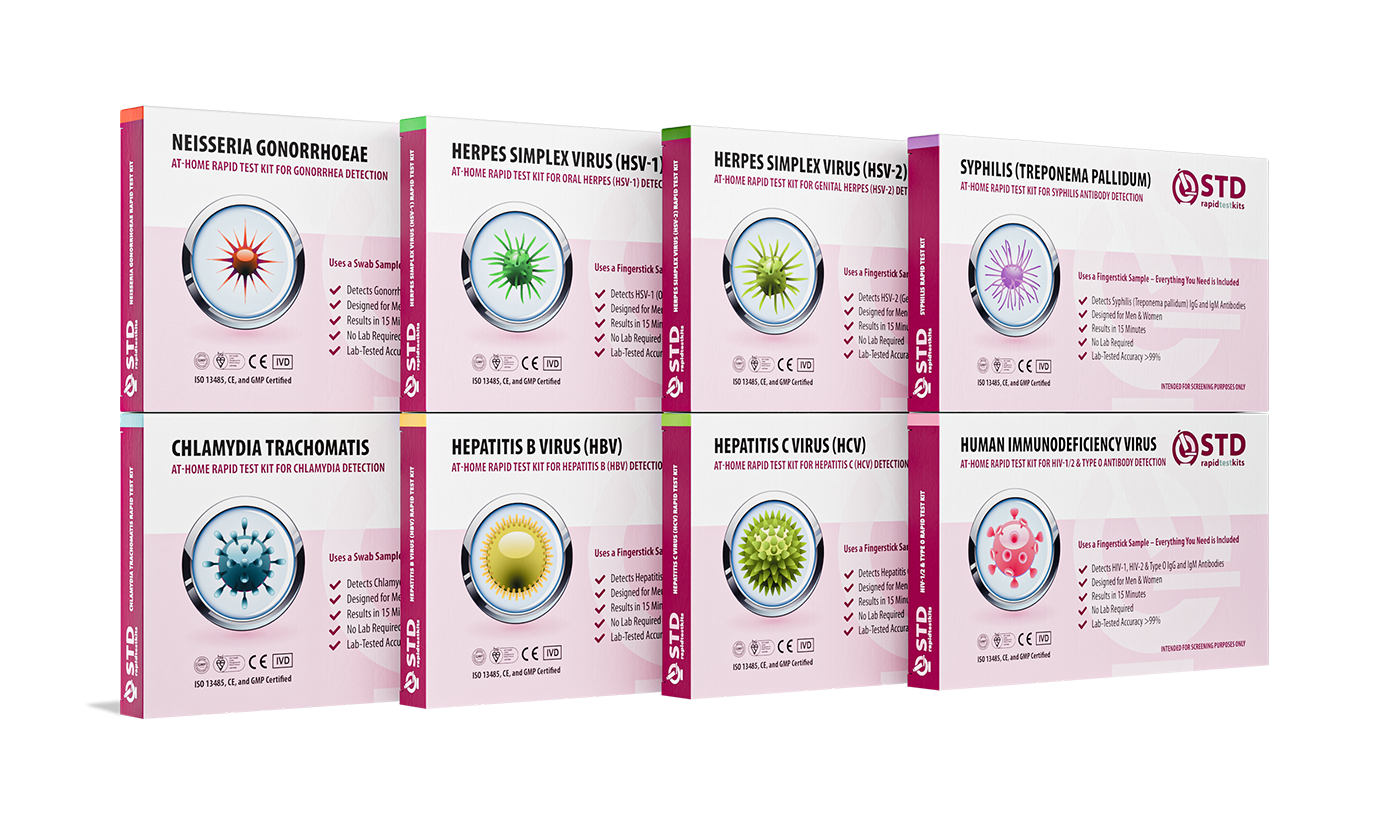 For Men & WomenResults in MinutesNo Lab NeededPrivate & Discreet
Order Now $149.00 $392.00
For all 8 tests
When Is It Safe to Have Sex Again After Treatment?
It’s the question almost everyone has but few ask out loud: “How soon after treatment can I have sex again?” And the answer depends not just on your medication, but on your test results, your partner’s treatment status, and the specific STD involved.
Fatima, 29, thought she was good to go. She took her one-dose azithromycin for chlamydia and felt fine within 48 hours. Her boyfriend hadn’t tested yet, but they used condoms, so she figured the risk was low. Two weeks later, her symptoms were back, and this time, the test showed a new infection. He had never gotten treated. What she thought was clearance was actually a revolving door.
The CDC recommends waiting at least 7 days after completing treatment for bacterial STDs before having sex again. That’s how long it takes for antibiotics to fully eliminate the infection. But here's the catch: if your partner hasn’t been treated, reinfection is almost guaranteed. For single-dose treatments, the countdown starts the moment you swallow the pills. For multi-day regimens, it starts after the last dose. No exceptions. And “feeling better” isn’t a reliable sign you’re non-infectious.
For viral STDs like herpes or HIV, there’s no “off switch” or fixed post-treatment waiting period. Suppression therapy and viral load monitoring replace cure as the marker of safety. Talk to your provider, or if using self-monitoring, make sure symptoms are gone, outbreaks have healed, and your partner understands what’s still transmissible.
Preventing Reinfection: Scripts, Condoms, and Conversations
Testing and treating are only half the battle. The real challenge is what comes next, keeping the infection from bouncing back between partners. This is where scripts and honest disclosure matter more than ever. If you were treated but your partner wasn’t, it’s not paranoia to ask questions. It’s harm reduction.
Jordan, 24, shared that they felt intense shame texting an ex to say, “Hey, I tested positive for gonorrhea. You might want to get checked.” But a week later, that same ex messaged them back: “Thanks for telling me. I had no clue. Just got meds.” That conversation prevented another cycle of exposure. It took fifteen seconds, and a lot of courage. But it stopped the loop.
Some clinics offer anonymous partner notification services. Others provide expedited partner therapy, allowing you to give medication directly to your partner. And if you’re using an at-home test and feel overwhelmed about what to say, even a basic script like “I got treated for [STD] and was told my partner should too” is enough to start the conversation. What matters is that you don’t keep it to yourself. Reinfection isn’t a failure of hygiene. It’s a failure of silence.
Using condoms after treatment doesn’t replace partner treatment, but it does reduce risk during that gray period before you're both cleared. Condoms, communication, and a planned retest are the best way to stay in control.
Privacy, Shipping, and Testing From Anywhere
If you're worried about how testing kits arrive, how they’re billed, or whether someone else will see your results, you're not alone. Privacy is one of the top reasons people choose at-home kits. The packaging is discreet. The label doesn’t scream “STD TEST INSIDE.” The billing is neutral. And most kits, like those from STD Rapid Test Kits, allow tracking and encrypted results so you control what happens next.
Jorge, 33, works on the road and couldn’t visit a clinic. “I was in my truck cab at a gas station,” he told us. “Swabbed, dropped it at the post office, and got my result three days later.” That test changed his whole trajectory, caught a silent trichomoniasis infection before he had symptoms, and led him to retest at three months after treatment. He avoided reinfection, stayed on the road, and didn’t have to explain anything to anyone he didn’t choose to.
Remote living, busy schedules, and fear of judgment shouldn’t block access to care. At-home retesting after treatment offers control, speed, and peace of mind, all on your terms. Whether you're urban, rural, or somewhere in between, you deserve the kind of testing that doesn’t compromise your dignity.
If you're unsure when to retest, how to do it discreetly, or whether you're even “supposed” to test again, our combo test kits take the guesswork out of it. You choose when, where, and how. Privacy isn’t a luxury. It’s part of care.
FAQs
1. Can you really test positive after treatment, even if you're cured?
Yep, and it messes with a lot of people. What’s happening is the test may be picking up dead bacterial fragments, especially with sensitive tests like NAATs. So if you tested a week after treatment for chlamydia and saw a positive, don’t panic just yet. The meds probably worked. You just tested too early.
2. Do I have to get retested if I already feel fine?
100%. A lot of STDs go quiet after treatment, but that doesn’t mean they’re gone forever, or that a new one didn’t sneak in. Gonorrhea, for instance, can come back fast if your partner wasn’t treated, even if your symptoms vanished. Feeling fine isn’t the same as being in the clear.
3. How long should I wait to have sex again?
At least seven full days after finishing your antibiotics, and only if your partner was treated too. Otherwise, you’re playing bacterial ping-pong. One more thing: don’t let “I feel better” fool you. Some STDs stay active while symptom-free.
4. Is retesting the same as a test-of-cure?
Not exactly. Test-of-cure means checking to see if treatment worked. Retesting means checking to see if you caught it again. For most people, routine test-of-cure isn’t needed unless you’re pregnant, had a throat infection, or symptoms stuck around. But retesting at 3 months? That’s for everyone.
5. What if my partner refuses to test or treat?
First: that sucks, and you're not wrong to feel frustrated. Second: protect yourself. You can’t force someone to care about your body, but you can choose to retest, use protection, and rethink your boundaries. STDs aren’t about blame, they’re about action.
6. I used an at-home test after treatment. Was that a mistake?
Not at all. Just make sure you waited the right amount of time, usually 3 months for chlamydia, gonorrhea, or trichomoniasis. At-home tests are legit, especially when labs feel out of reach. Just don’t rush it. Early testing = confusing results.
7. What if I tested positive again, but swear I didn’t hook up with anyone else?
That happens more than you'd think. Sometimes the treatment didn’t fully work. Sometimes it’s a partner reinfecting you unknowingly. And sometimes, it’s a leftover signal (those stubborn DNA bits). Get a follow-up test. Talk to your provider. You're not alone, and you’re not “dirty.”
8. How often should I retest if I'm sexually active?
If you're under 30 or have multiple partners, aim for once a year minimum, and again 3 months after any treatment. If your relationships are fluid (like open, poly, or undefined), bump that to every 3–6 months. Testing isn’t a punishment, it’s a reset button.
9. Is it possible to get reinfected by someone I already slept with before?
Yes, and it’s maddening. If they weren’t treated at the same time, or didn’t take the full dose, you could pass the infection back and forth. It’s called serial reinfection, and it’s surprisingly common. That’s why partner notification matters, even if it feels awkward.
10. Is retesting just for people who "sleep around"?
No. Full stop. STDs don’t care if you’ve had one partner or ten. If you’ve ever had unprotected sex, even once, or if your partner has other partners, retesting is just smart. It’s not about judgment. It’s about keeping your body yours.
You Deserve Answers, Not Assumptions
If you’ve finished treatment, that’s already a big step, one that many people struggle to take. Now comes the part that often gets skipped: confirming you’re still clear weeks or months later. Not because you did something wrong, but because life is messy, timing matters, and your health is worth circling back for.
Whether you’re worried about a lingering infection, reexposure from a partner, or just want to close the chapter for good, retesting gives you the power to know, no guessing, no guilt. This discreet combo kit checks for the most common infections and puts the timeline back in your control.
How We Sourced This Article: We combined current guidance from leading medical organizations with peer-reviewed research and lived-experience reporting to make this guide practical, compassionate, and accurate. In total, around fifteen references informed the writing; below, we’ve highlighted six of the most relevant and reader-friendly sources.
Sources
About the Author
Dr. F. David, MD is a board-certified infectious disease specialist focused on STI prevention, diagnosis, and treatment. He blends clinical precision with a no-nonsense, sex-positive approach and is committed to expanding access for readers in both urban and off-grid settings.
Reviewed by: Dr. Naomi Lee, MPH | Last medically reviewed: October 2025
This article is for informational purposes and does not replace medical advice.


