
Published: September 2025 | Last updated: May 2026 | Editorial review and quality control: Martina N.
You have rectal pain that will not quit, but every time you check, there is nothing visible to confirm what your body keeps insisting on. The gap between what you feel and what looks back at you is exactly what sends people into a 2 a.m. spiral of open browser tabs.
Here is the part the standard health-class diagrams skip. Herpes does not always announce itself with a textbook outbreak. Herpes simplex virus can cause significant rectal pain without producing a single visible sore, especially when the infection settles inside the rectal canal. This pattern has a medical name, herpes proctitis, and it shows up more often than most people realize.
Key Takeaways
- Rectal pain after receptive anal sex can be herpes even with zero visible blisters; internal inflammation often precedes or replaces external lesions.
- The CDC STI Treatment Guidelines recommend retesting at twelve weeks after a suspected exposure for reliable type-specific HSV antibody results, so early negatives don't always rule HSV out.
When It Hurts but Nothing's Visible
The picture most people carry of herpes comes from posters and slide decks: clusters of dramatic blisters on visible skin. That picture is real, but it is incomplete. Herpes simplex virus infects nerve endings and travels along sacral nerve pathways, and the inflammation it triggers can stay well above the anal margin where you simply cannot see it.
This is especially true during a first outbreak. The mucosa lining the rectum is thin and richly innervated, so even a modest amount of viral activity produces outsized pain, pressure, and burning. The skin outside the body may look perfectly ordinary while the canal inside is inflamed.
That mismatch is what makes the experience so disorienting. Your symptoms are loud. Your visible evidence is quiet. The virus does not care which one a search engine wants to validate.
Herpes proctitis inflames the rectal canal above the anal margin. The skin you can see at the opening may look completely normal while significant inflammation exists a few centimeters upstream, where you cannot see it.
Early Anal Herpes: What It Actually Feels Like
Early symptoms tend to be subtle but distinctive. People often describe a deep aching in the rectum that worsens when sitting, a sharper-than-usual burning during bowel movements, and a tingling or almost electric quality along the buttocks or upper thighs. Some report feeling like a hemorrhoid is forming that never quite appears.
In a first outbreak, systemic symptoms can join the local pain. Fatigue, swollen lymph nodes in the groin, and a low-grade fever are common signs that the immune system is encountering HSV for the first time. None of these are guaranteed, and many internal cases show up as localized discomfort with no systemic warning at all.
Timing is the most useful clue you have. Per CDC guidance on genital herpes, primary HSV infection typically produces symptoms within the first couple of weeks after exposure. Clinical references generally describe that incubation window as roughly two to twelve days. If you had receptive anal sex inside that window and now feel rectal pain without seeing sores, HSV stays on the list of possibilities worth taking seriously.
| Symptom | May Occur Without Visible Sores? | Typical Timing After Exposure |
|---|---|---|
| Deep rectal pain or pressure | Yes | 2–12 days |
| Burning during bowel movements | Yes | 2–12 days |
| Tingling or nerve-like pain in buttocks | Yes | Early prodrome phase |
| External blisters or ulcers | Not always present | Often 3–7 days after initial pain |
| Flu-like symptoms | Sometimes | More common in a first outbreak |
Herpes Proctitis: What's Happening Inside the Rectum
When HSV infects the rectum, clinicians use the term herpes proctitis. Proctitis means inflammation of the rectal lining. When HSV is the cause, that inflammation can produce deep aching, mucus discharge, a feeling of fullness, and pain that feels internal rather than skin-deep. The CDC STI Treatment Guidelines list HSV alongside chlamydia, gonorrhea, and syphilis as a recognized cause of acute proctitis after receptive anal sex.
This is where the confusion really takes hold. The instinct is to look for blisters or ulcers near the anal margin. The actual inflammation often sits inside the rectal canal, where visibility is limited and nerve endings are dense. The result feels like pressure that does not release, a constant urge to use the bathroom, or a bruise that refuses to fade.
Receptive anal sex is the most common route for rectal HSV. The virus can establish itself in mucosal tissue without producing any external lesion, which is why the skin you can see may look completely normal while the inflammation a few centimeters upstream is very real.
Herpes, Hemorrhoids, or Fissure: How to Tell Them Apart
Once rectal discomfort starts, most people cycle through the same three internet tabs: hemorrhoids, anal fissures, and herpes. The patterns overlap enough to make any single symptom unreliable on its own, which is exactly why the comparison spiral happens.
Hemorrhoids tend to cause swelling, itching, and sometimes bleeding. They often worsen with straining and may feel like a small lump near the anal margin. A fissure produces a sharp tearing pain, usually with bright red blood, and the pain is concentrated during and right after a bowel movement. Herpes more often brings nerve-like burning, tingling that radiates outward, and systemic signs during a first episode.
Here is the wrinkle: herpes proctitis can produce rectal inflammation that mimics inflammatory bowel disease or bacterial proctitis. Providers sometimes label early anal HSV as hemorrhoids when no sores are visible, especially under time pressure. Readers who insist their pain feels viral rather than mechanical are often onto something real.
| Feature | Herpes (Internal) | Hemorrhoids | Anal Fissure |
|---|---|---|---|
| Visible lump or external sign | Often none | Common | Sometimes a skin tag |
| Nerve-like tingling or radiating burn | Common | Rare | Rare |
| Pain at rest, unrelated to bowel movement | Yes | Sometimes | Usually tied to bowel movements |
| Flu-like symptoms | Possible (first outbreak) | No | No |
| Onset 2–12 days after sexual contact | Common | No direct link | No direct link |
| Bright red blood on toilet paper | Uncommon | Common | Common |
The Timeline That Explains the Confusion
Part of what makes rectal HSV so psychologically heavy is the timing gap. First there is the exposure, then silence, then subtle discomfort, and only sometimes a visible lesion. The clock matters more than most people realize.
First outbreaks are usually the most intense. If this is your first HSV infection, symptoms tend to appear within two to twelve days of exposure. Internal inflammation may begin before any blisters surface. In some cases lesions develop later. In others they stay microscopic or remain entirely internal.
Recurrent outbreaks behave differently. Once HSV is established in the body, future flare-ups are usually milder and shorter. Many people experience tingling or nerve pain without ever developing a visible lesion. That prodrome phase can last a day or two and resolve on its own.
| Phase | What You Might Feel | Visible Sores Required? |
|---|---|---|
| Exposure event | No symptoms yet | No |
| Incubation (2–12 days) | Subtle tingling, fatigue, mild rectal discomfort | No |
| Early outbreak | Burning, pressure, pain with bowel movements | Not always |
| Peak outbreak | Blisters or ulcers may appear externally or stay internal | Sometimes |
| Healing | Pain fades; skin heals if lesions ever formed | No |
When and How to Test
Testing for HSV is where timing matters most. When blisters are present, a swab taken from the lesion is the most accurate option. When there are no visible sores, the diagnostic picture shifts.
If symptoms began recently after a known exposure, a provider may still attempt a rectal swab; inflamed mucosa can sometimes yield positive results on PCR. Blood tests look for antibodies the immune system produces in response to HSV, and those antibodies take weeks to develop. Testing too early is the main reason for a false-negative result; the body simply has not produced detectable antibodies yet.
Per the CDC STI Treatment Guidelines, retesting at twelve weeks after the suspected exposure is recommended for reliable type-specific antibody results. Clinical practice generally treats results from about six weeks onward as increasingly informative, with twelve weeks as the clean read. That waiting period is the part nobody wants to hear when anxiety is loud, but accuracy genuinely depends on patience.
| Time Since Exposure | Blood Test Reliability | Interpretation Notes |
|---|---|---|
| 1–2 weeks | Low | Antibodies usually not yet detectable |
| 3–5 weeks | Moderate | Some infections detectable; false negatives still common |
| 6–12 weeks | High | Most HSV infections detectable by antibody testing |
| 12+ weeks | Very high | CDC-recommended retest window for a reliable type-specific result |
Where Our At-Home Rapid Test Fits In
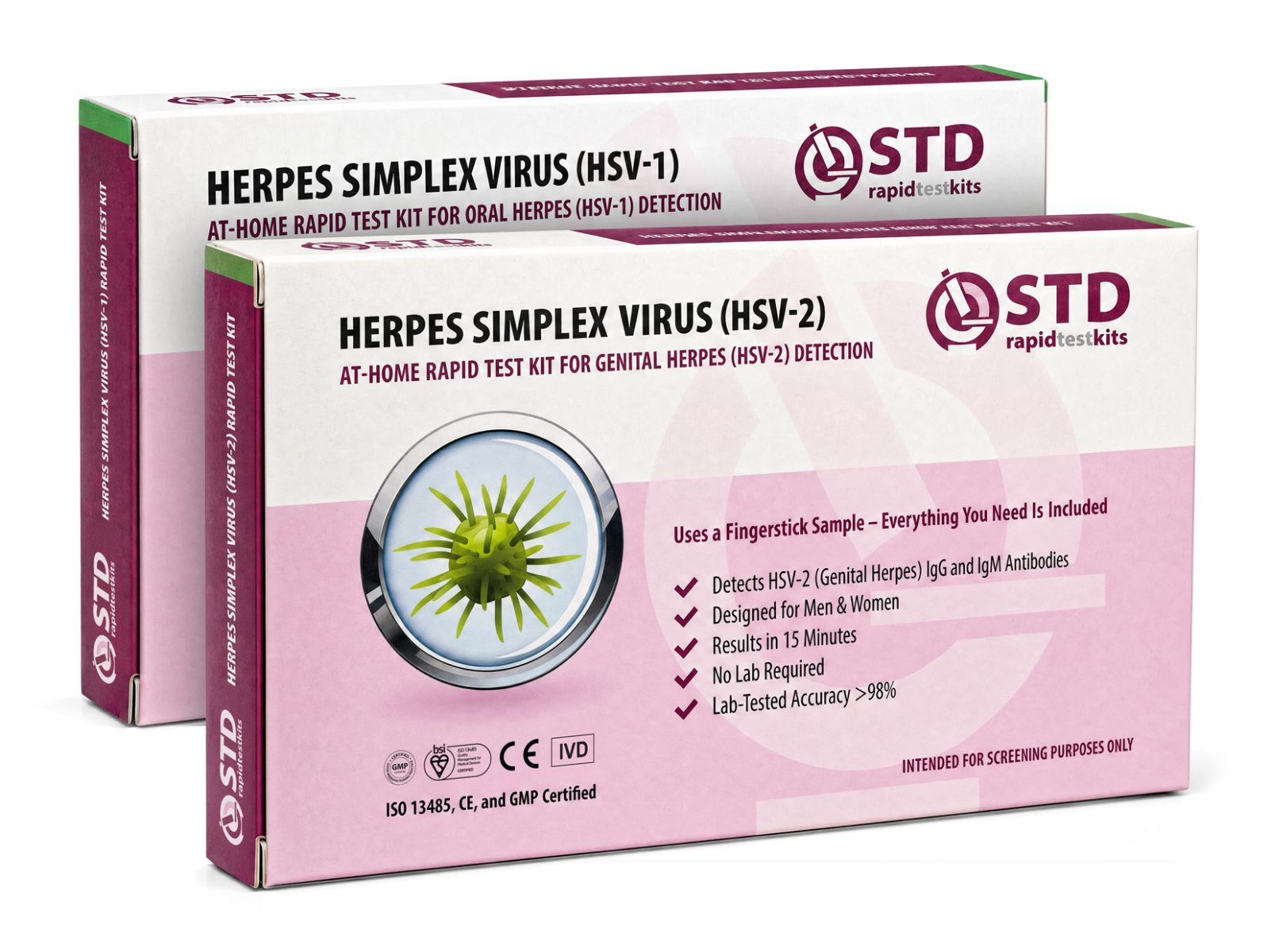
Once you are past the six-week mark and want a private way to check your status, an at-home antibody test offers a practical option that does not require booking a clinic visit. The kit linked below covers both HSV-1 and HSV-2 with a single fingerstick blood draw, and a positive result is always worth confirming with a lab test afterward.
This site sells the rapid tests linked below. We only recommend kits that fit the reader's specific concern; for the rest of the article, that means a blood antibody test for HSV and a broader multi-infection panel when the exposure event covers more than one risk.
Most people with genital herpes have no symptoms or have very mild symptoms. Mild symptoms may go unnoticed or be mistaken for other skin conditions like a pimple or ingrown hair.
First Outbreak Versus Recurrence
First outbreaks tend to be louder, with more inflammation, stronger systemic symptoms, and sometimes more emotional weight. If this rectal pain is your first encounter with HSV, the immune system is meeting the virus for the first time, and that reaction shows up in the body.
You might notice deeper pelvic discomfort, swollen groin lymph nodes, or a general flu-like heaviness. Some people report urinary discomfort alongside the rectal pain. That cluster often nudges thoughtful providers toward a primary herpes infection even when external sores are not obvious.
Antiviral medications such as acyclovir, valacyclovir, or famciclovir cannot cure HSV. They do shorten outbreaks and reduce symptom severity, and starting treatment early in a first outbreak can meaningfully change how long the rectal pain lasts. The NHS genital herpes page covers the standard treatment options in plain language.
| Feature | First Outbreak | Recurrent Outbreak |
|---|---|---|
| Typical severity | More intense; immune-naive reaction | Milder and shorter |
| Systemic symptoms (fever, swollen lymph nodes, fatigue) | Common | Uncommon |
| Visible lesions | May develop after internal pain | Often absent; prodrome only |
| Typical duration | Up to 2–4 weeks untreated | Often a few days to a week |
When It's Probably Not Herpes
Not every rectal ache is HSV. Friction during sex, especially without enough lubrication, can produce inflammation that feels like an infection. Constipation can stress fragile tissue. Stress, dehydration, and long stretches of sitting can all worsen hemorrhoid-related pain.
If your pain appeared immediately after intense sexual activity and improves steadily over a few days without systemic symptoms, friction or a minor mucosal tear is the more likely explanation. If bright red blood appears on the toilet paper with a sharp tearing sensation, fissures climb higher on the list.
The discomfort that keeps HSV in the conversation feels viral, electric, or nerve-based. It often appears days after exposure rather than immediately, and it can come with swollen lymph nodes or a low-grade fever. Pattern matters as much as any single symptom.

Protecting Partners Without the Panic
If rectal pain without visible sores does turn out to be herpes, the next question is usually about transmission. HSV spreads through skin-to-skin contact, and asymptomatic shedding does happen, which means the virus can be present on the skin without obvious signs.
Context matters. Daily suppressive antiviral therapy significantly reduces transmission risk. Condoms reduce it further, though they do not eliminate it entirely because herpes can affect areas not covered by a condom. The WHO fact sheet on HSV is a calm, well-sourced starting point if a partner wants to read the science directly.
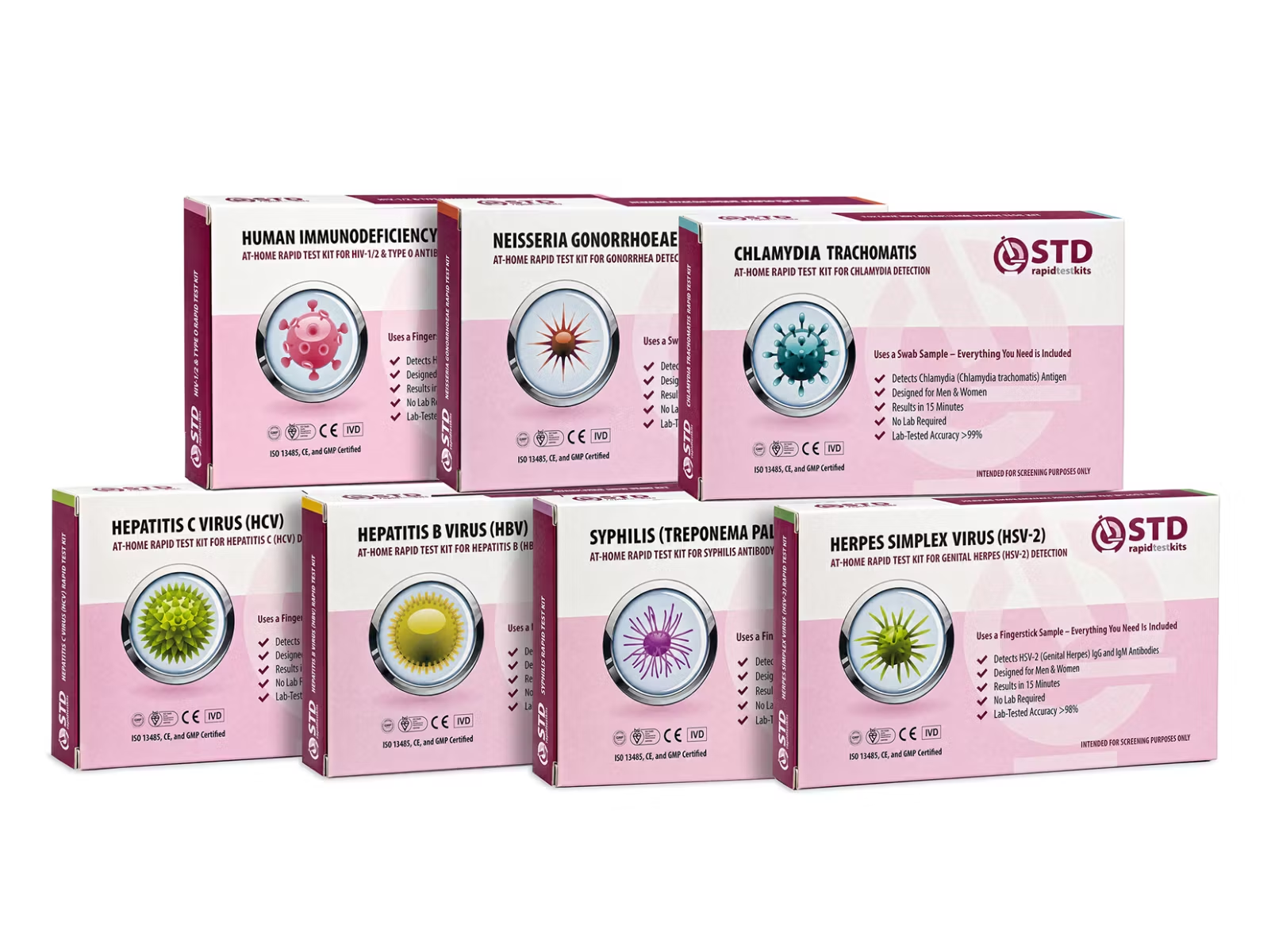
Because receptive anal sex can transmit more than HSV in a single encounter, a broader-panel screen is worth considering. Chlamydia and gonorrhea can also cause proctitis. Syphilis presents with painless rectal lesions that are easy to miss. HIV and hepatitis have their own windows. A multi-infection home panel covers more of the realistic risk picture from a single exposure event without forcing multiple separate orders.
When Rectal Pain Needs Urgent Care
Most herpes outbreaks resolve with treatment and time. Some symptoms, though, deserve same-day medical evaluation rather than a home approach. Untreated rectal infections, whether viral or bacterial, can occasionally cause serious complications. There is a real difference between anxious 2 a.m. Googling and a clinical red flag, and learning that difference protects both your peace of mind and your body.
Severe rectal pain that prevents bowel movements. High fever (over 102°F / 39°C). Inability to urinate. Heavy rectal bleeding. Symptoms that are worsening day over day rather than holding steady or improving. These are signs to go to urgent care or an emergency department rather than to wait out an outbreak at home.
The Bottom Line
Rectal pain with no visible sores is one of the most confusing presentations of herpes because it contradicts what most people were taught to expect. We look for blisters as proof. When pain shows up without them, the instinct is to question whether we are imagining it.
HSV is a nerve infection as much as it is a skin condition. Internal outbreaks happen. Early outbreaks can precede visible lesions by days. Recurrent outbreaks can stay entirely subtle. If your timeline fits, if the pain feels viral rather than mechanical, and if the same possibility keeps circling back, testing at the right window gives you something better than guesswork.
Your next steps
- Map your exposure timeline: count the days since the encounter you are worried about.
- If you are within six weeks, monitor symptoms and ask for a clinician swab if active inflammation is present; antibody blood testing too early often misses HSV.
- Once you are past the six-week mark, an at-home blood antibody test for HSV is a reliable private way to get clarity, with the CDC-recommended retest window at twelve weeks for the cleanest read.
Frequently Asked Questions
- Can you really have rectal herpes with zero visible sores?
- Yes. HSV does not need to produce a dramatic outbreak to be active. If the virus is replicating internally in the rectal mucosa, the result can be deep burning, pressure, or electric tingling without anything visible at the anal margin. Absence of blisters does not equal absence of infection.
- How do I know if this is herpes or just hemorrhoids?
- Hemorrhoids usually feel swollen or itchy and often come with visible lumps or bleeding after straining. Herpes pain tends to feel nerve-based, sharper, tingly, or flu-ish. If you had a new sexual partner recently and discomfort started a few days later, HSV deserves consideration. If pain started right after a hard bowel movement and improves steadily, hemorrhoids are more likely.
- What does herpes nerve pain actually feel like?
- People commonly describe it as burning, buzzing, or almost electric. It can radiate into the buttocks or upper thighs. This is the prodrome phase, an early warning signal that can precede or even replace a visible sore.
- If I test too early and it's negative, can I trust that?
- Maybe, maybe not. Early testing can miss HSV because antibodies take weeks to form. If it has been less than six weeks since exposure, a negative blood test is not always the final word. Retesting at the twelve-week mark is what the CDC STI Treatment Guidelines recommend for a reliable type-specific result.
- Can internal herpes just go away on its own?
- Outbreaks usually calm down within two to four weeks even without treatment. Antiviral medications shorten that timeline and reduce severity. The virus itself stays in the body long term, but individual outbreaks are temporary.
- Is anal herpes worse than genital herpes?
- Not necessarily worse, just sometimes different. The rectum has dense nerve endings, so inflammation there can feel more intense. Treatment is the same regardless of anatomical site.
- Can I transmit herpes even if I don't have any visible sores?
- Yes. Asymptomatic shedding is real, which means HSV can spread even without active lesions. That does not mean you are constantly contagious. Daily suppressive antiviral therapy and condoms significantly reduce transmission risk.
- What's the smartest next move if I'm still unsure?
- Map your timeline. If you are within two weeks of exposure, monitor symptoms and plan for testing at the appropriate window rather than testing immediately. If you are past six weeks, an antibody blood test is far more reliable. Six weeks is the earliest point where a negative result starts to carry real weight; twelve weeks is the clearest read.
How we sourced this article: This guide combines current public-health guidance on herpes simplex virus from the U.S. Centers for Disease Control and Prevention, the World Health Organization, and the U.K. National Health Service, with the CDC's STI Treatment Guidelines on proctitis and on genital herpes. We focused on what is genuinely known about internal HSV presentation, recognized testing windows, and the differential diagnosis between herpes proctitis, hemorrhoids, and anal fissures.
- U.S. Centers for Disease Control and Prevention. About Genital Herpes: overview, symptoms, and transmission.
- U.S. Centers for Disease Control and Prevention. STI Treatment Guidelines: Genital Herpes, including antiviral therapy, clinical course, and serologic retesting guidance.
- U.S. Centers for Disease Control and Prevention. STI Treatment Guidelines: Proctitis, Proctocolitis, and Enteritis, including HSV as a recognized cause.
- World Health Organization. Herpes simplex virus fact sheet, including global prevalence and transmission.
- U.K. National Health Service. Genital herpes overview, treatment, and patient guidance.
