
Published: September 2025 | Last updated: May 2026 | Editorial review and quality control: Martina N.
Fresh bumps after a shave have a way of triggering instant panic. Most of the time the explanation is mechanical: a dull blade, friction from tight clothes, a hair curling back through irritated skin. Sometimes the explanation is the human papillomavirus, the most common sexually transmitted infection in the United States according to the CDC's HPV fact sheet. Both can land in the same patch of skin and both can look small and pale at first glance.
The two conditions behave very differently across days, weeks, and months, though. Once you know what each one looks like and how each one evolves, the picture stops being scary and starts being decidable. This guide walks through how to tell razor burn, ingrown hairs, folliculitis, and HPV warts apart, and where at-home testing fits in (and where it does not).
Key Takeaways
- Razor burn arrives within hours of shaving and clears in roughly 2 to 7 days. If a bump is still there after a week, friction is probably not the explanation.
- Genital warts from HPV arrive weeks to months after sexual exposure, are usually painless, and rarely resolve on their own quickly. There is no at-home swab or blood test that diagnoses warts; clinicians diagnose them visually.
How razor burn shows up
Razor burn is a friction-and-irritation reaction. The blade scrapes the outer skin layer, sometimes nicks the follicle, and the area reacts within hours. The visible pattern is consistent: pink or red bumps clustered along the shaved area, often centered on hair follicles, sometimes with a small white or yellow dot at the tip when the follicle is inflamed. The skin usually itches or stings to touch.
Most cases settle in 2 to 7 days once you stop shaving the area, switch to looser cotton underwear, and skip fragranced products on still-irritated skin. The longer-running version is pseudofolliculitis barbae, the shave-bump pattern that mostly affects people with coarse, curly hair where strands curl back into the follicle. It follows the same general look but flares with every shave. MedlinePlus notes that folliculitis often clears with hygiene and friction reduction, though warm compresses and topical care may be needed for persistent cases.
Stop shaving the area for at least a week. Wear loose cotton underwear so the skin can breathe. Skip fragranced soaps, lotions, and bath products on still-irritated skin until it has fully calmed.
How HPV genital warts show up
Genital warts are skin growths caused by specific strains of HPV. According to the CDC's HPV overview, HPV strains are classified as either non-oncogenic (wart-causing) or oncogenic (cancer-causing), and the two groups are different. A wart diagnosis is therefore not the same conversation as a cancer-screening one.
The look is distinct from razor burn. Warts tend to be flesh-colored or slightly lighter than the surrounding skin, sometimes pinkish or grayish. They can be smooth and dome-shaped, slightly bumpy, or clustered into the cauliflower pattern medical sites quote so often. They are almost always painless. They almost never itch the way razor burn itches. The most useful behavioral clue is the timeline: warts show up weeks to several months after exposure (not within hours of a shave), and they do not resolve on their own quickly, per the NHS genital warts page. Untreated, they often persist or multiply over weeks.
| Feature | Razor Burn | HPV Genital Warts |
|---|---|---|
| Onset | Within hours of shaving | Weeks to several months after exposure |
| Appearance | Pink or red bumps clustered at follicles | Flesh-colored or pale soft growths, sometimes cauliflower-like |
| Texture | Slightly raised, irritated, can have pus tip | Soft, smooth or bumpy, usually no pus |
| Itch or pain | Often itchy, stingy, or sore | Usually painless and non-itchy |
| Duration without treatment | Clears in 2 to 7 days | Persists or spreads without targeted treatment |
| Trigger event | Shaving, friction, dull blade | Sexual skin-to-skin contact (hours to years earlier) |
Quick answer: razor burn vs HPV genital warts, how do I tell?
Razor burn shows up within hours of shaving, clusters around hair follicles, itches or stings, and clears in 2 to 7 days. HPV genital warts show up weeks to months after sexual exposure, are usually painless, can be flesh-colored or pale, and do not clear quickly without treatment. If a bump is still there after one week or has changed shape, the cause is probably not your razor and a clinic visit is the right next step.
When the timeline gets confusing
Real life rarely sorts itself into clean categories. You might have shaved on Friday, had sex on Saturday, switched to a new soap that same week, and added a sweaty gym session in tight leggings on top of it all. The fastest way to cut through the noise is to ask one question: are these bumps still here a week from now, and have they changed shape?
Razor burn at the one-week mark should be either gone or close to it. HPV warts at the one-week mark are typically just getting established. If something has held its shape for two weeks, started to enlarge, or formed a cluster where there used to be a single bump, the cause is probably not your razor.
A bump persists past 7 to 10 days, changes shape, or multiplies. A single growth feels firm and rubbery rather than tender. There is bleeding from a growth that is not a shave nick. The skin around the bump becomes painful, warm, or streaked with red (signs of infection that need a clinician, regardless of cause).
Ingrown hairs and folliculitis: the lookalike middle ground
Not every post-shave bump is razor burn or HPV. The two most common in-betweens are ingrown hairs and bacterial folliculitis. Both can sit on the same skin, mimic both razor burn and warts, and confuse the diagnosis.
An ingrown hair forms when a hair curls back and grows into the skin. It tends to be a single tender bump, often with a faintly visible dark hair trapped under the surface. Most resolve in 3 to 14 days when you stop shaving and let the area heal; gentle exfoliation helps. Don't dig at it with tweezers, since that can introduce bacteria and turn it into folliculitis.
Folliculitis is inflammation of one or more follicles, usually from bacteria, friction, or moisture. It looks like small red or white pimples around hair follicles, sometimes itchy, sometimes mildly tender, and almost always short-lived with hygiene and friction reduction. The shape and timeline are the giveaways: warts skip the irritation step entirely and show up well after the trigger event.
Ingrown hair vs folliculitis vs HPV wart at a glance
- Ingrown hair: single tender bump, often with a hair visible under the surface, resolves in 3 to 14 days.
- Folliculitis: small red or white pimples clustered around hair follicles, sometimes itchy, clears with hygiene and friction reduction.
- HPV wart: usually painless, no trapped hair, persists or grows over weeks, sits on top of normal-feeling skin.
Why scrolling Google Images misleads you
Most online photos of genital warts are extreme cases. Medical sites show advanced or untreated examples to make the diagnosis obvious; grooming irritation gets photographed less often because it heals on its own. Skin tone changes the picture too. Warts on darker skin can look like small flat patches that blend with surrounding tissue rather than the textbook cauliflower clusters, which is why visual self-diagnosis fails so often. The NHS describes warts as appearing white, red, skin-colored, or darker than the surrounding skin, a wider visual range than most photo galleries depict.
The honest takeaway: if photos do not match what is on your body, that does not rule warts in or out. Texture, timeline, and persistence are more reliable than visual matching with a Reddit thread.
Most people who have HPV do not know they are infected and never develop symptoms or health problems from it.
What home and clinic testing can actually answer
Here is the part that often catches people off guard. There is no rapid swab or blood test that diagnoses genital warts. Warts are diagnosed visually, either in person at a clinic or by a clinician reviewing a photo through telehealth, per the NHS genital warts page. A biopsy is sometimes used when the appearance is ambiguous.
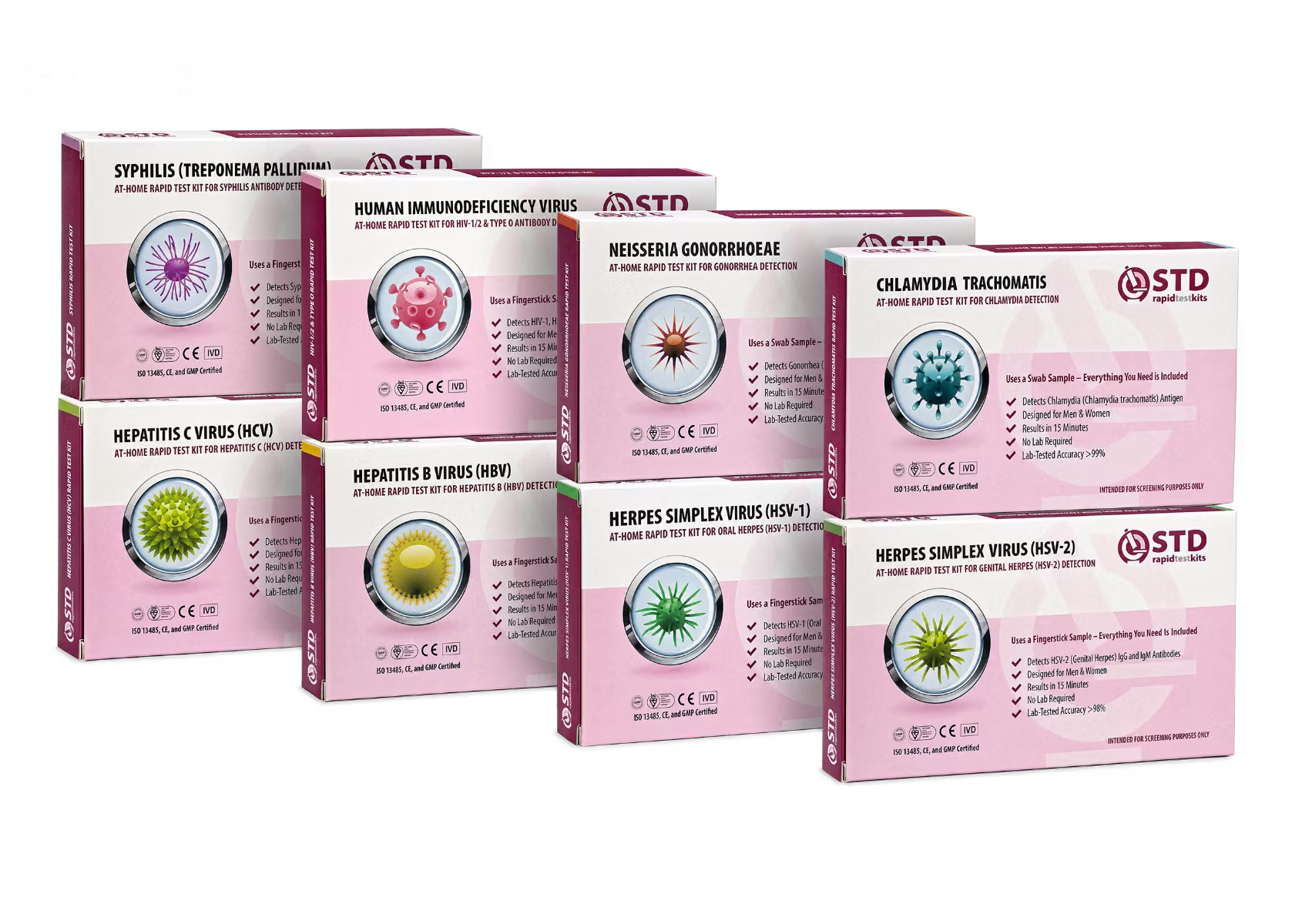
That doesn't mean home testing is irrelevant. Warts are caused by HPV, and HPV is one of several STIs that can show up around the same exposure event. Ruling in or out chlamydia, gonorrhea, syphilis, HIV, and herpes can shape what happens next, especially if you've recently changed partners. A negative result on those won't tell you whether the bump is a wart, but it narrows the question and tells you whether a clinic visit is urgent or routine.
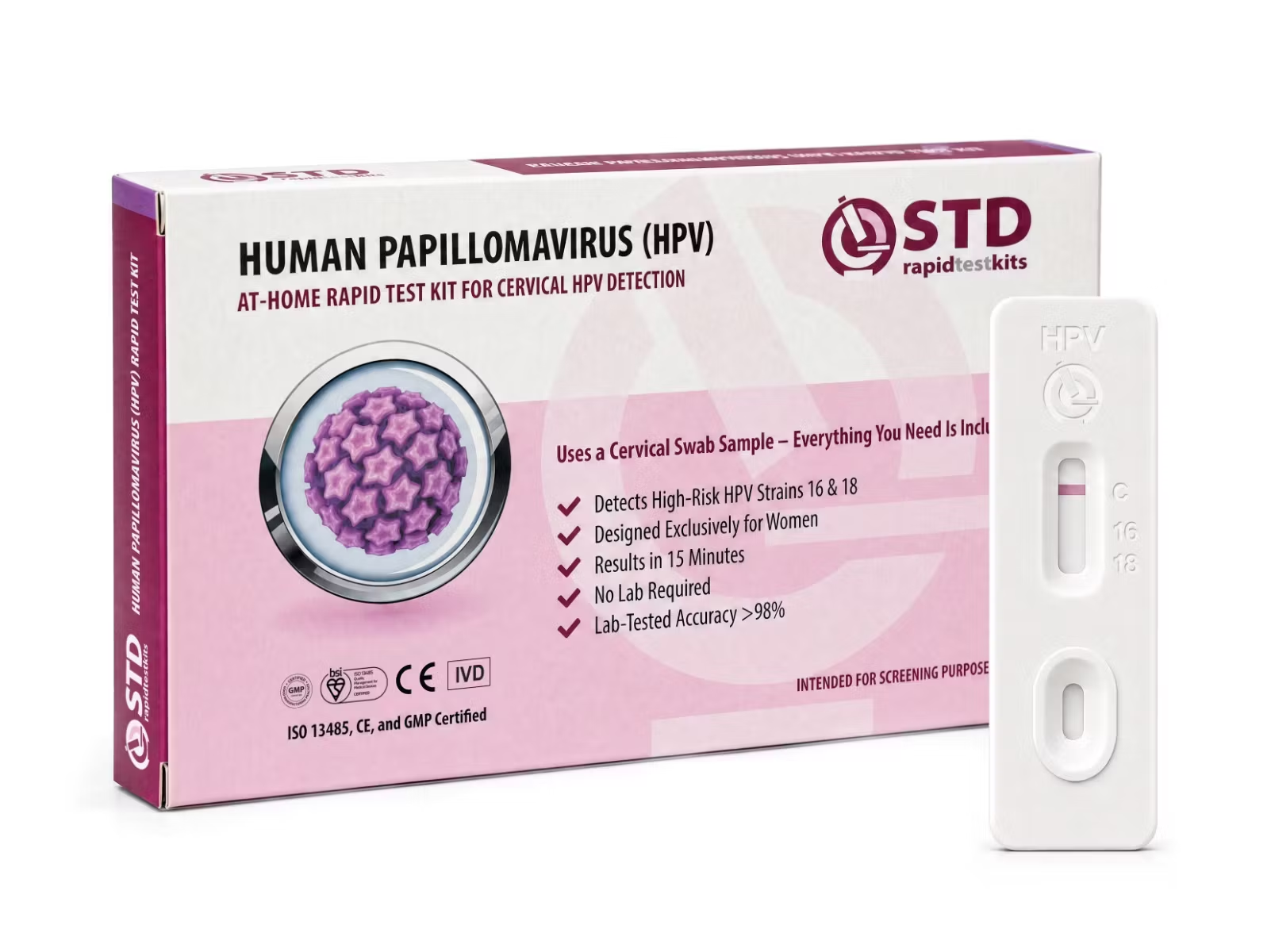
For people with a vagina, a self-collected vaginal swab can also screen for HPV DNA itself, similar to the screening tool clinicians use during cervical cancer screening. A positive HPV result still does not diagnose visible warts, since most HPV infections are silent. But it is one more piece of information, and it can be done at home in private.
HPV can stay quiet for years
One of the most loaded questions on this topic: "My partner and I have been together a long time. How can a wart show up now?" The answer that most people don't want but do need: HPV can stay dormant in the body for months or years before producing visible warts, and most people who carry it never develop symptoms at all, per the CDC's HPV fact sheet. A new wart in a long-monogamous relationship is not, on its own, evidence that anything has changed in the relationship.
That is worth saying clearly because the alternative interpretation breaks relationships unnecessarily. The CDC's HPV overview states that nearly everyone will get HPV at some point in their lives, and 9 out of 10 infections clear on their own within two years. A small fraction surface as visible warts later.
A new wart between long-monogamous partners is not, by itself, evidence that anything has changed between you. HPV can be silently present for months or years, so the virus producing today's wart may have been carried in long before this relationship began.
If you've already shaved over a wart
This question shows up a lot, and the worry is reasonable. Shaving over a wart can theoretically spread HPV to nearby skin through tiny abrasions, a process called autoinoculation. It is not common, but it has been documented, which is why dermatologists generally suggest pausing shaving and waxing in the area while the bump is being evaluated.
If you've already shaved, do not panic. You haven't guaranteed anything. Stop shaving the area until you know what is on your skin. A clinician can confirm the diagnosis and start treatment (cryotherapy, prescription topical, or in-office removal). Once the area is clear and the skin has healed, regular grooming can resume.
Treatments compared by condition
The treatment path branches sharply once you've identified what's actually there. Razor burn and ingrown hairs respond to home care: warm compresses, unscented moisturizers, friction reduction, and time. HPV warts do not respond to those; they need targeted intervention, either prescription topicals (imiquimod, podofilox, sinecatechins), cryotherapy with liquid nitrogen, or office removal. Over-the-counter wart removers sold for hand or foot warts are not appropriate for genital skin and can cause significant chemical burns there.
Waiting on warts isn't usually the right call either. Some clear when the immune system suppresses the virus, but most persist or recur, and untreated warts increase the chance of passing HPV to a partner.
| Condition | Typical duration | What works |
|---|---|---|
| Razor burn | 2 to 7 days | Stop shaving, loose cotton clothing, fragrance-free moisturizer, time |
| Ingrown hair | 3 to 14 days | Warm compress, gentle exfoliation, leave it alone, treat any infection |
| Folliculitis | Days to 2 weeks | Hygiene, friction reduction, topical antibacterial if infected |
| HPV genital warts | Weeks to months without treatment | Cryotherapy, prescription topical (imiquimod, podofilox), in-office removal |
When broader STI testing makes sense
Even if the bump turns out to be irritation, the broader sexual-health context still matters. STIs cluster: someone exposed to one infection is statistically more likely to have been exposed to others around the same time. If you are seeing changes you can't explain and you have had any new or unprotected exposure in the last few months, screening for the common ones (chlamydia, gonorrhea, syphilis, HIV, hepatitis B, hepatitis C) is reasonable whether the bump is HPV or not. The CDC publishes regular STI screening cadences for sexually active adults in its STI Treatment Guidelines.
At-home rapid tests are not lab NAATs, and a negative rapid result does not replace clinic evaluation if symptoms persist.
FAQs
- How long does razor burn usually last?
- Two to seven days is typical when you stop shaving and let the skin breathe. Past the one-week mark, friction alone is probably not the full explanation and a clinical evaluation is worth considering.
- Do genital warts itch?
- Usually they don't. Warts tend to be silent: no pain, no sting, no itch. That's part of what makes them easy to miss. When the genital area itches, friction, dermatitis, yeast, herpes, or pubic lice are more likely explanations than warts.
- Can condoms prevent HPV transmission?
- They reduce risk significantly but don't eliminate it. HPV transmits through skin-to-skin contact, including areas a condom doesn't cover. The HPV vaccine is the strongest single tool for prevention; the CDC recommends routine vaccination through age 26 and shared clinical decision-making for some adults aged 27 to 45 (see the CDC's HPV vaccines page at cdc.gov/hpv/vaccines).
- How do I tell a wart from an ingrown hair?
- Ingrown hairs are tender, often have a faintly visible hair trapped under the surface, and resolve in 3 to 14 days. Warts are typically painless, lack a trapped hair, sit on top of normal-feeling skin, and persist or grow over weeks. The single most useful question is whether the bump is still there in 7 days.
- Should I keep shaving if I see a new bump?
- Pause shaving in that area until you know what it is. Continuing to shave irritated skin worsens razor burn, and shaving over a wart can theoretically spread HPV to nearby skin (autoinoculation). A short break costs nothing and protects the diagnosis.
- Will genital warts go away on their own?
- Sometimes the immune system suppresses the virus and warts shrink or disappear. More often, untreated warts persist for weeks to months or come back. Treatment isn't only cosmetic; it lowers the chance of passing HPV to a partner.
- Is there an at-home test for genital warts?
- No. Visible genital warts are diagnosed visually by a clinician. There are at-home HPV swab tests (vaginal self-swab, validated for female anatomy) that detect HPV DNA, but a positive HPV result is not the same as diagnosing a wart, since most HPV infections cause no visible signs at all. Home tests for adjacent STIs (chlamydia, gonorrhea, HIV, syphilis, herpes) can rule out other causes of bumps.
- What if my partner has warts but I don't see anything?
- HPV can be silent for months or years before producing visible warts, and many people who carry HPV never develop any. Not seeing a wart on yourself doesn't mean you're not exposed. Talk with a clinician about screening options, ask about the HPV vaccine if you haven't had it, and avoid sharing razors or towels until things are sorted.
- U.S. Centers for Disease Control and Prevention. About Genital HPV Infection. Source for HPV symptoms, dormancy, and the 'most people with HPV never develop symptoms' framing.
- U.S. Centers for Disease Control and Prevention. About HPV. Source for HPV lifetime prevalence ('nearly everyone will get HPV') and the 9-out-of-10 natural-clearance figure within two years.
- NHS. Genital warts. Source for visual appearance across skin tones, time-to-symptoms after exposure, and visual-exam diagnosis approach.
- MedlinePlus (U.S. National Library of Medicine). Folliculitis. Source for folliculitis duration, causes, and standard treatment approaches.
- U.S. Centers for Disease Control and Prevention. HPV Vaccines. Source for routine vaccination through age 26 and shared clinical decision-making through age 45.
- U.S. Centers for Disease Control and Prevention. Sexually Transmitted Infections Treatment Guidelines, 2021. Source for STI co-screening rationale and screening cadences.
