Published: November 2025 | Editorial review and quality control: Martina N.
A new bump in a sensitive area can hijack your whole afternoon. You shaved last night, the next morning something looks redder than expected, and within minutes your brain has skipped past five harmless explanations and parked on the worst one. By 2 a.m. you are typing "herpes vs razor burn" into a search bar and convincing yourself the worst is real.
Most of the time, it is not. Shaving the pubic area produces irritation, ingrown hairs, and mild folliculitis far more often than it reveals an infection. These three skin reactions look dramatic in a small space, and they share enough visual features with early herpes lesions to spark real worry. The reassuring piece is that timing, pattern, and pain tell two very different stories once you know what to compare.
This guide walks through the differences clinicians use to sort shaving irritation from a herpes outbreak, when waiting it out is the right call, and when a quick at-home test is worth doing for peace of mind.
Key Takeaways
- Razor burn appears within hours of shaving and scatters across the shaved area; herpes typically surfaces within days to about two weeks after exposure and clusters into a tight group of fluid-filled blisters that progress into shallow ulcers.
- Bumps that appear the morning after grooming and follow the razor's path are usually irritation. Bumps that turn into blisters, become deeply painful, or persist past two weeks deserve a test or a clinic visit.
What Razor Burn Actually Does to Skin
The skin in the pubic area sits on top of more nerve endings and more vascular tissue than the skin on your arms or legs. It is thinner, reacts faster to friction, and stays warm and damp through more of the day. When a razor passes over it, the blade scrapes off the top layer of protective cells while cutting through coarse hair shafts at their base. Even a careful shave leaves behind hundreds of microscopic openings in the skin barrier, plus a sharp fresh edge on each cut hair that can press back into the follicle wall.
The skin reacts the way any irritated tissue reacts: it gets red, slightly swollen, and a little warmer. Tiny bumps form around each disturbed follicle, a pattern dermatologists describe as follicular inflammation. The Mayo Clinic groups razor burn under the broader category of barrier irritation, the same family of reactions that produces friction rashes and contact dermatitis (Mayo Clinic, Folliculitis).
The sensation is usually annoyance rather than pain. The bumps may itch when clothing rubs over them, sting briefly under hot water, or feel tender for a few hours after shaving. The discomfort fades through the day. Real razor burn rarely produces the deep, focused burning that people describe during a herpes outbreak, and it does not announce itself with the tingling or shooting sensation that often precedes a viral lesion.
Razor burn is mechanical irritation, not infection. Hundreds of follicles disturbed by a single shave produce scattered bumps, mild redness, and surface itch that settle on their own within two to five days once shaving stops and friction eases.
Why Pubic Skin Reacts So Dramatically
Pubic hair is coarser than the hair on the rest of the body. Each shaft sits in a thicker follicle with a stronger sebaceous gland, and the hair often grows in curls or whorls rather than straight lines. When a razor cuts that thick curly hair flush with the skin, the tip is left at a sharp angle that can easily curve back into the follicle wall or into nearby skin.
The result is hundreds of follicles primed to react. Add sweat from a workout, friction from underwear, the warmth of the groin, and the bacteria that live normally on the skin, and the area suddenly has a lot to push back against. Even small triggers (a tight pair of jeans, a hot shower, a synthetic gym short) can extend a mild razor burn into something that looks much worse than it is.
This is also why so many shaving rashes look frightening. The pubic area concentrates a lot of small bumps into a small visual field. Twenty inflamed follicles on a forearm would barely register. The same twenty packed into the genital area look alarming, especially in dim bathroom lighting at 1 a.m.
Location amplifies everything. Bumps that would barely register on a forearm look alarming in the genital area, and the same red dot tells a completely different emotional story depending on where it shows up.
Coarse curly hair, thin vascular skin, warmth, and constant friction add up to a follicle field primed to react. Most shaving rashes look worse than they are because the bumps are packed into a small visual zone, not because anything serious is happening underneath.
How Herpes Outbreaks Usually Begin
Genital herpes follows a different timeline entirely. After exposure, herpes simplex virus (HSV-1 or HSV-2) typically incubates quietly for days to about two weeks before any symptoms surface rather than appearing overnight. Some first outbreaks take longer to surface, particularly when the initial exposure was mild.
The earliest sign is often a feeling rather than a visible lesion. People describe a tingling, itching, burning, or shooting sensation in a small patch of skin, sometimes a day or two before any bumps appear. Clinicians call this the prodrome, and it represents the virus traveling along a sensory nerve from where it has been resting in a ganglion back out to the skin surface.
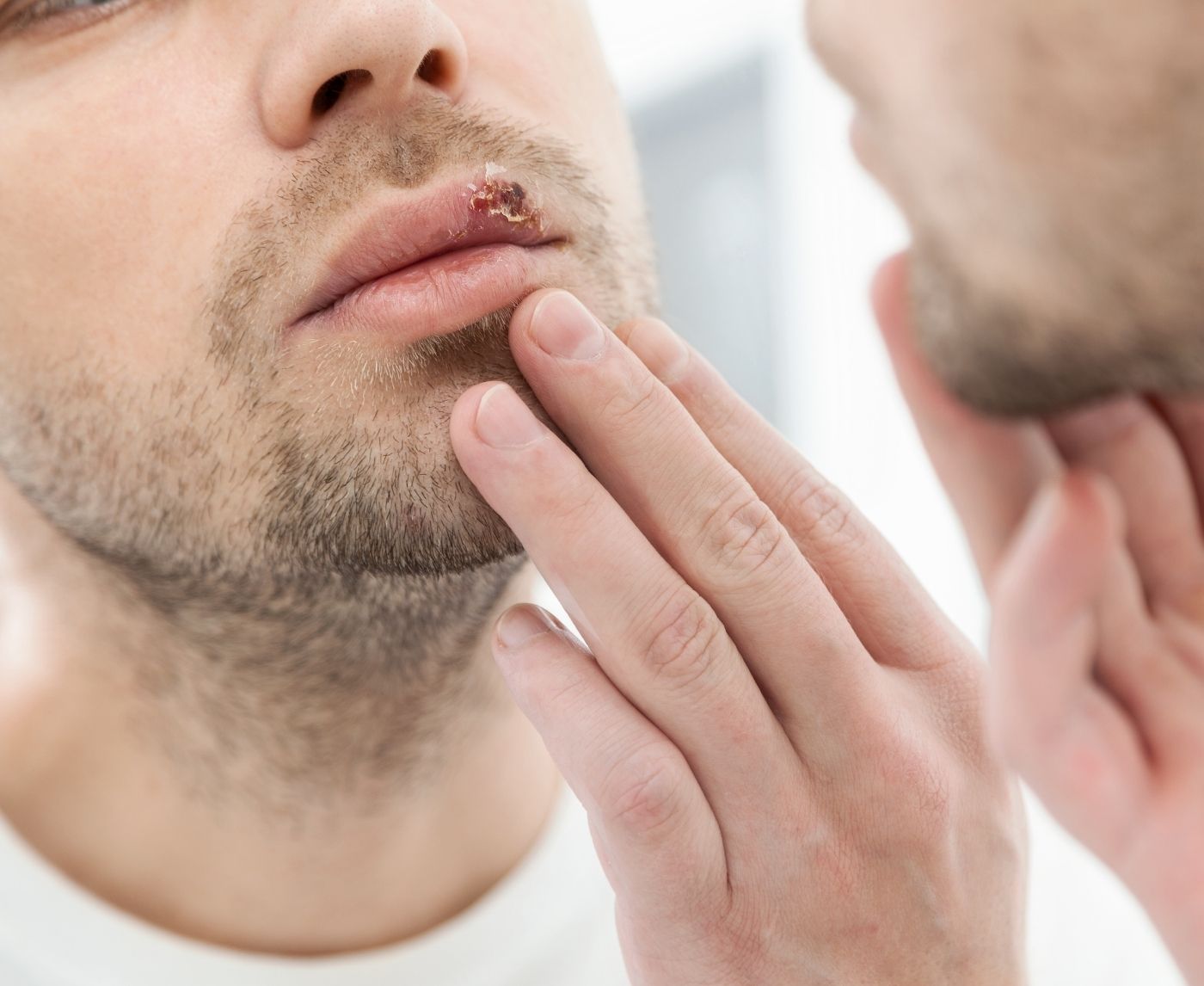
A day or two later, small fluid-filled blisters appear in a tight cluster. The blisters break open into shallow ulcers that are often painful, and the WHO describes the typical course of HSV infection in its HSV fact sheet. The sores crust over and heal across roughly one to three weeks for a first outbreak; recurrences usually heal faster.
A first outbreak can also bring fever, body aches, headache, and tender swollen lymph nodes in the groin. These flu-like symptoms reflect the body's first immune response to the virus and rarely accompany ordinary razor burn or folliculitis.
This pattern (prodrome, then a tight cluster of blisters, then shallow ulcers, sometimes with systemic symptoms) is very different from what shaving produces. Razor burn produces no nerve sensations, no clustered blisters, and resolves in days instead of weeks.
Side-by-Side Symptom Comparison
When the bumps appeared and how they look over the next few days reveals more than any single photo or single feature. The chart below collects the patterns clinicians compare when a patient is unsure whether a fresh shave or a herpes outbreak is to blame. The timing column does most of the work.
| Feature | Razor Burn | Herpes |
|---|---|---|
| Timing | Usually appears within hours after shaving | Typically surfaces within days to about two weeks after exposure |
| Bump pattern | Scattered bumps around hair follicles, along the razor's path | Tight cluster of fluid-filled blisters in one small zone |
| Pain level | Mild itching, stinging, or tenderness | Deep burning or shooting pain, often preceded by tingling |
| Progression | Bumps fade and skin heals | Blisters break into shallow ulcers, then crust over |
| Other symptoms | Usually none beyond skin irritation | First outbreak can bring fever, body aches, swollen groin nodes |
| Healing time | 2 to 5 days | 1 to 3 weeks for a first outbreak |
The Ingrown Hair Trap
Ingrown hairs trigger more "is this herpes?" false alarms than any other condition. After a close shave, a coarse hair can grow sideways under the skin or curl back into the same follicle it came from. The body treats the trapped hair as a small foreign object and walls it off with inflammation. The result is a red, raised bump that sometimes fills with cloudy fluid or develops a small pus head.
From a distance, ingrown hair bumps can look like blisters. Up close they almost always have one of two giveaways: a dark hair visible just beneath the skin surface, or a single yellow-white center that points downward into one specific follicle (NHS, Ingrown Hairs).
The location pattern matters as much as the appearance. Ingrown hairs appear exactly where hair grew, which means they cluster along the bikini line, the inner thighs, the labia majora, the base of the scrotum, and anywhere else regular grooming happens. They follow the grain of the hair, not the random distribution of a viral cluster.
Herpes lesions behave differently. They form between hair follicles as easily as on them, and they do not need a hair to be present to develop. The blisters appear in a tight group within one to two days and then evolve into shallow ulcers. An ingrown hair stays a single bump for a much longer time, sometimes weeks, before either resolving or releasing the trapped hair.
If the bump is a clear pimple-like swelling with a single hair under it and your last sexual contact was weeks ago, an ingrown hair is by far the more likely answer. If the bump is one of several blisters that appeared together within two days, the pattern is closer to a viral outbreak.
Look for a single dark hair just under the skin or a yellow-white center pointing into one follicle. Ingrown hairs sit on the hair pattern (bikini line, inner thigh, scrotal base) and stay as one bump for days to weeks. Viral lesions form between follicles in tight clusters that change shape over a day or two.
When Folliculitis Enters the Picture
Folliculitis is the next-most-common pubic-area look-alike. When bacteria (usually Staphylococcus aureus) enter the tiny openings left after shaving, the follicle wall becomes infected and forms a pimple-like bump. The Mayo Clinic describes folliculitis as small red bumps or whiteheads centered on each affected hair follicle (Mayo Clinic, Folliculitis). Warm weather, tight clothing, hot tubs with under-treated water, and shared razors all raise the risk.
Folliculitis bumps often appear in groups, which is why people mistake them for herpes lesions at first glance. The key visual difference is the relationship with hair: folliculitis sits exactly on a follicle, while herpes blisters form independently of follicle position and tend to ulcerate after a day or two.
Folliculitis bumps usually clear within a week with gentle hygiene, looser clothing, and warm compresses. Persistent or spreading folliculitis may need a topical or oral antibiotic from a clinician. Painful deep nodules that grow rather than fade are a separate category called furuncles or boils and are worth a clinic visit.
| Condition | Typical cause | Appearance | Healing time |
|---|---|---|---|
| Razor burn | Skin irritation from shaving friction and micro-cuts | Scattered red bumps along the razor's path | 2 to 3 days |
| Ingrown hair | Hair curls back into or grows sideways under the skin | Single inflamed bump with a visible hair beneath | Several days to a few weeks |
| Folliculitis | Bacterial infection of hair follicles after shaving | Pimple-like bumps with white or yellow centers on follicles | 3 to 7 days |
| Genital herpes | HSV-1 or HSV-2 infection | Tight cluster of fluid-filled blisters that ulcerate and crust | 1 to 3 weeks for a first outbreak |
How Timing Reveals the Real Cause
Clinicians treating genital bumps almost always start with one question: when did the bumps appear in relation to your last shave and your last sexual contact?
The two timelines do not overlap. Razor burn shows itself fast, usually within twelve hours of shaving and almost always by the next morning. The skin reacts immediately to friction and to the microscopic wounds the blade left behind. Bumps that appear the same day or the next day, and that cluster along the shaved area, are very likely irritation.
Herpes does not run on a shave-related timeline. The virus needs days to travel along nerves and reach the skin, and a first outbreak typically surfaces within days to about two weeks after a new exposure. If your last sexual contact was a week or two ago and bumps are showing up now, sexual transmission belongs on the differential even if shaving is also recent.
A common case: someone shaves Friday, sees bumps Saturday morning, and panics. The shaving connection is too tight for a viral outbreak. Razor burn is the leading suspect, and most of these cases settle within two to five days. If the bumps instead worsen, blister, or persist, the timeline starts to look more like an infection and less like a fresh shave.
The second timing question clinicians ask is whether the bumps have changed. Razor burn and folliculitis both clear within days once shaving stops and the skin gets a rest, while ingrown hairs can sit under the surface for a week or two before resolving. Herpes lesions evolve in stages: clear blister, then cloudy blister, then shallow ulcer, then crust, then healed in roughly one to three weeks for a first outbreak. The change over days is more telling than the snapshot you took on day one.
How do I tell razor burn from herpes at home?
Compare three things: when the bumps appeared, how they cluster, and how they feel. Razor burn shows up within hours of shaving, scatters along the shaved area, and feels mildly itchy or stingy. Herpes typically develops within days to about two weeks after exposure, forms a tight cluster of fluid-filled blisters in one small spot, and produces deep burning or shooting pain often preceded by tingling. Bumps that progress to blisters, persist past two weeks, or come with fever and swollen groin lymph nodes deserve testing or a clinic visit.
When Testing Actually Makes Sense
Most razor burn does not need a test. It needs three to five days of gentle care, no fresh shaving, and looser clothing.
Testing becomes the right move when the picture stops fitting irritation. Three signs that shift the calculation:
- The bumps progress into clear, fluid-filled blisters that pop and leave shallow ulcers in their place.
- The pain becomes deep and focused, with burning or stinging that does not fade through the day.
- The bumps persist past two weeks, or you also notice fever, body aches, or swollen tender lymph nodes in the groin.
Context is the other reason to test. If you had a new sexual contact in the past one to fourteen days and the bumps could fit either timeline, testing converts guesswork into clarity. The CDC notes that mild herpes symptoms often go unnoticed or are mistaken for other skin conditions such as a pimple or ingrown hair, which is part of why many people do not realise they carry the virus (CDC, About Genital Herpes). Knowing your status protects partners and lets you choose suppressive treatment if positive.
What test to pick depends on what you are looking at:
- An active blister or sore: a clinician-collected PCR swab of fresh fluid is the most accurate option, especially within the first 48 hours of blister formation.
- A possible prior exposure with no current lesion: an HSV antibody blood test 12 or more weeks after exposure gives the most reliable result, since antibodies take that long to develop fully.
- Broader peace of mind after a new partner: a multi-infection panel covering chlamydia, gonorrhea, syphilis, HIV, and the hepatitises picks up the more common silent infections at the same time.
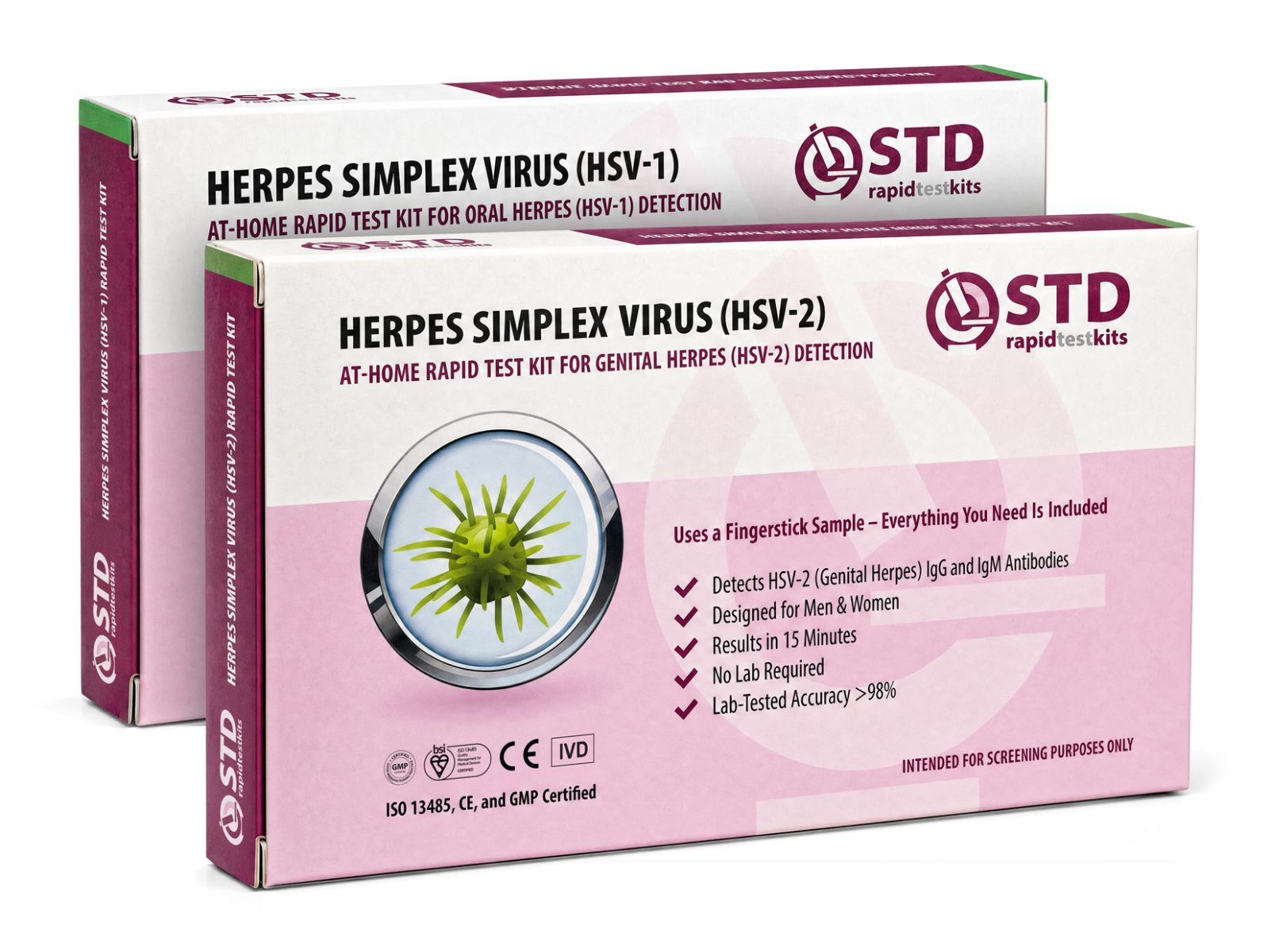
At-home rapid tests linked below are lateral-flow immunoassays sold on this site. They screen privately and quickly once the window period has passed, but they do not replace a clinician-collected PCR swab for an active blister.
What Helps Razor Burn Heal Faster
Razor burn responds well to leaving the skin alone for a few days. Gentle aftercare usually does the work: warm (not hot) showers, fragrance-free moisturisers with glycerin, ceramides, or aloe on the raw skin, and looser clothing until the irritation settles. The point is to take heat, friction, and harsh chemicals off the area while the barrier rebuilds.
When the next shave does happen, several steps cut down on a repeat reaction. Trim the hair short with clippers first, soften the skin with a few minutes of warm water, use a sharp razor (a blunt blade tugs on hair and irritates the follicle more) with the grain, rinse the blade often, and finish with a fragrance-free moisturizer. The NHS specifically warns against shaving with a blunt razor as a cause of ingrown hairs and razor irritation (NHS, Ingrown Hairs).
Most cases settle within three to five days. Ingrown hairs may need slightly longer, especially if the hair is still working its way back to the surface. If a single bump becomes red, hot, and clearly enlarging after three or four days, that points more toward folliculitis or a small abscess and is worth a brief clinic visit.
Habits that make razor burn worse
- Shaving the same area again before the irritation fully resolves.
- Tight synthetic underwear during workouts or hot weather.
- Fragranced gels, deodorants, or wipes applied to freshly shaved skin.
- Aggressive scrubbing or exfoliation that breaks the surface again.
What Clinicians Look For First
When someone visits a sexual health clinic worried about bumps, the clinician usually looks at the pattern before asking anything else. The pattern alone narrows the possibilities by a lot.
Razor burn follows the path of the razor: scattered, follicle-centered, no progression to blisters, and resolving rather than worsening. Folliculitis behaves like acne in the same area, with bumps that have a small yellow or white center sitting directly on hair follicles. Ingrown hairs are usually solitary, with a visible hair under the skin or a clear single pus head.
Herpes lesions look different from all three. They concentrate in a small zone of skin, evolve from clear blisters into shallow ulcers across one to two days, and do not depend on hair follicles to develop. A clinician can also press gently on the area to check for tenderness, which is far more pronounced with a viral outbreak than with surface irritation. Swollen tender lymph nodes in the groin add weight to the viral side of the differential.
If the visual pattern is still ambiguous, a swab of fresh blister fluid sent for PCR is the most accurate path forward, especially within the first 48 hours of blister formation. Blood antibody tests are most useful for confirming a prior infection rather than for diagnosing what is happening on the skin right now.
In practice, a brief clinical look is faster and more informative than a long search session. If three days of rest and looser clothing have not changed the bumps, an in-person evaluation usually sorts the cause within minutes.
Mild symptoms may go unnoticed or be mistaken for other skin conditions like a pimple or ingrown hair.
Before You Spiral on a Late-Night Search
The internet is unmatched at delivering information. It is also extremely good at escalating fear when you are already worried. A person sees a bump in a sensitive area, types "genital bumps after shaving" into a search bar, and within seconds is reading about HIV, syphilis, herpes, HPV, and three obscure dermatologic conditions in a row.
Suddenly every symptom seems to match. The bumps feel itchier. The redness looks worse in the mirror. Even normal skin sensations start to feel suspicious. The spiral happens because online symptom lists describe many conditions at once without weighting which is most likely for any one person.
What those lists rarely include is context. Timing and pattern together tell the story that no single photo can. The history of shaving, friction, irritated follicles, and recent sexual contact explains far more than any single symptom on its own. Razor burn the morning after a shave is not the same scenario as ulcerated blisters appearing five days after a new partner. The same red bump tells a completely different story in each context.
When clinicians evaluate genital bumps, they look at the full story rather than the snapshot. That bigger picture usually reveals something far less dramatic than the late-night search suggested. The fastest way out of the spiral is to pause, write down the timing, note how the bumps have changed in the past 24 hours, and use that information to decide whether home care, an at-home test, or a clinic visit is the right next step.
You Deserve Answers, Not Anxiety
Discovering a new bump in a sensitive place can hijack a perfectly normal week. Online symptom lists make it worse by piling every possibility on top of each other with no sense of which one is most likely for your situation. The actual answer is usually less dramatic than that 2 a.m. search makes it look.
The three shaving reactions all share a feature: scattered or follicle-centered bumps that clear within days once the skin gets a real rest. Herpes runs on a slower and more organised timeline, with a prodrome, a tight cluster of fluid-filled blisters, shallow ulcers, and a healing arc of one to three weeks for a first outbreak. If the pattern fits that second description, testing is the simplest way out of the loop.
Less commonly, contact dermatitis from a new soap or lubricant, molluscum contagiosum, or HPV warts can also produce bumps in this area. Any lesion that does not fit the razor-burn or herpes pattern after two weeks is worth a clinic evaluation regardless of how minor it looks.
The two answers worth chasing here are not razor burn versus herpes. They are "I know what this is" and "I know my next step." Most readers of this page will land on the irritation side and recover with rest. A smaller group will land on the testing side and gain real peace of mind. Either way, that is a better next step than another search at 2 a.m.
Home care path: bumps showed up within hours of shaving, scatter along the shaved area, feel itchy or stingy rather than deeply painful, and have not changed shape in 24 hours. Three to five days of rest, looser clothing, and no fresh shaving usually settles them.
Testing path: bumps progressed into clear fluid-filled blisters, came with tingling or shooting pain, brought fever or swollen groin lymph nodes, or persist past two weeks. An at-home antibody test (12+ weeks after a possible exposure) or a clinic swab of an active blister gives a clear answer.
Frequently asked questions
- I shaved yesterday and woke up with bumps today. Could this still be herpes?
- Almost certainly not. Herpes does not appear overnight from shaving. The virus needs days to about two weeks to incubate after exposure before symptoms surface. Razor burn and irritated follicles, on the other hand, often show up the morning after a shave. If the bumps appeared within twelve hours of grooming and sit along the path of the razor, irritation is by far the more likely cause.
- What does razor burn feel like in the pubic area?
- Most people describe it as itchy, slightly stingy, or simply annoying. Clothing can rub uncomfortably across the area, and hot water can sting briefly in the shower. The discomfort tends to stay on the surface and fades through the day. Deep, focused burning pain that does not let up is more typical of a herpes outbreak than razor burn.
- What is the biggest visual difference between herpes and shaving bumps?
- Pattern. Razor burn looks scattered, with small bumps spread along wherever the razor passed. Herpes organizes itself into a tight cluster of blisters in one small area, more like a constellation than a sprinkling. The blisters also evolve over a day or two from clear fluid to cloudy fluid to a shallow ulcer, which razor burn does not do.
- Can ingrown hairs really look like herpes blisters?
- Yes. An ingrown hair can swell into a red bump dramatic enough to send anyone straight to a search engine. Some develop a small white tip that resembles a tiny blister. The giveaway is the hair follicle in the center, often with a curled hair visible just under the surface. If you see a hair trapped there, an ingrown hair is far more likely than a viral lesion.
- How long should razor burn last before I worry?
- Most razor burn clears in 48 to 72 hours once the skin gets a break from shaving and friction. If bumps last more than a week, spread beyond the shaved area, become painful rather than itchy, or turn into clear blisters, it is worth either testing at home or seeing a clinician.
- Can shaving trigger a herpes outbreak in someone who already has the virus?
- Yes, this can happen. Shaving does not create a herpes infection out of nowhere, but in someone who already carries the virus, the irritation can disturb nerves near a dormant viral site and trigger a recurrence. The outbreak still follows the usual viral pattern (cluster of blisters, prodrome, healing over one to three weeks) rather than the scattered pattern of razor burn.
- When should I test instead of waiting it out?
- Get a test when your symptoms evolve past what irritation produces. Specifically: fluid-filled blisters that form within one to two days and break into shallow ulcers, bumps that persist past two weeks, deep focused pain that does not fade through the day, or systemic signs such as fever and tender swollen lymph nodes in the groin. Also test when you had a new sexual contact in the past one to fourteen days and the bumps could plausibly fit either timeline. Testing converts an anxious wait into a clear answer.
- What kind of test is most accurate for an active blister?
- A swab of fluid from a fresh blister sent for PCR is the most accurate test for an active outbreak, especially within the first 48 hours of blister formation. Antibody blood tests, including at-home rapid kits, are most useful for confirming a prior infection 12 or more weeks after exposure rather than for diagnosing what is happening on the skin right now.
- U.S. Centers for Disease Control and Prevention. About Genital Herpes. Supports the description of the asymptomatic-or-mild nature of many infections, and the observation that mild symptoms are often mistaken for other skin conditions such as a pimple or ingrown hair.
- World Health Organization. Herpes Simplex Virus Fact Sheet. Supports the general clinical course of HSV infection, including the progression from vesicle through ulcer to crust.
- Mayo Clinic. Folliculitis: Symptoms and Causes. Supports the description of folliculitis as small red bumps or whiteheads centered on hair follicles, and the role of bacteria, warmth, and tight clothing as triggers.
- Mayo Clinic. Ingrown Hair: Symptoms and Causes. Supports the description of an ingrown hair as a single inflamed bump with a hair visible beneath the surface, and general prevention guidance for shaved areas.
- NHS. Ingrown Hairs. Supports the prevention and home-care guidance around shaving technique, including avoiding shaving with a blunt razor.
- Cleveland Clinic. Ingrown Hair: Causes, Treatment and Prevention. Supports the general home-care framing around warm-water aftercare and the reasons to seek clinical evaluation for persistent or worsening bumps.
