Published: September 2025 | Last updated: May 2026 | Editorial review and quality control: Martina N.
A small bump near the base of the shaft. A sting when you pee. A patch of skin that wasn't there last week. For a lot of guys, those moments come with a quiet panic, then ten days of putting it off, then more panic. The reality is calmer than the worst-case stories your brain runs at 2 a.m., but only if you look at what you're seeing and act on it. Most penis bumps are harmless, but the difference between a benign anatomical quirk and an STD matters, and it's almost always decidable with a careful look and, when needed, a single test.
This guide covers what tends to be benign (Fordyce spots, pearly penile papules, ingrown hairs, friction rashes), what could be an STD (herpes, HPV, syphilis), and what burning when you pee usually means in men under 35 (chlamydia or gonorrhea, until proven otherwise). It also covers when each test actually works, because testing too early after an exposure is a common reason men get a false sense of relief and end up retesting weeks later anyway.
Key Takeaways
- Harmless bumps tend to be small, painless, and stable; STD bumps usually change, spread, recur, or come with itching, burning, or weeping.
- Burning when you pee, especially within one to two weeks of a new partner, points to chlamydia or gonorrhea more often than to a UTI in men under 35.
When a Bump Is (Probably) Just a Bump
Most penis bumps men panic about are not STDs. The penis has sweat glands, hair follicles, sebaceous glands (Fordyce spots), and a row of small dome-shaped bumps that can sit around the corona of the head (pearly penile papules). All of these are normal anatomy. They've usually been there for years, they don't change, and they don't itch, weep, or hurt.
Add to that the bumps caused by everyday friction: ingrown hairs from shaving, razor burn, irritation from condoms or lubricants, heat rash after long bike rides or sweaty days. These show up after an obvious trigger, peak within a day or two, and fade within a week. They might sting if you scratch them, but they don't progressively get worse.
The flag-raising patterns are different. According to the CDC's overview of STIs, infections like herpes, syphilis, and HPV all start with skin findings that change over days to weeks, often after a sexual exposure. They grow, spread, recur, blister, or open up. They itch or burn before you see them. And they don't go away with hygiene or hydrocortisone. If a bump is doing any of those things, it's not in the harmless bucket anymore.
| Pattern | Likely harmless | More likely an STD |
|---|---|---|
| Onset | After shaving, friction, sweat, or new soap | Days to weeks after a new sexual partner |
| Appearance | Small, skin-colored, stable in size | Changes color, shape, or count over days |
| Sensation | Mild irritation or none | Itches, burns, tingles, or hurts before it shows |
| Discharge | None | Possible pus, weeping, or crusting |
| Course | Fades within a week | Lingers, spreads, recurs, or worsens |
Common Lookalikes (and What Distinguishes Them)
Visual identification alone is unreliable, even for clinicians. But pattern recognition narrows the field and tells you whether to wait, treat at home, or test. The four conditions men most often confuse are pearly penile papules, herpes lesions, HPV warts, and ingrown hairs. The gallery below shows the typical look of each so you have something concrete to compare against.
Pearly penile papules are tiny dome-shaped bumps, all the same size, arranged in a neat ring around the rim of the head. They appear in adolescence, never change, and never itch. They are not contagious and not an STD; according to DermNet's pearly penile papules reference, they are reported in 8 to 43 percent of men, more commonly in uncircumcised men.
Genital herpes typically shows up as a cluster of small fluid-filled blisters on the shaft, foreskin, or scrotum, often preceded by hours of tingling, burning, or itching in the same spot. The blisters break open into shallow ulcers that crust over within a few days. Outbreaks recur in the same anatomical area, especially under stress or illness.
Genital warts caused by HPV are flesh-colored or pink, can be smooth or cauliflower-textured, and tend to be painless. They grow slowly, sometimes singly and sometimes in clusters, and can sit anywhere on the genital skin including under the foreskin. The NHS guide to genital warts notes they often appear weeks to months after exposure, which is why men frequently can't pin them to a specific encounter.
Ingrown hairs are red, raised, and often have a visible coiled hair just under the skin. They appear after shaving, peak within a day or two, and resolve as the hair works its way free.
What Burning When You Pee Actually Means
For men under 35, burning during urination after a recent sexual exposure is most commonly caused by chlamydia or gonorrhea, not by a urinary tract infection. UTIs in young, otherwise healthy men are uncommon. The burning these infections cause comes from urethritis, inflammation of the urethra (the tube that carries urine out of the body). Gonorrhea symptoms often appear within a few days to two weeks after exposure; chlamydia symptoms, when they occur, typically take one to three weeks to develop.
The pattern is classic: a sting at the start of urination, sometimes a thin clear or cloudy discharge in the morning, sometimes nothing visible at all. According to the CDC's chlamydia fact sheet, most chlamydia infections in men cause no symptoms or only mild ones, which is part of why it spreads. Gonorrhea more often causes obvious discharge and pain, but plenty of men have a quiet version that's only noticeable when they pee.
Burning can also come from non-infectious causes: dehydration, irritation from soap, harsh detergents, frequent sex or masturbation, or sensitive condom lubricants. The give-away is timing. If your burning lines up with a new soap or a long workout and clears in 48 hours, it's probably mechanical. If it lines up with sex three to ten days ago and isn't going away, swab and test before you guess.
If burning is paired with fever, lower abdominal or testicular pain, blood in the urine, or pain that radiates into the groin or back, that's beyond a typical urethritis presentation and worth a same-day clinic or urgent-care visit. Untreated gonorrhea can spread to the testicles (epididymitis) and beyond, which is harder to treat than the original infection.
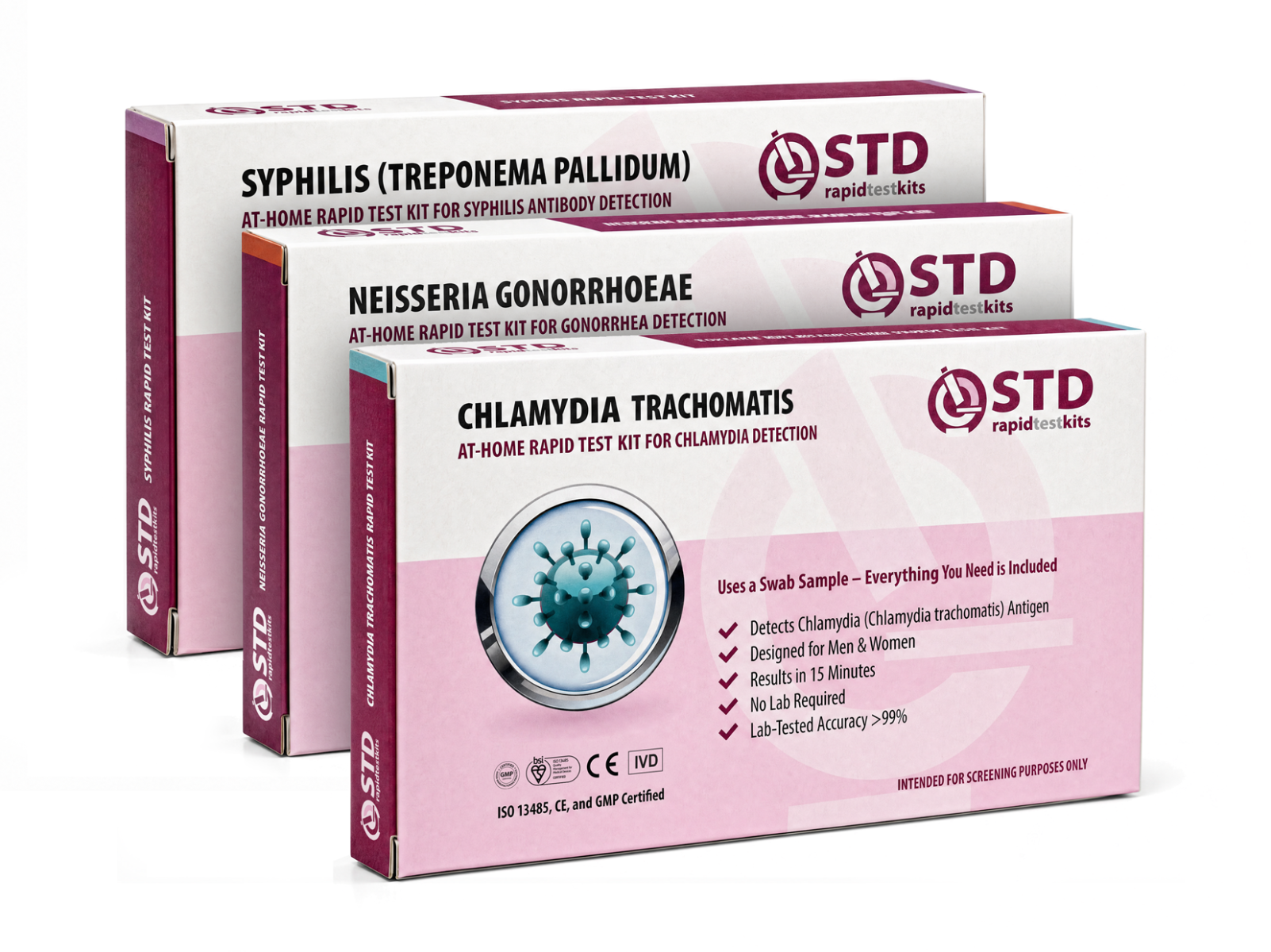
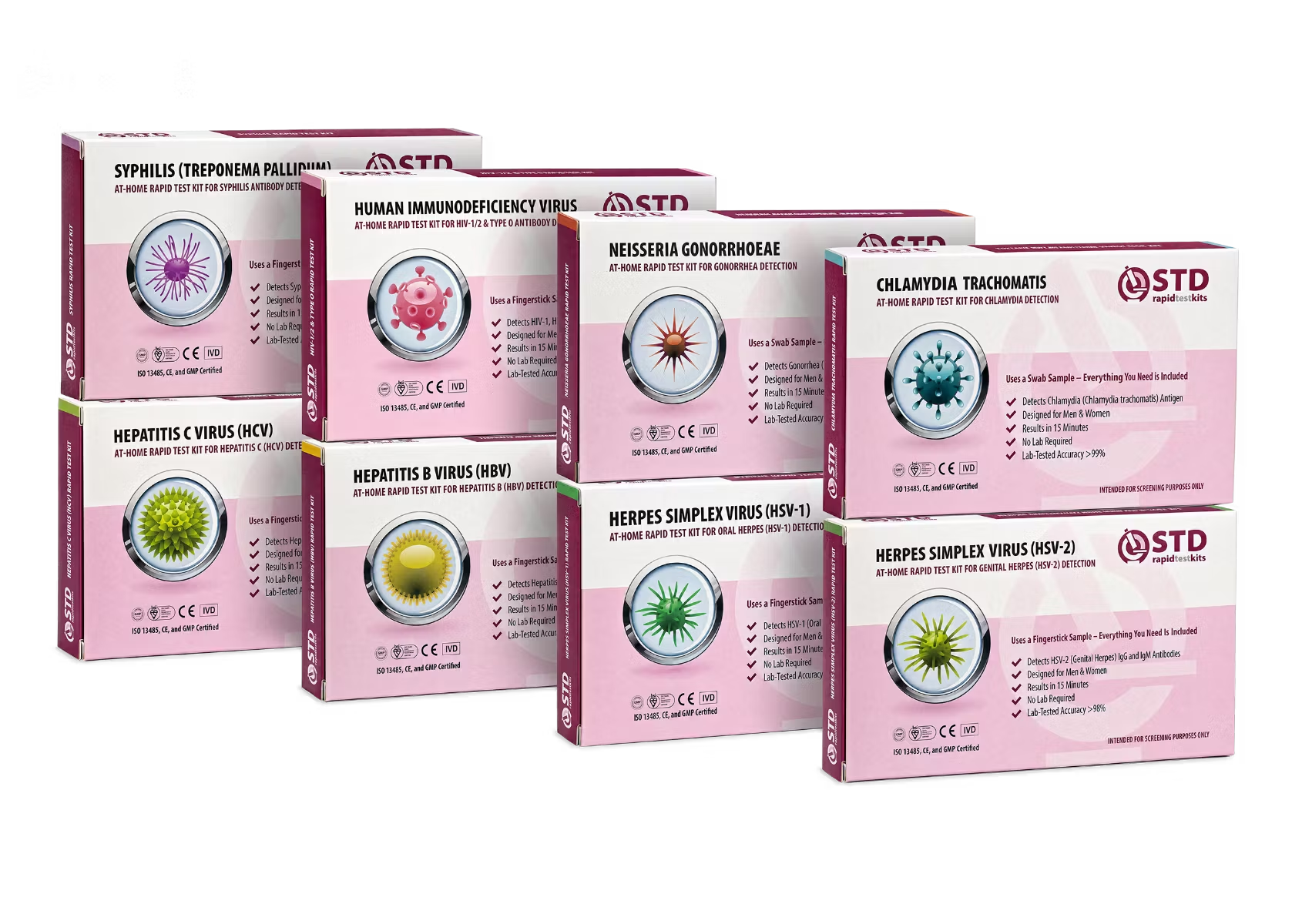
stdrapidtestkits.com sells the home test kits linked in this article. This editorial content is not sponsored, and product recommendations are based on fit-for-purpose for the reader's concern, not commercial benefit.
The Silent STDs (When You Don't Feel Anything)
Some of the most common STDs in men cause no symptoms at all. The CDC has long noted that most chlamydia infections in men are asymptomatic, and HPV (the virus behind genital warts and certain cancers) usually causes nothing visible in men, even while it transmits. Hepatitis B and C, HIV, and early syphilis all routinely sit in the body for weeks or months before they make themselves known.
The practical implication is uncomfortable: feeling fine is not the same as being clear. If you have new partners, condomless sex, or any reason to wonder, the only way to know is to test. The CDC's STI testing guidance sets out the testing intervals worth following: at least once a year for sexually active gay and bisexual men and for younger sexually active women, more often if you have multiple partners or share injection equipment.
HPV deserves a closer look here, because it's the silent infection with the longest tail. HPV is the primary cause of penile, anal, and oropharyngeal cancers in men, alongside its more visible role in genital warts. Vaccination before first sexual contact dramatically reduces risk; even later vaccination still covers several high-risk strains. Men who are eligible and unvaccinated should ask their provider about catch-up dosing through age 26, or shared decision-making through age 45.
Untreated chlamydia and gonorrhea are the other long-tail risk for men. Either infection can spread up from the urethra to the epididymis, the coiled tube behind each testicle that stores and carries sperm. The resulting inflammation, called epididymitis, is painful in the short term and can scar the ducts in the long term. Caught early, a single antibiotic course usually prevents that damage; caught late, the scarring may not be fully reversible. Untreated syphilis progresses through stages and eventually damages the brain, heart, and other organs. Untreated HIV is now a manageable chronic disease, but only if you know you have it and start treatment.
Most people who have chlamydia have no symptoms. If you do have symptoms, they may not appear until several weeks after you have sex with an infected partner.
Testing Windows: When the Test Actually Works
Every STD test has a window period: the time between exposure and when the test can reliably detect the infection. Test too early and a negative result means very little. Test inside the right window and a negative is genuinely informative. The numbers below describe when each test is most reliable, drawn from CDC and FDA test-labelling guidance, not the absolute earliest a test could ever pick something up.
| Infection | Test type | Reliable from | Most accurate after |
|---|---|---|---|
| Chlamydia | Swab or urine NAAT (lab); rapid swab (home) | About 7 days | 14 days post-exposure |
| Gonorrhea | Swab or urine NAAT (lab); rapid swab (home) | About 7 days | 14 days post-exposure |
| Syphilis | Blood antibody test | 3 to 6 weeks | 12 weeks |
| HIV | Fourth-generation antigen-antibody (lab); rapid antibody (home) | 18 to 45 days | 90 days for rapid antibody |
| HSV-2 | Blood antibody test | 6 to 12 weeks | 12 weeks (up to 16 for some assays; check your kit's IFU) |
| Hepatitis B | Blood antigen-antibody test | 3 to 6 weeks | 8 to 12 weeks |
| Hepatitis C | Blood antibody test | 8 to 11 weeks | 12 weeks |
What Happens If a Test Is Positive
A positive result on a rapid home test is medical information, not a verdict. The next step is the same regardless of which infection you're dealing with: confirm at a clinic with a lab test (NAAT for chlamydia and gonorrhea, RPR plus treponemal antibody for syphilis, fourth-generation antigen-antibody for HIV), then start treatment.
Most of the STDs in this guide are curable or highly treatable. Chlamydia, gonorrhea, and early syphilis clear with the right antibiotic regimen, usually within a single course. Hepatitis B is preventable with vaccination and managed with antivirals when chronic. Hepatitis C is now curable in most cases with eight to twelve weeks of direct-acting antivirals. Genital herpes is suppressible with daily antivirals that also lower transmission risk. HIV is managed with antiretroviral therapy that brings the virus to undetectable, at which point it is not sexually transmitted (this is the science behind U=U, undetectable equals untransmittable).
The piece that matters most is action. The longer an infection sits untreated, the more time it has to do silent damage and to spread. Sitting with a positive home test for a week before deciding what to do is the single most common avoidable mistake.
How to Tell a Partner
The conversation people dread is usually shorter than the version they've rehearsed in their head. The structure that works is direct, factual, and free of blame: what you tested for, what came back, what you're doing about it, and what you'd recommend they do.
If a face-to-face or phone conversation is genuinely not possible, public-health departments in most U.S. states offer anonymous partner notification services that will contact named partners on your behalf without revealing your identity. The CDC links to these through state STD program directories. They exist precisely because the cost of silence (untreated infections, ongoing transmission, legal exposure in some jurisdictions) is higher than the cost of an awkward five-minute conversation.
"I just tested positive for chlamydia. I'm starting antibiotics today. You should get tested too, since the timing means there's a real chance you were exposed."
That's the whole script. Direct, factual, no blame. Adapt the infection name and treatment detail to your situation; keep everything else.
Why Men Wait, and Why That Costs More Than the Test
Surveys consistently find that men test less often, test later, and are more likely to ignore symptoms than women. Some of this is structural (less routine sexual-health screening built into men's primary care), but a lot of it is stigma: the false belief that getting an STD reflects on character rather than on the simple math of being sexually active.
The math is unforgiving. Most reported cases occur in people in their 20s and 30s who are not, by any reasonable definition, careless; testing is what responsible adults do. A rapid test takes fifteen minutes and can be done without leaving the house, while the infection it leaves untreated may take months of medical care to resolve.
In 2024, the CDC's national surveillance counted more than 2.2 million reported cases of chlamydia, gonorrhea, and syphilis combined in the United States, per the <a href="https://www.cdc.gov/sti-statistics/annual/index.html" target="_blank" rel="noopener">CDC STI Statistics annual report (provisional data, 2024)</a>. Most of those cases were in adults under 35.
A Practical Decision Path
If you're staring at a bump or feeling a sting and you want a clear plan, the timeline usually decides the question. Symptoms that started within ten days of a new sexual partner tilt toward an STD; symptoms that started after a long workout, a new soap, or a fresh shave with no recent partner change are most likely irritation, and a week of careful watching is reasonable. A single bump that has been present and unchanged for years is almost certainly anatomy, while a new bump or cluster that has appeared, grown, or recurred deserves attention. Burning when you pee, with or without discharge, deserves a swab whenever there has been any sexual exposure in the prior two weeks.
Once you've decided you need a test, the window-period table above tells you when each test is reliable. Testing at the back end of the window gives a more meaningful negative than testing the day after exposure. Either way, action beats anxiety: men who ignore symptoms for a month and end up needing complicated treatment far outnumber the ones who tested early and were embarrassed about it.
What to do next
- If symptoms started within 10 days of a new partner, plan to test.
- If symptoms started after shaving, sweating, or a soap change, watch for one week before deciding.
- Burning during urination after sex within the past two weeks needs a swab, with or without visible discharge.
- Time the test for the back end of the window period for the infection you want to rule out, then retest only if the first test was inside the window.
Frequently Asked Questions
- How can I tell if a bump is herpes or just an ingrown hair?
- Timing and warning signs are the giveaways. Ingrown hairs show up after shaving, you can usually see a coiled hair under the skin, and they fade within a few days. Herpes lesions are typically preceded by hours of tingling, burning, or itching in the same spot, then form a cluster of small fluid-filled blisters that break and crust. Recurrent outbreaks in the same anatomical area also point to herpes. If you can't tell, a swab from an active blister gives a definitive answer.
- Does gonorrhea always cause discharge in men?
- No. Most men with gonorrhea do develop some discharge and burning, but a meaningful minority have minimal or no symptoms, especially early in the infection. Asymptomatic gonorrhea is more common than people think, particularly for pharyngeal and rectal infections (which we don't test for at home; clinic swabs are needed for those). Burning when you pee, with or without visible discharge, is enough reason to test for chlamydia and gonorrhea together.
- How soon after a risky encounter can I test?
- It depends on the infection. Chlamydia and gonorrhea are reliably detectable from about 7 days, with the most accurate testing window starting at 14 days. Syphilis takes 3 to 6 weeks to show up on antibody tests. HIV takes 18 to 45 days for fourth-generation lab tests and up to 90 days for rapid antibody tests at home. Testing inside the first week of exposure for HIV or syphilis is unlikely to be informative.
- If I test negative at home, do I need to retest?
- If your first test was inside the window period for the infection (for example, an HIV antibody test at 4 weeks post-exposure), yes, retest at the end of the window. If the first test was at the appropriate time and there have been no new exposures since, a negative is a real negative. The retesting question is really a question about whether your first test was timed correctly.
- Can shaving really cause bumps that look like warts?
- Yes. Ingrown hairs and folliculitis from shaving cause raised, sometimes pus-filled bumps that can look alarming. The differentiating feature is course: ingrown hairs and folliculitis come on after shaving, often have a visible hair, and resolve within a week. Warts grow slowly, don't have a hair inside, and don't go away on their own.
- Are pearly penile papules contagious?
- No. Pearly penile papules are a normal anatomical variant reported in 8 to 43 percent of men, more commonly in uncircumcised men. They sit in a single ring around the corona, are uniformly the same small size, and never change. They're not infectious, not sexually transmitted, and don't need treatment. They're occasionally removed for cosmetic reasons, but it's elective.
- Does an at-home test count as a real diagnosis?
- A positive at-home rapid test is a strong screening signal, not a final diagnosis. Home rapid tests use lateral-flow chemistry, which is faster and more private than lab testing but not as analytically sensitive as the NAAT or antigen-antibody assays a clinic runs. A positive should be confirmed at a clinic before you draw firm conclusions about your partners or your treatment. A clean negative inside the right testing window is generally trustworthy.
- Should I have sex while waiting for results?
- If you've already had a possible exposure and you're testing because of it, the safer call is to wait until you have results. Condoms reduce but don't eliminate transmission of skin-to-skin infections like herpes, HPV, and syphilis. A few days of waiting is a reasonable cost compared with the alternative of passing something on without knowing.
- U.S. Centers for Disease Control and Prevention. About sexually transmitted infections, including symptom patterns, screening intervals, and risk factors.
- U.S. Centers for Disease Control and Prevention. Chlamydia: signs, symptoms, asymptomatic infection rates, and treatment.
- U.S. Centers for Disease Control and Prevention. STI testing guidance, including annual screening recommendations for sexually active adults at risk.
- U.S. Centers for Disease Control and Prevention. Genital herpes: symptoms, transmission, and outbreak patterns.
- NHS. Genital warts: appearance, course, and treatment.
- NHS. Genital herpes: symptoms, treatment, and management.
- World Health Organization. Sexually transmitted infections fact sheet.
- DermNet. Pearly penile papules: clinical description and prevalence.
- U.S. Centers for Disease Control and Prevention. STI Statistics annual report (2024 provisional data) on combined chlamydia, gonorrhea, and syphilis case counts.
