Genital Sores: Herpes, Syphilis, or Something Else? Causes and Testing
How to tell genital sores apart and when to test at home



- Most genital sores trace back to one of three causes: a herpes outbreak, a syphilis chancre, or a benign skin issue like razor irritation, contact dermatitis, or an ingrown hair.
- The first stage of syphilis often produces a painless sore that heals on its own within a few weeks. The infection keeps spreading internally without treatment, so a healed-looking sore does not mean the infection is gone.
Published: November 2025 | Last updated: May 2026 | Editorial review and quality control: Martina N.
A new bump or sore on the genitals tends to set off the loudest alarm in the head. Most people search through photos online before they tell anyone, hoping to talk themselves out of the worst-case scenario. The honest answer is that a genital sore can be a sexually transmitted infection, but it can also be a razor nick, an allergic reaction to a new soap, or an ingrown hair that picked the wrong spot.
This guide walks through the three sexually transmitted infections most likely to cause genital sores, the harmless conditions that mimic them, and how to tell them apart well enough to know whether testing is the next step. The short version is that testing settles the question faster than visual comparison ever can.
Key Takeaways
- Most genital sores trace back to one of three causes: a herpes outbreak, a syphilis chancre, or a benign skin issue like razor irritation, contact dermatitis, or an ingrown hair.
- The first stage of syphilis often produces a painless sore that heals on its own within a few weeks. The infection keeps spreading internally without treatment, so a healed-looking sore does not mean the infection is gone.
The Three STIs Most Likely to Cause Genital Sores
Three sexually transmitted infections produce visible sores often enough to be the first suspects clinicians consider: herpes simplex virus (HSV), syphilis, and chancroid. The first two are common in the United States. The third is rare in the U.S. but still appears in travel-related cases and in some communities outside major urban testing networks.
Each one looks slightly different, but the overlap is wide enough to confuse careful observers. Herpes and syphilis can both cause flat, painless ulcers in some cases. Chancroid and a herpes outbreak can both produce painful clustered lesions. Visual diagnosis alone, even in a clinic, is unreliable. The standard guidance is to test rather than guess.
Chancroid is now uncommon in the United States, with fewer than 20 confirmed cases reported to the CDC in most recent years according to CDC surveillance data (CDC STI Treatment Guidelines). Herpes is far more common: CDC surveillance estimates that herpes simplex virus type 2 affects tens of millions of U.S. adults aged 14 to 49, and most of them do not know they have it. First outbreaks can be dramatic. Recurrences are usually milder, which is part of why people miss them or attribute them to something else.
The table below summarizes the typical presentation of each condition.
| STI | Appearance | Pain Level | Timing After Exposure | Typical Test |
|---|---|---|---|---|
| Herpes (HSV-2) | Clusters of small fluid-filled vesicles that burst into shallow ulcers | Mild to severe burning or stinging | 2 to 12 days | Lesion swab during outbreak; antibody blood test after window period |
| Syphilis | Single round firm painless ulcer (chancre) | Usually painless | 10 to 90 days, average 21 days | Antibody blood test (RPR or treponemal) |
| Chancroid | Soft painful ulcer with ragged undermined edges | Painful | 4 to 10 days | Clinical diagnosis or PCR (rare in U.S.) |
What These Sores Actually Look Like
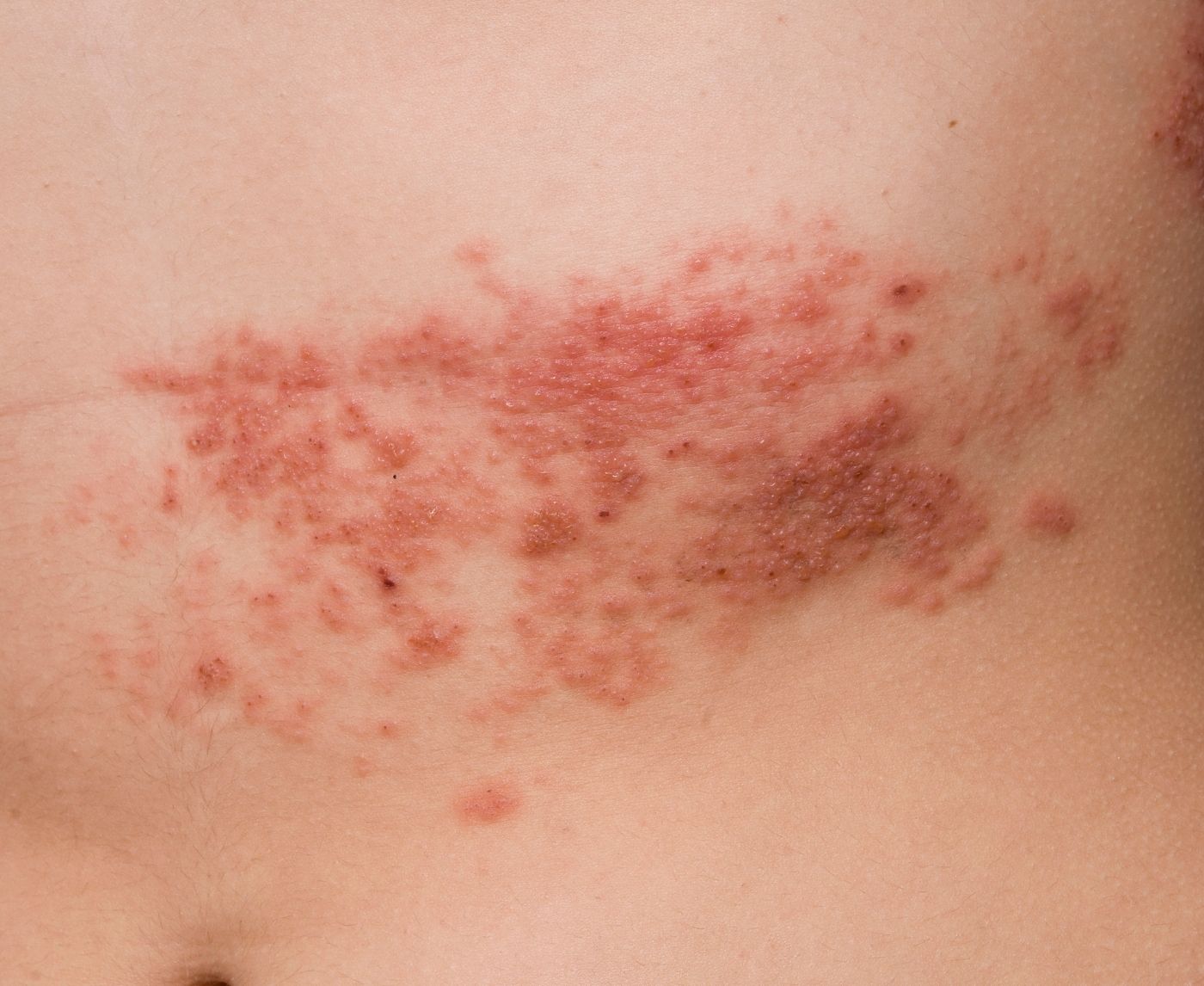
Photographs help only up to a point. The same infection can present differently on different bodies and at different stages of an outbreak. The figures below show the typical visible morphology of each condition at the stage when most people first notice it. The morphology of each lesion is the same on genital skin as on the neutral body areas shown in the figures, which is why these reference images carry diagnostic value even though they do not depict genital anatomy.
When It Is Not an STI: Common Causes of Genital Bumps That Are Not Infections
For every sore that turns out to be a sexually transmitted infection, dozens of bumps and irritations come from harmless causes. Friction from new underwear or tight clothing can produce small inflamed bumps. A new soap, lubricant, or laundry detergent can trigger contact dermatitis with redness, itching, and tiny blisters. Razor burn and ingrown hairs are particularly common because the area is shaved or waxed by many people, and the curved hair pattern is prone to trapping a hair below the skin surface.
Other non-sexual causes that can mimic STI sores include molluscum contagiosum (a viral skin infection that can spread through any skin-to-skin contact, sexual or otherwise, and produces small dome-shaped bumps with a central indentation), folliculitis (infected hair follicles that produce small red papules with white pustular centers), lichen sclerosus (a chronic inflammatory skin condition that thins and whitens the skin), and yeast infections that crack the skin in moist areas.
None of these are sexually transmitted in the strict sense, but a clinician needs to rule them in or out before assuming the cause is benign. Self-treatment with the wrong product, such as an acne cream applied to a herpes outbreak, can worsen the situation and delay correct diagnosis.
The signal that pushes toward testing is persistence. A bump from friction or a single ingrown hair usually settles within a few days. A sore that lingers beyond a week, returns in cycles in the same spot, or appears within two weeks of unprotected sex deserves a test even when it does not match the textbook description.
Some patterns need in-person care rather than home testing. Sores that bleed easily, are spreading rapidly, are accompanied by fever or swollen lymph nodes, are deep enough to look like punched-out craters, or that you cannot identify after two weeks of self-care all warrant a clinic visit. Sores during pregnancy also need same-week clinical evaluation because of transmission risk to a newborn.
Disclosure: this site sells rapid at-home test kits for the infections described in this article. We recommend products based on fit-for-purpose for the reader's concern, not commercial benefit.
How Genital Sores Evolve Over Days and Weeks
Most genital sores follow a recognizable sequence. Knowing the sequence helps separate an evolving infection from a fleeting irritation. Herpes typically begins with itching, tingling, or burning at the future outbreak site one to two days before any visible change. The virus is replicating below the skin during this prodrome stage. Within 48 hours, fluid-filled vesicles appear in clusters. The vesicles burst within a few days, become shallow ulcers, then crust and heal over the following one to two weeks (NHS genital herpes guide).
Syphilis follows a slower pattern. The first-stage sore, called a chancre, appears anywhere from 10 to 90 days after exposure, with three weeks being the average. The chancre is usually a single, round, firm, painless ulcer at the site of inoculation. It heals on its own within three to six weeks even without treatment, which is the deceptive part. The infection continues spreading internally even as the surface looks better. Untreated syphilis moves into a secondary stage with rash, fever, and swollen lymph nodes, then into long latent and tertiary stages that can damage the heart, brain, and nervous system over years (NHS syphilis guide).
Chancroid sores appear four to ten days after exposure and present as soft, painful ulcers with ragged irregular edges, often with painful swelling of nearby lymph nodes. They do not heal on their own without antibiotic treatment.
The table below summarizes how a typical sore progresses across the first week and beyond.
| Stage | What You Might See | Possible Causes | What to Do |
|---|---|---|---|
| Day 0 to 2 | Itching, tingling, redness, or a single small bump | Herpes prodrome, friction, contact dermatitis, ingrown hair | Monitor, avoid picking, watch for change |
| Day 3 to 6 | Vesicles appear, burst, or a single ulcer becomes visible | Herpes outbreak, syphilis chancre, chancroid | Test now if exposure history fits, see clinician if pain is severe |
| Day 7 and beyond | Crusting, scabbing, or a shallow healing ulcer | Herpes (healing), trauma healing, syphilis chancre disappearing | Continue care, complete testing if not done, hold off on sexual activity |
Testing Windows and Which Test Catches What
The right time to test depends on which infection is suspected and which type of test is being used. Different tests have different window periods, the time between exposure and the point at which a test reliably detects the infection.
If a fresh sore is present, a swab of the lesion fluid is the most direct way to identify herpes or syphilis. The swab feeds either a viral culture or a PCR test that looks for genetic material from the pathogen. Swab tests work best within the first few days of an outbreak, before the sore scabs over. After the scab forms, sensitivity drops sharply.
Blood tests measure antibodies that the immune system produces in response to infection. Antibodies take weeks to develop, which is why blood tests have longer window periods. For syphilis, blood tests typically become reliable around three to six weeks after exposure (CDC syphilis testing guidance). For HSV-2, antibody blood tests generally become reliable around four to six weeks, with most IgG assays reaching full sensitivity between 12 and 16 weeks (WHO herpes simplex virus fact sheet).
At-home rapid kits use the same antibody-detection chemistry as many lab blood tests, with the convenience of a fingerstick sample and a 15-minute readout. They are lateral-flow tests rather than laboratory NAATs, which means they screen well after the window period has passed. They are not equivalent to a laboratory NAAT, and a positive result is worth confirming with a clinician. Within the window period, a negative result does not yet rule out infection.
The table below summarizes the testing windows for the three main causes of STI-related genital sores.
| Infection | Best Time to Test | Retest If First Test Is Negative? |
|---|---|---|
| Herpes (HSV-2) | Lesion swab within 5 days of outbreak; antibody blood test 4 to 6 weeks after exposure (full sensitivity by 12 to 16 weeks) | Yes, if symptoms persist or recur |
| Syphilis | Antibody blood test 3 to 6 weeks after exposure | Yes, repeat at 12 weeks if risk continues |
| Chancroid | 4 to 10 days, in-person clinical evaluation in the U.S. | Uncommon; follow physician guidance |
What to Do While You Wait for Test Results
The wait between testing and result can stretch from 15 minutes for an at-home rapid test to several days for a clinic-based panel. A few practical steps reduce both the chance of spreading an infection and the chance of irritating the area further.
Avoid touching, popping, or squeezing the sore. Pressure can worsen a herpes outbreak and increase the risk of bacterial superinfection in any open lesion. Skip over-the-counter acne products, which are formulated for facial skin and can cause significant irritation in the genital area. Keep the area clean with plain warm water rather than scented soap, and pat dry rather than rubbing.
Hold off on sexual activity until results come back, including oral and manual contact. Condoms reduce transmission risk for most STIs but cannot fully prevent transmission of herpes or syphilis when sores are present outside the area the condom covers. The safest assumption is that an unidentified sore is contagious until a test confirms otherwise.
Open genital ulcers also raise the stakes for HIV. A break in the mucosal barrier substantially increases both the chance of acquiring HIV from an infected partner and the chance of transmitting it onward, which is one reason public health guidance treats any genital ulcer as a serious enough event to test for several infections at once. If recent unprotected exposure is also a concern, a separate rapid HIV blood test is worth adding to the plan, ideally taken once the HIV antibody window period has passed (about three to twelve weeks depending on the test type). For higher-risk exposure within 72 hours, post-exposure prophylaxis (PEP) from a clinician is the time-sensitive option.
Searching online photo galleries is the activity most likely to make the wait worse without making it more useful. The same condition presents differently on different skin tones, body areas, and stages of an outbreak, which is why even experienced clinicians do not rely on visual comparison alone.
What to Do If a Test Comes Back Positive
A positive result is the start of a manageable process, not a verdict. Most STIs that cause genital sores are treatable, manageable, or both.
Herpes is managed rather than cured. Daily suppressive therapy with antiviral medications such as valacyclovir, acyclovir, or famciclovir reduces the frequency and severity of outbreaks and lowers the chance of transmission to a partner. Episodic therapy, taken at the first sign of an outbreak, can shorten individual episodes. Most people with herpes live with the virus for decades without it meaningfully affecting their health or sex life once the diagnosis is established and a management plan is in place. Pregnancy with herpes also has well-established management protocols that protect the newborn.
Syphilis is curable when caught early. The standard treatment is a single intramuscular injection of long-acting penicillin G for primary, secondary, or early latent stages. Later stages need a longer course. Follow-up blood tests at six and twelve months confirm successful treatment (CDC STI Treatment Guidelines). Treatment requires a clinician for the injection itself, but the rapid blood test is what gets a person into that clinic.
Chancroid is curable with a short course of azithromycin or ceftriaxone, often a single dose.
Partner notification is the part most people dread. Many local health departments offer anonymous notification services, where they will contact recent partners on a positive case's behalf without naming the source. The conversation matters because untreated partners can reinfect a treated person and pass the infection to others.
Most people who have genital herpes are unaware of their infection. Many of those who are infected experience minimal symptoms or have symptoms that go unrecognized.
When to See a Clinician Without Waiting for a Home Test
Home rapid tests serve well for people who want to screen privately before deciding whether to seek care. They are not a substitute for clinical evaluation in a few specific situations. Pregnancy, immunocompromise, severe pain, multiple sores spreading rapidly, fever with the sores, sores accompanied by neurological symptoms, or any sore in a child all warrant in-person evaluation rather than home testing.
The reverse situation also warrants care. A sore that does not match anything described in this guide, or one that lingers beyond a few weeks, is reason enough to see a clinician. Sexually transmitted infections are not the only cause of genital ulcers. Skin cancers, autoimmune conditions, and Behçet disease can all produce genital lesions and need a tissue diagnosis that no rapid test can provide.
- Pregnancy with any genital sore, because of newborn transmission risk.
- Any sore in a child, regardless of suspected cause.
- Sores spreading rapidly, growing deeper, or bleeding easily.
- Fever, swollen lymph nodes, severe pain, or neurological symptoms (numbness, weakness, vision changes) accompanying the sore.
- Sores that do not resolve within two weeks of self-care.
- A sore that does not match anything in this guide, since skin cancers, autoimmune conditions, and Behçet disease can also produce genital lesions and need a tissue diagnosis.
FAQs
- Do all genital sores mean I have an STI?
- No. Many genital bumps and sores come from non-sexual causes such as razor burn, ingrown hairs, contact dermatitis from a new soap or detergent, or yeast infections that crack the skin. The sores worth testing are the ones that are new, persistent beyond a week, or appeared within two weeks of unprotected sex.
- How do I tell herpes apart from a pimple or ingrown hair?
- Herpes typically starts with itching, tingling, or burning before any visible change, then forms small fluid-filled vesicles in tight clusters that burst into shallow ulcers. Pimples and ingrown hairs usually appear as a single firm bump with a white or pus-filled center, and they do not start with a prodrome. Visual differences fade once a bump has been picked at, which is why testing is more reliable than waiting and watching.
- Can I get an STI from oral sex?
- Yes. Herpes (especially HSV-1, the cold-sore virus) and syphilis are the two STIs most associated with oral-to-genital sores. Gonorrhea can also transmit through oral-genital contact, though it does not typically cause a genital ulcer; it usually presents with discharge or pain on urination instead. A sore on a partner's lip or inside their mouth is enough to pass herpes or syphilis during oral sex.
- If a sore is not painful, can I assume it is not serious?
- No. The first-stage sore of syphilis, called a chancre, is typically painless and heals on its own within three to six weeks. That surface healing does not end the infection; untreated syphilis keeps progressing internally and remains transmissible during the secondary stage, which follows several weeks later.
- How long after exposure should I wait to test?
- It depends on the test. A swab of an active sore can be taken right away, ideally within the first five days of the outbreak. Blood tests have longer window periods. Syphilis blood tests are reliable from about three to six weeks after exposure, and HSV-2 antibody tests from about four to six weeks, with full sensitivity reached around 12 to 16 weeks.
- I tested negative but a sore appeared days later. What happened?
- Most likely the test was inside its window period when you tested. Antibody-based blood tests do not register an infection until the immune system has produced enough antibodies, which takes weeks. A second test outside the window is the standard follow-up.
- Why do my sores keep coming back in the same spot?
- That pattern is highly suggestive of herpes. The virus settles in the nerve roots that supply a particular skin area and reactivates along the same nerve, which is why outbreaks tend to recur in nearly the same location. A blood antibody test, or a swab during an active outbreak, can confirm.
- Can I pass herpes to a partner if I have no visible sores?
- Yes. Herpes can be transmitted through asymptomatic viral shedding, even when no sore is visible. Daily antiviral therapy reduces shedding and transmission risk substantially. Discussing the diagnosis with a partner allows informed decisions about timing, antiviral use, and condom use.
Our article was constructed based on current advice from the most prominent public health and medical organizations, including the U.S. Centers for Disease Control and Prevention, the World Health Organization, and the U.K. National Health Service. We summarize their guidance and current peer-reviewed clinical literature into plain English for at-home health decisions. We do not provide clinical diagnosis. For symptoms that concern you, see a licensed provider.
- U.S. Centers for Disease Control and Prevention. Sexually transmitted disease information including detailed fact sheets on herpes, syphilis, and chancroid covering symptoms, testing windows, and transmission.
- World Health Organization. Herpes simplex virus fact sheet covering global prevalence, asymptomatic shedding, antibody-test sensitivity timelines, transmission, and clinical guidance.
- U.K. National Health Service. Genital herpes patient guide covering symptom timeline, prodrome stage, vesicle progression, and management.
- U.K. National Health Service. Syphilis patient guide covering chancre appearance, stage progression, blood-test windows, and treatment.
- U.S. Centers for Disease Control and Prevention. Sexually Transmitted Infections Treatment Guidelines covering clinician-grade recommendations for genital ulcer disease workup, syphilis follow-up testing protocol after benzathine penicillin treatment, antiviral suppression therapy, and antibiotic selection.