
Published: July 2025 | Last updated: May 2026 | Editorial review and quality control: Martina N.
Pegging carries the same kinds of sexually transmitted infection risk as any other receptive anal-sex activity. The fact that the giver is wearing a strap-on instead of using their own body doesn't change the basic transmission routes. Shared toys, microtears in delicate rectal tissue, skin-to-skin contact at the harness and surrounding skin, and fluid that moves between bodies and objects are all real exposure pathways. Most people who peg with informed precautions never run into a problem; the routes are still worth understanding so you can plan around them.
This guide covers what can actually be transmitted, how to clean and cover toys so they don't carry infection between bodies or between sessions, which conversations to have with a partner before you start, and where at-home testing fits versus where you genuinely need a clinic.
Key Takeaways
- Pegging can transmit chlamydia, gonorrhea, herpes, syphilis, HPV, and (less commonly) HIV when toys are shared, cleaned poorly, or used without condoms between partners or between orifices.
- Standard genital STI panels often miss rectal infections. After receptive anal exposure, ask a clinic for rectal-site swab testing; at-home rapid kits screen via finger-stick blood and genital self-swab, not rectal swabs.
How STIs Move During Pegging
The assumption that pegging is low-risk because no biological penis is involved misses how most STI transmission actually works. Pathogens travel through three main routes during this kind of play: contaminated surfaces, microscopic tissue tears, and skin contact at parts of the body that aren't always covered by a barrier.
The toy itself is the most underestimated vector. Hard surfaces like silicone, glass, or stainless steel are easier to clean than porous materials, but no surface is sterile after use. Bacteria and viruses can survive on a dildo or plug for hours, and some longer. If the same toy moves from the anus to the vagina, from one partner to another, or from one session to another without proper cleaning and a new barrier, it can carry pathogens between sites and people. Shared toys are a documented transmission route for chlamydia, gonorrhea, trichomoniasis, and several other infections.
Microtears in the rectal mucosa are the second route. The lining of the rectum is thinner than vaginal tissue and produces no natural lubrication. Penetration almost always causes small tears that aren't visible or painful but that give bloodborne and mucosal pathogens an easier path to enter the body. This is why receptive anal exposure is considered the highest-risk sexual route for HIV transmission when an HIV-positive fluid is present.
The third route is skin-to-skin contact. Herpes, HPV, and syphilis can all transmit through contact with skin or mucous membranes that aren't covered by a condom or barrier. The base of a harness, the giver's thighs, the receiver's perineum and outer anal skin, and any genital area pressed against another body during play are all potential contact zones. Visible sores, lesions, or warts are not required for transmission; many of these infections can shed when no symptoms are present.
- Fomite (surface) transmission: bacteria and viruses on a shared or unwashed toy carried from one body or site to another.
- Microtear transmission: small, often invisible tears in rectal tissue create entry points for bloodborne and mucosal pathogens.
- Skin-to-skin contact: herpes, HPV, and syphilis transmit through unbarriered contact at the harness, thighs, perineum, and surrounding skin.
Which Infections Carry the Most Risk
Not every STI is equally relevant to pegging, but more are relevant than most people assume. Here is what the major ones look like in this context.
Chlamydia and gonorrhea. These two bacterial infections are the most commonly transmitted STIs in receptive anal exposure. CDC chlamydia information and CDC gonorrhea information both note that rectal infections are typically asymptomatic, which is exactly why dedicated rectal screening matters. Both can survive briefly on toy surfaces if not cleaned. Both are curable with antibiotics, but untreated rectal infections can persist for months and spread to new partners during that window.
HIV. The risk of HIV transmission specifically from a strap-on is low in absolute terms, but it is not zero. Two conditions raise it: an HIV-positive partner whose viral load is not suppressed, and the presence of infected fluid (vaginal secretions, rectal mucus, or blood) on the toy that contacts the receptive partner's torn rectal tissue. If both partners are on PrEP, the HIV-positive partner has an undetectable viral load, or barriers are used consistently, the practical risk drops substantially. See CDC's HIV risk page for the precise per-act estimates.
Syphilis. Syphilis transmits primarily through direct contact with a chancre (an open sore typical of primary syphilis) or with the rash and mucous patches of secondary syphilis. The CDC's syphilis page describes the chancre as usually firm, round, and painless, which is exactly why it goes unnoticed. The chancre is often on the genitals, anus, or surrounding skin, so skin contact at the harness base or perineum during play is a plausible route.
Herpes (HSV-1 and HSV-2). Both herpes types transmit through skin-to-skin contact with affected areas. Asymptomatic shedding is well documented in CDC herpes guidance, so the absence of a visible sore doesn't mean the partner can't transmit. Toys can briefly carry herpes between sites if used without a barrier.
HPV. CDC HPV resources describe HPV as the most common STI in the U.S. It spreads via skin-to-skin contact, and certain high-risk strains are linked to anal cancer. Most adults will encounter HPV at some point; vaccination and condom use both reduce transmission, though neither eliminates it.
| Infection | Primary route in pegging | Pegging-specific risk level |
|---|---|---|
| Chlamydia | Fomite (shared toy) and rectal mucosal contact | High; usually asymptomatic in the rectum |
| Gonorrhea | Fomite (shared toy) and rectal mucosal contact | High; often asymptomatic in the rectum |
| Syphilis | Skin-to-skin contact with a chancre or secondary rash | Moderate; depends on visible or hidden lesions |
| HSV-1 / HSV-2 | Skin-to-skin contact with affected area; asymptomatic shedding | Moderate; barriers reduce but don't eliminate |
| HPV | Skin-to-skin contact at genital or anal skin | Moderate; common in adults, vaccine reduces |
| HIV | Fluid contact with torn rectal tissue | Low absolute risk, raised by unsuppressed viral load |
Anal sex is the riskiest type of sex for getting or transmitting HIV.
Cleaning Toys: What Actually Works
Most cleaning failures aren't about doing it wrong; they're about doing too little. A 10-second rinse under cold water at the end of a session won't dislodge bacteria, viral particles, or residual lubricant from a textured silicone surface. Proper cleaning takes one to two minutes per toy and the right products.
For non-porous materials like medical-grade silicone, glass, or stainless steel, the cleaning protocol is:
- Rinse under warm running water immediately after use to remove visible residue.
- Wash thoroughly with warm water and a fragrance-free antibacterial soap, or a dedicated toy cleaner. Use your hands rather than a sponge that can scratch the surface.
- For boilable silicone toys without internal electronics, fully submerge in boiling water for three to five minutes for a deeper clean between partners or after an active infection.
- Dry completely with a clean lint-free towel before storage. Moisture in storage encourages bacterial growth.
- Store toys separately in breathable cotton or muslin pouches, not piled together.
Porous materials are a different conversation. Toys made from PVC, jelly rubber, or unmarked “skin-feel” plastics can absorb fluid into their material and cannot be fully sanitized. If you've been using porous toys for shared or anal play, the safest move is to either retire them or treat them as single-partner, single-orifice items with a condom every time. Replace any toy that has visible cracks, discoloration, sticky buildup, or persistent odor; these are signs the surface has degraded.
Harnesses and straps also need cleaning. Fabric and leather harnesses should be cleaned according to the manufacturer's instructions, typically a damp wipe-down for leather and a gentle wash for fabric. They sit against skin that may not be covered by a condom, so they collect fluid and sweat that can carry pathogens.

Barriers That Reduce Risk
Condoms on toys are the foundational barrier for pegging, and they do more than just hygiene. They reduce direct contact between the toy surface and rectal tissue (relevant for any pathogen the toy might be carrying), they make swapping between orifices safe with a quick change, and they make end-of-session cleanup faster. Use a new condom every time the toy moves between partners or between sites on the same body.
The rule worth memorizing: change the condom whenever the toy crosses a boundary. Anus to vagina, anus to mouth, partner A to partner B, second session of the night. Each of these is a transmission opportunity that a thirty-second condom swap closes.
Lubricant choice matters more than most guides admit. Use plenty of it; the rectum doesn't produce its own, and inadequate lubrication is the leading cause of microtears. Water-based lubricants are compatible with silicone toys and latex condoms. Silicone lubricants degrade silicone toys but work with glass, metal, and non-silicone toys. Oil-based lubricants break down latex condoms and should be avoided whenever a latex barrier is in play.
For oral contact during the same session (kissing the receiver's body, oral on the giver, rimming), the same barrier logic applies. A dental dam or a cut-open condom can be used for rimming and reduces oral exposure to rectal pathogens. Brush your teeth before, not after, if you've had oral contact; brushing can cause gum microtears that increase oral exposure risk.
None of these barriers eliminate risk; they reduce it. Combined with mutual recent testing, knowing your partner's status, and using condoms consistently, the practical risk of most STI transmission during pegging drops to a level comparable to other moderate-risk consensual sexual activity.
The Conversation to Have With Your Partner
Pegging is intimate in ways that traditional penetrative sex sometimes isn't. The role inversion alone makes it emotionally vulnerable for many people, and that vulnerability deserves a real conversation about safety, not a quick check-in at the door. Treat the pre-pegging discussion like any other negotiation about sexual safety.
Useful questions to actually ask:
- When were you last tested, and did that test include rectal sampling if you've had receptive anal exposure before?
- Are we comfortable using a condom on the toy? Some people prefer bare with a tested partner; some prefer condom-on-toy every time. Either is a fine answer when it's a shared one.
- How will we clean the toy between us, and between sessions?
- Is this exclusive, or are we open? Is the partner status fresh enough to rely on, or have things changed?
- Are there any symptoms either of us has had recently (discharge, sores, unusual bleeding, painful urination, rectal pain) that should pause this until we test?
These questions feel awkward the first few times. Couples who have them explicitly tend to find them clarifying rather than mood-killing, because the alternative (silent assumptions on both sides) creates more anxiety than the conversation itself.
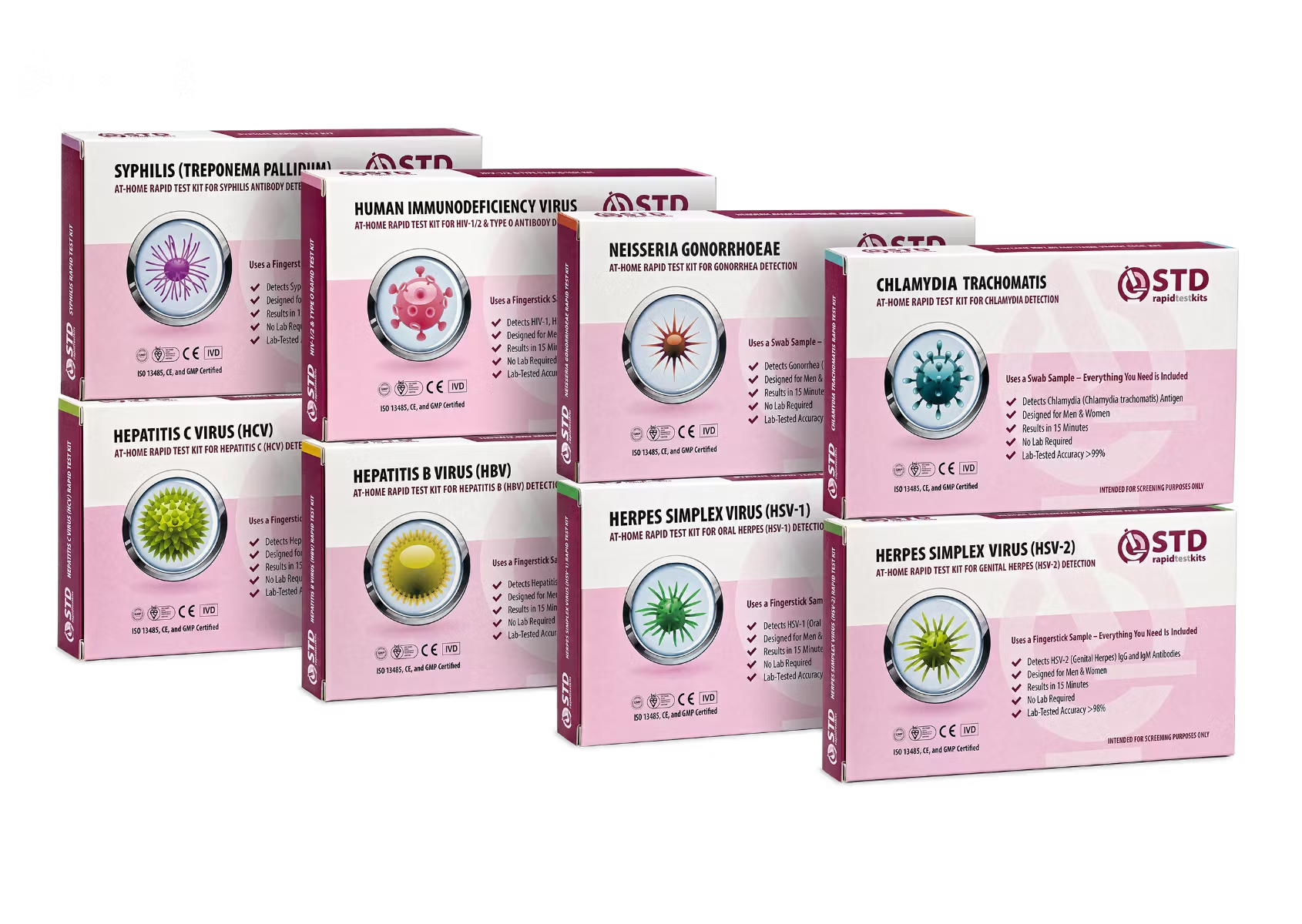
The kits referenced in this guide are sold by STD Rapid Test Kits. We recommend products based on fit for the reader's concern, not commercial benefit; the guidance above applies regardless of where you test.
Testing After Pegging: What to Ask For
This is where the gap between what most clinics offer by default and what receptive-anal exposure actually requires becomes important. Standard STI panels typically sample only urine, blood, and sometimes a urethral or vaginal swab. They miss rectal infections, because rectal sampling requires a separate site swab that has to be specifically requested. For someone who has had receptive anal exposure during pegging, a missing rectal swab can leave an asymptomatic chlamydia or gonorrhea infection undetected for months.
If you're seeing a clinician after pegging, ask explicitly for:
- A rectal-site swab for chlamydia and gonorrhea NAAT testing.
- HIV testing (the standard antigen-antibody combo, or RNA testing if it's within the early window).
- A syphilis blood test.
- Hepatitis B and C, if you don't already know your status.
- Visual examination of the anal and genital area if you notice warts, sores, rashes, or unexplained bleeding.
Timing matters. Bacterial infections (chlamydia, gonorrhea, syphilis) can be detectable within one to two weeks of exposure. Modern fourth-generation HIV antigen-antibody combo lab tests are reliable around three to six weeks. Antibody-only rapid tests, which is what most at-home HIV kits use, have a longer window: per CDC HIV testing guidance, antibody tests detect HIV 23 to 90 days after exposure. Herpes antibody tests are most reliable twelve weeks or more after a suspected first exposure.
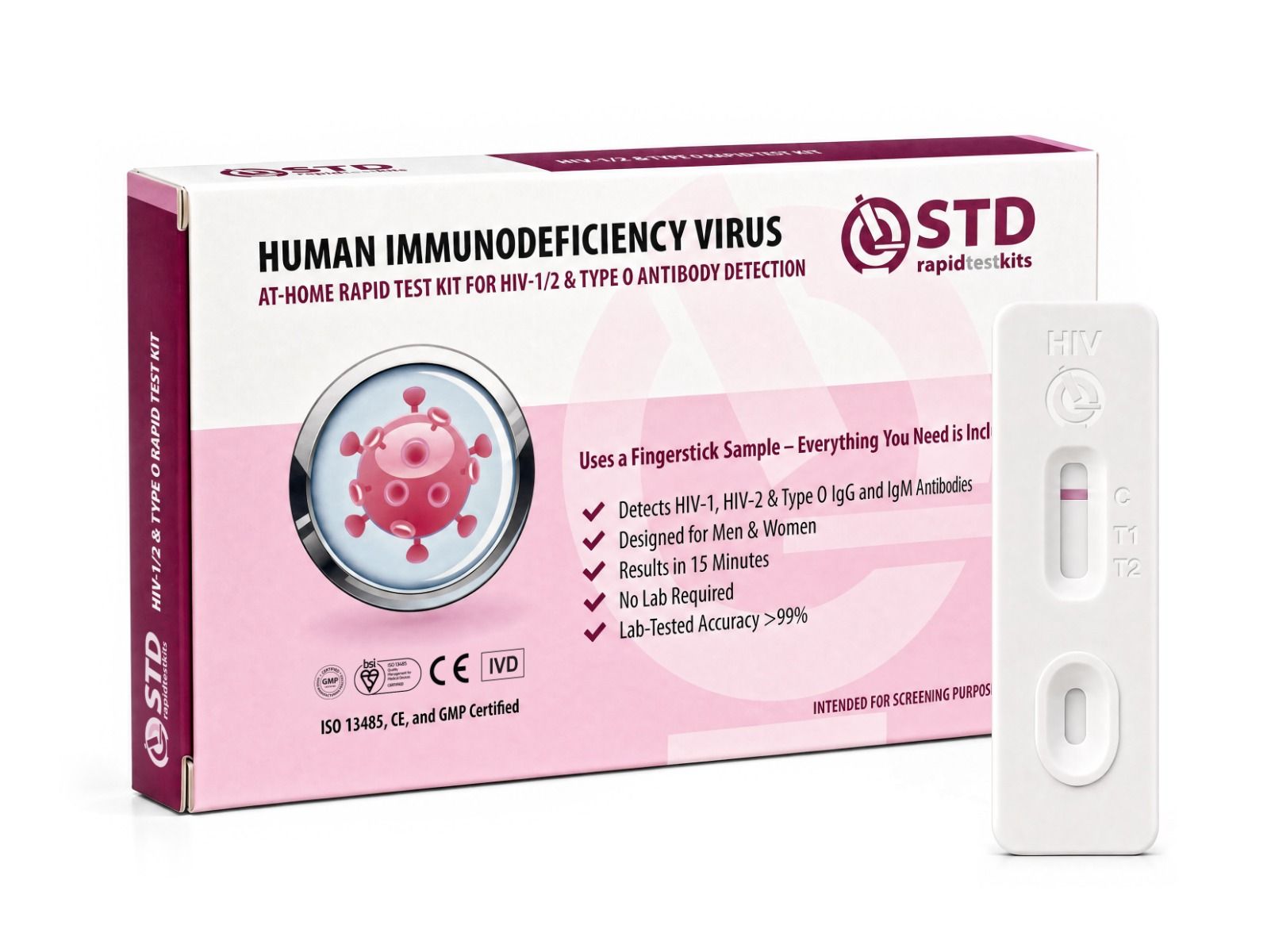
Where at-home rapid tests fit, and where they don't. Our home-test kits screen via finger-stick blood for HIV, syphilis, hepatitis B and C, and herpes (antibody-based, blood test, not a lesion swab), and via self-collected genital swabs for chlamydia, gonorrhea, and other genital infections. They are valuable for the bloodborne and genital portions of the screen, especially when clinic access is limited or privacy is a priority.
What our kits do not cover: rectal-site swab testing. For rectal chlamydia and gonorrhea after receptive anal exposure, you need a clinic or sexual-health center that offers extragenital sampling. That's a limitation of the at-home rapid-test category as a whole, not just our catalog. We mention it because honesty about scope matters more than steering you toward a product that doesn't fully answer the question you came with.
Higher-Risk Scenarios
A few specific situations raise the baseline transmission risk during pegging enough to warrant extra caution. Each is something most general guides skip past.
Menstrual blood. If the giver is menstruating and the toy or barrier comes into contact with blood before entering the receiver, bloodborne pathogens (HIV, hepatitis B, hepatitis C) become more clinically relevant. Blood contains far higher concentrations of HIV than other fluids, so even a small contact with menstrual blood meaningfully raises transmission risk if the giver is HIV-positive and not virologically suppressed. Use barriers, wash hands, and consider deferring the session.
Hemorrhoids or anal fissures in the receiver. Both conditions create open, often bleeding tissue at the exact site of insertion. They function as a much larger portal of entry for any pathogen the toy or barrier might be carrying, and they make even minor microtears more likely to bleed and tear further. If hemorrhoids are inflamed or a fissure is acute, postpone the session until the tissue has healed.
Recent anal douching. Douching is common before pegging for aesthetic reasons, but aggressive or repeated douching strips the natural mucus barrier of the rectum and can cause mild inflammation that lasts hours. That inflammation, plus the dehydrated tissue from the douching fluid, makes the rectal lining temporarily less effective at resisting pathogen entry. Light douching with plain warm water close to play time is gentler than scented or chemical preparations.
Bleeding after play. A small amount of bright blood from a microtear typically resolves on its own within a few hours. Persistent bleeding, dark blood, severe pain, or symptoms over the next several days warrant a clinic visit; these are not expected outcomes of well-lubricated, well-paced pegging.
- Active menstruation in the giver: blood raises HIV and hepatitis transmission risk; use barriers or defer.
- Inflamed hemorrhoids or acute anal fissures in the receiver: wait until the tissue has healed.
- Recent aggressive douching: postpone an hour or use only plain warm water in light volumes.
- Persistent or dark bleeding after play: see a clinician promptly.
Emotional Safety, Communication, and Aftercare
Pegging often crosses gender or role lines that have other meaning in a relationship. For many partners, that role reversal is part of what makes pegging compelling, and it's also part of what makes it emotionally bigger than typical penetrative sex. Plan for that.
Build check-ins into the session itself. “Still good?” “Faster, slower, stop?” These questions can happen mid-play without breaking intimacy. If one partner needs to pause, the pause shouldn't require apology or explanation. When pegging is folded into BDSM or role-play more broadly, established safe words and explicit pre-scene negotiation apply here too.
Aftercare matters. Pegging can leave the receiver feeling physically tender and emotionally exposed; it can leave the giver feeling unsure about whether their partner is genuinely okay. Make space for both. A drink of water, a few minutes of physical closeness, a check-in conversation an hour or a day later. The same emotional infrastructure that supports any other intense intimacy supports this. If you want a concrete starting point for testing, the panels referenced earlier apply to both partners, regardless of role.
FAQs
- Can pegging really transmit STIs?
- Yes. Pegging shares the major STI transmission routes with any other receptive anal-sex activity: shared toys, microtears in rectal tissue, skin-to-skin contact at the harness and surrounding skin, and fluid exchange between bodies and objects. The strap-on doesn't reduce these routes; it adds a fomite (the toy) that can carry pathogens between sites or partners.
- What is the single most effective way to reduce risk during pegging?
- A condom on the toy, changed whenever the toy crosses a boundary (different orifice, different partner, different session). It addresses fomite transmission, makes between-site switches safe, and shortens cleanup. Combine that with plenty of lubricant and mutual recent testing for the highest practical risk reduction.
- Do sex toys really carry STIs?
- Yes, several pathogens survive on toy surfaces. Chlamydia, gonorrhea, trichomoniasis, and herpes can persist on non-porous surfaces for hours, and on porous materials (PVC, jelly rubber) for longer because the material absorbs fluid. Cleaning thoroughly between uses and using a condom on the toy when switching sites or partners closes most of this risk.
- Do I need a rectal swab after pegging, or is a blood test enough?
- It depends on your exposure. For chlamydia and gonorrhea, rectal infections after receptive anal exposure are common and often asymptomatic. Standard genital or urine panels miss them, so ask a clinic for a rectal-site NAAT swab. Blood tests cover HIV, syphilis, hepatitis B and C, and herpes antibody status, but not rectal site-specific bacterial infections.
- How long after pegging should I wait to test?
- The key windows: one to two weeks for bacterial infections like chlamydia, gonorrhea, and syphilis; 23 to 90 days for an HIV antibody test (retest at the 90-day mark if an earlier result was negative); twelve or more weeks for herpes antibodies. Symptoms appearing sooner are a reason to test sooner, not a reason to wait the full window.
- Can I peg or be pegged if one of us has an active STI?
- It depends on the infection and treatment status. With curable bacterial infections like chlamydia or gonorrhea, wait until the course of antibiotics is complete and any follow-up test of cure is clear. With viral infections like herpes, transmission risk is highest during outbreaks; barriers reduce risk between outbreaks but don't eliminate it. With HIV, an undetectable viral load on consistent treatment means effectively no sexual transmission risk to a partner.
- Does PrEP cover the HIV risk from pegging?
- Daily oral PrEP, taken consistently, is highly effective at preventing HIV acquisition during receptive anal sex per CDC data. It does not protect against any other STI, so it should be combined with condoms on toys, regular STI screening, and the other steps in this guide if HIV is the specific concern.
- Can I use an at-home rapid test instead of going to a clinic after pegging?
- At-home rapid kits are useful for the bloodborne and genital-swab portions of the screen: HIV, syphilis, hepatitis, herpes antibody status, and genital chlamydia or gonorrhea. They do not cover rectal-site swab testing, which is the one piece a clinic visit specifically adds for receptive anal exposure. Use them as a complement, not a replacement.
- U.S. Centers for Disease Control and Prevention. Overview of sexually transmitted infections, including documented transmission routes.
- U.S. Centers for Disease Control and Prevention. HIV transmission routes and per-act risk estimates, including receptive anal sex as the highest-risk sexual route.
- U.S. Centers for Disease Control and Prevention. HIV testing windows for antibody and antigen-antibody assays, including the 23-90 day detection range for antibody tests.
- U.S. Centers for Disease Control and Prevention. Chlamydia and gonorrhea clinical overview, including asymptomatic rectal infection patterns.
- U.S. Centers for Disease Control and Prevention. Syphilis transmission and chancre presentation.
- World Health Organization. Global STI fact sheet covering prevalence, transmission, and prevention guidance.
