
Published: September 2025 | Last updated: May 2026 | Editorial review and quality control: Martina N.
The slickness of coconut oil or petroleum jelly feels harmless, even healthy. But the same texture that makes those products good moisturizers is what dissolves a latex condom in under a minute. For anyone having anal sex with a condom, the choice of lubricant is doing real protective work, or quietly undoing it.
Most sex-ed lessons cover the condom. They almost never cover what you put on the condom. That gap matters because oil-based lubricants are still common in bedrooms (coconut oil from the kitchen, baby oil from the bathroom, body butter from the gift basket), and pairing them with latex condoms is one of the more reliable ways to fail a barrier without realizing it. This article walks through what oil does to condoms, why rectal tissue is uniquely vulnerable, which lubes are actually safe, and how to handle a slip-up if it has already happened.
Key Takeaways
- Oil-based lubricants (coconut oil, petroleum jelly, baby oil, shea butter) degrade latex and polyisoprene condoms within a minute of contact, even when the condom shows no visible damage.
- After a condom failure during anal sex, CDC-aligned testing windows are: chlamydia and gonorrhea at 1 to 2 weeks, syphilis at 3 to 6 weeks, and HIV at 18 to 90 days depending on the test type.
Why your lube choice quietly affects your health
Lube tends to get filed under preference. Smell, feel, glide, mess. People choose it the way they choose a candle.
For anal sex with a partner whose STI status you do not know, lube does something different. It sits at the friction interface between rectal tissue and a condom, and both of those things are surprisingly fragile. The rectal lining is one layer of cells thick in places, with none of the protective mucus that vaginal tissue produces. Latex is a thin polymer film stretched under tension. A lubricant that disrupts either of them is not just a comfort issue; it is a barrier issue.
Oil-based products are the highest-risk category here. Coconut oil, petroleum jelly, baby oil, shea butter, mineral oil, olive oil, and most body lotions and butters all break down latex. The product feels great. The condom is failing meanwhile, often without any visible sign. The lab data on exactly how fast that happens is where to look next.
Anal sex puts pressure on two delicate things at the same time: a single-cell-thick rectal lining with no native mucus, and a polymer condom film that is millimeters thin. Whatever sits between them either protects both or wears both down. That is why lube choice carries more weight than most people are taught.
How oil-based lubes break down condom barriers
The classic paper on this is Voeller and colleagues' 1989 study published in Contraception. They exposed latex condoms to mineral oil for 60 seconds. The condoms lost roughly 90 percent of their structural strength almost immediately. Follow-up work through the 1990s confirmed similar damage from a long list of oil-based lubricants and cosmetic products: petroleum jelly, vegetable oils, butters, hand lotions, and most body moisturizers.
The mechanism is straightforward. Latex is a polymer network held together by chemical cross-links and weak intermolecular forces. Oils dissolve into that polymer and disrupt the matrix, which causes loss of tensile strength, increased porosity, and eventual tearing. Polyisoprene condoms (the synthetic latex alternative) behave the same way against oils. Polyurethane and nitrile condoms are more chemically resistant but still uncommon outside specialty product lines.
What does this look like during sex? It rarely looks like anything; the condom does not pop, and there is no obvious moment of failure. The latex thins, develops microscopic flaws, and starts to let through fluids and pathogens it was designed to block. By the time you would notice, the protection is already compromised. Water-based and silicone-based lubricants do not have this effect on latex. They are chemically inert against the polymer and have been the recommended pairing in CDC guidance and on condom packaging for decades.
| Lube type | Latex / polyisoprene condom compatibility | Effective STI risk during anal sex |
|---|---|---|
| Oil-based (coconut oil, petroleum jelly, baby oil, shea butter, mineral oil) | Not compatible; degrades within ~60 seconds | Elevated; causes silent condom failure |
| Water-based (KY Jelly, Sliquid, Astroglide water formulas) | Safe with every condom material | Low when used correctly with a condom |
| Silicone-based (Uberlube, Pjur, Wet Platinum) | Safe with latex and polyisoprene (avoid silicone toys) | Low; longer-lasting glide reduces friction damage |
| Hybrid water + silicone | Safe with most condom materials; check label | Low; condom-safe and toy-friendly |
Can oil-based lube cause STDs?
Oil-based lube does not carry pathogens and cannot directly infect anyone. The risk is indirect. Oil-based lubricants degrade latex and polyisoprene condoms within about 60 seconds of contact, and they aggravate microscopic tears in rectal tissue. Both effects make HIV, chlamydia, gonorrhea, syphilis, and other STIs more likely to transmit during anal sex. Switch to water-based or silicone-based lubricants whenever a latex condom is involved.
Why rectal tissue is uniquely vulnerable to STIs
The other half of the risk equation is the tissue itself. The rectum is built for absorption, not for friction. Its lining is a single layer of columnar cells, thinner and more permeable than the multilayer squamous epithelium that lines the vagina. There is no native lubrication, so even consensual, careful anal sex tends to produce microscopic abrasions in the surface tissue.
Those microabrasions are the entry routes the CDC singles out when it explains why receptive anal sex carries the highest per-act HIV transmission risk of any common sexual exposure. To put a number on it, the CDC estimates roughly 138 transmissions per 10,000 exposures (about 1 in 72) during receptive anal sex with an HIV-positive, untreated partner. Viral load, condom use, and PrEP status shift that figure substantially in either direction. HIV, hepatitis B, hepatitis C, syphilis, chlamydia, gonorrhea, and HPV can all enter through breaks in the rectal lining. HIV and hepatitis B in particular prefer those entry routes because the immune cells they target are concentrated in rectal mucosa.
Oil-based lubricants compound the problem. They sit on top of mucous membranes instead of mixing with native fluids. They can disrupt the local microbiome, shift tissue pH in unhelpful directions, and stay on the skin long enough to slow healing of small abrasions. Friction goes up over time instead of down, and any abrasions that form take longer to seal.

If you have already used oil-based lube during anal sex
First, the recovery framing. People use oil-based lube without knowing better all the time. The point of knowing now is not to spiral about what happened; it is to take the right steps afterward.
If you used oil-based lube with a latex or polyisoprene condom, assume the condom integrity was compromised even if it did not visibly break. Treat the encounter like unprotected anal sex for testing purposes. Telehealth providers can walk you through next steps without an in-person visit, and many state health departments offer free or low-cost STI testing through community clinics.
Here is the CDC-aligned timeline for post-exposure testing:
- Test for chlamydia and gonorrhea at 1 to 2 weeks. These bacterial infections have short incubation periods and are detectable quickly by lab NAAT or by rapid swab tests after the window.
- Test for syphilis at 3 to 6 weeks. Earlier testing can produce false negatives because antibodies take time to develop. If you developed an unexplained sore or rash, see a clinician for confirmatory testing sooner.
- Test for HIV at 18 to 45 days with a fourth-generation antigen/antibody lab test, or at 23 to 90 days with most rapid antibody-only home tests. Retesting at the longer end of that window confirms a negative.
- Watch for symptoms in the interim: rectal pain, unusual discharge, painful urination, sores, fever, swollen lymph nodes, or visible lesions. Any of those are reasons to get checked sooner, not later.
- Notify partners if a test comes back positive. Treatment for bacterial STIs is straightforward; the harm comes from delay and onward transmission.
This article is published by stdrapidtestkits.com, which sells at-home STI testing kits. The product links below go to our own product pages. We recommend kits based on fit for the reader's concern, not commercial benefit.
Safer lube options when condoms are involved
There are two safe categories for use with latex or polyisoprene condoms: water-based and silicone-based. Both have been formulated specifically to glide without chemically attacking the condom material, and both have decades of clinical use behind them.
Water-based lubricants are the default recommendation. They are chemically inert against every condom material on the market, they clean up easily, and they are safe with silicone toys. They do dry out faster than silicone, so longer sessions usually involve reapplying or adding a few drops of water. Look for formulas that are paraben-free, glycerin-free if you are prone to yeast infections, and free of warming or numbing agents if you have sensitive tissue.
Silicone-based lubricants last much longer and are particularly well-suited to anal sex because they reduce friction over time without absorbing into tissue. They are condom-safe with latex and polyisoprene. The main caveat: silicone lube degrades silicone toys, so the two should not be used together. Silicone takes a bit more effort to wash off, which is usually a feature on slipperier surfaces.
Hybrid lubricants combine water and silicone in a single formula. They are condom-safe and toy-safe in most blends, with longer-lasting glide than pure water-based products. What to skip entirely with latex condoms: anything labeled oil, petroleum, mineral oil, baby oil, butter, balm, or massage oil. The wellness halo around "natural" coconut oil makes it the most commonly misused product in this category. Check the label for "condom-safe" or "anal-safe" and scan the ingredient list for anything ending in oil or jelly before you reach for it.
| Lube type | Best use case | Notes |
|---|---|---|
| Water-based | Short or mixed-use sessions; toy play; sensitive tissue | Reapply as it absorbs; safe with all condoms and all toys |
| Silicone-based | Longer sessions; anal sex; shower use | Long-lasting; avoid with silicone toys; takes more effort to wash off |
| Hybrid (water + silicone) | Moderate-length sessions where toys may be involved | Check label for silicone-toy compatibility |
| Oil-based | Solo use or barrier-free partnered sex only | Do not use with latex or polyisoprene condoms under any circumstance |
Lube myths worth retiring
A few patterns of reasoning lead people back to oil-based products even after they have read the warnings. They are worth naming directly.
- Myth: "It is natural, so it is safe." Coconut oil, olive oil, and shea butter are food-safe and skin-safe in many contexts. They are not condom-safe. The same fatty-acid chemistry that makes them stable moisturizers makes them solvents for latex.
- Myth: "The condom did not break, so I am fine." Oil-induced damage to latex is microscopic for the first several minutes. A condom can fail as a barrier well before it fails visually. Fluid and pathogen passage do not require a hole you can see.
- Myth: "Silicone lube is unsafe because it is synthetic." Silicone is one of the most chemically stable lubricants available. It does not interact with latex condom polymers and does not absorb into skin. The only practical limitation is that it should not be used with silicone toys.
- Myth: "A little oil-based lube is fine if I switch to water-based later." Latex damage from oil is essentially permanent on the affected surface. Adding water-based lube on top does not restore lost tensile strength or seal microscopic flaws.
- Myth: "Lambskin condoms are a safe oil-compatible option." Lambskin condoms are oil-compatible but do not protect against viral STIs because their pores are large enough to let viruses through. They are a pregnancy-prevention tool, not an STI-prevention tool.
Latex condoms can be effective in preventing HIV transmission only if they are used correctly. Oil-based products should not be used as lubricants because they weaken latex.
Testing as a planned step, not a panic response
The way most people relate to STI testing is reactive, after a scare. A more useful framing is preventive: routine testing builds a baseline you can compare against, so when something does happen, you already know how to interpret the result.
If you have ongoing anal sex with one or more partners, the CDC recommends routine screening every three to six months for chlamydia, gonorrhea, syphilis, and HIV. Add hepatitis B and hepatitis C if you are not already vaccinated against B or have known risk factors for C. HPV vaccination is recommended routinely through age 26, with shared clinical decision-making through age 45 for adults who did not get vaccinated earlier.
After a known or likely condom failure, follow the testing windows above. If you cannot reach those marks comfortably (cost, location, privacy), at-home rapid tests give you a credible answer for the most common infections without a clinic visit. They are lateral-flow chemistry, not lab NAAT, so a positive result is worth confirming with a lab when possible. For ruling out the highest-anxiety scenarios after a condom slip, they cover most of what you would screen for and they ship in unmarked packaging.
What to keep on hand if you are sexually active
A small stock at home tends to be the difference between a panic moment and a manageable one. Most CDC sexual-health resources implicitly recommend this list, even when they do not phrase it as a shopping list:
- A condom-safe lubricant: water-based for short or mixed-use sessions, silicone-based for longer sessions or anal sex. Avoid anything in your bathroom labeled oil, balm, butter, or petroleum.
- Latex or polyisoprene condoms within their expiration date. Polyurethane is an option for latex allergies but is thinner and more likely to break. Lambskin condoms do not protect against viral STIs and should not be used for prevention.
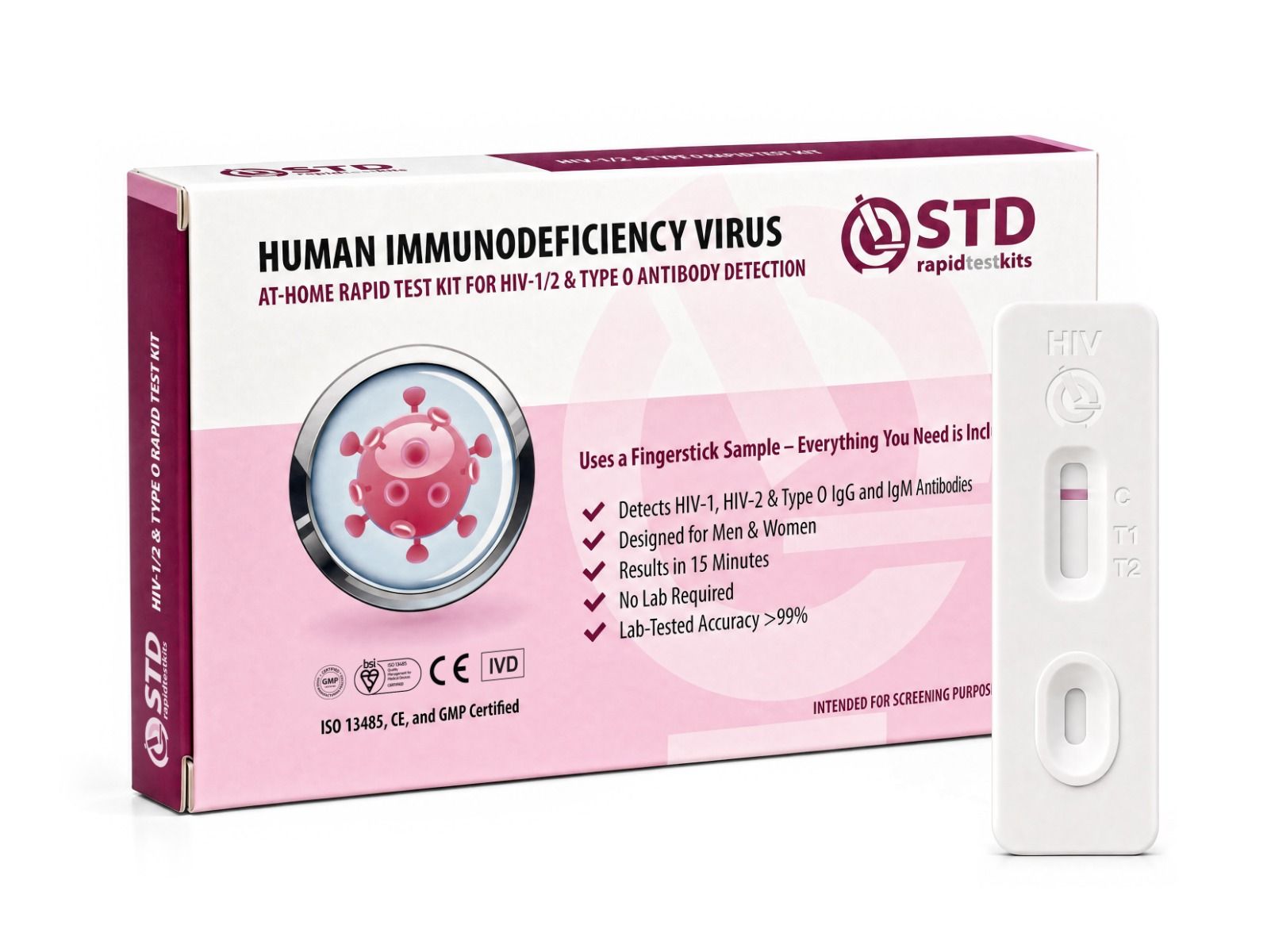
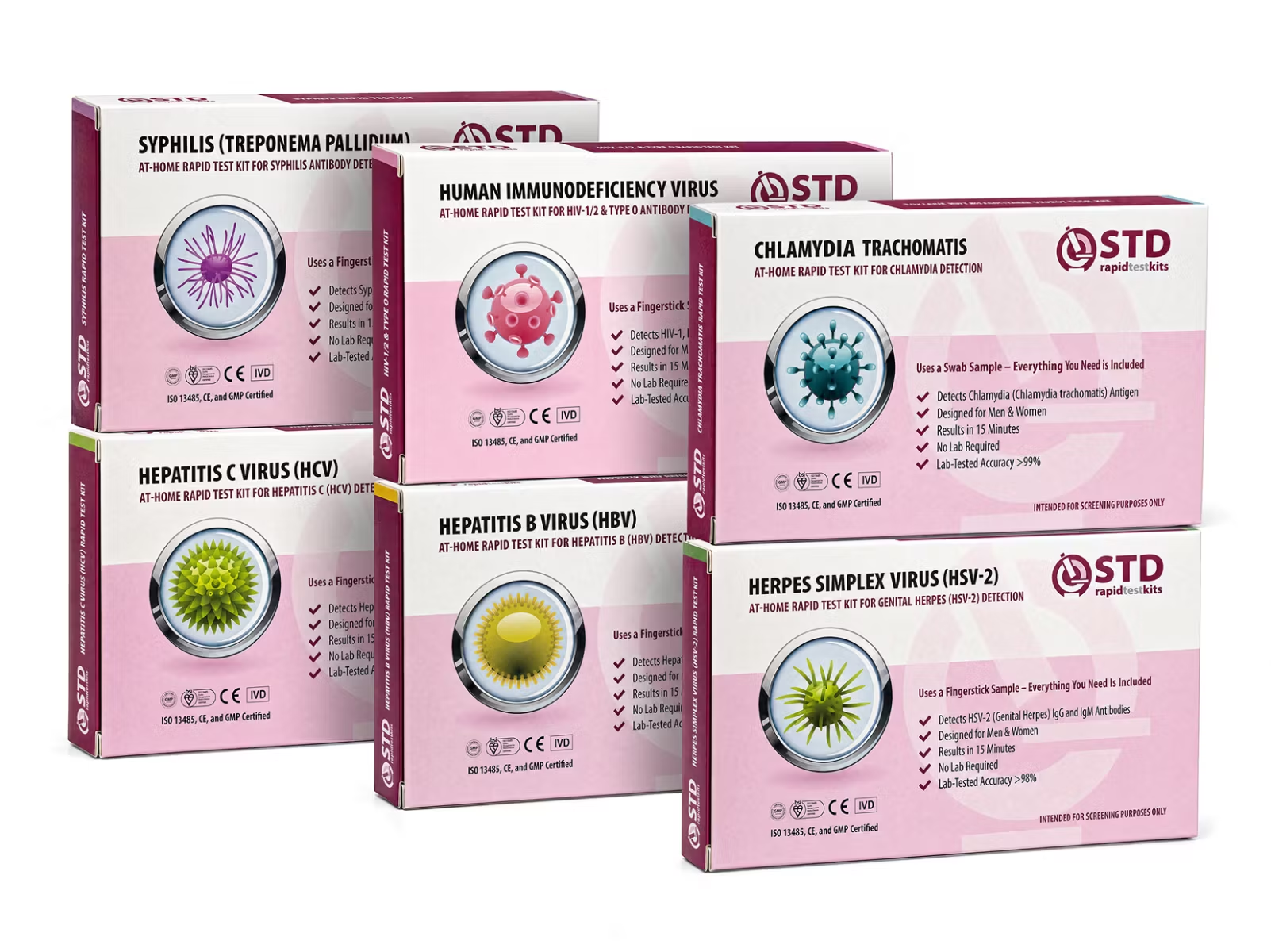
- An at-home rapid test for the infections most likely to apply to your activity. Combination kits cover several at once and are useful after a known exposure event when you want broad coverage with one swab and one fingerstick.
- A telehealth contact or local clinic you trust. Privacy and cost vary by service, so set this up before you need it, not during a stressful moment.
FAQs
- Can oil-based lube directly transmit an STI?
- The transmission risk is indirect, not direct. Oil compromises the condom, and the compromised condom then fails to block pathogens during sex with an infected partner. Two mechanisms drive this: barrier loss from polymer degradation, and tissue disruption from oil sitting on rectal mucosa long enough to slow healing of microabrasions. Without an infected partner in the picture, oil-based lube is just an irritant. With one, it removes much of what was supposed to keep the encounter safe.
- How quickly does coconut oil damage a latex condom?
- Lab studies date back to Voeller's 1989 paper in Contraception, which showed roughly 90 percent strength loss in latex after 60 seconds of exposure to mineral oil. Coconut oil and other plant-based oils behave similarly because they share fatty-acid chemistry. The damage is invisible at first and rarely produces an obvious tear.
- Is silicone-based lube safe for anal sex?
- Yes, and it is often preferred. Silicone lubricants do not degrade latex or polyisoprene condoms, last longer than water-based options without reapplying, and do not absorb into skin. The only caveat is that silicone lube damages silicone toys, so use water-based with those.
- Can I get an STI if the condom looked fine after sex?
- Yes, for two reasons. Oil-induced damage to latex is microscopic and rarely visible. And if condom use was inconsistent during the encounter (slipped, applied late, removed early), exposure can still occur even with an intact condom at the end. Treat a known oil-and-latex pairing the way you would treat unprotected sex for testing purposes.
- What testing timeline should I follow after a possible exposure?
- There is no single window. It depends on which infection you are testing for and which test you use. Chlamydia and gonorrhea show up earliest, at 1 to 2 weeks. HIV takes longest with a home antibody test, up to 90 days for a fully confirmed negative. If you can only test once, prioritise the longest-window infection you are most concerned about, which after anal exposure is usually HIV.
- Are polyurethane condoms safe with oil-based lube?
- Polyurethane is more chemically resistant than latex and tolerates some oil exposure, which is why a small number of oil-compatible polyurethane condom brands exist. They are uncommon and easy to mistake for standard latex. Unless the packaging specifies oil-compatibility, default to assuming no.
- What if my partner only has oil-based lube on hand?
- Either wait until you have a water-based or silicone-based option, or skip the condom barrier and accept the higher transmission risk. Both choices are honest. The failed-condom-with-oil path is the one that looks safe but is not.
- Can sharing a bottle of lube spread STIs?
- Direct lube-to-lube transmission is unlikely, but sharing a bottle with hands that have touched genitals can move bacteria or virus particles between partners, particularly HPV and herpes. Use a fresh squeeze per partner rather than dipping fingers back in the bottle.
Our article was constructed based on current advice from the most prominent public health and medical organizations, and then molded into simple language based on the situations that people actually experience. Sources include the CDC's STI treatment guidelines and HIV prevention resources, the foundational Voeller (1989) study on mineral oil and latex degradation, and NHS and WHO guidance on STI testing windows. Where claims involve specific timing or sensitivity figures, the cited source contains that figure directly; where the underlying research is more nuanced, we err on the conservative side and recommend confirmatory lab testing after any at-home result.
- U.S. Centers for Disease Control and Prevention. STI treatment guidelines, screening recommendations, and prevention resources for sexually transmitted infections.
- U.S. Centers for Disease Control and Prevention. HIV transmission routes, per-act risk by exposure type, and testing window guidance.
- Voeller B, Coulson AH, Bernstein GS, Nakamura RM. Mineral oil lubricants cause rapid deterioration of latex condoms. Contraception. 1989;39(1):95-102. The foundational study on oil-based lubricant degradation of latex.
- UK National Health Service. Overview of sexually transmitted infections including symptoms, testing, and prevention.
- World Health Organization. Key facts on sexually transmitted infections, global burden, and prevention strategies.
