
Published: August 2025 | Last updated: May 2026 | Editorial review and quality control: Martina N.
Painful sex after a new partner often arrives quietly. Maya, 27, told herself it was just nerves. “It had been a while since I’d been with someone new,” she said. “The sex wasn’t rough. It didn’t hurt at the time. But the next day, I felt this burning every time we tried again.” She waited. She hydrated. She convinced herself she was overthinking it.
By day four, the burning hadn’t stopped. There was no obvious discharge. No dramatic sores. Just discomfort that made her body tense up before penetration. That’s when fear slid in quietly. Was this just friction? A yeast infection? Or something she didn’t want to say out loud?
This kind of discomfort is rarely the emergency the brain makes it out to be, but it is also not something to dismiss for a week. The stall is almost never about not caring; it is about how quickly the brain conflates exposure with fault. Most of the time the answer turns out to be friction or irritation that fades within a couple of days. Sometimes it is an infection that needs antibiotics. Either way, the only thing that resolves the spiral is information.
Key Takeaways
- Pain that lasts more than 24 to 48 hours after sex with a new partner, or that worsens, is a reasonable trigger to test for STDs even when there is no discharge or visible sore.
- Chlamydia, gonorrhea, herpes, and trichomoniasis can all cause painful sex as the only early symptom, and untreated chlamydia or gonorrhea can climb into pelvic inflammatory disease.
What Kind of Pain Are We Talking About?
Not all painful sex is created equal, and the type of discomfort matters. A surface-level sting is different from a deep pelvic ache. A raw feeling is different from a sharp internal jab. Those distinctions can point in different diagnostic directions.
Clinically, pain during sex is called dyspareunia. According to the Mayo Clinic guide to painful intercourse, dyspareunia can be external, internal, or both, and the context matters: did it hurt during penetration, after, only in certain positions, or did it begin suddenly? These details aren’t trivial. They are investigative clues.
| Type of Pain | Common Description | Possible Non-STD Causes | STD-Related Possibilities |
|---|---|---|---|
| Surface burning | Stinging or raw feeling at the vaginal opening or tip of the penis | Friction, dryness, microtears, latex sensitivity | Early herpes, chlamydia, gonorrhea |
| Deep pelvic ache | Dull or sharp pain felt deep inside | Positioning, ovarian cysts, endometriosis | Pelvic inflammatory disease from untreated chlamydia or gonorrhea |
| Sharp internal pain | Sudden stabbing sensation with deeper thrusting | Cervical irritation, retroverted uterus | Cervicitis from chlamydia or gonorrhea |
| Burning after sex | Discomfort lasting hours afterward, often with urination | UTI, irritation, lubricant reaction | Urethral infection from gonorrhea or chlamydia |
The STDs Most Commonly Linked to Painful Sex
Most sexually transmitted infections do not arrive with flashing lights. They whisper. The infections people miss are the ones that look unremarkable at first.
Chlamydia is notorious for subtlety. The NHS chlamydia overview notes that most people with chlamydia have no symptoms at all. When symptoms do appear, they often look like low-grade pelvic discomfort, pain during penetration, or spotting between periods. Left untreated, the infection can travel upward and cause pelvic inflammatory disease, which makes sex deeply uncomfortable.
Gonorrhea can inflame the cervix or urethra, creating burning during penetration or after intercourse. The NHS gonorrhoea overview describes painful or burning urination, pelvic discomfort, and bleeding between periods as common patterns. In men, it may show up as painful ejaculation or urethral discomfort rather than obvious discharge in early stages.
Herpes is often misunderstood. People expect visible sores, but early outbreaks can begin as tenderness, nerve-like tingling, or a raw feeling before blisters appear. Sometimes lesions are internal or small enough to go unnoticed. Trichomoniasis may cause irritation and discomfort during sex without dramatic symptoms at first; it can feel like persistent inflammation rather than an acute infection. None of these automatically mean you did something reckless. They mean you had sex with another human body. That is all.
“But We Used a Condom.” Why Protection Doesn’t Eliminate All Risk
Jordan, 31, remembers the exact sentence he said to himself: “We were safe. So this can’t be an STD.” The pain started as a faint urethral burn during urination. Then intercourse began to sting. He waited a week before testing.
Condoms dramatically reduce risk. They are one of the best protective tools available, but they do not eliminate it. Skin-to-skin infections like herpes and HPV can spread from areas a condom doesn’t cover. Oral sex can transmit gonorrhea or chlamydia to the throat or genitals. And condoms occasionally slip, break, or get applied late. Protection lowers probability. It does not create zero.
Skin-to-skin infections (herpes, HPV) can spread from areas a condom doesn’t cover. Oral transmission of gonorrhea and chlamydia happens during unprotected oral sex. Application timing matters too: a condom put on partway through, or one that slipped or broke, gives partial protection at best. Condoms cut risk dramatically. They don’t take it to zero.
How Timing Changes the Equation
One of the most overlooked details in painful sex after a new partner is timing. When did the pain begin? Immediately? Two days later? Two weeks later? Different infections have different incubation and window periods. The body needs time to register infection, and the body’s antibodies need time to become detectable. Testing too early can create false reassurance. Testing too late can prolong discomfort and increase the risk of complications.
| STD | Possible Symptom Onset | Recommended Testing Window | Can It Cause Painful Sex? |
|---|---|---|---|
| Chlamydia | 1 to 3 weeks | About 14 days after exposure | Yes |
| Gonorrhea | 2 to 7 days | 7 to 14 days after exposure | Yes |
| Herpes | 2 to 12 days | Lesion swab if visible; antibody test 6 to 12 weeks | Yes |
| Trichomoniasis | 5 to 28 days | 1 to 4 weeks after exposure | Yes |
How soon should I test if sex hurts after a new partner?
If pain lasts longer than 24 to 48 hours, intensifies, or is paired with burning urination, unusual discharge, fever, or spotting, testing is reasonable. For chlamydia and gonorrhea, an at-home rapid test is most reliable about two weeks after the exposure. For herpes, a swab during an active sore is most useful; an antibody blood test takes 6 to 12 weeks to become reliably positive.
When It’s Probably Friction, And When It’s Not
Sometimes painful sex after a new partner really is mechanical, with bodies adapting to different anatomy, rhythm, and lubrication patterns. Even something as simple as a longer session than you’re used to can create tiny microtears that sting the next day.
But friction pain typically improves quickly. It fades within 24 to 48 hours. It does not intensify. It does not spread into deep pelvic aching, and it does not usually bring urinary burning or unusual spotting along for the ride. Lena, 24, described the difference clearly: “I’ve had soreness before. This felt different. It wasn’t just outside. It felt deeper, like pressure.” That internal shift is often what pushes people from denial into curiosity. Friction heals, infection lingers, and inflammation from an STD often becomes more noticeable over several days rather than less.
When Pain Signals Pelvic Inflammatory Disease
One of the most serious complications linked to painful sex after a new partner is pelvic inflammatory disease, often shortened to PID. The Mayo Clinic PID overview explains that it usually begins with untreated chlamydia or gonorrhea: what starts as mild cervical inflammation can move upward into the uterus and fallopian tubes.
The early signs are subtle. Sex begins to hurt deeper. You might notice a low fever that feels like a mild flu. There may be irregular bleeding between periods, or pain only in positions that allow deeper penetration. Rosa, 29, ignored the first twinges. “It was just a weird cramp during sex. I thought I was about to get my period.” Two weeks later, she couldn’t ignore it. The pain wasn’t just during sex anymore; it lingered afterward. PID is treatable, especially when caught early, but the longer it sits, the higher the risk of complications including fertility issues. That is why persistent deep pain after a new partner deserves real attention, not silent endurance.
Disclosure: stdrapidtestkits.com sells the at-home test kits linked in this article. Recommendations are made on fit-for-purpose, not commercial benefit.
What About Men? Painful Sex Matters Here Too
Painful sex conversations often center on women, but men experience infection-related discomfort as well. It just looks different. Instead of deep pelvic aching, men may feel urethral burning, painful ejaculation, or testicular tenderness.
Marcus, 34, assumed it was dehydration. “It burned a little when I peed, and sex felt irritated. I figured I needed more water.” A week later, the discomfort hadn’t resolved. Testing revealed gonorrhea. Men are statistically more likely to show symptoms earlier with certain bacterial infections, but that doesn’t mean the symptoms are dramatic. Mild pain is still pain, and when it follows a new sexual encounter, the timing is rarely random.
Men with chlamydia or gonorrhea more often report urethral burning, painful ejaculation, or testicular tenderness than the deep pelvic ache women describe. The pattern can read like a mild UTI or post-sex irritation, which is exactly why exposure timing should drive the decision to test, not symptom intensity. A faint sting that follows sex with a new partner is enough.
When Pain Is the Only Symptom
This is where people spiral. There is pain during sex, but no discharge, no sores, no obvious redness, nothing dramatic. The brain starts negotiating. “Maybe it’s stress. Maybe I imagined it.” You can absolutely have an STD with pain as the only symptom, especially early on. Cervical inflammation can cause discomfort long before discharge becomes noticeable. Urethral infections may cause burning without visible change. The absence of drama does not equal absence of infection; subtle presentations are the norm, especially early in the course of bacterial STDs.
No discharge. No sores. Just discomfort. Cervical or urethral inflammation can precede visible symptoms by days to weeks, so pain by itself is sufficient reason to test after a new exposure. You do not need a second symptom to justify the swab.
UTI, Yeast, or STD? Why the Confusion Happens
Painful sex after a new partner overlaps heavily with urinary tract infections and yeast infections. The symptoms blur: burning during penetration, stinging afterward, general irritation. That overlap is exactly why people misattribute infections. A UTI may cause urinary burning but usually does not cause deep pelvic pain during sex. A yeast infection may create intense itching and a thick discharge that looks cottage-cheese-like, but it does not typically cause internal cervical pain.
| Condition | Burning During Sex | Deep Pelvic Pain | Discharge Changes | Needs STD Test? |
|---|---|---|---|---|
| UTI | Sometimes | Rare | Usually no major change | Only if exposure risk |
| Yeast infection | Yes | Rare | Thick white, cottage-cheese-like | Only if exposure risk |
| Chlamydia or gonorrhea | Yes | Possible | May be mild or absent | Yes |
The Emotional Layer No One Talks About
There is another layer to painful sex after a new partner that isn’t biological. It is psychological. Anxiety itself can create muscle tension that makes penetration uncomfortable. Guilt can tighten pelvic floor muscles unconsciously. Here is the key difference: anxiety-related pain usually improves with reassurance. Infection-related pain does not respond to breathing exercises alone.
Whether what you are feeling is nervous, regretful, or nothing in particular, none of it changes what your body needs: information.

Testing Without Spiraling
Here is the grounded approach. If painful sex appears after a new partner and lasts more than 48 hours, testing is reasonable. If pain intensifies, spreads, or is accompanied by fever, testing becomes urgent. You do not need to wait for discharge. You do not need to wait for sores. You do not need to wait until anxiety consumes your week.
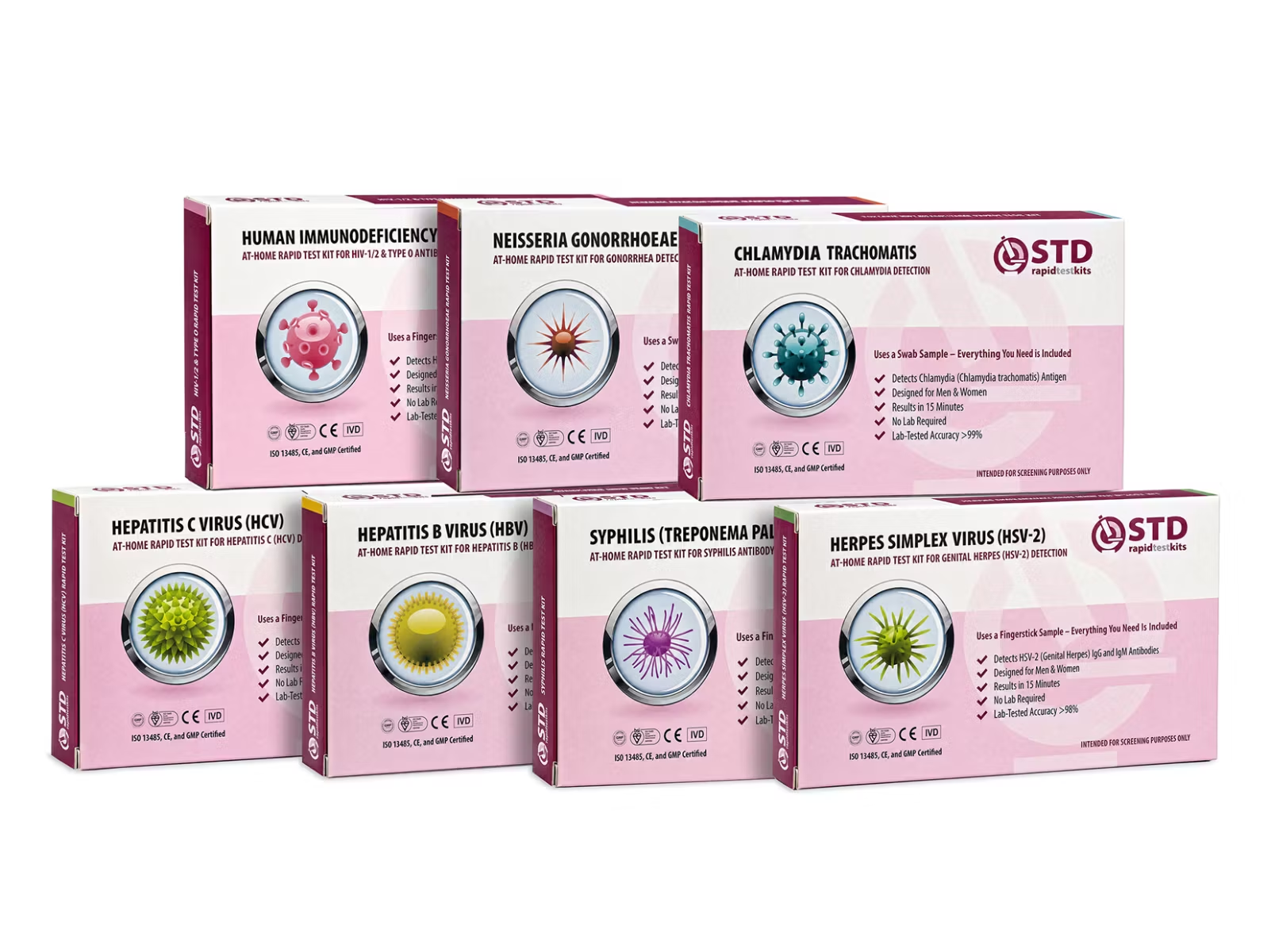
For many people, the easiest first step is discreet at-home testing. It removes the emotional barrier of walking into a clinic while still providing clarity. If you want immediate control, confidential options are available at STD Rapid Test Kits. When symptoms are unclear, many people choose a multi-infection panel from the combo STD test kit category rather than guessing which single infection to check. Testing isn’t an admission of guilt; it is an act of data collection.
Most people who have chlamydia have no symptoms. If symptoms do occur, they may not appear until several weeks after sex with an infected partner.
If the Test Is Positive: The First 24 Hours
Let’s say you test, you wait, you open the result, and it’s positive for chlamydia, gonorrhea, or another infection. The first sensation is usually heat. Then shame tries to creep in. Then the mental rewind starts. Who gave this to me? Did I miss signs? What does this mean about me?
Pause right there. A positive STD test does not define your character. It defines exposure. These infections are medical conditions, not moral verdicts. Most are treatable, and many are common. According to the CDC STI surveillance program, millions of new STI cases occur each year in the United States alone. You are not rare. You are not reckless. You are statistically human. The first 24 hours are about logistics, not self-punishment. Confirm you read the test correctly, follow instructions for next steps, seek prescribed treatment if required, and breathe.
1. Read the result carefully. Confirm against the kit’s instructions, and if the line is faint or you’re uncertain, repeat with a second test before assuming. 2. Book treatment. Most bacterial STDs need a prescription antibiotic; a telehealth or in-person appointment usually resolves the visit within a day or two. 3. Pause sex until you’re cleared. Resuming during treatment can re-expose your partner and reset the cycle. 4. Notify recent partners. A factual, calm message is enough; you’re passing along information, not assigning blame.
Treatment Is Usually Straightforward
Most bacterial STDs that cause painful sex, including chlamydia and gonorrhea, are treated with antibiotics. Treatment protocols are outlined in the CDC STI treatment guidelines, and they are routine in clinical practice. This is not experimental medicine. It is standardized, evidence-based care.
People with herpes and other viral infections are treated, not cured. Antiviral medications reduce outbreak frequency and lower transmission risk. Treating symptoms early often makes them resolve faster, especially during the first episode. The key is not to delay. Painful sex that continues without evaluation can escalate, especially if pelvic inflammatory disease develops. Once treated, inflammation decreases and sexual comfort typically returns.
Bacterial STDs (chlamydia, gonorrhea, syphilis, trichomoniasis): a course of antibiotics, often a single dose or short regimen. Once finished, the infection itself is gone. Viral STDs (herpes, HIV, HPV): managed with antivirals or long-term care, not cured. Treating viral infections early shortens flare-ups and lowers transmission risk to partners.
If the Test Is Negative but Pain Continues
This is another common fork in the road. The test is negative, relief washes in, but sex still hurts. What now?
If testing happened within a few days of exposure, results may not reflect peak detectability. Incubation and window periods vary by infection, and a repeat test after the recommended window may be necessary if the first was taken too soon. If timing was appropriate and results remain negative, consider other causes: hormonal shifts, pelvic floor dysfunction, endometriosis, ovarian cysts, or chronic stress. Pain during sex deserves evaluation whether the cause is infectious or not. Testing is a starting point, not the entire story.
Retesting: When and Why It Matters
Even after treatment, follow-up testing is sometimes recommended. Some STDs have high reinfection rates, especially in the first few months if both partners are not treated at the same time. Reinfection can bring painful symptoms back and slow healing. Here is how retesting decisions typically unfold.
| Infection | Initial Treatment | Retest Timing | Reason |
|---|---|---|---|
| Chlamydia | Antibiotics | About 3 months after treatment | High reinfection rate |
| Gonorrhea | Antibiotics | About 3 months after treatment | Reinfection monitoring; antibiotic resistance check |
| Herpes | Antivirals when needed | No routine retest; symptom monitoring | Chronic management |
| Trichomoniasis | Antibiotics | About 3 months for women | High recurrence risk |
Talking to a Partner Without Turning It Into a Blame Story
This is often the hardest part. The conversation. The text-message draft that sits unsent. Ella, 30, said it best: “I was more afraid of the conversation than the diagnosis.” She worried it would sound accusatory. But infections don’t always indicate who transmitted what. Many people carry STDs without symptoms for months.
The most effective approach is factual and calm: “I tested positive for chlamydia. It’s treatable. I wanted you to know so you can get tested too.” No courtroom tone. No forensic analysis. Partner notification is public health in action. It protects both of you, it stops a re-exposure cycle, and it tends to defuse the situation rather than inflame it.

Making Testing a Routine, Not a Panic Response
Painful sex after a new partner can feel like betrayal, by your body or by someone else. It can also become a reset moment, a shift toward clearer boundaries, routine testing, and proactive conversations.
Regular screening is one of the simplest ways to reduce anxiety around new relationships, even when you feel fine and everything looks normal. Proactive testing means pain is less likely to be your first clue. If you want to make screening part of your routine rather than your panic response, discreet options are available at STD Rapid Test Kits. Many people prefer to test before becoming sexually active with someone new. It changes the emotional tone from fear to responsibility.
Frequently Asked Questions
- Can painful sex really be the only sign of an STD?
- Yes, and this is the part people don’t expect. Not every STD shows up with dramatic discharge or visible sores. Sometimes it’s just discomfort that feels off: a deeper ache, a burning sensation that wasn’t there before. Especially early on, infections like chlamydia or gonorrhea can cause inflammation without obvious visual clues. If sex suddenly feels different after a new partner, that change alone is worth paying attention to.
- It only hurt once. Do I still need to test?
- One isolated moment of discomfort that disappears completely within a day is often friction or positioning. Bodies are adaptable, not fragile. But if the pain lingers, repeats, or makes you tense up before penetration because you’re anticipating it, testing gives clarity. Think of it this way: if your body whispers once and then goes quiet, you can observe. If it keeps whispering, you investigate.
- What if we used protection the entire time?
- Protection reduces risk dramatically and is one of the smartest decisions you can make. But condoms don’t cover all skin, and they don’t eliminate oral transmission. Skin-to-skin infections like herpes and HPV can still spread. That doesn’t mean protection “failed.” It means protection lowers odds; it doesn’t create zero.
- How soon after a new partner would pain start if it’s an STD?
- Some infections can cause symptoms within a few days. Others take a couple of weeks. Gonorrhea symptoms often appear within 2 to 7 days, chlamydia within 1 to 3 weeks, herpes within 2 to 12 days, and trichomoniasis within 5 to 28 days. The timing depends on the organism and your immune response, which is why testing windows matter.
- What does pelvic inflammatory disease actually feel like?
- PID typically starts as deeper pressure during penetration or mild cramping that doesn’t track with your cycle. What separates it from ordinary soreness is that it doesn’t ease between sessions; it tends to worsen and spread. If pelvic discomfort starts appearing outside of sex, or comes with a low fever, don’t wait. Early treatment is straightforward and meaningfully reduces the long-term fertility risk.
- My partner says they have no symptoms. Should I still worry?
- Yes, but not in a panic way. Many STDs are asymptomatic for months. Your partner may genuinely feel fine. That doesn’t make anyone dishonest; it just means infection doesn’t always announce itself loudly. Testing protects both of you without turning the situation into a courtroom drama.
- Can anxiety alone cause painful sex?
- Yes. The pelvic floor is highly responsive to stress. If you’re replaying the encounter in your head, the muscles can tighten subconsciously, and that tension creates discomfort. The difference is that anxiety-related pain usually improves when you feel reassured. Infection-related pain tends to persist regardless of mindset.
- What if my STD test is negative but sex still hurts?
- Then we zoom out. It could be hormonal shifts, pelvic floor dysfunction, endometriosis, cysts, or even unresolved irritation from friction. A negative STD result doesn’t mean your pain isn’t real. It rules out one category. If discomfort continues, a clinician can help explore the next layer, and a repeat STD test after the full window period may still be worthwhile if exposure was very recent.
You Deserve Answers, Not Assumptions
Painful sex after a new partner can spin your mind into places your body hasn’t even confirmed. Was it friction? Was it an infection? Was it something I missed? The guessing is often worse than the answer, because uncertainty breeds stories, and most of those stories are harsher than reality.
Your body is not accusing you. It is communicating. Sometimes the message is minor irritation. Sometimes it is a treatable infection. Either way, assumptions don’t resolve it; information does. Testing isn’t dramatic. It is practical. It shifts you from “what if” to “now I know.” If you’re sitting in that uncomfortable middle space, not panicking but not relaxed either, give yourself clarity. Browse confidential options at STD Rapid Test Kits and pick what fits your situation. You don’t need to spiral. You don’t need to self-blame. You deserve answers, not assumptions.
How we sourced this article: This guide integrates current public-health guidance from the U.S. Centers for Disease Control and Prevention, the UK National Health Service, and Mayo Clinic patient-education materials. Composite reader stories are illustrative and based on common presentation patterns described in clinical literature, not real patient interviews. This article is published by stdrapidtestkits.com, which sells at-home STI testing kits; product recommendations are made on fit-for-purpose, not commercial benefit.
- U.S. Centers for Disease Control and Prevention. STI surveillance program landing page, with annual U.S. case-count data for chlamydia, gonorrhea, syphilis, and other reportable STIs.
- U.S. Centers for Disease Control and Prevention. Sexually Transmitted Infections Treatment Guidelines, used here for current antibiotic and retesting protocols for chlamydia, gonorrhea, and trichomoniasis.
- Mayo Clinic. Pelvic Inflammatory Disease (PID) symptoms-and-causes overview, used for the ascending-infection mechanism described in this article.
- Mayo Clinic. Painful Intercourse (Dyspareunia) symptoms-and-causes overview, used for the clinical definition of dyspareunia and the surface-versus-deep distinction.
- UK National Health Service. Chlamydia overview, used for the asymptomatic-presentation framing referenced in the STDs section.
- UK National Health Service. Gonorrhoea overview, used for the burning urination, pelvic discomfort, and intermenstrual bleeding symptom pattern.
