Published: November 2025 | Last updated: May 2026 | Editorial review and quality control: Martina N.
The choice between a single STD test and a full panel sounds like a clear yes-or-no question, but it rarely is. Most readers landing on this page are balancing two fears at once: testing for the wrong thing, or testing for more than they can afford or emotionally absorb. The honest answer turns on three things: the exposure you actually had, the symptoms (if any) showing up now, and how recently you completed a comprehensive screen.
This guide walks through how to weigh those three factors, what current public-health guidance from the CDC’s STI testing recommendations says, and where at-home rapid kits fit into the picture. This article is published by stdrapidtestkits.com, which sells at-home STI testing kits; we recommend products based on fit for the reader’s actual situation, not commercial benefit.
Key Takeaways
- A focused single test is reasonable after a known exposure to one specific infection, if you also tested negative on a comprehensive screen within the past three months.
- A full panel is the safer call after a new partner, a condom failure, unclear symptoms, or whenever it has been more than six months since your last complete screen.
What’s Actually in a “Full Panel” Test?
Not every “complete” panel covers the same infections. Some at-home rapid kits screen for six infections; some clinic orders cover three or four. The CDC’s general adult screening recommendations cover chlamydia, gonorrhea, syphilis, and HIV, with hepatitis B and C added when risk factors or pregnancy apply. Trichomoniasis is added when symptoms or exposure history suggest it. HPV is screened differently, by cervical swab inside routine cervical-cancer screening rather than as a line item in an STI panel.
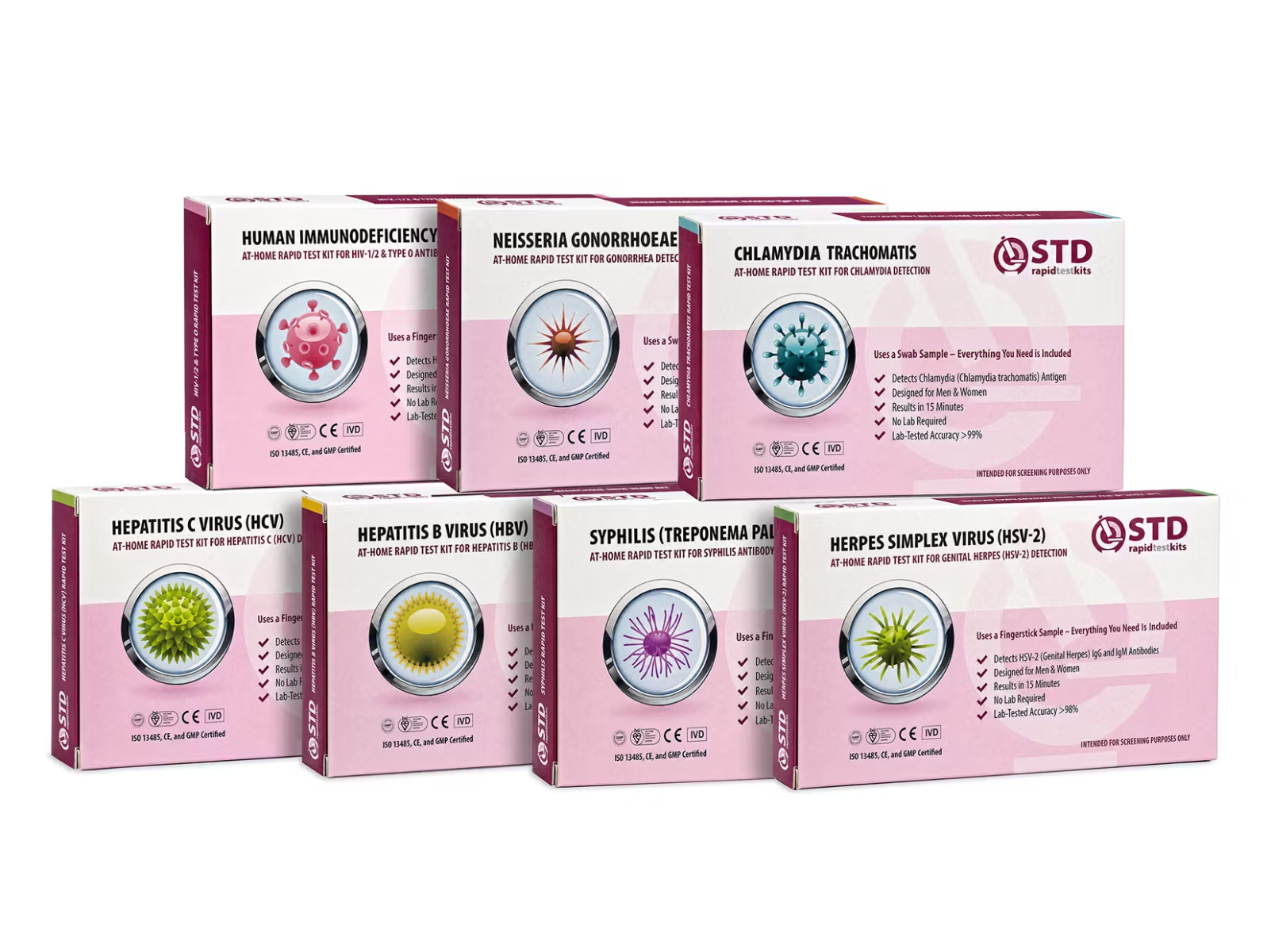
The at-home rapid kits sold here use a fingerstick blood sample for HIV, syphilis, hepatitis B, hepatitis C, HSV-1, and HSV-2 antibodies, and a self-collected genital swab for chlamydia, gonorrhea, trichomoniasis, and HPV. The trichomoniasis and HPV self-swab kits are validated for vaginal anatomy only, so male readers needing those tests should see a clinic. We do not sell urine-sample tests, throat or rectal swabs, or lab-processed mail-in nucleic acid amplification test (NAAT) panels; if your situation specifically calls for one of those (a pharyngeal exposure, for example), a clinic visit is the right next step.
| Test type | Infections covered | Sample | Result time |
|---|---|---|---|
| Comprehensive at-home panel (6 to 8 infections) | Chlamydia, gonorrhea, syphilis, HIV, hepatitis B and C, HSV antibodies; some include trichomoniasis | Fingerstick blood for blood-tested infections; self-collected swab for chlamydia and gonorrhea | About 15 minutes for rapid lateral-flow |
| Single-target rapid test (e.g., chlamydia only) | One infection | Self-collected swab or fingerstick blood depending on the infection | About 15 minutes |
| Lab-based NAAT panel (clinic order) | Typically chlamydia, gonorrhea, sometimes trichomoniasis | Urine, vaginal swab, or pharyngeal/rectal swab depending on exposure | 1 to 3 days |
When One Test Might Be Enough
Targeted single-infection testing is reasonable in a few specific situations. The most common is partner notification: someone you recently had sex with tells you they tested positive for a specific infection. If you have not had other partners since your last comprehensive screen, and that screen was within the past three months, retesting only for the named infection is a defensible choice.
The second case is post-treatment follow-up. CDC guidance recommends retesting for chlamydia, gonorrhea, and trichomoniasis roughly three months after treatment, mainly to catch reinfection from a partner who was not treated at the same time. That follow-up is single-target by design.
The third is routine annual screening inside a long-term, mutually monogamous relationship where both partners tested negative on a full panel before becoming exclusive. In that scenario, an annual single screen of the one or two infections most relevant to your demographic (often chlamydia for women under 25, or HIV depending on regional risk) is what most public-health bodies recommend.
- Partner-notification retest. A recent partner tells you they tested positive for one specific infection, and you have a comprehensive negative screen on file from within the past three months.
- Post-treatment follow-up. CDC recommends retesting for chlamydia, gonorrhea, and trichomoniasis roughly three months after treatment to catch reinfection.
- Routine annual screen in a mutually monogamous relationship where both partners had a negative full panel before becoming exclusive.
When the Full Panel Is the Smarter Move
Five situations push the calculation toward broader screening: after a new partner with limited shared health history; after a condom break, slip, or unprotected encounter; when symptoms appear that could fit several infections at once (genital itching, burning urination, unusual discharge, an unexplained rash); when your last comprehensive screen was more than six months ago; and before you and a new partner stop using condoms.
Why broader instead of narrower? Two reasons. First, many STIs are silent. The CDC’s chlamydia overview describes the infection as “often asymptomatic,” and the same is true of gonorrhea in many cases, especially in women. Testing only for what you can feel will miss the infections most likely to spread quietly. Second, symptoms overlap heavily. Burning during urination might be chlamydia, gonorrhea, trichomoniasis, herpes, or a non-STI urinary tract infection; a single-target test reassures you about one cause while leaving four others uninvestigated.
Untreated common STIs carry real downstream consequences. Chlamydia and gonorrhea can progress to pelvic inflammatory disease and infertility. Untreated syphilis can cause serious organ damage years after the initial infection. Untreated trichomoniasis raises the risk of acquiring HIV from an infected partner.
Should I get a single STD test or a full panel?
A focused single test makes sense only after a known exposure to one specific infection, and only if you also tested negative on a comprehensive screen within the past three months. A full panel is the safer call in every other common situation: a new partner, a condom failure, unclear symptoms, or any time it has been more than six months since your last complete screen. Public-health guidance leans toward broader screening because most chlamydia and gonorrhea cases produce no symptoms at all.
How to Decide by Situation
The table below is a starting point. Adjust based on your last screen date, any specific exposures, and the local screening guidance your clinician follows. The reasoning column matters more than the suggestion column, because your situation almost never fits one row exactly.
| Situation | Suggested test | Reasoning |
|---|---|---|
| Condom broke or slipped with a new partner | Full panel after the appropriate window period | Multiple infections share the same exposure route; window-period timing matters |
| Partner notified you of a confirmed chlamydia (or gonorrhea, etc.) result, no other recent partners | Single-target test for the named infection | Targeted retest is reasonable if a recent full panel was negative |
| Symptoms that could fit several infections | Full panel | Many STIs share symptoms with each other and with non-STI causes |
| Routine screening, long-term mutually monogamous relationship | Single screen of the most relevant infection for your demographic | Lower baseline risk, especially with prior negative panels on file |
| New relationship, no symptoms, before stopping condoms | Full panel for both partners | Baseline screen sets a known starting point |
Window Periods: Why Timing Matters
Most STIs have a window period: a stretch of time after exposure when an infection is present in the body but not yet detectable by the test you are using. Test before that window closes and a negative result might not actually mean what you want it to mean.
Window periods differ by infection and by test technology. Lab-processed NAAT detects chlamydia and gonorrhea earlier than antibody-based tests detect HIV or syphilis. The table below summarizes the practical timing for common at-home and clinic tests; specific assay sensitivity varies by manufacturer, so check the data sheet that comes with your kit. The CDC’s HIV testing page notes that antigen/antibody tests can usually detect HIV between 18 and 45 days after exposure, with self-tests on the longer end of that range.
| Infection | Earliest reliable detection | Smart retest timing |
|---|---|---|
| Chlamydia and gonorrhea (NAAT) | About 7 to 14 days | Retest at 14 days if first test was earlier |
| Syphilis (antibody) | 3 to 6 weeks | Confirmation retest at 12 weeks |
| HIV (antigen/antibody) | 18 to 45 days, longer for self-tests | Confirmation retest at 90 days |
| HSV-2 (antibody) | About 12 weeks for most people, sometimes up to 16 | Retest at 16 weeks if early result was negative |
| Trichomoniasis (NAAT or rapid) | 5 to 28 days | Retest if symptoms persist or first test was very early |
| Hepatitis B and C (antibody) | 8 to 12 weeks | Confirmation retest if early result was negative |
What Happens If You Test Positive
A positive result on an at-home rapid test starts a sequence, not a verdict.
The first step is confirmation. A reactive rapid test is a screening result, and most positives need confirmation by a lab test: a NAAT for chlamydia or gonorrhea, an RPR plus treponemal test for syphilis, an antibody confirmation or PCR for herpes. Your primary care doctor or local health department can order these without requiring you to repeat your story from scratch.
Treatment comes next. Bacterial STIs (chlamydia, gonorrhea, syphilis, trichomoniasis) are curable with antibiotics; the CDC STI treatment guidelines document the current recommended regimens. Viral STIs (HIV, herpes, hepatitis B and C in chronic forms) are managed rather than cured, with effective long-term therapies available for each. HIV, in particular, is now treatable to undetectable viral loads on modern antiretroviral therapy.
After treatment comes notification. Letting recent partners know lets them get tested and treated, which protects them and prevents reinfection of you. Many state and county health departments offer free anonymous partner notification by text, email, or postcard if a direct conversation feels too hard.
Finally, retesting. For chlamydia, gonorrhea, and trichomoniasis, the CDC recommends retesting roughly three months after treatment to catch reinfection, which is more common than treatment failure. For HIV, syphilis, and herpes, your provider sets the follow-up cadence based on the regimen used.
Everyone ages 13 to 64 years should be tested at least once for HIV. All sexually active women younger than 25 years should be tested for gonorrhea and chlamydia every year.
Privacy, Cost, and Confidence
Money and privacy drive a lot of testing decisions, and they sometimes pull in different directions. A single at-home rapid test typically runs $20 to $40; a comprehensive at-home panel runs $80 to $150 depending on how many infections it covers. Clinic-based screening is often free or low-cost through state health departments, Planned Parenthood chapters, or insurance, but it requires an appointment, a visit window, and (for some readers) the friction of a face-to-face conversation about sex.
At-home testing trades cost for control. Kits ship in plain unmarked packaging, the credit-card line item shows a generic merchant name, and results stay between you and whoever you choose to tell. For people in rural areas, on opaque insurance plans, or in living situations where mail privacy matters, that combination of features can carry as much weight as the medical data itself.
The cost calculation also depends on how many follow-up tests you might need. Buying one $25 chlamydia kit feels cheaper than a $90 full panel, but if a vague symptom prompts a second kit a week later and a third when symptoms persist, the running total catches up fast.

What Skipping a Full Panel Costs
A clean negative on a single test feels like permission to stop worrying. That feeling is the most common path to a missed co-infection. People who test only for the infection they are most worried about and stop there often miss the silent infections that travel along the same exposure routes.
The clearest example is trichomoniasis. It is one of the most common curable STIs in the United States, often presents with mild or absent symptoms, and is rarely the infection people specifically ask to be tested for. Untreated trichomoniasis raises the risk of acquiring HIV from an infected partner and contributes to preterm birth in pregnancy.
There is also the partner side. Silent infections in the categories you tested negative for do not vanish on their own; they pass forward into the next relationship, where they sometimes turn up months later with consequences (pelvic inflammatory disease, urethral stricture, syphilis progression to secondary or tertiary stages) that were preventable with a single broader screen at the start.
Bringing It All Together
The decision really comes down to a short series of questions. Did you have a known exposure to one specific infection? Have you had a comprehensive negative screen within the past three months? Are you in a long-term mutually monogamous relationship where both partners screened negative before becoming exclusive? If yes to all three, a focused single test is reasonable.
If any of those answers is no, or if you have any symptom that could fit more than one infection, a full panel buys you something a single test cannot: confidence in the whole picture rather than just the one corner you happened to think about. The reader who tests for chlamydia, gets a clean negative, and walks away from a vague symptom set is the reader most likely to discover months later that the actual cause was a different infection running in parallel.
Whichever route you choose, the most important step is choosing one. A late single test is more useful than a planned full panel that never happens. And if money is a real barrier, your local health department or a Planned Parenthood chapter is a stronger fallback than skipping testing entirely.

FAQs
- Do I really need to test for everything?
- Not always. A focused single test is reasonable after a known exposure to one specific infection, if you also tested negative on a comprehensive screen within the past three months. Outside of that, broader screening is usually the safer call because most chlamydia and gonorrhea infections, especially in women, produce no noticeable symptoms.
- What if I only had sex once?
- A single exposure is enough to transmit any STI; the number of contacts does not change the testing logic. After one new partner whose status you do not know, a comprehensive screen taken after the appropriate window period is the standard recommendation.
- How accurate are at-home rapid tests?
- Lateral-flow rapid tests typically report sensitivity in the mid-to-high 90s and specificity above 99% when used after the correct window period. Lab NAAT testing is generally more sensitive, especially in asymptomatic infections, which is why a positive at-home screening result should be confirmed by a lab and a negative result close to the exposure date should be retested at the appropriate window.
- How soon after sex can I get tested?
- Testing too early produces an unreliable negative. A safe minimum for most at-home rapid kits is around 14 days for swab tests (chlamydia, gonorrhea) and 45 days or more for blood-based tests (HIV, syphilis), with HSV antibody testing typically needing about 12 weeks. The window-period table earlier in the article has the per-infection detail; if you tested before that window, plan a follow-up retest at the recommended time.
- Why do I need to retest if I already got a negative?
- Because your first test might have been within the window period, when an infection is present but not yet detectable. A retest at the appropriate window confirms the negative or catches an infection the early test missed. Retest if symptoms appear after a clean early result, or if you tested closer to the exposure date than the window allows.
- Can I test for one STI and skip the rest?
- Yes, if you have a specific exposure to one infection and a recent comprehensive screen on file. The threshold for “specific exposure” should be high: a partner notifying you of a confirmed positive result, not a generalized worry. The infection you skip testing for is the one most likely to surprise you later.
- What does a “full panel” actually test for?
- At-home rapid full panels usually cover chlamydia, gonorrhea, syphilis, HIV, hepatitis B and C, and HSV antibodies. Some add trichomoniasis. HPV is generally not part of an STI panel; it is screened separately by cervical swab as part of cervical-cancer screening. Our HPV at-home kit is a self-collected vaginal swab validated for women only.
- What if I test positive?
- A reactive at-home rapid result is a screening signal, not a diagnosis. Confirm with a lab test (NAAT for chlamydia or gonorrhea, RPR plus treponemal test for syphilis, antibody confirmation or PCR for herpes), then start treatment with a clinician, notify recent partners, and retest at the cadence your provider recommends.
How we sourced this article: This guide was built from current screening recommendations published by the U.S. Centers for Disease Control and Prevention, the World Health Organization, and the UK National Health Service, then translated into the practical decisions readers actually face when weighing a single test against a full panel. Window-period figures and treatment guidance are drawn from CDC clinical guidelines current as of publication.
- U.S. Centers for Disease Control and Prevention. Getting Tested for STIs: who should be tested, sample types, and testing pathways.
- U.S. Centers for Disease Control and Prevention. HIV testing overview, including window periods for antibody, antigen/antibody, and self-tests.
- U.S. Centers for Disease Control and Prevention. Chlamydia overview, including asymptomatic prevalence and screening recommendations.
- U.S. Centers for Disease Control and Prevention. STI treatment guidelines, current recommended antibiotic and antiviral regimens.
- World Health Organization. Sexually transmitted infections fact sheet, global epidemiology and screening guidance.
- UK National Health Service. Sexually transmitted infections overview, testing access, and confidentiality.
