







Quick Answer: Yes, you can get an STD without having vaginal, anal, or even oral sex. Skin-to-skin contact, kissing, shared toys, and non-penetrative acts can all transmit certain infections.
It Started with a Symptom: What Brings People Here
It often begins with something small, an unusual tingle, a patch of irritation, a sore that wasn't there before. You might dismiss it at first: shaving rash, tight jeans, friction burn. But when it doesn’t go away, or worse, when it gets more painful, Googling begins. That’s when the horror hits. The search results say “STD” over and over, even when you’ve never had traditional sex.
Herpes is one of the most common culprits in this scenario. The virus doesn't require penetration to spread. According to the CDC, it transmits through skin-to-skin contact, including during oral kissing, grinding, or touching of genitals. A single night of makeouts or mutual masturbation could be enough.
Other STDs that don’t require intercourse include:
| STD | Transmission Without Intercourse? | How It Spreads |
|---|---|---|
| Herpes (HSV-1/HSV-2) | Yes | Skin-to-skin contact, kissing, oral sex, shared sex toys |
| HPV | Yes | Skin-to-skin contact, even without visible warts |
| Trichomoniasis | Sometimes | Possible through shared damp towels, genitals rubbing |
| Chlamydia | Rare but possible | Potentially via shared toys or genital contact |
Table 1. STDs that don’t require intercourse to spread. All have documented cases of non-penetrative transmission, particularly among younger or inexperienced individuals.
“But I’m a Virgin!”, Why That Doesn’t Mean “Safe”
Virginity is a social concept, not a medical one. And it’s one that leaves a lot of people dangerously misinformed. In studies of university students, nearly 25% believed they couldn’t get an STD if they hadn’t had “real sex.” One large-scale analysis found that adolescents who reported being virgins still tested positive for HPV and HSV, especially if they'd engaged in oral or manual stimulation.
In other words: if you’ve kissed someone, been touched, or touched them back, there’s a chance you were exposed. And if you're using shared toys, towels, or fingers without protection or cleaning, that risk grows. Even grinding naked can transmit herpes.
What hurts most is the shame. Many people feel blindsided, not just by the test result, but by the judgment that follows. Doctors, friends, or family may question your truth. This adds a second layer of trauma: the need to defend yourself while grappling with your health.
There’s no “right” way to be sexual. But there are better ways to stay informed. If your only sex ed came from school (or worse, porn), it likely didn’t explain just how common and complex STDs are. That’s not your fault, but now you deserve real answers.
How It Really Spreads: Routes They Never Taught You
Let’s say it clearly: not all STDs spread through penetration. The virus or bacteria just needs a way to travel from one body to another. That could mean lips, skin, fluids, or even fingers. Here’s how it often plays out:
Marcus, 21, hooked up with someone for the first time.
“We didn’t do anything serious,” he recalls. “No sex. Just made out, and they went down on me.”
Three weeks later, Marcus noticed an uncomfortable burning sensation during urination and a small bump on the base of his shaft. He tested positive for HSV-1.
That’s because oral herpes, often just called “cold sores”, can infect the genitals if oral sex is involved. According to the World Health Organization, over 3.7 billion people under age 50 carry HSV-1. Many don’t know they’re contagious. One kiss, or one round of unprotected oral, can be enough.
It gets murkier with toys, towels, or fingering. Some case reports suggest trichomoniasis and chlamydia might rarely transfer this way, especially if toys aren’t cleaned or condoms aren’t used. Moisture, skin residue, and microtears all create pathways.
Here’s a reality check: if an infection has a mucous membrane to infect, and enough time and fluid to get there, it doesn’t care whether you call it “sex” or not.
Check Your STD Status in Minutes
Test at Home with RemediumGenital & Oral Herpes Test Kit
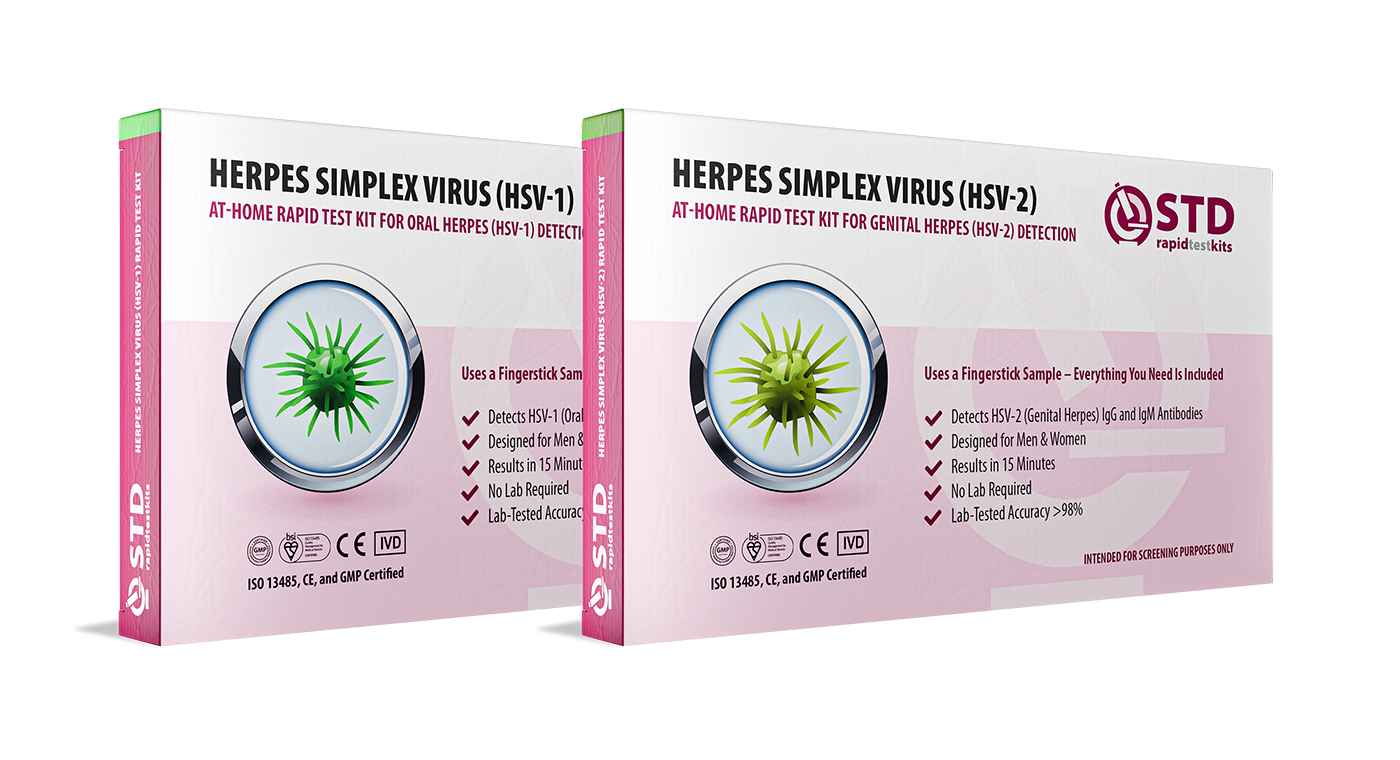
 For Men & Women
 Results in Minutes
 No Lab Needed
 Private & Discreet
Order Now $75.00 $98.00
For all 2 tests
Silent Infections: Why Feeling Fine Doesn’t Mean You’re Clear
One of the hardest things about STDs is that many of them don’t show symptoms right away, if ever. According to the CDC’s most recent data, a staggering percentage of people carrying chlamydia, gonorrhea, or HPV report no symptoms at all. These silent infections can last for months, or years, without detection unless you actively test.
This is especially true for people who’ve never had vaginal or anal sex. Because they assume they’re “safe,” they’re less likely to get screened. That’s how transmission chains keep going. A 2020 study of college students found that 13% of those who identified as “sexually inexperienced” tested positive for at least one STD, primarily HPV and HSV-1.
The myth of purity becomes a trap. It teaches people that risk begins with penetration, when in fact, it begins with exposure. And exposure comes in many forms, skin-to-skin, mouth-to-genital, fingers, toys, or unknowing contact with a sore or shedding virus.
The body doesn’t wait for a definition of sex. Neither do infections.
“They Said I Lied About Being a Virgin”
Rami, 18, was still in high school when he got tested for a scholarship-required physical. He had never had penetrative sex with anyone, male or female. But the bloodwork showed he had been exposed to herpes simplex virus type 2 (HSV-2).
“They told me that’s an STD from sex. My mom didn’t believe me when I said I hadn’t done anything,” he says. “I started doubting myself, like, did I black out or forget something? It messed with my head.”
Rami later remembered a hookup from junior year: a classmate he had kissed and dry-humped with during a sleepover. No clothes had come off, but their underwear had shifted. It was the only plausible moment of exposure, and it was enough.
Herpes doesn’t need visible sores to spread. Viral shedding can occur when someone feels totally fine. The skin around the genitals can transmit the virus even without deep contact. And because many people never get symptoms, they never know they’re contagious.
What happened to Rami wasn’t rare, it was just rarely acknowledged.
How Long STDs Can Stay Hidden (No Symptoms)
Understanding how long infections can lurk unnoticed is crucial, especially for those who assume their "clean" status is enough. Here's a breakdown of how common STDs can stay silent.
| STD | How Often It’s Asymptomatic | Typical Duration Without Symptoms |
|---|---|---|
| Chlamydia | ~70% of cases in women, ~50% in men | Weeks to months (can become chronic) |
| Gonorrhea | ~50% in women, ~10% in men | Weeks to months (often mild discharge or none) |
| HPV | 90% have no symptoms | Years (some clear naturally, others persist) |
| Herpes (HSV-2) | 85–90% don’t know they have it | Indefinite (symptoms may never appear) |
| Trichomoniasis | ~70% asymptomatic | Months, sometimes years if untreated |
Table 2. Estimated asymptomatic rates and durations.
Why You Deserve Answers, Not Accusations
If you’re reading this article with a lump in your throat, maybe it's because you’ve recently tested positive. Maybe you’re terrified to tell a partner, or even admit it to yourself. Maybe you're wondering how it happened when you were so careful. Let’s pause for a second and say this clearly: you did nothing wrong by trusting someone, by exploring your body, or by having a sexual experience that wasn’t “full sex.”
This isn’t about shame. It’s about biology. You don’t have to earn an STD with promiscuity or mistakes. Sometimes, life and bodies are just complicated. That doesn’t make you dirty. That doesn’t make you broken.
And the good news? Most STDs are treatable, manageable, and don’t affect your long-term health when caught early. You’re not doomed. You’re just informed now.
Take a breath. Let’s walk through what to do next.
Which Test Should You Use, And When?
When you’re spiraling after a scary symptom or confusing diagnosis, the last thing you need is a maze of testing options. But the truth is, choosing the right test depends on what you’ve been exposed to, and how long ago it happened.
If your symptom just showed up today, it might be too early to detect an infection. But if it’s been over a week since a possible exposure, like kissing someone with a cold sore, mutual touching, or oral sex, a rapid test can often detect viral shedding or antibodies already circulating in your body.
Here’s a quick guide to testing timelines that apply even if you’ve never had penetrative sex:
| STD | Recommended First Test | When to Test After Exposure |
|---|---|---|
| Herpes (HSV-1/2) | Rapid Antibody or PCR | 10–21 days for antibodies; sooner with active sores (PCR) |
| HPV | Pap + HPV DNA (for cervix); visual/biopsy for warts | Several weeks to months; not routinely tested without symptoms |
| Trichomoniasis | Rapid Antigen or NAAT | 5–28 days post-exposure |
| Chlamydia | NAAT (urine or swab) | 7–14 days after exposure |
Table 3. Timing matters, even for non-penetrative exposure. Testing too early can lead to false negatives. If unsure, repeat testing in 2–4 weeks can clarify results.
Don’t know which test to pick? This at-home combo kit covers multiple common STDs and doesn’t require a clinic visit. It's especially helpful if you’ve had oral sex, shared toys, or suspect symptoms but aren't sure where to start.
If you’d rather narrow it down, you can also order individual kits like the Herpes 1 & 2 test for peace of mind after mouth-to-genital contact or the Chlamydia test if you’ve shared toys or been fingered by someone with an unknown status.
What If the Test Is Positive, But You Still Feel “Fine”?
It’s a strange kind of disorientation to look down at a test result that says “positive” when your body feels totally normal. No burning, no sores, no fever. Just... a new truth staring back at you.
This happens more than most people realize. In fact, the majority of people with HSV-1, HPV, and even chlamydia don’t report symptoms at the time of testing. According to research published in BMC Infectious Diseases, many STDs are discovered by accident, required bloodwork, partner notification, or concern over a minor unrelated symptom.
What matters is what you do next. You have power now. You know something you didn’t know yesterday. That’s not a failure, it’s an opportunity.
Get confirmatory testing if you’re unsure, and start treatment if recommended. Many STDs are curable. Others, like herpes or HPV, are manageable and often harmless when monitored. But untreated infections, even “quiet” ones, can cause complications over time, from pelvic inflammation to fertility issues to chronic discomfort. You deserve to avoid all of that.
People are also reading: Yes, Oral Sex Can Transmit STDs, Here’s What You Need to Know
Prevention That Doesn’t Shame or Limit You
It's not just about where things go; it's also about trust, risk, timing, and talking to each other. And not having fun isn't what prevention is all about. It's about making a choice about how you want to get involved, with tools and knowledge that keep you safe. You should still know these tips, even if you don't plan on having penetrative sex:
- When you can, use condoms or barriers for oral and toy play.
- Use soap and water or toy cleaner to clean toys that you both use.
- If you or your partner have visible sores or flu-like symptoms, don't touch them.
- Even if you and your new partner have never had "real" sex before, you should still get tested together.
And don't forget: "being a virgin" is not a test result. The body doesn't know what that label means. It only knows how to be exposed. Don't let assumptions, shame, or someone else's idea of intimacy guide you; let testing do that.
FAQs
1. Can you really get an STD if you’ve never had sex?
Yup, 100%. It messes with your brain, but it’s real. STDs like herpes, HPV, and trichomoniasis don’t need penetration to spread. If you’ve ever kissed, been on the receiving end of oral sex, grinded naked, or shared sex toys, you’ve had exposure. You’re not weird or rare, it happens more than anyone talks about.
2. Which STDs can you catch from just kissing?
The main one is herpes, specifically HSV-1. You might know it as “cold sores,” but when passed to someone’s genitals during oral sex, it becomes a whole new problem. You don’t need open sores to pass it either, shedding happens silently. One makeout session during a flare? That’s all it takes.
3. Is it possible to get chlamydia or gonorrhea without penetration?
It’s uncommon, but not impossible. There are documented cases from shared toys or rubbing where fluids were exchanged. Think of it like this: if there's moisture, mucous membranes, and contact, there’s a path. It’s not about what went in where, it’s about exposure and biology.
4. What about towels, hot tubs, or toilet seats? Are those risky?
Nah. The odds of catching an STD from a toilet seat or towel are so low they’re basically urban legends. STDs don’t survive well outside the body. That said, trichomoniasis might hang out on damp surfaces for a short time, but you’d need a perfect storm for transmission. Still, shower sandals and clean towels never hurt.
5. I tested positive, but I’ve never had symptoms. How?
Honestly? Most people don’t. Chlamydia, HPV, herpes, many of these can hang out quietly in your body for months or even years. No itching, no pain, no discharge, nothing. That’s why routine testing is everything. Feeling “fine” doesn’t always mean you’re clear.
6. Are these at-home rapid tests actually legit?
Yes, when you use them properly and at the right time. Some, like the combo kits for chlamydia and gonorrhea, use proven tech like lateral flow or antibody detection. They’re over 90% accurate in most cases. Just don’t test too early after exposure, and follow instructions like your peace of mind depends on it. Because it kind of does.
7. I tested positive and haven’t had “sex”, what now?
First: breathe. Second: you’re not alone, and you’re not dirty. Get a confirmatory test if you need it. Start treatment if it’s curable. And if it’s something like herpes or HPV, know that millions of people are living totally normal lives with them. You’re still worthy of pleasure, relationships, and joy. Always.
8. Do I have to tell a partner if I got something from oral or skin contact?
Yes, but don’t panic. You don’t have to give a TED Talk. You can say: “Hey, I found out I tested positive for something. I didn’t have symptoms, but it’s something that can spread without full-on sex.” There are even anonymous texting tools if talking face-to-face feels too intense.
9. Can I still have sex if I’ve got something now?
Yes, but be smart about it. Use condoms. Use barriers for oral. Communicate. Know your cycle of symptoms if you’ve got something like herpes. STDs don’t cancel your sex life, they just ask you to be a little more thoughtful. And anyone who judges you for being informed? Not worth your bed space.
10. Where do I even start if I want to test privately?
Right here. You can order a Combo Home STD Test Kit that shows up in boring, no-logo packaging and gives results fast. No clinic awkwardness. No insurance. Just clarity, on your terms.
You Deserve Answers, Not Assumptions
If you’ve made it this far, chances are you’ve felt the fear, confusion, or shame that comes with a result that doesn’t match your definition of “sex.” And that’s exactly why this article exists, to tell you that you're not alone, not dirty, and not wrong for wanting clarity.
Intimacy doesn’t have to mean risk, but it also doesn’t come with guarantees. The best thing you can do is stay informed, stay tested, and stay grounded in facts, not stigma. Whether you’re navigating a confusing diagnosis or just double-checking after a moment of uncertainty, there’s a solution within reach.
Don’t stay in the dark. This at-home combo test kit checks for the most common STDs discreetly and quickly, no judgment, no waiting rooms, no pressure. Just answers.
How We Sourced This Article: We combined current guidance from leading medical organizations with peer-reviewed research and lived-experience reporting to make this guide practical, compassionate, and accurate. In total, around fifteen references informed the writing; below, we’ve highlighted some of the most relevant and reader-friendly sources.
Sources
2. Sexually Transmitted Infections (STIs) | WHO
3. Yes, You Can Contract an STD Without Having Penetrative Sex | Healthline
4. Can You Get an STD Without Having Sex? | Verywell Health
5. Sexually Transmitted Infections (STIs) | NHS
About the Author
Dr. F. David, MD is a board-certified infectious disease specialist focused on STI prevention, diagnosis, and treatment. He blends clinical precision with a no-nonsense, sex-positive approach and is committed to expanding access for readers in both urban and off-grid settings.
Reviewed by: Jenna Liu, MPH | Last medically reviewed: October 2025
This article is for informational purposes and does not replace medical advice.


