
Published: December 2025 | Last updated: May 2026 | Editorial review and quality control: Martina N.
A positive STI result inside a long-term relationship lands like an accusation. The first reflex is to look for who broke the rules. Infections don't carry timestamps, though, and the body doesn't separate exposures from a decade ago from exposures last month. Chlamydia, herpes, HPV, and several other infections can sit quietly in the body for years with no symptoms, no flare, no signal. They surface during a routine screen, a pre-IVF panel, or an unrelated workup, and the couple in the exam room has to figure out what to do with information that arrived without context.
This piece walks through that gap: why monogamy isn't a clean slate, why the window between exposure and detection can stretch into years, how to bring up testing without turning it into a trial, and what at-home rapid testing can and can't do for couples who want answers without a clinic visit.
Key Takeaways
- Several common STIs, including HPV, herpes, and chlamydia, can stay in the body for years without symptoms; a new positive inside a marriage doesn't automatically point to recent infidelity.
- If you and your partner have never tested together, a baseline panel now plus a yearly cadence afterwards is the simplest way to stay ahead of silent infections, fertility-screen surprises, and reinfection after treatment.
Why a Diagnosis Inside a Marriage Isn't Automatic Proof of Cheating
The first reaction many married people have to a positive STI test is fear, and the fear often points outward: fear of betrayal, of being blamed, of what the result "means" about the relationship. The biology doesn't cooperate with that interpretation. Infections like HPV, herpes simplex, and chlamydia can remain asymptomatic or dormant for years, sometimes decades, quietly living in the body until they flare or get caught during routine screening.
Marcus, 44, found out he had chlamydia during a pre-IVF screening with his wife. The diagnosis blindsided both of them. "We went into that appointment thinking about babies," he said. "Instead, we left fighting about who had been unfaithful. But I hadn't cheated, and neither had she. Our doctor told us it might have been in my system for years, maybe before we even met."
Stories like Marcus's aren't outliers. STI testing belongs in the preventive-care category, similar in spirit to a blood-pressure screen or a pap smear. The difference is that STI testing carries more emotional weight, which makes it easy to delay, avoid, or skip altogether. The delay is where the damage grows: untreated chlamydia can quietly cause pelvic inflammatory disease and infertility; unmonitored high-risk HPV can progress to cervical or oropharyngeal precancer; herpes can pass to a partner without ever causing a noticeable outbreak.
Most chlamydia infections cause no symptoms. The CDC's chlamydia page notes that "chlamydia often has no symptoms, but it can cause serious health problems, even without symptoms," which is why public-health guidance recommends routine screening for people at risk even when nothing feels wrong. Source: <a href="https://www.cdc.gov/chlamydia/index.html" target="_blank" rel="noopener">CDC, About Chlamydia</a>.
The Monogamy Myth: How Common Infections Hide in Long-Term Relationships
Once a relationship feels settled, the assumption that STI risk is behind you tends to settle in too. The vocabulary reinforces it: "clean," "settled down," "safe." Biology doesn't read those labels. Many STIs are content to wait in the background, and a surprising share cause no symptoms at all until something pushes them into view.
According to the CDC's STI overview, millions of new STI infections occur every year in the United States, and a sizeable share of carriers never know they are infected. Chlamydia is asymptomatic in the majority of infections, which is why public-health screening is recommended even without symptoms. HPV often clears on its own, though high-risk strains can linger and raise cancer risk years later. Herpes simplex can live in the body for months or years before any noticeable outbreak, and shedding can occur without any visible lesion at all.
Here's what "silent" looks like across the common infections couples worry about, alongside the long-term risk if a positive case sits untreated.
| STI | Symptoms Often Present? | Can It Stay Dormant? | Long-Term Risks If Untreated |
|---|---|---|---|
| Chlamydia | No in roughly half to two-thirds of cases (CDC) | Yes, for years | PID, infertility, chronic pelvic pain |
| Genital herpes (HSV) | Often none, or mistaken for irritation | Yes | Recurrent outbreaks, transmission to partners |
| HPV | Rarely with non-cancer strains | Yes | Cervical, anal, or throat precancer/cancer |
| HIV | Not typical in early stages | Yes (chronic if untreated) | Immune-system damage, progression to AIDS |
| Gonorrhea | Often mild or absent in women | Yes | PID, infertility, joint involvement |
Where Did This Come From? Window Periods and Old Exposures
This is where the questions get messy. You test positive. Your partner says they haven't strayed. Neither have you. The math doesn't seem to work. The math, often, lies in the past. Some STIs, especially herpes simplex and certain HPV strains, can stay in the body undetected for many years. People can carry herpes acquired from a partner before their current relationship and not know about it until a clinical screen or a flare reveals it.
A second piece of the puzzle is the window period: the interval between exposure and the moment a test can detect the infection. Window periods differ across pathogens and test technologies. A blood antibody test for HSV often takes weeks to months to register. HIV antibody tests have a standard 23 to 90 day window depending on the assay; rapid antigen-antibody tests detect earlier than older generations but still need several weeks after exposure. A negative test taken at the wrong moment in the window doesn't mean the infection isn't present. It means the test ran too soon to see it.
Here's the practical window-period landscape for the infections most relevant to long-term couples.
| STI | Typical Window Period | Can It Reactivate or Surface Later? |
|---|---|---|
| Herpes (HSV) | 2 to 12 days for first outbreak; antibody tests can take weeks to months | Yes, reactivates intermittently for life |
| HPV | Weeks to months; may never produce a detectable lesion | Yes, can persist or recur |
| Chlamydia | 5 to 14 days for the most common rapid tests | Reinfection is common if partner not treated |
| HIV | About 23 to 90 days for antibody-based tests; sooner with RNA testing | Chronic if untreated; lifelong with treatment |
When Trust Gets Twisted: The Shame Spiral After a Positive Test
Amanda, 36, was brushing her teeth when she opened her test results: positive for trichomoniasis. Her husband froze. "So, who did you sleep with?" he asked. The words hit like acid. Amanda hadn't cheated. She'd taken the test because of an unusual discharge, thinking it might be a yeast infection. Instead, she was now the accused.
This is the damage silence causes. When STI testing isn't normalized inside a marriage, every result gets emotionally weaponized. The absence of regular screening sets up a false binary: either someone cheated or the test is wrong. The truth is usually more complicated and more human. Trichomoniasis can persist for months without symptoms in some carriers, and reinfection from an untreated partner is well-documented in CDC guidance.
Shame isn't just emotionally costly. It delays treatment, suppresses honest communication with a clinician, and stops people from seeking the follow-up they need. Couples who could work through a treatable health issue together instead spiral into guilt, suspicion, and avoidance. None of that is required. Routine testing, framed as preventive care rather than as evidence collection, defuses the worst of the spiral before it begins.
Shame collapses the chain that ought to follow a positive result. The diagnosed partner delays sharing the result; the conversation is then framed as confession instead of teamwork; the untreated partner stays untreated; the original infection lingers or reinfects after treatment ends; the couple loses confidence in testing as a tool. Each link is preventable, but each link compounds the next.
Why Many Married People Never Get Tested
There's no honeymoon phase for STI awareness. In many relationships the topic drops off the moment things get serious. The reasons people skip testing are emotional, logistical, and cultural, and they tend to cluster around the same handful of lines:
- "We were each other's firsts, so we didn't think it was necessary."
- "He said he got tested before we got serious."
- "It feels strange to bring it up after this long."
These justifications feel reasonable until someone gets sick, or a pregnancy test prompts more lab work, or one partner develops symptoms they can't ignore. Then the silence cracks, and what could have been a routine check becomes a relationship crisis. The framing matters. STI testing handled as a baseline part of preventive health, similar to a flu shot or a cholesterol check, loses the sting it carries when treated as a confession or an accusation.
Long-term couples have specific reasons to keep testing on the calendar: new medications can shift immune response; fertility planning involves required panels anyway; libido or discharge changes that look like perimenopause or BPH can also mask infection; and the past partner histories the two of you exchanged early in the relationship may not have included exposures the original partner didn't know about either.
STIs are often asymptomatic. When symptoms occur, they can be non-specific.

Case Study: Five Years of Marriage, One Surprise Result
Diego and Farah had been married for five years. Both worked high-pressure jobs and were trying to conceive. When Farah's OB-GYN suggested a full panel of tests before starting hormone treatments, she agreed without thinking much of it. The result came back positive for gonorrhea. She confronted Diego. He denied cheating. They fought, slept in separate rooms, and booked a counselor.
In the second session, the therapist asked the question neither of them had: "When was the last time either of you was tested?" Neither had been since they met. Diego remembered an untreated UTI back in college that "cleared on its own." He'd never followed up with a clinic. The infection might have stayed asymptomatic, then passed to Farah at some point during the marriage without either of them noticing a clinical change.
Their story, like many, doesn't end in divorce. It ends in a course of antibiotics for both of them, a confirmatory follow-up test, and a yearly STI panel added to the shared calendar. The therapist's reframe gave them a procedural way out of the loop: replace the search for blame with a scheduling decision they could both act on.
Three steps Diego and Farah took after the gonorrhea diagnosis
- Both completed the full prescribed antibiotic course at the same time, not just the partner whose test came back positive.
- Both retested at three months to confirm clearance, matching the CDC's recommended interval for post-treatment follow-up.
- Added a recurring yearly STI panel to the shared calendar so the next test is an appointment, not a conversation that has to be re-opened from scratch.
The Right Way to Bring Up Testing
There's no one perfect script. There is, though, a tone that tends to work: calm, collaborative, and rooted in care. Avoid ultimatums, dramatics, and vague language like "I just feel off." If you want to test, say so directly. If you've already tested, share your results and explain why you went.
One way to frame it: "I know we trust each other, and I don't have any reason to think something's wrong. I've been reading about how STIs can sit dormant for years, even before people meet. I think it would be good for both of us to test. I care about us, and this is part of how I show that."
If you've already tested and got a result that surprised you, avoid starting the conversation with blame. Try: "I got tested recently as a routine check, and something came up. I want to talk about it with you. I know this is going to sound scary; I'm not accusing you of anything. I want us to handle it together."
You want to start testing as a couple, with no specific worry: "I've been reading that STIs can sit dormant for years, even before people meet. I'd like both of us to test. Not because I'm worried about us, because I care about us."
You already tested and the result surprised you: "I got tested recently as a routine check, and something came up. I'm not accusing you of anything; I want us to handle this together. Can we talk about next steps tonight?"
When It Comes Back: Reinfection and Recurrence
Some couples breathe a sigh of relief after one round of treatment, then it happens again. Reinfection often has more mundane causes than betrayal: one partner didn't finish treatment; bacteria weren't fully cleared; the couple resumed sex before treatment finished; or one partner was never tested at all.
Trichomoniasis and chlamydia are especially prone to boomeranging back. CDC guidance notes that reinfection within weeks to months is common when sexual partners aren't treated at the same time. CDC's 2021 STI treatment guidelines state that "men and women who have been treated for chlamydia should be retested approximately 3 months after treatment, regardless of whether they believe their sex partners were treated." Yet in long-term relationships, one person often gets tested "just in case," assumes the partner is fine, and skips the awkward follow-up.
Quick checklist after a positive chlamydia or gonorrhea result
- Both partners take the prescribed treatment course in full, even if only one tested positive.
- Wait seven days after single-dose treatment, or until the full course is finished, before resuming sex.
- Retest at three months, the CDC's recommended interval for catching the most common reinfection cases.
- If symptoms return before three months, retest immediately rather than waiting for the scheduled retest.
How Often Should Married Couples Test?
There's no single right cadence, but a baseline schedule covers most cases. The four scenarios below cover the vast majority of long-term couples.
- Never tested with your current partner: a one-time baseline panel now. It's never too late to start.
- Monogamous, symptom-free, no new risk factors: a yearly check is a reasonable rhythm. Many primary-care visits include a screen if you ask. At-home kits cover the gap between visits.
- Either partner has had unprotected sex outside the relationship (past or present), a history of an STI, or new symptoms: test now, then retest after the relevant window period for the infections of concern.
- Planning a pregnancy, beginning IVF, or working through fertility questions: request a full panel as part of the workup. Several STIs that don't produce symptoms still affect fertility.
Specific triggers can push testing out of the yearly cadence: a fertility workup, a positive partner-notification, a new prescription that affects immune function, an unexplained discharge or pelvic pain, or a result from an occupational physical that flags something unexpected. Any of those is reason to test now rather than wait for the calendar slot.
Privacy Matters, Even in Marriage
One of the biggest barriers to testing, even in committed relationships, is logistical privacy. People don't want to be seen walking into a clinic. They don't want a shared insurance statement showing a procedure code that prompts questions. They don't want to explain to a partner why they're suddenly motivated to test before they're ready to have the conversation.
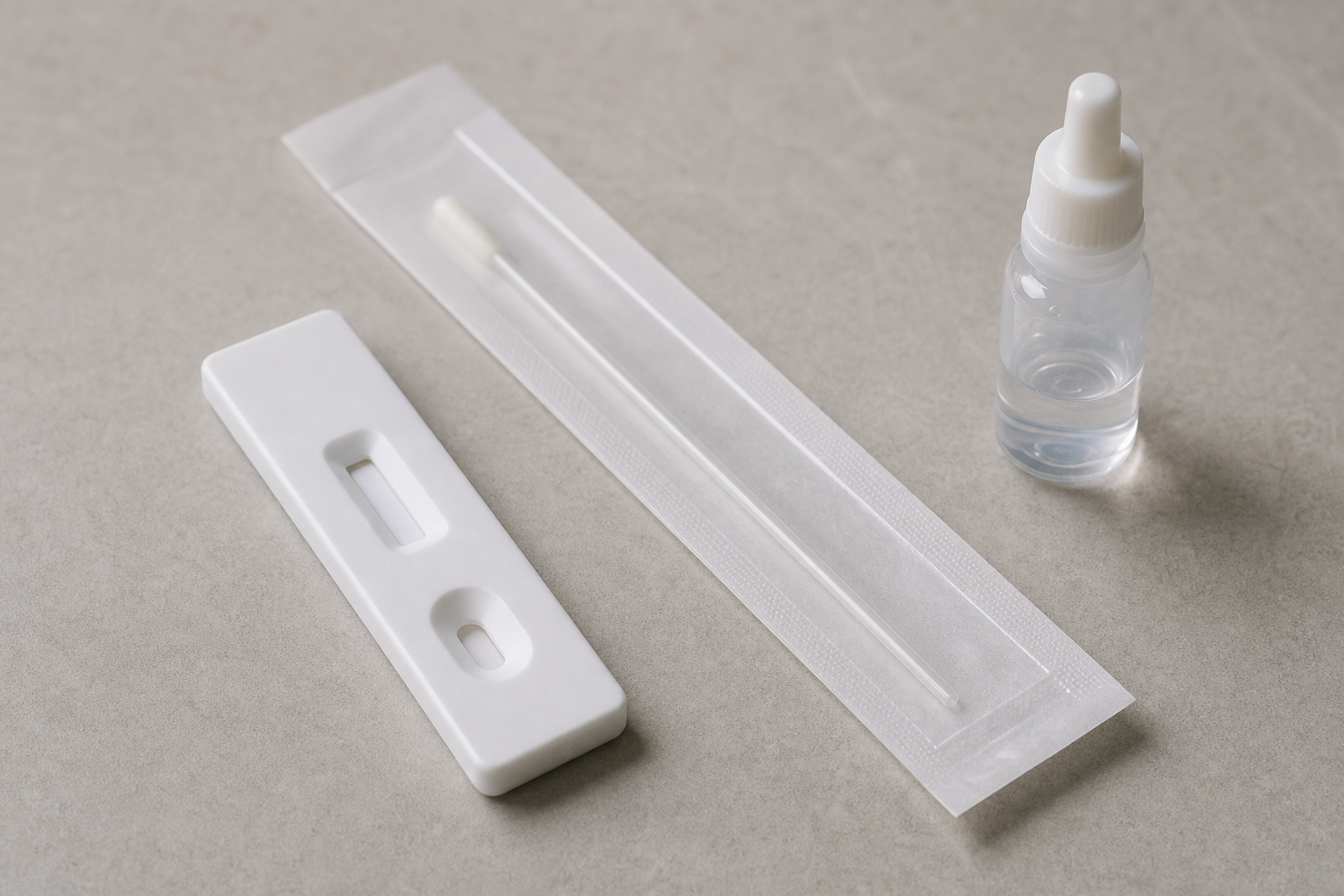
This is where at-home testing helps. Full disclosure: the kits described below are sold on this site. Rapid kits from stdrapidtestkits.com arrive in unmarked packaging, require no appointments, and deliver results in roughly 15 minutes from the privacy of a bathroom. You can test on your own schedule, decide when to share results, and retest later if a window period was an issue.
Logistical privacy and dishonesty are different things. In any relationship, advocating for your own health on your own timing is reasonable. Practically, that looks like ordering a kit in plain brown packaging, running it on a Saturday morning at the kitchen counter, reading the result strip after about 15 minutes, and then deciding when and how to share what came back.

Faithful Couples Get STIs Too
The cultural script around STIs assigns them to "other people": single people, promiscuous people, people who make bad choices. Infections don't follow scripts. They follow biology, timing, and exposure history. Married, faithful, and cautious people get STIs as well, and the diagnostic delay is often longer for them because nobody in the room expects the result.
The result, when it does land, often arrives at an inconvenient moment: a fertility workup, a pregnancy panel, an unrelated urinary infection, a routine occupational physical. The panic that follows is the same panic a casual dater would feel, layered with the additional weight of explaining the result to a long-term partner who didn't see it coming. A panel taken on a quiet Saturday morning at home, before any of those moments arrive, is a much shorter conversation than a panel forced by an unrelated occupational physical.
If you're starting from zero, do these four things
- Pick a date in the next four weeks and schedule a baseline STI panel for both partners, at-home or at a clinic.
- Add a yearly recurring reminder on the shared calendar so the next test isn't a decision, it's an appointment.
- Treat any positive result with the prescribed course in full, then retest at three months per CDC guidance.
- If a fertility workup or new symptoms come up, retest at that point rather than waiting for the yearly slot.
FAQs
- Can I have an STI if I haven't cheated?
- Yes. Plenty of married people land on a positive result they can't explain through recent behavior. Several STIs, including HPV, herpes, and chlamydia, can stay in the body for years and surface during a routine screen, a fertility workup, or unrelated lab work. A new positive doesn't automatically map to a recent exposure or to a partner's actions.
- We both got tested when we first got together. Isn't that enough?
- A single baseline test is a good start; it's not lifetime coverage. Infections that were inside their window periods at the time can slip past a first test, and HPV or herpes that didn't show on antibody testing back then can register later. Once-a-year testing keeps the baseline current.
- Do we really need to test if we've only ever been with each other?
- Both partners still have pre-relationship histories that may not have been fully screened. Testing is preventive care, similar in scope to a pap smear or a cholesterol panel. It answers a biology question, not a fidelity question.
- How do I bring this up without starting a fight?
- Try, "I've been reading that STIs can sit dormant for years before people even meet, and I think it would be good for both of us to test. I care about us, and this is part of how I show that." Framed as a routine health check rather than an accusation, the conversation tends to land differently.
- What if I test positive and my partner reacts badly?
- A positive result doesn't establish recent infidelity. Remind them, and yourself, that many STIs can stay hidden for years. If the conversation gets stuck, a couples counselor or a telehealth provider can help separate the medical question from the relationship question.
- Could I have passed something on without knowing?
- Yes, and that doesn't make you a bad partner; it reflects the infection's biology. Many STIs cause no itching, no burning, and no discharge until months or years in. Testing is the only reliable way to rule them in or out.
- How reliable are at-home rapid tests for screening?
- At-home rapid lateral-flow kits are a private, fast way to screen, and they're useful for catching positives that warrant follow-up. They use different chemistry from the lab NAAT or PCR tests clinics run, which remain the gold standard for confirmation. The practical approach: use a rapid kit as a first-line screen, then follow any positive with a clinician for confirmatory testing.
- We're trying to have a baby. Should we test first?
- Yes, even if both of you feel fine. Some STIs, including chlamydia and gonorrhea, can affect fertility and pregnancy outcomes without producing symptoms. Fertility clinics screen as a matter of course, and doing it before treatment starts saves time and surprises later.
How we sourced this article: We built this piece from current public-health guidance issued by the U.S. Centers for Disease Control and Prevention and the World Health Organization, alongside patient-facing resources from Planned Parenthood and a peer-reviewed StatPearls overview of sexually transmitted infections. The composite case studies use names changed for privacy; the clinical patterns and timelines are based on documented cases and current CDC guidance.
- U.S. Centers for Disease Control and Prevention. About sexually transmitted infections, including the annual incidence of new STI infections in the United States and the prevalence of asymptomatic infection.
- U.S. Centers for Disease Control and Prevention. About chlamydia, including the statement that chlamydia often has no symptoms but can cause serious health problems even without symptoms.
- U.S. Centers for Disease Control and Prevention. 2021 STI treatment guidelines for chlamydia, including the recommendation to retest approximately three months after treatment regardless of whether the partner was treated.
- U.S. Centers for Disease Control and Prevention. Annual sexually transmitted infections surveillance data and trends.
- World Health Organization. Global factsheet on sexually transmitted infections, including the statement that STIs are often asymptomatic and that symptoms, when present, can be non-specific.
- Planned Parenthood. Patient-facing guide to STI testing, including when to test and what to expect.
- Garcia MR, Leslie SW, Wray AA. Sexually Transmitted Infections. StatPearls Publishing. Broad clinical overview of STI etiology, epidemiology, diagnosis, and treatment.
