Published: October 2025 | Last updated: May 2026 | Editorial review and quality control: Martina N.
I'm pregnant and having a herpes outbreak. How worried should I be?
For most people with a long-standing herpes diagnosis, the risk to the baby is low, under 1 percent. Tell your obstetric team now. Standard care is suppressive antiviral medication from 36 weeks and a cesarean only if sores or warning tingling are present when labor starts.
A herpes outbreak during pregnancy can land like a verdict on the rest of the pregnancy. The first questions are almost always the same: will my baby be okay, will I need a cesarean, will I have to tell people. The reassuring answer that gets buried under those worries is that for most expectant parents with a herpes diagnosis, the outcome is a healthy baby and a planned, calm delivery.
Genital herpes is common. Roughly 12 percent of U.S. adults aged 14 to 49 carry HSV-2 antibodies, per the CDC STI Treatment Guidelines, and many do not know it. Most of those people go on to have uncomplicated pregnancies. Two variables drive almost every clinical decision here: whether this is a first infection or a recurrence, and what the exam finds when labor begins.
Key Takeaways
- Late-pregnancy primary HSV infection drives 30 to 50 percent transmission risk at delivery; recurrent outbreaks in someone with prior HSV transmit in less than 1 percent of cases.
- Standard care is suppressive acyclovir or valacyclovir from 36 weeks, a clinical exam at labor onset, and cesarean delivery only when lesions or prodromal symptoms are present.
Why Timing and History Make All the Difference
Herpes simplex virus (HSV) comes in two types. HSV-1 causes most cold sores and is increasingly responsible for genital infections too. HSV-2 is the classic cause of recurrent genital herpes. In pregnancy, the crucial variable is whether this is your first ever HSV exposure (a primary infection) or a flare of a virus your body has known for years (a recurrence). Which type you carry matters less than whether your immune system has had time to respond to it.
With a primary infection, your immune system has not yet made antibodies to HSV. The reason that matters is antibody chemistry. Immunoglobulin G (IgG) antibodies, the long-term memory proteins your body builds after an infection, cross the placenta in the second and third trimesters and arrive at the baby as borrowed protection. They blunt what the virus can do if exposure happens during birth. A first-time infection in late pregnancy does not give the parent enough time to make those antibodies before delivery, so more virus is shed during labor and the newborn has nothing to slow it down.
With a recurrent outbreak in someone who has carried HSV for months or years before pregnancy, the picture is much calmer. The body recognizes the virus, viral shedding is shorter and lower in volume, and the baby benefits from antibodies you have already made. The CDC notes that transmission risk drops to less than 1 percent for women with prior HSV who deliver during a recurrence, compared to 30 to 50 percent for women whose first ever HSV infection happens close to delivery.
This is why the single most important question your obstetrician will ask is: when did you first get this? The answer your care plan turns on is the very first exposure, which may have been years before this pregnancy.
Primary vs. recurrent: the immunity facts that drive the plan
- IgG antibodies your body builds after an HSV infection cross the placenta in the second and third trimesters and reach the baby as borrowed protection at birth.
- A primary HSV infection in late pregnancy leaves no time for those antibodies to form, which is why transmission risk climbs from below 1 percent (recurrent) to 30 to 50 percent (newly acquired near delivery).
How Common Is Neonatal Herpes?
Neonatal herpes is the outcome everyone is trying to prevent. It is also rare. The World Health Organization estimates it occurs in roughly 10 of every 100,000 births worldwide, though rates vary by region and by how cases are counted (WHO herpes simplex virus fact sheet). The large majority of pregnancies in HSV-positive parents end without neonatal infection.
When it does occur, neonatal herpes ranges from disease limited to the skin, eyes, and mouth, which is treatable and usually has a good outcome, to disseminated infection involving the brain, lungs, or liver, which is serious and demands immediate antiviral treatment. Where transmission happens matters because it shapes where prevention has to focus. The large majority of cases occur during birth itself, when the baby passes through a genital tract that is shedding virus. A smaller share happen after birth, usually from a caregiver with a cold sore. A very small minority happen in utero, when virus crosses the placenta.
| When transmission happens | Approximate share of cases | Why it matters for prevention |
|---|---|---|
| During labor and delivery (intrapartum) | Large majority | Direct contact with virus in the birth canal. Prevention focuses here: antiviral suppression, exam at labor, and selective cesarean delivery. |
| Shortly after birth (postnatal) | Smaller share | Contact with someone shedding HSV-1, often a cold-sore kiss to the newborn. Prevention is social and family education. |
| Before birth (intrauterine) | Small minority | Virus crosses the placenta. Rare and usually associated with primary infection in early pregnancy. |
How to Recognize a Herpes Outbreak in Pregnancy
Recognizing an outbreak early matters more in pregnancy than at almost any other time, because the question that shapes your delivery is whether signs of active virus are present when labor begins. Most recurrent outbreaks announce themselves the same way each time, so learning your own pattern means you can tell your obstetric team promptly. The MedlinePlus overview of genital herpes is a useful plain-language reference for what those symptoms look like.
A recurrence usually starts with prodrome, the tingling, itching, or burning that precedes a visible sore by hours to a day or two. Lesions then appear as small fluid-filled blisters that break open into shallow, tender sores before crusting over. A first-ever (primary) outbreak tends to be more intense, often with several sores at once, painful urination, and flu-like symptoms such as fever and swollen lymph nodes in the groin. Some outbreaks happen on the cervix, where you cannot see or feel them, which is one more reason the labor-onset exam is built into the plan rather than left to memory.
Signs of a Herpes Outbreak to Watch for in Pregnancy
Report any of these to your obstetric team promptly, even if mild. The plan turns on whether signs of active virus are present when labor begins, not on how an outbreak felt weeks earlier.
- Tingling, itching, or burning in the genital area, the prodrome that often comes hours to a day before a sore Common
- Small fluid-filled blisters that break open into shallow, tender sores, then crust over Common
- Pain or stinging when urine passes over a sore Less common
- Flu-like symptoms during a first-ever outbreak: fever, body aches, and swollen lymph nodes in the groin Less common
- Sores on the cervix that you cannot see or feel, found only on a clinical exam Rare
What Actually Raises the Risk at Delivery
Not every HSV-positive pregnancy is high risk, and not every outbreak triggers an intervention. A short list of factors meaningfully shifts the math.
A primary infection in the last six weeks of pregnancy. This is the single biggest risk factor. Because there has not been time for antibodies to form, viral shedding tends to be heavier and the newborn has no passive protection. If a primary infection is suspected this late, suppressive therapy starts immediately and most providers lean toward cesarean delivery if symptoms persist into labor.
Visible lesions or prodromal symptoms at the start of labor. Prodrome is the tingling, itching, or burning that often precedes a visible sore. If either is present when labor begins, it is treated as evidence of active virus and is the standard trigger for cesarean delivery.
Prolonged rupture of membranes. Once the amniotic sac has been broken for several hours, ascending exposure to the genital tract becomes a concern. Timing decisions can change accordingly.
Invasive fetal monitoring. Scalp electrodes and similar devices can introduce virus directly into the baby's skin. Most providers avoid them when an HSV history is on the chart.
Asymptomatic shedding, where someone with HSV is contagious without any visible sores, also happens. It is why the standard suppressive regimen is started even in people who feel fine, and why an exam at labor is built into the plan rather than relying on symptoms alone.
The frightening numbers in this article apply to a narrow scenario: a brand new HSV infection in late pregnancy. If you have lived with HSV for years and your outbreaks are intermittent, transmission risk at delivery sits below 1 percent per <a href="https://www.cdc.gov/std/treatment-guidelines/herpes.htm" target="_blank" rel="noopener noreferrer">CDC treatment guidelines</a>, and is lower still with suppressive therapy. The vast majority of pregnancies in HSV-positive parents end with a healthy baby and no infection.
What Testing Looks Like Late in Pregnancy
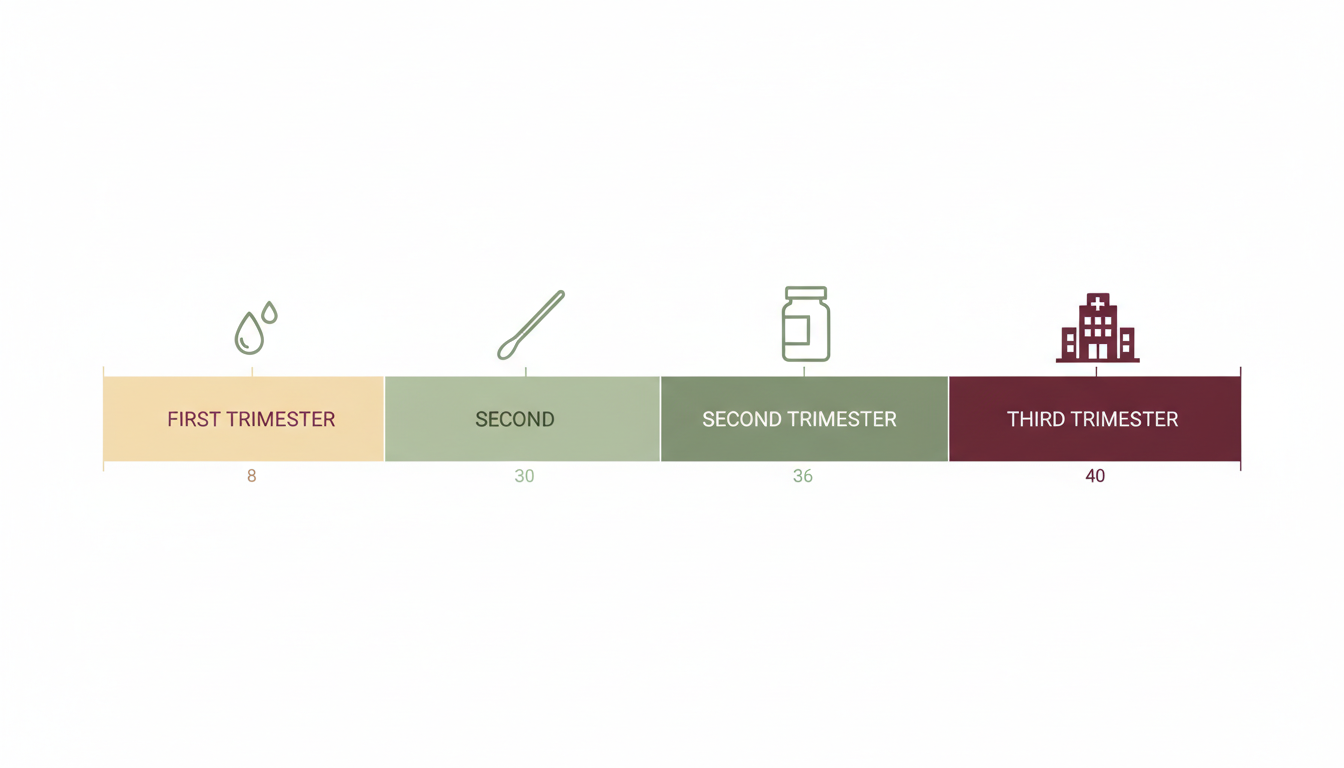
Testing during pregnancy is not the same as a routine STI screen. The questions are narrower: is virus active right now, and has the immune system had time to make antibodies?
Routine universal HSV antibody screening is not recommended in pregnancy. A positive antibody test in someone with no symptoms does not change much about delivery planning, and false positives in low-risk populations can lead to anxiety and unnecessary intervention.
Targeted testing is different. If you develop sores or symptoms during pregnancy, your provider will swab the lesion and send it for PCR (polymerase chain reaction) testing. PCR detects viral DNA directly and is the most sensitive method available. Most labs return PCR results within a couple of days.
If you are pregnant and either you or your partner have a known HSV history but no current symptoms, blood antibody testing can clarify whether your immune system has already seroconverted. This matters most when one partner has HSV and the other does not, because it identifies the higher-risk scenario of a possible new infection late in pregnancy. The CDC specifically recommends that pregnant people who are HSV-negative avoid sexual contact with infected partners during the third trimester, with consistent barrier protection if abstaining is not realistic.
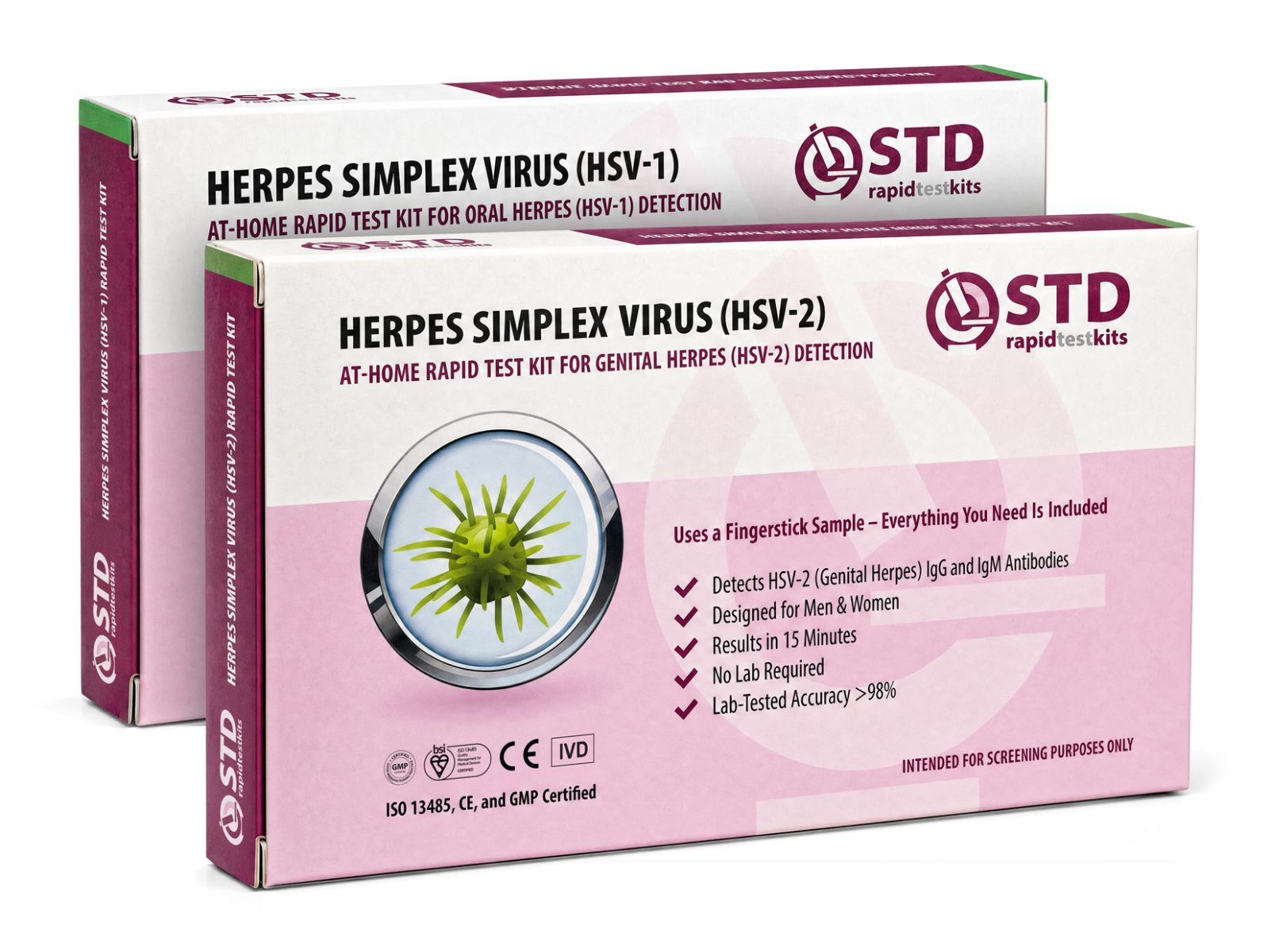
At-home rapid tests for HSV, including an at-home herpes antibody test, use lateral-flow blood antibody chemistry. They are useful for confirming that exposure has happened and that antibodies are present, which is reassurance during a recurrent outbreak, and they are most informative 12 or more weeks after a possible exposure when seroconversion has had time to complete. They are not the right tool for diagnosing an active genital lesion in pregnancy, where a PCR swab from the lesion itself, ordered by your OB, is what guides the delivery plan.
Disclosure: stdrapidtestkits.com sells the at-home herpes antibody test described below. We recommend tests based on fit for your situation, not commercial benefit.
Suppressive Antiviral Therapy: What and When
For anyone with a known HSV history, the standard recommendation is suppressive antiviral therapy starting at 36 weeks of pregnancy and continuing until delivery. The goal is to reduce viral shedding and the chance of an active outbreak at the start of labor. Both major U.S. obstetric and infectious disease guidelines, including ACOG and CDC, support this approach. (U.K. practice through the NHS often starts a little earlier, around 32 weeks, so do not be surprised if guidance differs by country.)
The two medications used are acyclovir and valacyclovir. Both are widely considered safe for late-pregnancy use, and large cohort data have not shown an overall pattern of birth defects from the suppressive regimen starting at 36 weeks. The CDC does note one case-control study flagging a potential gastroschisis association with antiviral use in early pregnancy, a concern that does not apply to the 36-weeks-to-delivery schedule that is standard practice. Standard suppressive dosing in late pregnancy looks like this:
| Medication | Typical suppressive dose | What it does |
|---|---|---|
| Acyclovir | 400 mg by mouth, three times daily, from 36 weeks to delivery | Reduces frequency and severity of outbreaks; reduces asymptomatic viral shedding. |
| Valacyclovir | 500 mg by mouth, twice daily, from 36 weeks to delivery | Same mechanism as acyclovir; better oral bioavailability means fewer doses per day. |
How Suppressive Therapy Changes the Picture
Suppressive therapy reduces but does not eliminate risk. Pooled trial data summarized in the CDC treatment guidelines shows it substantially reduces both the rate of clinical outbreaks at delivery and the rate of cesarean delivery needed for HSV indications. It does not guarantee a vaginal birth and it does not entirely abolish viral shedding, which is why an exam at labor remains part of the standard plan.
If you are diagnosed with a primary HSV infection during pregnancy, your provider will start treatment immediately rather than waiting until 36 weeks, often using a higher initial dose for the first episode. Frequent or severe recurrent outbreaks earlier in pregnancy can also push the suppressive start date earlier than 36 weeks, depending on individual history.
Both acyclovir and valacyclovir are well tolerated. Side effects are usually mild: occasional headache, nausea, or fatigue. Severe reactions are rare. If you cannot tolerate one, the other is generally a workable alternative. The decision between the two is mostly about dosing convenience: twice-daily valacyclovir is easier to remember than three-times-daily acyclovir, but acyclovir has the longer track record in pregnancy.
Suppressive antivirals from 36 weeks lower the chance of a clinical outbreak at delivery and reduce asymptomatic shedding. They do not abolish viral shedding entirely, do not guarantee a vaginal birth, and do not replace the labor-onset exam. The exam at labor is still what determines route of delivery, regardless of how well suppression has gone in the weeks before.
Cesarean or Vaginal Birth: How the Plan Comes Together
The most common worry expectant parents bring up is whether HSV automatically means a cesarean. It does not. The decision is made at labor onset based on what the exam shows and what your history says.
Are there visible lesions or prodromal symptoms? If yes, current ACOG guidance recommends cesarean delivery. The aim is to keep the baby from passing through a genital tract that is actively shedding virus.
Is there a known HSV history with no current signs? If suppressive therapy has been used and the exam at labor shows no lesions and no prodrome, vaginal delivery is generally considered safe and is the default plan. ACOG, the CDC, and the U.K. Royal College of Obstetricians and Gynaecologists all align on this point.
Has the water broken, and how long ago? Prolonged rupture of membranes adds a separate consideration. The longer the interval before delivery and the higher the suspicion of viral activity, the more weight goes onto cesarean as the lower-risk choice.
Cesarean reduces but does not eliminate the risk of neonatal HSV. A small number of babies are still infected even when delivered by cesarean, often when membranes ruptured well before the procedure. The decision is always a balance, not a guarantee, and it is made between you and your obstetric team based on what they see at labor and what your history says.
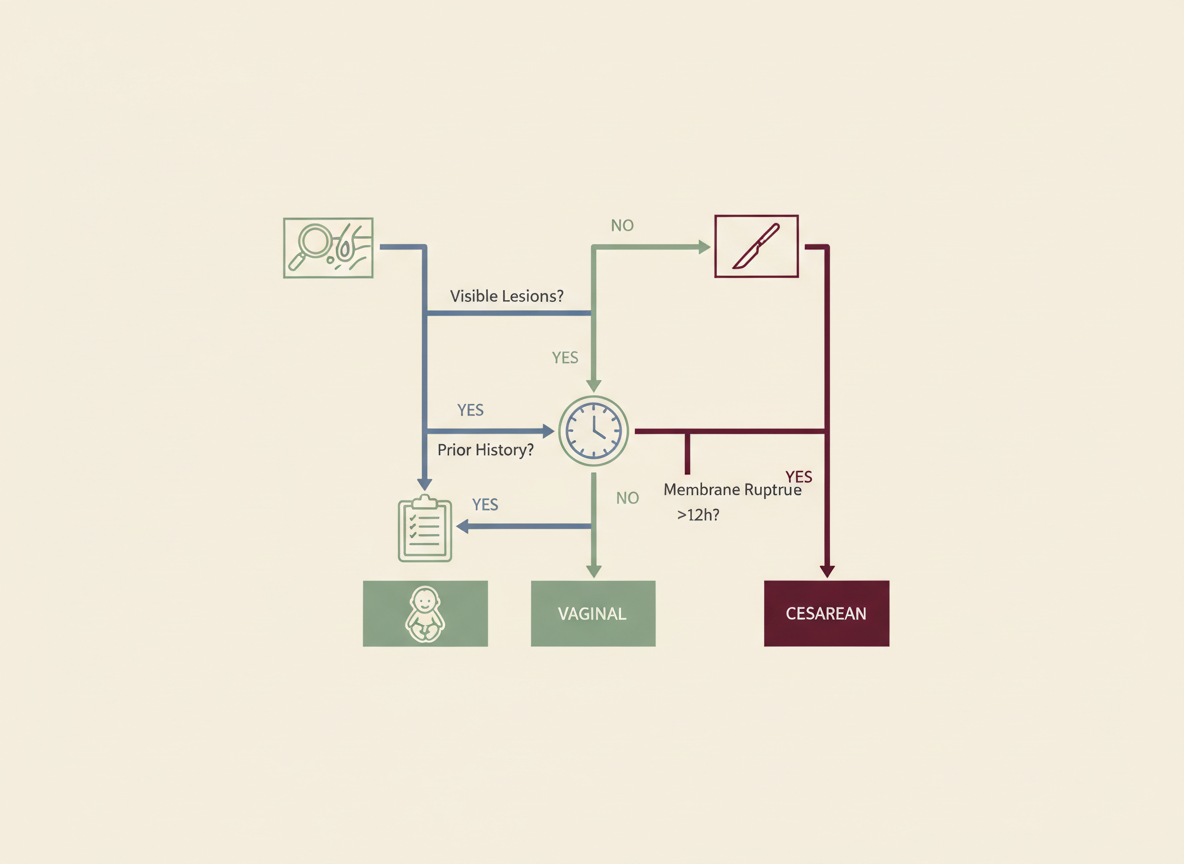
The decision rarely comes as a surprise at labor onset. By the time you arrive in triage, your team has already scoped the plan based on your history and the suppressive regimen. The labor exam confirms or pivots that plan based on what is actually visible at that moment and what the timing of any membrane rupture suggests about exposure.
Two Common Pathways: How the Plan Plays Out
Two pathways describe how the plan typically plays out in practice.
Pathway one: a known HSV-2 history, no outbreak at delivery. Someone diagnosed with HSV-2 years before pregnancy, with two or three outbreaks per year, gets pregnant. Their OB notes the history at the first prenatal visit. At 36 weeks, they start valacyclovir 500 mg twice daily. Labor begins at 39 weeks. The exam shows no lesions and no prodromal symptoms. They deliver vaginally without complication. The baby is observed but not treated. This is the most common shape of an HSV-positive pregnancy.
Pathway two: a first ever HSV infection at 35 weeks. Someone with no prior HSV diagnosis develops painful sores and flu-like symptoms at 35 weeks. PCR confirms HSV-2. The OB starts valacyclovir immediately at a higher initial dose, then continues suppression. At 38 weeks, the patient still reports tingling. The team plans cesarean delivery. The baby is monitored closely after birth, swabs are taken, and IV acyclovir is started prophylactically until cultures clear. The baby goes home with no infection.
| Variable | Pathway one (known recurrent HSV) | Pathway two (new primary HSV at 35 weeks) |
|---|---|---|
| HSV history at conception | HSV-2 diagnosed years earlier; two to three outbreaks per year | No prior HSV diagnosis; first sores appear at 35 weeks |
| When antivirals start | Valacyclovir 500 mg twice daily from 36 weeks | Higher-dose valacyclovir starts immediately at diagnosis |
| Labor exam finding | No lesions, no prodromal symptoms | Tingling reported at 38 weeks; risk treated as active |
| Delivery route | Vaginal birth | Planned cesarean delivery |
| Newborn course | Observed only; no treatment needed | Surface swabs taken; IV acyclovir started prophylactically until cultures clear; baby goes home well |
After Delivery: How the Newborn Is Monitored
What happens to the baby after birth depends on what happened before it. If you have a known HSV history, no outbreak at delivery, and an uncomplicated vaginal birth, the baby is usually observed without any special workup. Skin-to-skin and breastfeeding are encouraged, with the standard caveat that anyone with an active cold sore should not kiss the baby.
If there was concern at delivery, including suspected primary infection, visible lesions, or prolonged membrane rupture, the protocol is more cautious. U.S. hospitals follow a standardized American Academy of Pediatrics algorithm that combines surface testing with prophylactic antiviral therapy until cultures clear.
Prompt antiviral treatment is the critical intervention for neonatal HSV. With early IV acyclovir, mortality from skin-and-mucous-membrane disease is near zero. Untreated, neonatal HSV can be devastating, which is why the threshold to test and treat is deliberately low. For parents, the reassuring part is that newborn HSV exposure is one of the more carefully managed situations in modern hospital care.
For babies born after a high-risk HSV exposure, the American Academy of Pediatrics algorithm calls for surface swabs from the mouth, eyes, skin, and rectum at around 24 hours of age, blood drawn for HSV PCR, and IV acyclovir started while the lab results are pending. If the baby tests positive or develops symptoms, IV acyclovir continues for 14 to 21 days depending on whether the disease is limited to skin and mucous membranes or has spread to the central nervous system. The algorithm exists precisely so that no exposed newborn slips through the cracks while waiting on lab confirmation.
What If the Outbreak Happens in the First or Second Trimester?
An outbreak earlier in pregnancy feels less urgent because delivery is still far away. The clinical picture mostly matches that intuition.
If you have known HSV and experience a recurrence in the first or second trimester, the standard response is observation, symptomatic care, and a note in your chart so the team knows to plan suppressive therapy at 36 weeks. There is no good evidence that recurrent maternal outbreaks earlier in pregnancy harm the baby in utero.
A primary HSV infection in the first half of pregnancy is a different conversation. Case literature has documented a small increased risk of miscarriage, preterm labor, and very rarely, intrauterine HSV transmission. The numbers are small, and most pregnancies with an early primary HSV infection still proceed normally to a healthy delivery. The key intervention is starting antivirals when symptomatic and ensuring the OB knows about the infection so the late-pregnancy plan accounts for it.
Either way, an early outbreak gives you and your provider time to put a 36-week suppressive plan in place before it matters most.
Recurrent HSV outbreaks in the first or second trimester are managed with observation, symptomatic care, and a chart note for the late-pregnancy plan. A first-ever HSV infection in the first half of pregnancy is rarer and warrants closer follow-up, but most pregnancies still proceed to a healthy delivery with the standard 36-week suppressive regimen.
Daily Habits That Reduce Outbreak Frequency During Pregnancy
Beyond medication and the delivery plan, daily habits make a measurable difference to how often outbreaks happen. The triggers are well understood and consistent across the literature: physical stress, poor sleep, illness, dehydration, and friction or irritation of the genital area. Pregnancy itself is a stressor on every one of those axes, so the goal is not perfection but small, repeated reductions.
Practical things that tend to help:
- Sleep. Even a couple of nights of disrupted sleep can precede an outbreak. Treat sleep as a clinical input, not a luxury.
- Hydration and nutrition. Adequate fluid intake and balanced meals support immune function and tissue repair. The effect is unglamorous but real.
- Gentle clothing and hygiene. Loose cotton underwear, avoiding heavily fragranced products, and patting (not rubbing) the area dry after showering all reduce micro-trauma that can mimic or trigger an outbreak.
- Stress management you will keep up with. Twenty minutes of walking, prenatal yoga, or simply sitting outside beats an aspirational plan that never gets followed.
- Tracking. Note prodromal symptoms in your phone the moment you notice them. The earlier your provider knows about a possible flare, the easier the response.
Stigma around herpes is real, and it is heaviest during pregnancy when you are already facing more clinical conversations than usual. Talk to a therapist, a trusted friend, or a moderated online support group if shame is making you reluctant to speak honestly with your obstetrician. Silence is the one factor on this list that genuinely makes the medical picture worse, because it can delay disclosure that the delivery plan depends on.
Reducing Risk Before Delivery: Actions Within Your Control
Several actions move the needle on transmission risk, and almost all of them are within your control.
Know your status, and your partner's. If you do not know whether you have HSV and your partner does, ask about testing. Most adult HSV transmission happens between partners who did not know one of them was positive. Serology testing in early pregnancy can identify the higher-risk discordant scenario in time to manage it.
Practice safer sex through the third trimester if your partner has HSV and you do not. This is the single most effective way to prevent the late-pregnancy primary infection that drives the highest neonatal risk. Condoms, suppressive therapy for the partner, and abstinence during partner outbreaks all help.
Take suppressive antivirals as prescribed from 36 weeks. Adherence matters. Missed doses reduce the protective effect on viral shedding.
Tell your obstetric team about every outbreak. Even if it seems trivial, having a clear timeline of recent outbreaks helps them assess viral activity at labor.
Brief the people who will be near the baby. Anyone with an active cold sore should not kiss the newborn. Postnatal HSV-1 transmission from family members accounts for a meaningful share of neonatal cases, and it is almost entirely preventable.
Quick reference: what reduces transmission risk
- Know your status and your partner's. Discordant couples drive most late-pregnancy primary infections.
- Use safer-sex measures through the third trimester if your partner has HSV and you do not.
- Take suppressive antivirals as prescribed from 36 weeks; adherence is what makes the regimen work.
- Tell your obstetric team about every recent outbreak so the labor exam and plan account for it.
- Brief family and visitors: anyone with an active cold sore should not kiss the newborn.
Five Myths Worth Sorting Out
Most of the fear around herpes in pregnancy comes from outdated stories, not current medicine. Here are five of the most damaging ones, with what the evidence shows.
Common Misconceptions About Herpes in Pregnancy
Myth: A herpes diagnosis means a high-risk pregnancy by default.
Fact: A long-standing, well-managed genital herpes diagnosis is not a high-risk pregnancy on its own. The high-risk label is reserved for specific situations, mostly a newly acquired infection in late pregnancy or co-existing complications.
Myth: A cesarean is automatic if you have herpes.
Fact: The cesarean recommendation depends on whether active lesions or prodromal symptoms are present when labor starts. People with a known herpes history routinely deliver vaginally when they are symptom-free at labor, especially on suppressive therapy.
Myth: Herpes will harm the baby in utero.
Fact: The placenta is a strong barrier and intrauterine HSV infection is rare. The main concern is exposure during birth, which is exactly what suppressive therapy and the delivery plan are designed to prevent.
Myth: You will always feel an outbreak coming.
Fact: Asymptomatic shedding is real and is one reason HSV spreads so easily between adults. Suppressive therapy reduces shedding but does not erase it, so the delivery decision rests on what is happening at labor, not on whether you recall a recent flare.
Myth: You cannot breastfeed if you have herpes.
Fact: HSV does not pass through breast milk. Breastfeeding is safe unless there is an active lesion on the breast or nipple, in which case you pause feeding from that side until it heals. The CDC and the Academy of Breastfeeding Medicine both make this distinction.
The risk for transmission to the neonate from an infected mother is high (30 percent to 50 percent) among women who acquire genital herpes near the time of delivery and low (less than 1 percent) among women with prenatal histories of recurrent herpes or who acquire genital HSV during the first half of pregnancy.
What to Do Right Now
The right next move depends on what you are noticing today and on what your obstetric team already knows. Walk through these questions and bring whatever applies to your next prenatal visit.
Should You Act on Your HSV Status Today?
Do you have an active sore, or prodromal tingling, itching, or burning in the genital area right now?
Yes: Contact your obstetric team today. They can examine you, swab any lesion for PCR if needed, and factor active signs into the delivery plan.
Could this be your first-ever herpes outbreak, with symptoms starting in the last several weeks of pregnancy?
Yes: Treat it as time-sensitive. Tell your OB now so antiviral treatment can start immediately, because a newly acquired late-pregnancy infection carries the highest risk to the baby.
Do you have a known HSV history but no symptoms at the moment?
Yes: Ask your provider about starting suppressive acyclovir or valacyclovir at 36 weeks, and keep reporting any prodrome right up to delivery.
No: If you or your partner are unsure of your HSV status before the third trimester, consider testing now so any new infection is caught in time to plan around.
Guidance only. Your obstetric team can advise based on your specific history and exam.
Frequently Asked Questions
- Do I have to have a cesarean if I have herpes?
- No. Cesarean is recommended only when there are visible lesions or prodromal symptoms (tingling, itching, burning) at the start of labor. If you have known HSV but show no signs of an active outbreak when the labor exam happens, vaginal delivery is the default plan.
- How likely is it that my baby will get herpes from me?
- With suppressive antivirals and no active lesions at delivery, the real-world risk is much lower than the headline figures suggest. The 30 to 50 percent figure applies only to a first-ever infection acquired in late pregnancy; for someone with a prior history, transmission sits below 1 percent even without antivirals, and lower still with them.
- I had a cold sore during pregnancy. Should I be worried?
- A cold sore (HSV-1 on the lip) is not a direct risk to the baby in utero. The risk is postnatal: do not kiss the newborn while a cold sore is active, and ask anyone in the household with a cold sore to do the same.
- Are acyclovir and valacyclovir safe in pregnancy?
- Both are routinely prescribed in late pregnancy for HSV suppression and are widely considered safe at the 36-weeks-to-delivery schedule. Cohort data on the suppressive regimen has not shown an overall pattern of birth defects. If you have kidney disease or another condition that affects how you clear these medications, your provider will adjust the dose. Talk to your provider about your specific history before starting.
- I just found out I have herpes and I am already in my third trimester. What now?
- Tell your obstetrician immediately. The clinical priority is to figure out, as best as possible, whether this is a primary infection (newly acquired) or a recurrence of a long-standing infection you did not know you had. The answer affects the delivery plan. Antibody testing and a PCR of any current lesion can help distinguish the two. Your provider will start antiviral therapy without waiting for a definitive answer, and most babies still go home well.
- Do I have to tell my obstetrician if I have not had an outbreak in years?
- Yes. Antibody status persists even when outbreaks stop, and asymptomatic shedding can still happen. Your provider needs the full picture to decide whether suppressive therapy is right and to know what to look for at delivery. There is no judgment attached, and that disclosure is the single piece of information that lets the rest of the plan work.
- Can I have HSV without ever having symptoms?
- Yes. Most people with HSV do not know they carry it because outbreaks can be mild, brief, or absent. Asymptomatic viral shedding still happens, which is why blood antibody testing is the only way to know your status if you have never had visible symptoms.
- Can I breastfeed if I have herpes?
- Yes, as long as you do not have an active lesion on the breast itself. Breastmilk does not transmit HSV. The only restriction is direct contact between an active lesion and the baby's skin, including from cold sores around the lips. If a lesion appears on the breast, pump and discard from that side and feed from the unaffected breast until it heals.
- What is the difference between an antibody test and a swab test for herpes?
- A swab (PCR) test detects active virus from a lesion and is what your OB will use during pregnancy if you develop symptoms. An antibody (blood) test detects past exposure and tells you whether your immune system has seen HSV before. The two answer different questions and are used in different situations.
If You Want a Broader Screen at the Same Visit
HSV often shares a clinical conversation with other STIs because exposure routes overlap. If you are clarifying your herpes status before pregnancy or in the early weeks, it is reasonable to check the rest of the panel at the same time with at-home STI test kits. A broader at-home screen catches infections that would otherwise be flagged separately at prenatal labs and lets you arrive at the first OB visit with a clearer picture.
Product: STD-8
- U.S. Centers for Disease Control and Prevention. Sexually Transmitted Infections Treatment Guidelines: Genital Herpes Infections. Source for the 30 to 50 percent versus less-than-1 percent transmission risk figures, the 12 percent HSV-2 adult prevalence figure, suppressive therapy from 36 weeks, acyclovir/valacyclovir dosing, and antiviral safety profile in pregnancy.
- U.S. Centers for Disease Control and Prevention. About Genital Herpes. Source for general HSV background, symptoms, transmission, and patient-facing context.
- World Health Organization. Herpes Simplex Virus fact sheet. Source for global HSV-1 and HSV-2 prevalence and the estimate that neonatal herpes occurs in roughly 10 of every 100,000 births worldwide.
- U.S. National Library of Medicine, MedlinePlus. Genital Herpes. Plain-language patient overview of diagnosis, treatment, and pregnancy considerations.
- U.K. National Health Service. Genital Herpes condition page. Source for the U.K. clinical overview and pregnancy guidance, including the earlier (around 32 weeks) suppressive-therapy start used in the U.K.
- American College of Obstetricians and Gynecologists. Source for ACOG-aligned delivery decision-making, suppressive therapy at 36 weeks, and prenatal counseling framing.
