






Quick Answer: STD anxiety can mimic symptoms, prolong stress, and lead to compulsive testing, even after a negative or treated diagnosis. Understanding timing, testing limits, and the psychology of fear can help you move forward with clarity.
This Guide Is For Anyone Who Can’t Shut Their Brain Off
If you’ve found yourself spiraling after a diagnosis, or convinced you’re infected even after multiple tests, this is for you. If you’ve canceled hookups, compulsively checked your genitals, or read through endless Reddit threads at 3AM? You’re not alone.
One reader, Kai, 28, shared: “I tested negative for everything, twice. But I kept feeling like something was wrong. My groin was tingly, and every itch felt like herpes. It wasn’t until a therapist explained anxiety symptoms that I could breathe again.”
We wrote this to break the silence, shrink the shame, and untangle the mental mess that often comes with sexual health scares. Here’s what we’ll cover:
- How STD anxiety shows up (and why it’s not “just in your head”)
- What symptoms mean, and what they don’t
- When to test, retest, and stop testing
- How to talk to partners without panicking
- Where support fits in, emotionally, medically, and sexually
This isn’t a lecture. It’s a lifeline.
When Anxiety Feels Like an STD
Anxiety can mimic STD symptoms in ways that are disturbingly convincing. That tingling? Could be a real nerve response, but triggered by stress. That burning? Often caused by muscle tension, dehydration, or even caffeine. Panic tightens your muscles, heightens your focus, and wires your brain to scan for danger… including “symptoms.”
Here’s the cycle we see most:
| Trigger | Thought | Body Response | Behavior |
|---|---|---|---|
| Unprotected sex / new partner | “What if I got something?” | Rapid heartbeat, genital tingling | Google symptoms, test immediately |
| Negative test result | “What if I tested too early?” | Tension, stomach upset, insomnia | More Googling, schedule retest |
| Still no symptoms or very mild | “But herpes can be asymptomatic…” | Itchiness, phantom pain, dry mouth | Check body obsessively, cancel sex |
Figure 1. The cycle of STD anxiety, trigger, thought, symptom, behavior.
The fear doesn’t just stay in your head. It travels into your body. And unless you know how to break the cycle, it can become a self-fulfilling trap: anxiety causes symptoms, which cause more anxiety, which causes more symptoms.
When It Is Real, And Anxiety Still Follows
Not all STD anxiety is irrational. Many people reading this have tested positive, and even after treatment, the fear remains. For those with incurable infections like herpes or HPV, the anxiety can spike around outbreaks, disclosure, or rejection.
Maribel, 32, was diagnosed with herpes in the middle of a breakup. “I thought I’d never date again. I kept googling ‘how to live with herpes’ like it would tell me how to stop hating myself.”
Here’s what we want you to know:
- Most STDs are manageable or curable. A positive result doesn’t mean you’re “damaged” or doomed.
- Disclosure gets easier. There are scripts, safe ways to talk, and more empathy out there than you think.
- Your sex life is not over. It just changes, and in many cases, improves because of new communication and consent.
Let’s talk about what to do after a positive, or persistently anxious, testing experience.

People are also reading: Post-Exposure Prophylaxis and its Role in STD Management
Testing, Retesting, and Knowing When to Stop
STD anxiety often leads to what we call “testing OCD.” This isn’t about curiosity, it’s compulsion. You test after every encounter, even when it’s low risk. Or worse, you test during window periods and trust a negative that isn’t yet accurate, only to spiral again days later.
Here’s a clear testing timeline, especially for those struggling with anxious retesting:
| STD | Earliest Reliable Test | Best Time to Test | Retest Needed? |
|---|---|---|---|
| Chlamydia | 7 days | 14+ days | Yes, if tested before 14 days |
| Gonorrhea | 7 days | 14+ days | Yes |
| Syphilis | 3 weeks | 6 weeks | Yes |
| HIV | 10 days (RNA) | 4+ weeks (Ag/Ab) | Yes, at 12 weeks |
| Herpes | 3–6 weeks (blood) | 12–16 weeks (best accuracy) | Sometimes |
Figure 2. Optimal STD testing windows for accuracy and peace of mind.
Testing too early can produce false negatives. Testing too often can trigger anxiety loops. Testing with awareness? That’s where real empowerment lives.
If your mind is stuck on loop, peace of mind is one test away. This at-home combo test kit checks for the most common STDs discreetly and quickly, so you can start feeling safe again.
Check Your STD Status in Minutes
Test at Home with Remedium7-in-1 STD Test Kit

 For Men & Women
 Results in Minutes
 No Lab Needed
 Private & Discreet
Order Now $129.00 $343.00
For all 7 tests
STD Guilt, Shame, and the Stories We Inherit
One of the most corrosive parts of STD anxiety isn’t the infection itself, it’s the guilt. Guilt from being "reckless." Shame from "not knowing better." Fear that people will see you differently. But these feelings don’t come from nowhere. They’re built from years of silence, jokes, judgment, and misinformation.
Ryan, 25, shared: “I didn’t even tell my best friend. I thought he’d think I was dirty. But when I finally told him, he just said, ‘Dude, it happens. Did you get meds?’”
Stigma thrives in the silence. That’s why writing this, and reading this, matters. The truth? People contract STDs for all kinds of reasons: broken condoms, asymptomatic partners, misinformation, even through non-sexual contact in some rare cases. It doesn’t make you irresponsible. It makes you human.
So here’s a challenge: if you're spiraling from shame, try this reframe. You’re not dirty, you’re informed. You’re not doomed, you’re doing the work. You’re not alone, you’re one of millions.
Talking to Partners Without Panicking
One of the hardest anxiety triggers? Disclosure. Whether it’s a casual partner or a long-term relationship, telling someone you have, or had, an STD can feel like standing naked in a courtroom. The fear of rejection, judgment, or even aggression is real.
But you deserve partnerships where communication and safety come first. And you deserve scripts that help you get there. Try something like:
“Before we hook up, I want to share something. I tested positive for [herpes/chlamydia/etc.] a while ago. I’m managing it and taking precautions. I’m telling you because your health matters, and so does honesty.”
If that sentence makes your chest tighten, that’s okay. Practice it. Say it in the mirror. Say it with a therapist. Text it if you need to. Remember, disclosure is a boundary, not a confession.
STD Rapid Test Kits offers privacy-first tools for people who want control before those conversations ever happen. Whether you’re testing before a date or after a scare, you don’t have to walk in blind.
How to Know When It’s Anxiety, and Not an STD
This is one of the most common reader questions we see: “I’ve tested negative. Why do I still feel symptoms?”
Here’s the truth: anxiety can cause real, physical sensations that mimic STD symptoms. These include:
- Genital tingling or numbness (from nerve tension)
- Burning during urination (from pelvic floor stress or dehydration)
- Anal or vaginal itchiness (from sweat, tight clothes, or hormonal shifts)
- Rash-like feelings without a visible rash (from hypersensitivity)
If you’ve tested at the right time, and symptoms persist in the absence of clinical findings, it’s time to look at your nervous system, not your sex life. This doesn’t mean it’s “all in your head.” It means your brain and body are stuck in a fear response.
Try tracking these flare-ups. Do they come after anxious thoughts? Before bed? After caffeine or scrolling late-night forums? That’s your nervous system, not an infection.
People are also reading: Is That a Pimple or an STD? Decoding Vaginal Bumps
Case Study: “I Took 8 Tests in 3 Months, All Negative”
Leah, 30, had one unprotected encounter with a casual partner. She tested for chlamydia and gonorrhea seven days later, negative. But her mind spiraled. She retested at day 14, then 21, then 30.
“Every time I’d feel a little itch, I’d panic. I started canceling plans. I wasn’t sleeping. My partner thought I didn’t trust him, but I didn’t even trust myself.”
Eventually, Leah saw a therapist who specialized in health anxiety. They worked on grounding, exposure, and understanding test accuracy. It took time, but Leah now tests only when medically warranted, and has reclaimed her sex life.
If this sounds like you, consider speaking with a mental health provider who understands somatic anxiety. You’re not “crazy.” You’re caught in a loop, and there’s a way out.
Check Your STD Status in Minutes
Test at Home with Remedium6-in-1 STD Test Kit
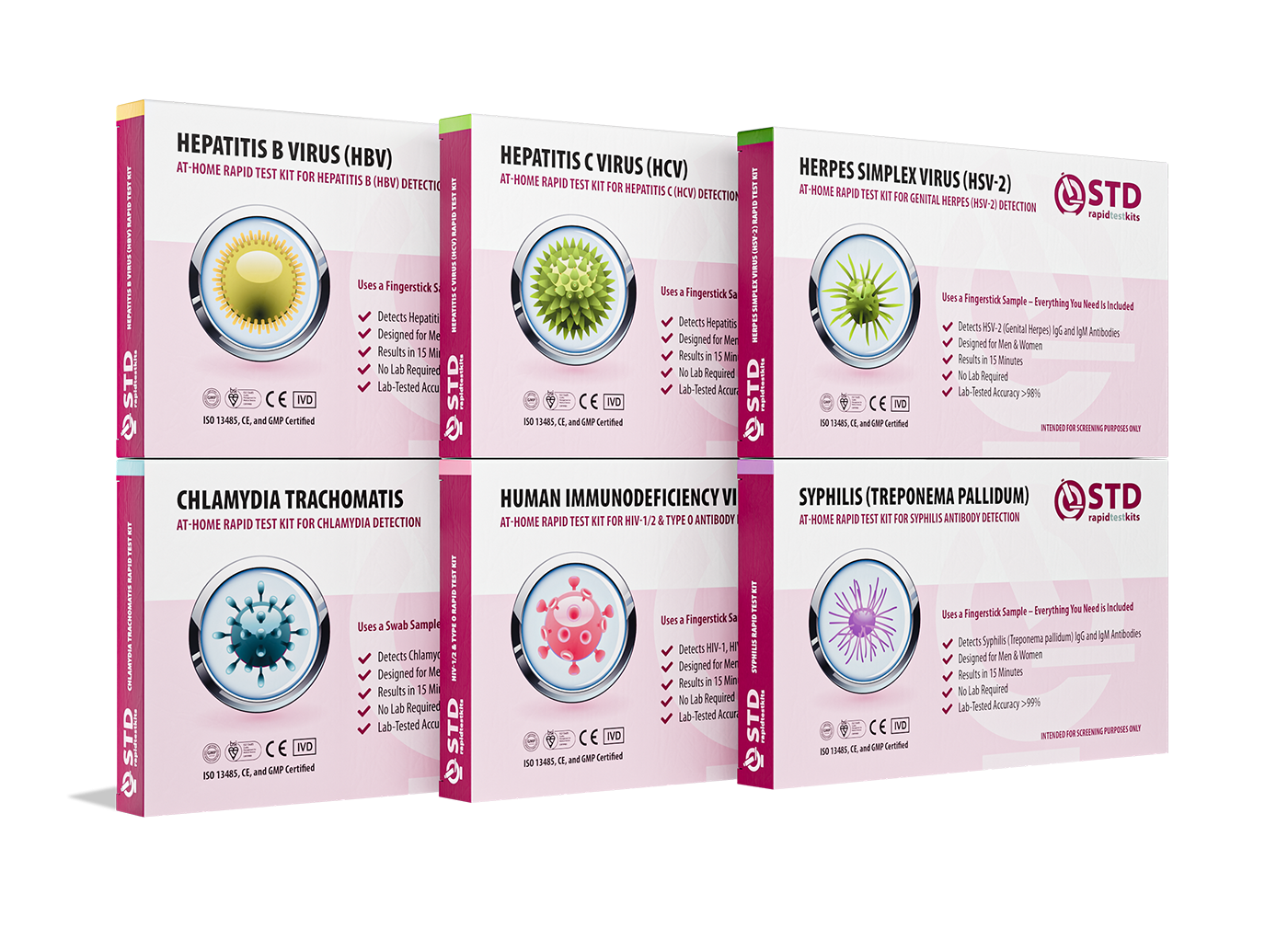 For Men & WomenResults in MinutesNo Lab NeededPrivate & Discreet
Order Now $119.00 $294.00
For all 6 tests
What Happens After You Calm Down (Yes, It’s Possible)
Here’s the part they don’t show in PSA ads: you can live with an STD and not feel broken. You can date again, have sex again, laugh again, without spiraling. But it starts with three things: education, timing, and support.
Once you’ve tested at the right window, ruled out major concerns, and received treatment if needed, the next phase is emotional healing. That includes:
- Letting go of constant checking, if it looks the same today as yesterday, it’s probably not new.
- Learning about your infection, knowledge fights fear. The more you understand, the less you’ll catastrophize.
- Focusing on future care, how you protect yourself, talk to partners, and build confidence moving forward.
This isn’t toxic positivity. It’s slow, grounded resilience. You don’t “get over” STD anxiety in one day. But you do move through it, with the right tools, at your own pace.
How to Build a Safety Plan for Your Mental Health
If you know anxiety tends to hijack your brain post-hookup or pre-test, make a plan ahead of time. Here’s what that could include:
| Trigger | What You Feel | Your Reframe/Tool |
|---|---|---|
| Itching after sex | “I’m infected again” | “Could be friction. Let’s observe, not spiral.” |
| Partner disclosure | “I’m doomed” | “Let’s test after the window and stay grounded.” |
| Waiting for results | Insomnia, Googling | Use grounding exercises, set Google limits |
| Getting a positive result | Shame, panic | Text support person, read treatment steps |
Figure 3. Sample STD anxiety reframe chart for mental wellness planning.
Managing your anxiety around STDs doesn’t mean ignoring risk. It means responding with calm action instead of panic. And yes, you can learn to do that.
Your Sex Life Isn’t Over, It’s Just Evolving
We won’t lie: an STD diagnosis can shake your sexual confidence. You might feel dirty, scared, or unworthy. But here’s the wild part, many people report having better sex after diagnosis. Why? Because they talk. They disclose. They ask questions. They prioritize their pleasure and safety.
Riley, 27, was terrified to date after a herpes diagnosis. “I thought no one would want me. But I met someone who asked smart questions and didn’t flinch. It was actually the best sex of my life, because it was so honest.”
When you move through fear, you find what’s real. And what’s real is this: STDs are part of life for millions of people. They do not cancel your worth. They just change how you move, with a little more clarity, a little more courage.
FAQs
1. Can anxiety really cause STD-like symptoms?
Oh yeah, big time. Your brain on fear is a powerful thing. Anxiety can trigger tingling, burning, phantom itching, even pelvic tightness. We’ve seen people convinced they had herpes because their skin “felt weird,” but it was just their nervous system on overdrive. You’re not imagining the sensations, they’re real. They’re just not always coming from an infection.
2. How do I tell the difference between anxiety and an actual STD?
Honestly, it’s tricky sometimes. But here’s the cheat sheet: symptoms that come and go quickly, move around, or flare when you're stressed are often anxiety-related. Meanwhile, STDs tend to stick around or follow a known pattern (like sores or discharge). If you’ve tested after the right window period and nothing shows? It’s okay to shift your focus from testing to calming your system.
3. I’ve tested negative multiple times… so why do I still feel like I have something?
Welcome to the spiral, it’s more common than you think. The mind hates uncertainty. So it fills in the blanks with worst-case scenarios. This is especially true if you grew up with fear-based sex ed, or had a past scare. Repeated negative tests should be a green light to exhale, but anxiety makes you want “just one more.” That’s not your fault. It’s a fear loop, and it can be broken with support.
4. Can I still have sex if I have an STD, or anxiety about one?
Yes, and yes. Many people live full, hot, amazing sex lives after a diagnosis. The key is communication, protection, and consent. As for anxiety? Talk it out with your partner if you trust them. Set boundaries. Go slow. Your body doesn’t need to be symptom-free to be worthy of intimacy, it just needs to feel safe. And that safety can start with you.
5. I’m scared I’ll never date again if someone finds out I have herpes.
That fear is real, and it’s also rooted in stigma, not truth. Plenty of people date, fall in love, and hook up after a herpes diagnosis. In fact, some folks say it made their relationships stronger because it forced honest conversations. Disclosure is scary the first few times. Then it becomes just… part of the process. If someone bails after you share? They were never your person.
6. What if I’m too anxious to even take the test?
You are not weak, you’re overwhelmed. And there are ways to get through that wall. Start with a plan: pick a test that feels doable (like an at-home kit), set a time, and ask someone to check in with you before and after. You don’t have to rush. You just have to stay curious and kind to yourself. Testing isn’t about punishment. It’s about peace of mind.
7. Do people actually go to therapy for STD anxiety?
Absolutely. Health anxiety, sexual shame, testing OCD, these are real and treatable issues. Therapists (especially those with sex-positive or trauma-informed training) can help untangle the mental loops. You're not "overreacting" for needing help. You're responding to a real emotional trigger. And healing that can change your whole relationship to your body and sex.
8. My test was positive. Now what?
First: breathe. Then treat. Then talk. A positive result can feel like the world cracked open, but most STDs are totally treatable, and many are temporary. What you do next is what matters: get treated, protect partners, and start rewriting the story in your head. You’re not broken. You’re informed.
9. I keep Googling symptoms even though I know it makes me panic. Why can’t I stop?
Because you're trying to self-soothe, ironically, through self-sabotage. Googling feels like control… until it spirals. Try setting a boundary: “no symptom searches after 8PM” or “only check with verified sites like the CDC or Mayo.” Better yet, replace the urge with something that actually helps: a calming video, journaling, texting someone safe. The answers you need aren’t always in the search bar, they’re in your story.
10. Is it normal to feel gross or ashamed after a diagnosis?
Sadly, yeah. But that doesn’t make it true. Shame loves to hide in silence, and STDs are buried under decades of it. But here’s the truth: STDs are infections, not indictments. They don’t say anything about your character. You’re not “gross.” You’re human. You’re just navigating something vulnerable. And that makes you strong as hell.
You’re Not Alone, You’re Just Ready to Heal
If you’ve made it this far, take a breath. You’ve already done something brave by seeking answers. Whether you’re stuck in a spiral of doubt or reeling after a diagnosis, the next step is never shame, it’s support.
Testing doesn’t define your worth. A diagnosis doesn’t erase your value. And anxiety doesn’t mean you’re weak, it means you care. That’s a powerful place to begin.
Don’t wait and wonder, get the clarity you deserve. This at-home combo test kit checks for the most common STDs discreetly and quickly, so you can stop spiraling and start moving forward.
How We Sourced This Article: We used information from medical groups like the CDC and Mayo Clinic, as well as peer-reviewed research and personal stories from lived-experience blogs and support forums. This guide is based on both science and what it's like to go crazy after getting an STD scare or diagnosis.
Sources
1. Illness Anxiety Disorder: A Review of the Current Research (PMC)
2. CDC – Sexually Transmitted Infections Treatment Guidelines 2021
3. Mayo Clinic – Illness Anxiety Disorder: Symptoms & Causes
4. Nature – Health Anxiety Amplifies Fearful Responses to Illness‑Related Imagery
5. Reddit – r/STD Support and Stories (Community-based)
About the Author
Dr. F. David, MD is a board-certified infectious disease specialist focused on STI prevention, diagnosis, and treatment. He blends clinical precision with a no-nonsense, sex-positive approach and is committed to expanding access for readers in both urban and off-grid settings.
Reviewed by: Brianna T. Cole, LCSW | Last medically reviewed: September 2025
This article is for informational purposes and does not replace medical advice.


