Can Kissing Transmit Oral Gonorrhea? What the Research Shows
A 2019 Melbourne study suggested that deep kissing alone may transmit gonorrhea to the throat, even without oral sex. The finding broke with decades of public-health messaging. Here is what the research actually shows, why throat infections almost never cause symptoms, how the current CDC treatment has changed, and which testing options fit which exposure.




- A 2019 Melbourne study found that men with more recent kissing partners had a higher rate of pharyngeal gonorrhea, even after adjusting for oral sex frequency. The route is still being studied but is now considered biologically plausible.
- Most throat gonorrhea infections cause no symptoms. The only reliable detection is a clinic-collected pharyngeal swab. Home rapid kits cover the genital site, not the throat.
Published: October 2025 | Last updated: April 2026 | Editorial review and quality control: Martina N.
A 2019 study from the Melbourne Sexual Health Centre raised an uncomfortable question: can deep kissing alone transmit gonorrhea to the throat, even without oral sex? The findings, published in Sexually Transmitted Infections, suggested that men who kissed more partners had higher rates of pharyngeal (throat) gonorrhea, regardless of whether they reported oral sex. That was a meaningful break from the standard public-health line, which had long treated kissing as near-zero-risk for gonorrhea.
This article walks through what the study actually showed, why most throat infections cause no symptoms, how the current CDC treatment guidelines changed in 2021, and what testing options exist for someone worried after a recent encounter. If you are scanning for a yes-or-no, the quick answer is below. If you want the science, keep reading.
Can kissing alone transmit gonorrhea?
Possibly, yes. A 2019 cross-sectional study among men attending a Melbourne sexual-health clinic found that deep tongue-kissing was independently associated with pharyngeal gonorrhea, even after the analysis adjusted for oral and anal sex partners. The CDC currently treats kissing as a possible but uncommon transmission route, while the dominant routes remain oral, vaginal, and anal sex. Throat infections almost never cause symptoms and require a clinic-collected pharyngeal swab to detect. Our at-home rapid kit covers the genital site, which is a different exposure route, and is not validated for throat samples.
Key Takeaways
- A 2019 Melbourne study found that men with more recent kissing partners had a higher rate of pharyngeal gonorrhea, even after adjusting for oral sex frequency. The route is still being studied but is now considered biologically plausible.
- Most throat gonorrhea infections cause no symptoms. The only reliable detection is a clinic-collected pharyngeal swab. Home rapid kits cover the genital site, not the throat.
What the 2019 Melbourne study found
The study most often cited on this topic is Chow and colleagues, published in Sexually Transmitted Infections in May 2019. The researchers surveyed 3,677 men attending the Melbourne Sexual Health Centre about their recent sexual behavior, including the number of partners they had kissed, had sex with, or done both. They then tested everyone for pharyngeal gonorrhea.
The headline result: men who reported four or more kissing-only partners in the previous three months had higher odds of testing positive for throat gonorrhea than men who reported fewer kissing-only partners. That association held up after the team statistically adjusted for the number of partners with whom each man had oral or anal sex. In other words, kissing seemed to track with throat gonorrhea independently, not just because the kissers also tended to have more sex.
The study has limits. It looked at one clinic, one city, and one demographic (men who have sex with men). It is observational, so it shows association, not proof of cause. The researchers themselves stopped short of declaring kissing a confirmed transmission route. Still, the result was strong enough to push the U.S. CDC and the World Health Organization to acknowledge kissing as a plausible secondary route in subsequent guidance updates, even if the dominant routes remain oral, vaginal, and anal sex.
Chow and colleagues, Sexually Transmitted Infections, May 2019. Cross-sectional survey of 3,677 men attending the Melbourne Sexual Health Centre. The kissing-only group with four or more recent partners showed higher odds of testing positive for pharyngeal gonorrhea, with the association persisting after statistical adjustment for oral and anal sex partner counts. The design demonstrates association, not causation.
STDs and kissing: separating fact from myth
Before zooming in on gonorrhea, it helps to map out which infections actually transmit through kissing and which do not. Three broad patterns show up in the literature, and the table below summarizes each category.
HIV deserves an explicit note since it is the most common kissing-anxiety question. The CDC's HIV transmission page classifies deep open-mouth kissing as an extremely rare route and states clearly that closed-mouth kissing and saliva alone cannot transmit HIV. Chlamydia and HPV likewise require genital or oral mucosa contact during sex, not saliva exchange.
| Category | Examples | Notes |
|---|---|---|
| Routinely transmitted by kissing | HSV-1 (cold-sore herpes), Cytomegalovirus (CMV) | Both extremely common; most carriers acquire one or both before adulthood, often without noticing. |
| Possibly transmitted by kissing, mostly through sores | Syphilis, HSV-2, gonorrhea (per 2019 Melbourne data) | Risk depends on the presence of an oral chancre or active lesion, depth of contact, and bacterial load. |
| Not transmitted by intact-mucosa kissing | HIV, chlamydia, HPV | CDC excludes closed-mouth kissing and saliva exchange from documented HIV routes; chlamydia and HPV require sexual mucosa contact. |
How gonorrhea reaches the throat in the first place
Neisseria gonorrhoeae, the bacterium responsible, colonizes mucosal surfaces. The same tissue type lines the urethra, cervix, rectum, and the back of the throat. Pharyngeal infection happens when bacterium-containing fluid reaches the tonsillar pillars, the soft palate, or the posterior pharyngeal wall and successfully attaches to the cells there.
The classic route is performing oral sex on an infected partner: secretions from the urethra or cervix carry bacteria directly into the throat. That route has been documented for decades and is uncontroversial. The newer hypothesis is that throat-to-throat transfer can also work. If person A has untreated pharyngeal gonorrhea, their saliva contains live bacteria. Deep tongue-kissing transfers a meaningful volume of saliva, which then contacts person B's tonsillar tissue. From a microbiology standpoint, this is plausible. The 2019 study supplied the first solid epidemiological evidence that this route does transmit infection.
That changes how to think about exposure. Under the old model, you only had to worry about gonorrhea after oral, vaginal, or anal sex. Under the updated model, an evening of deep kissing with a new partner who happens to carry asymptomatic pharyngeal gonorrhea is a non-zero exposure. The risk is still much smaller than after unprotected sex, but it is no longer comfortable to call it negligible.
Why pharyngeal infections almost never cause symptoms
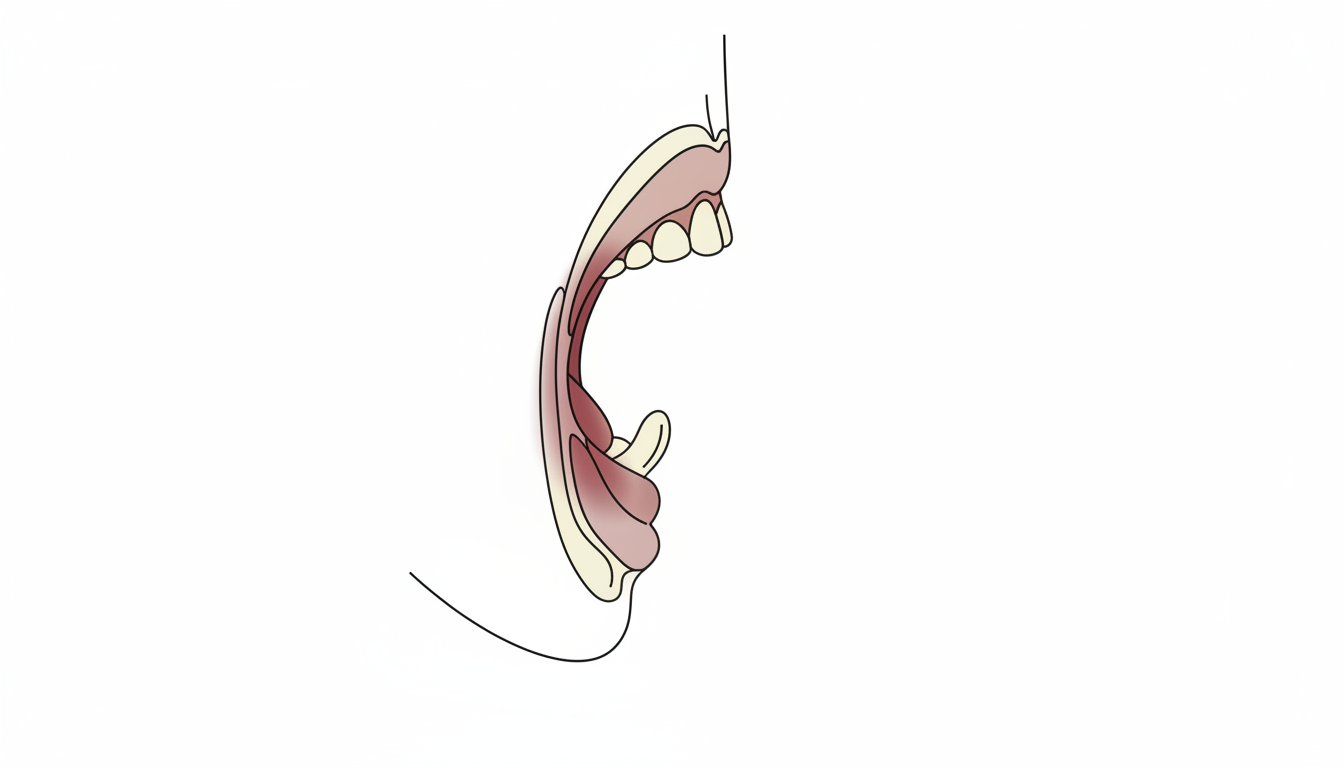
Throat gonorrhea most often goes unnoticed entirely. Surveillance summarized in the CDC's STI Treatment Guidelines states that the majority of pharyngeal gonococcal infections cause no symptoms at all. That has two consequences worth understanding before you decide whether to test.
First, a clear throat can still harbor active pharyngeal colonization. Plenty of people walk around with untreated infection for weeks while feeling fine. Second, when symptoms do occur, they are clinically indistinguishable from any other sore throat: scratchy throat, mild pain on swallowing, tender lymph nodes in the neck, sometimes a low fever. There is no pattern that lets a clinician say "that looks like gonorrhea, not strep" without a swab.
The table below summarizes how typical kissing or oral-contact activities map to current pharyngeal-gonorrhea risk thinking.
| Activity | Pharyngeal gonorrhea risk |
|---|---|
| Closed-mouth peck on the lips or cheek | Negligible. The bacterium needs sustained mucosal contact and a meaningful volume of saliva. |
| Open-mouth kiss without tongue contact | Low and largely theoretical. No epidemiological evidence of transmission at this depth. |
| Deep tongue (French) kissing | Possible. The 2019 Melbourne study linked four or more recent kissing-only partners to higher throat infection rates. |
| Performing oral sex on a male partner (fellatio) | Well-established route. Throat exposure to urethral fluid is the historic primary route. |
| Receiving oral sex from an infected partner | Well-established route to genital infection (not throat). |
| Sharing food, drinks, or utensils briefly | No documented transmission. The bacterium does not survive long outside mucosal tissue. |
How to test for oral gonorrhea (and why honesty matters here)
For a clinically reliable answer about throat infection, you need a pharyngeal swab. A clinician brushes the back of the throat with a sterile swab and sends the sample to a lab that runs nucleic acid amplification testing (NAAT). NAAT for pharyngeal gonorrhea is the gold standard and is what the CDC and the NHS use in clinical settings. Results typically take 1 to 3 days.
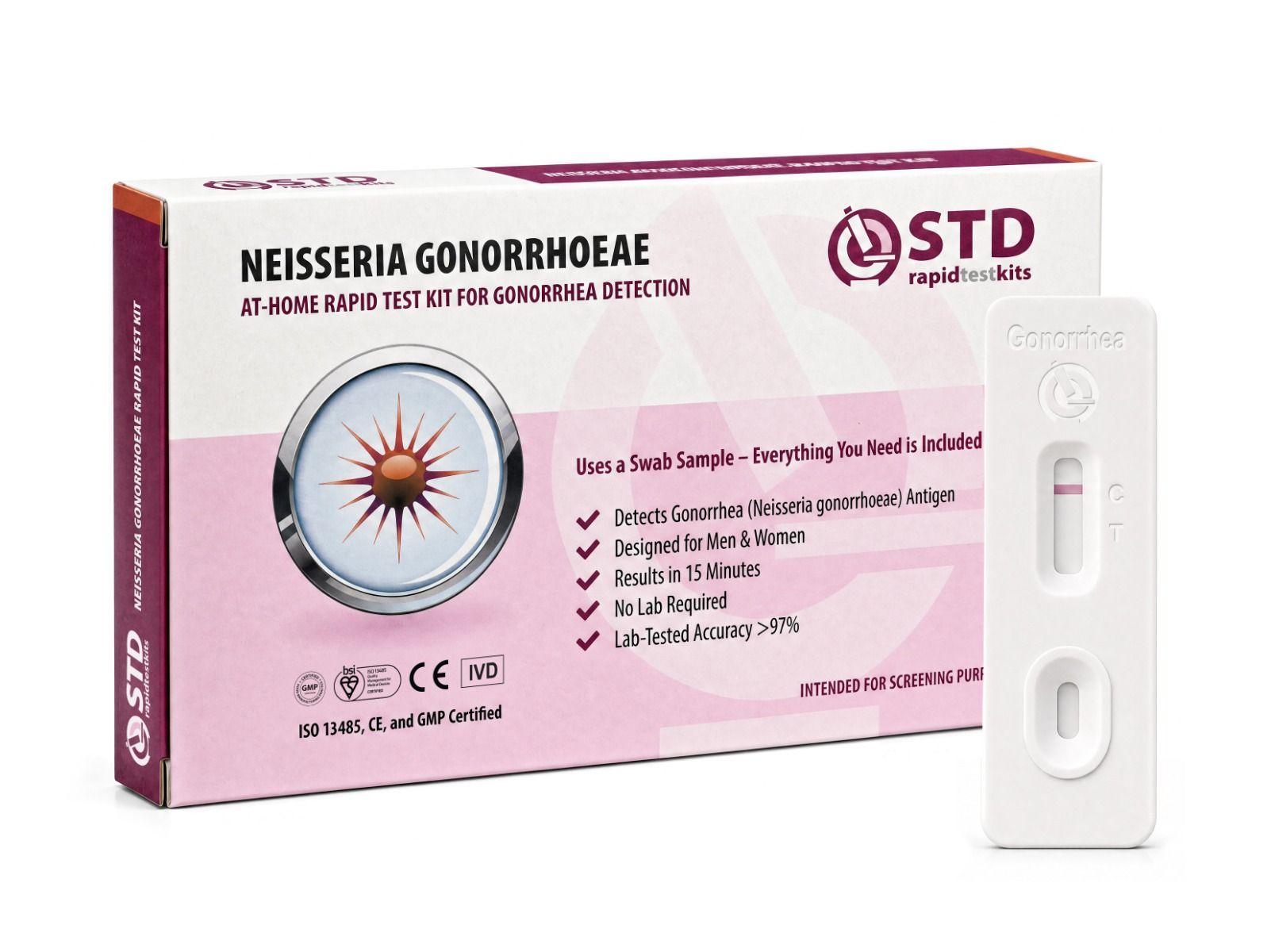
Home rapid tests have a different role. They are lateral-flow immunoassays that use a self-collected vaginal or penile swab to screen the genital site. They are useful for the most common gonorrhea exposure (genital contact during sex), and they return a result in about 15 minutes at home. They are not validated for throat samples and will not give a meaningful answer about pharyngeal infection. If your concern is specifically a throat exposure, see a clinic for a pharyngeal swab. If your concern includes any genital exposure during the same encounter, a home swab is a reasonable starting point for that site.
Either way, timing matters. The CDC suggests testing for gonorrhea about 7 to 14 days after exposure, since earlier tests can produce false negatives while bacterial loads are still ramping up. If your test is negative but symptoms develop later, retest.
Our at-home rapid gonorrhea test uses a self-collected vaginal or penile swab. It is the right tool for screening the genital site after vaginal, anal, or receiving-oral exposure. It is the wrong tool for confirming or ruling out a throat infection from kissing or performing oral sex. For pharyngeal testing specifically, a clinic-collected swab processed by NAAT is what the CDC recommends. (Disclosure: stdrapidtestkits.com sells at-home rapid STI kits, so this note appears here to flag our commercial context before the product below.)
Treatment in 2026: what changed and why
The article you may have read on this topic five years ago recommended dual therapy: a single ceftriaxone injection plus a single oral dose of azithromycin. That guidance is now outdated. In December 2020 the CDC published an update, finalized in the 2021 STI Treatment Guidelines for adults, that switched to monotherapy. The current recommended regimen for uncomplicated gonococcal infection of the cervix, urethra, rectum, or pharynx is a single intramuscular dose of ceftriaxone 500 mg (or 1 g if the patient weighs 150 kg or more). Azithromycin is no longer routinely co-administered, primarily because of rising azithromycin resistance in N. gonorrhoeae.
Pharyngeal infections are notably harder to clear than genital ones, partly because the throat is a more difficult anatomical environment for antibiotics to penetrate. The CDC therefore recommends a test of cure 7 to 14 days after treatment for pharyngeal cases, even when the patient feels fine, to confirm eradication. After treatment starts, abstain from kissing and any sexual activity for at least seven days, and ideally until the test of cure comes back negative, to avoid passing the infection to a new partner during the lingering shedding window.
One important note: ceftriaxone is the last broadly effective oral-and-injectable option for gonorrhea. Resistance to it has been documented in surveillance programs. The WHO considers gonorrhea one of the priority pathogens for new-antibiotic development.
Prevention strategies that actually move the needle
Public-health prevention research on pharyngeal gonorrhea has settled on a short list of practices that genuinely reduce risk. None of them are dramatic. The point is that small, consistent choices stack.
- Use barriers for oral sex. Condoms during fellatio and dental dams during cunnilingus or rimming meaningfully cut transmission to and from the throat. The CDC consistently lists barrier use as the single most effective behavioral measure for any STI.
- Test on a regular cadence if you are sexually active with new partners. Every 3 to 6 months is a common interval for higher-risk situations; once a year is the floor for almost any sexually active adult. Asymptomatic infections require routine testing to find.
- Limit overlapping concurrent partnerships. Network density drives STI spread more than absolute partner count. Two sequential monogamous partnerships within a year is a different risk profile from two simultaneous ones, even if the headcount is the same.
- Take recent kissing into account. If you have just changed dating contexts and the 2019 study findings worry you, ask new partners about their last STI test. It is a normal modern conversation.
The other two questions people ask, fairly: do mouthwash or PrEP-style oral antibiotics prevent gonorrhea? Mouthwash trials have produced mixed results so far. Doxycycline post-exposure prophylaxis (DoxyPEP) does reduce gonorrhea incidence in some populations and is being incorporated into selective public-health programs, but it is not yet a broad recommendation and carries antibiotic-resistance trade-offs. Talk to a clinician before relying on either.
Throat gonorrhea is usually invisible. Routine testing, barrier use during oral sex, and a willingness to ask new partners about recent results does more than worrying about kissing in isolation. If you have a specific recent throat exposure, book a clinic pharyngeal swab. If you have a genital exposure, a home swab is a sensible first step.
Talking to partners: the awkward but useful conversation
Disclosing a positive result, asking a new partner about their last test, or volunteering your own status before a date are all conversations most people would rather not have. They are also the single most underused prevention tool. Two conversational reframes make these talks easier.
First, the conversation does not have to be a confession. "I get tested every six months and I last had a negative panel in February. What about you?" reads as routine adult behavior, not as an accusation. Most people will mirror the framing, and the few who react badly to a basic health question have given you useful information.
Second, if you tested positive after only kissing or after a low-risk encounter, the partner notification still matters. The 2019 study findings mean a positive throat result you got via kissing is plausibly transmissible to your other recent kissing partners. The kindest move, even when it feels disproportionate, is a brief message letting them know they may want a clinic swab too. Treatment is short and effective, and an early conversation prevents a longer chain of transmission.
Many state and county public-health departments operate Disease Intervention Specialist programs that contact past partners on a patient's behalf, anonymously, after a confirmed STI diagnosis. Ask the clinician handling your treatment whether your local health department offers this service. Free anonymous partner-notification websites also exist; the clinic that runs your test can point you to the option used in your area.
Other STIs that deserve a thought after intense kissing
If you are reviewing your sexual-health picture after a recent encounter, gonorrhea is not the only thing on the list. A few others tied to oral or near-mouth contact:
HSV-1 and HSV-2. Both herpes types transmit through direct mucosal contact. HSV-1 around the mouth is extremely common; the WHO estimates roughly two-thirds of people under 50 worldwide carry HSV-1. Most carriers are asymptomatic most of the time but can shed virus during subclinical periods. HSV-2 transmits orally less often but can; cross-site transmission (HSV-1 to genitals, HSV-2 to mouth) is increasingly common.
Syphilis. The primary syphilis chancre can appear on the lips, in the mouth, or on the tonsils. It is painless and easily missed. Direct contact with that lesion during kissing transmits the infection. A blood test is the standard diagnostic; rapid antibody tests are useful screening tools after the window period of about 3 to 6 weeks.
Mononucleosis (EBV) and CMV. Not STIs in the classic sense but commonly transmitted through saliva. Worth knowing about for context but not for testing decisions in most situations.
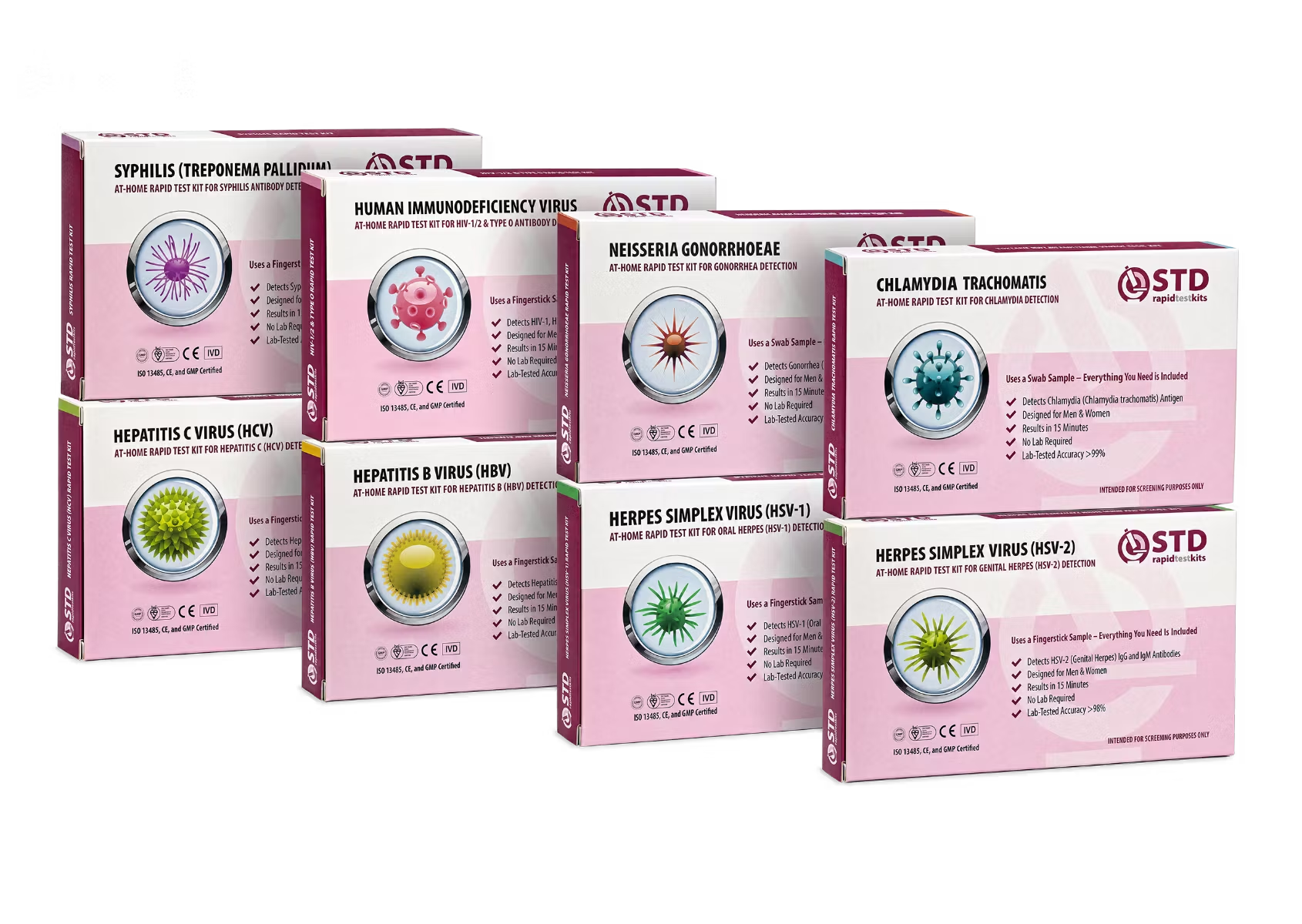
For someone with broader concern after a higher-risk encounter, a multi-infection panel (HIV, syphilis, hepatitis B, hepatitis C, plus genital chlamydia and gonorrhea) is more efficient than testing one infection at a time. The relevant timing windows differ across infections, so plan accordingly.
Most pharyngeal gonococcal infections are asymptomatic. Untreated infection may serve as a reservoir for transmission and contribute to the development of antimicrobial resistance.
What is on the research horizon
Two parallel research efforts are worth tracking. Mouthwash trials are the first thread worth watching. Several studies have tested whether routine antiseptic mouthwash use reduces pharyngeal gonorrhea incidence; results so far are inconsistent, and large randomized trials have not produced a clean signal for or against. If a future trial does show a real preventive effect, that would shift the conversation about kissing risk substantially. Until then, mouthwash sits well below condoms and routine testing in the prevention hierarchy.
A gonorrhea-specific vaccine is the longer-horizon effort. Researchers have observed that the meningococcal B (MenB) vaccine, originally developed for a different bacterium, appears to provide partial cross-protection against gonorrhea. Several countries, including parts of the UK, are now offering MenB vaccination to higher-risk groups specifically to reduce gonorrhea incidence. A purpose-built gonorrhea vaccine is in earlier-stage trials. The NIAID tracks this active research area and updates the timeline as trials report.
None of this changes what to do this week: keep using barriers during oral sex, test on a regular cadence, and have direct conversations with partners about recent results.
The meningococcal B (Bexsero) vaccine, developed for an unrelated bacterium, has shown partial cross-protection against gonorrhea in observational research. Selected UK regions began offering it to higher-risk groups in 2024 specifically for this benefit. Trials of a purpose-built gonorrhea vaccine remain in earlier stages.
Frequently asked questions
- Can I really get gonorrhea from kissing alone?
- Possibly. The 2019 Melbourne study found that men with four or more recent kissing-only partners had higher rates of pharyngeal gonorrhea, even after adjusting for oral and anal sex. The study shows association rather than proof of cause, but the route is now considered biologically plausible. Risk is much lower than after unprotected sex but no longer zero.
- How long after kissing would symptoms show up?
- Most people get no symptoms at all. When symptoms do occur, they typically appear 2 to 14 days after exposure and look like an ordinary sore throat. The CDC recommends testing 7 to 14 days after a known exposure, since earlier tests can produce false negatives.
- What does pharyngeal gonorrhea actually feel like?
- Often nothing. When symptoms appear, they include a scratchy or sore throat, mild pain on swallowing, tender lymph nodes in the neck, and sometimes a low fever. The pattern is clinically indistinguishable from strep or a viral pharyngitis without a swab.
- Will an at-home gonorrhea kit detect a throat infection?
- No. Our at-home rapid gonorrhea test is a self-collected vaginal or penile swab and is validated only for the genital site. For a pharyngeal (throat) result, you need a clinic-collected throat swab processed by laboratory NAAT.
- How is throat gonorrhea treated in 2026?
- Treatment guidance changed at the end of 2020. Current CDC practice is a single intramuscular ceftriaxone injection (500 mg, or 1 g for patients 150 kg or above), replacing the older ceftriaxone-plus-azithromycin combination. For pharyngeal cases, a follow-up swab 7 to 14 days later confirms clearance, since the throat clears more slowly than the genital tract.
- Should I tell my partner if I tested positive after only kissing?
- Partner notification is the right move even after low-risk contact like kissing. The 2019 data suggests that a kissing-acquired pharyngeal infection can plausibly transmit onward to other kissing partners. A short message giving recent partners a heads-up to test is the kindest option, and many public-health departments offer anonymous partner-notification services if direct contact feels too awkward.
- Does mouthwash kill gonorrhea bacteria?
- The research is mixed. Some early trials suggested antiseptic mouthwash might reduce viable bacteria in the throat, but larger randomized trials have not produced a consistent preventive signal, and trials are ongoing. Barrier use and routine testing remain the reliable approaches.
- Can I get oral gonorrhea more than once?
- Past infection does not produce durable immunity, which is part of why a successful vaccine has been so hard to develop. Re-infection is possible after each new exposure, including from a partner who was treated but not retested for cure.
This article is published by stdrapidtestkits.com, which sells at-home STI testing kits. We recommend products based on fit-for-purpose for the reader's concern, not on commercial benefit. When the right test for your situation is one we do not sell (such as a pharyngeal swab), we say so directly.
- U.S. Centers for Disease Control and Prevention. About Gonorrhea: transmission, symptoms, and prevention overview.
- U.S. Centers for Disease Control and Prevention. STI Treatment Guidelines, 2021: gonococcal infection in adolescents and adults, including the ceftriaxone 500 mg IM monotherapy regimen and pharyngeal test-of-cure guidance.
- World Health Organization. Sexually transmitted infections fact sheet: global epidemiology of gonorrhea and antimicrobial-resistance concerns.
- U.K. National Health Service. Gonorrhoea: clinical overview, testing options, and patient guidance.
- Mayo Clinic. Gonorrhea: symptoms, causes, and clinical context.
- U.S. National Institute of Allergy and Infectious Diseases. Gonorrhea: research priorities, vaccine development, and antibiotic-resistance tracking.
- U.S. Centers for Disease Control and Prevention. How HIV is transmitted: explicit clarification that closed-mouth kissing and saliva alone do not transmit HIV, and that deep open-mouth kissing is an extremely rare route.