
Published: July 2025 | Last updated: May 2026 | Editorial review and quality control: Martina N.
Getting an STI more than once does not mean you were careless. It means you are sexually active, and the bacteria you treated last time can come back if a partner was not treated, if a new partner brought it in, or if your retest window was too short. None of that makes you dirty. It makes you part of a public-health pattern that simply does not get explained enough.
This article walks through what reinfection actually looks like, what the numbers say, what the U.S. Centers for Disease Control and Prevention (CDC) recommends for retesting after chlamydia and gonorrhea, and how to have the testing conversation without the word "clean." If you tested positive again, you are exactly the reader this was written for.
We do not provide diagnosis on this page. We summarize current CDC, World Health Organization, and peer-reviewed guidance into plain language so you can act on it. For anything new or worsening, see a licensed clinician.
Key Takeaways
- Repeat positivity after chlamydia or gonorrhea treatment is common, and the CDC says most repeat positives come from a partner who was not treated, not from antibiotic failure.
- The CDC recommends a single retest about three months after any chlamydia or gonorrhea diagnosis, regardless of symptoms, to catch repeat infections early.
Reinfection Is Common, Not a Personal Failing
The first thing to know about a second or third positive test is that you are far from alone. Chlamydia and gonorrhea, the two most commonly retested bacterial STIs, do not leave you with immunity after treatment. The antibiotics clear the bacteria you have right now. They do not protect you from picking up the same infection tomorrow if a current or former partner still carries it, or if a new partner has an untreated case.
That is the part most clinics do not have time to explain in the five minutes between the prescription and the door. Treatment is the start of the recovery, not the end of the risk. CDC surveillance data show that repeat positivity in the months following an initial chlamydia or gonorrhea diagnosis is one of the most consistent patterns in U.S. STI epidemiology (CDC STI Surveillance, 2024 provisional).
So if you are sitting with a second positive result and the word "again" feels heavier than the diagnosis, take a breath. The result tells you something about a single bacterial encounter. It tells you nothing about your character, your hygiene, your worth as a partner, or whether you "should have known better." A second test is a public-health event, not a verdict on you.
Reinfection clusters where partner notification and partner treatment break down. If a clinic gave you antibiotics but did not also offer your partner expedited treatment, the math is against you from day one. If you went back to the same partner before the seven days the CDC says to wait after starting antibiotics, the math is against you again. Those are timing and partner-treatment gaps in how care is delivered, and they account for far more repeat positives than anything a patient did or did not do.
More than 1.5 million chlamydia cases and over half a million gonorrhea cases are reported in the U.S. each year, per CDC 2024 provisional surveillance. Repeat positivity after treatment is a documented, expected pattern in this dataset rather than a fringe outcome. Source: <a href="https://www.cdc.gov/sti-statistics/annual/index.html" target="_blank" rel="noopener">CDC STI Surveillance, 2024 provisional</a>.
What the Numbers Actually Say About Repeat Chlamydia and Gonorrhea
Looking at the data flips the "you again?" feeling into something more like "yes, of course, this is what reinfection rates predict."
For chlamydia, CDC's most recent provisional surveillance counts more than 1.5 million reported cases per year in the United States (CDC STI Surveillance, 2024 provisional). Most chlamydia infections cause no symptoms, particularly in women, which is one reason so many cases go undiagnosed and untreated (CDC: About Chlamydia). A partner can carry, treat, and re-acquire chlamydia without ever feeling the kind of warning sign that would prompt a test.
For repeat infection specifically, the CDC's chlamydia treatment guideline summarizes the pattern this way: most post-treatment positives come from partners who never received treatment or from new partners, while antibiotic failure for chlamydia is uncommon. Repeat positivity in the following months is well documented, with rates varying by age group and partner-notification practice (CDC chlamydia treatment guidelines).
Gonorrhea looks similar. Provisional CDC data put U.S. cases above half a million per year, and retests at three months show repeat-positive patterns in the same general range as chlamydia (CDC STI Surveillance, 2024 provisional). Antibiotic-resistant strains add another layer: gonorrhea is on the WHO's priority list for antimicrobial resistance monitoring, which is part of why a retest is now standard practice rather than optional follow-up (WHO STI fact sheet).
The pattern that emerges from these figures is a screening-and-partner-treatment problem, sitting on top of a large baseline of asymptomatic carriage that escapes routine notice.
From the CDC's chlamydia treatment guideline: a high prevalence of repeat infection has been observed among people who were treated for chlamydia during the preceding months, and most of those repeat positives come from partners who did not receive treatment or from new partners rather than from the antibiotic failing. That is why the CDC recommends one retest at about three months after any chlamydia or gonorrhea diagnosis.
Why Treatment Does Not Build Immunity
Many readers reasonably assume that finishing a course of doxycycline, or getting a one-shot ceftriaxone injection for gonorrhea, means the infection is "done" in the same way a flu is done after the fever lifts. Bacterial STIs do not work that way.
Antibiotics clear the specific bacteria currently in your body. They do not teach your immune system to recognize the same bacteria next time. For chlamydia and gonorrhea, there is no durable acquired immunity in the way there is for measles or chickenpox. A new exposure means a new infection. A second exposure during the same year means a second infection, regardless of how thoroughly you completed your first course.
A treatment-timing problem also creates "looks like reinfection but is really persistence" cases. If sex resumes too soon after antibiotics, the medication has not fully cleared the partner pair, and a small bacterial load can rebound. CDC guidance is to wait seven days after starting a single-dose treatment, or until the full course is finished, before any sexual contact, and for both partners to be treated before resuming. If either side of that window is shortened, what shows up at the three-month retest can be hard to label clean reinfection or treatment failure. The practical consequence is the same either way: you test, you treat again, both partners complete the seven-day wait, and you retest.

The Shame Vocabulary, and Why It Hurts Public Health
"Are you clean?" is the most common screening question in U.S. dating apps, and the phrase clinicians most wish would disappear from the language. Skin is clean or dirty. Hands are clean or dirty. A chlamydia test result is positive or negative, and a person carrying chlamydia is a person, not a contamination.
Public health research identifies stigma-loaded language as a documented barrier to STI care-seeking, alongside cost and access. People delay testing, decline partner notification, and avoid retesting after treatment when the result feels like a moral verdict rather than a medical event.
When a positive result reads as a moral status rather than a medical event, three things happen at once. The person who tested positive is less likely to tell partners. Their partners are less likely to come in for testing. Asymptomatic carriers continue moving through dating pools untreated. The shame loop is part of why repeat-infection rates do not fall faster, even though the antibiotics work and the tests are widely available.
Replacing "clean" with "tested recently" or "tested negative for X" is a small editorial change with a measurable downstream effect. It moves the conversation from worth to medical status, which is the only level on which a person can give a meaningful answer. "I tested negative for chlamydia and gonorrhea about three weeks ago, no new partners since" is honest, specific, and partner-respectful. "I'm clean" is none of those things.
For anyone reading this after a repeat positive, that vocabulary shift is also internal work. The way you talk to yourself about your test result shapes whether you treat the next retest as routine care or as confession.
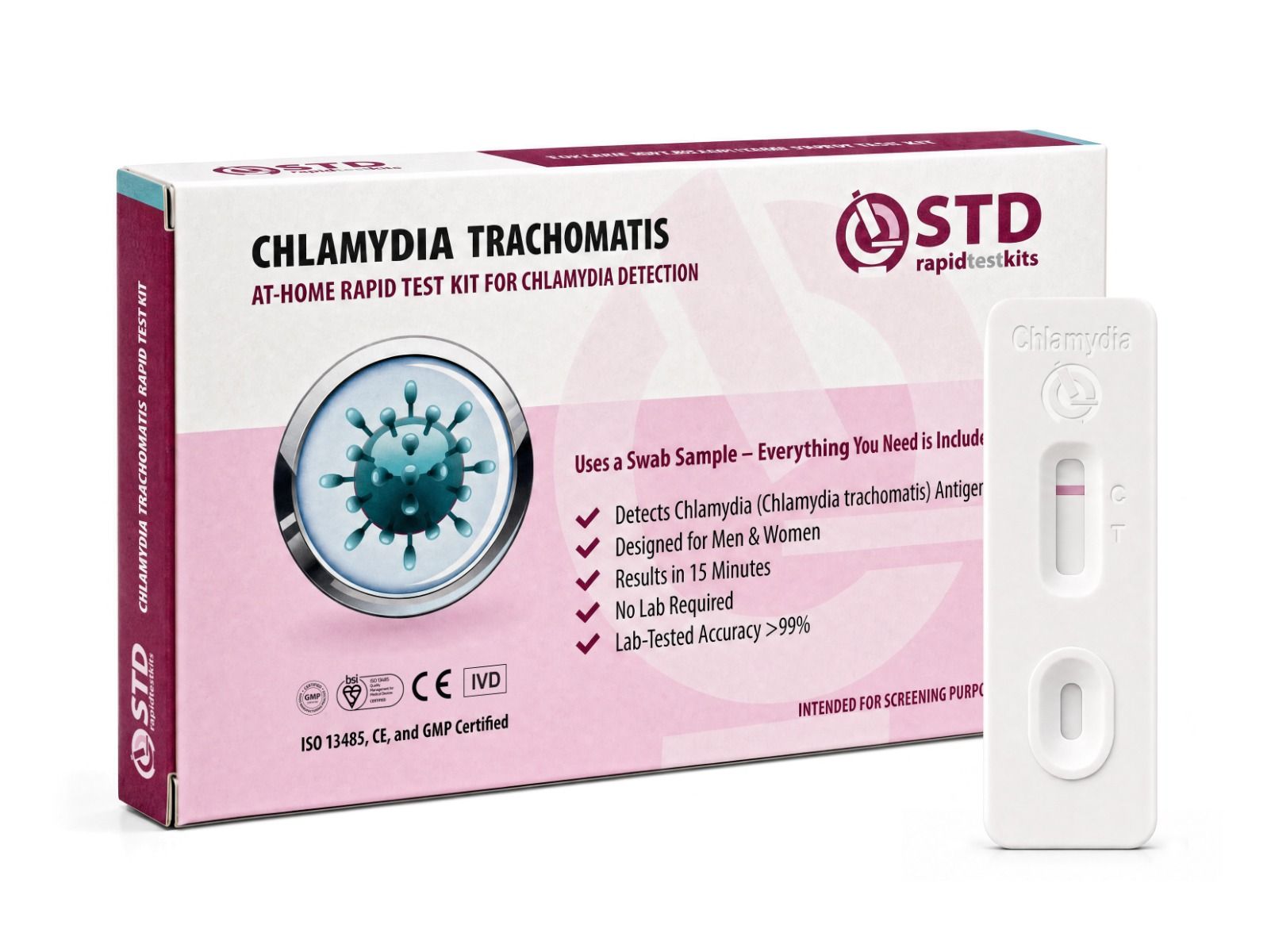
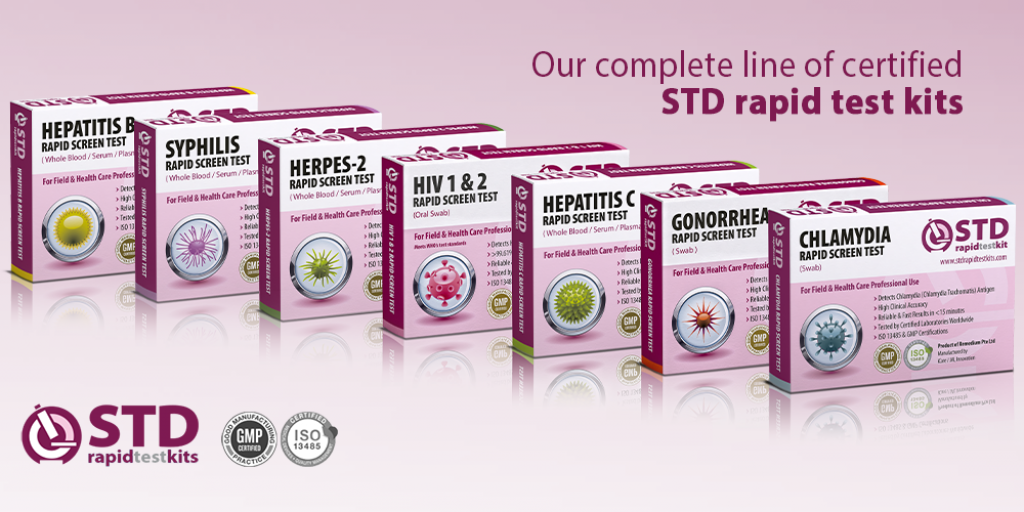
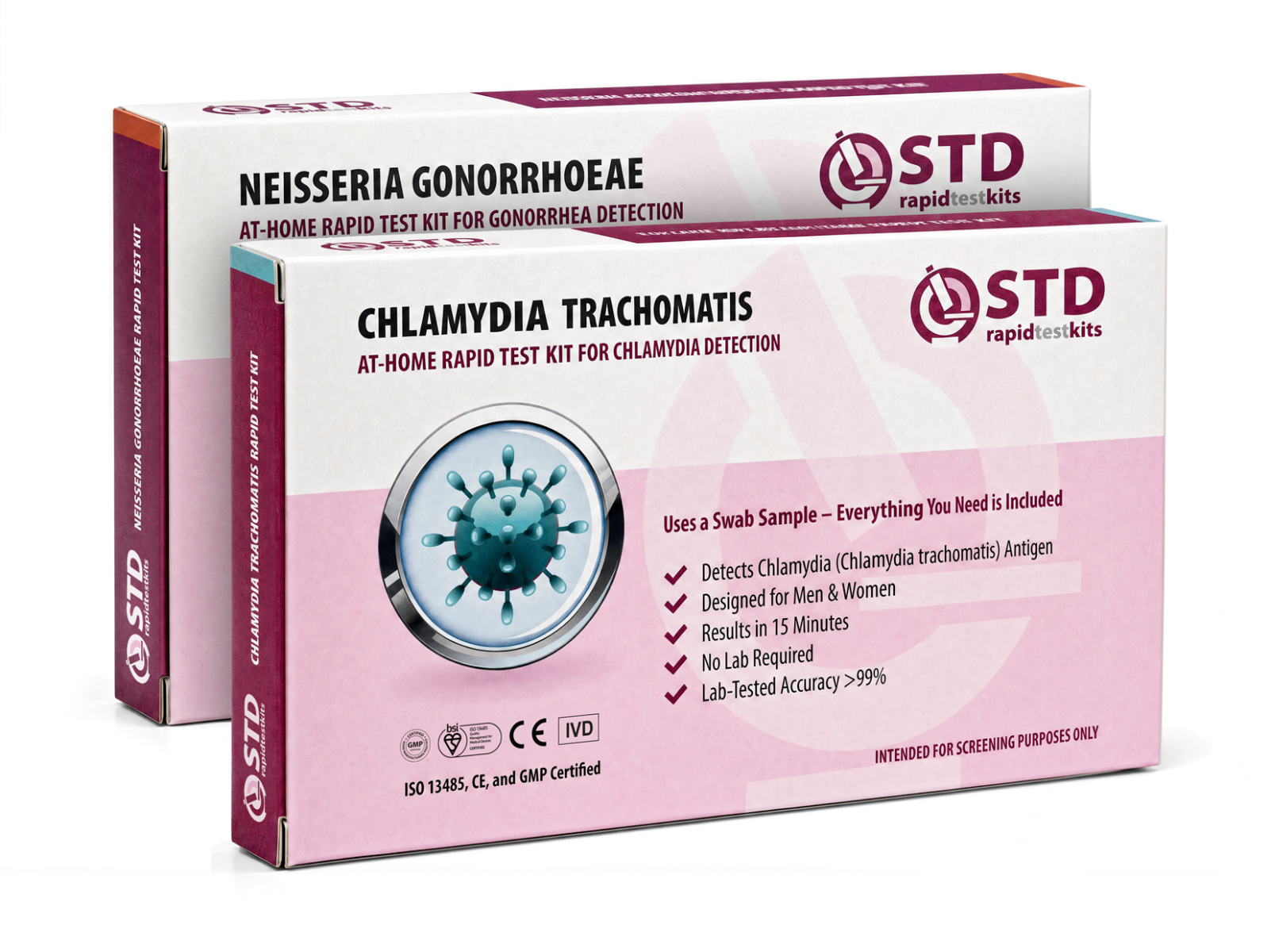
stdrapidtestkits.com sells at-home rapid STI test kits. The kits mentioned in this article are products available through this site; we recommend tests based on fit for the reader's concern, not on commercial benefit.
How Reinfection Usually Happens in Real Life
Three patterns account for most repeat-positive results that clinicians see. Each one is mechanical, none are moral.
Pattern one: the partner who was never treated. A common scenario looks like this. Someone tests positive for chlamydia, finishes their antibiotics, and tells their partner. The partner means to get tested, never does, either because they have no symptoms and feel fine, or because the visit feels embarrassing, or because their clinic is far. Three months later, the original patient retests as part of routine follow-up and finds the infection has rebounded from the untreated partner. This is the single most common reinfection pathway in U.S. surveillance data. Expedited partner therapy (EPT), where the original patient is given a prescription or an antibiotic packet for their partner to take home, was developed specifically to interrupt this pattern.
Pattern two: protection that worked at the wrong site. Condoms reduce the risk of urethral and vaginal transmission of gonorrhea and chlamydia considerably, and they do not eliminate pharyngeal transmission during oral sex. Pharyngeal gonorrhea, a throat infection, is often asymptomatic and is increasingly common in clinic data. A consistent condom user can still acquire pharyngeal gonorrhea from a partner with an untreated throat infection and never know they have it until a routine retest. Condoms are site-specific, and oral sex is a transmission route they do not cover.
Pattern three: an asymptomatic new partner. Most chlamydia infections in women, and many in men, show no symptoms at all. A new partner can be carrying chlamydia, feel completely well, and pass it on. The first sign is a positive retest from the receiving partner, often weeks or months after the encounter. Nothing in the encounter itself flags this risk in the moment.
When to Retest After a Positive Result
The CDC retest recommendation after a chlamydia or gonorrhea diagnosis is short and specific: retest at approximately three months after treatment, regardless of whether you have symptoms (CDC chlamydia treatment guidelines). Three months is not arbitrary. It balances two pressures. Too soon, and lingering DNA from cleared bacteria can produce a false positive on a NAAT test. Too late, and an asymptomatic reinfection has had months to circulate before anyone catches it.
This three-month window applies whether you stayed with the same partner who was also treated, started seeing someone new, or have not had sex at all in the interim. The retest is a check on the bacterial state of your body, not a check on your behavior.
For people who are pregnant, the recommendation is more frequent and is layered with a test-of-cure at three to four weeks after treatment to confirm the antibiotic worked, because untreated chlamydia in pregnancy can transmit to a newborn at delivery (NHS chlamydia overview).
A few practical points that get lost in the standard summary:
- The three-month retest covers chlamydia and gonorrhea specifically. If your original positive was for a different infection (syphilis, HIV, herpes), the timing is different and is set by the natural history of that infection.
- If you develop new symptoms before the three-month mark, retest then. The standard window is for asymptomatic monitoring, not symptomatic care.
- If a new partner discloses a positive at any point, retest as soon as the window for that infection allows. Do not wait for your scheduled three-month visit.
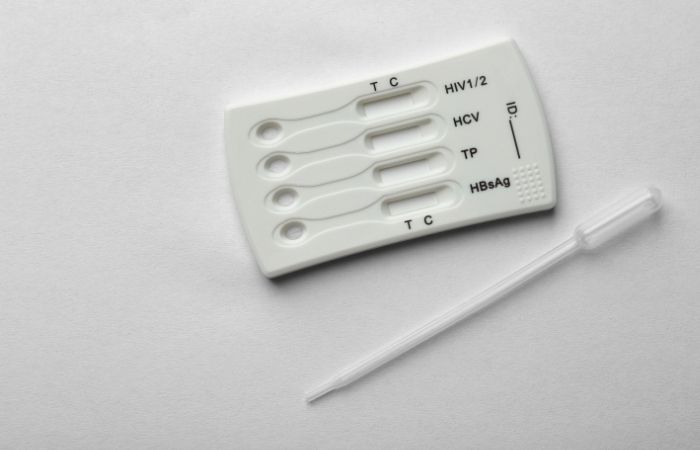
- At-home rapid tests using the same swab sample type as in-clinic NAATs can keep up with the three-month rhythm without a clinic appointment each time. They are screening tools, and a positive home result should be confirmed at a clinic before treatment.
A three-month retest catches the small percentage of cases where the antibiotic did not fully clear, plus the much larger percentage of cases where a partner reintroduced the infection.
How to Talk About Testing With a Partner
The hardest part of repeat testing for many readers is not the swab. It is the conversation.
A useful shift is from status questions to timing questions. Instead of asking a new partner "are you clean," ask "when were you last tested, and for what?" The first question has a moral answer. The second has a calendar answer. "I had a full panel four months ago, all negative, and I have had one new partner since" is the kind of detail that lets you make an informed decision. "I'm clean" gives you nothing.
Leading with your own recent test rather than asking for theirs lowers the friction further. "I tested for chlamydia and gonorrhea about six weeks ago and the results were negative; I'm planning a retest in early summer. Want to do one together?" is dramatically lower-friction than asking a partner to volunteer their status first. It frames testing as a shared baseline rather than as an interrogation.
If you are disclosing a past positive, keep it simple and specific. "I tested positive for chlamydia last fall, completed treatment, retested negative, and I retest every few months as a routine. I'm telling you because I want us to be on the same page." There is no obligation in any U.S. state to disclose a treated, cleared bacterial STI from your past history, and many readers find that the disclosure changes the relational tone for the better anyway.
If a partner reacts to a testing question with hostility, that reaction is information about the partner, not about the question. A partner who treats the testing conversation as an interrogation rather than a shared baseline has given you useful information about how they approach shared health decisions.
You Are Not Your Test Result
If you have walked out of a clinic with a second positive result and felt the air go out of the room, that feeling is normal and it is not a verdict. A repeat positive means a treatable bacterial infection is present in your body for a second time. The lab report has no column for dirty, broken, irresponsible, or unlovable.
What the second result does mean is that the system around you, the partner-notification step, the retest cadence, the sex-education curriculum that was probably silent on reinfection, did not catch the gap in time. You are not the gap. You are the person doing the catching by being in the clinic, or in front of a home test kit, at all.
People who do best after a repeat infection share one habit: they keep coming back to test. They treat retesting as routine, not as confession. They build the three-month follow-up into their calendar the way other people build in dental cleanings. Over a few cycles, the testing rhythm replaces the testing dread, and a positive result starts to read as a piece of information rather than as a personal indictment.
One last reminder, because it is the part readers most often need to hear twice. A history of treated STIs has no bearing on your fertility, your future relationships, or your worth, provided the infections were treated. The complications that public-health campaigns warn about, pelvic inflammatory disease, infertility, chronic pelvic pain, come from untreated or repeatedly missed infections.
Because repeat infection is common, CDC recommends retesting at approximately three months after treatment for chlamydia or gonorrhea, regardless of whether sex partners were treated.
FAQs
- How soon after treatment should I retest for chlamydia or gonorrhea?
- Three months is the CDC's standard retest window: long enough to avoid false positives from residual bacterial DNA, short enough to catch the most common reinfection timing. If symptoms appear sooner, test then rather than waiting for the three-month mark.
- Does a repeat positive mean the antibiotics did not work?
- Usually no. Most repeat positives come from reinfection: an untreated partner, a new partner, or a partner whose infection was at a site condoms did not cover. Antibiotic failure is uncommon for chlamydia. For gonorrhea, resistance is monitored, and reinfection still accounts for the majority of repeat-positive cases.
- Can I get the same STI again from the same partner?
- Yes. If your partner was not treated, or if either of you resumed sex before completing the seven-day post-treatment wait, the bacteria can rebound between you. Both partners need to be treated, and both need to complete the wait before resuming sex.
- Are home rapid STI tests reliable for retesting?
- When purchased from certified providers, at-home rapid tests use the same swab sample type as in-clinic NAATs. They are screening tools rather than confirmatory diagnostics. A positive home result should be confirmed at a clinic before treatment, and a negative result during a window period may need a follow-up test.
- Does repeated chlamydia affect fertility?
- Only when chlamydia is untreated or repeatedly missed. Treated infections do not damage fertility. The fertility risk comes from undiagnosed pelvic inflammatory disease, which is itself a complication of untreated chlamydia in people with uteruses. Retesting on the CDC schedule is how that complication is prevented.
- What if I have a new positive but no new partners since treatment?
- Most likely your original partner was not treated, or one of you resumed sex inside the seven-day wait window. Less commonly, the original treatment did not fully clear; in that case the retest catches it and a second course is given. Either pathway is treatable.
- Why does my partner need treatment if they have no symptoms?
- Because most chlamydia infections, and many gonorrhea infections, cause no symptoms. A partner can carry an active infection, feel completely well, and reintroduce it the next time you have sex. Treating both partners is the standard CDC approach.
- Can I have a normal sex life with a history of STIs?
- Yes. A history of treated bacterial STIs has no bearing on future relationships or sexual function. Regular testing, partner communication, and adherence to retest windows turn a past positive into a managed medical history, not a permanent label.
- U.S. Centers for Disease Control and Prevention. About Chlamydia: signs, symptoms, transmission, and partner treatment.
- U.S. Centers for Disease Control and Prevention. STI Treatment Guidelines: Chlamydia, including the three-month retest recommendation and seven-day post-treatment wait.
- U.S. Centers for Disease Control and Prevention. About Gonorrhea: transmission, pharyngeal infection, and partner-treatment guidance.
- U.S. Centers for Disease Control and Prevention. STI Surveillance, 2024 (Provisional). National annual case counts for chlamydia and gonorrhea.
- U.S. Centers for Disease Control and Prevention. Retesting After Treatment to Detect Repeat Infections.
- World Health Organization. Sexually transmitted infections fact sheet: global burden, asymptomatic carriage, and antimicrobial resistance monitoring.
- U.K. National Health Service. Chlamydia overview: testing, treatment, retesting, and pregnancy-specific guidance.
