Published: October 2025 | Last updated: May 2026 | Editorial review and quality control: Martina N.
Perimenopause and sexually transmitted infections share an awkward amount of symptom overlap. Burning, itching, dryness, an unusual smell, discomfort during sex: any of these can come from falling estrogen, from an infection, or from both happening at once. The body rarely tells you which one is in charge.
That uncertainty drives a lot of late-night searching, especially in the early 40s when periods still show up but estrogen has already started to wobble. Testing settles the question in a day. Guessing almost never does, because the symptoms cluster too closely to read from the outside.
Key Takeaways
- Falling estrogen during perimenopause thins vaginal tissue and changes the acid balance of the vagina, which mimics the irritation, burning, and discharge changes people associate with sexually transmitted infections.
- When symptoms appear suddenly, change in character, or follow a new sexual partner, an at-home or clinic STI test is the only reliable way to rule infection in or out.
Why hormonal changes can feel like an infection
Perimenopause often starts quietly in the early to mid-40s, sometimes sooner. Estrogen levels begin fluctuating years before the final period, and those swings affect more than mood, sleep, or cycle length. They also reshape the vaginal environment in ways most people are never warned about.
Lower estrogen reduces blood flow and natural moisture in vaginal tissue. The lining gets thinner, less elastic, and more easily irritated. The same hormonal shift can also produce soreness, itching, and a higher chance of urinary symptoms (NHS guidance on vaginal dryness). Clinicians often group these changes under the term genitourinary syndrome of menopause (GSM).
The result is a body that suddenly reacts differently to ordinary things. Sex can feel rougher than it used to. Toilet paper can irritate skin that never reacted before. Tight clothing or a long workout might trigger itching that wasn't there last year. Most of those sensations are also classic descriptions of an early STI, which is why clinicians regularly see patients convinced they have an infection when hormones are doing most of the work.
The reverse happens just as often. Someone assumes their discomfort is just "the change" and skips testing for months, then later discovers an untreated infection that has had time to settle in.
Genitourinary syndrome of menopause is a clinical umbrella term for the symptom cluster low estrogen produces in vaginal and urinary tissues:
- Dryness and reduced natural lubrication
- Burning, itching, or rawness
- Discomfort or pain during sex
- More frequent urinary symptoms, including recurring UTIs
The symptoms that overlap the most
Most people searching at midnight want one thing: a way to tell what's normal from what isn't. The body doesn't usually offer clean categories. The same symptom can have a hormonal cause, an infectious cause, or sometimes both at once.
This overlap is exactly why many clinicians suggest an STI test whenever new symptoms appear alongside a new partner. Hormones can absolutely cause real discomfort, but ruling infection out removes the most stressful unknown. The table below shows where the confusion lives.
| Symptom | Possible hormonal cause | Possible STI cause |
|---|---|---|
| Vaginal itching | Thinning tissue, pH shift, skin sensitivity | Trichomoniasis, herpes outbreaks |
| Burning sensation | Friction on drier, more fragile tissue | Chlamydia, gonorrhea, herpes irritation |
| Pain during sex | Reduced lubrication and elasticity | Inflammation from active infection |
| Unusual discharge | Hormone-driven changes in normal flora | Trichomoniasis, gonorrhea, bacterial vaginosis |
| Genital irritation or rawness | Hormone-related skin sensitivity | Herpes outbreaks, contact reactions |
| Burning when urinating | Tissue thinning near the urethra | Chlamydia, gonorrhea, herpes, UTI |
Why STI rates are quietly rising after 40
There's a widespread assumption that sexually transmitted infections are mainly a concern for people in their teens and twenties. Younger adults do still represent the largest share of cases, but infections among adults over 40 have been climbing steadily for years, both in the US and abroad (CDC STI overview).
A few things have pushed those numbers up. Dating later in life has become more common after divorce, widowhood, or long relationships ending. People often re-enter the dating world without the same risk awareness they had decades earlier, and without the same automatic conversations about testing and protection.
The quiet contributor most people don't think about is the disappearance of pregnancy risk. Once contraception is no longer about preventing pregnancy, condom use frequently drops. That one shift alone increases vulnerability to chlamydia, gonorrhea, trichomoniasis, and other infections that pass through unprotected contact.
Healthcare conversations sometimes thin out too. If a primary care provider stops asking about sexual activity as patients age, opportunities for routine testing and education shrink at the exact moment they would help. Put all those factors together and you get a group of women experiencing very real symptoms, dryness, burning, itching, without always knowing which culprit is responsible for which sensation.
Two situations almost always warrant a test, regardless of age: a new sexual partner in the last few weeks, or any symptom that appeared abruptly or changed character. Hormonal symptoms tend to drift in over months; infections more often arrive in days.
Clues the body sometimes gives
Symptoms alone can't deliver a verdict, but certain patterns hint at whether hormones or infection is more likely involved.
Perimenopause-related irritation tends to develop gradually. Someone might notice dryness building over several months, or discomfort during sex that becomes more noticeable as estrogen swings get sharper. The pattern is slow and creeping.
STI symptoms, when they appear at all, more often show up within days or weeks of an exposure. They can include unusual discharge, pelvic pain, sores, painful urination, or flu-like symptoms depending on the infection. The pattern is sudden, and it often clusters with one or two other clues rather than arriving in isolation.
The table below shows how those timing and quality differences can break down in practice.
| Feature | Hormonal changes | Possible STI |
|---|---|---|
| Onset | Gradual over months | Often days to weeks after exposure |
| Dryness | Very common, often the lead symptom | Less typical, irritation more common |
| Sores or lesions | Uncommon | Possible with herpes or syphilis |
| Discharge changes | Subtle shifts in color or volume | More noticeable color, smell, or texture |
| Partner exposure | Not relevant | Often linked to a recent new partner |
| Pattern of symptoms | Slowly worsening, cycle-linked | Sudden, persistent, or recurring in waves |

When vaginal dryness is the real culprit
Of all the symptoms people mistake for an infection, dryness is the most common. Estrogen does a lot of quiet work maintaining the thickness, elasticity, and natural lubrication of vaginal tissue. When levels start fluctuating during perimenopause, the local environment shifts in subtle but noticeable ways.
The tissue lining gets thinner and more fragile. Natural lubrication drops, sometimes dramatically. Even mild friction can suddenly produce a burning or itching sensation that wasn't there a year ago. Sex can start to feel uncomfortable in ways it never did before, and not because of anything either partner is doing differently. The tissue is simply responding less generously than it used to.
Some women describe the change as rawness or hypersensitivity rather than classic dryness. That sensation can trigger a real spiral of worry, especially after a new sexual partner. But hormone-driven dryness doesn't mean intimacy is over. It usually means the body is asking for some support that wasn't necessary before.
Vaginal moisturizers, lubricants, and (in some cases) localized low-dose estrogen therapy can dramatically improve symptoms within weeks. Many clinicians still recommend an STI test if symptoms appeared suddenly or after a new partner, even when dryness is the lead complaint, since the two pictures genuinely overlap in early presentation.
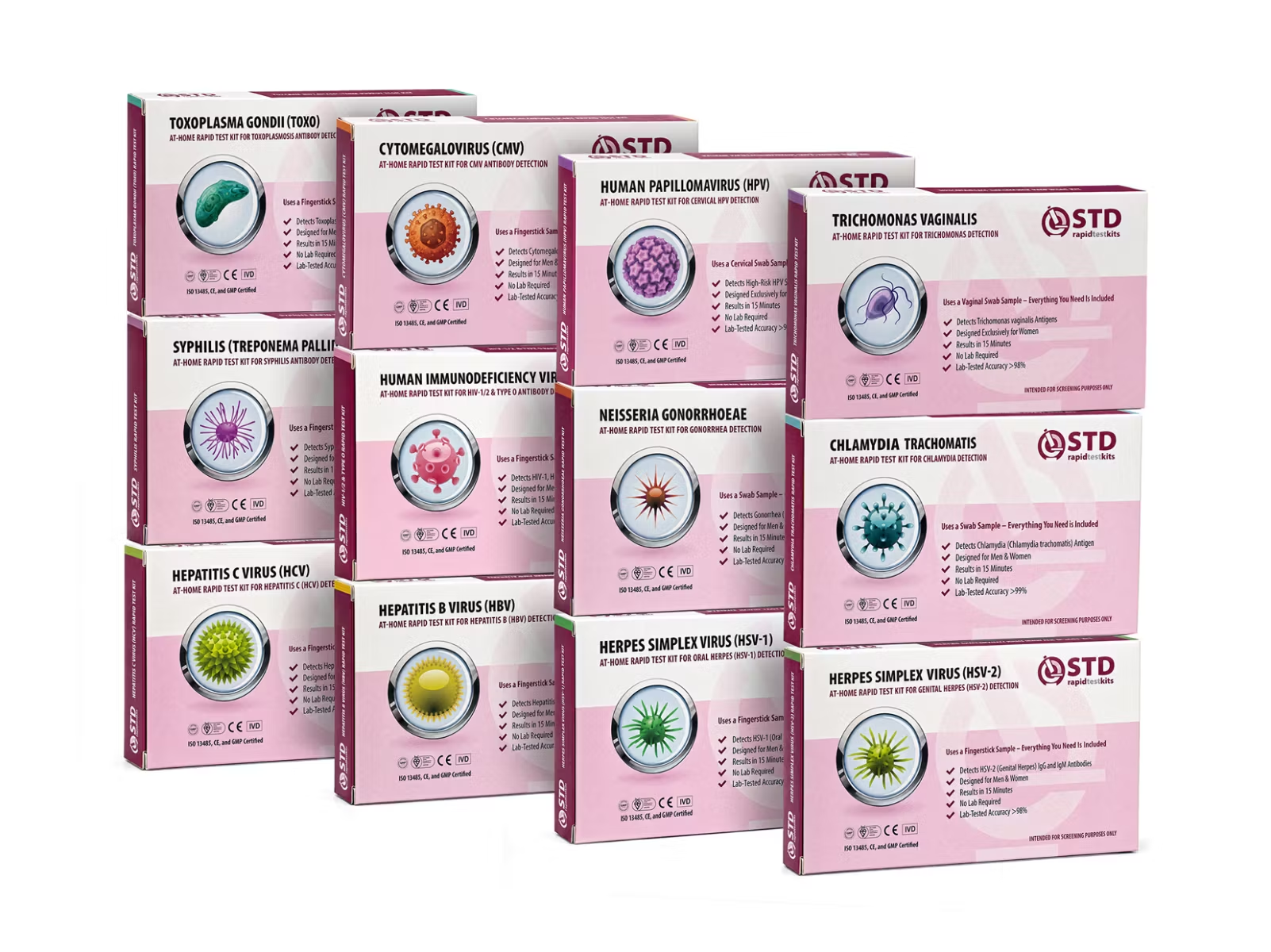
Disclosure: stdrapidtestkits.com sells at-home rapid STI kits, including the panel below. It's one screening option among other testing routes, including clinic visits and lab-processed panels.
Hormones, pH, and the vaginal microbiome
Another reason perimenopause can imitate an infection comes down to the microscopic ecosystem living in the vagina. A healthy vaginal environment is slightly acidic, which keeps protective bacteria in balance and discourages overgrowth of less helpful microbes.
Estrogen helps maintain that acid balance. When estrogen drops, the equilibrium shifts. The Cleveland Clinic notes that lower estrogen "lowers the amount of normal vaginal fluids and changes the acid balance in your vagina," and lists frequent urinary tract infections as a related consequence (Cleveland Clinic on vaginal atrophy).
These changes can absolutely feel like the start of an STI. Someone might notice itching plus a small amount of discharge and assume the worst, when the underlying driver is a hormone-led shift in the local environment rather than a transmitted infection. The treatments are also different: secondary issues like bacterial vaginosis usually need antibiotics, hormonal dryness needs moisture support, and an actual STI needs targeted treatment based on which infection is present.
What infections usually add to the picture
While there's plenty of overlap between hormonal changes and STIs, infections often bring extra signals. They aren't always dramatic, but they tend to be more specific to a particular infection.
Trichomoniasis can produce discharge that looks frothy, greenish, or smells distinctly different from baseline. Gonorrhea and chlamydia in women can cause discharge changes plus pelvic discomfort or painful urination, though many cases produce no symptoms at all. Genital herpes typically arrives as small painful blisters or ulcers in clusters. Syphilis can begin with a single painless sore that resolves on its own before later-stage symptoms appear (CDC STI fact sheets).
The silent infections are the bigger worry. Chlamydia and gonorrhea often produce few symptoms in women, especially early on. Someone can carry an infection for months without realizing it, which is exactly why public health guidance recommends routine testing after a new partner regardless of how someone feels (WHO STI fact sheet).
If uncertainty is keeping you up at night, a discreet home screen can settle the question without scheduling a clinic visit. A multi-STI home test panel covers several of the most common infections in a single run.
Quickest way to tell if it's perimenopause or an STI?
If the symptoms drifted in over months and dryness is the lead complaint, hormones are usually the bigger driver. If something changed suddenly or you've had a new partner in the last few weeks, treat it as a testing question rather than a guessing one. An at-home or clinic STI panel can rule infection out in a day, which lets you focus on whatever's actually behind the irritation.
How doctors typically approach this question
When a patient walks into a clinic with itching, burning, or dryness, providers usually start with a simple framework. The first questions are about timing: when did the symptoms start, and did anything change around that time, a new partner, a new medication, a shift in cycle length.
Next they look for signs that lean infectious. Visible lesions or sores, unusual discharge with a color or smell change, pelvic pain, fever, or painful urination all move the suspicion toward an STI. None of these signs are perfect on their own, but they shift the working picture in one direction or another.
Hormonal symptoms usually arrive with other perimenopause company. Irregular periods, hot flashes, sleep disruption, mood shifts, and changes in libido often appear in the same window. When that cluster shows up together, providers lean more strongly into hormonal explanations (Office on Women's Health menopause basics).
Testing still gets ordered frequently, because symptoms alone can't reliably exclude infection. In a lot of cases doctors run an STI panel simply to clear that branch of the decision tree before focusing treatment on hormonal options.
What helps hormone-related irritation the most
If testing rules out infection and the picture points toward perimenopause, several simple treatments make a real difference. Most people are surprised at how quickly relief shows up once the actual driver gets addressed instead of guessed at.
Vaginal moisturizers and lubricants are usually the starting point. Moisturizers (used every few days, separate from sex) restore baseline tissue hydration. Lubricants (used as needed during sex) reduce friction-driven irritation. Water-based or silicone-based products both work well; oil-based options can break down latex condoms, which is worth knowing if condoms are still part of the picture.
Localized low-dose estrogen therapy (vaginal cream, tablet, or ring) is the next tier and often the most effective option for persistent symptoms. These treatments deliver estrogen directly to vaginal tissue with very limited systemic absorption, and they help restore tissue comfort and moisture over several weeks (Merck Manual menopause overview). A primary care provider or gynecologist can match the right form to the symptom pattern.
The smaller-feeling fixes matter too. Avoiding heavily fragranced soaps and washes, switching to gentle skin-friendly underwear fabrics, and staying well hydrated all reduce friction and irritation that the more fragile tissue is now sensitive to.
STIs are often asymptomatic. When symptoms occur, they can be non-specific.
Stop guessing, get a real answer
There's a specific kind of anxiety that builds around intimate symptoms. It usually sounds like maybe it's nothing. Maybe it's hormones. But what if it isn't? That loop can run for weeks, especially when symptoms come and go.
Testing changes the math. Instead of reading every sensation for clues, you can focus on results and next steps. For most women, that step simply means ruling infection out so the rest of the picture, which usually does turn out to be hormonal, can be treated properly.
If the symptoms drifted in over months and dryness is the lead complaint, the story is probably perimenopause and the right next step is talking to a primary care doctor or gynecologist about moisturizers, lubricants, or local estrogen. If anything is sudden, recent, or paired with a new sexual partner, the right next step is an STI test, either at home or at a clinic.
Symptoms drifted in over months, dryness leads: book a GP or gynecologist appointment to discuss GSM treatment options (moisturizers, lubricants, or local low-dose estrogen).
Symptoms sudden, recent, or after a new partner: take an at-home STI test or book a clinic screen first, then return to the hormonal question with that answer in hand.
Frequently asked questions
- Can perimenopause actually cause itching down there?
- Yes. Falling estrogen thins vaginal tissue and shifts pH, which can produce real itching, burning, or rawness that feels a lot like the early stages of an infection. It's one of the most common reasons women in their 40s end up worrying about an STI when hormones are doing most of the work.
- How can I tell if burning is hormonal or an STI?
- Hormonal burning usually shows up during or after friction (sex, workouts, tight clothing) and drifts in over months. STI-related burning more often comes with company: unusual discharge, sores, pelvic pain, or painful urination, and it tends to arrive within days or weeks of a new exposure. If you're unsure, a quick STI test is the fastest way out of the loop.
- My discharge changed. Does that automatically mean an infection?
- Not automatically. Hormonal shifts during perimenopause can change pH and the vaginal microbiome, which subtly changes how discharge looks or feels. But if it suddenly becomes green, yellow, very thick, frothy, or strongly malodorous, it's worth getting tested.
- Are STIs common in people over 40?
- More common than most people expect, and the trend in older adults has been rising for years. New relationships after divorce, fewer routine sexual-health conversations with providers, and the natural drop in condom use once pregnancy is no longer a concern all contribute.
- Should I test even if I'm pretty sure it's just hormones?
- If there's been a new sexual partner or the symptoms feel different from anything you've had before, yes. Treating it as fact-checking your body, rather than panic, makes the test feel less loaded. A negative result frees you to focus on the hormonal side without lingering doubt.
- Can an STI cause vaginal dryness?
- Usually not. Infections more often cause discharge, irritation, sores, or painful urination rather than dryness itself. When dryness is the dominant complaint, hormones are the more likely driver, though an STI test still rules the other possibility out cleanly.
- How soon after exposure do STI symptoms show up?
- It depends on the infection. Gonorrhea and chlamydia can show up within a week or two if they show up at all; many cases stay silent for months. Herpes outbreaks typically appear within 2 to 12 days of exposure. Syphilis can take 3 weeks or longer. Because timing is so variable, symptoms alone rarely tell the full story.
- How accurate are at-home rapid STI tests?
- Rapid lateral-flow home tests are designed for screening, with high specificity (few false positives) and good sensitivity when used correctly and after the appropriate window period for each infection. Reported figures typically fall in the 90 to 99 percent range depending on the pathogen and timing; check the individual product page for specifics. Any positive home result should be confirmed with a clinic lab test before starting treatment.
How we sourced this article: This guide combines clinical guidance on perimenopause and sexually transmitted infections from the CDC, WHO, NHS, Cleveland Clinic, the Office on Women's Health, and the Merck Manual with general background on hormonal change and vaginal tissue health. We focused on how symptoms overlap, when testing is most useful, and how clinicians typically separate hormonal from infectious causes. This article is informational and does not replace evaluation by a licensed clinician.
- U.S. Centers for Disease Control and Prevention. STI overview, symptom descriptions, and testing guidance for the most common sexually transmitted infections.
- NHS. Vaginal dryness overview, including its connection to menopause, symptoms of itching and soreness, and treatment with hormonal therapy.
- Cleveland Clinic. Vaginal atrophy guide covering low estrogen, changes in vaginal acid balance, and recurring urinary tract infections.
- World Health Organization. Sexually transmitted infections fact sheet, including the note that STIs are often asymptomatic and that when symptoms occur they can be non-specific.
- Office on Women's Health (U.S. Department of Health and Human Services). Menopause basics, including symptom patterns of the menopause transition.
- Merck Manual (Consumer Version). Menopause overview, including hormonal therapy options for vaginal symptoms.
